
Get in Touch with Engelhardt


nome
I write about elastomer materials and the processes used to mold them. My articles cover liquid silicone rubber injection molding and EPDM rubber molding, helping readers consider material behavior, production methods, and intended use when they are planning a custom rubber part.
Rubber Molding Process: Compression vs Transfer vs Injection
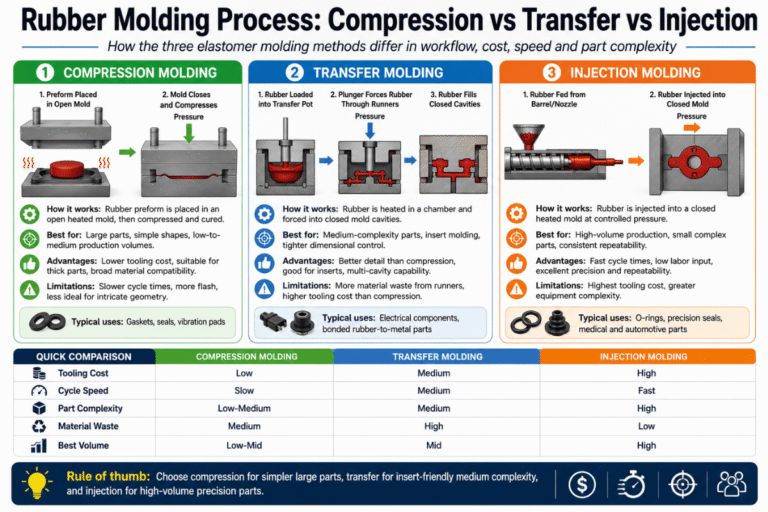
First among the “true costs” in a custom rubber program is one of the most often got wrong choices: the decision of which Puvopuz and Lepuh to pick. All three use the same vulcanization Chemistry, but the difference in tooling…
Custom Rubber Parts: Material, Process & Cost Guide (2026)
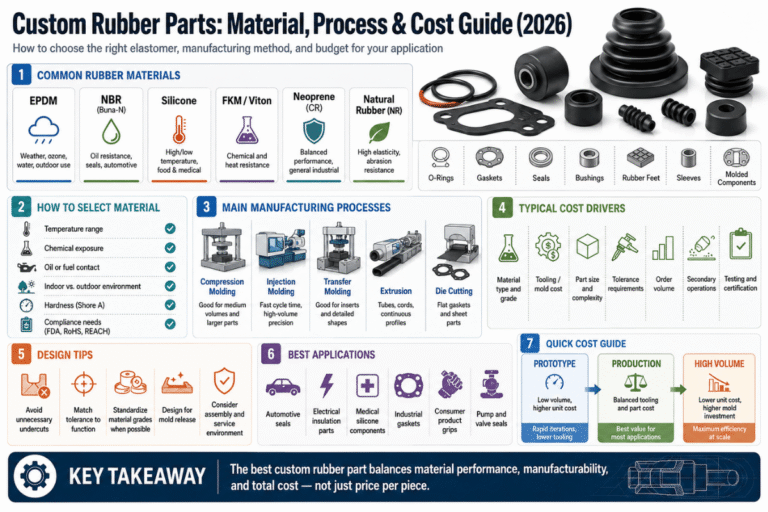
When buying custom rubber parts, everything seems straight forward until you receive your first quote, where the numbers vary by 3x between suppliers. For what’s a seemingly identical component, this discrepancy rarely happens due to one supplier’s greed; instead, it’s…
Liquid Silicone Rubber Applications: Industries & Use Cases Guide
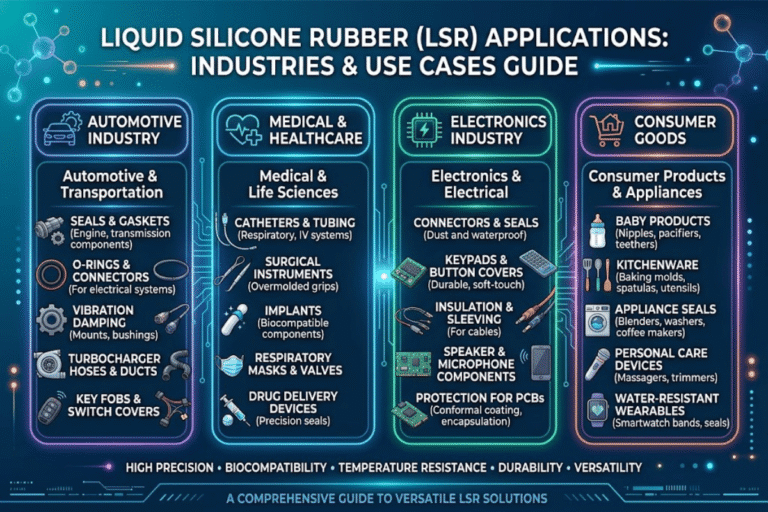
Liquid silicone rubber applications span almost every serious manufacturing sector — from implantable medical devices to EV battery seals to baby-bottle nipples to dielectric encapsulation in smartphones. This guide maps where liquid silicone rubber wins, why it wins there, and…
Silicone Overmolding: Multi-Material LSR Design Guide [2026]
![Silicone Overmolding: Multi-Material LSR Design Guide [2026]](https://meitu-engelhardt.com/wp-content/uploads/2026/04/0-8-768x512.png)
Silicone overmolding is a manufacturing process that bonds a flexible silicone layer to a rigid plastic part or metal substrate, all in one shot of the overmolding process. Two materials-the ease of a thermoset silicone on the “soft” side plus…
LSR Design Guidelines: Wall Thickness, Tolerances & DFM
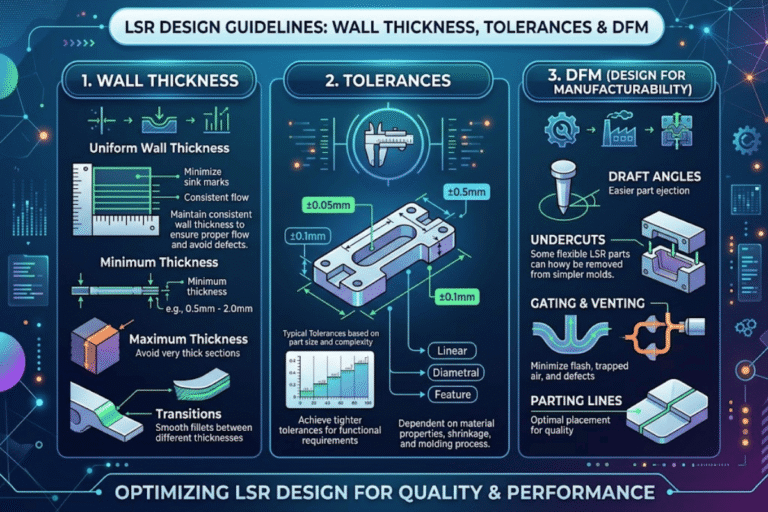
What design engineers need to know before locking geometry — first-party tolerance data and decision rules from a Class 7 LSR cell producing 1,000+ tons per year. These LSR design guidelines answer the questions that matter before a single mold…
Silicone Compression Molding: Process, Applications & When to Use It
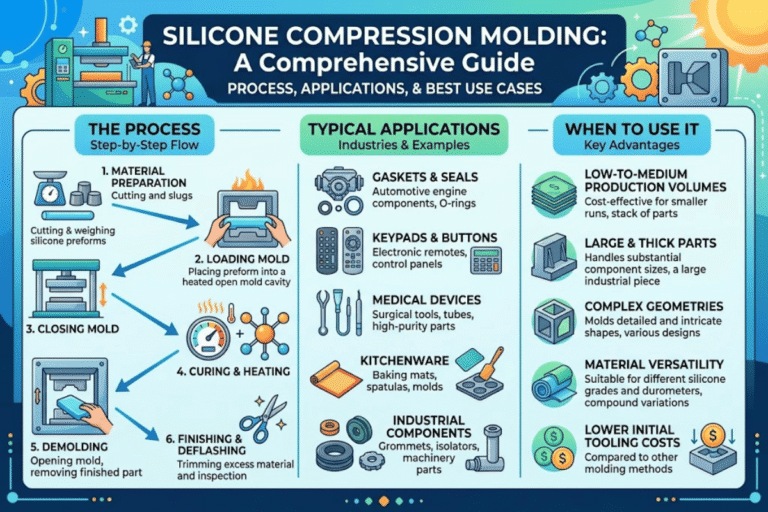
Silicone compression molding shapes pre-measured high-consistency rubber into cured parts inside a heated, closed mold — at a fraction of the tooling spend that liquid silicone rubber (LSR) injection demands. Silicone rubber compression molding is a manufacturing process that begins…
LSR vs TPE: When to Choose Silicone Over Thermoplastic Elastomers
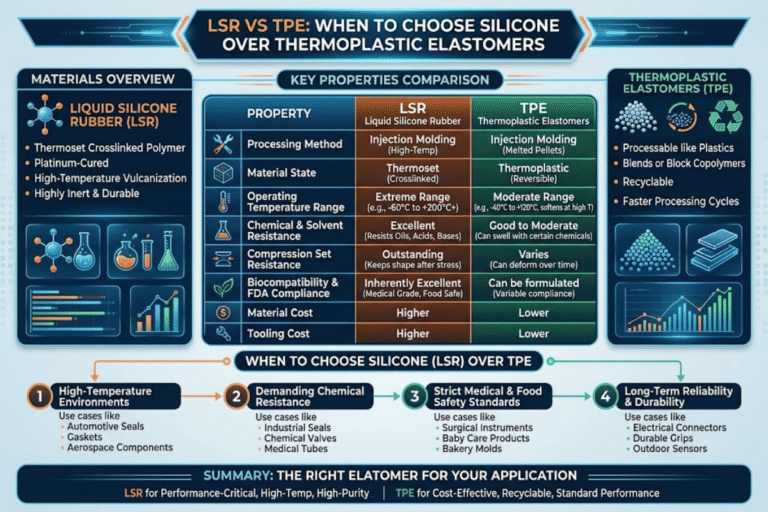
LSR vs TPE is the elastomer-selection question that dooms most product teams before a single part is tooled. Both liquid silicone rubber (LSR) and thermoplastic elastomer (TPE) displace natural rubber in the most demanding precision applications, yet they occupy opposite…
LSR vs HCR Silicone Rubber: A Side-by-Side Material & Process Comparison for Engineers
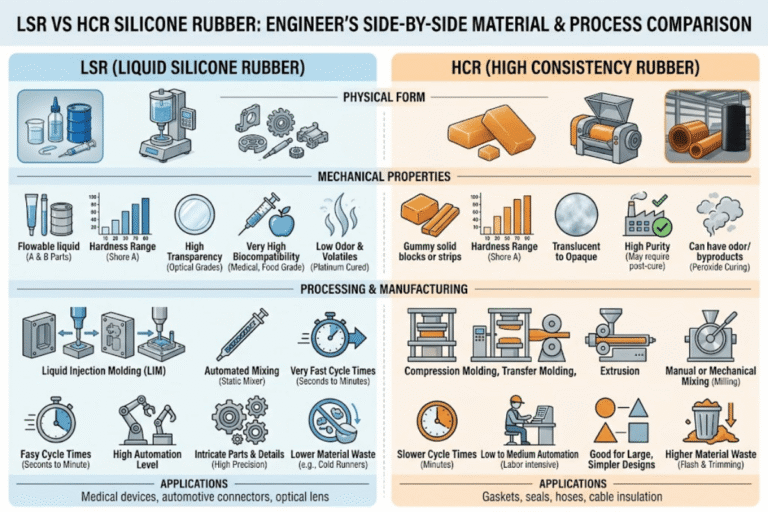
Engineers comparing LSR vs HCR silicone rubber for a new program rarely settle the question on chemistry alone. The decision usually turns on cycle time at target volume, achievable tolerance against the part drawing, the post-cure burden downstream qualification can…
Rubber Overmolding: Process, Design Tips & 2026 Applications
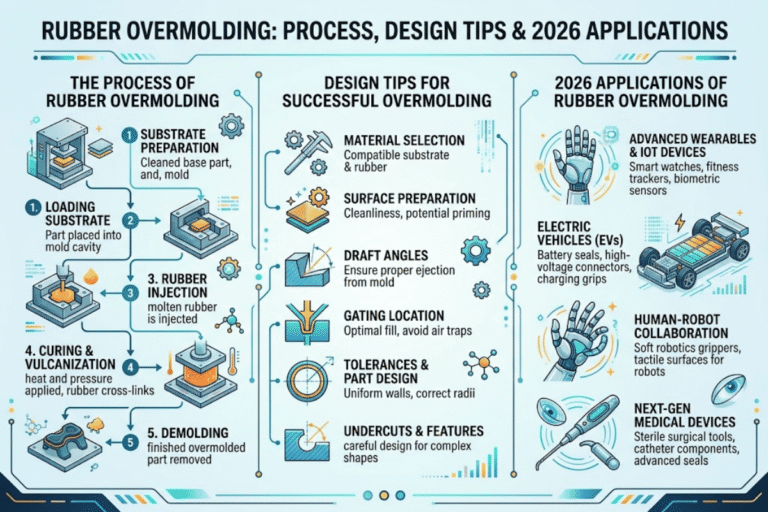
Rubber overmolding bonds a vulcanized rubber or liquid silicone elastomer directly onto a metal or plastic substrate in one molding cycle. It replaces a secondary assembly step and removes the adhesive joint that shows up in most field warranty claims.…
Rubber Molding Tolerances Explained: Standards, Classes, and How to Specify Them
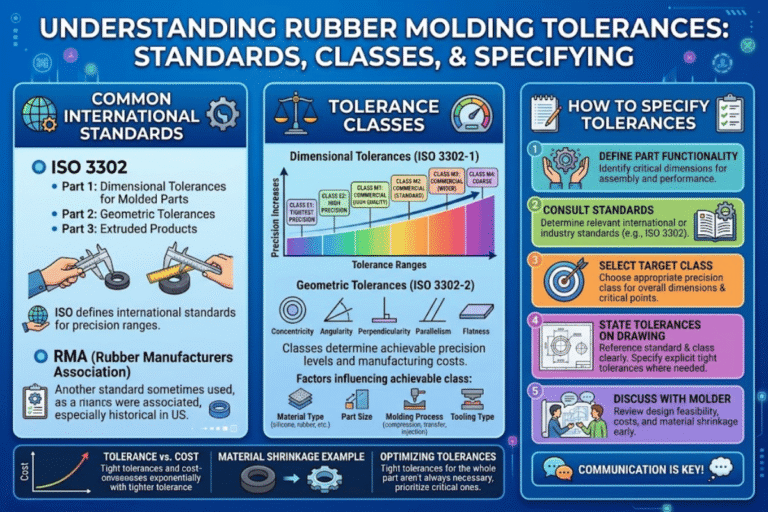
A Rubber molding tolerance describes the allowable variation in dimension that a molded rubber part may exhibit of its nominal dimension – and they behave nothing like the machined-metal tolerances most design engineers grew up with. At Meitu-Engelhardt, we see…