Get in Touch with Engelhardt

OEM-Grade Manufacturing · Zhongshan
Custom Rubber Parts Manufacturer
OEM-grade molded rubber components from a 53,000 m² IATF 16949-certified facility
Engelhardt Custom Rubber Parts Manufacturing For OEM Programs
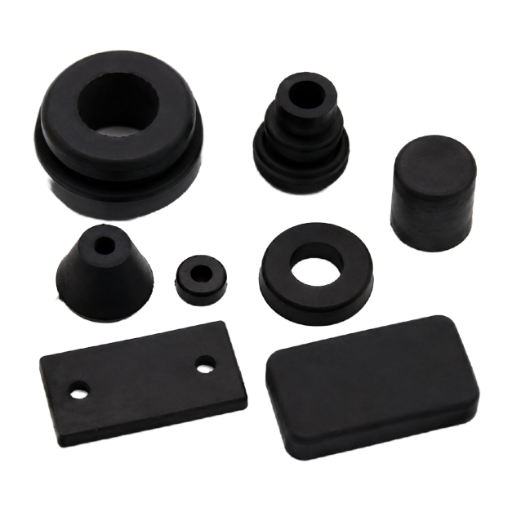
Engelhardt manufactures custom rubber parts for OEM programs in plumbing, electrical connectors, sanitary fixtures, and aerospace lavatory systems. Our 53,000-square-meter manufacturing complex in Zhongshan runs 40+ vulcanizing presses, including 250-ton vacuum vulcanizers and 300-ton rubber injection molding machines, with 2,000 tons of molded rubber component capacity annually. ISO 9001 and IATF 16949 certification support projects that require batch traceability, incoming inspection records, and audit-ready production documentation.
01
Cert
ISO 9001 + IATF 16949
Automotive-grade dual cert (most competitors hold ISO 9001 only).
02
Scale
53,000m² Plant + 40 Vulcanizers
Physical scale supporting OEM volume contracts and audit transparency.
03
Tier-1
Named Tier-1 OEM Customers
American Standard · Amphenol · Kohler · Oatey · SFA
Capabilities Snapshot
At A Glance — Engelhardt Custom Rubber Parts Manufacturing Capabilities
[ Facility · Zhongshan ]
08
/
08
Specs
SPEC / 01
Molding Processes
Injection / Compression / Transfer
SPEC / 02
Vulcanizing Equipment
40+ Presses (250T Vacuum, 300T Injection)
SPEC / 03
Annual Rubber Output
2,000 Tons + 1,000 Tons Silicone
SPEC / 04
Materials Specialty
8 Elastomers (Neoprene, EPDM, Viton, More)
SPEC / 05
Quality Standards
ISO 9001 + IATF 16949
SPEC / 06
Lab Capabilities
12+ Test Instruments
SPEC / 07
Sample Lead Time
7–14 Days
SPEC / 08
Founded
2009 (17+ Years OEM Experience)
Section 01 · Sourcing Risk & Resolution
From Engineering Drawing To Mass Production: How Engelhardt Solves OEM Rubber Sourcing
A custom rubber parts supplier becomes a sourcing risk when communication slows during a line stoppage, parts fail incoming inspection, or quoted lead times cannot be supported by real capacity. Three practical concerns come up most often in procurement conversations with our engineering team:
PAIN / 01
Supply-Chain Interruption Risk
From single-source suppliers without backup capacity.
PAIN / 02
Quality Drift Between Batches
When material specifications are loosely interpreted.
PAIN / 03
Painful 8-To-12-Week Timeline
Between prototype approval and full mass production when a supplier lacks integrated tooling capability.
Section 02 · Resolution
Built Around Those Three Constraints
Our company built its custom rubber parts manufacturing capability around those three constraints. Our 53,000-square-meter Zhongshan facility runs 40+ vulcanizing presses across injection, compression, and transfer molding, so a single supplier can absorb your full annual rubber volume without subcontracting to a partner you have not audited. The integrated rubber-plastic-hardware-assembly model means a single PO covers gaskets, plastic housings, metal inserts, and final sub-assembly when your OEM specification needs all four. Dual ISO 9001 and IATF 16949 certification — verified by independent automotive auditors — applies the same defect-prevention discipline to every Engelhardt custom rubber gasket, seal, or grommet that automotive Tier-1 OEMs require for safety-critical parts.
“
Most rubber procurement risk comes from compound variation between batches, not from the molding machine alone. Our team links twelve lab instruments—including the Mooney viscometer, moving die rheometer, and salt-spray chamber—into a single batch traceability record that customers can request for a specific production lot, including historical production records from the previous three years.
Molding Capabilities · In-House Processes
Custom Rubber Molding Services: Injection, Compression, And Transfer
The right molded rubber part starts with the right molding process. Choosing the wrong route can add avoidable tooling cost, longer cure cycles, flash-control work, or dimensional drift over the product life cycle. Because Engelhardt runs all three industry-standard processes in-house, our engineers can recommend the process that fits geometry, tolerance, annual volume, and lifecycle cost rather than forcing every design into one equipment set.
PROCESS / 01
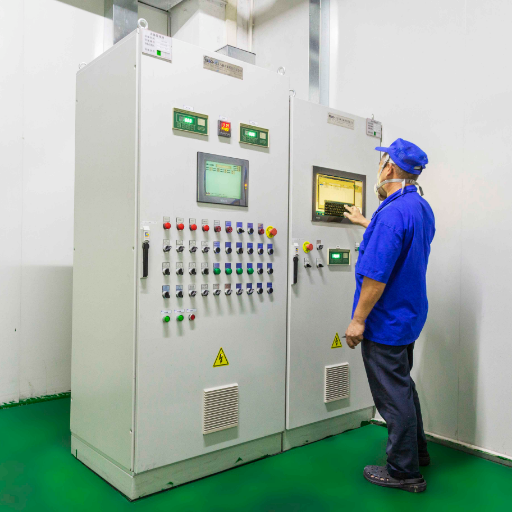
Rubber Injection Molding
Highest Volume · Tightest Tolerance
300-ton injection machines
Cycle Time
Shortest (high-volume scaling)
Tolerance
±0.05mm achievable
Flash
Minimal (automation-friendly)
Best For
Complex geometries, thin walls, 50K+ annual units.
PROCESS / 02
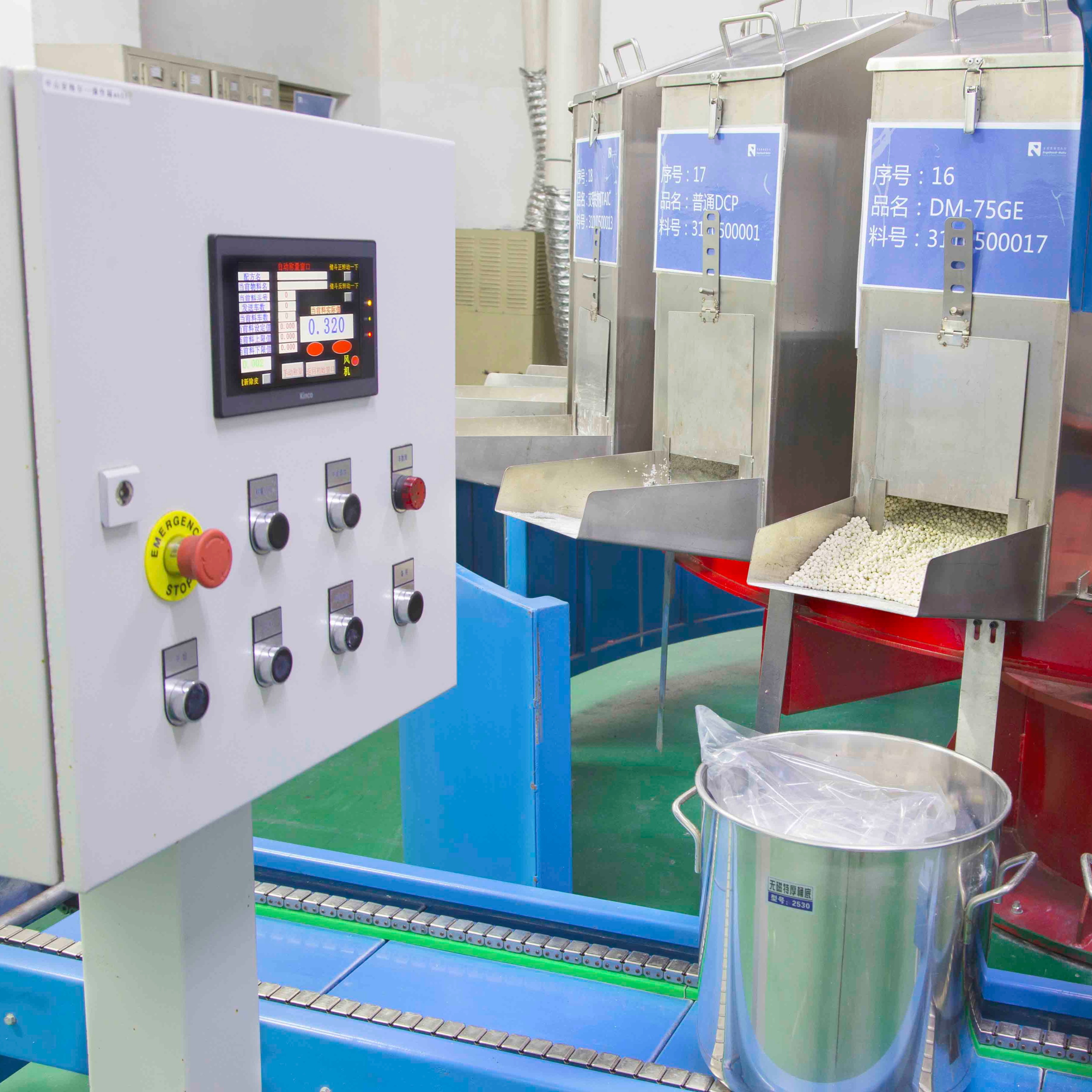
Rubber Transfer Molding
Insert Molding · Precision Bonding
Closed-mold plunger system
Cycle Time
Medium
Tolerance
±0.10mm typical
Specialty
Insert-friendly (rubber-to-metal bonding)
Best For
Components with embedded inserts, moderate complexity.
PROCESS / 03
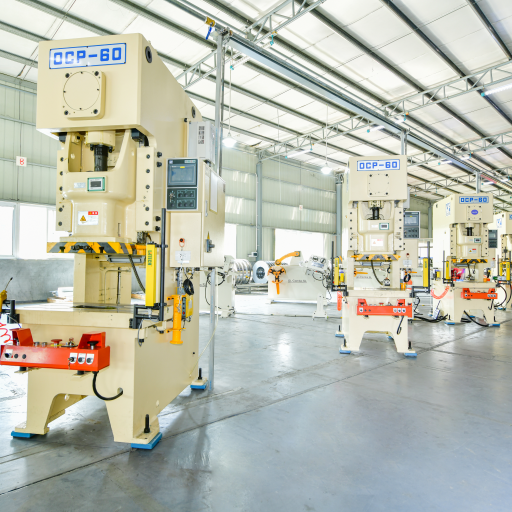
Rubber Compression Molding
Lower Tooling · Large Parts
250-ton vacuum vulcanizers
Cycle Time
Longer (cure-driven)
Tolerance
±0.25mm typical
Tooling Cost
Lowest of the three
Best For
Large, thick, simpler parts; low-to-medium volume.
Engineering Decision · Pre-Order Selection
Process Selection Is A Collective Engineering Effort
The process chosen is a collective engineering effort before an order is issued. When the part geometry, annual volume, and tolerance class lead to injection, we use injection. When tooling cost dominates the unit economics and tolerances are moderate, then compression is a sound proposition. Our engineers will not push a customer toward a $15,000 compression mold when a $40,000 injection mold will produce a significantly better product.
Data-Driven Supplier Benchmark
Engelhardt Vs U.S. Top 5 Rubber Manufacturers — Data-Driven Comparison
Most rubber molding companies publish two paragraphs about their practice and a quote form. This comparison was assembled from public service pages and certification disclosures of five established U.S. rubber manufacturers — Custom Rubber Corp, Qualiform, Aero Rubber Co, The Rubber Group and Timco Rubber — then filled in Engelhardt’s numbers from our 2024–2025 production records and certificate registry. Where a competitor does not publish a figure, “not disclosed” is the entry, because that opacity is itself the most useful signal a procurement manager can read.
Dimension
Engelhardt
Custom Rubber Corp
Qualiform
Aero Rubber Co
Timco Rubber
The Rubber Group
Facility Size
53,000 m²
not disclosed
not disclosed
not disclosed
not disclosed
not disclosed
Vulcanizing Presses
40+
not disclosed
not disclosed
not disclosed
not disclosed
not disclosed
Annual Rubber Output
2,000 tons + 1,000 tons silicone
not disclosed
not disclosed
“B2B Volume”
not disclosed
not disclosed
Certifications
ISO 9001 + IATF 16949
“certifications” generic
ISO 9001:2015
ISO 9001:2015
not disclosed
not disclosed
Named OEM Customers
5 disclosed publicly
0
0
0
0
0
Lab Instruments Published
12+
0
0
0
0
0
One-Stop Integration
Rubber + Plastic + Hardware + Assembly
rubber only
rubber only
rubber only
rubber + plastic
rubber only
Why The Opacity Matters · IATF 16949
Public Data Gaps Should Be Treated As Supplier-Risk Signals
Public supplier data helps procurement teams decide which questions to ask before an RFQ. IATF 16949 is a stricter automotive quality framework than generic ISO 9001 because it adds requirements around defect prevention, error proofing, traceability, and warranty management. In this comparison, several U.S. suppliers do not publish facility scale, press count, production volume, or automotive-certification status. Engelhardt publishes those operating figures and can provide certificate details during supplier qualification.
Compound Library · 8 Elastomers
Eight Rubber Materials — Engelhardt Engineering Expertise By Application
Material choice is where most custom rubber projects thrive or self-destruct months after delivery. EPDM placed in oil exposure cracks within weeks. Neoprene attacked by strong acids degrades quickly. Silicone abraded against metal counterfaces wears faster than expected. Engelhardt’s engineering team supports material selection because we have run all eight elastomers below across 2,000-plus production programs and seen which compound fits which application.
Material
Durometer Range (Shore A)
Temperature Range
Chemical Resistance
Typical Applications
Neoprene
30A – 85A
−40°C to 110°C
Good oil and ozone resistance; vulnerable to strong acids and ketones
Automotive gaskets, weather seals, general-purpose seals
EPDM
40A – 90A
−40°C to 150°C
Excellent ozone, UV, and weather resistance; not for oils
Outdoor seals, automotive weatherstrips, HVAC gaskets
Viton (FKM)
60A – 95A
−20°C to 230°C
Outstanding chemical and fuel resistance; high temperature
Aerospace seals, oil & gas seals, chemical processing
Silicone (LSR)
30A – 80A
−55°C to 230°C
Inert; food-grade and medical-grade variants available
Medical devices, food-contact seals, baby products
Nitrile (NBR)
40A – 95A
−30°C to 120°C
Excellent oil, fuel, and solvent resistance
Hydraulic seals, automotive fuel system gaskets, O-rings
Butyl
40A – 75A
−40°C to 100°C
Outstanding air impermeability and vibration dampening
Inner tubes, anti-vibration mounts, pharmaceutical stoppers
Natural Rubber
30A – 85A
−40°C to 80°C
High tensile strength; poor oil and ozone resistance
Shock absorbers, anti-vibration components, bushings
TPE
30A – 95A
−50°C to 130°C
Recyclable thermoplastic elastomer; broad chemical compatibility
Consumer products, medical grips, ergonomic components
Automotive Spec Language · ASTM D2000 / SAE J200
Where IATF 16949 Audit-Trail Traceability Begins
Customers who need automotive-spec material classification can quote against the ASTM D2000 line call-out system — for example, M2BC 507 A14 EO34 — and Engelhardt will match the type, class, hardness, tensile, and fluid-resistance code combination from our compound library. SAE J200 mirrors the same classification system for automotive applications. Working in this standardized specification language is faster than back-and-forth descriptive specs, and it is how IATF 16949 audit-trail traceability begins.
Quality Assurance · 12-Instrument Lab
Quality Control: ISO 9001 + IATF 16949 With 12+ Laboratory Instruments
Most custom rubber parts manufacturers publish two lines about quality and a logo of one certification. We publish the full lab inventory because procurement teams who audit Chinese suppliers want to know exactly which test capabilities exist on site before a containerload of parts ships. We operate an in-house testing center built to international laboratory management standards, with twelve principal instruments covering compound characterization, physical property validation, environmental aging, and dimensional measurement.
Dual Certification: ISO 9001 + IATF 16949
Per industry authority DNV, IATF 16949 builds on ISO 9001 with additional automotive-sector requirements covering defect prevention, customer-specific requirements, variation reduction, and warranty management — and it extends to third-tier suppliers, design centers, distribution centers, and corporate headquarters. ISO 9001 alone is a generic ticket-to-trade across industries; IATF 16949 is the automotive equivalent benchmark. Engelhardt holds both, audited and renewed annually by independent certification bodies.
Twelve Laboratory Instruments — Compound, Physical, Environmental Testing
12 / 12 In-HouseLot-Level Batch Traceability — PPAP & AS9100 Compatible
Every production lot ships with a batch-traceability record linking the compound mixer run, cure cycle, dimensional inspection, and salt-spray or aging-test reports. Customers running IATF 16949 PPAP submissions or aerospace AS9100 quality systems can pull our lot records directly into their submission package.
Customer Outcomes · Public Client List
Customer Outcomes: Tier-1 OEM Brands Trust Engelhardt
Many rubber suppliers describe customer trust in broad terms without naming the industries, qualification routes, or part families involved. Engelhardt lists selected OEM customer experience where public disclosure is appropriate, while NDA-covered project details are discussed only during supplier qualification. The procurement question is practical: has the supplier already worked through demanding qualification, traceability, and production-release requirements?
Selected OEM Customer Experience — Public Client List
05 / 05 DisclosedAmerican Standard
Plumbing fixtures
Amphenol
Electrical connectors
Kohler
Sanitary & kitchen
Oatey
Plumbing supplies
SFA
Aerospace lavatory
Four OEM Purchasing Profiles
Each Project: Different Process, Material, Certification & Tooling Match
These customers have four very different OEM rubber purchasing profiles: high-volume plumber-supply with food-grade silicone Certification (American Standard, Kohler, etc.), precisely dimensioned electrical-component seals with tight tolerances and IATF 16949 traceability (Amphenol), high-mix plumber-supply items running on cost-optimized compression molds (Oatey), and aerospace lavatory-subsystem parts requiring AS-grade documentation as well as our rubber output (SFA). Each project runs multi-year, multi-line, each requires a different match of process choice, material grade, certification audit trail, and tooling expenditure that directly addresses the customer’s procurement risk model.
About Engelhardt-Meitu · Single-Vendor Integration
About Engelhardt: One-Stop Rubber, Plastic, Hardware, And Assembly Integration
Our company is a custom rubber parts manufacturer, but the larger Engelhardt-Meitu operation is defined by a single-vendor integration model that most rubber molding companies do not offer. From the same 53,000 m² Zhongshan campus, we run rubber, plastic, hardware, and assembly under a single system of quality, a single project manager, and a single PO. For OEMs whose finished good needs molded rubber gaskets, injection-molded plastic housing, stamped metal inserts, and final sub-assembly, that integration is one audit instead of four, one quality contract instead of four, and one set of dimensional interfaces checked at our factory before shipment instead of debugged on your assembly line.
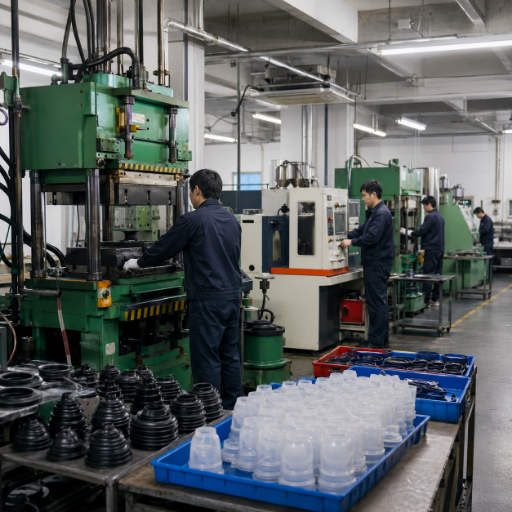
DEPT / 01
Rubber Department
- 40+ vulcanizing presses
- 2,000 t/yr rubber + 1,000 t/yr silicone
- Injection 300T + Vacuum 250T
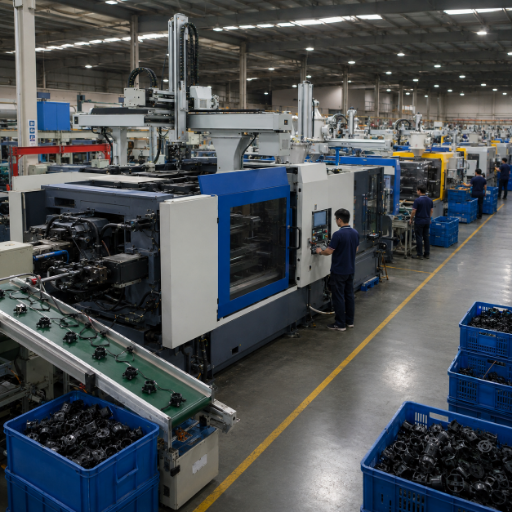
DEPT / 02
Plastic Department
- 400 injection machines
- Largest 2,000-ton press
- 100 tons/day plastic throughput
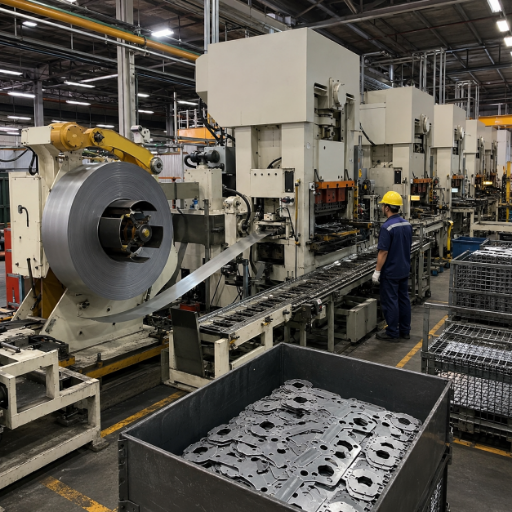
DEPT / 03
Hardware Department
- 1,000 m² automated stamping line
- 30M+ pieces annually
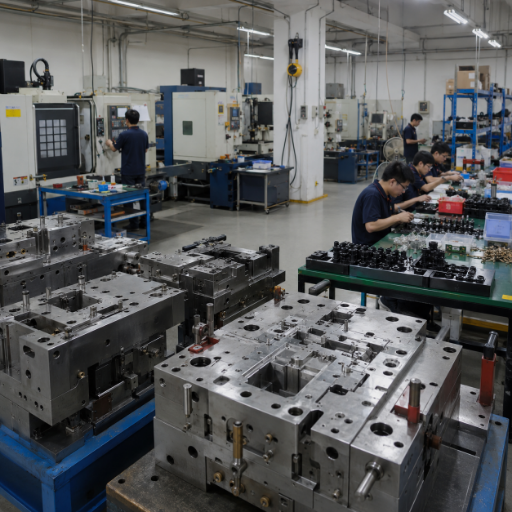
DEPT / 04
Mold & Assembly
- 3,600 m² mold workshop
- German Rhodes machines, CNC, EDM
- Integrated R+P+HW assembly
Integration Logic · Supply-Chain Risk Reduction
Single-vendor integration is not just operational simplicity. It is supply-chain risk reduction: when an OEM sources the rubber gasket, plastic housing, and metal insert from three different suppliers, the integration interfaces — bolt pattern matching, gasket compression height, hardware concentricity to the molded boss — become the OEM’s responsibility once delivered to the factory. When Engelhardt makes all three, those interfaces are checked at our factory before the parts leave the line.
Procurement Guide · Transparent Figures
Procurement Guide: Cost Drivers, Lead Time, MOQ, And Sample-To-Production Timeline
Most rubber molding companies publish nothing about how their pricing actually works, lead times, or payment terms. Procurement teams waste weeks getting quotes on parts that turn out to be out of MOQ or out of budget. We publish the figures listed below from our 2024–2025 program deliveries.
Five Pricing Drivers
DRIVER / 01
Material Grade
Top-tier FKM/Viton cost three to five times more than neoprene.
DRIVER / 02
Number Of Cavities & Tooling Complexity
Single-cavity vs 32-cavity molds range 20–40× in price.
DRIVER / 03
Annual Order Volume
Quasi-annual material-usage or actual annual quoting, plus actual order volume. Consistent.
DRIVER / 04
Tolerance Class
0.05mm tight injection vs 0.25mm loose compression.
DRIVER / 05
Certification Formalization
Commercial grade vs IATF 16949 audit-clearance.
Lead Time & Sample-To-Production Timeline
01
7–14 Days
Sample
T1 from existing compound
02
3–4 Weeks
Prototype
T2 with PPAP-style documentation
03
4–6 Weeks
Tooling Fabrication
04
4–8 Weeks
First Mass Prod Start
After tool approval
05
3–5 Weeks
Ongoing Production Releases
From PO
Payment Terms & Shipping
- 01 Standard: 30% deposit / 70% balance before shipment
- 02 Methods: LC at sight or TT (telegraphic transfer)
- 03 Shipping terms: FOB Shenzhen or Guangzhou, CIF to buyer port, or EXW factory / nominated freight forwarder
- 04 Currency: USD, EUR, RMB invoicing available
MOQ & Tooling Policy
- 01 Standard catalog items: 500–1,000 pieces typical MOQ
- 02 Custom molded parts: MOQ negotiable based on tooling amortization
- 03 Tooling ownership: customer-owned tooling supported; existing tooling transfer welcomed
- 04 Sample fee: applied to the first production order on PO confirmation
Interactive Engineering Tools For Custom Rubber Parts
FAQ · Procurement & Engineering
Frequently Asked Questions
Questions
Q / 01
How Much Do Custom Rubber Parts Cost From Engelhardt?
Custom rubber parts pricing depends on five drivers: material grade (Neoprene vs Viton can differ 3-5× per kg), cavity count and tooling complexity (single-cavity vs 32-cavity differ 20-40× in tooling), annual volume tier, tolerance class, and certification requirement. We do not publish a flat price list because doing so misleads buyers — your part with your specification needs a custom quote built around your actual production economics. Request a quotation through the form above and you will receive a complete-system breakdown within 24 hours, including tooling, sample, and shipping estimate.
Q / 02
What Is The Lead Time From Drawing To Mass Production?
From a confirmed PO and approved drawing: samples in 7-14 days using existing compound, prototype with PPAP-style validation in 3-4 weeks, tooling fabrication 4-6 weeks, and first mass production lot 4-8 weeks after tooling approval. Ongoing production releases run 3-5 weeks from each subsequent PO. Air freight from Guangzhou or Shenzhen typically adds 5-7 days; ocean freight 25-35 days to most U.S. and European ports.
Q / 03
Which Rubber Material Should I Choose For My Application?
Material selection follows three questions: what temperature range will the part see in service, what fluids will it contact, and what mechanical loading does it carry. EPDM excels outdoors but fails in oil. Nitrile excels in fuel but degrades under UV. Viton handles high temperature and aggressive chemicals at premium cost. Silicone serves food and medical at moderate cost. Our engineering team supports the selection conversation before quoting, and the Materials and Tolerance Selection Guide PDF available above includes durometer matching, temperature compatibility, and ASTM D2000 line call-out worked examples.
Q / 04
Can Engelhardt Manufacture Custom Rubber Parts To IATF 16949 Automotive Standards?
Yes. Engelhardt holds active IATF 16949 certification audited and renewed annually by an independent certification body, in addition to ISO 9001. IATF 16949 extends the ISO 9001 quality management framework with automotive-specific requirements around defect prevention, error proofing, customer-specific requirements, control plan governance, and warranty management. Per certification authority DNV, IATF 16949 is the automotive equivalent ticket-to-trade and extends down to third-tier automotive suppliers, design centers, and corporate headquarters. We support full PPAP submissions including PSW, control plans, process flow diagrams, dimensional layouts, material certifications, performance test reports, and capability studies — the level of documentation an automotive Tier-1 OEM expects from a qualified rubber molding supplier. Customer audits at our Zhongshan facility are welcome and typically scheduled within two weeks of the request.
Q / 05
Do You Supply Prototypes, Small-Batch Orders, And Full Mass Production?
Yes to all three. Samples ship in 7-14 days on existing compounds. Small-batch MOQ is typically 500-1,000 pieces for catalog items. Mass production scales from 10,000 to several million pieces per year, with custom-tool MOQ negotiable based on amortization.
Q / 06
What Is The Difference Between Injection, Compression, And Transfer Rubber Molding?
Injection molding heats and plasticizes the elastomer before injecting it into a closed mold cavity under high pressure — fastest cycle, tightest tolerance, highest tooling cost, best for high-volume complex parts. Compression molding places a measured preform into an open heated mold that closes under pressure — lowest tooling cost, longest cycle, moderate tolerance, best for large or thick parts at low-to-medium volume. Transfer molding uses a plunger to push rubber through sprues into closed cavities — middle ground, particularly strong for insert molding and rubber-to-metal bonding. The right choice depends on geometry, volume, tolerance, and lifecycle cost.
Q / 07
Do You Also Offer Plastic Injection Molding And Hardware Manufacturing?
Yes. The broader Engelhardt-Meitu operation runs 400 plastic injection machines (largest 2,000-ton presses, 100 tons/day plastic throughput) and a 1,000-square-meter automated hardware stamping line producing 30 million-plus pieces annually. The integrated rubber-plastic-hardware-assembly model means an OEM with a multi-material sub-assembly can source the rubber gasket, plastic housing, metal insert, and final sub-assembly from a single supplier under one quality system and one PO. See the Engelhardt main capability pages for plastic and hardware sub-services.