
Get in Touch with Engelhardt

Plastic Injection Molding Services
Custom Plastic Injection Molding — From Prototype to Full Production
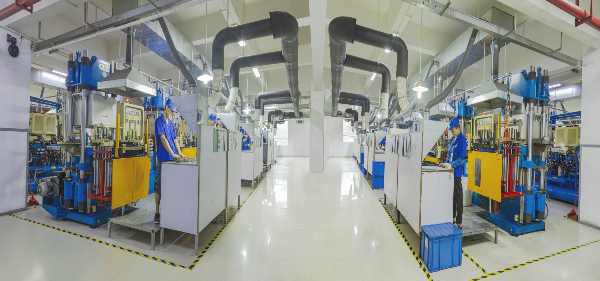
Meitu is a plastic injection molding manufacturer specializing in precision plastic components for automotive, medical, electronics, and consumer products. We operate over 400 molding presses, and can fulfill orders from 100 pcs to 10 million pcs annually.
Understanding the Basics
What Is Plastic Injection Molding?
Injection molding is a manufacturing technology used for repeatable production of high precision plastic components in high volumes. It involves forcing flowing molten resin into a highly-polished steel mold cavity with tightly controlled pressure and temperature. After the materials harden and cool, the mold opens up and the finished part is demolded.
Injection molding is one of the most common manufacturing processes in the world for all types of plastic components, because it can produce millions of part copies over dozens of production runs, with the same dimensional accuracy.
While technologies like CNC machining or 3D printing are preferred in low volumes for trial runs and prototypes, injection molding can achieve costs of cents per part if dozens of thousands or millions are produced, and the investment amortizes out when the first few thousand units are produced.
Key Advantages at a Glance
Excellent repeatability – two parts from two different production runs will have virtually-identical dimensions
Fast cycle times as short as 15 seconds in smaller thin-walled components
Wide material selection — over 40 thermoplastic resins available
Low wastage of the resin materials, since runners and sprue are later ground back into pellets used again
Complex geometry with undercuts, living hinges, and snap fits
Flexible scale-up from low-volume (100 units) to many millions of units
The Manufacturing Process
How the Injection Molding Process Works
Every injection molding procedure works in four stages, which is key for design engineers to refine parts and buyers to evaluate service providers.
01
Clamping
Both halves of the injection mold are secured under hydraulic force. Clamping force across the fleet ranges from 50 to 2,000 tons — larger parts with more projected area need higher tonnage to keep the mold closed during injection.
02
Injection
Plastic resin pellets are fed from a hopper into a heated barrel where a rotating screw melts and mixes the material. Next, the screw pushes molten plastic through a nozzle into the mold cavity at controlled injection speed and pressure.
03
Cooling
Molten plastic cools inside the mold while maintaining pressure to compensate for material shrinkage. Cooling channels within the mold circulate water or oil to control temperature. This stage typically accounts for 60-80% of total cycle time.
04
Ejection
Once the part has solidified, the mold opens and ejector pins push the finished molded part out. After ejection, the mold closes and the cycle repeats — typically every 15 to 90 seconds depending on part size and wall thickness.
Precision Control: The injection pressure, injection velocity, mold temperature, and clamping pressure are controlled by each of our injection molding machines very precisely, allowing unit shot weights to vary less than 0.5 percent from shot to shot, and ensuring same parts can be made from hundreds of thousands and more.
Quality Assurance: Part QC is determined more than anything else by the design and fabrication of the mold – location of the part gate, runner design, venting, and cooling channel locations can make or break the tolerances of a finished product. That’s why we control it ourselves in house.
Material Selection
Plastic Injection Molding Materials and Resins
Material choice has the largest influence on a parts architecture – before even machines and process parameters are selected, we recommend all clients define which resin will be used, as various plastics imply a different mold tool, drive, cooling, and finishing design.
| Material | Key Properties | Common Applications | Shrinkage Rate |
|---|---|---|---|
| ABS | Impact-resistant, good surface finish, paintable | Consumer electronics housings, automotive interior trim | 0.4–0.7% |
| PC | Optical clarity, high heat resistance, tough | LED lenses, safety equipment, medical device covers | 0.5–0.7% |
| Nylon (PA6/66) | High wear resistance, strong, moisture-absorbing | Gears, bearings, structural brackets, cable ties | 0.8–1.5% |
| PP | Chemical-resistant, lightweight, living hinge capable | Packaging, household containers, automotive bumpers | 1.0–2.5% |
| POM (Acetal) | Low friction, high stiffness, dimensionally stable | Gears, clips, valve bodies, conveyor components | 1.8–2.5% |
| TPE/TPU | Rubber-like flexibility, good for overmolding | Grips, seals, soft-touch surfaces, wearable bands | 0.5–2.0% |
| PC/ABS | Combines PC toughness with ABS processability | Laptop housings, power tool casings, instrument panels | 0.5–0.7% |
| PBT | Electrical insulation, chemical resistance | Connectors, switch housings, sensor enclosures | 1.5–2.0% |
Material shrink or contraction rate affects the dimensional stability of the finished product. Once we know which material your component will be made of, we can factor in the contraction rate and adjust tooling and cooling parameters accordingly, to hit exact specifications in our parts.
Engineering tip
Glass-fiber reinforced grades (GF10, GF20, GF30) tend to reinforce and harden the part, but they are brutal on the mold surfaces… applying glass-reinforced resins there will require hardened tool steel (H13 or S136) for the cavity insert.
Process Variations
Types of Injection Molding Processes
The majority of plastic parts are produced through standard injection molding. However, for some applications, there are process variations that offer additional capabilities for a molded component. Planting different processes together makes the supply chains easier for those who require more than one type of part within the same assembly.
Insert Molding
Preformed Insert – A metal insertion such as a bushing, threaded fastener or electrical contact is inserted into the mold prior to injection of the plastic around it to produce one finished component. Examples of use are in electrical connectors, threaded mountings and hybrid metal-plastic support structures.
Overmolding
Overmolding- A second shot of material is molded over a previously formed part or substrate, combining two plastics into a single component. Typically a hard plastic like ABS is overmolded with a soft TPE grip surface. Overmolding eliminates the need for glued or mechanically joined assemblies, and creates a single high quality part. Material needs to be selected carefully for good layer bonding.
Two-Shot Molding
Two shot molding: (also known as dual-injection molding and multi-material molding) This advanced process involves the simultaneous injection of two different resins using a rotating mold during the injection cycle. The result is bi-color/ bi-material parts with no second of bonding required. Typical applications include car buttons and other appliance controls, and consumer electronics.
Gas-Assisted Injection Molding
Nitrogen gas is injected into the molten plastic after the first fill to hollow out the thick sections of a mold, significantly lowering the weight of the part. Gas-assisted is also used to prevent sink marks on thick ribs and bosses and decrease the overall volume of the manufactured part. Typical products using Gas assistance include handles, structural beams and large panels.
Structural Foam Injection Molding
A chemical blowing agent forms a microcellular foam core within the section of the part providing a lightweight, solid skin material structure. Structural foam injection molding is well suited to large panels, pallets, enclosures and other high stiffness parts with a minimal weight requirement. Its foam core lowers material density and allows reduced clamping force for large-area parts.
Compression Molding
However, it is not injection based; as a complementary technique is compression molding; which is highly suitable for thermosets and sheet or large flat panels. In total we have 70 compression presses operating in addition to our injection fleet. Compression is used for BMC/SMC composites, Rubber gaskets and Silicone parts as the flow characteristics are different.
Where Our Parts Go
Industries and Applications for Injection Molded Parts
Plastic injection molded parts end up in products people use every day — from the sanitaryware fittings in a bathroom to the electrical connectors inside a car dashboard. Eight major industries count on these parts, each with distinct requirements for material performance, surface finish, and regulatory compliance.
Automotive
Interior trim panels, HVAC ducting, sensor housings, cable management clips. IATF 16949 process controls apply to all automotive injection molding orders.
Medical Devices
Enclosures for medical diagnostic equipment, syringe parts, handles for surgical appliances. Medical injection molding demands for resins USP Class VI or ISO 10993 and for documented traceability of the material.
Consumer Products
Household storage containers, kitchen appliances, personal care product containers. Consumer products, high volume production runs require uniform color control and A-Grade appearance finish.
Electronics
Connector housings, switch plates, LED building illumination diffusers, Cable gland bodies. Flame retardant grades (UL94 V-0) and dimensional tolerances, critical for snap fit construction.
Building Materials
Fittings, fasteners, ventilation grilles, and supports for foam packaging, thermal and acoustical insulation, climate control appliances. These parts often require exposure to outdoor UV light and thermal cycling.
Sanitaryware
Toilet seats, shower valves, toilet tanks, drain covers. Parts that contact water, require plastic resins that are under FDA regulation or certified to NSF 61 specifications.
Electrical Equipment
High-voltage power tools, industrial, elevator components and enclosures require the high electrical CTI (Comparative Tracking Index) plastics to prevent arcing.
Packaging
Caps, closures, narrow neck containers, blister tray inserts. Packaging injection molding facilities produce over 11,000 tons of packaging annually, utilizing a five layer co-extruder and high cycle thermoforming presses.
What We Offer
Custom Plastic Injection Molding Services
All project development begins with a part design and manufacturing requirement. Our custom injection molding services cover the entire product development chain, from parts analysis, tooling, sampling, to product production, assembly, packaging. This is all done on one site, eliminating the must coordinate and unwieldy quality issues that can occur with production spread out over many vendors.
Production and low volume prototype injection molding from concept to finished parts. Over molds fabricated from aluminum or P20 steel can be shipped in 2-3 weeks. This allows you to test fit or function parts with production grades of resin before moving to tougher, hardened steel production molds.
Practical tip:
Many first time buyers of injection molded parts neglect the importance of a good DFM analysis. Our engineers help to highlight draft angles, thin wall sections, and pinch gate location problems before any tooling ever leaves the printer. Correcting a part on screen costs nothing. Waiting to correct problems after mold fabrication costs weeks and thousands of dollars.
Service Scope
- Design for Manufacturing Analysis – Moldflow simulation, gate and wall thickness optimization, draft angle perspectives.
- Mold design and machining – from simplex cavity knives to 64 cavity production injections
- Material selection – application based resin recommendations, with data sheets.
- Prototype molded parts – aluminum or soft steel tooling, volume from 100 to 5,000 pieces, 2-3 week lead.
- Production injection molding – hardened steel molds, volume from 1,000 to 10 million+ pieces per year.
- Secondary Operations — Pad printing, ultrasonic welding, assembly, packaging
- Logistics – FOB, CIF, DDP shipped, with complete export documents.
Ready to Start Your Injection Molding Project?
Please send us your three dimensional part file or dimensional drawing – receive a response within 24 hours with tooling, DFM feedback, and a detailed quote.
Get Your Free Quote
Quality & Accuracy
Precision Injection Molding: Tolerances and Quality Control
Precision injection molding, means holding tight specifications, accurately, over thousands to hundreds of millions of dies. General injection molding specifications allow tolerances of 0.005 inches (0.127 mm). Through a combination of application specific tooling, monitored processing control, and selected resin we can hold critical dimensions to 0.001 inches (0.025 mm) – that many buyers think they need CNC machining for initially.
Tolerance capability varies with several inputs simultaneously; mold cavity steel quality, resin shrinkage behavior, uniformity of mold temperature, consistency in plasticizing parameters. Our servo hydraulic injection molding presses monitor and respond to shot-to-shot fluctuations in transfer pressure, shot shot position of the part.
Tradeoff considerations
Why more precise tolerances will drive the mold price up even higher: Hole final tolerances will be higher prices due to the tighter tolerances require higher quality steel, more polishing of the mold, and longer cycle times due to the tight process window. Tighter tolerances on feature that are not critical to the part function can be specified to reduce the mold cost without hurting the part quality.
Quality Control Equipment
| Equipment | Function |
|---|---|
| Coordinate Measuring Machine (CMM) | 3D dimensional verification of critical features |
| Projector Measurement System | Profile and contour inspection for 2D features |
| Mooney Viscometer | Incoming raw material viscosity verification |
| Moving Die Rheometer | Cure characterization for thermoset materials |
| Salt Spray Corrosion Tester | Surface coating durability testing (ASTM B117) |
| Heat Aging Test Chamber | Long-term thermal stability assessment |
| Multifunctional Material Tester | Tensile, flexural, and impact strength measurement |
| Transportation Simulation Tester | Packaging integrity verification under shipping conditions |
Factory Overview
Our Injection Molding Manufacturing Capabilities
Meitu has a 26,000 capacity factory based in Zhongshan, Guangdong. Within this facility are three integrated workshops, injection molding, camera assembly, automatic set up, and blisters packaging, each connected by an internal logistics system that moves parts directly from the mold to the finished pack.
400+
Injection Machines
Clamping force range from 50 to 2,000 tons. Incorporates the liquid silicone injection, vacuum vulcanizing, and solid injection machines.
100+
Tons Daily Material
Once a day I do a run with the ABS, PC, PA, PP POM, TPE and PBT alongside all the speciality compounds.
11k
Tons Annual Output
Combined output across injection, compression, and thermoforming operations.
Digital Manufacturing Infrastructure
The backbone of our production floor is an integrated MES and ERP system which offers 24/7 visibility of all activity from receipt of material to shipping of finished goods. Raw material batches are tracked with barcodes. Automated MES routing assures proper process sequence – this system will not permit operation skips, rendering the errors common in paper shop floors useless.
A computer-based quality data collection system, which records inspection measurements and electronically compares them to existing standards in real time. Out-of-specification conditions will cause a batch to be rejected before it advances to the next process step. This is the degree of automation that allows us to have quality consistency across 300 operators and 3 shifts.
ISO 9001:2015
Quality Management System
IATF 16949:2016
Automotive Quality Standard
MES/ERP
Digital Production Tracking
Full Traceability
Material → Process → Customer
Pricing Transparency
Plastic Injection Molding Cost: Key Factors That Affect Pricing
Injection molding cost is not one number – it is a sum of the tooling investment plus per part manufacturing cost plus the cost of secondary operations. Learning how to break down the injection molding cost components will enable buyers to choose the right source and comparing a supplier quote fairly.
01
Mold Tooling Cost
The tool makes by far the highest initial investment. A basic prototype single cavity aluminum tool could be a few thousands of dollars. A multi cavity production tool in hardened H13 steel with hot runner system could be thousands of dollars. Cost drivers include : number of cavities, part intricacy (undercuts, side actions, lifters), mold steel availability grade, surface quality, hot or cold runner system.
02
Per-Part Production Cost
The cost per part includes raw material, machine and labor. Raw material cost is the resin cost in kg multiplied by the part weight. The machine time cost is related to the cycle time of the mold. Shorter cycles mean more parts per hour at the same cost. For example, a thin-walled polypropylene container might have a cycle time of 12 sec, whereas a thick-walled polycarbonate housing might have a cycle time of 60 sec.
03
Secondary Operations
Each one of these processes adds cost to each of our units. However, our in house blister packaging and totally automatic assembly line can keep our secondary operation costs lower than having these operations farmed out to multiple vendors.
What Drives Cost Up
| Factor | Impact on Cost |
|---|---|
| Tighter tolerances | Better steel, longer polishing, slower cycles |
| More cavities | Higher mold cost, but lower per-part cost |
| Undercuts & side actions | More complex mold mechanisms |
| Textured or polished finish | Additional mold surface treatment time |
| Engineering resins (PEEK, PEI) | Higher material price, special processing |
| Small order quantities | Mold cost spread across fewer parts |
What Drives Cost Down
| Factor | Impact on Cost |
|---|---|
| Higher volumes | Mold amortization spread thinner |
| Uniform wall thickness | Faster cooling, shorter cycle times |
| Standard resins (PP, ABS) | Lower material cost per kg |
| Part design simplicity | Fewer mold features, less machining |
| Family molds | Multiple parts in one mold = one setup |
Plastic Injection Molding Material Selection Guide
Compare engineering resins side-by-side. Select your application industry and up to three key performance requirements, then let our recommendation engine surface the best-fit thermoplastics for your project.
Select 1 to 3 performance priorities
0 / 3 selected
Recommended Materials
Need Help Selecting the Right Material?
Our engineers can recommend the optimal resin for your application, review your part geometry, and ensure the best moldability outcome.
Engineering & Costing Tools
Optimize your plastic injection molding projects with our interactive calculators. Get instant cost estimates and verify dimensional tolerances.
Cost Estimator
Calculate estimated tooling investments and per-part production costs based on size, material, and volume. Perfect for budgeting and feasibility studies.
Launch Estimator
Tolerance Calculator
Determine achievable dimensional tolerances for your specific resin and mold type. Check standard (commercial) vs. fine (precision) limits instantly.
Check Tolerances
Case Studies: Injection Molding Projects We Have Delivered
Automotive — Interior Components
HVAC Duct Assembly for a Tier-2 Auto Parts Supplier
A second Tier-One supplier, who manufactures HVAC duct assemblies in glass-fiber reinforced nylon (PA66-GF30), needed polymer components with very tight dimensions for snap-fit connections. Their first two suppliers had been unable to migrate production due to warpage caused by uneven fiber orientation in the flow path.
We redesigned the gates locations using flow simulation data, added a series of eight sequential valve gates to control fill pattern, and included conformal cooling inserts in the critical snap-fit zones of the mold. The part was produced on a 650-ton machine, with 48-second cycle time.
"The snap-fit dimensions have been within spec on every shipment since the mold transfer. We haven't had a single assembly reject at the OEM plant."
Warpage <0.3mm
48s Cycle
IATF 16949
Consumer Electronics — Housing
Smart Home Device Enclosure in PC/ABS with Textured Finish
A consumer electronics manufacturer was preparing to introduce a smart home controller, requiring a two-part enclosure in a PC/ABS blend. Soft-touch matte texture was specified on the top cover, while the bottom half was specified to have a high-gloss appearance. Samples had to match within a Delta E measurement of 1.0 on both large surfaces.
Meitu machined a 2-cavity mold, with different surface textures on the opposite sides - VDI 30 matte texture on the top cavity, and SPI A-2 polish on the bottom cavity. The most difficult aspect of the project was developing cooling channels that balanced both parts, so that each finished the ejection cycle at the same time, at a total 36-second cycle.
Delta E < 1.0
36s Cycle
50K units/mo
Building Materials — Plumbing Components
NSF-Compliant Valve Body in POM for a Plumbing OEM
A plumber came to us in need of a POM (acetal) valve body alternative to their current machined brass part. POM's lower cost and weight had to go hand-in-hand with NSF 61 compliance for use in drinking water. The internal threads in this valve body required collapsible cores with a 0.05mm tolerance, and sealing groove.
Our tooling engineers chose POM with a specific shrink rate, built a 4-cavity mold designed with hydraulically driven collapsible cores, and delivered to the customer first articles with right on specs. The product passed NSF testing and production quickly ramped to output of 200,000+ units per year at a greatly reduced part cost compared to the original machined brass body.
"The switch from machined brass to molded POM was a game-changer for our cost structure. Meitu's tooling team solved the collapsible core design..."
NSF 61
±0.05mm Tol.
200K units/yr
Common Questions
Frequently Asked Questions About Plastic Injection Molding
What is plastic injection molding and how does it work?
Plastic injection molding is a manufacturing process where molten plastic resin is forced into a precision-machined mold cavity under high pressure. After filling, the material cools and solidifies into the shape of the mold, then gets ejected as a finished part. Each cycle repeats every 15 to 90 seconds depending on part size and wall thickness. Because the same mold produces every unit, dimensional consistency stays extremely tight throughout an entire production run. This repeatability makes injection molding one of the most cost-effective methods for producing identical plastic parts in volumes from a few hundred to several million units. Automotive, medical device, consumer electronics, and packaging manufacturers all rely on this process.
What types of plastic materials work best for injection molding?
Material choice depends on your application requirements. ABS offers a good balance of strength, impact resistance, and surface finish for consumer products. Polycarbonate provides exceptional clarity and heat resistance for optical and electronic housings. Nylon delivers high wear resistance for mechanical gears and bearings. Polypropylene is cost-effective for packaging and household goods. Our facility processes over 40 different thermoplastic resins and can recommend the right one for your project.
What is the difference between insert molding and overmolding?
Insert molding places a pre-formed component into the mold before plastic is injected around it. Overmolding applies a second plastic layer over an already-molded substrate. Both eliminate secondary assembly steps.
What tolerances can precision injection molding achieve?
Standard injection molding holds tolerances of ±0.005 inches (0.127 mm). Precision tooling and process control can tighten that to ±0.001 inches (0.025 mm) on critical dimensions. Material shrinkage rate and mold temperature uniformity are the biggest influencing factors.
How much does plastic injection molding cost?
Total cost depends on three main components: mold tooling, per-part production cost, and secondary operations. Mold tooling typically ranges from a few thousand dollars for simple single-cavity aluminum molds to tens of thousands for complex multi-cavity hardened steel tools with hot runner systems. Per-part production cost is influenced by resin price per kilogram, part weight, cycle time, and labor. Secondary operations like painting, pad printing, ultrasonic welding, and assembly each add to the per-unit total. Higher production volumes spread the fixed mold cost across more parts, which drives down the per-unit price substantially. Requesting a detailed quote breakdown helps compare suppliers on a fair, line-item basis.
What is the minimum order quantity for custom injection molding?
Minimum order quantity starts at 100 pieces for prototype runs. Standard production orders typically begin at 1,000 units for favorable per-part pricing.
How long does it take from design to production?
A typical timeline breaks down as follows: design review and DFM feedback takes 1 to 3 business days; mold design and fabrication takes 3 to 6 weeks depending on complexity; first article samples (T1) ship within 1 week after mold completion; sample approval and any mold revisions take 1 to 2 weeks; and production ramp-up begins immediately after approval. Total lead time from final design to first production shipment is typically 5 to 10 weeks.
Do you offer prototype injection molding services?
Yes. Rapid prototype tooling in aluminum or soft steel produces 100 to 5,000 parts for design validation. Lead times start at 2 to 3 weeks for simple geometries.