
Get in Touch with Engelhardt


nome
I write about elastomer materials and the processes used to mold them. My articles cover liquid silicone rubber injection molding and EPDM rubber molding, helping readers consider material behavior, production methods, and intended use when they are planning a custom rubber part.
Complete Guide to Liquid Silicone Rubber (LSR) Injection Molding
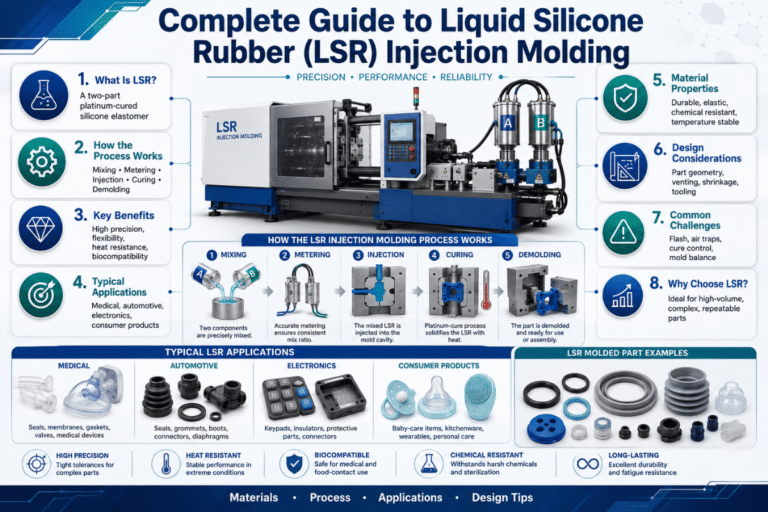
Updated June 2026 · Reviewed by the Guangdong Engelhardt Rubber & Plastic Technology technical team Liquid silicone rubber injection molding is a thermoset process that forces a chilled, two-part platinum-cured silicone into a hot steel cavity, where it cures into…
EPDM Rubber Molding: Properties, Processes & Uses (2026)
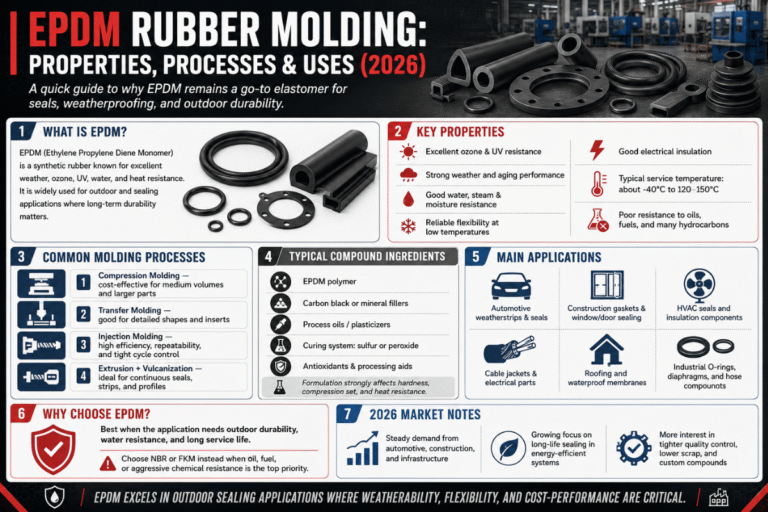
EPDM rubber molding is the process of shaping ethylene propylene diene monomer (EPDM) — a weather-resistant synthetic rubber, into finished parts by injection, compression, or transfer molding and then vulcanizing them under heat and pressure. Engineers reach for it when…
Overmolding Guide: Materials, Bonding & DFM (2026)
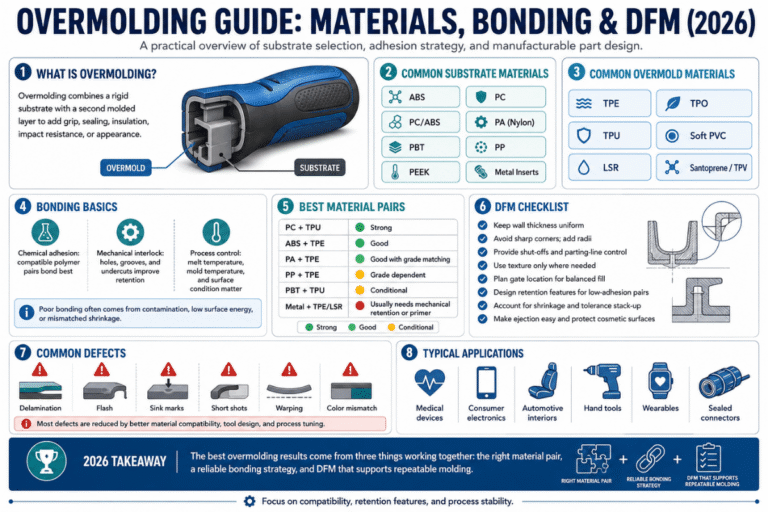
Overmolding is an injection molding process that molds a second material over an existing substrate to make one finished part, a soft grip over a rigid handle, a sealed housing, or rubber bonded to a metal core. This guide to…
Silicone Compression Molding: 2026 Cost & DFM Guide
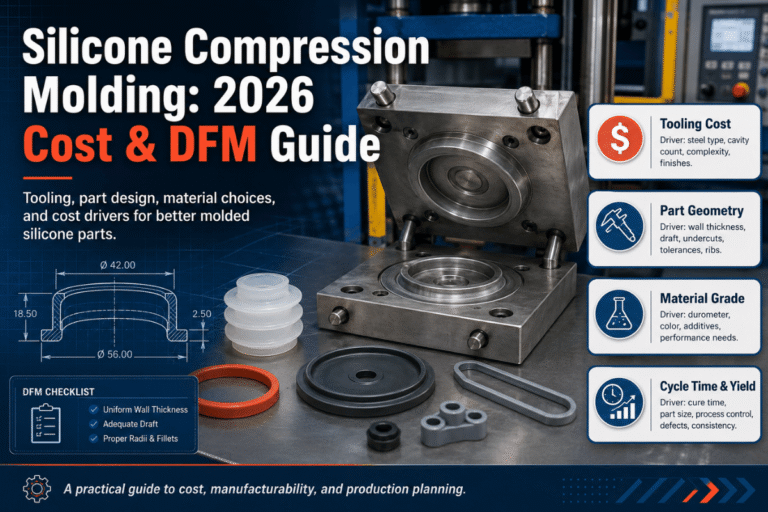
Silicone compression molding is a thermoset molding process that presses a weighed charge of uncured solid silicone into a heated cavity and cures it to shape. It’s the workhorse for low- to mid-volume gaskets, seals, grommets, keypads, and thick sections…
LSR Injection Molding: Process, Cost & Materials (2026)
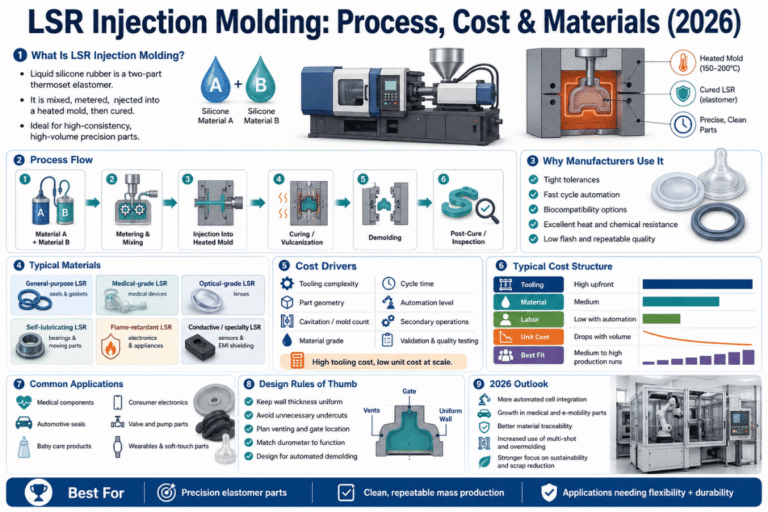
LSR Injection Molding is a manufacturing process that injects a two-part, platinum-cured liquid silicone rubber into a heated mold, where it cross-links into a finished thermoset elastomer part in seconds. Because it cures chemically rather than by freezing, the part…
Plumbing Assembly Products: A Buyer Guide To Materials, Certification, And Supplier Proof
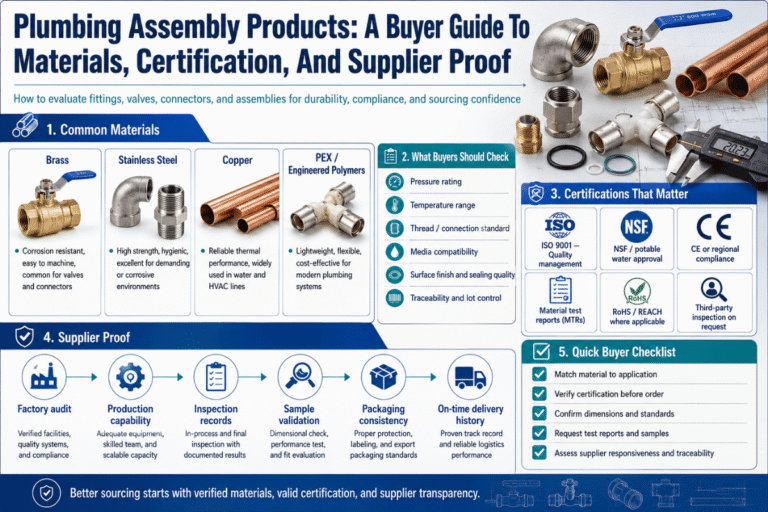
Plumbing assembly products seem simple on a catalog page, but a buyer sourcing custom plumbing assembly products manufacturing has to settle body material, seal design, thread fit, certificate path, and assembly proof before tooling starts. For this guide, a custom-manufactured…
Electrical and Electronic Rubber Parts: 9 Types & Guide
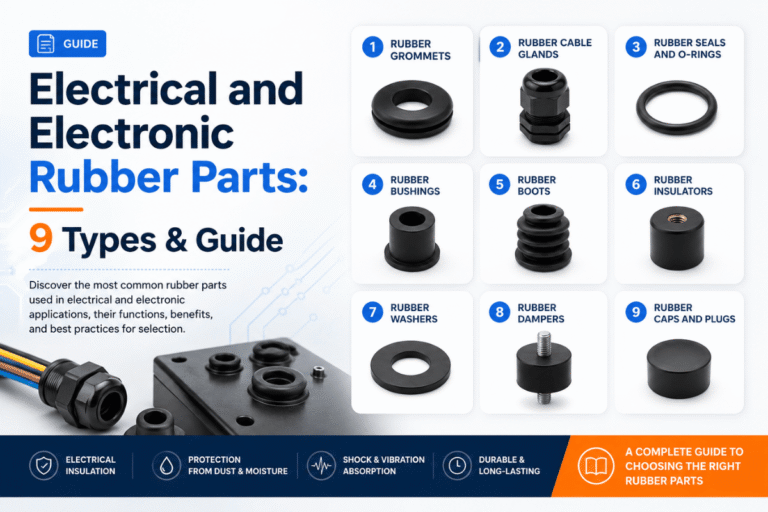
Electrical and electronic rubber parts are the molded and extruded elastomer components that insulate, seal, shield, and cushion the inside of almost every powered product, from a wire grommet on a junction box to a conductive gasket that keeps a…
Plumbing & Building Rubber Parts: Material, Standards and RFQ Guide
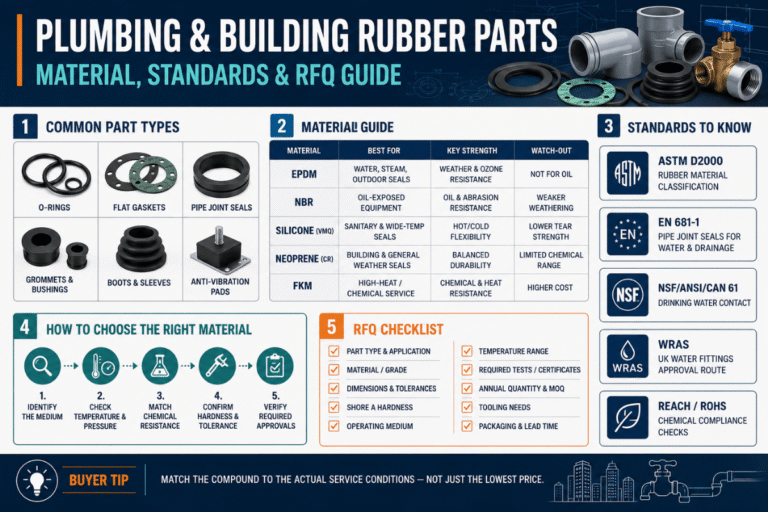
Plumbing & Building Rubber Parts can mean two very different buying tasks: retail repair pieces for a jobsite, or custom plumbing and building rubber parts for an OEM product, a sanitaryware program, a pipe system, or a building assembly. This…
Automotive Rubber Parts: Types, Materials & Uses (2026)
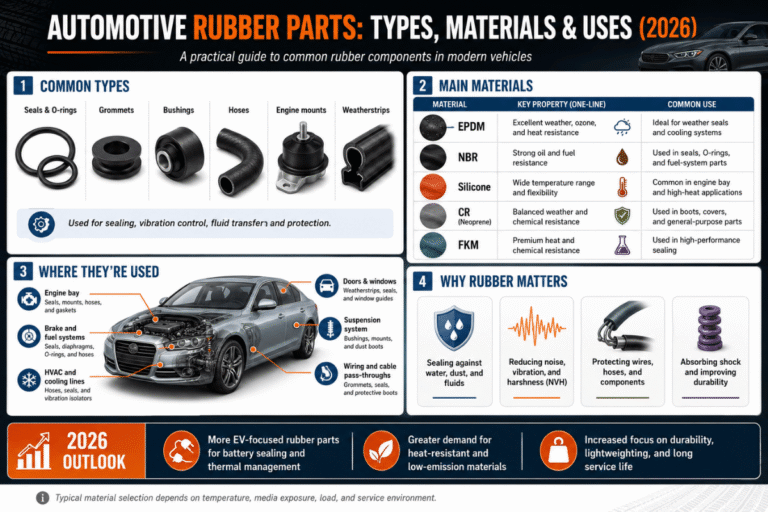
Automotive rubber parts are the molded elastomer components a vehicle relies on to isolate vibration, seal out water and dust, protect moving joints, and carry fluids. They’re easy to overlook because most are hidden, small, and cheap relative to the…
Rubber Grommets & Bushings: Types, Sizes & Material Guide
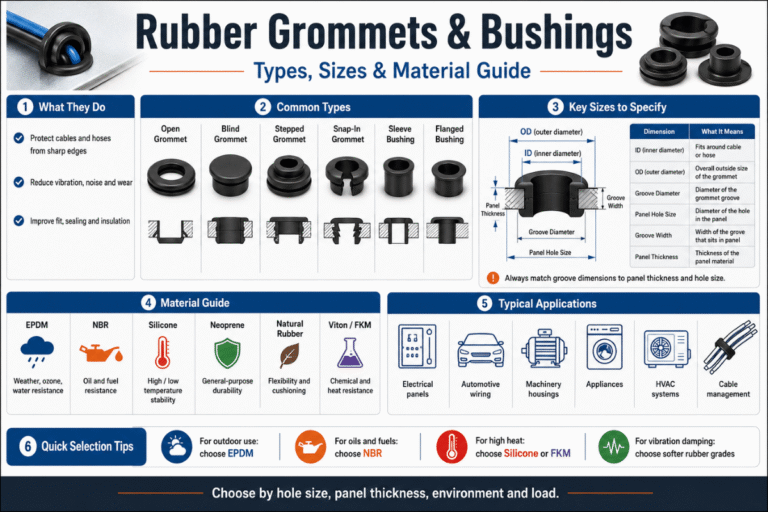
Rubber grommets and bushings look like cheap, expendable parts, yet a wrong one drives an outsized share of field failures: a wire chafing through at its grommet, a mount buzzing its bolts loose, a seal that swells and closes its…