
Get in Touch with Engelhardt

Rubber Injection Molding Manufacturer — Custom Molded Rubber Parts
From EPDM seals to liquid silicone rubber components, Engelhardt delivers injection molded rubber products for automotive, sanitary, electrical, and industrial markets. ISO 9001 & IATF 16949 certified, with 53,000 m² of manufacturing floor space.
40+
Vulcanizing Machines
2,000
Tons/Year Capacity
300+
Employees
15+
Years in Business
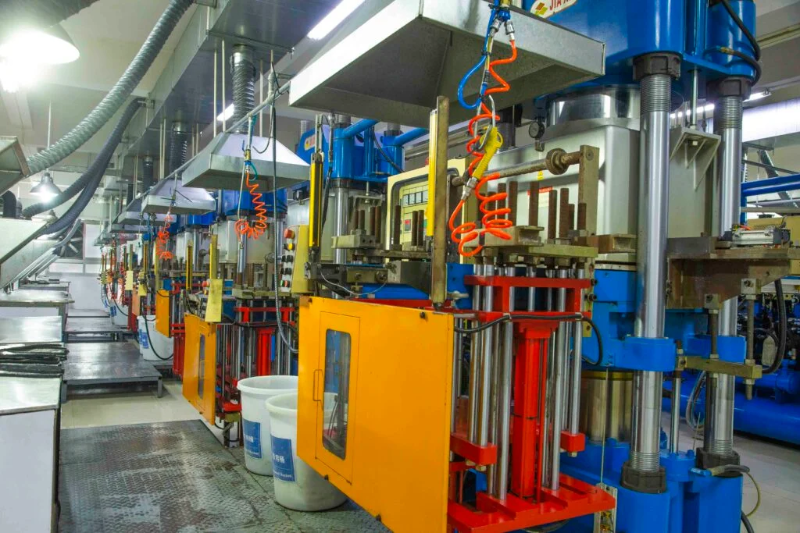
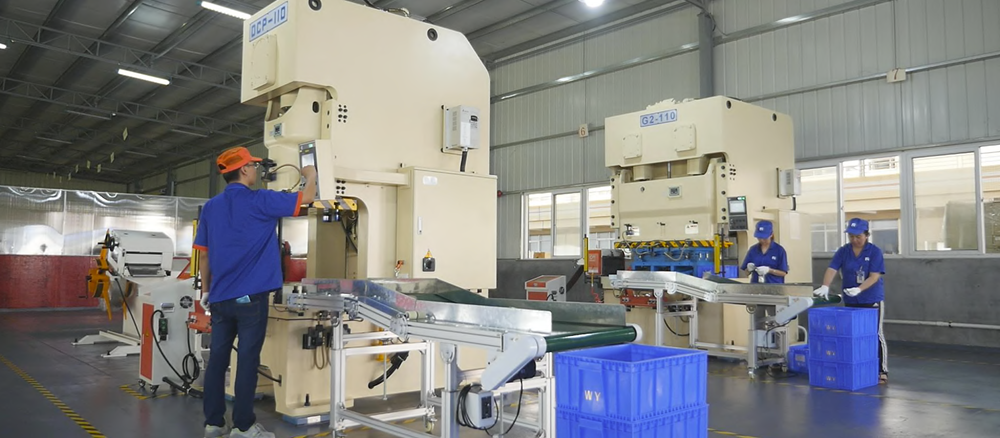
Engelhardt has over 40 vulcanizing machines plus 400 plastic injection machines at our Zhongshan plant. With rubber and plastic usually present in the same part assembly the ability to perform both in one location cut out the delays typically associated with multi-vendor supply chains.
What Is Rubber Injection Molding?
Rubber injection molding produces precision rubber parts by injecting heated rubber compound into a closed mold cavity under pressure. It all starts with injection molding process when an uncured rubber compound – usually strip or pellet material – goes into the barrel of a injection molding machine. Inside the barrel is a reciprocating screw that heats and plasticizes the rubber, then injects it through a nozzle into the mold.
Once inside the mold cavity, the rubber cures at temperatures between 150°C and 200°C. Crosslinking — known in the industry as vulcanization — transforms the pliable raw material into a durable elastomer with defined mechanical properties. After the cure cycle completes, ejector pins push the finished part out of the mold, and the cycle repeats.
What makes rubber injection molding a particularly effective high volume manufacturing process is its short cycle time in the range of 30 to 90 seconds for normal geometry parts versus 3 to 15 minutes in compression molding for same part geometry. Closed-mold injection also produces substantially less flash – its the thin film of excess rubber at the parting line – minimizing post-process labor.
Rubber Molding Methods: Injection vs Compression vs Transfer
Select the optimum rubber molding technology based upon your volume and part needs, geometry as well as material. Each of the three applications can be used to greatest advantage under their own parameters: injection, compression or transfer.
← Scroll horizontally to view full table →
| Parameter | Injection Molding | Compression Molding | Transfer Molding |
|---|---|---|---|
| Process | Rubber injected by screw into closed mold | Rubber placed in open mold cavity, mold closes under pressure | Rubber forced by piston from transfer pot into closed mold through sprues |
| Cycle Time | 30–90 seconds | 3–15 minutes | 2–8 minutes |
| Flash | Minimal (closed mold) | Significant (open mold) | Moderate (sprue flash) |
| Tooling Cost | $10,000–$50,000+ | $3,000–$15,000 | $5,000–$25,000 |
| Best Volume Range | 10,000+ pieces/year | 100–10,000 pieces/year | 1,000–50,000 pieces/year |
| Dimensional Tolerance | ±0.05–0.25 mm | ±0.20–0.70 mm | ±0.10–0.40 mm |
| Automation | High — continuous, automated operation | Low — manual charge placement | Medium — semi-automated |
| Best For | High-volume, tight-tolerance parts | Large parts, low volume, simple geometry | Complex geometry with inserts, undercuts |
In practice, many projects start with compression molding for prototype and initial validation runs, then move to injection mold tooling once the design is locked and volume demands justify the higher tooling costs. Transfer molding fills the gap where mold inserts or complex internal features make straight injection impractical but compression cannot achieve the needed precision.
Compression molding remains the preferred method for large cross-section parts like vibration dampeners and industrial bushings, where the long cure time is acceptable and the tooling investment stays low. For tight-tolerance components like O-rings, gaskets, and automotive seals produced at volume, injection molding delivers the lowest per-part cost and most consistent results.
Rubber Materials and Compound Selection
Part performance in real world is impacted by the choice of rubber compound. Engelhardt has a broad application portfolio of rubber and silicone compounds that are carefully engineered to match the desired temperature range along with environment of chemical exposure and mechanical loads.
| Material | Durometer (Shore A) | Temperature Range | Key Properties | Typical Applications |
|---|---|---|---|---|
| EPDM | 30–90A | −50°C to +150°C | UV, ozone, weather resistance | Automotive seals, weatherstripping, gaskets |
| NBR (Nitrile) | 40–90A | −30°C to +120°C | Oil, fuel, hydraulic fluid resistance | O-rings, fuel system seals, hose covers |
| Silicone (VMQ) | 10–80A | −60°C to +230°C | Biocompatible, high-temp stability | Medical products, food-grade seals, keypads |
| Liquid Silicone Rubber (LSR) | 5–70A | −55°C to +200°C | Fast cure, low viscosity, self-lubricating | Infant care, medical devices, multi-shot parts |
| FKM (Viton) | 55–90A | −20°C to +250°C | Chemical, acid, solvent resistance | Chemical processing seals, aerospace |
| Natural Rubber (NR) | 30–90A | −55°C to +80°C | High tear strength, elasticity, resilience | Engine mounts, vibration isolators, bumpers |
| CR (Neoprene) | 30–90A | −40°C to +120°C | Moderate chemical, oil, flame resistance | Automotive belts, cable jackets, bridge bearings |
| SBR | 40–90A | −40°C to +100°C | Abrasion resistance, low cost | Conveyor belts, shoe soles, general-purpose parts |
| TPE / TPV | 30–90A | −50°C to +135°C | Recyclable, no vulcanization needed | Grips, over-molded plastic parts, consumer goods |
Thermoplastic Elastomers (TPEs)
Thermoplastic elastomers (TPEs) blur the line between rubber and plastic. Unlike thermoset rubbers that require vulcanization and cannot be remelted, TPEs can be processed on standard plastic injection molding machines with faster cycle times and no curing step. One trade-off: TPEs generally have lower high-temperature performance and compression set compared to vulcanized rubber compounds.
Liquid Silicone Rubber (LSR)
Liquid silicone rubber (LSR) injection molding — sometimes called liquid injection molding or LIM — uses a two-component platinum-catalyzed system. Parts A and B are mixed at a precise ratio and injected into a heated mold where they cure rapidly. LSR flows into intricate mold cavities with very low viscosity, making it the preferred approach for multi-cavity molds producing high-volume medical devices, infant pacifiers, and silicone keypads.
Specifying for your project: When specifying rubber material for a new project, provide your operating temperature range, chemical exposure environment, required Shore A durometer, and any regulatory compliance needs (FDA, REACH, RoHS). Engelhardt’s engineering team will recommend the most suitable rubber compound from our compound library and can develop custom formulations when standard materials fall short.
Custom Rubber Molding Capabilities
Engelhardt delivers custom rubber molded parts from concept through production. Our Zhongshan facility covers 53,000 m² with dedicated zones for rubber molding, silicone processing, plastic injection, mold fabrication, and quality testing — all under one roof.
Rubber to Metal Bonding
Rubber to metal bonding permanently attaches vulcanized rubber to metal substrates during the molding process. We use primer-adhesive systems applied to prepared metal inserts before they are placed in the mold. During vulcanization, rubber compound chemically bonds to the metal, creating a bond that is typically stronger than the rubber itself. Applications include engine mounts, suspension bushings, and vibration isolators where rubber must absorb dynamic loads while remaining attached to a steel or aluminum bracket.
Rubber Overmolding
Rubber overmolding applies a rubber layer over a rigid substrate — typically a plastic or metal part — in a secondary molding operation. This process creates soft-touch grips, sealed housings, and integrated gasket features without assembly. Engelhardt’s combined rubber and plastic molding capabilities allow us to produce both the substrate and the overmold in-house, eliminating the cost and quality risk of shipping parts between separate facilities.
Multi-Shot and Insert Molding
Complex assemblies that combine multiple rubber compounds or integrate metal hardware are produced using insert molding. Pre-formed inserts — whether steel plates, threaded fasteners, or electrical contacts — are placed in the mold before injection. Material flows around the insert, encapsulating it and forming a mechanical or chemical bond. This approach replaces post-molding assembly operations and reduces the risk of part failure at bond interfaces.
Prototyping and Low-Volume Production
Before committing to hardened steel production tooling, Engelhardt offers prototype molds in aluminum or soft steel. These tools produce 50 to 500 sample parts for fit testing, material validation, and customer approval — at a fraction of production mold cost and lead time. Once the design is confirmed, we transition to multi-cavity production molds built in our 3,600 m² mold workshop.
Applications and Industries
Molded rubber parts serve every industry where sealing, damping, insulation, or flexibility is needed. Engelhardt produces injection molded rubber products for five core sectors:
Automotive
Engine mounts, door seals, brake cups, grommets, fuel system gaskets, HVAC duct connectors. EPDM and NBR dominate automotive rubber parts due to their resistance to heat, oil, and weathering. IATF 16949 certification is standard for automotive supply chains.
Sanitary & Plumbing
Faucet cartridge seals, valve diaphragms, pipe couplings, shower head gaskets, toilet flush valves. EPDM and silicone meet drinking water contact standards (NSF 61, WRAS). Parts must handle chlorinated water without degrading.
Electrical & Electronics
Cable grommets, connector seals, silicone keypads, EMI shielding gaskets, insulating boots. Silicone rubber provides dielectric strength and flame retardance per UL 94. Industrial rubber components protect sensitive electronics from moisture, dust, and vibration.
Building & Construction
Expansion joints, window seals, curtain wall gaskets, vibration pads, bridge bearings. CR (neoprene) and EPDM handle UV exposure and weather cycling. Custom rubber profiles are extruded or molded to specification.
Medical & Consumer
Syringe plunger tips, respiratory masks, wearable device bands, infant care products. LSR and silicone compounds meet FDA 21 CFR 177.2600 and ISO 10993 biocompatibility requirements. Many applications require cleanroom-grade production.
Industrial Machinery
Hydraulic seals, pneumatic diaphragms, conveyor rollers, pump impellers, vibration dampeners. NBR and FKM handle hydraulic oils and aggressive chemicals. Parts operate under sustained compression with minimal compression set.
Quality Control, Testing, and Certifications
Quality in rubber molding starts with raw material verification and carries through every production step. Engelhardt maintains ISO 9001:2015 and IATF 16949 quality management systems, backed by MES (Manufacturing Execution System), ERP, and QMS digital platforms that provide full lot traceability from incoming rubber compound to shipped parts.
Testing and Inspection
Every production run undergoes defined inspection checkpoints:
Incoming material inspection
- Shore A durometer per ASTM D2240
- Specific gravity per ASTM D297
- Mooney viscosity per ASTM D1646
In-process monitoring
- Cavity pressure sensors
- Mold temperature tracking
- Cure time validation
Finished part inspection
- CMM (Coordinate Measuring Machine) dimensional checks
- Compression set per ASTM D395
- Tensile and elongation per ASTM D412
Visual and functional testing
- Flash inspection
- Surface defect detection
- Assembly fit checks
Engineering Decision Tool
Rubber Molding Method Selector
Answer five questions about your rubber part requirements. This tool compares injection, compression, and transfer molding based on your project volume, geometry, and tolerances.
Your Part Requirements
1
Annual Production Volume?
2
Part Geometry Complexity?
3
Tolerance Requirement?
4
Largest Part Dimension?
5
Flash Acceptance?
Please answer all 5 questions.
Molding Method Recommendation
Best Fit
Injection Molding
Closed-mold, screw-fed rubber under high pressure
Fit Score
—
Best Fit
Compression Molding
Pre-formed rubber placed in open mold cavity
Fit Score
—
Best Fit
Transfer Molding
Rubber forced from pot chamber through sprues
Fit Score
—
Need Help Choosing?
Our rubber molding engineers review part geometry, compound selection, and production targets to recommend the right process.
Request a Quote →Other Rubber Injection Molding Tools
Case Studies and Project References
Automotive Faucet Cartridge Seal — High-Volume EPDM Production
The Challenge
A European faucet manufacturer needed a supplier who could deliver EPDM cartridge seals at volumes exceeding 2 million pieces per year while maintaining dimensional tolerance of ±0.08 mm on the sealing lip. Their previous supplier struggled with consistency beyond 500,000 pieces annually.
The Solution
Engelhardt designed a 16-cavity injection mold with balanced runner layout and cavity-specific venting channels. Each cavity was individually qualified against CMM dimensional data during mold trials. Production runs on automated injection molding machines with robotic part extraction — operators focus on quality sampling rather than part handling.
The Result
Rejected rate dropped below 0.3% across 28 consecutive monthly shipments. Cycle time held steady at 42 seconds per shot, giving actual throughput of 2.4 million qualified parts per year from a single mold.
Engine Mount — Natural Rubber to Metal Bonding
The Challenge
An automotive Tier 2 supplier approached Engelhardt with a specification for an engine mount combining natural rubber with a stamped steel bracket. It needed to resist vibrational loading at frequencies from 10 Hz to 200 Hz while supporting static load of 800 N without exceeding 4 mm deflection.
The Solution
Our engineering team specified a two-coat primer-adhesive system (Chemosil-based) applied to phosphated steel inserts. The natural rubber compound was formulated to deliver Shore A 55 hardness with high resilience and low heat buildup under dynamic loading. Inserts were placed in the mold and rubber was injected around them, bonding during the cure cycle at 165°C for 180 seconds.
The Result
Bond peel strength exceeded 8 N/mm — well above the specification minimum of 5 N/mm. Compression set after 72 hours at 100°C measured 18%, confirming long-term reliability. The customer has reordered continuously for 3 years.
Multi-Material Electrical Connector Seal — LSR Over Plastic
The Challenge
An electrical connector manufacturer needed an IP67 rated seal molded directly onto a glass-fiber-reinforced nylon (PA66-GF30) connector housing. The seal had to withstand 100,000+ mating cycles and operate from −40°C to +180°C in under-hood automotive environments.
The Solution
Engelhardt developed a two-shot molding sequence: the PA66 housing was injection molded in our plastics department, then transferred to a liquid silicone rubber injection mold where Shore A 40 LSR was overmolded onto the sealing surfaces. The LSR cure cycle ran 25 seconds at 170°C — fast enough to match the plastic injection cycle time and maintain throughput balance between the two operations.
The Result
All 50-piece first article samples passed IP67 immersion testing (1 meter depth for 30 minutes). No adhesion failures in 150,000 mating cycles inside thermal cycling chambers (−40°C to +180°C, 500 cycles). The two-shot process eliminated the additional seal and attachment labor.
Rubber Injection Molding Cost and Pricing Guide
The total cost of injection molded rubber products is divided between two cost groups: tooling (one-time) and per-part manufacturing. Knowing which of these dominates your initiative allows accurate budgeting and lower cost project design.
Tooling Costs
Tooling costs are influenced by part geometry, number of cavities, mold material, and added features like side actions or lifters for undercuts.
| Mold Type | Cavity Count | Typical Cost (USD) | Lead Time |
|---|---|---|---|
| Prototype (Aluminum) |
1 | $2,000–$8,000 | 2–3 weeks |
| Production (P20 Steel) |
2–4 | $8,000–$20,000 | 3–5 weeks |
| High-Volume (H13 Steel) |
8–16+ | $20,000–$50,000+ | 5–8 weeks |
Per-Part Cost Factors
Typical unit cost for rubber injection molded parts ranges from $0.05 for small O-rings to $5.00+ for complex assemblies. Primary cost variables include:
-
Raw material cost: EPDM/SBR are inexpensive; Silicone/FKM cost 5-10x more.
-
Number of cavities: More cavities = lower unit cost on high volume runs.
-
Shot size & weight: Heavier parts consume more material per cycle.
-
Cycle time: Shorter cycles reduce machine-time costs per part.
-
Post-processing: Deflashing, trimming, and surface treatment add labor.
-
Secondary operations: Bonding, printing, and assembly add cost layers.
For a ballpark estimate
A standard EPDM gasket with 50mm outer diameter, produced in an 8-cavity mold at volumes of 100,000 pieces per year, typically lands in the $0.15–$0.30 per-part range including material, molding, deflashing, and basic inspection. Precise pricing requires a 3D model or technical drawing review.
Get a Detailed QuoteStart Your Rubber Molding Project
Send us your drawings or 3D models. Our engineering team will provide DFM feedback and a detailed quote within 48 hours.
After-Sales Support and Global Delivery
Engelhardt supports customers from initial inquiry through ongoing production with dedicated project engineering, quality assurance, and logistics coordination.
Engineering Support
Our engineering team reviews your 3D models and drawings for moldability before tooling begins. Design for Manufacturability (DFM) feedback covers draft angles, wall thickness uniformity, parting line placement, gate location, and potential knit line concerns. Getting these details right before cutting steel saves weeks of mold revisions.
Production and Logistics
With 40+ vulcanizing machines and 400 plastic injection machines running across a 53,000 m² facility, Engelhardt has the capacity to scale from prototype through high-volume production without switching suppliers. We ship to North America, Europe, Southeast Asia, and the Middle East through established freight partnerships. Standard lead times for repeat orders run 2–4 weeks from purchase order to FOB Zhongshan.
Quality Assurance and Warranty
Every shipment includes a Certificate of Conformance with material test certificates and dimensional inspection reports. For IATF 16949 automotive parts, we provide full PPAP documentation. Standard warranty covers material and manufacturing defects for 24 months from delivery date. If a quality issue arises, our QMS traces the root cause through batch records within 48 hours, and corrective action reports are issued per 8D methodology.
Frequently Asked Questions
Injection molding uses a screw to inject rubber into a closed mold, offering faster cycle times and less flash. Compression molding places uncured rubber directly into an open mold cavity before closing, which works well for large simple parts. Transfer molding uses a piston to force rubber from a transfer pot into a closed mold through sprues. Injection molding is best for high-volume precision parts, compression for low-volume or large parts, and transfer for intricate geometries.
Common injection moldable rubbers include EPDM for weather resistance, NBR (nitrile) for oil and fuel resistance, silicone for heat and biocompatibility, FKM (Viton) for chemical resistance at high temperatures, natural rubber for elasticity and tear strength, SBR for abrasion resistance, and CR (neoprene) for moderate chemical and weather resistance. Liquid silicone rubber (LSR) is also injection molded using specialized LIM equipment.
Yes. EPDM is one of the most commonly injection molded elastomers due to its favorable flow and curing behavior. EPDM parts serve automotive, plumbing, and weatherstripping applications with strong UV and ozone resistance from −50°C to +150°C.
Standard rubber injection molding typically achieves dimensional tolerances per ASTM D3767 and ISO 3302 standards. For fixed dimensions, standard tolerance classes range from ±0.25 mm (Class A2) to ±0.70 mm (Class A4). Precision tooling and controlled processing can achieve tighter tolerances down to ±0.05 mm for critical features. Shore A durometer, compound shrinkage, and part geometry all influence achievable tolerance.
Minimum order quantities vary by molding method and part complexity. For injection molded rubber parts, typical MOQ ranges from 500 to 5,000 pieces depending on tooling investment and unit cost targets. Engelhardt supports prototype runs as low as 50 pieces for design validation before committing to production tooling. Compression molded parts may have lower MOQ thresholds due to simpler tooling requirements.
Simple single-cavity molds take 2 to 3 weeks. Multi-cavity production molds with undercuts or side actions need 4 to 8 weeks. Engelhardt's in-house mold shop with CNC and wire EDM helps shorten these lead times.