Get in Touch with Engelhardt


Quick Specs: Electrical & Electronic Rubber Parts
| Primary jobs | Insulate · seal · EMI/RFI shield · vibration damp |
| Common materials | Silicone (VMQ/LSR), EPDM, neoprene (CR), nitrile (NBR), fluorosilicone (FVMQ) |
| Dielectric strength (silicone) | ~24–32 kV/mm; volume resistivity ~10¹⁴–10¹⁵ Ω·m |
| Service temperature | −60 °C to +230 °C (silicone); −40 °C to +120 °C (NBR/CR) |
| EMI shielding (conductive) | ~60–120 dB by conductive filler |
| Key standards | IEC 60243 / ASTM D3755 (dielectric) · IEC 60529 (IP) · UL 94 (flammability) · ASTM D2240 (hardness) · RoHS/REACH |
What Are Electrical & Electronic Rubber Parts?
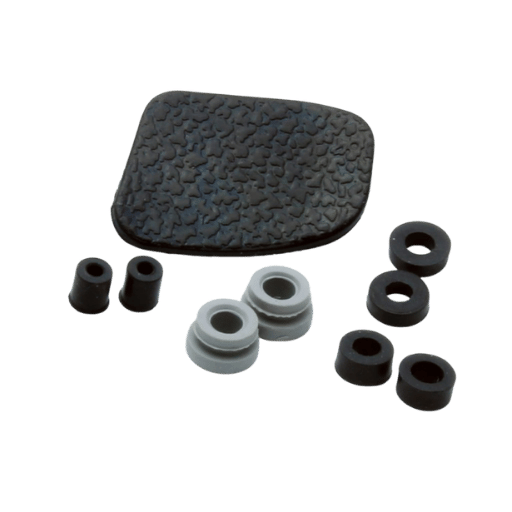
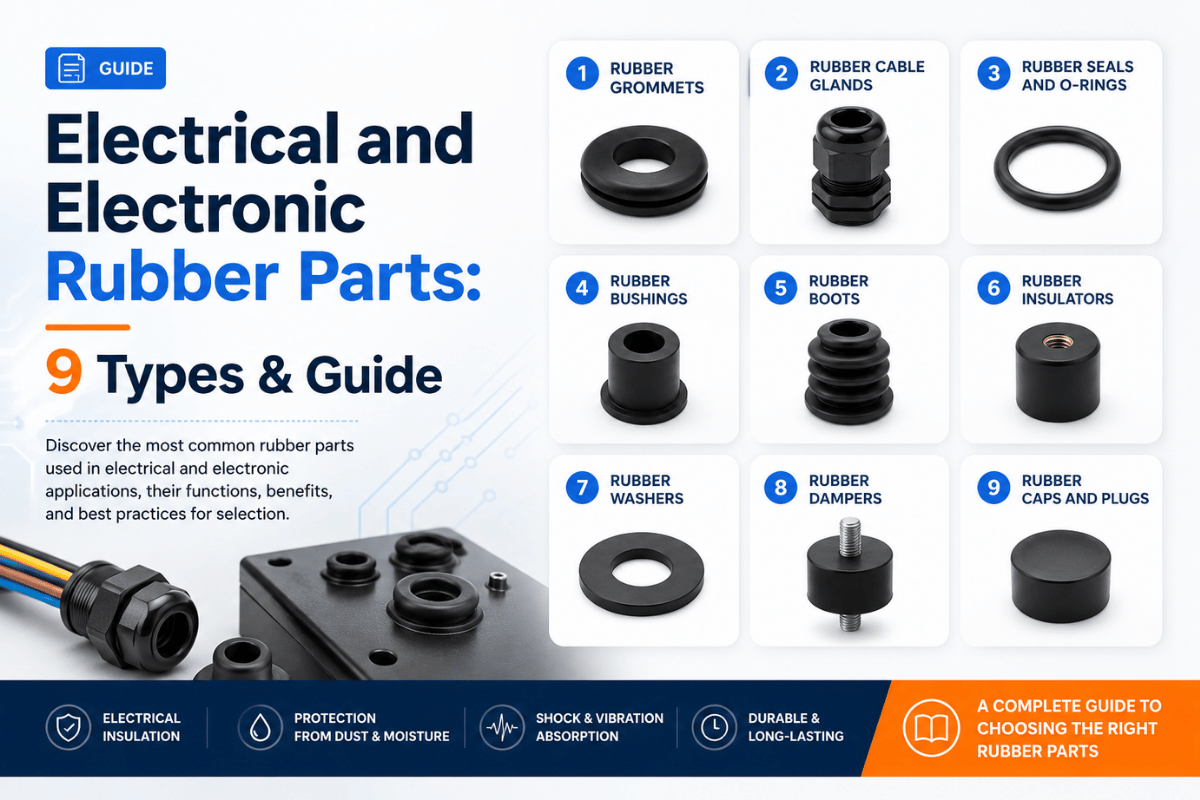
Electrical and electronic rubber parts are elastomer components engineered to do one or more of four jobs inside a powered assembly: insulate (block current and withstand voltage), seal (keep dust and moisture out, per an IP rating), shield (block electromagnetic interference), and damp (absorb vibration and shock). The same part often does two of these at once, a molded connector boot insulates a terminal and seals it from moisture in the same geometry.
Stress, heat, and moisture are the three drivers behind most electronics failures these components are meant to prevent: they cause short circuits, signal interference, and mechanical fatigue. A real answer is rarely “rubber” in the abstract, it’s a specific elastomer, at a specific hardness, validated against a specific standard. Silicone’s insulation behaviour, for instance, is well characterised in peer-reviewed breakdown-strength research, which is where the dielectric figures later in this guide come from.
9 Core Types of Electrical & Electronic Rubber Parts
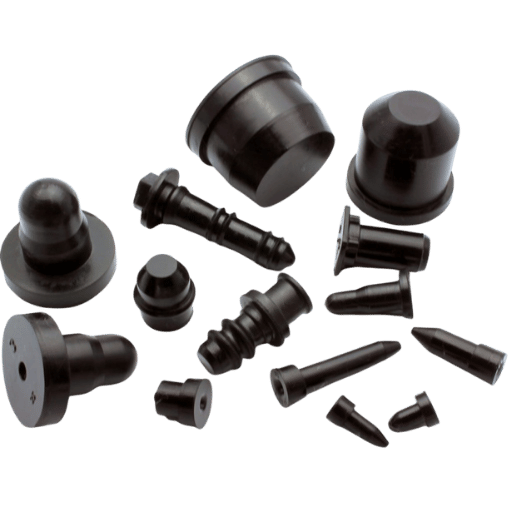
Most electronic hardware uses some combination of these families. Our 9-Part Electronic Rubber Function Table maps each one to its primary job, a typical elastomer, and the failure mode that most often take it out of service.
| Part family | Primary job | Typical material | Dominant failure mode |
|---|---|---|---|
| Cable grommets & strain reliefs | Insulate + protect wire entry | EPDM, NBR, silicone | Abrasion / tear at the edge |
| Seals & gaskets | Seal dust/moisture (IP) | Silicone, EPDM | Compression set |
| O-rings | Static/dynamic sealing | NBR, FKM, silicone | Chemical swell / set |
| Boots & bellows | Insulate + flex protection | Silicone, neoprene | Flex fatigue cracking |
| Vibration mounts | Damp shock/vibration | Natural rubber, neoprene | Creep / hardening |
| Silicone rubber keypads | Tactile input + seal | Silicone (conductive pill) | Contact wear |
| EMI gaskets | Shield enclosure seams | Conductive silicone | Galvanic corrosion |
| Connector seals | Seal + insulate contacts | Silicone, FKM | Heat-aging hardening |
| Insulating sleeves & caps | Insulate terminals / joints | Silicone, EPDM | Tracking / UV degradation |
Two of the highest-volume search terms in this spacerubber grommets and electrical wire grommets, sit in the first row, and for good reason: a cable entry is the most common place a designer need rubber to insulate and protect at the same time. Two sealing familiesgaskets and seals and O-ringshandle ingress protection, which we cover below.
Rubber Material Selection: Silicone vs EPDM vs Neoprene vs Nitrile vs Fluorosilicone
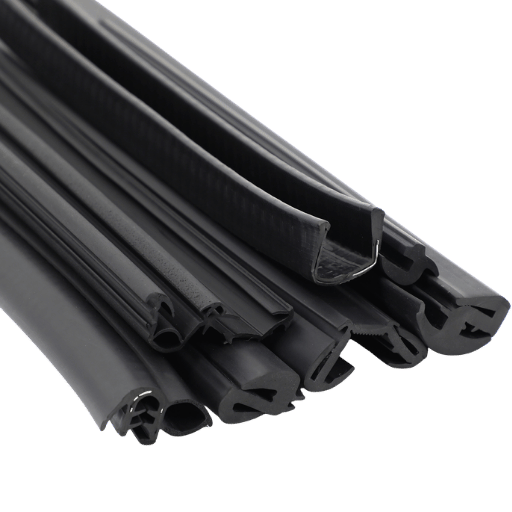
This is where most specifications go wrong, because the default habit is to pick on price rather than on the operating temperature and dielectric demands of the job. Our table compares the five elastomers you’ll use for 90% of electrical and electronic parts across their operating temperature ranges.
| Material | Service temp | Dielectric | Best at | Relative cost |
|---|---|---|---|---|
| Silicone (VMQ/LSR) | −60 to +230 °C | Good (24–32 kV/mm) | Temperature, flexibility | Med–High |
| EPDM | −50 to +150 °C | Best of group | Weather, ozone, water | Low |
| Neoprene (CR) | −40 to +120 °C | Good | Balanced oil + flame | Low–Med |
| Nitrile (NBR) | −40 to +120 °C | Weakest of group | Oil & fuel resistance | Low |
| Fluorosilicone (FVMQ) | −60 to +175 °C | Good | Fuel + wide temp | High |
Dielectric ranking per published material-properties data; silicone figures corroborated by peer-reviewed breakdown-strength studies.
Here’s the surprise that the table make obvious: silicone isn’t automatically the best insulator. In side-by-side material data, EPDM ranks highest for dielectric strength among the common elastomers while nitrile ranks lowest. Silicone earns its place on temperature range and flexibility, not on a peak dielectric number. That single fact reorders a lot of “use silicone for everything” specifications.
3-Step Dielectric-First Selection Rule
Order your decision criteria in this sequence, not the reverse:
- Pin down the dielectric + temperature envelope first, can it insulate at the hottest point it will ever see?
- Screen chemical / media exposure second, oils, fuels, solvents, ozone, UV.
- Weigh cost last, only choose among materials that already pass steps 1 and 2.
Most field failures we see trace back to a cost-first choice that never had the dielectric or temperature headroom to begin with.
Electrical Insulation & Dielectric Properties: What the Numbers Mean
Dielectric strength is the voltage a material can withstand per unit thickness before it breaks down, expressed in kV/mm and measured per IEC 60243 or, for DC, ASTM D3755. Silicone rubber typically lands at 24–32 kV/mm with volume resistivity around 10¹⁴–10¹⁵ Ω·m, numbers confirmed in peer-reviewed breakdown-strength research on silicone composites.
To turn that into a usable figure, do the arithmetic for your own wall thickness:
📐 Engineering Note — Withstand voltage worked example
A 2 mm silicone wall at 25 kV/mm gives a theoretical withstand of 25 × 2 = 50 kV. In practice, derate hard: temperature, surface contamination, geometry (sharp corners concentrate field), and creepage/clearance distances all cut into that figure. A common rule is to design to a fraction of the lab value and validate with a hi-pot test. Never publish the lab dielectric number as the working rating.
Get this wrong and the failure is unforgiving: a connector that flashes over in the field because the wall thickness was specified to the lab dielectric number rather than a derated working value. In our molding work for OEM electronic programs, insulation walls are engineered to a tolerance band of ±0.1 mm and validated batch-by-batch with a hi-pot test under our ISO 9001 process, not signed off from a datasheet figure alone.
And the contrarian point worth keeping in mind: rubber isn’t always an insulator. The same base polymer can be loaded with conductive fillers to make it deliberately conductive, which is exactly how EMI gaskets work, and the subject of the next section.
EMI/RFI Shielding with Conductive Rubber
What is conductive rubber?
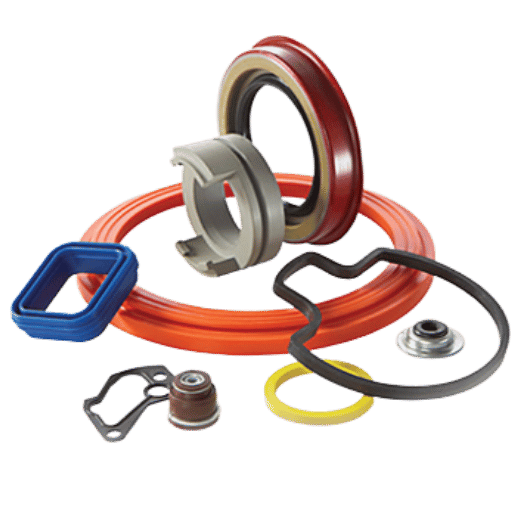
Conductive rubber is a silicone or fluorosilicone elastomer loaded with metal or metal-coated particlessilver, silver-aluminum, silver-copper, nickel-graphite, or carbonso it conducts electricity while still behaving like a gasket. Bolted across an enclosure seam, it closes the gaps that would otherwise leak electromagnetic interference, giving you a seal and a Faraday boundary in one part.
Shielding effectiveness (SE) is measured in decibels. Our ladder below converts dB into the attenuation it actually represents, useful when a spec says “60 dB” and you need to know what that buys.
| Shielding effectiveness | Attenuation | Typical use |
|---|---|---|
| 20 dB | 90% | Light, low-frequency |
| 40 dB | 99% | General consumer EMC |
| 60 dB | 99.9% | Industrial / medical |
| 100–120 dB | 99.999%+ | Defense / RF-dense |
Most conductive silicone gaskets fall in the 60–120 dB band depending on filler.
“Select gasket material by galvanic compatibility and shielding frequency, galvanic corrosion between the gasket and the enclosure surface is a primary failure path for EMI shielding.”
JEMIC, EMI Gasket Junction Design Principles
That quote points at the most expensive mistake in this category. Designers obsess over the gasket’s bulk conductivity, but the failure that show up in year three is galvanic corrosion at the interface between a silver-bearing gasket and a bare aluminum flange. Field reports describe shielding effectiveness dropping by 20 dB or more after oxidizer exposure. The fix is filler-to-flange galvanic matching (e.g., nickel-graphite against aluminum), not a higher dB rating on paper.
Environmental Sealing & IP Ratings
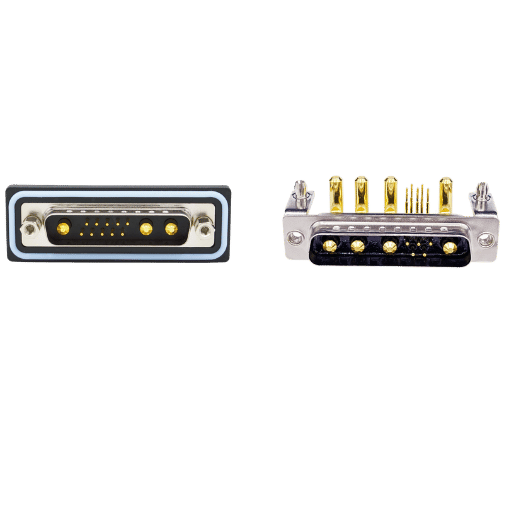
When a rubber part has to keep dust and water out of electronics, the target is an IP code under IEC 60529. The first digit is solids, the second is liquids.
| IP code | Protection | Typical seal |
|---|---|---|
| IP54 | Dust-protected + splash | Foam or soft gasket |
| IP65 | Dust-tight + water jets | Molded gasket / O-ring |
| IP67 | Dust-tight + 1 m / 30 min | Compression gasket / O-ring |
| IP68 | Continuous immersion | Precision O-ring in a gland |
Practitioners report a consistent rule of thumb: for a round opening, reach for an O-ring or O-ring cord first, and use a molded gasket only where the geometry forces it. A seal is only as good as the housing, an IP67-capable gasket on a flexing plastic lid won’t hold IP67.
📐 Engineering Note — Compression set & gland fill
Design a static gasket to 15–25% compression and check the elastomer’s compression-set rating: a material that takes a permanent set loses sealing force over temperature cycling. For O-rings, target ~70–85% gland fill so the seal has room to deform without extruding. Validate with an ingress test, not just a CAD cross-section.
Vibration & Shock Isolation
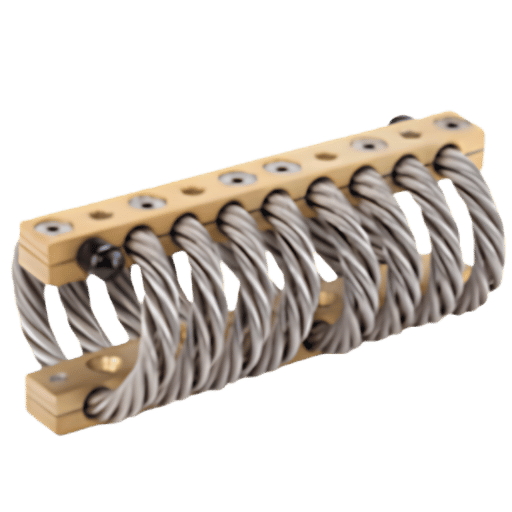
Rubber mounts deliver vibration isolation for circuit boards, connectors, and displays, protecting them from vibration that would otherwise fatigue solder joints and loosen fasteners. Two levers control the result: durometer (hardness, on the Shore A scale per standard hardness testing) and mount geometry.
Softer mounts (lower Shore A, often 30–50) isolate more vibration but sag more under load; harder mounts (60–80 Shore A) carry more weight but transmit more energy. The classic mistake is over-stiffening: a mount that’s too hard for the mass it carries provides almost no isolation, because the system’s natural frequency rises above ~30 Hz into the range you were trying to filter out, and the part fail by loosening connectors over thousands of cycles. For automotive and industrial electronics, Engelhardt engineers match Shore A hardness to the supported mass and confirm the result on a shaker table before committing precision tooling, a cheap step that prevents an expensive field recall.
How Electrical & Electronic Rubber Parts Are Made
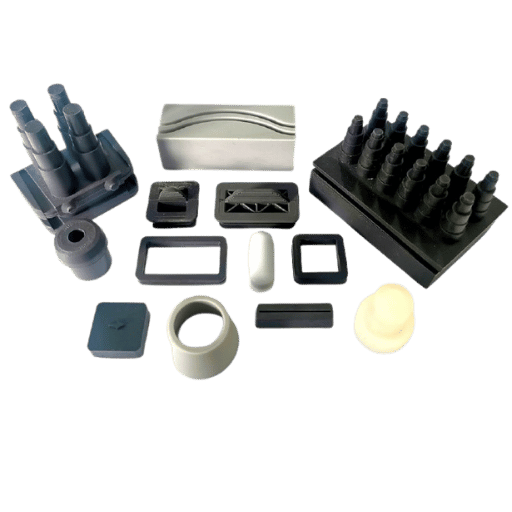
Electrical and electronic rubber parts are produced by one of four molding processes, compression, transfer, injection, or liquid silicone rubber (LSR) — selected mainly by production volume and the precision the feature demand, and often combined with rubber-to-metal bonding for mounts and bonded assemblies. Our table maps each route to where it wins; for a deeper breakdown see our rubber molding methods comparison and EPDM molding guides, plus rubber-to-metal bonding.
| Process | Volume sweet spot | Tooling cost | Best for |
|---|---|---|---|
| Compression molding | Low–medium | Low | Large parts, prototypes |
| Transfer molding | Medium | Medium | Inserts, tighter tolerance |
| Injection molding | High | High | High-volume precision |
| LSR injection | High | High | Fine features, keypads, seals |
| Rubber-to-metal bonding | Any | Medium | Mounts, bonded connector parts |
As an IATF 16949 and ISO 9001 custom molder running all four routes plus rubber-to-metal bonding for OEM and Tier 1/Tier 2 electronic programs, our practical guidance is simple: prototype in compression molding to validate the compound and geometry cheaply, then move to injection or LSR once the design and annual volume are locked. Switching process after tooling is the expensive way to learn the part needed a tighter tolerance.
Standards & Compliance: UL 94, RoHS, IP & Dielectric Testing
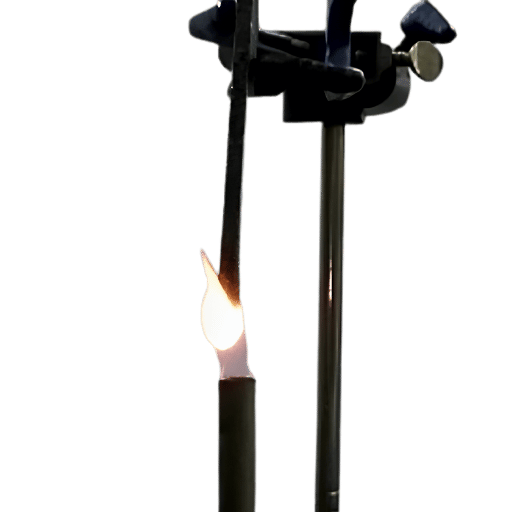
An electrical or electronic rubber part rarely stands alone in a compliance file. Build the spec around this checklist so nothing surfaces during certification:
- ✔ UL 94 flammabilitycall out V-0, V-1, V-2, or HB to match the enclosure rating (ATH-filled silicone can hit flame targets while keeping its insulation).
- ✔ RoHS / REACHlead limited to 0.1% (1000 ppm) by weight; verify the compound and any conductive filler.
- ✔ IEC 60529 IP codestate the target and how it is verified.
- ✔ ASTM D2240 hardnessspecify Shore A with a tolerance (e.g., 60 ±5).
- ✔ Dielectric / insulation-resistance testper IEC 60243 or ASTM D3755 where the part insulates.
How to Specify & Source Electrical & Electronic Rubber Parts
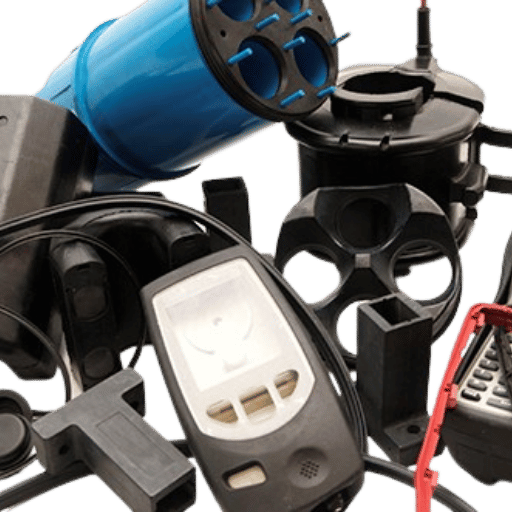
The difference between a fast quote and three rounds of back-and-forth is a complete RFQ. Before you send a drawing, lock down these six fields:
RFQ-Readiness Checklist
- Material + cure (e.g., LSR silicone, platinum cure)
- Durometer with tolerance (Shore A ±5)
- Dimensional tolerance class (RMA / drawing callout)
- Applicable standard (UL 94 grade, IP code, RoHS)
- Annual volume + EAU (drives process + tooling)
- Finish / color / branding and any conductive-filler requirement
Need help turning an application into a spec? Use our silicone vs rubber material guide and rubber molding tolerance reference, or send the drawing for review.
Request a Quote on Electrical & Electronic Rubber Parts →
Industry Outlook: What’s Driving Demand for Electronic Rubber Parts
Three forces are reshaping material choices in 2026, and each one is a reason to revisit older specifications rather than copy them forward.
EV power electronics and 5G are pushing parts hotter and higher-frequency. As inverters, on-board chargers, and mmWave radios pack more power into smaller volumes, the thermal and creepage demands push designers from EPDM toward high-temperature silicone and fluorosilicone, and toward conductive gaskets rated for higher frequencies. Peer-reviewed work on filler-enhanced conductive elastomers (2025) tracks the same shift into EMI shielding, wearables, and soft robotics.
Regulation is the near-term forcing function. Under the EU RoHS framework, several exemptions are scheduled to expire on 21 July 2026, narrowing the materials and finishes allowed in electronics. A costly mistake is treating a 2026 part like a 2020 part, an EV power-electronics seal once specified for +125 °C that now has to survive +175 °C, or a connector whose conductive filler relies on an expiring exemption. Because requalifying a compound risks months of delay, Engelhardt engineers lock high-temperature silicone and fluorosilicone choices for these automotive and OEM programs a full year ahead, backed by IATF 16949 and in-house tooling rather than a last-minute scramble.
For market context only: the EMI shielding market is sized at roughly USD 8 billion in 2026 with mid-single-digit CAGR, directional background, not a reason in itself to change a design.
Frequently Asked Questions
Q: What rubber is used in electronics?
View Answer
Five elastomers do most of the work: silicone (VMQ/LSR) for temperature and flexibility, EPDM for weather and dielectric strength, neoprene for balanced oil and flame resistance, nitrile (NBR) for oil and fuel, and fluorosilicone for fuel across a wide temperature range.
Q: Is rubber a good electrical insulator?
View Answer
Most rubber is a strong insulator — silicone reaches a dielectric strength of roughly 24–32 kV/mm — but the value varies widely by compound and filler. EPDM tends to insulate best among common elastomers and nitrile worst, and conductive grades are engineered to do the opposite and conduct. So “rubber insulates” is a starting assumption, not a guarantee; always specify the dielectric figure and verify it with a hi-pot test before relying on it.
Q: What is conductive rubber, and how is it different from insulating rubber?
View Answer
Conductive rubber is the same silicone or fluorosilicone base loaded with conductive particles — silver, silver-aluminum, nickel-graphite, or carbon — so it carries current instead of blocking it. It is used for EMI/RFI gaskets and ESD parts. Insulating rubber uses no such filler.
Q: Silicone vs EPDM, which is better for electronics?
View Answer
Neither is universally better — match the elastomer to the dominant stress. Silicone wins on temperature range (to +230 °C) and flexibility, so it suits hot or fine-feature parts, while EPDM wins on water, weather, and ozone resistance and edges silicone on dielectric strength, so it suits outdoor or water-exposed seals. For a part that lives in sun and rain, choose EPDM; for one that runs hot, choose silicone.
Q: Are electrical & electronic rubber parts flame retardant?
View Answer
Not by default — flammability depends on the compound. Many electronic rubber parts are specified to a UL 94 class (V-0 is the most demanding common grade, down to HB). Silicone can be made flame retardant with additives such as alumina trihydrate (ATH) while keeping its insulation, so filled silicone grades are common where a flame rating is required. Confirm the UL 94 class on the datasheet rather than assuming the base polymer is rated.
Q: What does an IP67 rubber seal actually protect against?
View Answer
Under IEC 60529, IP67 means the enclosure is dust-tight and survives immersion in 1 m of water for 30 minutes. It does not certify protection against high-pressure jets (that is the second digit covering IPx6) or continuous immersion (IPx8) — those are separate tests.
About This Analysis
This guide consolidates dielectric, EMI-shielding, and IP-rating data from peer-reviewed studies, IEC and ASTM standards, and USPTO patents, cross-referenced against our shop-floor experience molding silicone, EPDM, and conductive elastomers for electronic programs. Where a figure depends on compound, filler, or geometry, we say so rather than publish a single number. Reviewed by the Engelhardt technical team.
References & Sources
- ASTM D3755 DC dielectric strength of silicone rubber-insulated cablesU.S. NRC
- Polymeric insulator materials & dielectric testingAppalachian State University
- Silicone rubber composites with high breakdown strengthpeer-reviewed (PMC)
- Flame retardancy & electrical insulation of ATH-filled silicone rubberpeer-reviewed (PMC)
- Filler-enhanced conductive elastomers for next-generation applications (2025)Springer
- IEC 60529 Ingress Protection (IP) ratingsIEC
- EMI shielding gasket conductive fillers (US8822842B2)USPTO