
Póngase en contacto con Engelhardt


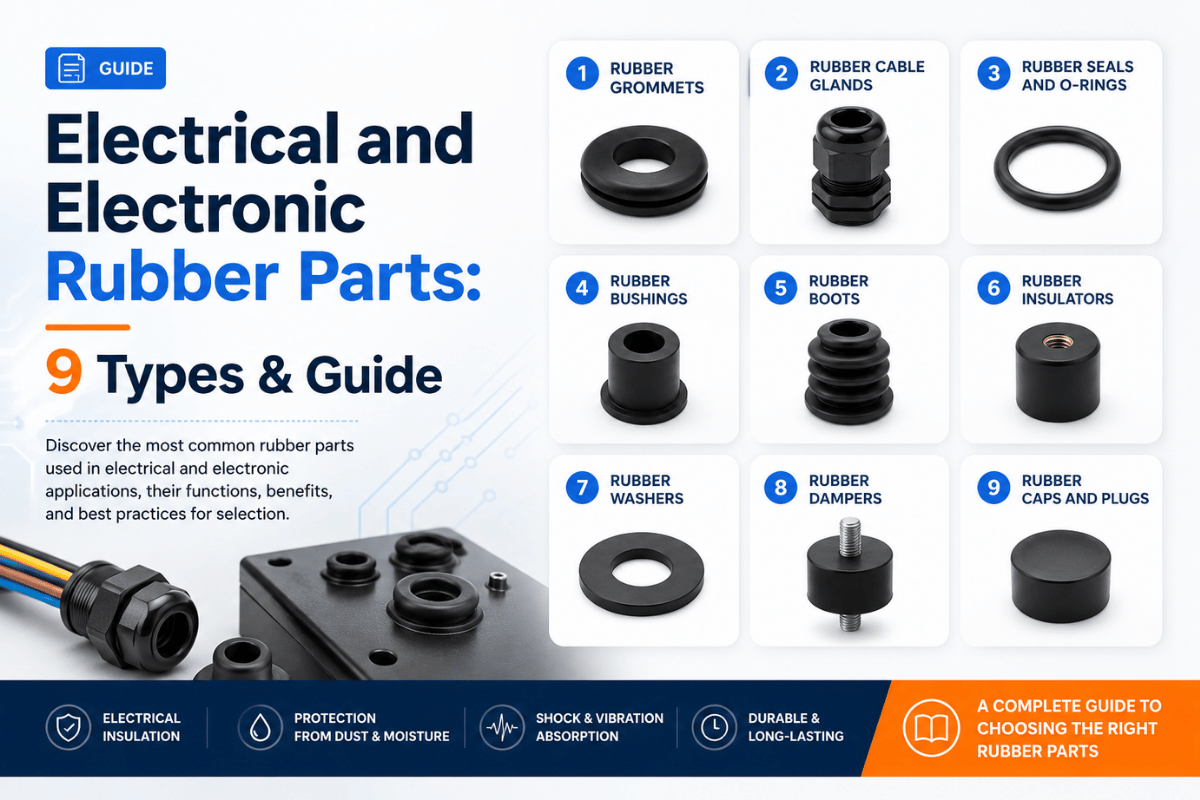
Especificaciones rápidas: piezas de caucho eléctricas y electrónicas
| Empleos primarios | Aislar · sello · Escudo EMI/RFI · humedad por vibración |
| Materiales comunes | Silicona (VMQ/LSR), EPDM, neopreno (CR), nitrilo (NBR), fluorosilicona (FVMQ) |
| Rigidez dieléctrica (silicona) | ~24-32 kV/mm; resistividad del volumen ~10¹4-10¹5 ··m |
| Temperatura de servicio | «60 °C a +230 °C (silicona); «40 °C a +120 °C (NBR/CR) |
| blindaje EMI (conductor) | ~60-120 dB por relleno conductor |
| Estándares clave | IEC 60243 / ASTM D3755 (dieléctrico) · IEC 60529 (IP) · UL 94 (inflamabilidad) · ASTM D2240 (dureza) · RoHS/REACH |
¿qué son las piezas de caucho eléctricas y electrónicas?
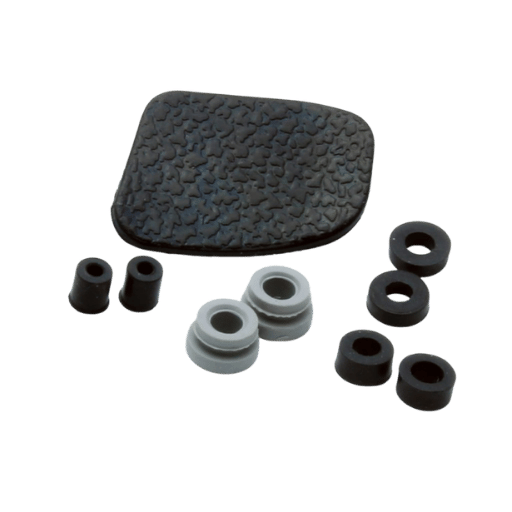
Las piezas de caucho eléctricas y electrónicas son componentes de elastómero diseñados para realizar uno o más de cuatro trabajos dentro de un conjunto motorizado: aislar (corriente de bloque y tensión soportada), sello (mantenga alejados el polvo y la humedad, según una clasificación IP), escudo (bloquear interferencias electromagnéticas), y húmedo (absorbe vibraciones y golpes). La misma pieza suele hacer dos de estos a la vez, una funda de conector moldeada aísla un terminal y lo sella de la humedad en la misma geometría.
El estrés, el calor y la humedad son los tres factores detrás de la mayoría de las fallas electrónicas que estos componentes deben prevenir: causan cortocircuitos, interferencias de señal y fatiga mecánica. Una respuesta real rara vez es “caucho” en abstracto, es un elastómero específico, con una dureza específica, validado según un estándar específico. El comportamiento de aislamiento de la silicona, por ejemplo, está bien caracterizado investigación de resistencia al desglose revisada por pares, de donde provienen las figuras dieléctricas que aparecen más adelante en esta guía.
9 tipos principales de piezas de caucho eléctricas y electrónicas
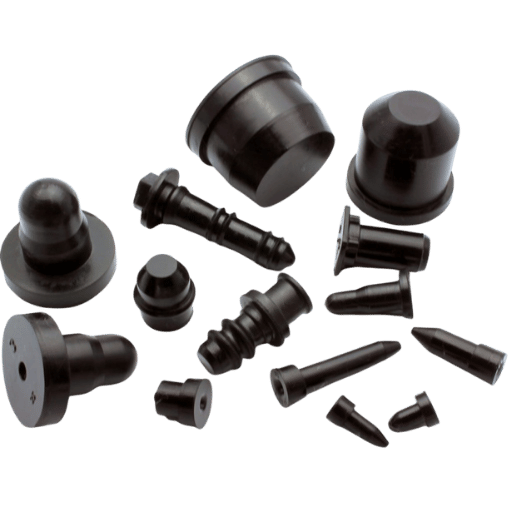
La mayoría del hardware electrónico utiliza alguna combinación de estas familias. Nuestro Mesa electrónica con función de caucho de 9 piezas asigna cada uno a su trabajo principal, un elastómero típico y al modo de falla que con mayor frecuencia lo deja fuera de servicio.
| Parte familia | Trabajo primario | Material típico | Modo de falla dominante |
|---|---|---|---|
| Ojales para cables y alivio de tensión | Aislar + proteger la entrada de cables | EPDM, NBR, silicona | Abrasión/desgarro en el borde |
| Sellos y juntas | Selle el polvo/la humedad (IP) | Silicona, EPDM | Conjunto de compresión |
| Juntas tóricas | Sellado estático/dinámico | NBR, FKM, silicona | Hinchazón/conjunto químico |
| Botas y fuelles | Protección aislante + flexible | Silicona, neopreno | Flexionar el agrietamiento por fatiga |
| Soportes de vibración | Choque/vibración de humedad | Caucho natural, neopreno | Arrastramiento/endurecimiento |
| Teclados de goma de silicona | Entrada táctil + sello | Silicona (píldora conductora) | Ropa de contacto |
| Juntas EMI | Costuras del recinto del escudo | Silicona conductora | Corrosión galvánica |
| Sellos de conector | Sellar + aislar contactos | Silicona, FKM | Endurecimiento por envejecimiento por calor |
| Mangas y gorras aislantes | Aislar terminales/juntas | Silicona, EPDM | Seguimiento/degradación UV |
Dos de los términos de búsqueda de mayor volumen en este espacioojales de goma y los ojales de alambre eléctrico, se encuentran en la primera fila, y por una buena razón: una entrada de cable es el lugar más común donde un diseñador necesita caucho para aislar y proteger al mismo tiempo. Dos familias de selladojuntas y sellos y Juntas tóricasmaneje la protección de ingreso, que cubrimos a continuación.
Selección de material de caucho: silicona frente a EPDM frente a neopreno frente a nitrilo frente a fluorosilicona
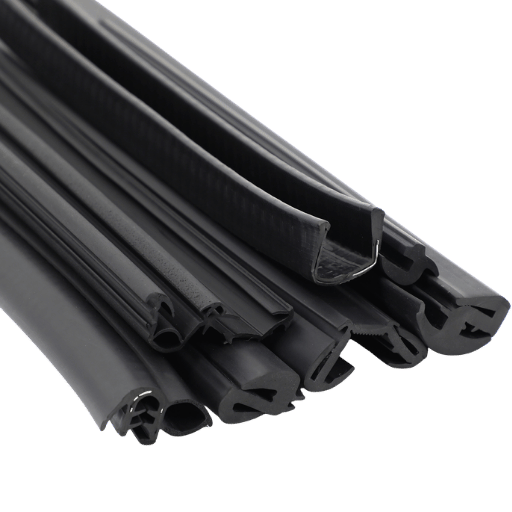
Aquí es donde la mayoría de las especificaciones salen mal, porque el hábito predeterminado es elegir el precio en lugar de la temperatura de funcionamiento y las demandas dieléctricas del trabajo. Nuestra tabla compara los cinco elastómeros que utilizará para 90% de piezas eléctricas y electrónicas en todos sus rangos de temperatura de funcionamiento.
| Material | Temperatura de servicio | Dieléctrico | Mejor en | Costo relativo |
|---|---|---|---|---|
| Silicona (VMQ/LSR) | «60 a +230 °C | Bun (24-32 kV/mm) | Temperatura, flexibilidad | Med-alto |
| EPDM | «50 a +150 °C | Lo mejor del grupo | Clima, ozono, agua | Bajo |
| Neopreno (CR) | «40 a +120 °C | Bien | Aceite equilibrado + llama | Medicina baja |
| Nitrilo (NBR) | «40 a +120 °C | El más débil del grupo | Resistencia al aceite y al combustible | Bajo |
| Fluorosilicona (FVMQ) | «60 a +175 °C | Bien | Combustible + amplia temperatura | Alto |
Clasificación dieléctrica según datos publicados sobre propiedades de materiales; cifras de silicona corroboradas por estudios de resistencia a la rotura revisados por pares.
Aquí está la sorpresa que la mesa deja claro: la silicona no es automáticamente el mejor aislante. En datos de materiales uno al lado del otro, EPDM ocupa el puesto más alto en cuanto a resistencia dieléctrica entre los elastómeros comunes mientras el nitrilo ocupa el puesto más bajo. La silicona se gana su lugar en cuanto a rango de temperatura y flexibilidad, no en un número dieléctrico máximo. Ese único hecho reordena muchas especificaciones de “uso silicona para todo”.
Regla de primera selección dieléctrica de 3 pasos
Ordene sus criterios de decisión en esta secuencia, no al revés:
- Primero fije la envoltura dieléctrica + de temperatura, ¿puede aislar en el punto más caliente que jamás haya visto?
- Detección de exposición química/medios en segundo lugar, aceites, combustibles, disolventes, ozono, UV.
- Pesar el costo al final, solo elija entre los materiales que ya pasan los pasos 1 y 2.
La mayoría de las fallas de campo que vemos se remontan a una opción de costo primero que nunca tuvo el margen dieléctrico o de temperatura para empezar.
Aislamiento eléctrico y propiedades dieléctricas: qué significan los números
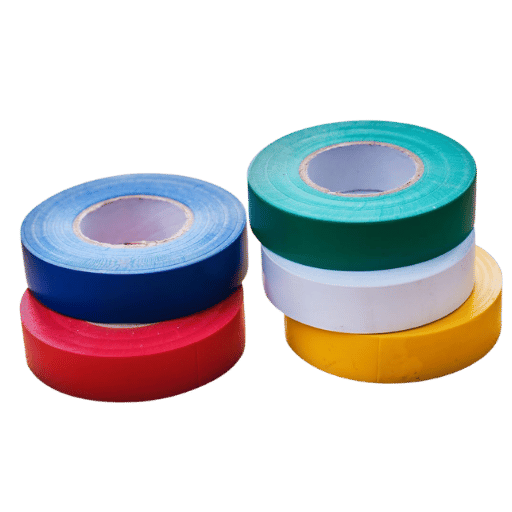
La rigidez dieléctrica es el voltaje que un material puede soportar por unidad de espesor antes de descomponerse, expresado en kV/mm y medido por IEC 60243 sau, pentru DC, ASTM D3755. El caucho de silicona normalmente aterriza a 24-32 kV/mm con una resistividad de volumen de alrededor de 10¹4-10¹5 ··m, números confirmados en investigación de resistencia al desglose revisada por pares sobre compuestos de silicona.
Para convertir eso en una figura utilizable, haga la aritmética para el espesor de su propia pared:
📐 Nota de ingeniería « Ejemplo de tensión trabajada para resistir
Una pared de silicona de 2 mm a 25 kV/mm da un teórico resistencia de 25 × 2 = 50 kV. En la práctica, la reducción de la temperatura: la temperatura, la contaminación de la superficie, la geometría (campo de concentración de esquinas afiladas) y las distancias de fluencia/limpieza se reducen en esa cifra. Una regla común es diseñar hasta una fracción del valor de laboratorio y validar con una prueba de hi-pot. Nunca publique el número dieléctrico del laboratorio como clasificación de trabajo.
Si se equivoca, la falla es implacable: un conector que parpadea en el campo porque el espesor de la pared se especificó según el número dieléctrico del laboratorio en lugar de un valor de trabajo reducido. En nuestro trabajo de moldeo para programas electrónicos OEM, las paredes aislantes están diseñadas con una banda de tolerancia de ±0,1 mm y validadas lote por lote con una prueba de hi-pot según nuestro proceso ISO 9001, no desconectadas únicamente de una figura de hoja de datos.
Y el punto contrario que vale la pena tener en cuenta: el caucho no siempre es un aislante. El mismo polímero base se puede cargar con cargas conductoras para hacerlo deliberadamente conductor, que es exactamente cómo funcionan las juntas EMI y el tema de la siguiente sección.
Blindaje EMI/RFI con caucho conductor
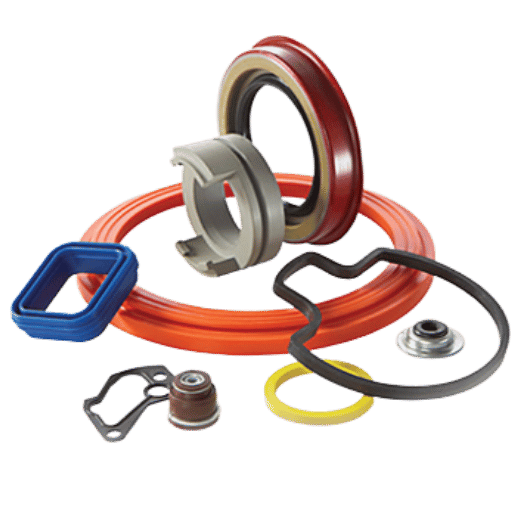
¿qué es el caucho conductor?
El caucho conductor es un elastómero de silicona o fluorosilicona cargado con metal o partículas recubiertas de metalplata, plata-aluminio, plata-cobre, níquel-grafito o carbonopor lo tanto, conduce electricidad sin dejar de comportarse como una junta. Atornillado a través de la costura de un gabinete, cierra los espacios que de otro modo filtrarían interferencias electromagnéticas, lo que le brinda un sello y un límite de Faraday en una parte.
La efectividad del blindaje (SE) se mide en decibeles. Nuestra escalera a continuación convierte dB en la atenuación que realmente representa, útil cuando una especificación dice “60 dB” y necesita saber qué compra.
| Eficacia del blindaje | Atenuación | Uso típico |
|---|---|---|
| 20 dB | 90% | Luz, baja frecuencia |
| 40 dB | 99% | Emc de consumo general |
| 60 dB | 99.9% | Industrial/médico |
| 100-120 dB | 99.999%+ | Defensa / Densa en RF |
La mayoría de las juntas de silicona conductoras se encuentran en la banda de 60-120 dB, según el relleno.
“Seleccione el material de la junta por compatibilidad galvánica y frecuencia de blindaje, la corrosión galvánica entre la junta y la superficie del gabinete es una ruta de falla principal para el blindaje EMI”
JEMIC, Principios de diseño de uniones de juntas EMI
Esa cita señala el error más caro de esta categoría. Los diseñadores están obsesionados con la conductividad masiva de la junta, pero el fallo que aparece en el tercer año sí lo es corrosión galvánica en la interfaz entre una junta plateada y una brida de aluminio desnuda. Los informes de campo describen la caída de la efectividad del blindaje por 20 dB o más después de la exposición al oxidante. La solución es la combinación galvánica de relleno a brida (por ejemplo, níquel-grafito contra aluminio), no una clasificación de dB más alta en el papel.
Sellado ambiental y calificaciones IP
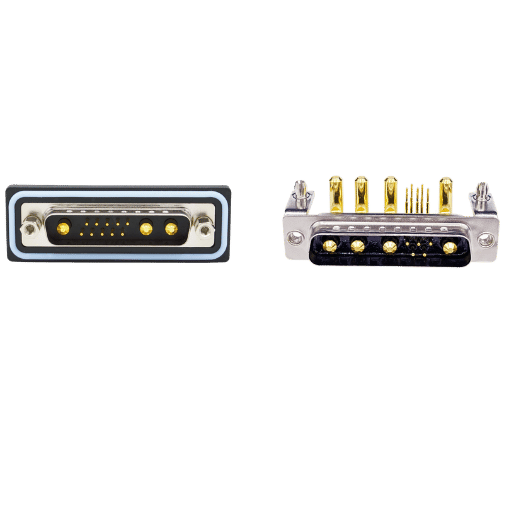
Cuando una pieza de goma tiene que mantener el polvo y el agua fuera de los componentes electrónicos, el objetivo es un código IP IEC 60529. El primer dígito son los sólidos, el segundo son los líquidos.
| código IP | Protección | Sello típico |
|---|---|---|
| IP54 | Protegido contra el polvo + salpicaduras | Junta de espuma o blanda |
| IP65 | Estanco al polvo + chorros de agua | Junta moldeada/junta tórica |
| IP67 | Estanco al polvo + 1 m / 30 min | Junta de compresión/junta tórica |
| IP68 | Inmersión continua | Junta tórica de precisión en una glándula |
Los profesionales informan una regla general consistente: para una abertura redonda, primero busque una junta tórica o un cable de junta tórica y use una junta moldeada solo donde la geometría lo fuerce. Un sello es tan bueno como la carcasa, una junta compatible con IP67 en una tapa de plástico flexible no aguantará IP67.
📐 Nota de ingeniería « Juego de compresión y relleno de glándulas
Diseñe una junta estática para una compresión de 15-25% y verifique la clasificación del conjunto de compresión del elastómero: un material que toma un conjunto permanente pierde fuerza de sellado durante los ciclos de temperatura. Para juntas tóricas, apunte al relleno de glándula ~70-85% para que el sello tenga espacio para deformarse sin extruirse. Validar con una prueba de ingreso, no solo una sección transversal CAD.
Aislamiento de vibraciones y golpes
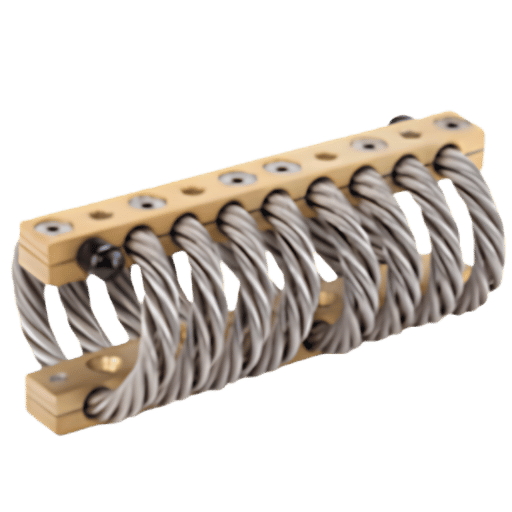
Los soportes de caucho brindan aislamiento de vibraciones para placas de circuitos, conectores y pantallas, protegiéndolos de vibraciones que de otro modo fatigarían las uniones de soldadura y aflojarían los sujetadores. Dos palancas controlan el resultado: durómetro (dureza, en la escala Shore A por pruebas de dureza estándar) y geometría de montaje.
Los soportes más blandos (Shore A inferior, a menudo 30-50) aíslan más vibración pero se hunden más bajo carga; Los soportes más duros (60-80 Shore A) transportan más peso pero transmiten más energía. El error clásico es demasiado rígido: un soporte que es demasiado duro para la masa que transporta casi no proporciona aislamiento, porque la frecuencia natural del sistema se eleva por encima de ~30 Hz en el rango que intentaba filtrar, y la pieza falla al aflojar los conectores durante miles de ciclos. Para la electrónica automotriz e industrial, los ingenieros de Engelhardt relacionan la dureza Shore A con la masa soportada y confirman el resultado en una mesa vibratoria antes de comprometer herramientas de precisión, un paso económico que evita un costoso retiro de campo.
Cómo se fabrican las piezas de caucho eléctricas y electrónicas
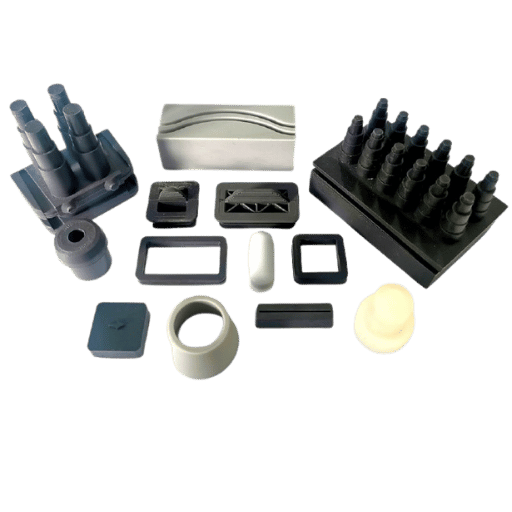
Las piezas de caucho eléctricas y electrónicas se producen mediante uno de cuatro procesos de moldeo, compresión, transferencia, inyección o caucho de silicona líquido (LSR), seleccionados principalmente por el volumen de producción y la precisión que exigen las características, y a menudo combinados con caucho a metal. unión para soportes y conjuntos adheridos. Nuestra tabla asigna cada ruta hacia donde gana; para un desglose más profundo, consulte nuestro comparación de métodos de moldeo de caucho y Moldura EPDM guías, más unión caucho-metal.
| Proceso | Punto óptimo del volumen | Costo de herramientas | Mejor para |
|---|---|---|---|
| Moldeo por compresión | Medio-bajo | Bajo | Piezas grandes, prototipos |
| Moldeo por transferencia | Medio | Medio | Insertos, tolerancia más estricta |
| Moldeo por inyección | Alto | Alto | Precisión de gran volumen |
| Inyección LSR | Alto | Alto | Funciones finas, teclados, sellos |
| Unión caucho-metal | Cualquiera | Medio | Soportes, piezas de conector adheridas |
Como moldeadora personalizada IATF 16949 y ISO 9001 que ejecuta las cuatro rutas más unión de caucho a metal para programas electrónicos OEM y Tier 1/Tier 2, nuestra guía práctica es simple: prototipo en moldeo por compresión para validar el compuesto y la geometría de manera económica, luego pasar a inyección o LSR una vez que el diseño y el volumen anual están bloqueados. El proceso de conmutación después de las herramientas es la forma costosa de aprender la pieza que se necesita con una tolerancia más estricta.
Estándares y cumplimiento: UL 94, RoHS, IP y pruebas dieléctricas
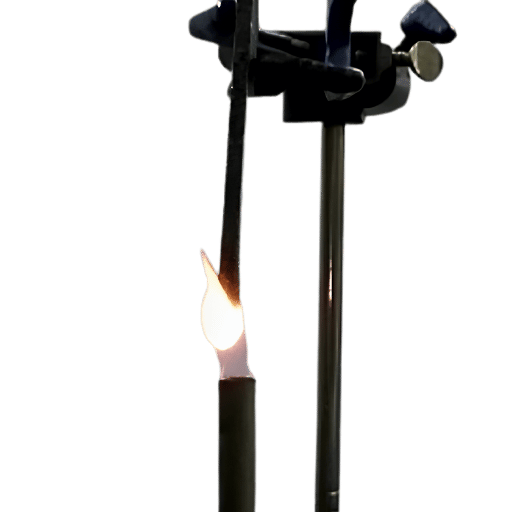
Una pieza de goma eléctrica o electrónica rara vez se encuentra sola en un archivo de cumplimiento. Cree la especificación alrededor de esta lista de verificación para que nada salga a la luz durante la certificación:
- ✔ UL 94 inflamabilidadllame a V-0, V-1, V-2 o HB para que coincidan con la clasificación del gabinete (Silicona rellena de ATH puede alcanzar objetivos de llamas manteniendo su aislamiento).
- ✔ RoHS/REACHplomo limitado a 0,1% (1000 ppm) en peso; verificar el compuesto y cualquier carga conductora.
- ✔ Código IP IEC 60529indique el objetivo y cómo se verifica.
- ✔ Dureza ASTM D2240especifique la costa A con una tolerancia (p. ej., 60 ±5).
- ✔ Ensayo dieléctrico/resistencia al aislamientosegún IEC 60243 o ASTM D3755 donde la pieza aísla.
Cómo especificar y obtener piezas de caucho eléctricas y electrónicas
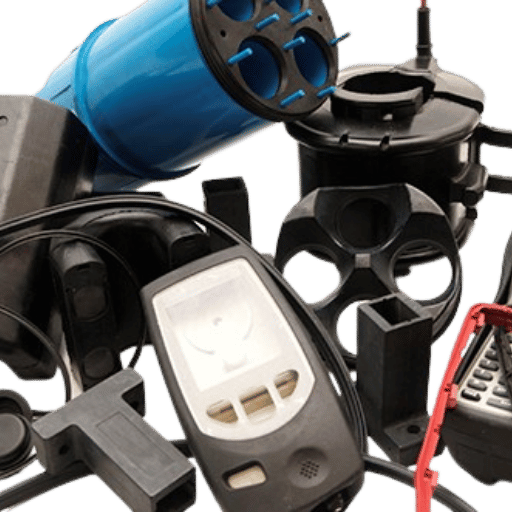
La diferencia entre una cotización rápida y tres rondas de ida y vuelta es una RFQ completa. Antes de enviar un sorteo, bloquea estos seis campos:
Lista de verificación de preparación para RFQ
- Material + curado (p. ej., silicona LSR, curado con platino)
- Durómetro con tolerancia (Planta A ±5)
- Clase de tolerancia dimensional (RMA / llamada de dibujo)
- Estándar aplicable (grado UL 94, código IP, RoHS)
- Volumen anual + EAU (proceso de unidades + herramientas)
- Acabado/color/marca y cualquier requisito de relleno conductor
¿Necesita ayuda para convertir una aplicación en una especificación? Utilice nuestro guía de material de silicona vs caucho y referencia de tolerancia de moldeo de caucho, o envíe el dibujo para su revisión.
Solicite una cotización sobre piezas de caucho eléctricas y electrónicas →
Perspectivas de la industria: ¿Qué impulsa la demanda de piezas de caucho electrónicas
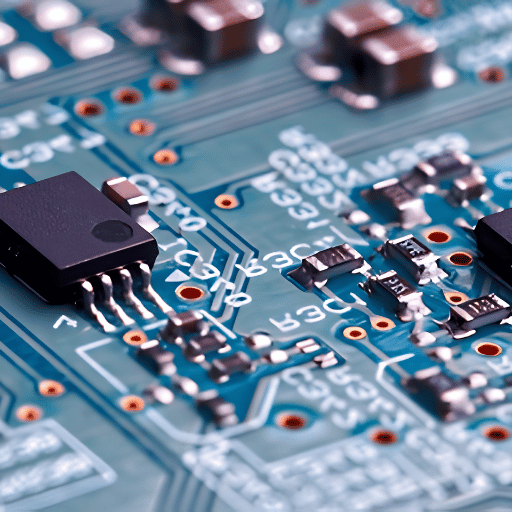
Tres fuerzas están remodelando las opciones de materiales en 2026, y cada una es una razón para revisar especificaciones más antiguas en lugar de copiarlas.
La electrónica de potencia de los vehículos eléctricos y el 5G están calentando las piezas y las de mayor frecuencia. A medida que los inversores, los cargadores integrados y las radios mmWave acumulan más energía en volúmenes más pequeños, las demandas térmicas y de fluorosilicona empujan a los diseñadores de EPDM hacia la silicona y fluorosilicona de alta temperatura, y hacia juntas conductoras clasificadas para frecuencias más altas. Trabajo revisado por pares sobre elastómeros conductores mejorados con relleno (2025) rastrea el mismo cambio hacia el blindaje EMI, los dispositivos portátiles y la robótica blanda.
La regulación es la función forzada a corto plazo. En el marco del RoHS de la UE, está previsto que expiren varias exenciones 21 iulie 2026, estrechando los materiales y acabados permitidos en la electrónica. Un error costoso es tratar una pieza de 2026 como una pieza de 2020, un sello electrónico de potencia para vehículos eléctricos que alguna vez se especificó para +125 °C y que ahora tiene que sobrevivir a +175 °C, o un conector cuyo relleno conductor depende de una exención que vence. Debido a que recalificar un compuesto corre el riesgo de sufrir meses de retraso, los ingenieros de Engelhardt bloquean las opciones de silicona y fluorosilicona de alta temperatura para estos programas automotrices y OEM con un año de anticipación, respaldados por IATF 16949 y herramientas internas en lugar de una lucha de último minuto.
Solo para el contexto del mercado: el mercado de blindaje EMI tiene un tamaño aproximado de 8 mil millones de dólares en 2026 con una CAGR de un solo dígito y un fondo direccional, no es una razón en sí misma para cambiar un diseño.
Preguntas frecuentes
P: ¿Qué caucho se utiliza en electrónica?
Ver respuesta
Cinco elastómeros realizan la mayor parte del trabajo: silicona (VMQ/LSR) para temperatura y flexibilidad, EPDM para clima y rigidez dieléctrica, neopreno para aceite equilibrado y resistencia a las llamas, nitrilo (NBR) para aceite y combustible, y fluorosilicona para combustible en un amplio rango de temperatura.
P: ¿Es el caucho un buen aislante eléctrico?
Ver respuesta
La mayor parte del caucho es un aislante fuerte, pero la silicona alcanza una rigidez dieléctrica de aproximadamente 24-32 kV/mm, pero el valor varía mucho según el compuesto y la carga. EPDM tiende a aislar mejor entre los elastómeros comunes y el nitrilo peor, y los grados conductores están diseñados para hacer lo contrario y conducir. Por lo tanto, “aislamientos de caucho” es una suposición inicial, no una garantía; Especifique siempre la figura dieléctrica y verifíquela con una prueba de hi-pot antes de confiar en ella.
P: ¿Qué es el caucho conductor y en qué se diferencia del caucho aislante?
Ver respuesta
El caucho conductor es la misma base de silicona o fluorosilicona cargada con partículas conductoras «plata, plata-aluminio, níquel-grafito o carbono «, por lo que transporta corriente en lugar de bloquearla. Se utiliza para juntas EMI/RFI y piezas ESD. El caucho aislante no utiliza tal relleno.
P: Silicona frente a EPDM, ¿cuál es mejor para la electrónica?
Ver respuesta
Ninguno de los dos es universalmente mejor: iguala el elastómero con la tensión dominante. La silicona gana en el rango de temperatura (hasta +230 °C) y la flexibilidad, por lo que se adapta a piezas calientes o de características finas, mientras que el EPDM gana en resistencia al agua, a la intemperie y al ozono y limita la silicona en resistencia dieléctrica, por lo que se adapta a sellos exteriores o expuestos al agua. Para una pieza que vive bajo el sol y la lluvia, elija EPDM; para uno que se caliente, elija silicona.
P: ¿Las piezas de caucho eléctricas y electrónicas son retardantes de llama?
Ver respuesta
De forma predeterminada, la inflamabilidad depende del compuesto. Muchas piezas de caucho electrónico están especificadas en una clase UL 94 (V-0 es el grado común más exigente, hasta HB). La silicona se puede hacer retardante de llama con aditivos como trihidrato de alúmina (ATH) manteniendo su aislamiento, por lo que los grados de silicona rellenos son comunes cuando se requiere una clasificación de llama. Confirme la clase UL 94 en la hoja de datos en lugar de asumir que el polímero base está clasificado.
P: ¿Contra qué protege realmente un sello de goma IP67?
Ver respuesta
Según IEC 60529, IP67 significa que el recinto es hermético al polvo y sobrevive a la inmersión en 1 m de agua durante 30 minutos. No certifica protección contra chorros de alta presión (es decir, el segundo dígito que cubre IPx6) o inmersión continua (IPx8), sino que se trata de pruebas separadas.
Acerca de este análisis
Esta guía consolida datos dieléctricos, de protección EMI y de clasificación IP de estudios revisados por pares, estándares IEC y ASTM, y patentes de la USPTO, con referencias cruzadas con nuestra experiencia en el taller de moldeo de silicona, EPDM y elastómeros conductores para programas electrónicos. Cuando una cifra depende del compuesto, el relleno o la geometría, lo decimos en lugar de publicar un solo número. Revisado por el equipo técnico de Engelhardt.
Referencias y fuentes
- ASTM D3755 DC de rigidez dieléctrica de cables aislados con caucho de siliconaNRC de EE. UU
- Materiales aislantes poliméricos y pruebas dieléctricasUniversidad Estatal de los Apalaches
- Compuestos de caucho de silicona con alta resistencia a la roturarevisado por pares (PMC)
- Retardancia de llama y aislamiento eléctrico del caucho de silicona relleno de ATHrevisado por pares (PMC)
- Elastómeros conductores mejorados con relleno para aplicaciones de próxima generación (2025)Springer
- Clasificaciones de protección de ingreso (IP) IEC 60529IEC
- Rellenos conductores de juntas protectoras EMI (US8822842B2)USPTO