
Entrez en contact avec Engelhardt

Fabrication de qualité OEM · Zhongshan
Fabricant de pièces en caoutchouc personnalisées
Composants en caoutchouc moulé de qualité OEM provenant d'une installation certifiée IATF 16949 de 53 000 m²
Fabrication de pièces en caoutchouc personnalisées 1TP2 T pour les programmes OEM
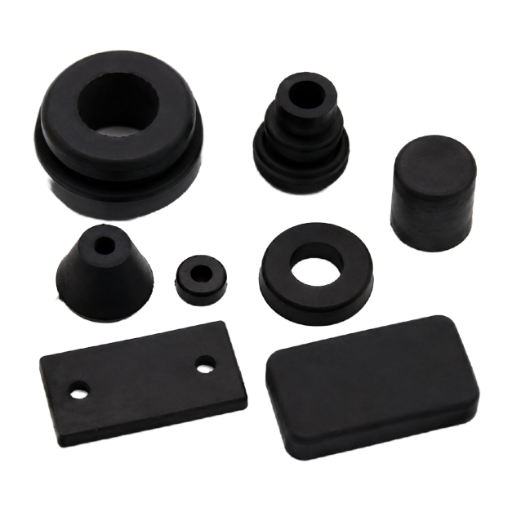
1TP2 T fabrique des pièces en caoutchouc personnalisées pour les programmes OEM dans la plomberie, les connecteurs électriques, les appareils sanitaires et les systèmes de toilettes aérospatiales. Notre Complexe de fabrication de 53 000 mètres carrés à Zhongshan exécute plus de 40 presses de vulcanisation, dont des vulcanisateurs sous vide de 250 tonnes et des machines de moulage par injection de caoutchouc de 300 tonnes, avec 2 000 tonnes de capacité de composants en caoutchouc moulé par an. Les projets de soutien à la certification 1TP4 T et 1TP3 T qui nécessitent une traçabilité des lots, des dossiers d'inspection entrants et une documentation de production prête à être auditée.
01
Cert
ISO 9001 + IATF 16949
Double certificat de qualité automobile (la plupart des concurrents détiennent uniquement le ISO 9001).
02
Échelle
Usine de 53 000 m² + 40 vulcanisateurs
Échelle physique prenant en charge les contrats de volume OEM et la transparence de l'audit.
03
Niveau 1
Nommés Tier-1 OEM Clients
Norme américaine· Amphénol · Kohler · Oatey · SFA
Capacités Snapshot
En un coup d'œil, capacités de fabrication de pièces en caoutchouc personnalisées Engelhardt
[Installation · Zhongshan ]
08
/
08
Spécifications
SPÉCIFICATION / 01
Procédés de moulage
Injection/Compression/Transfert
SPÉCIFICATION / 02
Équipement vulcanisant
Plus de 40 presses (vide 250 T, injection 300 T)
SPÉCIFICATION / 03
Production annuelle de caoutchouc
2 000 tonnes + 1 000 tonnes de silicone
SPÉCIFICATION / 04
Spécialité Matériaux
8 élastomères (néoprène, EPDM, Viton, plus)
SPÉCIFICATION / 05
Normes de Qualité
ISO 9001 + IATF 16949
SPÉCIFICATION / 06
Capacités du laboratoire
12+ instruments de test
SPÉCIFICATION / 07
Délai d'exécution de l'échantillon
714 jours
SPÉCIFICATION / 08
Fondé
2009 (plus de 17 ans d'expérience OEM)
Section 01 · Risque et résolution de l'approvisionnement
Du dessin technique à la production de masse : Comment 1TP2 T résout l'approvisionnement en caoutchouc OEM
Un fournisseur de pièces en caoutchouc sur mesure devient un risque d'approvisionnement lorsque la communication ralentit pendant un arrêt de ligne, que les pièces échouent à l'inspection entrante ou que les délais indiqués ne peuvent pas être pris en charge par une capacité réelle. Trois préoccupations pratiques reviennent le plus souvent dans les conversations d'approvisionnement avec notre équipe d'ingénierie :
DOULEUR / 01
Risque d’interruption de la chaîne d’approvisionnement
De fournisseurs mono-source sans capacité de sauvegarde.
DOULEUR / 02
Dérive de qualité entre les lots
Lorsque les spécifications des matériaux sont interprétées de manière vague.
DOULEUR / 03
Chronologie douloureuse de 8 à 12 semaines
Entre l'approbation du prototype et la production en série complète lorsqu'un fournisseur manque de capacité d'outillage intégrée.
Article 02 · Résolution
Construit autour de ces trois contraintes
Notre société a construit sa capacité de fabrication de pièces en caoutchouc sur mesure autour de ces trois contraintes Notre Installation de Zhongshan de 53 000 mètres carrés court 40+ presses de vulcanisation dans le moulage par injection, compression et transfert, de sorte qu'un seul fournisseur peut absorber votre volume annuel complet de caoutchouc sans sous-traiter à un partenaire que vous n'avez pas audité modèle intégré caoutchouc-plastique-matériel-assemblage signifie qu'un seul PO couvre les joints, les boîtiers en plastique, les inserts métalliques et le sous-ensemble final lorsque vos spécifications OEM nécessitent les quatre. Double certification 1TP4 T et IATF 16949 Engelhardt a vérifié par des auditeurs automobiles indépendants la même discipline de prévention des défauts pour chaque joint, joint ou œillet en caoutchouc personnalisé que les équipementiers automobiles de niveau 1 exigent pour les pièces critiques pour la sécurité.
“
La plupart des risques d'approvisionnement en caoutchouc proviennent de la variation composée entre les lots, et non de la seule machine de moulage Nos liens d'équipe douze instruments de laboratoire100 m, le viscosimètre Mooney, le rhéomètre à matrice mobile et la chambre à brouillard salin en une seule dossier de traçabilité des lots que les clients peuvent demander un lot de production spécifique, y compris les enregistrements de production historiques des trois années précédentes.
Capacités de moulage · Processus internes
Services de moulage de caoutchouc personnalisés : Injection, compression et transfert
La bonne pièce en caoutchouc moulé commence par le bon processus de moulage Le choix de la mauvaise voie peut ajouter un coût d'outillage évitable, des cycles de durcissement plus longs, un travail de contrôle flash ou une dérive dimensionnelle sur le cycle de vie du produit Parce que Engelhardt fonctionne les trois processus standard de l'industrie en interne, 4, nos ingénieurs peuvent recommander le processus qui correspond à la géométrie, à la tolérance, au volume annuel et au coût du cycle de vie plutôt que de forcer chaque conception à un seul ensemble d'équipements.
PROCESSUS / 01
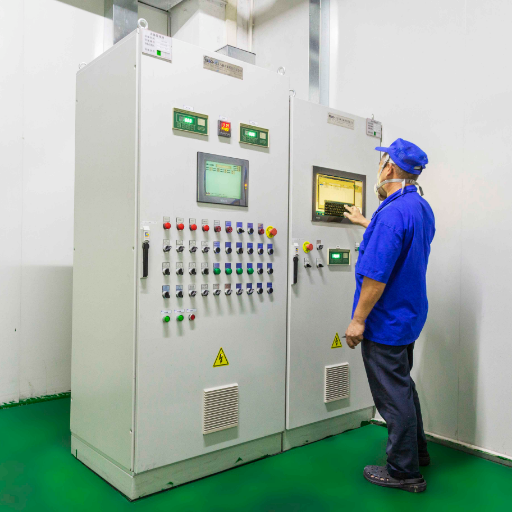
Moulage par injection de caoutchouc
Volume le plus élevé · Tolérance la plus serrée
Machines d'injection de 300 tonnes
Temps de cycle
Le plus court (mise à l'échelle à grand volume)
Tolérance
±0,05 mm réalisable
Flash
Minimal (convivivial pour l'automatisation)
Meilleur Pour
Géométries complexes, parois minces, plus de 50 K unités annuelles.
PROCESSUS / 02
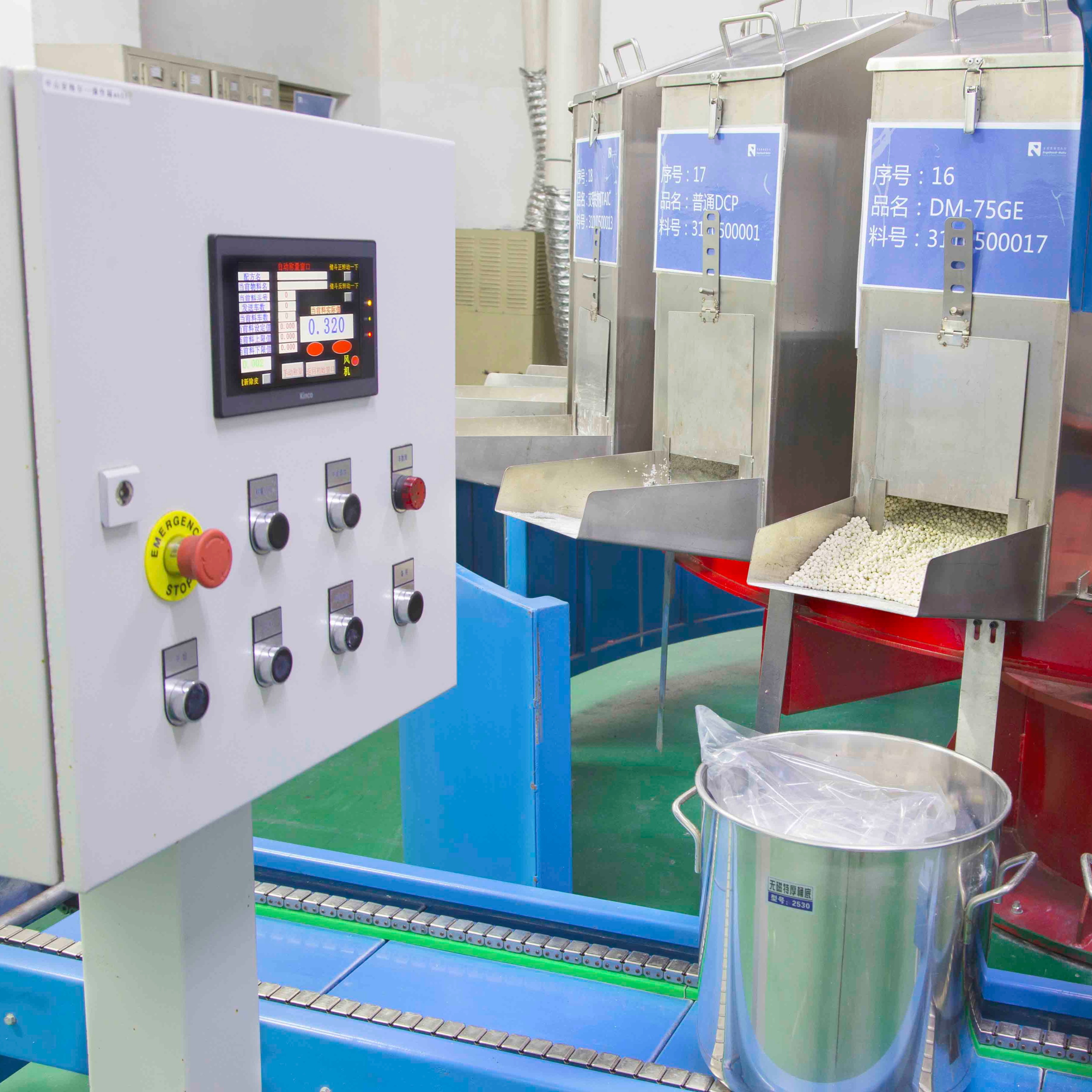
Moulage par transfert de caoutchouc
Moulage d'insertion · Collage de précision
Système de piston à moule fermé
Temps de cycle
Moyen
Tolérance
±0,10 mm typique
Spécialité
Insert-friendly (liaison caoutchouc-métal)
Meilleur Pour
Composants avec inserts intégrés, complexité modérée.
PROCESSUS / 03
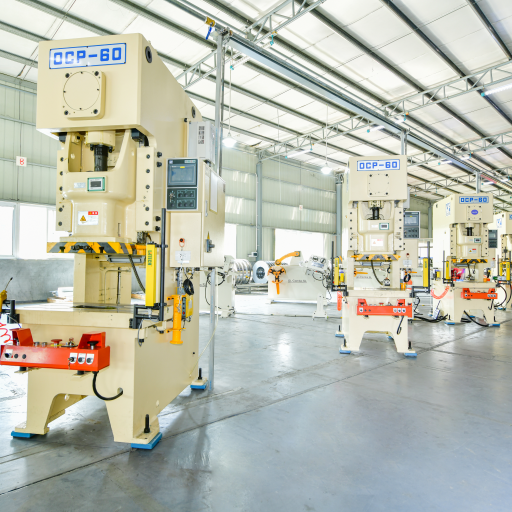
Moulage par compression du caoutchouc
Outillage inférieur · Grandes pièces
vulcanisateurs sous vide de 250 tonnes
Temps de cycle
Plus long (porté par le remède)
Tolérance
±0,25 mm typique
Coût d'outillage
Le plus bas des trois
Meilleur Pour
Pièces grandes, épaisses et plus simples ; volume faible à moyen.
Décision d'ingénierie · Sélection de précommande
La sélection de processus est un effort de génie collectif
Le processus choisi est un effort collectif d'ingénierie avant qu'une commande ne soit émise Lorsque la géométrie de la pièce, le volume annuel et la classe de tolérance conduisent à l'injection, nous utilisons l'injection Lorsque le coût d'outillage domine l'économie unitaire et que les tolérances sont modérées, alors la compression est une proposition solide. Nos ingénieurs ne pousseront pas un client vers un moule de compression $15 000 lorsqu'un moule d'injection $40 000 produira un produit nettement meilleur.
Référence du fournisseur basée sur les données
Engelhardt Vs US 5 Top 5 des fabricants de caoutchouc Comparaison basée sur les données
La plupart des entreprises de moulage de caoutchouc publient deux paragraphes sur leur pratique et un formulaire de devis Cette comparaison a été assemblée à partir de pages de service public et divulgations de certification sur cinq fabricants de caoutchouc établis aux États-Unis, « Custom Rubber Corp », Qualiform, Aero Rubber Co, The Rubber Group et Timco Rubber (en) ont ensuite rempli les numéros de 1TP2 de notre 202442025 dossiers de production et registre des certificats. Lorsqu'un concurrent ne publie pas de chiffre, “non divulguée” est l'entrée, car cette opacité est en soi le signal le plus utile qu’un responsable des achats puisse lire.
Dimension
Engelhardt
Corp. en caoutchouc personnalisée
Qualiforme
Aero Rubber Co.
Caoutchouc Timco
Le groupe du caoutchouc
Taille de l'installation
53 000 m²
non divulgué
non divulgué
non divulgué
non divulgué
non divulgué
Presses Vulcanisatrices
40+
non divulgué
non divulgué
non divulgué
non divulgué
non divulgué
Production annuelle de caoutchouc
2 000 tonnes + 1 000 tonnes de silicone
non divulgué
non divulgué
“B2B Volume”
non divulgué
non divulgué
Certifications
ISO 9001 + IATF 16949
“certifications” générique
ISO 9001:2015
ISO 9001:2015
non divulgué
non divulgué
Nommés clients OEM
5 divulgués publiquement
0
0
0
0
0
Instruments de laboratoire publiés
12+
0
0
0
0
0
Intégration à guichet unique
Caoutchouc + Plastique + Quincaillerie + Assemblage
caoutchouc uniquement
caoutchouc uniquement
caoutchouc uniquement
caoutchouc + plastique
caoutchouc uniquement
Pourquoi l'opacité compte · IATF 16949
Les lacunes dans les données publiques doivent être traitées comme des signaux de risque pour les fournisseurs
Les données des fournisseurs publics aident les équipes d'approvisionnement à décider quelles questions poser avant une demande de prix. 1TP3 T est un cadre de qualité automobile plus strict que le ISO 9001 générique parce qu'il ajoute des exigences en matière de prévention des défauts, de vérification des erreurs, de traçabilité et de gestion des garanties. Dans cette comparaison, plusieurs fournisseurs américains ne publient pas l'échelle de l'installation, le décompte des presses, le volume de production ou le statut de certification automobile. Engelhardt publie ces chiffres d'exploitation et peut fournir les détails du certificat lors de la qualification du fournisseur.
Bibliothèque de composés · 8 élastomères
Huit matériaux en caoutchouc. Expertise d'ingénierie Engelhardt par application
Le choix des matériaux est l'endroit où la plupart des projets de caoutchouc personnalisés prospèrent ou s'autodétruisent des mois après la livraison. Le 1TP9 T placé dans les fissures d'exposition au pétrole en quelques semaines Le néoprène attaqué par les acides forts se dégrade rapidement Le silicone abrasé contre les contrefaces métalliques s'use plus vite que prévu. L'équipe d'ingénierie de 1TP2 T prend en charge la sélection des matériaux car nous avons fait fonctionner les huit élastomères ci-dessous Plus de 2 000 programmes de production et j'ai vu quel composé correspond à quelle application.
Matériel
Chaîne Durometer (Rive A)
Plage de température
Résistance chimique
Applications typiques
Néoprène
30A 85A
-40 °C à 110 °C
Bonne résistance au pétrole et à l'ozone ; vulnérable aux acides et cétones forts
Joints automobiles, joints d'étanchéité, joints à usage général
EPDM
40A 90A
-40 °C à 150 °C
Excellente résistance à l'ozone, aux UV et aux intempéries ; pas pour les huiles
Joints d'extérieur, bandes météo automobiles, joints CVC
Viton (FKM)
60A 95A
-20 °C à 230 °C
Résistance chimique et au carburant exceptionnelle ; haute température
Joints aérospatiaux, joints pétroliers et gaziers, traitement chimique
Silicone (LSR)
30A 80A
-55 °C à 230 °C
Inerte ; variantes de qualité alimentaire et médicale disponibles
Dispositifs médicaux, phoques à contact alimentaire, produits pour bébés
Nitrile (NBR)
40A 95A
-30 °C à 120 °C
Excellente résistance à l'huile, au carburant et aux solvants
Joints hydrauliques, joints de système de carburant automobile, joints toriques
Butyle
40A 75A
-40 °C à 100 °C
Imperméabilité à l'air et amortissement des vibrations exceptionnels
Chambres à air, supports antivibratoires, bouchons pharmaceutiques
Caoutchouc Naturel
30A 85A
-40 °C à 80 °C
Résistance à la traction élevée ; mauvaise résistance à l'huile et à l'ozone
Amortisseurs, composants antivibratoires, bagues
TPE
30A 95A
-50 °C à 130 °C
Élastomère thermoplastique recyclable ; large compatibilité chimique
Produits de consommation, poignées médicales, composants ergonomiques
Automobile Spec Language · ASTM D2000/SAE J200
Où commence la traçabilité Audit-Trail IATF 16949
Les clients qui ont besoin d'une classification matérielle conforme aux spécifications automobiles peuvent citer le ASTM D2000 système d'appel de ligne pour exemple, M2BC 507 A14 EO34 1TP2 T correspondra à la combinaison de types, de classes, de dureté, de traction et de code de résistance aux fluides de notre bibliothèque de composés. SAE J200 reflète le même système de classification pour les applications automobiles Travailler dans ce langage de spécification standardisé est plus rapide que les spécifications descriptives de va-et-vient, et c'est le cas comment commence la traçabilité de la piste d'audit IATF 16949.
Assurance qualité · 12-Instrument Lab
Contrôle de qualité : ISO 9001 + IATF 16949 Avec plus de 12 instruments de laboratoire
La plupart des fabricants de pièces en caoutchouc personnalisées publient deux lignes sur la qualité et un logo d'une certification Nous publions le inventaire complet du laboratoire parce que les équipes d'approvisionnement qui auditent les fournisseurs chinois veulent savoir exactement quelles capacités de test existent sur place avant un conteneur chargé de pièces détachées. Nous exploitons un centre de test interne conçu pour normes internationales de gestion de laboratoire, avec douze instruments principaux couvrant la caractérisation des composés, la validation des propriétés physiques, le vieillissement environnemental et la mesure dimensionnelle.
Double certification : ISO 9001 + IATF 16949
Par autorité industrielle DNV, 1TP3 T s'appuie sur 1TP4 T avec des exigences supplémentaires du secteur automobile couvrant la prévention des défauts, les exigences spécifiques aux clients, la variation et la gestion des garanties. Elle s'étend aux fournisseurs de troisième niveau, aux centres de conception, aux centres de distribution et au siège social. Le 1TP4 T est à lui seul un ticket générique pour négocier entre les secteurs ; IATF 16949 est le benchmark équivalent automobile. Engelhardt détient les deux, audité et renouvelé annuellement par des organismes de certification indépendants.
Douze instruments de laboratoire pour les tests composés, physiques et environnementaux
12 / 12 En MaisonTraçabilité par lots au niveau du lot : compatible PPAP et AS9100
Chaque lot de production est expédié avec un enregistrement de traçabilité par lots relier le fonctionnement du mélangeur composé, le cycle de durcissement, l'inspection dimensionnelle et les rapports de tests de pulvérisation de sel ou de vieillissement. Clients en cours d’exécution Soumissions PPAP 1TP3 T ou systèmes qualité aérospatiaux AS9100 peut tirer nos enregistrements de lots directement dans leur dossier de soumission.
Résultats clients · Liste de clients publics
Résultats clients : Tier-1 OEM Marques Trust Engelhardt
De nombreux fournisseurs de caoutchouc décrivent la confiance des clients en termes généraux sans nommer les industries, les voies de qualification ou les familles partielles impliquées. 1TP2 T répertorie l'expérience client OEM sélectionnée lorsque la divulgation publique est appropriée, tandis que les détails du projet couverts par la NDA sont discutés uniquement lors de la qualification du fournisseur. La question de l'approvisionnement est pratique : le fournisseur a-t-il déjà travaillé en exigeant des exigences de qualification, de traçabilité et de sortie de production ?
Expérience client OEM sélectionnée Liste de clients publique
05 / 05 DivulguéNorme américaine
Installations de plomberie
Amphénol
Connecteurs électriques
Kohler
Sanitaire & cuisine
Oatey
Fournitures de plomberie
SFA
Lavabo aérospatial
Quatre profils d'achat OEM
Chaque projet : différents processus, matériaux, certification et correspondance d'outillage
Ces clients ont quatre profils d'achat de caoutchouc OEM très différents: approvisionnement en plombier à grand volume avec certification en silicone de qualité alimentaire (Norme américaine, Kohler, etc.), joints de composants électriques dimensionnés avec précision avec des tolérances serrées et une traçabilité IATF 16949 (Amphénol), des articles de fourniture de plombier à haut mélange fonctionnant sur des moules à compression optimisés en fonction des coûts (Oatey), et les pièces de sous-systèmes de toilettes aérospatiales nécessitant une documentation de qualité AS ainsi que notre sortie en caoutchouc (SFA). Chaque projet fonctionne pluriannuelle, multiligne, [traduction], chacun exige une correspondance différente entre le choix du processus, la qualité du matériel, la piste d'audit de certification et les dépenses d'outillage qui traite directement du modèle de risque d'approvisionnement du client.
À propos de Engelhardt-Meitu · Intégration mono-fournisseur
À propos de Engelhardt : Intégration unique du caoutchouc, du plastique, du matériel et de l'assemblage
Notre société est un fabricant de pièces en caoutchouc sur mesure, mais le plus grand fonctionnement Engelhardt-Meitu est défini par a modèle d'intégration mono-fournisseur que la plupart des entreprises de moulage de caoutchouc n'offrent pas De la même Campus de Zhongshan de 53 000 m², nous exécutons le caoutchouc, le plastique, le matériel et l'assemblage un système unique de qualité, un seul chef de projet et un seul PO. Pour les OEM dont le produit fini nécessite des joints en caoutchouc moulé, un boîtier en plastique moulé par injection, des inserts métalliques estampés et un sous-ensemble final, cette intégration est un audit au lieu de quatre, un contrat de qualité au lieu de quatre et un ensemble d'interfaces dimensionnelles vérifiées dans notre usine avant expédition au lieu de déboguer sur votre chaîne de montage.
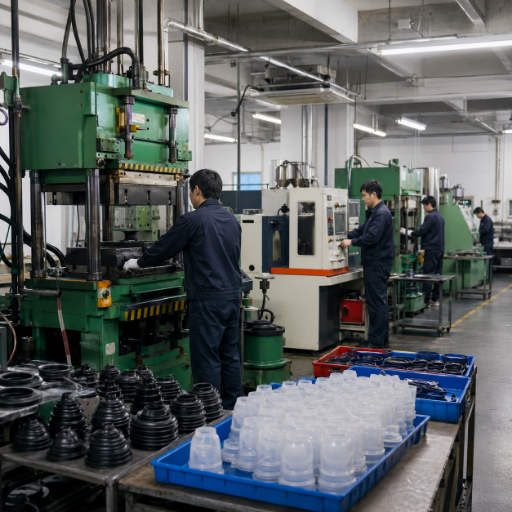
DÉPUTÉ / 01
Département Caoutchouc
- 40+ presses vulcanisantes
- 2 000 t/an caoutchouc + 1 000 t/an silicone
- Injection 300T + Vide 250T
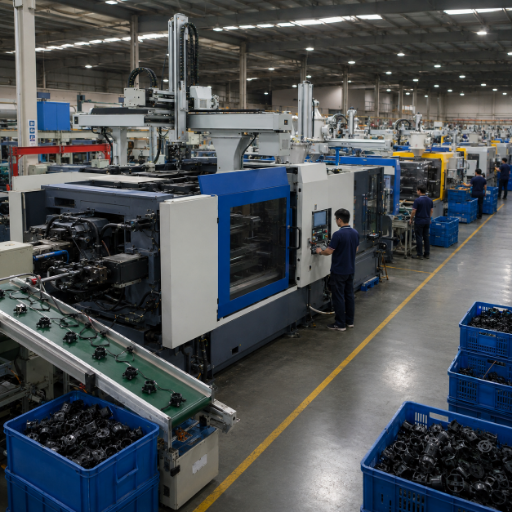
DÉPARTEMENT / 02
Département Plastique
- 400 machines d'injection
- Plus grand 2 000 tonnes presse
- 100 tonnes/jour débit plastique
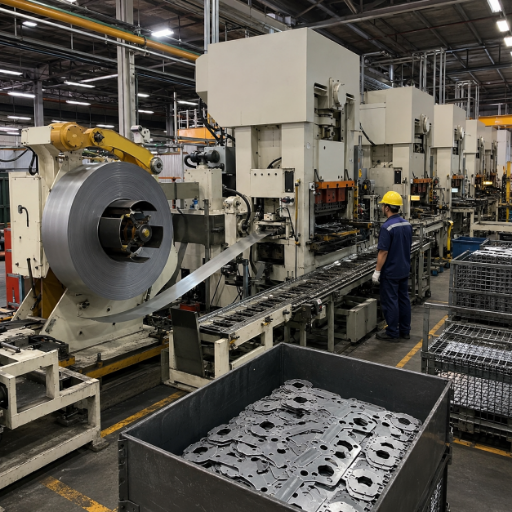
DÉPARTEMENT / 03
Département Matériel
- 1 000 m² ligne d'estampage automatisée
- 30M+ pièces annuellement
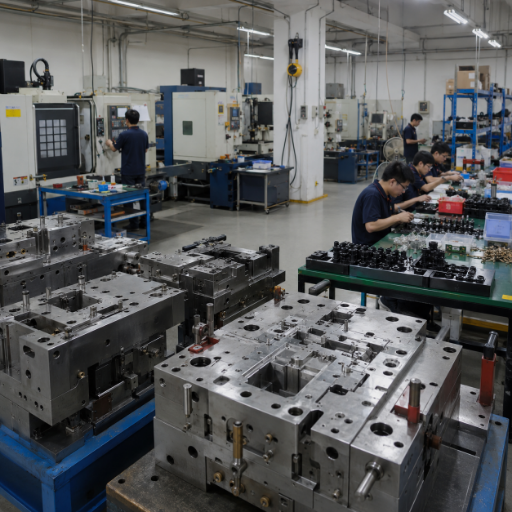
DÉPARTEMENT / 04
Moule et assemblage
- 3 600 m² atelier de moule
- Machines Rhodes allemandes, CNC, EDM
- Intégré R+P+HW assemblage
Logique d'intégration · Réduction des risques de la chaîne d'approvisionnement
L'intégration à fournisseur unique n'est pas seulement une simplicité opérationnelle Il s'agit de la réduction des risques liés à la chaîne d'approvisionnement : lorsqu'un OEM s'approvisionne en joint de caoutchouc, en boîtier en plastique et en insert métallique auprès de trois fournisseurs différents, l'intégration s'interface entre l'adaptation du motif, la hauteur de compression du joint, la concentricité matérielle du bossage moulé devenez la responsabilité de l'OEM une fois livré à l'usine. Lorsque 1TP2 T fabrique les trois, ces interfaces sont vérifiées dans notre usine avant que les pièces ne quittent la ligne.
Guide d'approvisionnement · Chiffres transparents
Guide d'approvisionnement : Facteurs de coûts, délais de livraison, MOQ et calendrier d'échantillonnage à la production
La plupart des entreprises de moulage de caoutchouc ne rien publier sur la façon dont leur tarification fonctionne réellement, les délais ou les conditions de paiement Les équipes d'approvisionnement perdent des semaines à obtenir des devis sur des pièces qui s'avèrent être hors MOQ ou hors budget. Nous publions les chiffres énumérés ci-dessous à partir de notre Livraisons du programme 2024025.
Cinq facteurs de prix
CONDUCTEUR / 01
Qualité matérielle
Niveau supérieur FKM/Viton coût trois à cinq fois plus que du néoprène.
CONDUCTEUR / 02
Nombre de cavités et complexité d'outillage
Une seule cavité contre moules à 32 cavités gamme 20–40× en prix.
CONDUCTEUR / 03
Volume de commande annuel
Utilisation quasi-annuelle des matériaux ou cotation annuelle réelle, plus volume réel de commande Cohérent.
CONDUCTEUR / 04
Classe de tolérance
0,05mm injection serrée vs 0,25mm compression lâche.
CONDUCTEUR / 05
Certification Formalisation
Qualité commerciale vs IATF 16949 audit-apurement.
Délai d'exécution et calendrier de production des échantillons
01
714 jours
Échantillon
T1 provenant du composé existant
02
3 semaines
Prototype
T2 avec une documentation de type PPAP
03
4 semaines
Fabrication d'outils
04
4 semaines
Premier départ en masse
Après approbation de l'outil
05
3 semaines
Sorties de production en cours
Depuis PO
Conditions de paiement et expédition
- 01 Norme: Dépôt 30%/équilibre 70% avant expédition
- 02 Méthodes: LC à vue ou TT (transfert télégraphique)
- 03 Conditions d'expédition : FOB Shenzhen ou Guangzhou, CIF au port d'achat, ou usine EXW/transitaire désigné
- 04 Monnaie: USD, EUR, facturation RMB disponible
MOQ et politique d'outillage
- 01 Articles de catalogue standard : 500 1 000 pièces MOQ typiques
- 02 Pièces moulées sur mesure : MOQ négociable sur la base de l'amortissement de l'outillage
- 03 Propriété de l'outillage : outillage appartenant au client pris en charge ; transfert d'outillage existant bien accueilli
- 04 Frais d'échantillonnage : appliqué à la première commande de production sur confirmation PO
Outils d'ingénierie interactifs pour pièces en caoutchouc personnalisées
FAQ · Approvisionnement et ingénierie
Fréquemment Demandé Questions
Questions
Q/01
Combien coûtent les pièces en caoutchouc personnalisées à partir de Engelhardt ?
La tarification personnalisée des pièces en caoutchouc dépend de cinq pilotes: qualité du matériau (Néoprène vs Viton peuvent différer 3-5× par kg), nombre de cavités et complexité de l'outillage (différence entre une seule cavité et 32 cavités 20-40× dans l'outillage), niveau de volume annuel, classe de tolérance et exigence de certification. Nous ne publions pas de liste de prix forfaitaire car cela induit les acheteurs en erreur « Votre pièce avec vos spécifications nécessite un devis personnalisé construit autour de votre économie de production réelle. Demandez un devis via le formulaire ci-dessus et vous recevrez une panne système complète » dans les 24 heures, : y compris l'outillage, l'échantillon et l'estimation de l'expédition.
Q/02
Quel est le délai entre le dessin et la production de masse ?
D'un PO confirmé et d'un dessin approuvé : échantillons en 7-14 jours en utilisant le composé existant, prototype avec validation de style PPAP 3-4 semaines, fabrication d'outils 4-6 semaines, et premier lot de production en série 4-8 semaines après l'approbation de l'outillage. Les versions de production en cours sont exécutées 3-5 semaines de chaque PO subséquent. Le fret aérien de Guangzhou ou de Shenzhen ajoute généralement 5-7 jours ; fret maritime 25-35 jours vers la plupart des ports américains et européens.
Q / 03
Quel matériau en caoutchouc dois-je choisir pour mon application ?
La sélection du matériau suit trois questions: quelle plage de température la pièce verra-t-elle en service, quels fluides entrera-t-elle en contact et quelle charge mécanique transporte-t-elle. EPDM excelle en extérieur mais échoue dans le pétrole. Nitrile excelle dans le carburant mais se dégrade sous UV. Viton gère des produits chimiques à haute température et agressifs à un coût élevé. Silicone sert de la nourriture et des soins médicaux à un coût modéré. Notre équipe d'ingénierie prend en charge la conversation de sélection avant de citer, et le guide de sélection des matériaux et de la tolérance PDF disponible ci-dessus comprend l'adaptation du duromètre, la compatibilité de la température et Exemples travaillés d'appel de ligne ASTM D2000.
Q / 04
Le 1TP2 T peut-il fabriquer des pièces en caoutchouc personnalisées selon les normes automobiles 1TP3 T ?
Oui. Engelhardt est valable certification active IATF 16949 audité et renouvelé annuellement par un organisme de certification indépendant, en plus de 1TP4 T. 1TP3 T étend le cadre de gestion de la qualité 1TP4 T avec des exigences spécifiques à l'automobile autour de la prévention des défauts, de la vérification des erreurs, des exigences spécifiques au client, de la gouvernance du plan de contrôle et de la gestion des garanties. Par autorité de certification DNV, IATF 16949 est le équivalent automobile ticket-to-trade et s'étend jusqu'aux fournisseurs automobiles de troisième niveau, aux centres de conception et au siège social de l'entreprise. Nous soutenons les soumissions PPAP complètes, notamment PSW, les plans de contrôle, les organigrammes de processus, les dispositions dimensionnelles, les certifications de matériaux, les rapports de tests de performances et les études de capacités. Le niveau de documentation qu'un OEM de T-1 automobile attend d'un fournisseur qualifié de moulage de caoutchouc. Les audits clients dans nos installations de Zhongshan sont les bienvenus et généralement programmé dans les deux semaines suivant la demande.
Q / 05
Fournissez-vous des prototypes, des commandes en petits lots et une production en masse complète ?
Oui à tous les trois. Les échantillons sont expédiés 7-14 jours sur les composés existants. Le MOQ en petits lots est généralement 500 à 1 000 pièces pour les articles de catalogue. Échelles de production de masse à partir de 10 000 à plusieurs millions de pièces par an, : avec un outil personnalisé MOQ négociable sur la base de l'amortissement.
Q / 06
Quelle est la différence entre le moulage du caoutchouc par injection, compression et transfert ?
Moulage par injection chauffe et plastifie l'élastomère avant de l'injecter dans une cavité de moule fermée sous haute pression : cycle le plus rapide, tolérance la plus stricte, coût d'outillage le plus élevé, meilleur pour les pièces complexes à grand volume. Moulage par compression place une préforme mesurée dans un moule ouvert chauffé qui se ferme sous pression : coût d'outillage le plus bas, cycle le plus long, tolérance modérée, meilleur pour les pièces grandes ou épaisses à faible ou moyen volume. Moulage par transfert utilise un piston pour pousser le caoutchouc à travers les épinettes dans les cavités fermées du milieu du sol, particulièrement solide pour le moulage par insert et la liaison caoutchouc-métal. Le bon choix dépend de géométrie, volume, tolérance et coût du cycle de vie.
Q / 07
Proposez-vous également le moulage par injection plastique et la fabrication de matériel ?
Oui. L'opération 1TP2 T-1TP5 T plus large s'exécute 400 machines d'injection plastique (plus grandes presses de 2 000 tonnes, débit de plastique de 100 tonnes/jour) et a Ligne d'estampage de matériel automatisée de 1 000 mètres carrés produire plus de 30 millions de pièces par an. Le modèle intégré caoutchouc-plastique-matériel-assemblage signifie qu'un OEM doté d'un sous-ensemble multi-matériaux peut s'approvisionner en joint en caoutchouc, boîtier en plastique, insert métallique et sous-ensemble final auprès d'un seul fournisseur sous un seul système qualité et un seul PO. Voir les pages de capacités principales 1TP2 T pour les sous-services en plastique et en matériel.