Get in Touch with Engelhardt


Updated October 2026
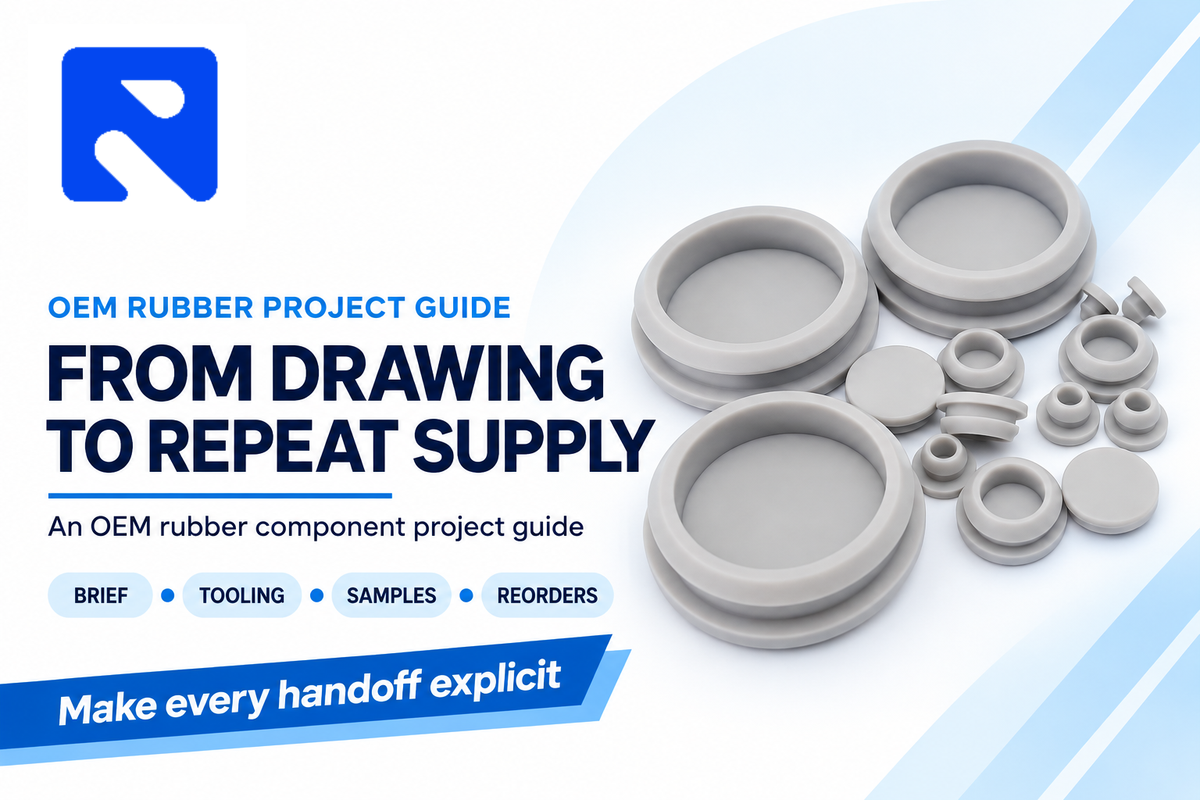
An OEM rubber components supplier makes or provides rubber parts for equipment manufacture. Repeat orders hinge on a clear application brief and an accepted handoff to production. A grommet can be installed during development but can cause problems later if the compound changes, a new cavity produces a different fit, or old stock reaches an assembly line after a drawing revision.
An OEM rubber components supplier makes or supplies rubber parts for equipment manufacture. A successful custom project connects the drawing and compound requirements to tooling, sample approval, production checks, order releases and change control.
Project essentials
- Similar hardness doesn’t make two rubber compounds interchangeable.
- Approve samples against identified materials, tooling and application conditions.
- Keep the forecast, firm order and shipment schedule separate.
- Assign an owner for changes affecting parts already in stock.
Starting brief: part number and drawing revision; mating interface; operating environment; critical features; required application tests; expected order pattern.
OEM rubber components supplier: define the supply route
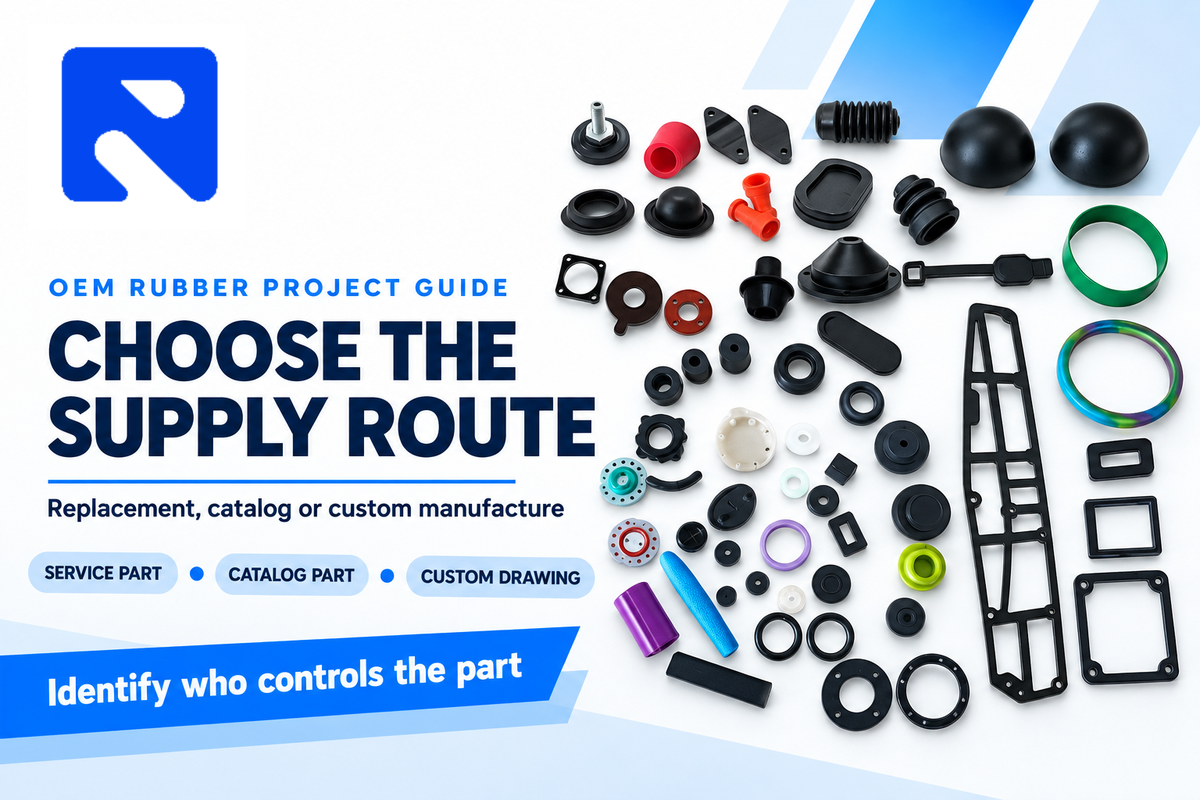
Manufacturers and suppliers can vary; quality rubber parts need requirements based on their use. An original replacement part, a standard catalog seal, and a component made to your drawing can be found via an OEM search. They solve different issues and their descriptions provide little information about who will control future modifications.
| Route | Best starting point | Question before ordering |
|---|---|---|
| Original-brand replacement | Existing equipment with an identified service part | Is this the correct part and authorized channel for this machine? |
| Standard catalog component | A published size and material that meet the application | Are the specified compound and operating limits suitable? |
| Custom manufacture | A controlled drawing or a function that needs a new design | Who owns the design and approves changes? |
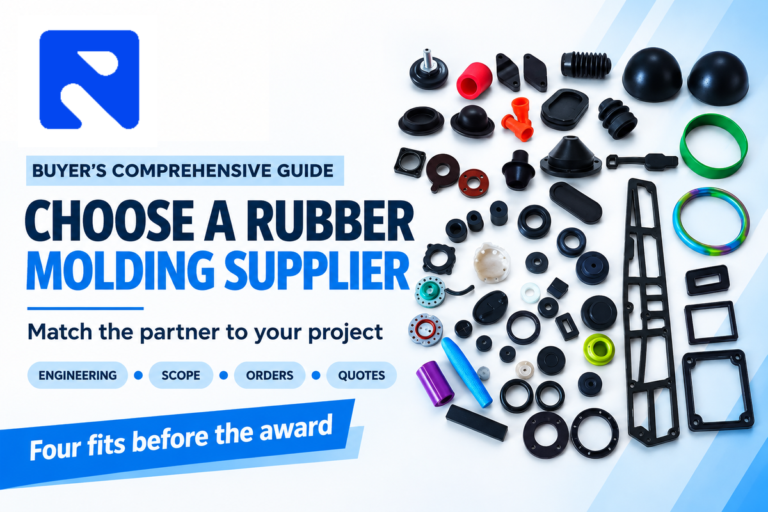
Some suppliers specialize in catalog components; others develop custom rubber solutions. A standard component can address a demanding application. A custom part can be used for a simpler requirement. Fit, performance of the material, and the specification dictate which path is taken. If you’re still considering rubber parts suppliers, the other guide to choosing a rubber molding supplier explains that path.
Where can I buy genuine OEM parts?
Buy genuine OEM replacement parts through the original equipment manufacturer or an authorized channel identified by the brand. Match the equipment model and service part number. A custom molding company can manufacture a part to the agreed design, but describing that part as “OEM quality” doesn’t establish original brand authorization or ensure it’s compatible with all variants of the equipment.
Select the owner of the drawing for a new machine. The parts supplier requires one approved revision before manufacturing begins, even when purchasing, engineering and the assembly plant submit comments.
Custom rubber parts: turn the application into a clear brief
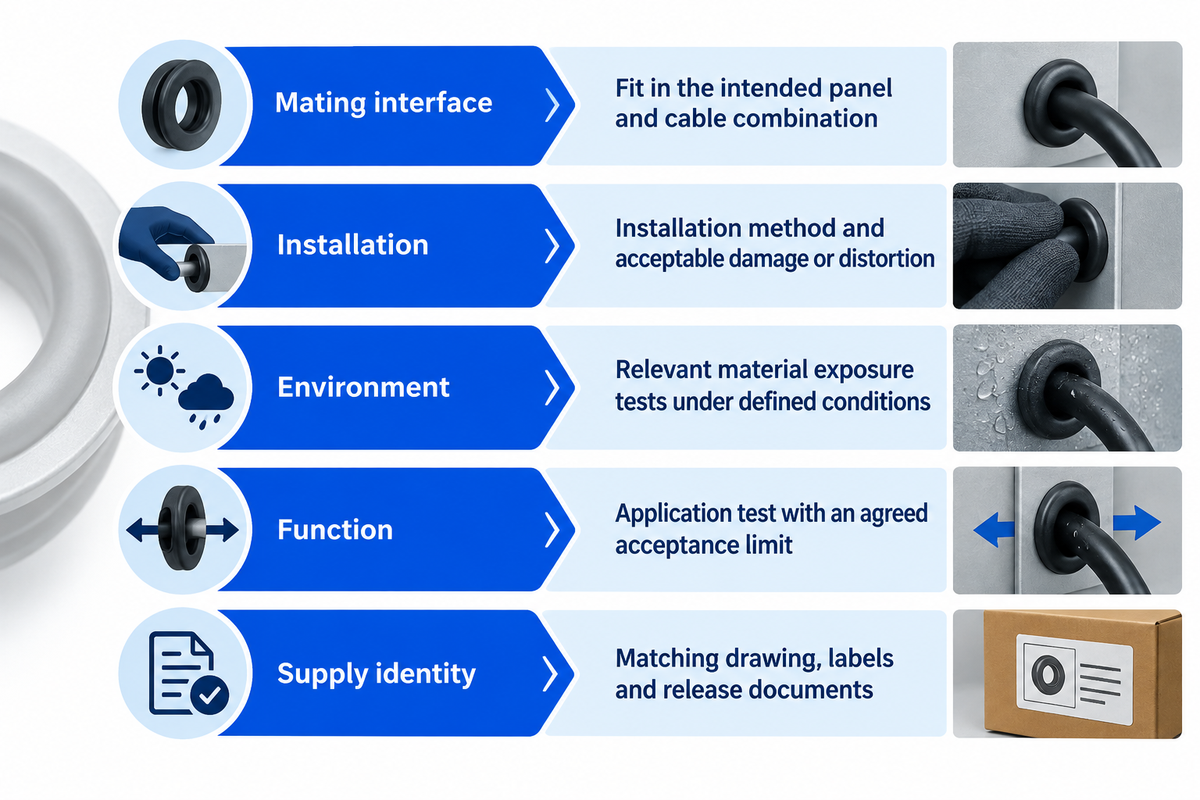
Start with mating parts and operating conditions. A durable rubber part needs to fit its housing, withstand a specified environment and perform a job to retain a cable, seal a joint, exclude dust or control vibration. A photograph and a nominal hardness leave too many of those requirements open.
Consider a fictional GR-17 grommet for an industrial equipment panel. Engineering supplies the opening in the panel and its thickness, and provides the diameter of the cable to be routed through the equipment and the direction of installation. The brief states that the equipment is exposed to outdoor conditions and comes into contact with cleaning fluids, and specifies whether cable retention or water ingress is to be tested. These factors assist an engineer to evaluate a catalog profile against custom rubber parts made to the application.
Application brief: connect each requirement to a check
| Requirement | GR-17 example | Check to agree |
|---|---|---|
| Mating interface | Panel opening, panel thickness and cable envelope | Fit in the intended panel and cable combination |
| Installation | Insertion direction and accessible assembly space | Installation method and acceptable damage or distortion |
| Environment | Outdoor exposure and named cleaning fluid | Relevant material exposure tests under defined conditions |
| Function | Cable protection; retention if required | Application test with an agreed acceptance limit |
| Supply identity | Part number, revision and approved compound | Matching drawing, labels and release documents |
EPDM, silicone and other elastomers require evaluation against the actual environment. Choosing the polymer family is just the starting point. ASTM D2000 states that, when its classification system cannot completely specify requirements for a particular use, the purchaser should agree properties, test methods and limits with the supplier. A material designation therefore belongs alongside the component’s application requirements. ASTM D2000 scope.
What is automotive rubber?
Automotive rubber covers all elastomer products and parts in vehicles, including seals, rubber hoses, grommets and vibration mounts. This term is used to define an industry application, not a compound or quality grade. A truck engine seal, a passenger-compartment gasket and a dust cover face different conditions, so each needs its own material and functional requirements.
For custom automotive projects, the brief defines the customer’s approval and documentation requirements for parts supplied as solutions for the automotive industry. Where a customer requires a supplier to certify conformity, identify the required certificate and the supporting results.
Rubber tooling: settle ownership before the first mold
Agreement on who will own the mold, where it will be run and what will happen during maintenance or transfer is required before placing the order. A tooling invoice and a drawing approval, for instance, address different requirements. Ownership and transfer stipulations should be included in the purchase order.
- Procurement: agree payment milestones, tool identification, location and transfer arrangements.
- Engineering: approve the drawing revision and the proposed molding route.
- Supplier: define maintenance, storage and the records supplied with the tool.
- Receiving manufacturer, if transferred: review equipment compatibility and the production trials needed.
A prototype mold can sometimes use the same cavity design as the production tool. Minnesota Rubber & Plastics describes this in their mold selection guidance, which is available on their website. Know which features are carried forward and which are changing. A change to multiple cavities or from one molding route to another warrants a specific trial.
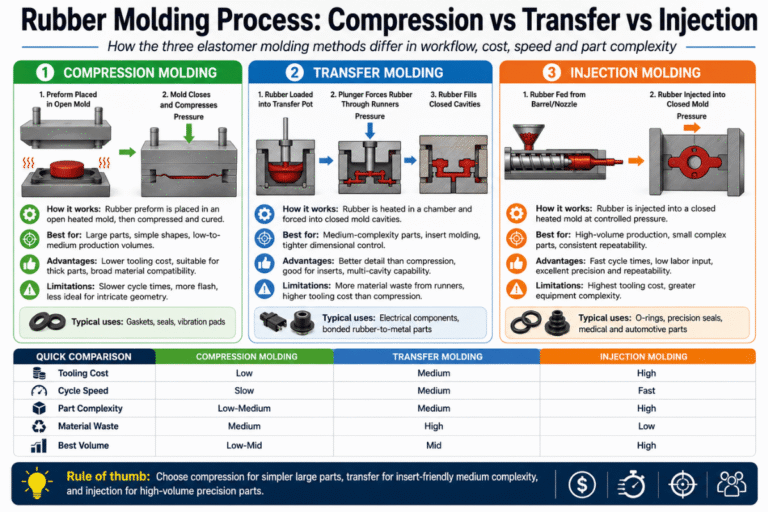
Compression, transfer and injection molding require different tool designs and manufacturing processes. If procurement proposes a tool transfer to protect supply, first have the receiving team review the mold against its equipment. Paying freight before that check can move the hardware without establishing a usable supply route.
Agree before manufacture
Identify the tool, drawing revision, maintenance owner and transfer deliverables in the order.
Avoid this assumption
“We paid for the mold, so another factory can immediately make approved parts with it.”
Rubber samples: connect approval to production
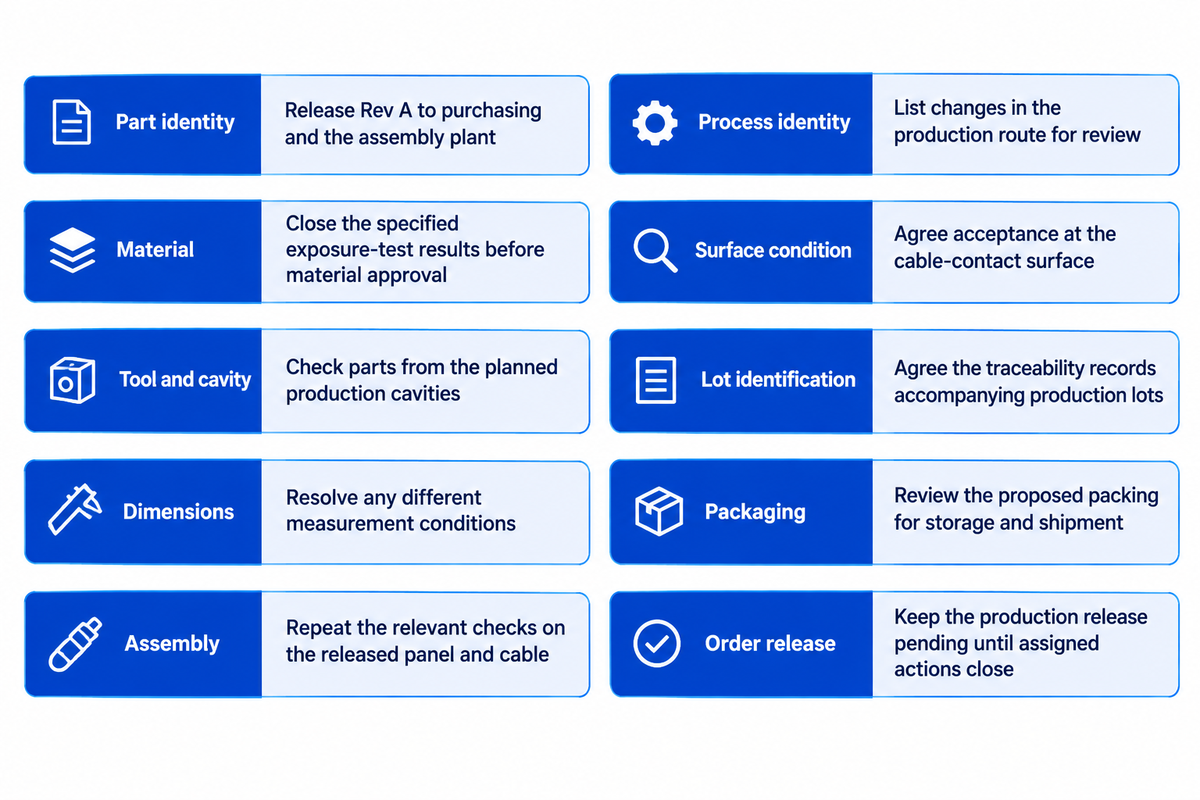
Sample approval should show which drawing, compound, tool and application checks the customer accepted. Use that approval to identify what’s still to be checked in production. The next batch may use the same conditions, or it may involve a different cavity, compound supply or process setting.
Custom Rubber Corp’s prototype-to-production guidance shows how changing compound and tooling and processes affect products as they scale. For custom molded rubber parts, track those changes with the results from the sample. The useful question is whether the evidence represents the planned production conditions.
| Evidence category | Sample record | Open production action | OEM owner |
|---|---|---|---|
| Part identity | GR-17, drawing Rev A | Release Rev A to purchasing and the assembly plant | Engineering |
| Material | Candidate compound identified by supplier code | Close the specified exposure-test results before material approval | Materials/quality |
| Tool and cavity | Prototype cavity identified | Check parts from the planned production cavities | Quality |
| Dimensions | Features measured by the agreed method | Resolve any different measurement conditions | Quality |
| Assembly | Fit trial on the development panel | Repeat the relevant checks on the released panel and cable | Engineering |
| Process identity | Prototype molding route recorded | List changes in the production route for review | Engineering/quality |
| Surface condition | Parting-line and flash locations recorded | Agree acceptance at the cable-contact surface | Engineering |
| Lot identification | Sample batch linked to its compound record | Agree the traceability records accompanying production lots | Quality |
| Packaging | Trial packing protects the sample shape | Review the proposed packing for storage and shipment | Plant operations |
| Order release | Samples received; material approval still open | Keep the production release pending until assigned actions close | Procurement |
Define measurement conditions with the dimensions. Minnesota Rubber & Plastics’ reference tolerance chart differentiates fixed and closure dimensions and mentions that part geometry affects achievable tolerances. For high-quality molded rubber, define the critical feature and the inspection method. State where precision is needed in the assembly. Refining all dimensions can add work without improving the assembly.
“Quality control is of the long-run variety”
Keep three decisions separate: approving the design and material, accepting an individual lot, and monitoring the ongoing process. Agree on sampling and process checks that reflect the consequences of failure. Passing a sample doesn’t resolve the other two decisions. For factory assessment at the project award stage, use the separate rubber manufacturer qualification guide.
Repeat orders: connect forecasts, releases and delivery
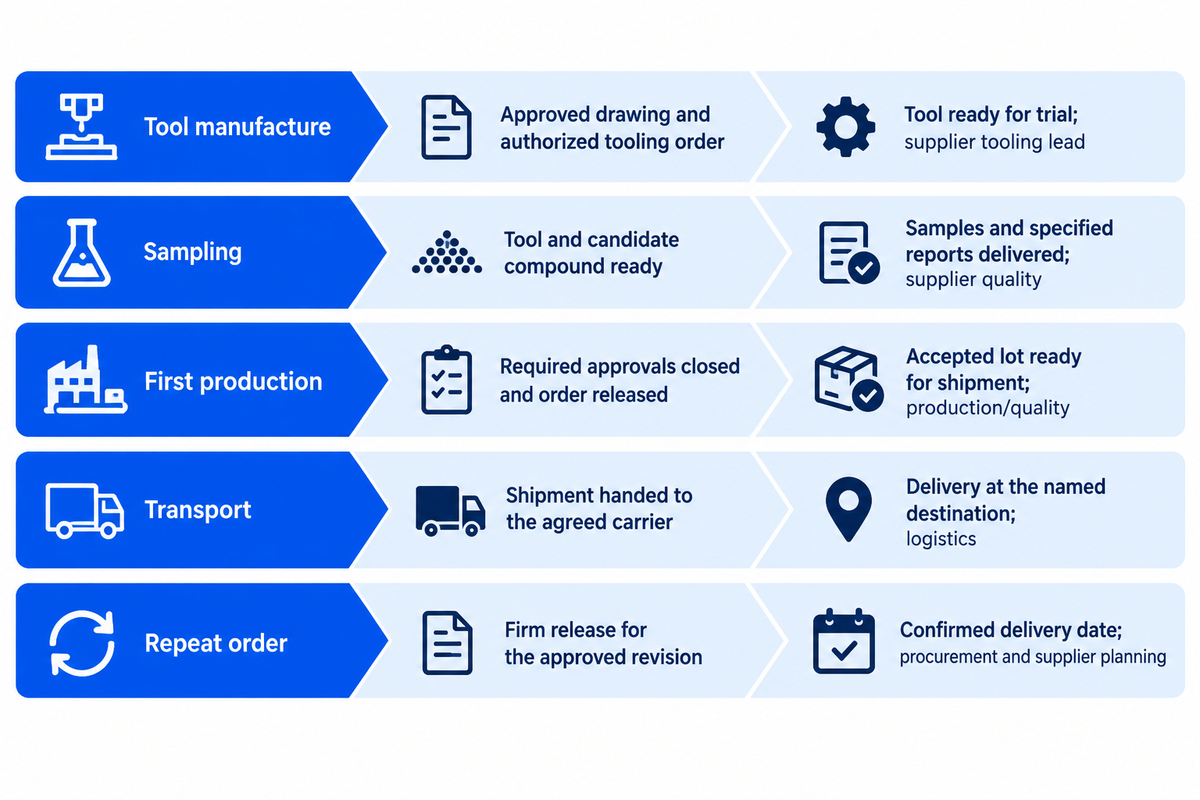
Define the start and the end of each lead-time commitment. Tooling, sampling, first production and shipping have different triggers. A quote stating a delivery period becomes useful when both teams agree what defines the start of the period and whether the end of the period is shipping the product or it arriving at the receiving location.
| Event | Start condition to agree | Finish and owner |
|---|---|---|
| Tool manufacture | Approved drawing and authorized tooling order | Tool ready for trial; supplier tooling lead |
| Sampling | Tool and candidate compound ready | Samples and specified reports delivered; supplier quality |
| First production | Required approvals closed and order released | Accepted lot ready for shipment; production/quality |
| Transport | Shipment handed to the agreed carrier | Delivery at the named destination; logistics |
| Repeat order | Firm release for the approved revision | Confirmed delivery date; procurement and supplier planning |
A forecast enables planning of capacity and material; a firm release defines the purchase commitment with agreed terms. Paul Ericksen’s IndustryWeek discussion of supply policies defines firm, flexible and forecast periods. Agree on what can change in each period and who bears the inventory when demand changes.
For GR-17, distinguish the manufacturing batch size from the shipment quantity and determine what minimum order applies to production, what quantity can be released from stock and what revision that stock covers. Consider cost factors of rubber molding when determining those quantities. An annual estimate isn’t an acceptable substitute for an agreed order schedule.
Storage and packaging should be included in the inventory plan. ISO 2230:2026, published in March 2026, covers storage, inspection, recording and packaging of rubber products before circulation. Use the applicable requirements and compound guidance to set storage controls; a buffer-stock agreement needs more than a quantity and a warehouse address. ISO 2230:2026 public scope.
Rubber component changes: protect fit and function
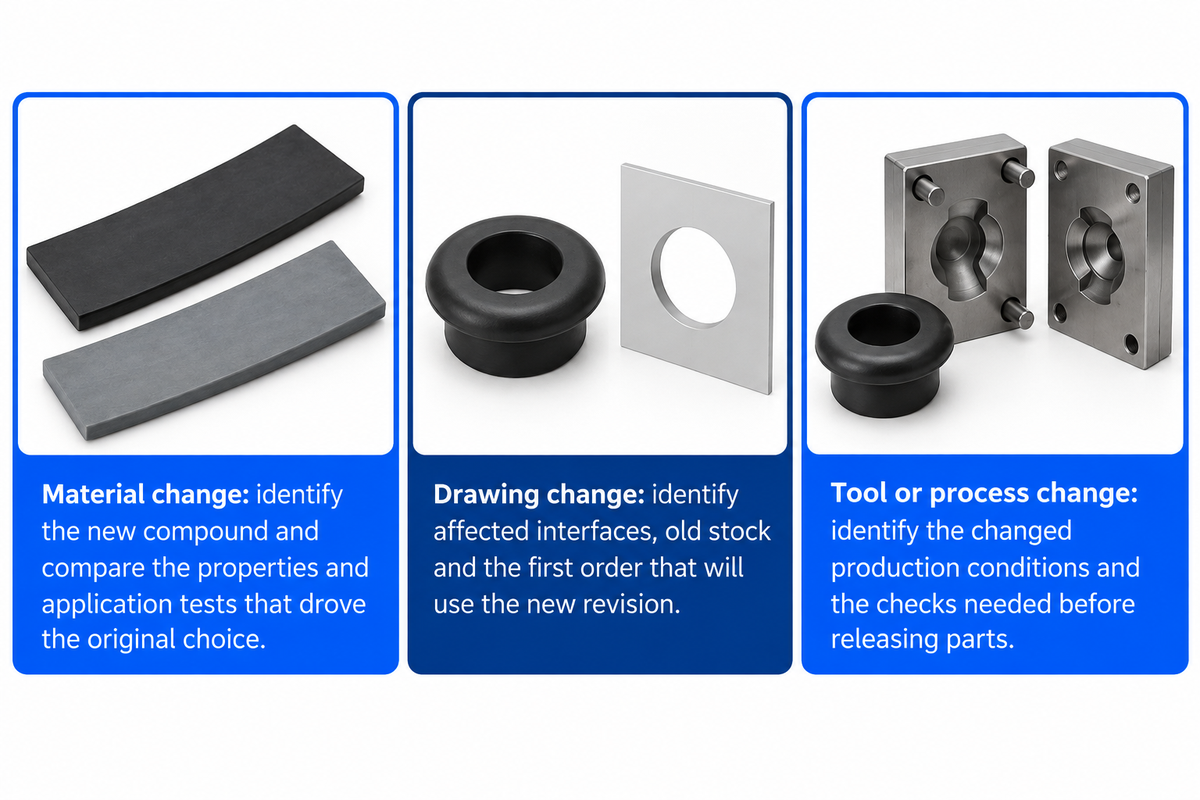
Evaluate the effect of changing requirements against the function of the part and stock it affects. A compound substitution can result in a change in other material properties. Drawing revisions to improve assembly function may render existing inventory unusable.
For sealing components, compare test results under comparable conditions. Parker’s rubber seal test-report guidance discusses the importance of testing method, specimen geometry, and environmental factors. Similar values, although from test conditions that aren’t the same, don’t provide a basis to accept a substitute.
Static and dynamic loads need to be considered differently. ASTM D395 states that compression-set testing is mainly applicable to static stress; compression flexing or hysteresis tests better represent dynamic repeated deformation. A flexible vibration control mount needs evaluation under dynamic loads, while a static gasket needs evaluation under static loads. ASTM D395 significance and use.
- Material change: identify the new compound and compare the properties and application tests that drove the original choice.
- Drawing change: identify affected interfaces, old stock and the first order that will use the new revision.
- Tool or process change: identify the changed production conditions and the checks needed before releasing parts.
Procurement should obtain an engineering disposition for the affected order when an urgent substitution is proposed. Indicate on the disposition if the existing stock may be used, if it needs to be segregated, or if it requires further assessment. The release should identify the part revision and lots covered so the assembly plant can act on the release.
Tooling and assembly support: define the supplier boundary
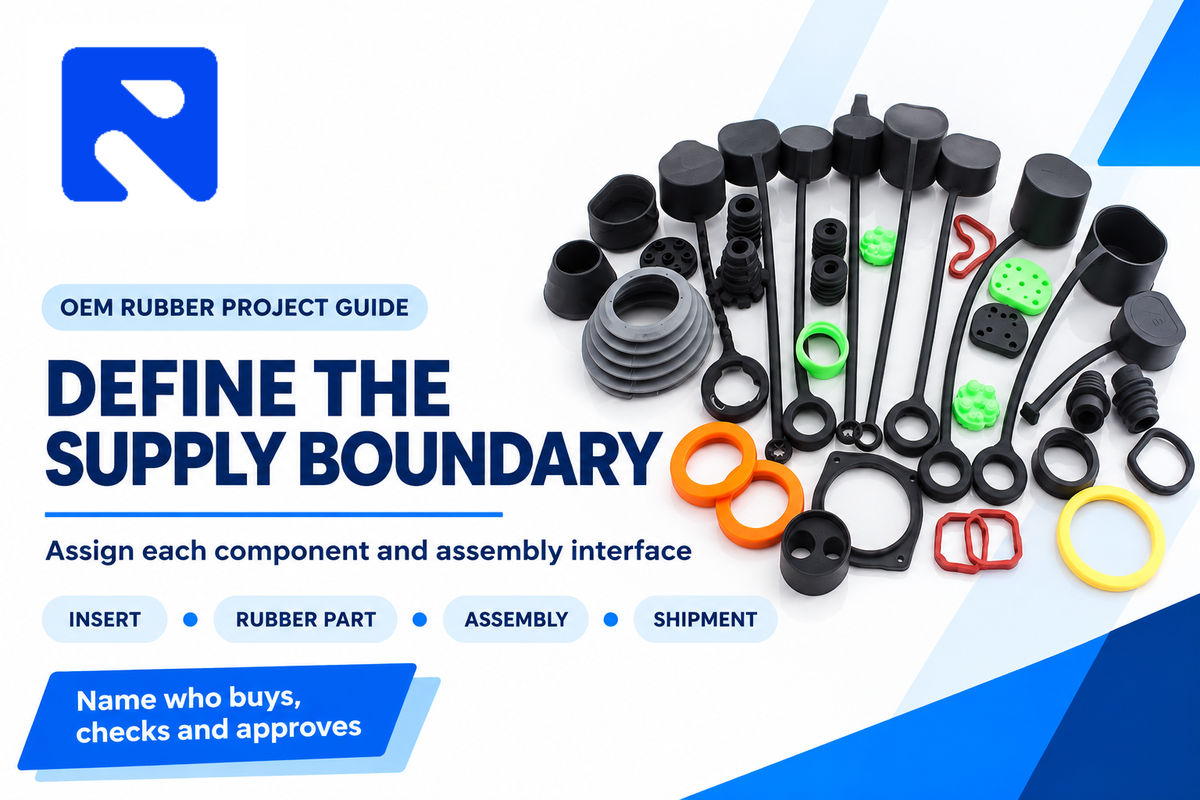
Assign responsibility for the interfaces between rubber molding and the finished assembly. For machinery assemblies, one provider may make the elastomer, buy a metal insert and assemble the product. The arrangement may work if the order identifies who buys, checks, and approves each item.
| Interface | Allocation to put in the order |
|---|---|
| Purchased insert or plastic housing | Who supplies it, controls its revision and checks incoming dimensions? |
| Molded rubber component | Who controls the compound, tool and inspection records? |
| Finished assembly | Who defines the assembly method and checks the resulting function? |
| Packed shipment | Who approves identification, protection and delivery documentation? |
Our manufacturing scope at Engelhardt includes rubber and plastic products, hardware, in-house mold work, assembly and packaging. For an integrated project, define which operations and purchased items belong in the quoted scope. Value-added assembly is helpful if it removes an interface that your team otherwise has to manage.
When discussing molded rubber products, provide the drawing, mating part and the anticipated order pattern. Identify the tests required on the assembled product as well as the rubber component. This provides the supplier a basis for evaluating capability and proposing a solution.
Production handoff: use the 3-Change Reorder Test
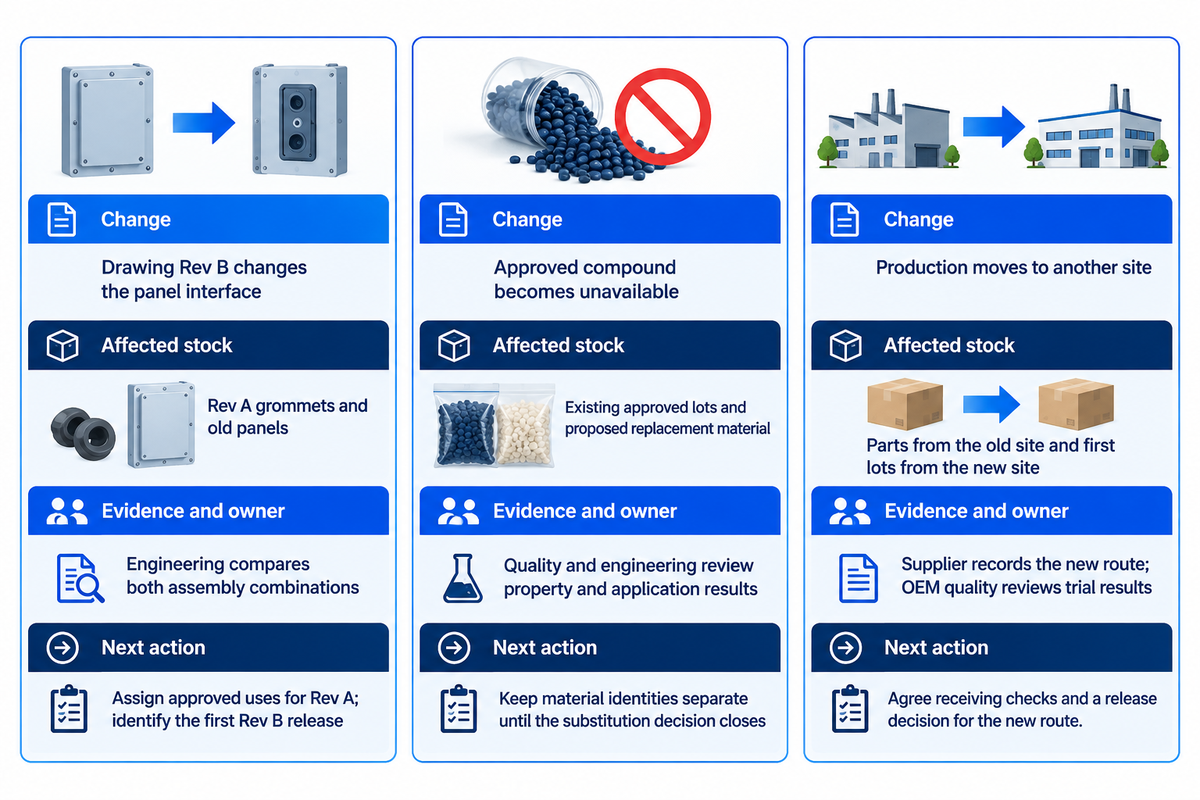
The 3-Change Reorder Test is a planning exercise to define responsibilities when a drawing, compound, or a production site changes.
Run the exercise with engineering, quality, procurement and plant operations before the first repeat order. Use the same part. The fictitious GR-17 example below maps actions to causes; it is a planning tool and not a certification score.
| Change | Affected stock | Evidence and owner | Next action |
|---|---|---|---|
| Drawing Rev B changes the panel interface | Rev A grommets and old panels | Engineering compares both assembly combinations | Assign approved uses for Rev A; identify the first Rev B release |
| Approved compound becomes unavailable | Existing approved lots and proposed replacement material | Quality and engineering review property and application results | Keep material identities separate until the substitution decision closes |
| Production moves to another site | Parts from the old site and first lots from the new site | Supplier records the new route; OEM quality reviews trial results | Agree receiving checks and a release decision for the new route |
NIST MEP’s supply-chain resilience guidance notes supplier alternatives and communication. For a custom rubber component, focus that communication on the approved part: who has the usable tool, what material can be supplied, and how much approved stock remains to cover the release schedule?
When the team is unable to name the owner of an outstanding decision, name one and agree to the outcome prior to releasing the change. Store the decision with the drawing revision and purchasing records so the next buyer can use it.
FAQ
What are 5 products made from rubber?
Five industrial examples are seals, grommets, gaskets, dust covers and vibration mounts.
Each performs a different job: containing fluid, protecting a cable, sealing a joint, excluding debris or controlling movement. Some rubber products combine several of these functions in one molded component. The product name alone doesn’t specify the compound, dimensions or operating limits. Define those requirements for the actual equipment before requesting manufacture or comparing a catalog alternative.
Can a supplier make a rubber part from an old sample?
Yes, a sample can help establish the shape, but the replacement still needs agreed dimensions and material requirements.
Age, compression and service exposure can change an old part. Give the supplier the mating parts and operating conditions, then agree a controlled drawing and suitable material requirements. Review the proposed replacement in the assembly before approving production. Copying a worn part can reproduce a distorted shape or miss the function that the original component was designed to perform.
Does the same rubber hardness mean the same performance?
No. Hardness describes one measured property under a stated test method.
Compounds with similar hardness can differ in compression set, chemical resistance, aging behavior and other properties. Agree the compound identity or performance specification and the application tests that matter. Treat a proposed material substitution as a change to review, even when its nominal hardness remains the same. For a seal or mount, review the relevant loading and exposure conditions too.
Can tooling be moved to another rubber manufacturer?
Possibly, after ownership, transfer terms and receiving-process compatibility have been resolved.
Review the tool condition and drawings with the receiving manufacturer. Agree the trials and part checks needed before production release at the new site.
Which delivery and support questions should a US buyer ask an overseas supplier?
Ask where the parts are molded, where stock is held and who owns each delivery milestone.
A sales address in the USA isn’t a production-site address. Confirm whether quoted lead times end at dispatch or at your receiving location. Separate transport from manufacturing and approval time. For stock held domestically, clarify who purchases it, which revision it covers and what happens after a drawing change. Agree lot identification, receiving checks, rejected-stock handling and the contact responsible for urgent changes. Apply these questions to an industrial rubber project wherever the supplier’s headquarters is located.
What should happen when a rubber component is discontinued?
Agree the notification, final order window, tool status and replacement proposal.
Review storage and application requirements before buying extra inventory. Decide who will qualify the proposed replacement and which remaining orders can use the existing approved part.
Prepare the project handoff
Bring the released drawing, application conditions, sample requirements and order pattern to your supplier discussion. Add the named owners for tooling, assembly approval and future changes.
Technical basis: This guide uses public standards scopes and government guidance, and identifies manufacturer technical references. GR-17 and the 3-Change Reorder Test are editorial planning examples and not customer test results. Acceptance limits for products and contract terms for purchase should appear in the project documents.
References & Sources
- ASTM D2000-18(2024)e1: rubber product material classification ASTM International.
- What is Acceptance Sampling? NIST/SEMATECH Engineering Statistics Handbook.
- Supply Management Policies: Consensus Building and Communication Paul Ericksen, IndustryWeek.
- ISO 2230:2026: rubber products, storage guidelines International Organization for Standardization.
- ASTM D395: rubber property, compression set ASTM International.
- Building Resilient Supply Chains: Strategies and Successes for Manufacturers Angelina Rivera, NIST MEP.