
Get in Touch with Engelhardt

Overmolding & Insert Molding Services
— Engelhardt
Move your overmolded and insert-molded parts past the prototype-shop ceiling. Engelhardt runs plastic, rubber and silicone overmolds onto plastic and metal inserts at automotive production volumes—mold making and assembling in one place.
Request A Quote
Substrate · Overmold · Assembly
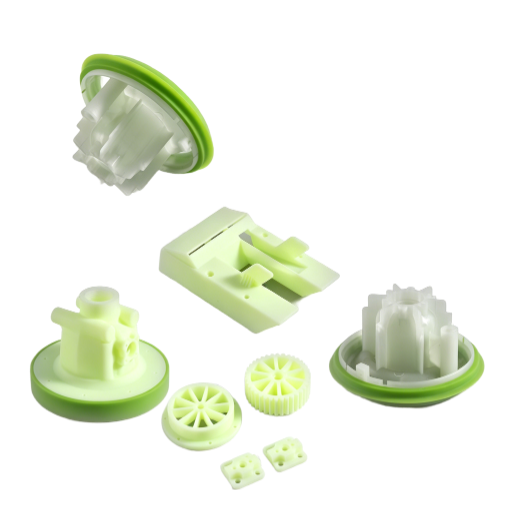
Plastic · Rubber · Silicone
01
400
Injection presses, up to 2,000-tonne clamping
02
40+
Vulcanizing machines for rubber & silicone
03
IATF 16949
Automotive quality system + ISO 9001
04
3,600 m²
In-house mold-making workshop
05
2009
Founded — Zhongshan, Guangdong
06
1 Factory
Substrate, overmold, inserts & assembly in one site
[ EH/OM·002 ] Production-Volume Sourcing
Sourcing Overmolded & Insert-Molded Parts At Production Volume
Most overmolding services and insert molding services you find online are built for prototyping: aluminum tooling, 15-day lead times and quote calculators sized for a few thousand parts. That model works until your program scales. Overmolding combines two or more materials into one part by molding a second material onto a substrate; insert molding places a pre-formed metal or plastic insert into the cavity before the plastic is injected around it during an injection molding cycle. Both eliminate downstream assembly — but only if the supplier can sustain quality over hundreds of thousands of cycles.
The Risk In Year Two
Where Prototyping-Grade Supply Chains Quietly Break
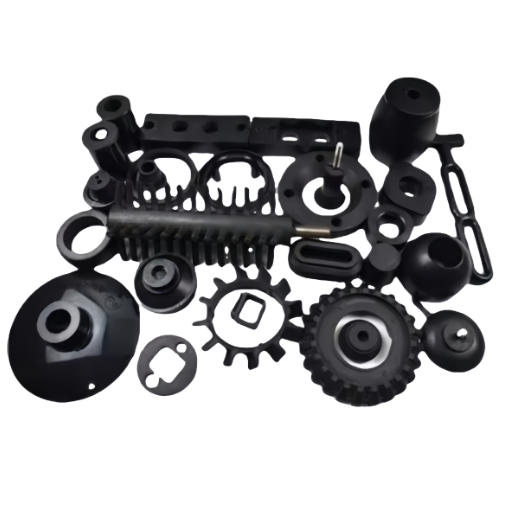
The weak link is seldom the first article. It is the second year of production. A prototyping bureau caps tooling at 2,000 to 10,000 shots, so a program which expands beyond that volume is mid-life re-tooled—a cost and qualification risk no procurement team expects. Rubber-only molders cannot run a rigid plastic substrate; plastic-only molders cannot vulcanize a soft overmold. Buyers then split one part among three suppliers—substrate here, overmold there, metal inserts somewhere else—and take on a tolerance stack that one supplier does not own.
Read Full Details
The Engelhardt Model
One Supplier. One Tolerance Chain. One PO.
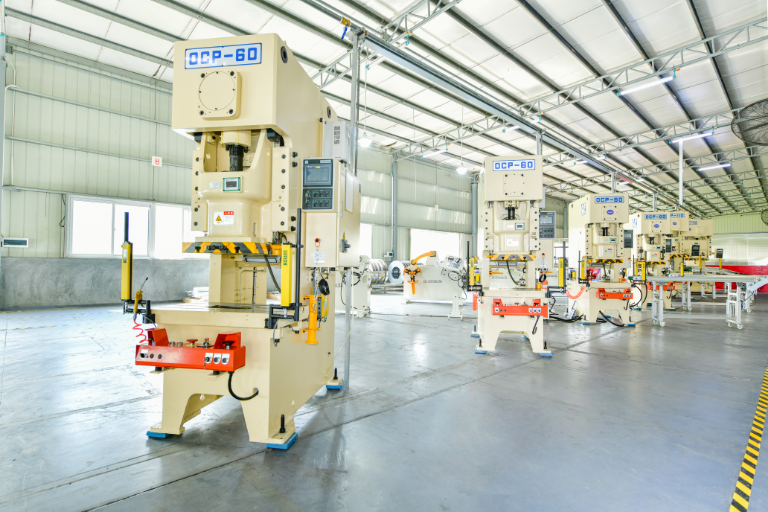
That is where Engelhardt comes in. We mold the rigid plastic substrate, the soft TPE or silicone overmold and the rubber-to-metal bonded part; we make or source the metal inserts; and we assemble the finished unit — inside one 53,000 m² factory running since 2009. Forty-plus vulcanizing machines and 400 injection presses, the largest at 2,000-tonne clamping, mean an overmolding program will not outgrow us. One supplier owns the whole tolerance chain, one PO covers the part and it is qualified once.
Read Full Details
“
When a buyer hands us a soft-grip handle as three separate part numbers, the first thing we look at is the bond line — not the price. Consolidating substrate, overmold, and the metal insert into one tool is where the real cost and quality gain lives, because the interface stops being someone else’s problem.
[ EH/OM·003 ] Capabilities · Materials · Tolerances
Engelhardt Overmolding & Insert Molding Capabilities — Materials, Tolerances & Process Types
An overmolded part fails in the field for one reason far more often than any other: the interface bond between substrate and overmold was an afterthought. A soft grip peels at the edge; a sealed connector enables water ingress at the interface; a TPE button de-laminates in thermal cycling. The primary reason is invariably a material combination which was never tested for compatibility, or a substrate shape with no mechanical interlock to support a weak chemical bond. Our process selection starts there — at the interface — not with the press.
Four Process Types We Run
PROCESS · COVERAGE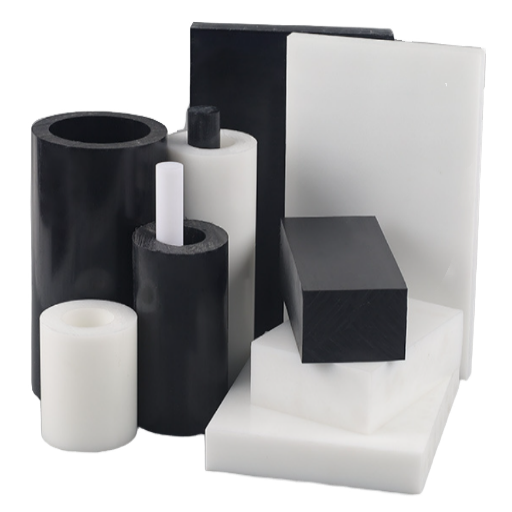
Plastic Over Plastic
A rigid thermoplastic substrate overmolded with a second rigid or engineering resin—multi-color housings, integrated hard/hard features, and two-material functional parts.
Read More
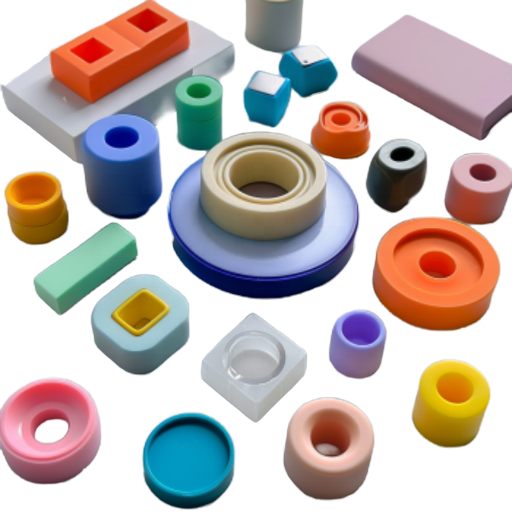
Soft Over Rigid
TPE (thermoplastic elastomer), TPV, TPU, or liquid silicone rubber molded onto a rigid substrate for soft-touch grips, vibration damping, seals, and added durability on ergonomic surfaces.
Read More
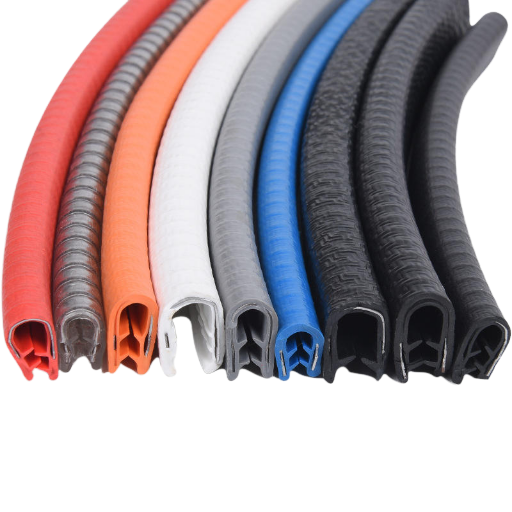
Plastic Or Rubber Over Metal
Insert molding around stamped, machined, or threaded metal inserts — connectors, electrical contacts, threaded bosses, and load-bearing assemblies.
Read More
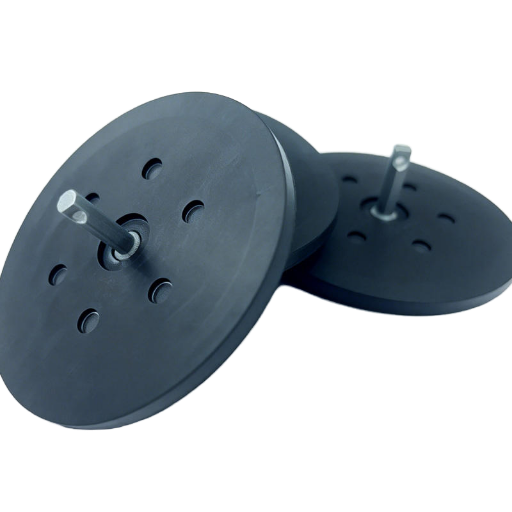
Rubber-To-Metal Bonding
Elastomer vulcanized and chemically bonded to a metal core for mounts, bushings, isolators, and sealing components that carry mechanical load.
Read More
Specifications & Selection Criteria
DATA HUB · METRICS| Parameter | Typical Capability | Notes |
|---|---|---|
| Injection Clamping Force | Presses up to 2,000 tonne | 400 machines — scales from small parts to large housings |
| Substrate Wall Thickness | 0.5 mm to 4 mm | Thinner sections reviewed case by case |
| Dimensional Tolerance | ±0.05 mm to ±0.10 mm | Tighter tolerances on critical features by agreement |
| Overmold Materials | TPE (thermoplastic elastomer), TPV, TPU, LSR, EPDM, Nitrile | 40+ vulcanizing machines for rubber and silicone |
| Substrate Resins | ABS, PC, PA (nylon), PP, PBT, glass-filled grades | 100 tonne of plastic processed daily |
| Metal Inserts | Brass, Steel, Stainless, Stamped & Machined | In-house hardware capability for insert supply |
| Mold Validation | T0 / T1 / T2 Sampling to Golden Sample | Built and trialled in our 3,600 m² mold shop |
Engineering Note
Insert Retention — Knurl, Boss Geometry & Real-Resin Validation
For threaded inserts, pull-out and torque resistance come from the knurl pattern and the plastic boss around it, not from the screw thread alone. A diamond-knurled brass insert holds substantially better than a smooth or self-tapping insert, because the plastic flows into the knurled insert and forms a mechanical bond. As a working rule, the plastic boss diameter should be roughly two to two-and-a-half times the insert outer diameter so the wall does not crack during molding or service. We confirm retention on your actual resin during sampling rather than relying on a generic datasheet.
Those tooling and volume trade-offs feed straight into total cost — which is where the next section starts.
[ EH/OM·004 ] Process Selection · Cost vs. Bond
Overmolding Vs. Insert Molding Vs. Two-Shot Molding — Process Comparison
Engineers and program managers keep hitting the same disagreement: engineering wants the strongest bond, the program wants the lowest piece price, and the two pull in different directions. A purely mechanical insert-molded joint is cheaper to tool but weaker at the interface; a chemically bonded overmold is stronger but adds a second material handling step. Our comparison below puts the trade-off in concrete terms so the decision is made on data, not preference.
| Attribute Decision Criterion | Process A Insert Molding | Process B Overmolding | Process C Two-Shot Molding |
|---|---|---|---|
| Materials Combined | Metal/plastic insert + plastic | Substrate + soft/rigid overmold | Two polymers in one cycle |
| Interface Strength | Mechanical Only Mechanical interlock only |
Chemical + Mechanical Chemical bond, mechanically reinforced |
Chemical In-Cycle Chemical bond, in-cycle |
| Cycle Steps | Single shot, insert loaded first | Two shots, substrate transferred | Two shots, automated, no transfer |
| Relative Tooling Cost | Lowest | Moderate | Highest |
| Volume Where It Pays Off | Profitable across most volumes | Low to high volume | Very high volume |
| Material Waste | Lower | Moderate | Lowest per part at scale |
Engineer's Working Rule
How Our Team Picks The Process On The First Design Call
The practical rule our engineers use: choose overmolding when the program runs from a few thousand into the high tens of thousands and needs a broad material range — its simpler tooling keeps the upfront cost down. Move to two-shot molding when annual volumes climb toward the hundreds of thousands and the single-cycle efficiency starts paying back the heavier tool. Insert molding stands on its own whenever the part needs a threaded fastener or an electrical contact, regardless of volume. Some part features can only be built one way — a sealed multi-material geometry may rule out two-shot, while a co-molded contact may rule out overmolding — which is why process selection belongs in the first design review, not after the tool is cut.
Not Sure Which Process Fits Your Part And Volume? Get A Free DFM & Tooling Feasibility Review.
Request Feasibility Review[ EH/OM·005 ] Production Capacity · OEM Trust
From Prototype To Million-Part Runs — Production Capacity & Customer Outcomes
A program that gets re-tooled because the supplier's capacity ran out is the most expensive surprise: new tooling spend, new PPAP, and weeks of lost supply. The cause is choosing a partner who sized tooling and press capacity for prototypes. Engelhardt's capacity is sized precisely the opposite. We make hardened production tooling in our own 3,600 m² mold shop with high-speed CNC, EDM, and deep-hole drilling, and we operate on a floor of 400 injection molding presses and over 40 vulcanizing machines. An overmolding program that grows from a pilot run to a million parts per year remains on the same tooling, in the same factory, qualified once.
Trusted By Leading OEMs
Audited & Approved By Tier-1 Brands Before A Part Number Is Assigned
American Standard
Kohler
Amphenol
Oatey
SFA
That scale is already trusted by leading OEMs. Engelhardt supplies molded rubber, silicone, plastic, and assembled components to clients including American Standard, Kohler, Amphenol, Oatey, and SFA — firms that perform rigorous audits of their supply chain before they assign a part number. These lines also produce automotive sealing and bushing parts, electrical connectors and cable overmolding, hardware tools with soft-touch grips, and appliance and consumer components.
3
1
Vendor Consolidation Ratio
Consolidating substrate, overmold, metal insert, and assembly from separate vendors into one supplier removes the cross-vendor tolerance stack, the duplicate freight, and the duplicated inspection — and replaces multiple POs with one.
TCO framework — savings depend on part complexity and current vendor structure. Request a custom analysis.
Industries We Serve At Production Volume
VERTICALS · APPLICATIONSAutomotive
Sealing components, bushings, and bonded isolators made under IATF 16949 system with PPAP-style documentation.
Electrical & Connectors
Cable overmolding, sealed housings, and gaskets for electronics, in which the overmold guards contacts from moisture and strain.
Hardware & Consumer
Soft-touch grips on tools and appliance parts, where overmolding removes a separate grip-assembly step.
Capacity protects the program; the quality system protects each shipment — which is what procurement audits next.
Want A Quote Sized To Your Annual Volume, Not A Prototype Calculator? Get A Volume-Based Quote.
Get Volume-Based Quote[ EH/OM·006 ] Certifications · Quality Control
Certifications & Quality Control
The greatest concern with shipping an overmolding supplier abroad isn't capability — it's whether the quality assertions can withstand audit. The plain truth is that a website certificate means little; the sign of quality lies in a documented system and its record. Our plant operates under IATF 16949, the automotive industry quality standard, and ISO 9001. IATF 16949 matters here because it requires statistical process control, capability studies, and part-approval paperwork — the discipline that keeps an overmolded part consistent from the first shot to the millionth.
Quality Control & Facilities
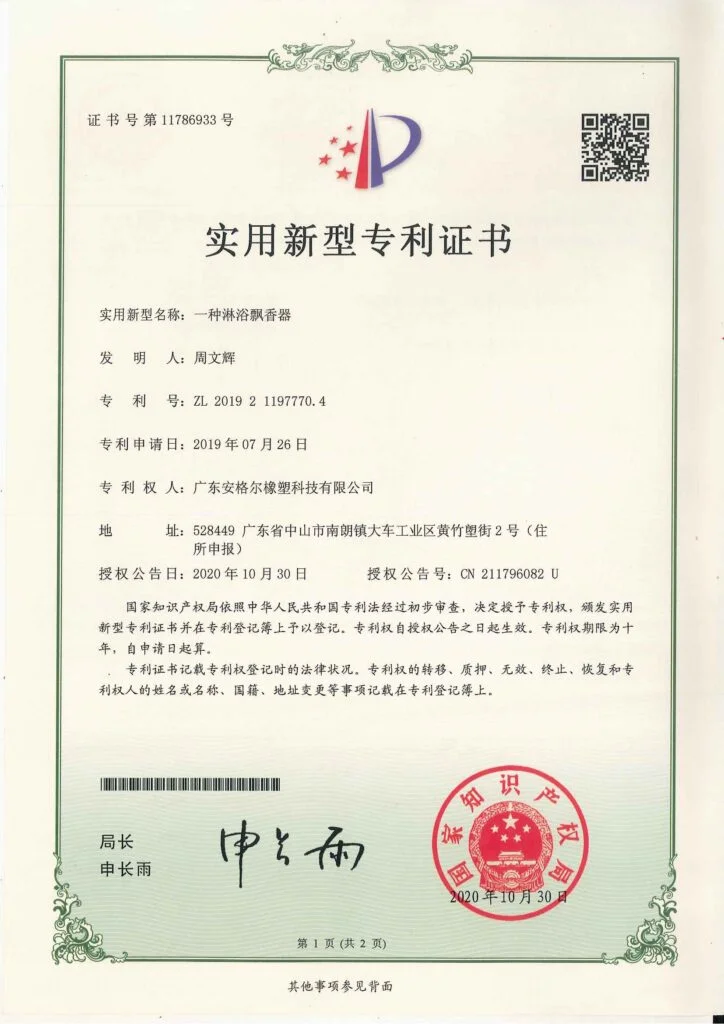
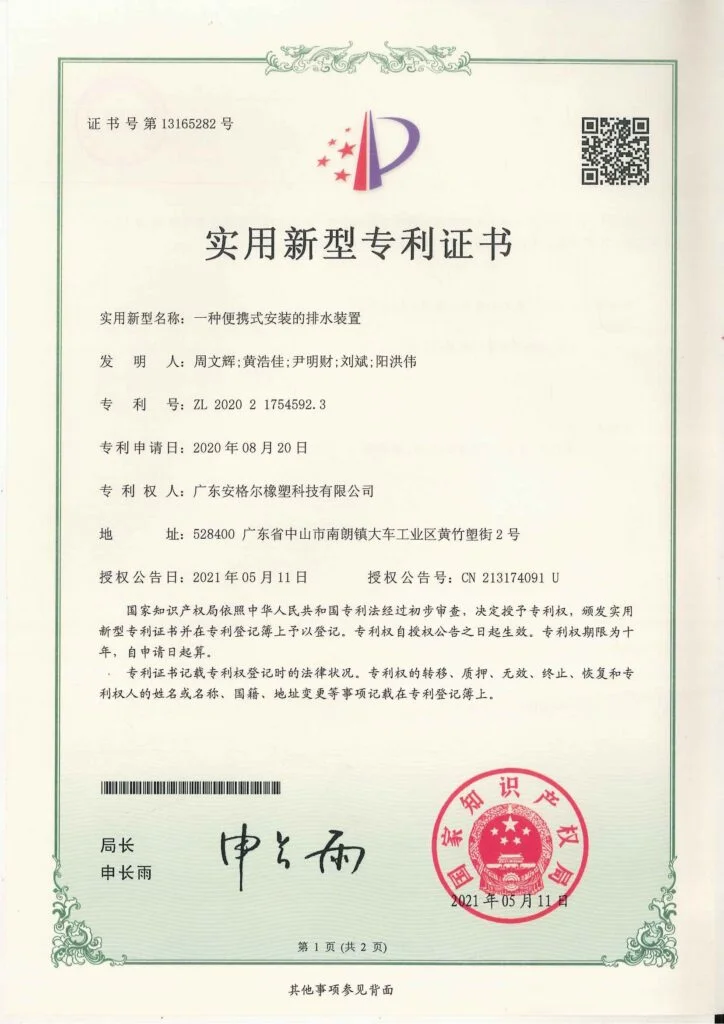
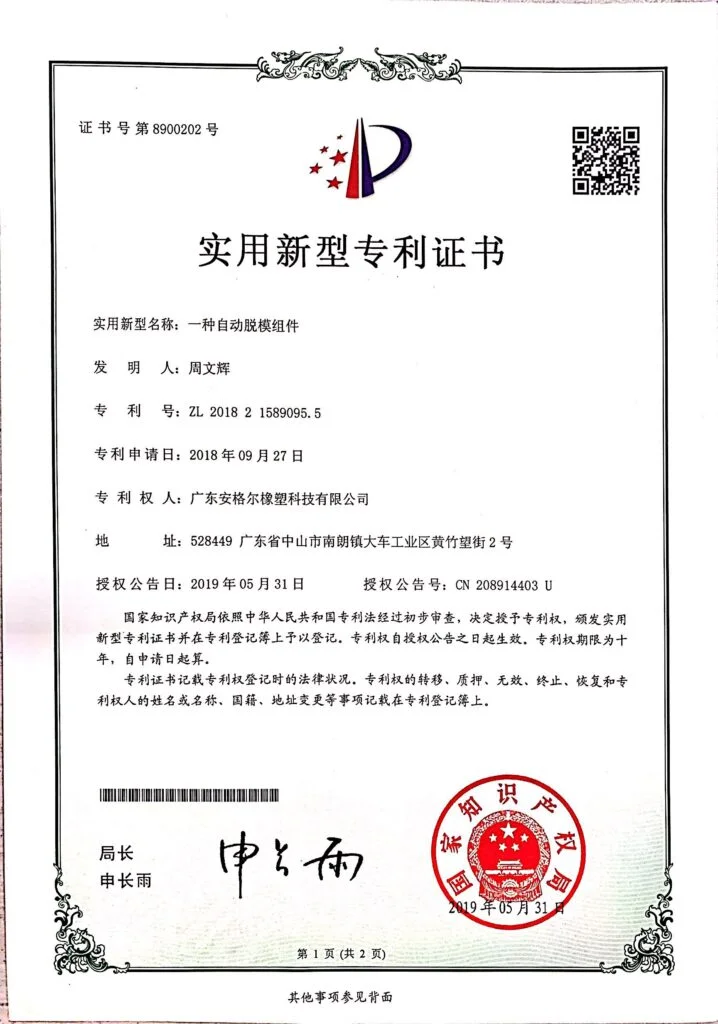
/ 01
IATF 16949
Automotive quality management system
/ 02
ISO 9001
Quality management system
/ 03
In-House Lab
Mooney viscometer, rheometer, salt-spray
/ 04
T0 / T1 / T2
Staged mold validation to golden sample
Quality Control Runs Across The Whole Process
INSPECTION · LAB · MATERIAL POLICYQuality control on a multi-material part runs across the whole process, not just final inspection. Inserts are checked for presence and orientation before the mold closes; first articles are dimensionally inspected; bond and pull-out strength is tested for samples throughout the run; and our test station — which features a Mooney viscometer, a moving-die rheometer, salt-spray corrosion test equipment, and materials test machines — verifies that the silicone and rubber compounds deliver as promised. Material Policy: Every overmolding and insert molding lot is run using virgin grade material unless the customer specifies differently; regrind is never blended in critical parts to save cost.
Inspection Checkpoints
CP1
Pre-Close: Inserts are checked for presence and orientation before the mold closes.
CP2
First Article: Dimensionally inspected at the start of the run.
CP3
In-Process: Bond & pull-out strength tested on samples throughout the run.
CP4
Lab Verification: Mooney viscometer, rheometer, salt-spray & materials test machines.
Need To See The Records Before You Shortlist Us? Request Our Compliance & Certification Pack.
Request Certification Pack[ EH/OM·007 ] Procurement · Tooling · Lead Times · MOQ
Procurement Guide: Tooling, Lead Times, MOQ & Working With An Overseas Molder
Most overmolding quotes look comparable in the first meeting and diverge sharply once you read into the tooling scope. Expensive surprises are well documented: a quote that turns out to cover only the cavity inserts while the factory keeps the mold base; regrind blended into parts that were specified as virgin material; a "local-equivalent" resin swapped in for the qualified grade; or soft steel substituted for the hardened grade you paid for. None of this is inevitable in outsourcing — it is what happens when the RFQ is vague. This guide is written so your RFQ is not.
How Tooling And Part Cost Are Structured
COST · FORMULA · QUOTE LINESA overmolding project is quoted in two ways: a one-time tooling fee, and a recurring per-piece price for every order. Total project price equals the one-time tooling fee plus the unit price times quantity. Tooling price is based on part size, the number of cavities, steel grade, mold design complexity, and the rated mold life; not on a published one-size fits all list price. The per-piece price is based on material grade and part weight, cycle time, press size, and secondary operations or assembly; not on one published price. We quote both lines explicitly, state whether you own the entire mold including the base, and document the steel grade.
Total Project Price Formula
Tooling Fee
+
Unit Price
×
Quantity
= TOTAL PROJECT PRICE
Tooling Drivers
Part size · cavity count · steel grade · mold complexity · rated mold life
Unit-Price Drivers
Material grade & part weight · cycle time · press size · secondary ops / assembly
Buyer Advisory — What To Lock Down In The RFQ
RISK · 4 CONTROL POINTSIdentify four potential sources of mold quality risk and most overseas-molding will roll that risk onto you. Engelhardt gladly quotes against all four by default — ask for your part and the results are already on the table.
01
Mold Ownership
That you own the entire mold including the base plate and are free to move it.
02
Virgin Material
"100% virgin material" on critical parts, with the exact resin grade specified.
03
Steel Grade
The steel grade for the tool, with a steel certificate and hardness report provided.
04
Dimensional Tolerances
The dimensional tolerances for critical features provided.
Engelhardt Commitment: we quote against all four control points by default — ask for your part and the results are already on the table.
Lead Times And Order Volume
SCHEDULE · MOQLead time on an overmolded part breaks down into stages and a pragmatic schedule accounts for each. For example, production tooling for overmolding and insert molding can take months depending on complexity, then T0/T1/T2 sampling and golden-sample signoff, after which press production can be transitioned over days to weeks. Rather than a single optimistic number, we provide you a lined out staged schedule up front. MOQ are determined for each part, with reduced limits for pilot and bridge runs; we will inform you of the current production MOQ rather than using a headline figure.
Lead-Time Stages · Lined Out
S1
Production Tooling
Months, depending on complexity.
S2
T0 / T1 / T2 Sampling
Staged trial shots through to golden-sample signoff.
S3
Press Production Transition
Days to weeks; volume ramp begins.
S4
MOQ & Bridge Runs
Per-part MOQ; reduced limits for pilot & bridge runs.
Working With An Overseas Molder
FACTORY · NOT MIDDLEMAN
The Real Question →
Not "China Or Domestic" — But "Factory Or Middleman?"
Why should a production-scale overmolding move to a manufacturer like Engelhardt? Simply because the same molding and tooling capability is available without the prototype-shop premium, and verified factories that serve automotive and medical OEMs run established assembly lines and in-house mold shops. The real question any buyer should ask isn't 'China or domestic,' but, 'factory or middleman?' — A trading company adds a markup and little engineering input. Engelhardt is the factory: a 53,000 m² site with its own presses, vulcanizing lines and mold shop, not a sales office. We work to a known defect rate, support pre-shipment inspection, and safeguard your design with an NNN-type confidentiality agreement and unambiguous tooling-ownership terms prior to any drawing surrender. Two-way shop floor English comms, video or photos on request, so the factory you witness is the factory dedicated to actually making your part.
53,000 m² Site
In-House Mold Shop
Known Defect Rate
Pre-Shipment Inspection
NNN Confidentiality
Tooling Ownership Terms
Two-Way English Comms
Video / Photo On Request
[ EH/OM·008 ] FAQ · Procurement Reference
Frequently Asked Questions
Eight procurement-level questions Engelhardt receives most often on overmolding, insert molding and overseas tooling — answered to the level of spec sheets, certificates and program schedules, not marketing copy.
08 Topics
Process · Cost · Lead Time · MOQ · Materials · Inserts · Automotive
FAQ-LIST · v.2026
01
What Is The Difference Between Overmolding And Insert Molding?
What Is The Difference Between Overmolding And Insert Molding?
Insert molding places a pre-formed component — often a threaded brass bushing or an electrical contact — into the mold, then injects plastic around it in a single shot; the joint is mechanical. Overmolding molds a second material over an existing plastic substrate, and the bond can be chemical, mechanical, or both. Insert molding adds a functional metal feature; overmolding adds a second plastic or rubber layer such as a soft grip or a seal.
02
How Much Does Overmolding Cost?
How Much Does Overmolding Cost?
An overmolding project has two cost lines: a capital tooling cost, and a running per-piece one. Tooling depends on part size, cavity count, grade of steel, complexity and estimated mold life; piece cost depends on material, part weight, cycle time, and such assembly as is involved. As the variables change on individual parts, we quote to your drawing, not publish a blanket figure — ask for an RFQ and you receive not only the cost line but the individual lines.
03
What Is The Lead Time For Overmolded And Insert-Molded Parts?
What Is The Lead Time For Overmolded And Insert-Molded Parts?
Lead time runs in phases: production tooling takes some weeks, after which T0/T1/T2 sampling rounds and golden samples approval, and then a stack-up of production to whatever goal may require a week or two. We'll supply a realistic program schedule for your individual part rather than an overly optimistic blanket one.
04
What Is The Minimum Order Quantity For Overmolding?
What Is The Minimum Order Quantity For Overmolding?
MOQ is set per part. We give you the realistic figure rather than a headline number once we understand the part geometry and target volume. Pilot and bridge runs carry reduced thresholds; full production carries a standard threshold tied to setup economics.
05
Can You Overmold Silicone Or Rubber Onto Plastic And Metal?
Can You Overmold Silicone Or Rubber Onto Plastic And Metal?
Yes. Engelhardt runs liquid silicone rubber and vulcanized rubber overmolds onto plastic substrates, alongside TPE, TPV and TPU. Silicone and rubber typically bond mechanically or through a primer or bonding agent, so the substrate geometry and surface preparation are designed in from the start. With 40-plus vulcanizing machines on site, rubber overmolding and silicone overmolding are a core capability, not a subcontracted service.
06
Which Materials Can Be Used As Substrate And Overmold?
Which Materials Can Be Used As Substrate And Overmold?
Common substrates include ABS, polycarbonate, nylon (PA), polypropylene, PBT, and glass-filled grades. Common overmolds include styrenic TPE, TPV, TPU, liquid silicone rubber and vulcanized elastomers e.g. EPDM, nitrile. Bond strength varies with each pair — we check material compatibility during design review and verify it on your actual resin during sampling.
07
Do You Make The Metal Inserts In-House?
Do You Make The Metal Inserts In-House?
Engelhardt has hardware and stamping capability alongside molding, so many metal inserts can be produced or coordinated in-house rather than sourced from a separate vendor. Combining the insert, the molding and the assembly in one facility avoids a supplier interface and ensures the tolerance chain remains within one quality system.
08
Can The Overmolding Tool Be Qualified To Automotive Requirements?
Can The Overmolding Tool Be Qualified To Automotive Requirements?
Yes. As Engelhardt is IATF 16949 certified, overmolding and insert molding tooling can be operated with the SPC, capability studies and part-approval records that automotive programs require. Advise us of the standard your program conforms to and we will verify applicability before tooling commences.
Question not listed? Procurement-level answers are addressed on a per-part basis — send the drawing, get the spec sheet.


