
Get in Touch with Engelhardt


Blog
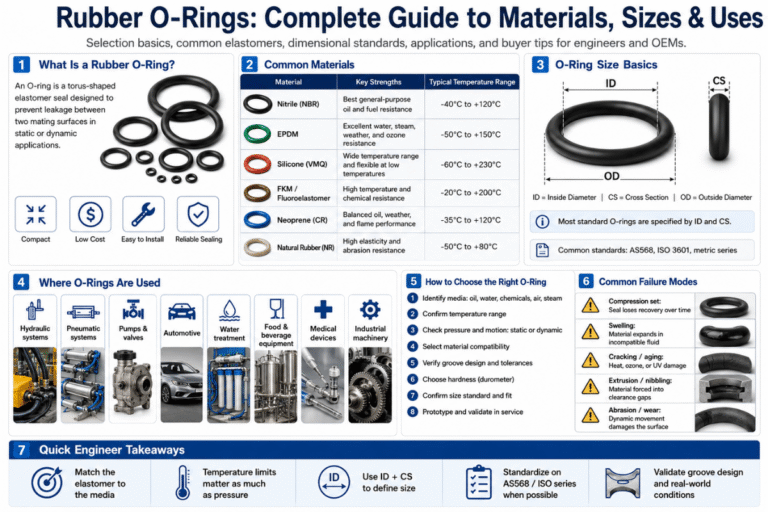
Rubber O-Rings: Complete Guide to Materials, Sizes & Uses
Rubber O-rings – the tiny round seals that maintain fluid and gas leakage within…
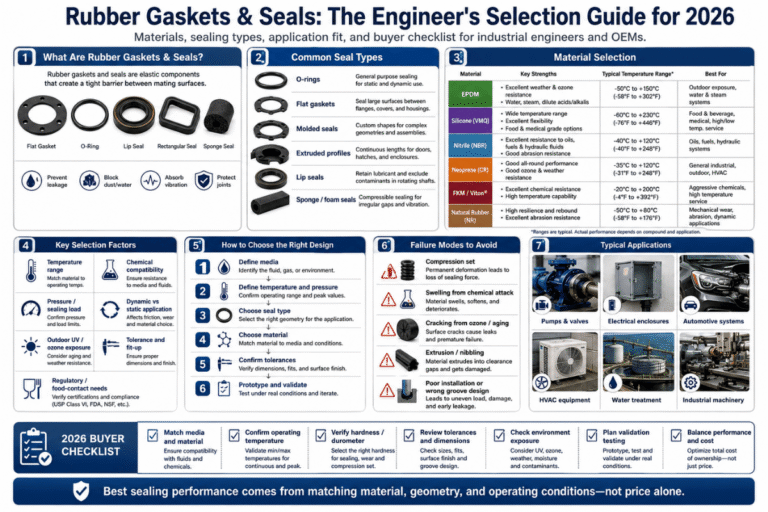
Rubber Gaskets & Seals: The Engineer’s Selection Guide for 2026
Rubber Gaskets & Seals: The Engineer’s Selection Guide for 2026 Rubber gaskets and seals…
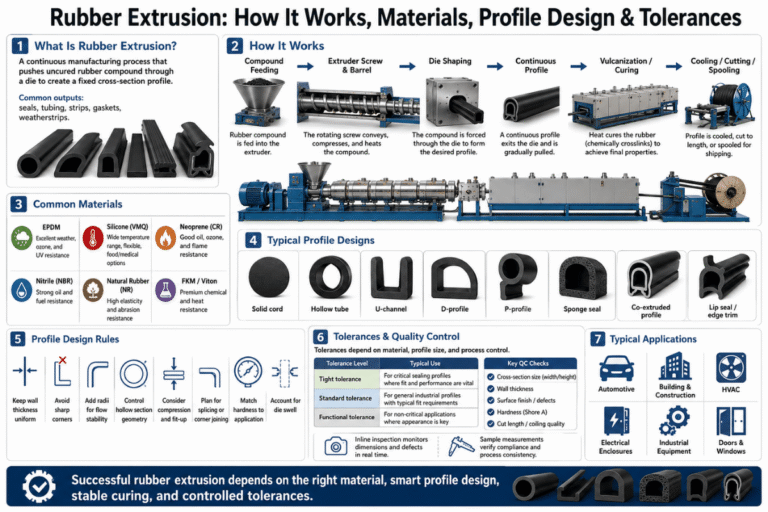
Rubber Extrusion: How It Works, Materials, Profile Design & Tolerances
Rubber extrusion is the continuous manufacturing process that takes uncured elastomer compound and pushes…
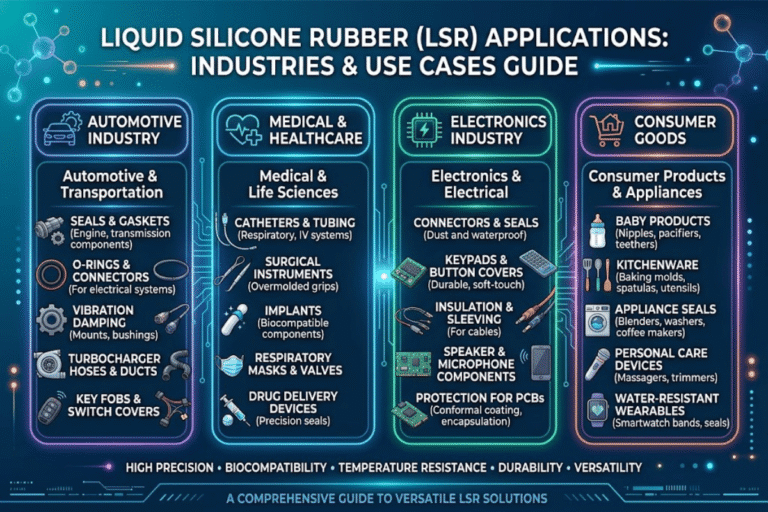
Liquid Silicone Rubber Applications: Industries & Use Cases Guide
Liquid silicone rubber applications span almost every serious manufacturing sector — from implantable medical…
![Silicone Overmolding: Multi-Material LSR Design Guide [2026]](https://meitu-engelhardt.com/wp-content/uploads/2026/04/0-8-768x512.png)
Silicone Overmolding: Multi-Material LSR Design Guide [2026]
Silicone overmolding is a manufacturing process that bonds a flexible silicone layer to a…
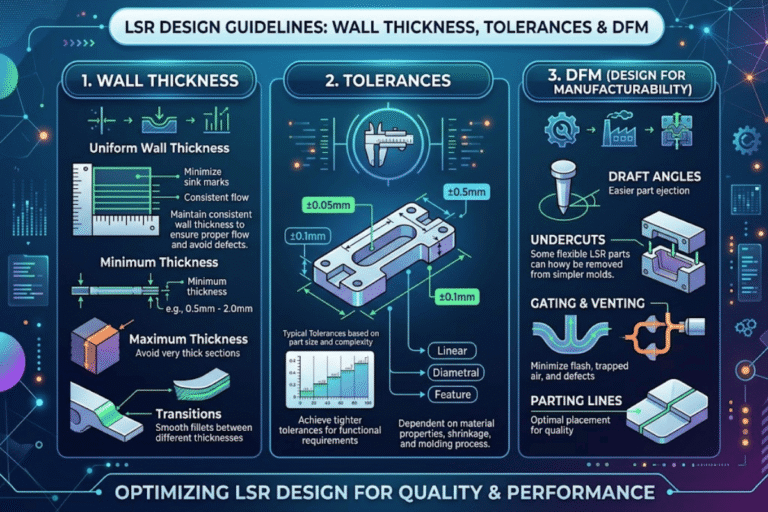
LSR Design Guidelines: Wall Thickness, Tolerances & DFM
What design engineers need to know before locking geometry — first-party tolerance data and…
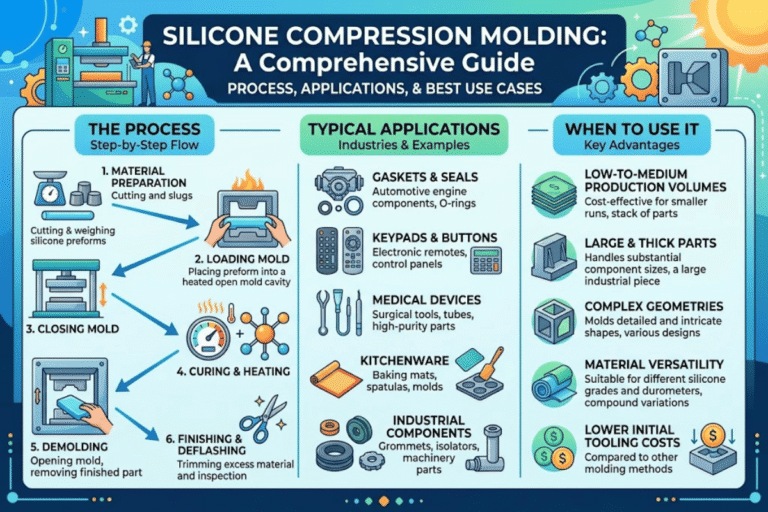
Silicone Compression Molding: Process, Applications & When to Use It
Silicone compression molding shapes pre-measured high-consistency rubber into cured parts inside a heated, closed…
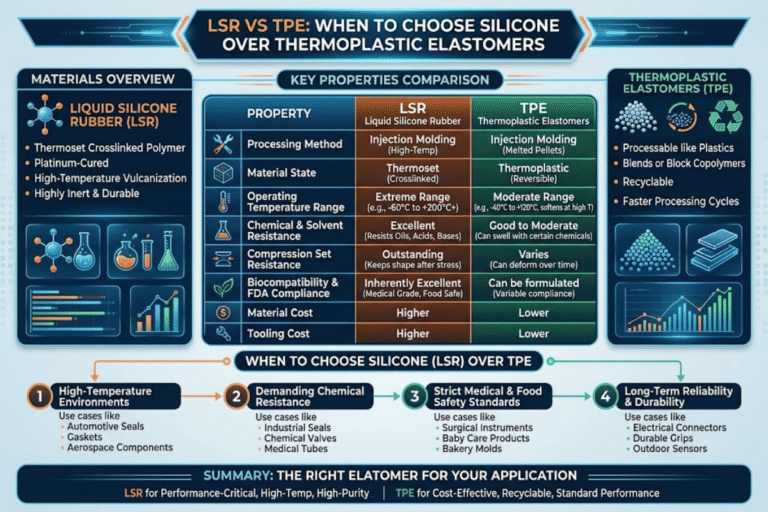
LSR vs TPE: When to Choose Silicone Over Thermoplastic Elastomers
LSR vs TPE is the elastomer-selection question that dooms most product teams before a…
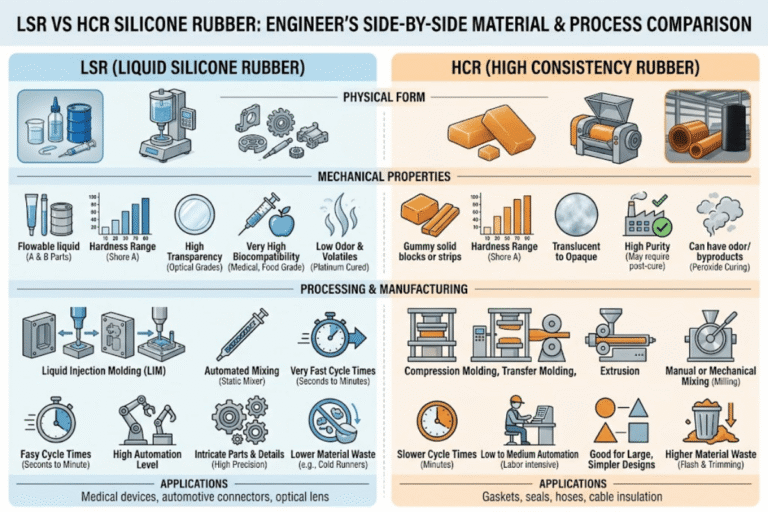
LSR vs HCR Silicone Rubber: A Side-by-Side Material & Process Comparison for Engineers
Engineers comparing LSR vs HCR silicone rubber for a new program rarely settle the…