
Get in Touch with Engelhardt

ISO 9001 · IATF 16949 · FDA Certified
Custom Rubber Molding
Custom Rubber Molding Precision-Engineered for Performance
Guangdong Engelhardt Rubber & Plastic Technology
Guangdong Engelhardt Rubber & Plastic Technology is a reliable manufacturer of custom molded rubber products for automotive, medical, aerospace, and industrial applications. With our global capacity and years of experience, we help with precision components from prototypes to mass production.
15+
Years of Experience
3000T
Annual Rubber Output
500+
Mold Sets / Year
80+
Vulcanizing Machines
Understanding
What Is Custom Rubber Molding?
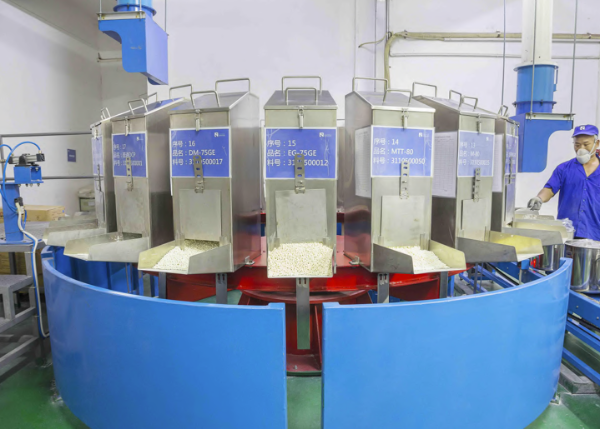
When rubber-bonded components are required for assemblies, the process involves integrating rubber and plastic. Engineers communicate design, hardness, and performance requirements. This enables the rubber to be designed for optimal performance under thermal cycling, chemical exposure, and vibration.
The specific application for the rubber components, for which the requirements are for seals, gaskets, o-rings, valve seats, diaphragms, or mounts, is designed for that specific application. Whether it involves a single prototype or a large-scale series, custom rubber molding combines materials science, process engineering, and precision molding to deliver reliable rubber products for extreme conditions.
At Engelhardt-Meitu, our engineers collaborate directly with every customer to define the geometry, tolerances, and performance specifications of every rubber part and assembly. With over 15 years of experience and in-house capabilities in rubber mixing, mold construction, vulcanization, and quality control, we deliver fully certified rubber products.
Key Capabilities at a Glance
- Compression molding, injection molding & transfer molding
- Insert molding & rubber overmolding services
- Rubber to metal bonding (chemical & mechanical)
- Wide range of silicone, EPDM, nitrile, Viton & custom compounds
- Prototype to high-volume production (3,000+ tons/year)
- Full-automatic upstream mixing with central computer control
- 500+ mold sets produced annually in-house
- Advanced metrology lab with chemical & physical testing
- FDA, LFGB, NSF, WRAS, UL compliant products
- Prototype delivery in as fast as 2–3 weeks
Quality Assurance
Quality Control in Custom Rubber Parts Manufacturing
Quality Control in Custom Rubber Molding offers reliability assurance from the prototype stage to production. We employ an extensive quality control system for each rubber part to ensure compliance with regulations for transportation, medical, and aerospace use.
01
Incoming Inspection
Verifies compound certification, raw material properties, and batch traceability before any material enters production.
02
In-Process Controls
The MES system monitors molding parameters, cavity balance, cure state, and press conditions in real time for every production run.
03
Precision Metrology
Confirms dimensions, hardness (Shore A/D), and surface integrity for every rubber component, including intricate features and bonded interfaces.
04
Functional Testing
Evaluates compression set, leakage performance for seals and gaskets, and resilience under thermal and chemical exposure conditions.
05
Statistical Process Control
SPC detects variations, identifies trends in consecutive production runs, and implements corrections before defects are shipped.
06
Documentation & Traceability
Complete traceability from raw material lot to finished custom molded rubber product, with certificates of conformance for every shipment.
Our Certifications & Compliance Standards
ISO 9001
IATF 16949
FDA
LFGB
NSF
UL
ASTM
WRAS
KTW
IAPMO
Molding Capabilities
Full-Spectrum Custom Rubber Molding Services
From compression molding to injection molding, our precision capabilities cover every manufacturing process required to produce custom rubber components for the most demanding applications across a wide variety of industries.
Compression Molding
Ideal for medium- to large-sized molded rubber parts with tight tolerances. We press pre-formed rubber compound directly into heated mold cavities under high pressure, producing durable seals, gaskets, and diaphragms at scale.
Injection Molding
Precision injection of elastomer compounds into intricate mold geometries enables high-volume production of complex rubber components — from automotive O-rings to medical-grade silicone assemblies — with exceptional consistency.
Transfer Molding
Combining the best of compression and injection methods, transfer molding is engineered for insert molding, rubber-bonded metal components, and multi-cavity precision parts used in mission-critical aerospace and defense applications.
Liquid Injection Molding
Our liquid silicone rubber (LSR) capability delivers medical and food-grade silicone components with flash-free precision. Perfect for high-performance applications demanding thermal resistance and chemical resistance across a wide range of environments.
Custom Molded Rubber Products We Manufacture
Standard O-Rings
Custom Seals
Gaskets & Flanges
Diaphragms
Valve Seats & Components
Vibration Mounts
Rubber Bonded Metal Parts
Silicone Keypads
Bushings & Bumpers
Molded Rubber Parts
Custom Rubber Seals
Insert Molded Assemblies
Why Engelhardt-Meitu
Your Trusted Custom Rubber Supplier
We focus on developing, manufacturing, and fabricating custom products made from rubber, plastic, and silicone. Our extensive knowledge in this area, combined with advanced manufacturing technology, positions us as the best option for your toughest challenges.
In-House Manufacturing
80+ acres, 26,000m² factory with full in-house capability — from compound mixing to finished product assembly. All molds are independently designed and manufactured.
Quality & Compliance
ISO 9001, IATF 16949, with a chemical and physical laboratory. Products meet FDA, LFGB, NSF, UL, and ASTM regulatory requirements across a wide array of industries.
Precision Engineering
500+ mold sets annually using Makino, Roeders, and Standy CNC equipment. 24/7 mold maintenance ensures precision molding with tight tolerance for every component.
Global Scale
With our new 200-acre Thailand production base (60,000m² facility), we offer expanded capacity for high-volume production and an optimized supply chain for global clients.
Industries We Serve
Custom Rubber Components for Every Industry
We manufacture tailored rubber products and precision-molded parts for a wide range of applications across nearly all major industry sectors.
Automotive
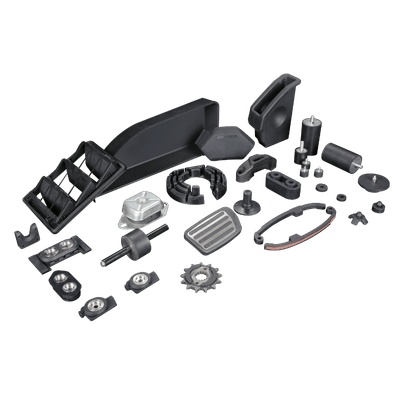
We design engine mounts, seals, dampeners, valve parts, and custom rubber components designed for extreme thermal and chemical resistance.

Aerospace & Defense
Critical mission rubber components for aerospace and military use. From seals for fuel systems to environmental gaskets that comply with AS9100D and ITAR.
Medical & Healthcare
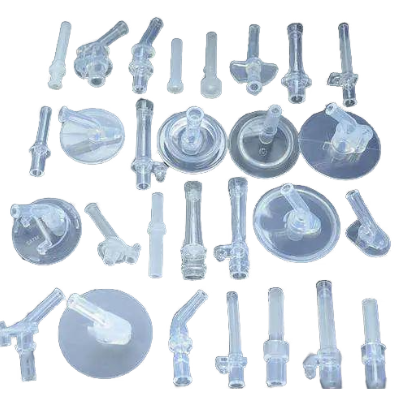
Components made of silicone rubber and elastomers that comply with FDA regulations for medical devices, surgical tools, and pharmaceutical devices that require utmost reliability.
Oil & Gas
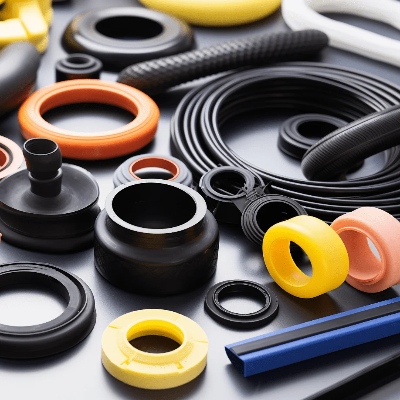
Components for oil and gas that perform admirably, including custom molded rubber components, seals, and diaphragms, are designed for extreme pressure and chemical environments.
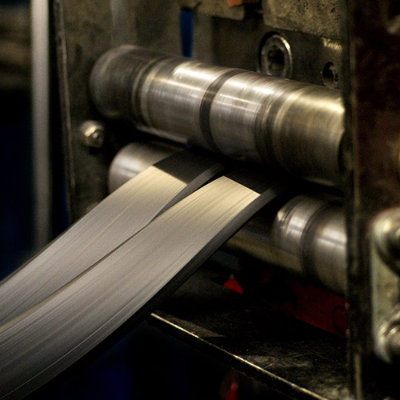
Industrial Equipment
Rubber parts for precision molding for heavy machinery, manufacturing, and transport equipment that extend the life of the equipment and reduce the need for repairs.
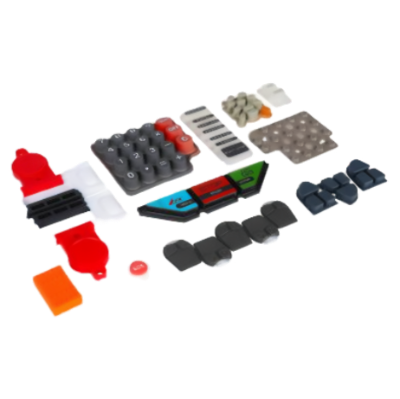
Electronics
Custom molded EMI gaskets, keypads, and protective seals for connectors tailored to the electronics industry.
Our Process
Custom Molded Rubber Parts — From Concept to Finished Product
Our streamlined manufacturing process delivers the best customer experience — from initial concept and material selection through prototype, tooling, and high-volume production.
01
Consultation
Engineer reviews your specs, tolerances, and application requirements
02
Material Selection
Expert compound recommendation based on environment and performance
03
Mold Design
In-house precision mold design using advanced CAD/CAM
04
Prototype
Rapid prototype for validation before committing to production tooling
05
Production
Scalable from low-volume to high-volume production with full QC
06
Delivery
Assembly, inspection, and global logistics for your finished products
Client Case Studies
How We Solve Real-World Custom Rubber Molding Challenges
Our engineering team is responsible for providing convenient, application-specific, custom-molded rubber solutions that meet the most demanding specifications across industries worldwide.
Automotive — Engine Sealing Systems
Custom EPDM Rubber Seals for High-Temperature Engine Bay Application
Challenge
A European Tier 1 automotive supplier was experiencing early failure of engine bay gaskets due to poor-quality Tier 2 EPDM gaskets that cracked, then leaked and spidered oil over 18 months or more of operation above 140 degrees Celsius (with sudden stoppages arising from warranty claims). They needed a custom rubber molding partner who could deliver. The most important requirements were consistent EPDM seals with greater thermal and chemical resistance, and full certification to IATF 16949, at a target volume of 750,000 units per year.
Our Solution
A peroxide-cured EPDM compound with improved heat-aged compression set properties was developed by our engineering team and validated through 2000-hour accelerated aging tests in our in-house laboratory. Repeated mold-flow analysis and process parameter optimization for an injection mold with 16 cavities pushed production quality beyond customer specifications. A fully automatic central mixing plant was used to ensure the greatest agreement among the individual batch preparation systems, so existing operational procedures are carried out with extreme reliability across the entire annual contract. Their PPAP documentation, MSA, and specific IATF 16949 validation were finally phased through contract maturity within the 10-week window from tooling to production start.
Medical Device — Surgical Pump Components
FDA-Compliant Liquid Silicone Rubber Diaphragms for Infusion Pump System
Challenge
An American pharmaceutical hardware manufacturer was seeking medical-grade silicone rubber diaphragms for a generation infusion pump. The rubber parts needed to be highly biocompatible, platinum-cured liquid Silicone rubber (LSR) with extremely tight tolerances (±0.03 mm wall thickness), low extractables per USP Class VI standards, and full FDA 21 CFR compliance. The existing domestic supplier could not meet the required tolerances at 200K units per annum. This led to pump calibration failures during trial validation.
Our Solution
We designed a precision 8-cavity LSR injection mold with a cold-runner system and vacuum-assisted venting, fabricated in our Makino-equipped mold workshop. The thin-wall diaphragm design (0.4mm) required micro-scale flow analysis to ensure complete cavity fill without flash. Our quality team established a documented manufacturing process with incoming silicone certification, cavity-level SPC, and 100% dimensional inspection using optical metrology. All materials were sourced with full FDA-compliant documentation, and extractable/leachable testing was conducted in our chemical laboratory.
Engineering Tools
Interactive Tools for Custom Rubber Molding
Use our free engineering tools to compare molding processes, select the right elastomer compound, and estimate production costs for your custom rubber project.
Rubber & Elastomer Compound Selector
Filter and compare elastomer compounds — including EPDM, silicone, nitrile, FKM, and more — by temperature range, chemical resistance, hardness, and industry compliance to find the right material for your application.
Molding Process Comparison Matrix
Compare compression, injection, transfer, and liquid injection molding side by side — evaluate cycle time, tooling cost, part complexity, and ideal volume range to choose the optimal process for your project.
Frequently Asked Questions (FAQs)
Custom rubber molding enables engineers to design seals tailored to specific valve geometries and operating conditions for oil and gas components, enhancing leak mitigation and extending equipment lifespan. By selecting appropriate elastomers and designing the mold accordingly, manufacturers can address normativity and the challenges of the surrounding environment while delivering a product superior to standard O-rings in highly demanding service.
Yes, custom rubber-molded inserts are widely used in aerospace and defense assemblies for vibration damping, EMI shielding, and environmental sealing. In-house tooling, combined with a controlled production process, ensures strict adherence to stringent regulatory requirements and traceability, enabling the production of highly reliable components for critical systems.
Press molding is well-suited to medium- to high-volume production, as it offers the shortest cycle times and the most uniform conditions for compression or transfer molding. For companies aiming for high-volume production, the combination of press techniques and efficient in-house processes results in a significant reduction in per-piece cost, while quality is maintained across a wide range of components, from seals to intricate overmolds.
Healthcare rubber assemblies must be designed with biocompatibility, cleanliness, and sterilization in mind. Custom rubber molding enables the selection of medical-grade compounds and process control to create assemblies that meet regulatory requirements and customer satisfaction in clinical environments, while ensuring consistent product use.
Yes, custom molded parts can be designed to interface with standard O-rings and off-the-shelf components. Engineers can design mating features and tolerances to ensure custom components integrate seamlessly into the assembly and retain interchangeability, whereas an off-the-shelf rubber o-ring may be a better fit.
Custom rubber-moulded parts help equipment last longer by reducing wear and the number of breakdowns. When rubber parts (such as seals and inserts) are designed to withstand extreme conditions (high temperatures, heavy abrasion, and corrosive chemicals), the equipment requires less maintenance, which is critical in industrial applications where equipment is in the field.
Key considerations include selecting rubber compounds, designing rubber molds, selecting the molding process (injection, transfer, or compression/press), quality assurance and control, and any secondary processes required for the parts after molding. From an operational standpoint, bringing production in-house enables control over lead times and change management, ensures compliance with applicable regulations, and enables rapid adjustments to optimize the product and improve the end-customer experience.
Yes. Custom rubber molding can do multiple elastomers and geometries, including multi–durometer components, overmolds, and insert bonding. This allows manufacturers to customize assemblies for healthcare, aerospace, and defense by integrating sealing, cushioning, and vibration isolation into a single component.