
Get in Touch with Engelhardt

Rubber O-Rings
Custom Rubber & Silicone O-Rings | IATF 16949-Certified Manufacturer
Engelhardt custom-designs nine in-house elastomer compounds — nitrile, EPDM, FKM (Viton®), silicone, FFKM, HNBR, neoprene, fluorosilicone, and natural rubber. Thailand dual-base plant dispatches orders to U.S. and EU clients duty-free, and delivers quotations within 48 hours.
Core Capabilities
ISO & IATF
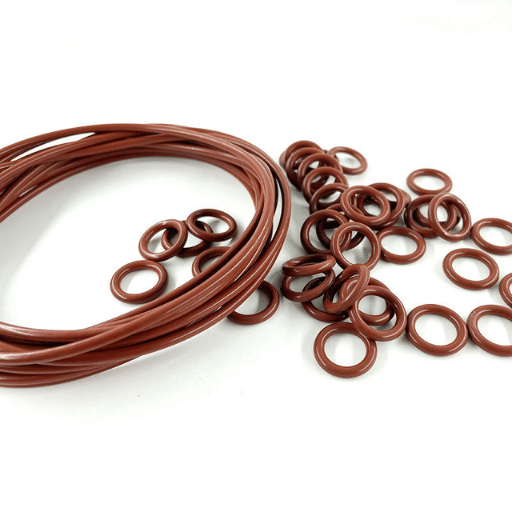
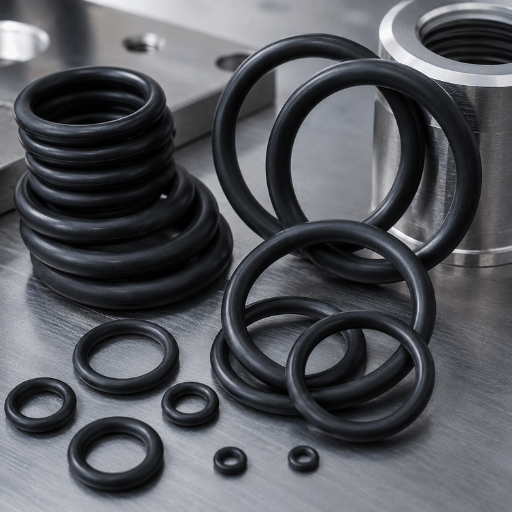
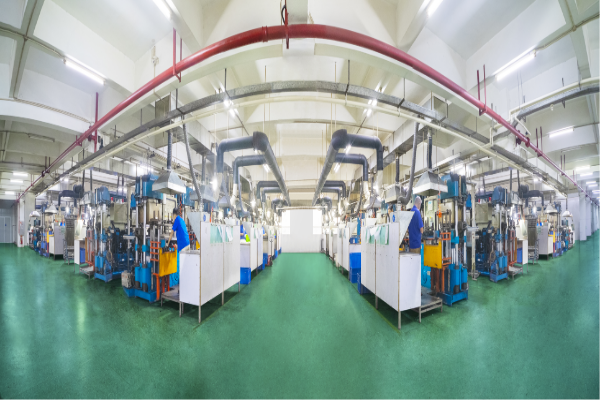
Engelhardt O-ring workshop · 40+ vulcanizing presses · Guangdong, China
Upload Drawing — Quote in 48h
15+ yrs
O-Ring Molding Experience
9
In-House Elastomer Compounds
8
Certifications
Certifications
(IATF·FDA·NSF·LFGB·USP)
2,000 T/yr
Rubber Parts Output
Rubber Parts Output
(O-Ring Workshop)
48 hr
RFQ Response
RFQ Response
Drawing to Quote
0%
Section 301 Tariff
Section 301 Tariff
(Thailand Route)
[SYS-IDENT: O-RING-ENG]
Custom O-Ring Sourcing Bottlenecks — How Engelhardt Solves Them
Custom O-rings are accounted the smallest in your bill of materials, but a single failed seal can take down your manufacturing line, taint a batch, or induce a recall. A Food product recall, for instance, will cost Apple’s consumers an average of $10 million or more—minuts spent in idled production means dollars lost in revenue.
The O-rings that don’t work: our clients’ large complaints revolve around lead time discrepancies, hidden tooling charges, and compound variations surfaced too late for a successful PPAP.
[SPEC-DEF: TOROIDAL]
An O-ring is a toroidal elastomeric seal that prevents fluid or gas leakage between two mating surfaces under static or dynamic compression. What’s for sale is the compound and dimensional parameters, backed by documentation.
Here’s how Engelhardt addresses the three bottlenecks our clients highlight most:
01
[DATA-NODE-01]
Materials mismatch
Catalog manufacturers carry stock 4-6 generic rubber grades. We manufacture nine compounds including FKM, FFKM, and medicalgrade silicone, and can adjust the weight average bulk durometer, ASTM D2000 type, and chemical and temperature resistance to match your intended fluid before commisioning tooling.
02
[DATA-NODE-02]
Cross-border QC worries
IATF 16949 compliant production batch traceability, SPC sampling tests at each batch, and every digital PPAP package archive strip the question “what is shipping?” away from the conclusion.
03
[DATA-NODE-03]
Section 301 duty penalty
Our 60,000m2 Thailand molding site produces that same nine compounds on the same IATF 16949 platform—but exports as Thailand origins so HTS 4016.93 tariffs too aren’t factored in the landed cost.
Our Nine Elastomer Compounds for Custom O-Ring Manufacturing
The costliest mistake in O-ring component purchasing is choosing the wrong elastomer. Five most frequent reasons for O-ring degradation – extrusion, chemical breakdown, abrasion, compression set, and temperature extremes—probably originate in a specification of Buna-N, Viton, or any other generic named compound due to willingness, determined a number of ASTM D2000 line callouts.
Our teams compound, mix, and mold all nine elastomer families shown below in our Guangdong and Thailand facilities so we can suggest a drop-in either called by name or judged ASTM equivalence without out sourcing the chemistry.
Elastomer Specifications Data
| Compound | Common Name | ASTM D2000 Type / Class | Std Temp °F (°C) | Shore A | Key Resistance | Certs Available |
|---|---|---|---|---|---|---|
| NBR | Nitrile / Buna-N | BG / BF | -40 to 257 (-40 to 125) | 40–90 | Petroleum oil, fuel, hydraulic fluid | FDA 21 CFR 177.2600 (option) |
| HNBR | Hydrogenated Nitrile | DH | -30 to 325 (-34 to 163) | 60–90 | Freon, oilfield H₂S, abrasion | NORSOK M-710 (option) |
| FKM | Fluorocarbon / Viton® | HK | -15 to 437 (-26 to 225) | 70–90 | Chemical, fuel, high-temp engine fluid | Mil-Spec AMS-R-83248 (option) |
| FFKM | Perfluoroelastomer | KK | +5 to 550 (-15 to 287) | 75–85 | Semiconductor, aggressive chemistry, vacuum | USP Class VI (option) |
| EPDM | Ethylene-Propylene-Diene | BA / CA | -65 to 300 (-54 to 149) | 50–80 | Steam, hot water, brake fluid, ozone | NSF/ANSI 61 · FDA · KTW · WRAS |
| VMQ | Silicone | FC / FE | -85 to 400 (-65 to 204) | 30–80 | Food contact, medical, dry heat | FDA 21 CFR 177.2600 · USP VI · LFGB |
| FVMQ | Fluorosilicone | FK | -75 to 400 (-59 to 204) | 60–80 | Aerospace fuel, oxygen, low-temp jet fuel | Mil-Spec AMS-R-25988 (option) |
| CR | Neoprene / Chloroprene | BC / BE | -40 to 250 (-40 to 121) | 50–80 | Refrigerant, ammonia, weathering | — |
| NR | Natural Rubber | AA | -65 to 180 (-54 to 82) | 30–70 | Abrasion, dynamic flex, water | — |
Engineering Note
ASTM D2000 Callout Translation
A design calling for M4HK710 A1-11 B38 EF31 EO78 mandates a 70 durometer fluorocarbon (FKM/Viton) designed to resist 275 C heat, 200 C compression set, Fuel C fluid contact, and Service Fluid 101 testing. We translate ASTM D2000 line callouts back to one of our nine compound families in the RFQ processing stage so the actual quote we deliver to you matches a known spec rather than a brand name.
The same compound substitution mistake shows up on roughly one in four incoming prints — a buyer specifies “Viton” when the service fluid actually demands FKM-GLT for low-temperature performance, or specifies “silicone” on a dynamic seal where compression set will kill the gasket inside three months. Our application engineering team catches those during the 48-hour quote review, not after T1 sample.
— Engelhardt Application Engineering Team, Custom O-Ring RFQ DeskStandard, Metric & Custom O-Ring Sizes We Manufacture
Wrong dimension O-rings account for a significant percentage of premature seal failures. 4 PM Elastostar Rubber Corporation states that if no dimension other than a catalog standard can be used, a new configuration increases the risk of system failure 70%. We only mold to the three internationally recognized O-ring size standards or create custom dimensions when the existing three will not fit the cavity. Tolerance class is specified in accordance with ISO 3601-3:2005 quality acceptance standards.
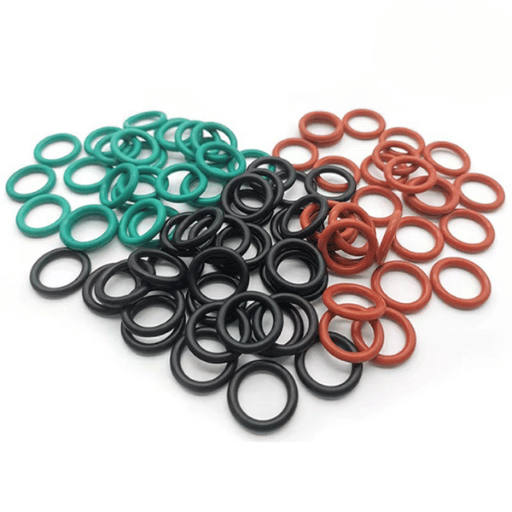
Global Size Standards & Tolerances
| Standard | Region / Industry | Cross-Section Range | ID Range | Count | Tolerance Class |
|---|---|---|---|---|---|
| AS568F | USA · Aerospace · SAE | 0.040″–0.275″ (1.02–6.99 mm) | 0.029″–25.940″ | 369 sizes | Class 2 (±0.80%–±1.00%) |
| ISO 3601-1:2002 Class A | International · Aerospace | Identical to AS568 | Identical to AS568 | 383 sizes | Class 1 (tighter) |
| ISO 3601-1:2002 G-Series | International · General | 1.78–8.40 mm | 1.80–250 mm | 445 sizes | Class 2 / B |
| JIS B 2401 | Japan · Automotive · Hydraulic | P/G/V/S series | Per series | Per series | Per JIS spec |
| Engelhardt Custom | Non-Standard ID/CS | 0.040″–1.500″ | up to 60″ (spliced & vulcanized) | Unlimited | Class 3 (±1.20%–±1.50%) for > 48″ ID |
Manufacturing Information
Tooling & OEM Interchangeability
If we currently own the cavity, we do not charge a tool fee for the 369 AS568F dash numbers and the 445 ISO 3601 G-series metric dimensions when matching. For non-standard cross-sections or oversize IDS, our compression mold cavity work runs from $300-$800 annually (end of life, typical single cavity) and is amortized over an MOQ of 500 pieces. The AS568 dimensions are still interchangeable with the ISO 3601 Class A within 0.001″ of the dimension-this is important in saving OEM effort when a US drawing is converted for use in Europe.
Gland Design Note
Compression Ratio
Cross section determines compression: a -100 dash series (0.103″ CS) for static seals delivers compression of 15-30% in normal glands; the -200 series (0.139″ CS) runs 10-25%. Dynamic seals (piston and rod) around 8-16% of compression maintains the seal between the packing force for extrusion and targeted seal force. We specify the groove ID, OD, and depth on the quotation so that any buyer can cross-reference the detail details with existing assembly drawings before check-out sample evaluation.
Specialty O-Ring Profiles & Configurations
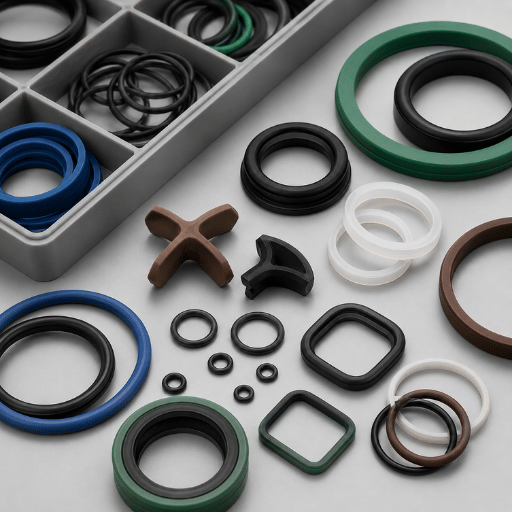
Round-cross-section O-rings account for about 80% of static and dynamic sealing applications, but sometimes a non-standard profile is required. Specialty profiles address sealing issues such as unpredictable extrusion, rolling in dynamic service, or lost core stability with non-circular courses in a given gland. Engelhardt molds and assembles the following profiles within the same nine-compound matrix detailed above.
Available Profile Configurations
01
X-Rings (Quad-Rings)
Four-lobed cross-section with two static sealing surfaces and less rolling tendency during dynamic rod or piston operation. Replacement for AS568 dash number seals.
02
Square and Square-cut O-rings
Molded or dia-cut square profile O-rings to designs for static low-pressure service where rolling obstruction in the groove cannot be tolerated.
03
Backup rings
PTFE or Nylon strips for installation downstream of any O-ring when above 1500 psi, as an anti-extrusion precaution. We supply solid, spiral, and contoured PTFE backups in AS568 sizes.
04
Encapsulated O-rings
Silicone or FKM core with PTF EFT or PFA fluoropolymer cover. Combines the chemical resistance of PTFE with rubbers elasticity and rebound characteristics for static seals in semiconductor and pharmaceutical applications.
05
Spliced and Vulcanized
For ID > 48″, our custom oven heats-splices continuously extruded and molded cord into an end product (Class 2 or Class 3 in size and tolerances) negating the need for a dedicated large mold.
06
Color marking
Any Pantone selection of production line colors in NBR, EPDM, silicones and FKM.
Engelhardt vs. U.S. and Tier-1 Brand O-Ring Manufacturers — TCO Comparison
Customers comparing a Chinese custom O-ring supplier asking the same question three ways: after Section 301 tariffs, sea freight, and cross-border QC risk, is the landed cost really lower? A clean answer depends on volume and origin routing. The table below compares mid-volume custom O-ring sourcing across three supplier archetypes using published industry pricing patterns and our own quote history.
Mid-Volume Custom O-Ring Sourcing Profile
| Dimension | Engelhardt (China + Thailand) |
Typical U.S. Custom Molder | Tier-1 Brand (Parker · Trelleborg) |
|---|---|---|---|
| Custom Tooling Cost (mid-volume) | $300–$2,500 | $1,500–$8,000 | $5,000–$25,000 |
| MOQ (typical custom) | 500–5,000 pcs | 500–2,000 pcs | 10,000–100,000 pcs |
| RFQ Response Time | 48 hours | 3–7 business days | 1–3 weeks |
| Lead Time (production) | 14–25 days | 21–35 days | 8–16 weeks |
| Section 301 Tariff (HTS 4016.93) | 0% via Thailand origin | n/a (domestic) | n/a (varies) |
| Sea Freight to U.S. East Coast | 22 days (Thailand) · 18 days (China) | Domestic ground | Varies by routing |
| Air Freight Backup Option | 5–7 days | n/a | Available, premium |
Strategic Sourcing Analysis
The Tier-1 column above is not a competitor with volume our typical buyer orders. Parker O-Ring & Engineered Seals Division and Trelleborg average above 100K parts per number and tooling prices accordingly. The custom simple tier – 500-50K pieces – is where we typically compete: IATF 16949 traceability without the brand premium or 12+ weeks working non-conformance queue. Deployment in the field has shown that replacing Tier-1 commodity FKM compound with our V1000-equivalent drops unit cost 28-35% without losing callouts on the AMS-R-83248.
0% Tariff Advantage
Section 301 tariff on HTS 4016.93 when O-rings are molded and shipped from our Thailand facility. The same compound recipe, same IATF 16949 quality system, same Engelhardt purchase order — Thailand origin keeps the landed cost decoupled from U.S.–China trade-policy volatility.
Source: USTR Section 301 Tariff List · USITC Harmonized Tariff Schedule (HTS 4016.93). Thailand-origin elastomer products are not subject to Section 301 duties; standard MFN duty applies. Verify the current rate with your customs broker at landing.
Certifications & Industry Standards for O-Ring Sourcing
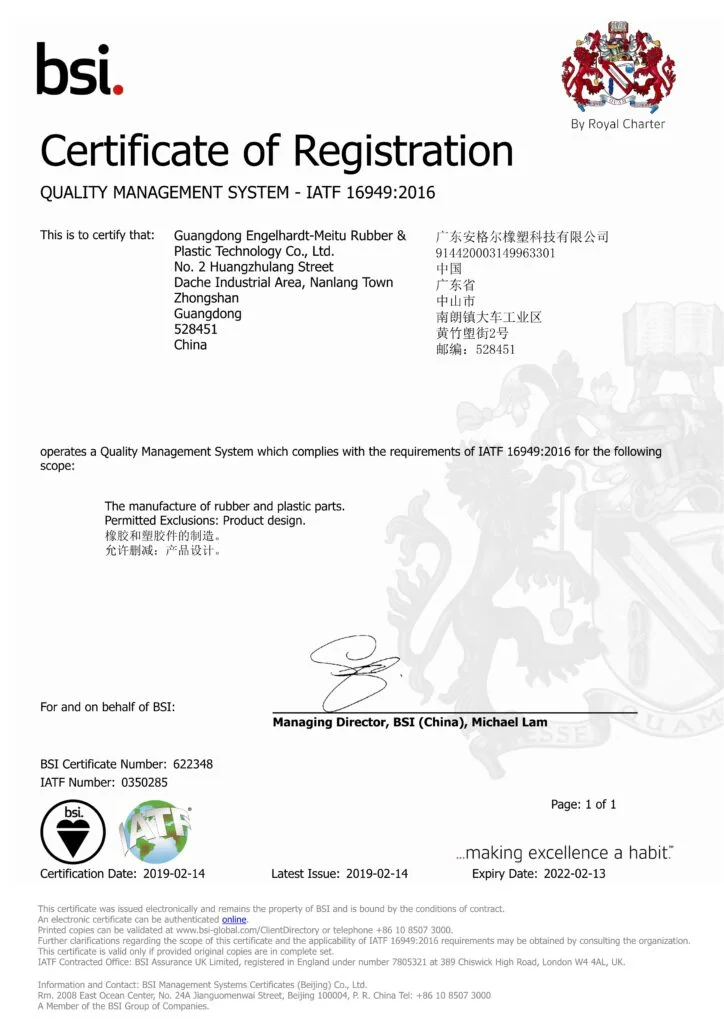
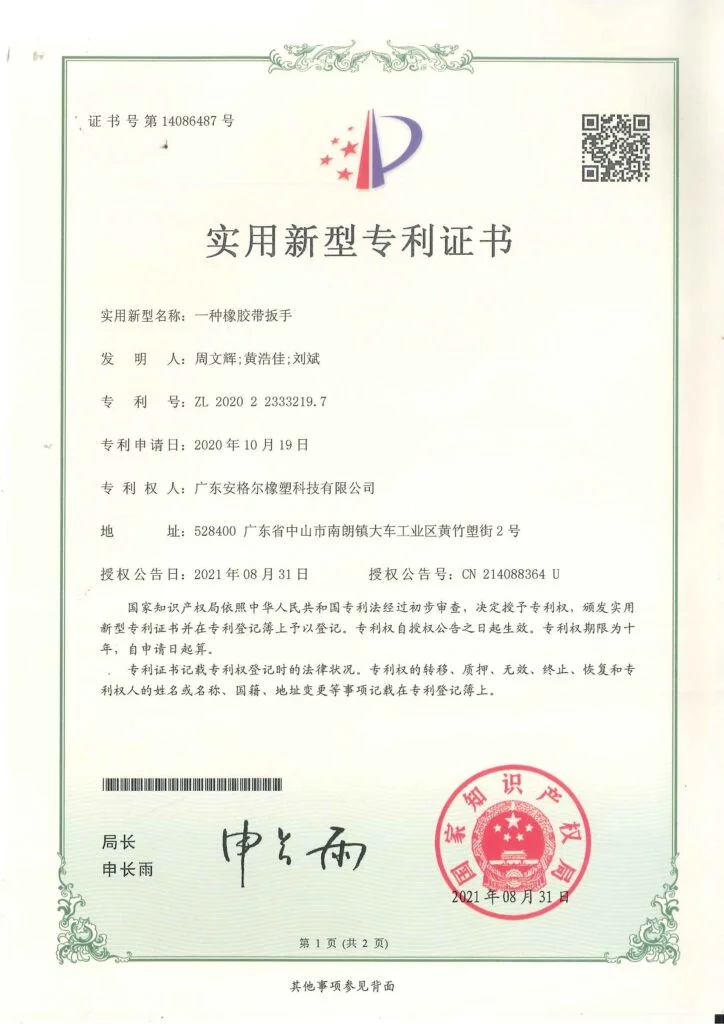
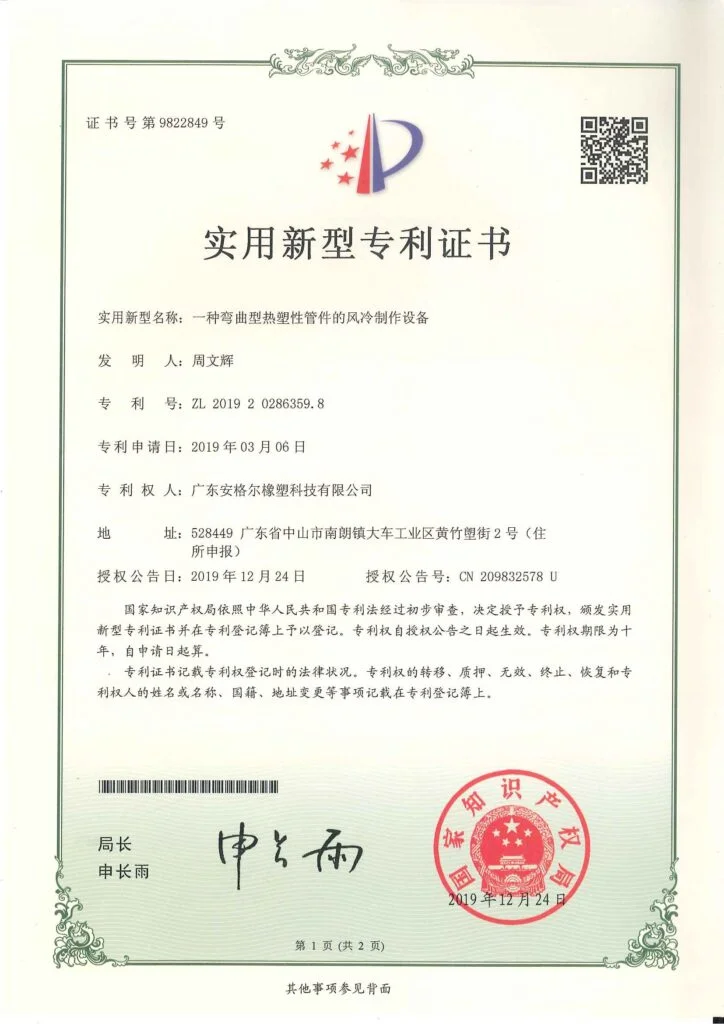
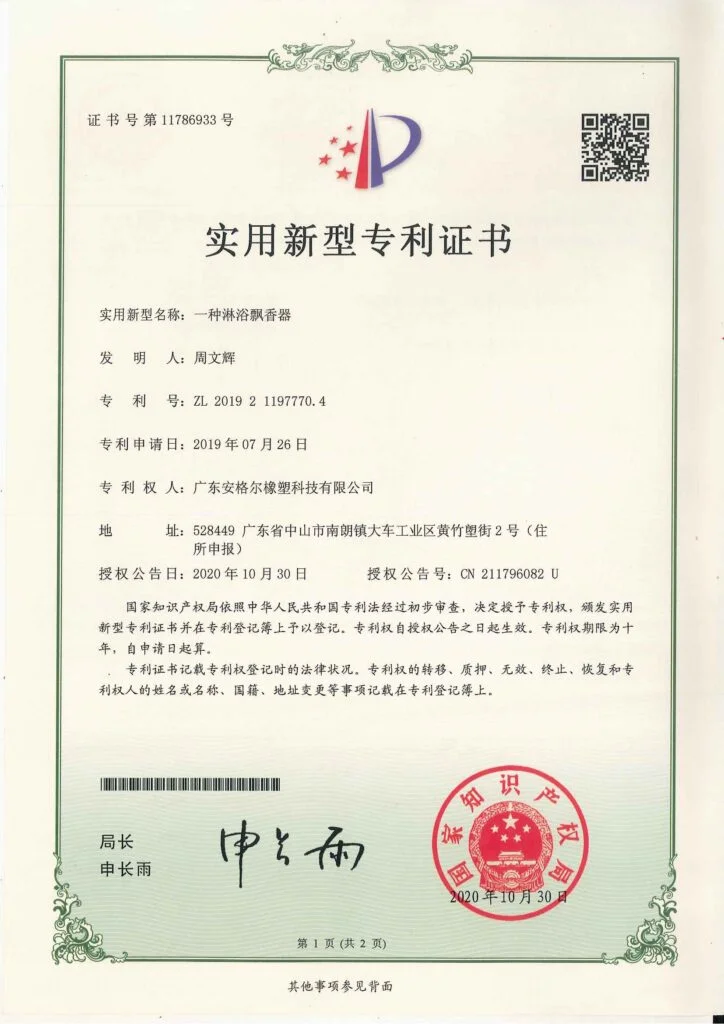
Each of the eight certifications below maps to a specific buyer audit that procurement, quality, and regulatory teams have to clear before an O-ring is approved for production use. Engelhardt holds every one on the corporate certificate, with surveillance audits documented and PPAP packages available on request.
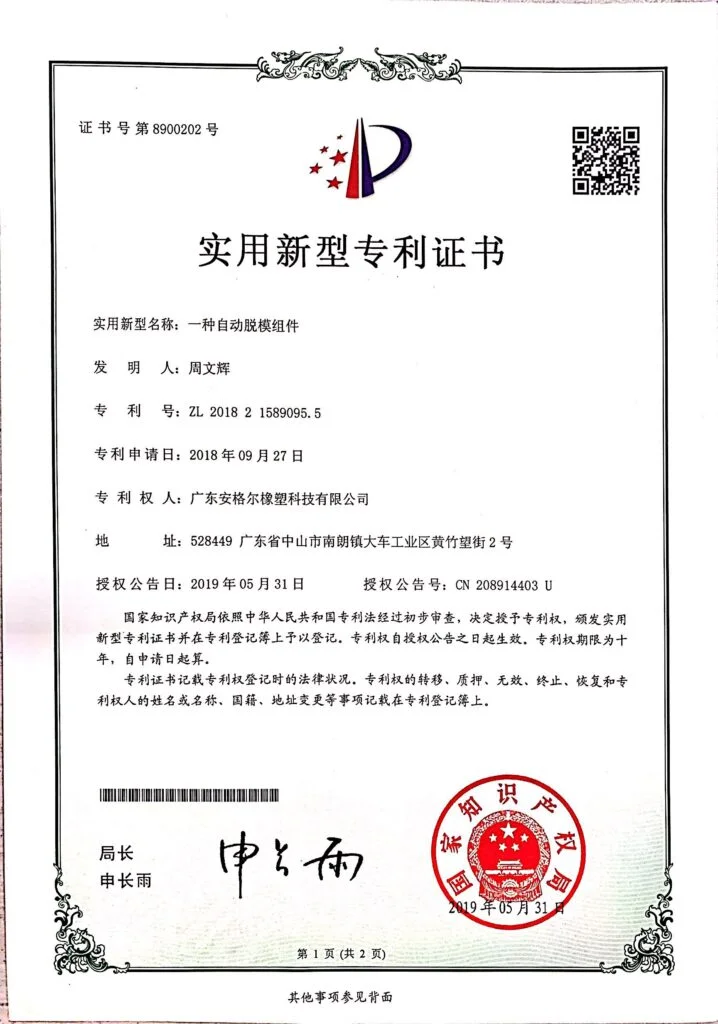
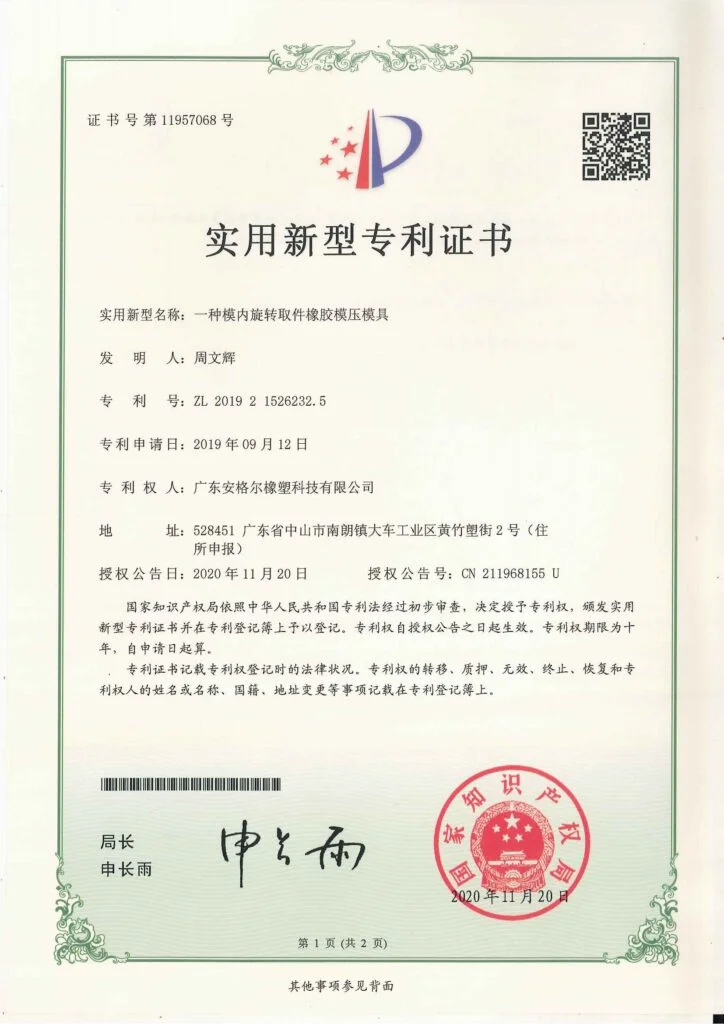
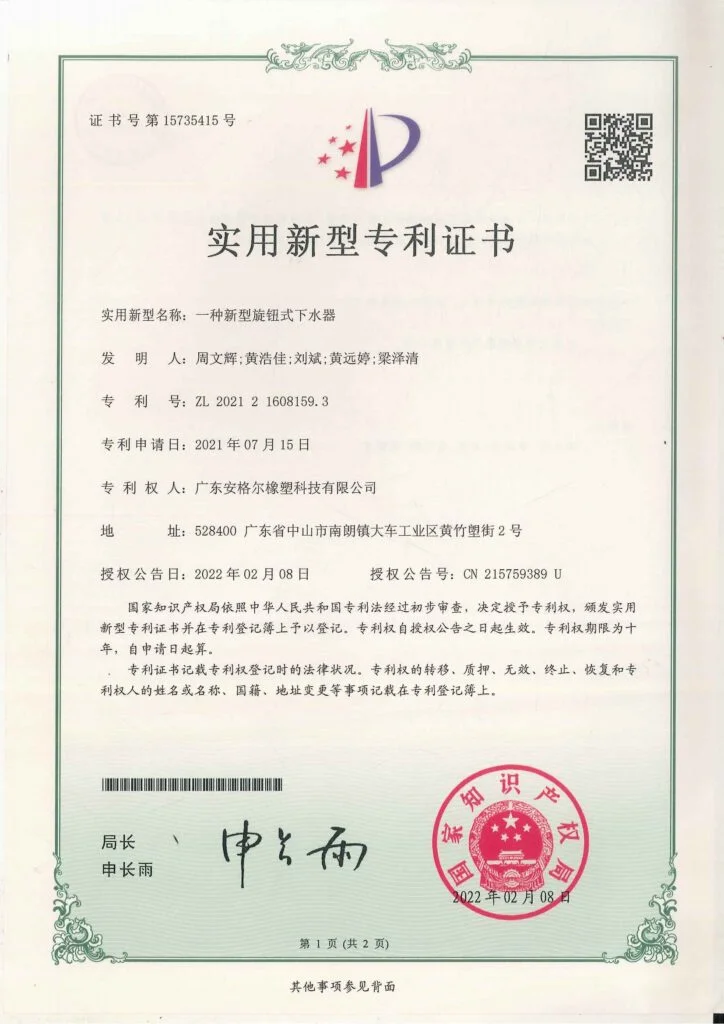
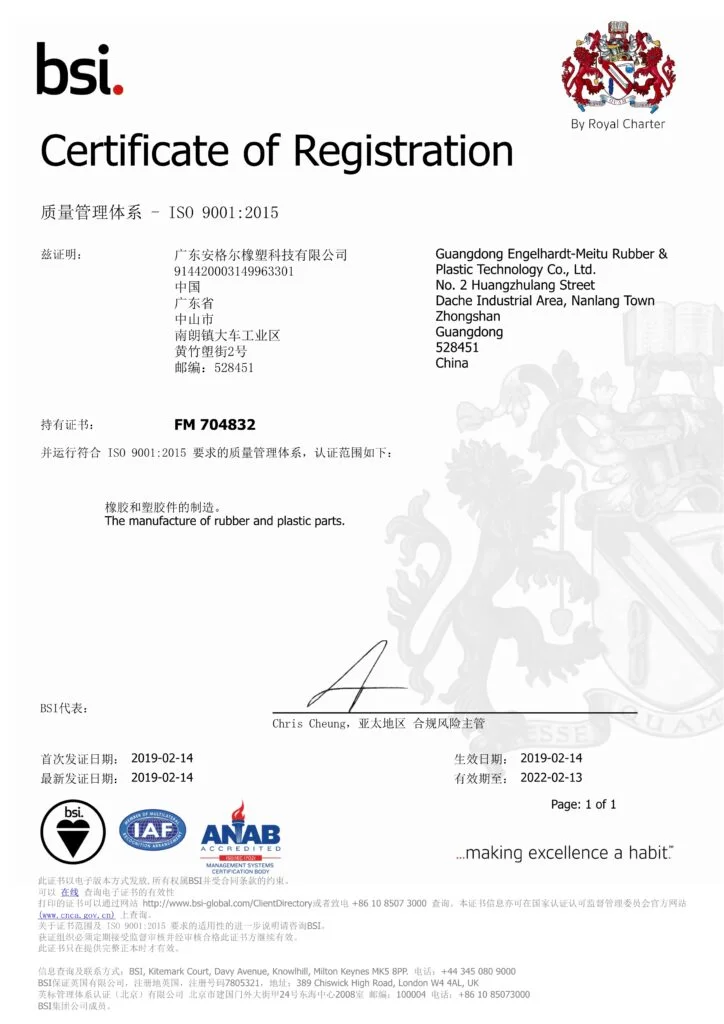
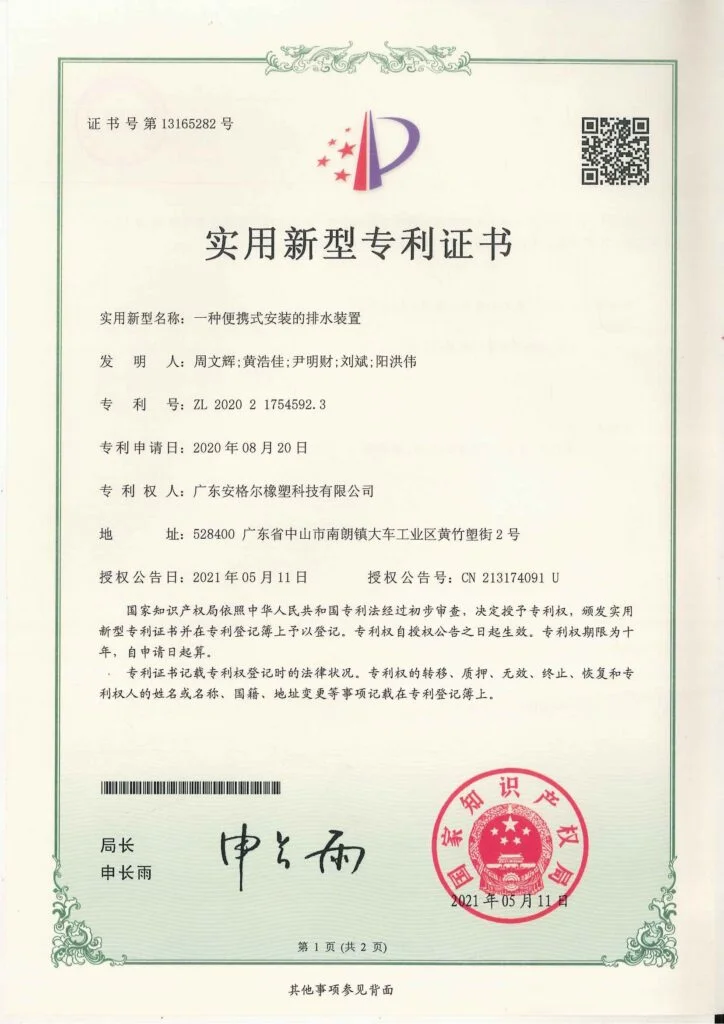
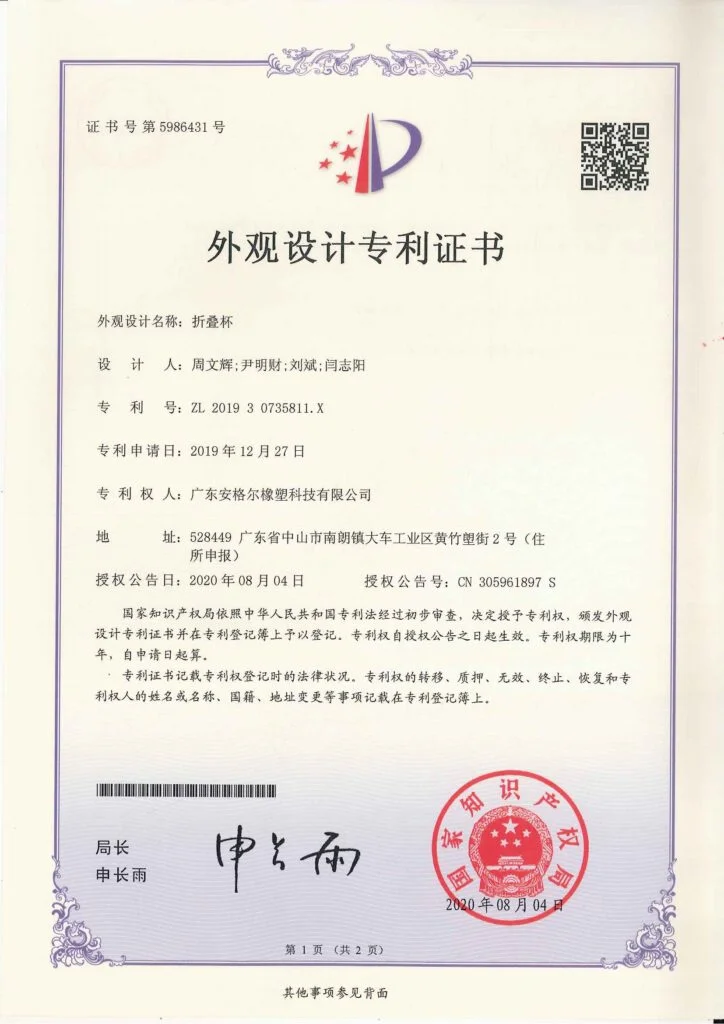
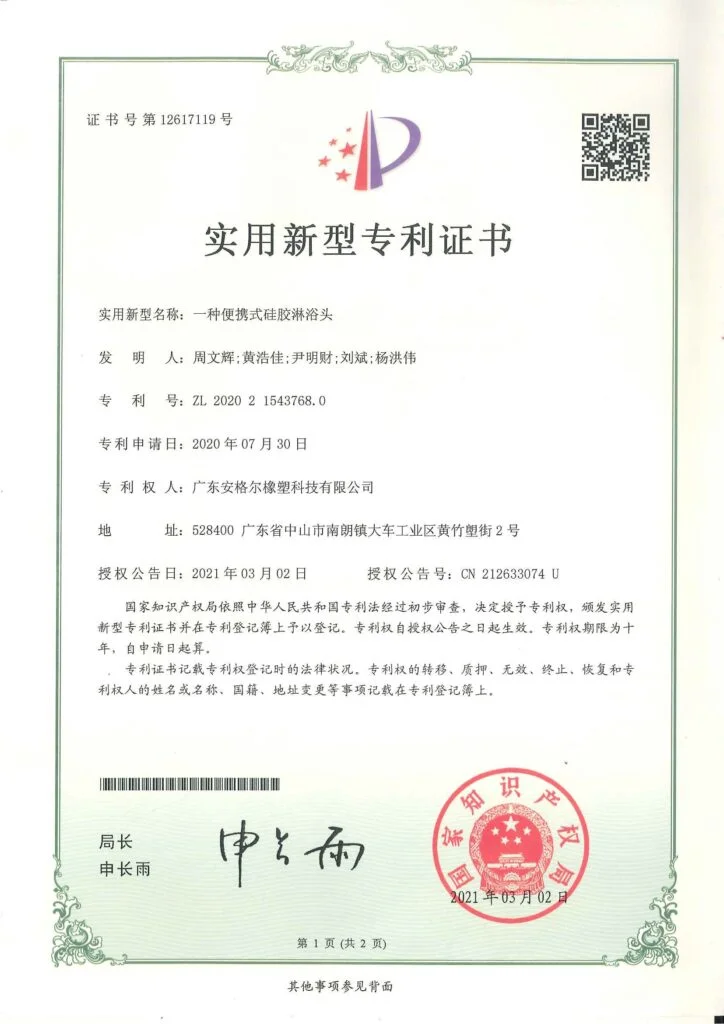
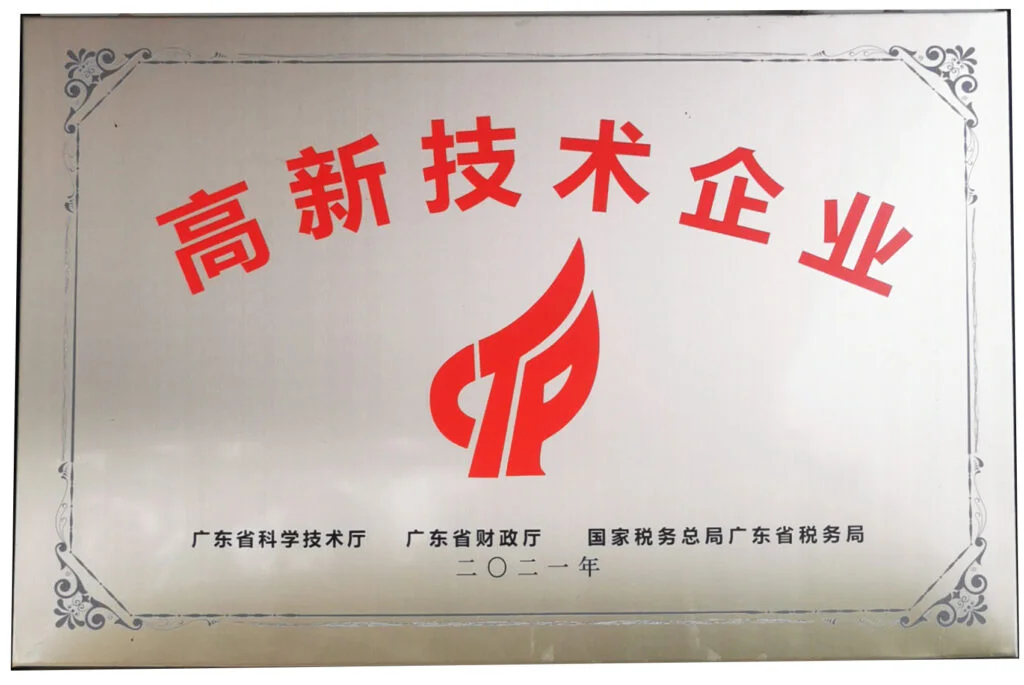
IATF 16949
Automotive Tier-1 QMS
ISO 9001
Quality Management
FDA 21 CFR 177.2600
Food Contact Rubber
LFGB
EU Food Contact
NSF / ANSI 61
Drinking Water
USP Class VI
Biological Reactivity
KTW · WRAS
EU / UK Drinking Water
UL · ASTM
Material & Safety
| Industry | Applicable Standard | Engelhardt Compliance |
|---|---|---|
| Automotive Tier-1 | IATF 16949:2016 | Corporate certificate · PPAP Level 3 default |
| Food Contact | FDA 21 CFR 177.2600 · LFGB · 3-A | FDA + LFGB on EPDM, NBR, Silicone, FKM compounds |
| Drinking Water | NSF/ANSI 61 · WRAS · KTW | NSF 61 + WRAS + KTW on peroxide-cured EPDM |
| Medical Device | USP <87>/<88> Class VI · ISO 10993 | USP VI on platinum-cured silicone, white silicone, clear silicone |
| Aerospace | AMS-R-25988 · AMS-R-83248 · NORSOK M-710 | On request — compound revision per print |
| Material Specification | ASTM D2000 · D1418 · D2240 | Quoted by ASTM D2000 line callout |
×
![Zoomed Certificate]()
Custom O-Ring Production Process at Engelhardt — From Drawing to Shipment
A custom O-ring in our production process flows through five stages from RFQ to shipment. Each step has a deliverable, a duration band and an owner providing sign off. Procurement and engineering teams use the chart below for project planning; manufacturing groups how to schedule a First Article Inspection.
01
RFQ (48 hours)
Upload your CAD or PDF drawing (STEP is preferred). Application engineering will then review compound, cross-section, ID/OD, tolerance class, certification option, and volume. Pricing will be returned in 48 hours with most suitable compound recommendation and tooling cost band.
02
T1 Sample / Prototype (7-14 days)
Depending on complexity of shape and how many cavity sets are needed to deliver it. For standard size bore dimensions and existing tooling parts can be made in 5-7 days.
03
PPAP / FAI Doc (5-7 days)
Production Part Approval Process Level 3 by default for automotive customers (IATF 16949 requirement), Level 2 for general industrial. The package includes IMDS submission, dimensional report, material certificate per ASTM D2000, and process capability data.
04
Production Run (14-25 days)
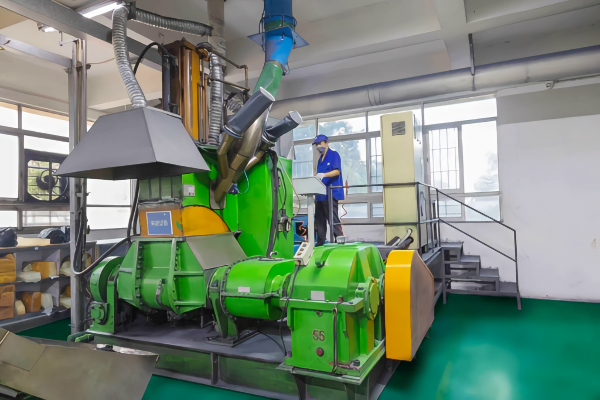
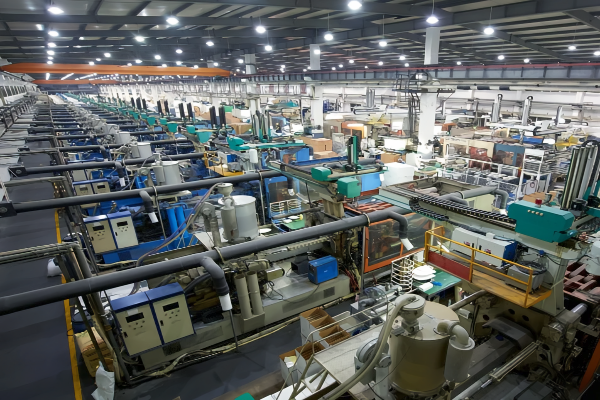
Compression molding for cavities below 500,000 pieces per year per part number; rubber injection molding above that threshold. The dedicated O-ring workshop runs more than 40 vulcanizing machines, including 250 T vacuum vulcanizing presses (which eliminate trapped air voids in critical-application FKM and FFKM O-rings) and 300 T rubber injection presses for mid-to-high volume nitrile and EPDM runs. SPC inspection runs every shift.
05
QC, Packaging & Shipment (3-5 days)
Final dimension inspection in accordance with AS568 or ISO 3601 tolerance class; bagging in a cleanroom for USP Class VI and FDA medical work; country-of-origin marking; FOB China or FOB Thailand based on your tariff strategy.
Facility Overview
Production Equipment · O-Ring Workshop
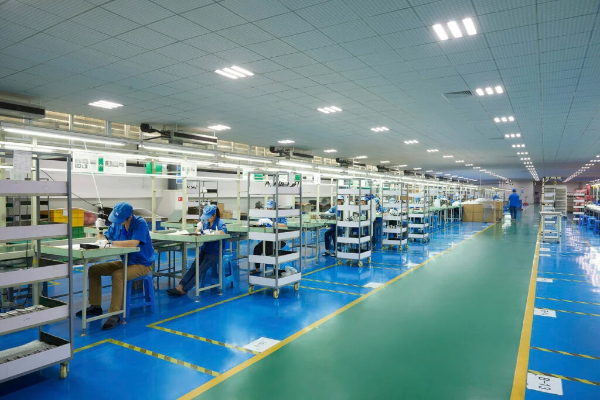
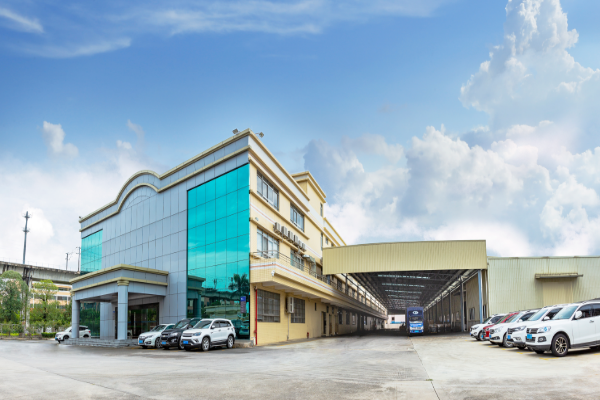
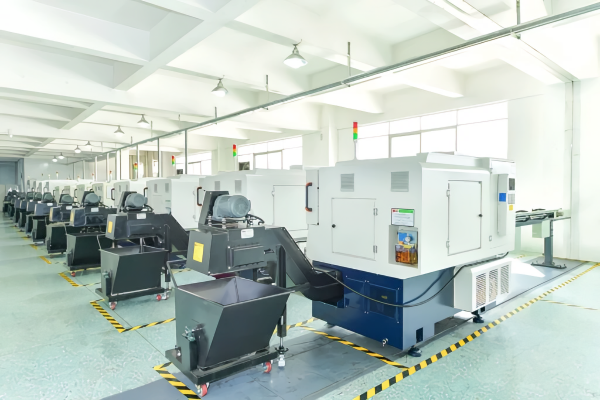
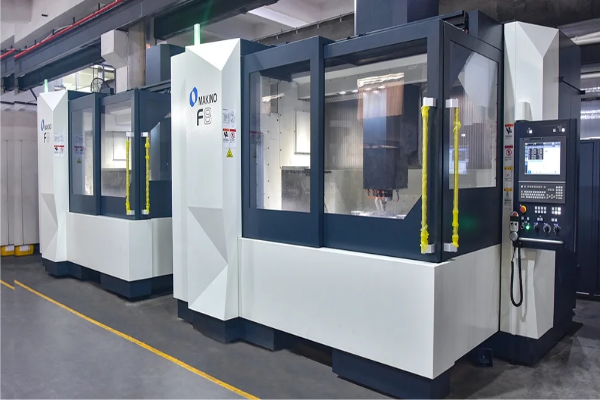
Dedicated O-ring workshops at our Guangdong can run over 40 vulcanizers; 250 tonne vacuum vulcanizing presses (which remove trapped air voids in FKM and FFKM O-rings for critical-application use), 300 tonne rubber injection presses (mid- to high-volume nitrile and EPDM runs). Rubber output just from the work-alone is 2000 metric tons annually. In total the company boasts over 80 vulcanizers, and over 400 rubber injection presses which are capable of supporting over 500 new molds per annum.
Customer Results — Automotive Tier-1, Medical OEM, Industrial
A few sample case specifications of the output our O-ring operation is capable of, including anonymised customer names and figures, but with reference data borrowed from our RFQ-to-PPAP half-life.
Automotive Tier-1 European Brand · Fuel System FKM O-Ring
32% landed cost reduction vs. incumbent Tier-1 supplier
A European Tier-1 brake-and-fuel system OEM qualified our V1000-equivalent FKM compound (ASTM D2000 M4HK710 line callout) as a drop-in for the incumbent Parker O-ring. Our PPAP Level 3 package passed first-round review against IATF 16949 audit criteria. That 32% landed cost reduction reflects unit price plus tooling amortization across a 24-month production agreement.
U.S. Medical OEM · FDA 510(k) Class II Device Silicone O-Ring
USP <88> Class VI Pass on platinum-cured silicone, in-cleanroom bagging
A U.S. medical device OEM specified a USP Class VI biocompatible silicone O-ring for a Class II fluid-handling device. Engelhardt supplied a platinum-cured S1146-equivalent compound, cleanroom-bagged at the cavity, with USP <87> cytotoxicity and <88> intramuscular implantation test reports. Landed unit cost was approximately one-sixth of the previous domestic U.S. molder quote.
Drinking Water Treatment OEM · EPDM Valve Seal
7M+ units/yr NSF/ANSI 61 peroxide-cured EPDM, zero leak failures over 36 months
A drinking-water valve OEM proceeded with a sole source upgrade for an in-line valve seal O-ring at our peroxide-cured EPDM compound (NSF/ANSI 61 + KTW + WRAS approved). Annual runs are about 7 million pcs; no leak-through warranty claims over an operational window of 36 months for the entire ring population.
Industries we currently mold custom O-rings for:
Automotive Tier-1
Aerospace
Medical Device
Food & Beverage
Oil & Gas
Semiconductor
Drinking Water
HVAC & Refrigeration
Hydraulic Systems
Pumps & Valves
Pharmaceutical
Marine
Procurement Guide — MOQ, Lead Time & Pricing Factors
Most procurement frustration in international O-ring sourcing is not unit cost; it is the line-item add-ons that surface between quote and final invoice — surface treatment, color premium, splitting cavities across molds, expedite charges. Engelhardt publishes the cost drivers upfront so the quote you receive is the quote you pay.
MOQ Tiers
500-5,000 piece batch runs – the most usual batch size. No tooling charge for standard (or typical) size AS568 or ISO 3601 class; tooling fee applies to non-equalateral or “custom” size.
5,000-50,000 pieces – mid-volume compression or transfer molding. Multi-cavity tooling amortized over the run.
50,000+ pieces – rubber injection molding (4-16 cavity dedicated tool). Tooling amortizes inside the first 25-40% of the run; the remainder of the pieces boast a substantial reduction in per-piece tooling.
Lead Time Bands
Prototype / T1 Sample: 7–14 days
Production AS568 standard size (existing tooling): 14–21 days post-PO
Custom size that requires new mold: 21-30 days after PO (tooling in production)
Air freight from China or Thailand to U.S./EU: 5-7 days for production-emergency orders
Pricing Factors Framework
Pricing of custom O-ring are dictated by each of these factors and then used with your drawing to prepare RFQ:
01
Compound family / FFKM & specialty FKM
6-12 times the commodity NBR; silicone and EPDM sit in the middle of the range; NBR is the lowest
02
Cross-section / ID (O-ring size)
Drives cavity count per shot and material consumption per piece
03
Tolerance class
Hysteresis & dimensional stability – Class 1 / Class 2 aerospace manufacturing techniques vs. Class 3 general industrial tolerancing
04
Certification level
US Pharmacopeial USP Class VI, IATF PPAP Level 3, NSF 61 – each has its paperwork cost
05
Color & surface treatment
Custom Pantone, Food Grade FDA-compliant pigments, internal lubrication or molybdenum coating
06
Number of cavities & tooling approach
Single-cavity for the low-volume custom; 4-16 cavity for production runs
High-Precision Rubber O-Rings Manufacturing Solutions
Rubber O-Ring Frequently Asked Questions
“Rubber O-ring” is a blanket term that means any elastomer-molded O-ring, including the epitome of all rubber O-rings, nitrile (NBR). EPDM, FKM, neoprene, and others can all be referred to as “rubber”. Silicone O-rings (sometimes abbreviated as VMQ) are one specific elastomer family within that group, differentiated by a few factors: their ability to operate in an even broader temperature range (-85 to +400 F), amazing flexibility at low temperatures (-79 F), being available with FDA and USP Class VI options, and the fact that they can generally only resist liquids (nothing in the way of oils or fuels). So if you want a rubber O-ring to seal fuel or oil, NBR or FKM are your best choices. If you want a food contact or medical grade solution, you’ll want a silicone.
O-rings are specified by 3 measurements: inside diameter (ID), outside diameter (OD), and cross sectional thickness (CS). To measure the ID, use a caliper and measure from the inside edge to the opposing inside edge. To measure the OD, use a caliper and measure from the outside edge to the opposing outside edge. To measure the CS, use a micrometer and measure the thickness from the inside edge to the outside edge. In the US, rubber O-rings number as per AS568F standards (also known as 369 dash numbers, close dimensional approximation on inches). Internally, ISO 3601 (metric with Class A and A/A dash equivalency) standards are used internationally. Japan adheres to JIS B 2401. Our quotation will show which standard your part falls under and the dimensional class.
Whatever your choice, it is primarily driven by three factors, in order of importance: (1) what you are sealing, fuel, oil, water, acid, solvent, food contact, biocompatibility (2) the general temperature range that you require (-40 to +130 F, +35 to 220 F, +9 to +400 F, +15 to +475 F, +50 to +600 F), and if (3) whether it is a static or dynamic seal. If it’s for fuel or oil, go with NBR (Buna-N). For internal brakes or extreme heat, try EPDM. For high temperature fluid or chemical resistance, see FKM (Viton). For aggressive chemistries or semiconductor usage, see FFKM. For food contact or biocompatibility, consider Silicone (domed, color coded for easy identification). The above elatomar matrix spells out exactly what each EPDM, FKM, and FFKM is intended for.
Viton (Chemours-trademarked FKM, ASTM type HK) is a fluorocarbon elastomer rated for chemical and petroleum resistance to approximately 437 F continuous use. Silicone (VMQ, ASTM type FE/FC) is a polysiloxane elastomer rated for dry heat to 400 F, with excellent low temperature flexibility and limited oil/fuel resistance. Viton is resistant to chemical media; silicone is resistant to temperature swings. They are not interchangeable—they can’t be substituted for each other. Designing the wrong family is one of the most common O-ring failure causes we see in incoming prints.
Replacement interval is very service-dependent. Static seals in contamination-free dry service can last through years of operation; dynamic seals under high pressure or temperature cycling or chemical-contact should be inspected at scheduled maintenance intervals—anywhere from 6 to 24 months—and changed at first evidence of compression set or surface cracking or extrusion in our experience. (The same goes for mission-critical medical or aerospace or food contact applications—annual replacement or condition-monitoring as dictated by application environment is, we believe, best practice).
Yes. We vulcanize custom O-rings over a broad cross-section of 0.040 inch (1 mm) to 1.500 inch (38 mm), and inside diameters to 60 inches (via splice-and-vulcanize for the largest IDs). Additional cross-sectional volume for the non-standard diameters is amortized between the approximately 500-piece minimum at a charge of $300-$2,500 for each article cavity. Forward us a drawing via CAD, STEP, PDF, or even a drawing by hand, and we’ll give you a quotation including compound recommendation and tooling fee factors within 48 hours.
Typically 500 pieces is the minimum for a custom O-ring to be compression molded by us. Our standard (AS568 size, not requiring custom tooling) pieces are no-charge unless the part needs to be held to a TIR within 0.010 inch (0.25 mm), in which case we quote to hold to a TIR of 0.005 inch (0.13 mm) based on your drawing. For injection-molded production, the minimum order size is customer-specific, based on the amortization of a tooling investment—generally 5,000+ pieces to amortize at high volume.
Yes. Our materials are also food contact approved (per 21 CFR 177.2600) in nitrile, EPDM, silicone, and FKM. For medical applications, we supply USP Class VI biocompatible platinum-cured silicone and FKM compounds processed in ISO Class 7 or 8 cleanrooms, with packaging accordingly. Drinking water service approved: peroxide cured EPDM, NSF/ANSI 61, WRAS and KTW. Certificates of compliance and test reports can be provided per your PPAP.
Typical lead times from PO for an AS568 standard size in an existing compound are between 14 and 21 days. A custom size requiring an insert mold cavity takes 21-30 days; meanwhile the cavity is being built, the material is being established. In a plan emergency, air freight from our China or Thailand facilities to your plant arrives in 5-7 days to most U.S. and EU ports.
Yes. Engelhardt’s corporate IATF 16949:2016 certificate covers automotive Tier-1 supply, including PPAP Level 3 records, IMDS submissions, SPC process capability data, and surveillance audit reports. Production runs supply O-rings to Tier-1 brake, fuel-system, and engine-component manufacturers in Europe, North America, and Asia. Certificate scope and surveillance audit dates are available on request to qualified buyers.
Custom O-Ring Quote Inside 48 Hours
Send us your drawing or your AS568 / ISO 3601 / JIS B 2401 size and our application engineering team will quote compound, tooling cost, MOQ and lead time for your tooling.