Get in Touch with Engelhardt

Plumbing Assembly Products:
Custom Drain & Sanitary Component Manufacturing
One supplier for fully-assembled plumbing products — rubber, plastic, hardware, silicone, and in-house assembly under a single IATF 16949 quality system.
[SYS-MATR]
4
Materials Assembled
[SPEC-LN]
6
Product Lines
[QA-CERT]
8+
Certifications
[EST-DATE]
2009
Established Since
[FAC-AREA]
26k㎡
Floor Area
[HC-ENG]
300
Operators & Eng.
Why Sourcing Assembled Plumbing Products Is Harder Than It Looks
[01 / TECHNICAL CONTEXT]
Plumbing assembly products — the finished drain assemblies, floor drains, pop-up drains, and sanitary fittings that ship ready to install — rarely fail because of one bad part. They fail at the interface, where a brass body meets a rubber seal meets a plastic threaded collar.
That interface is exactly where multi-vendor sourcing breaks down. A drain assembly usually crosses three separate factories before it reaches an assembler.
Each handoff adds tolerance drift, a sampling round, and one more party to blame when the unit leaks on a buyer’s QC bench.
[02 / SUPPLY CHAIN RISK]
The hidden cost buyers learn the hard way
Procurement teams that source components on price alone discover the cost later in leaks and failed certification.
- 01LOGISTICS DISCONNECT
- 02INTERFACE TOLERANCE
- 03LIABILITY GAP
- 04COMPLIANCE MULTIPLICITY
Engelhardt Plumbing Assembly Product Lines — Types & Selection
Engelhardt manufactures six families of plumbing assembly products. Each ships as a complete, tested unit rather than a bag of loose components.
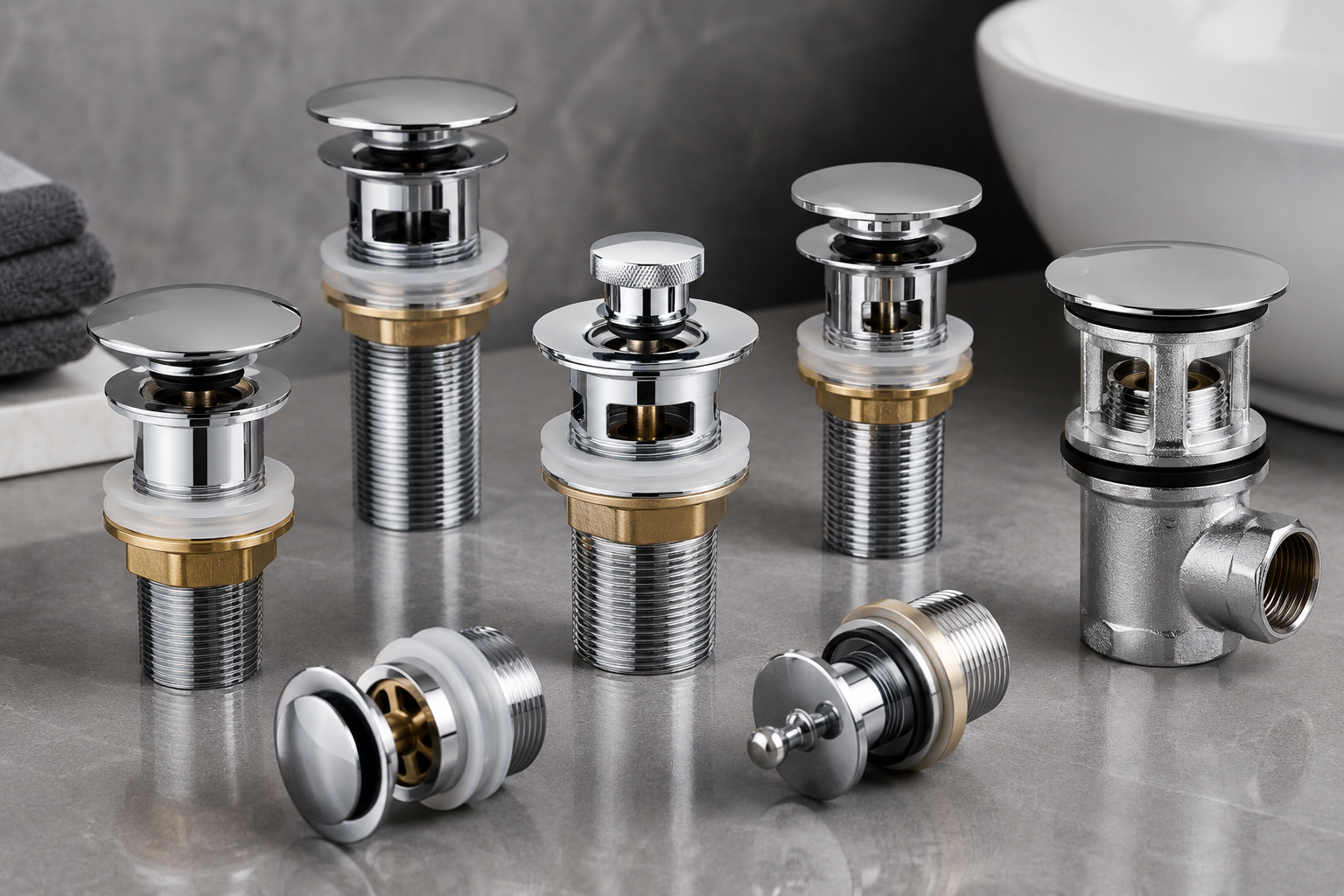
Drain Assemblies & Pop-Up Drains
Pop-up, push-pull, and knob-type pop-up drains for the bathroom sink and basin. Built around a brass or zinc-alloy body with a molded stopper and an overflow channel where the fixture requires it.
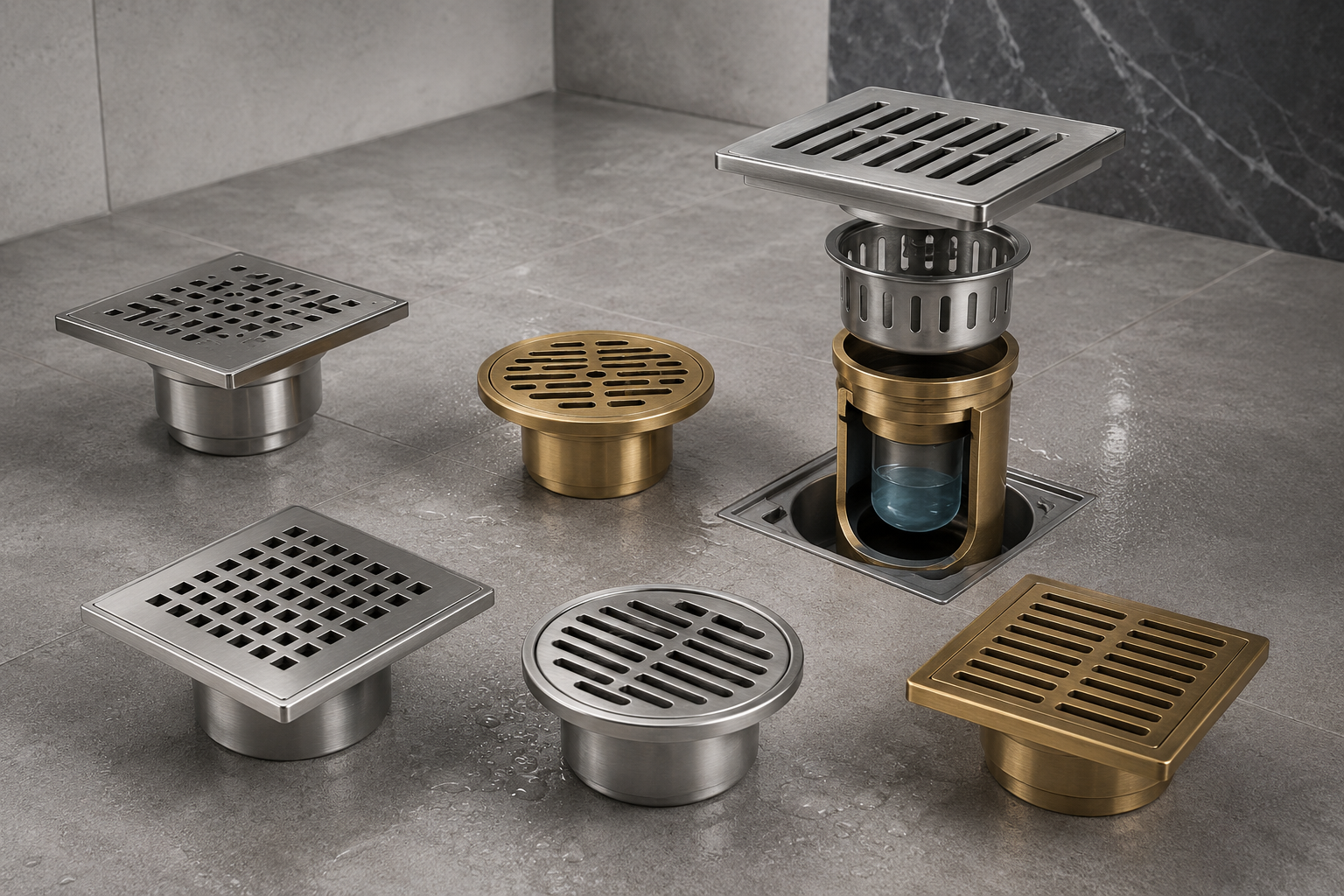
Floor Drains
Floor drains for residential, commercial, and wet-area use. Stainless steel and brass grates over a trap body engineered to hold a water seal and block sewer gas.
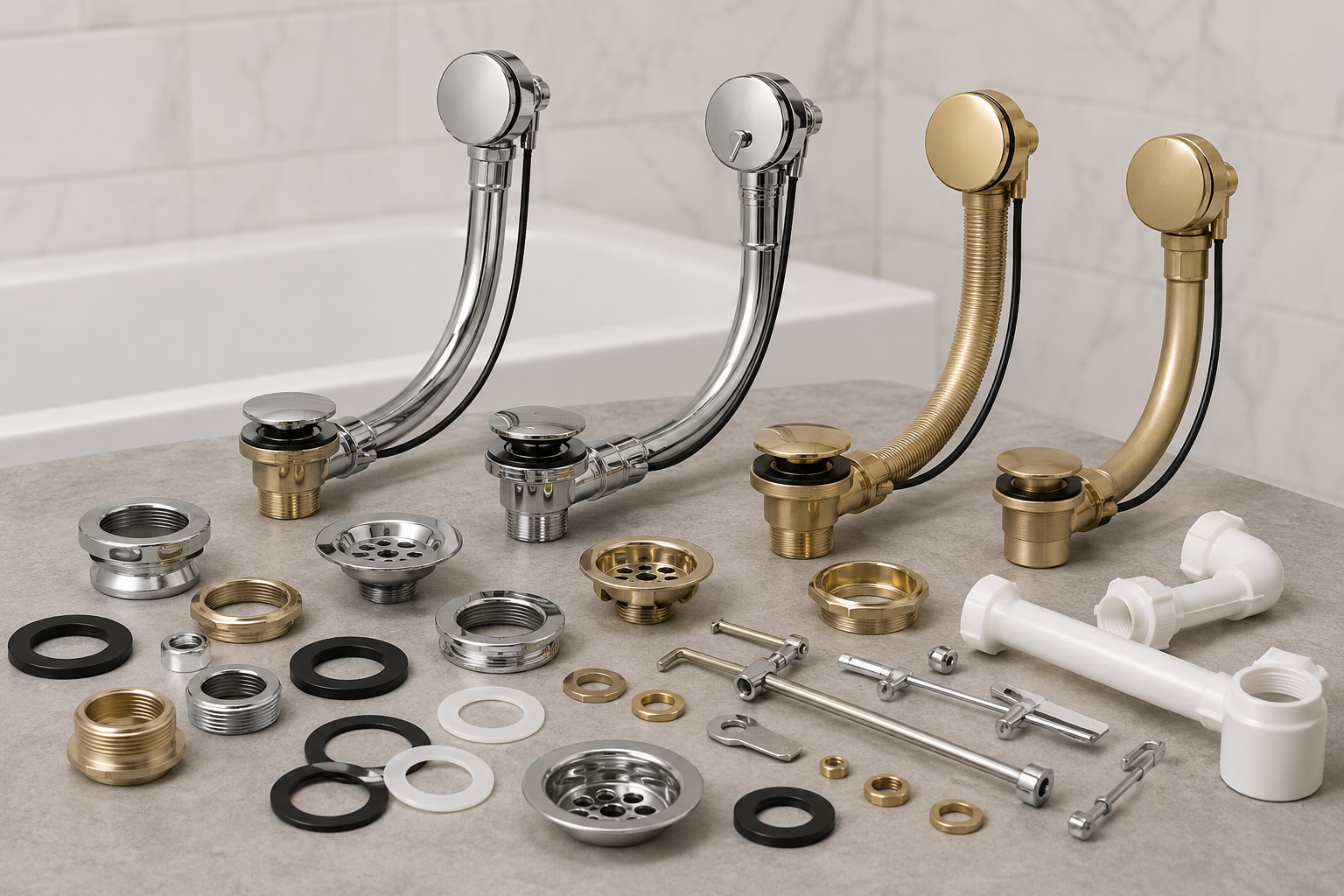
Bathtub Waste & Overflow Assemblies
Complete tub waste and overflow assemblies with linkage, gasket set, and strainer. Lift-and-turn and toe-touch stopper mechanisms are both tooled in-house.
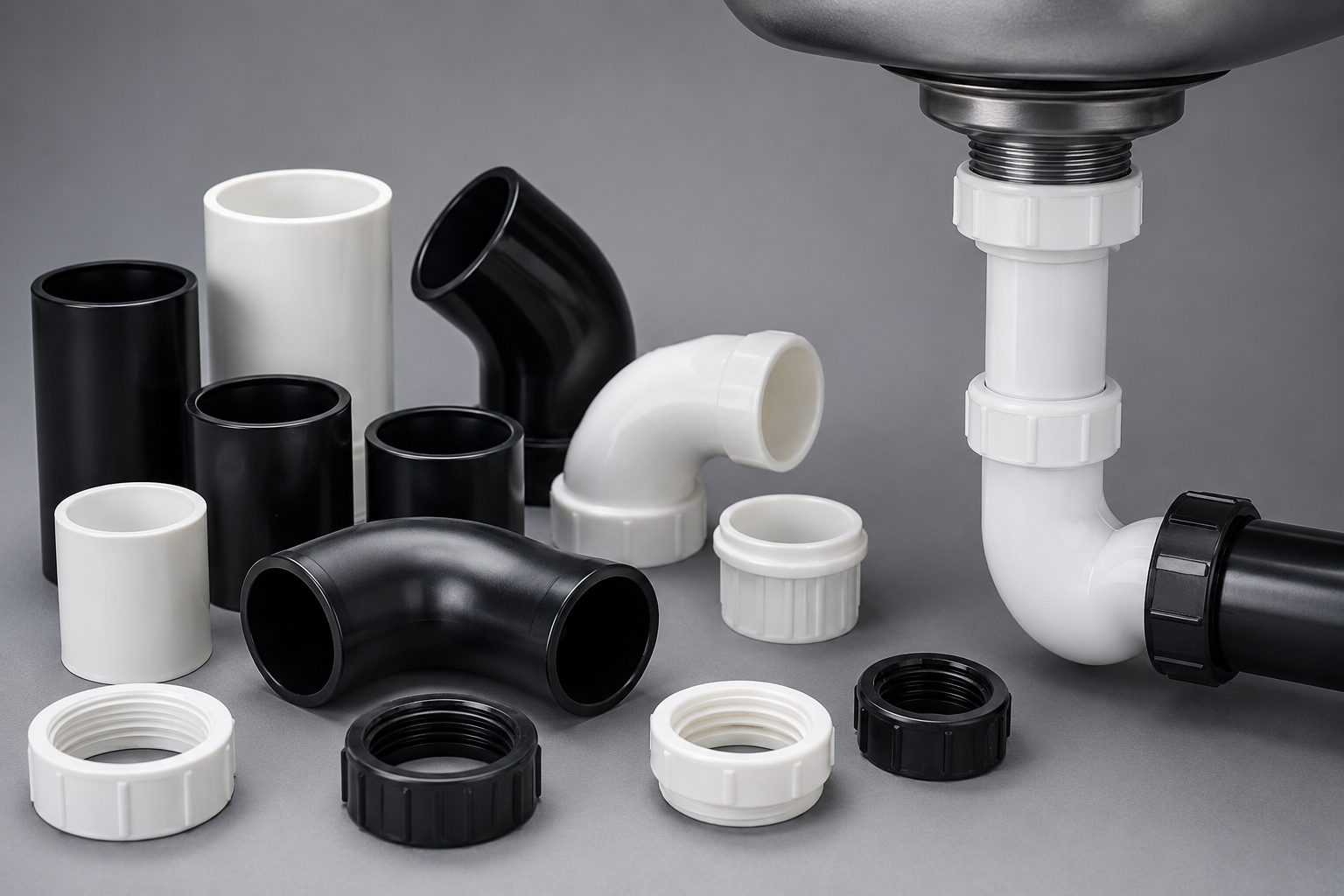
Pipe Sleeves, Bends & Connectors
Pipe sleeves, thermoplastic bends, and pipe connectors that join a fixture tailpiece to the drain line. Smooth-bore PVC and ABS reduce the clogging that rougher couplings invite.
Sanitaryware Gaskets & Seals
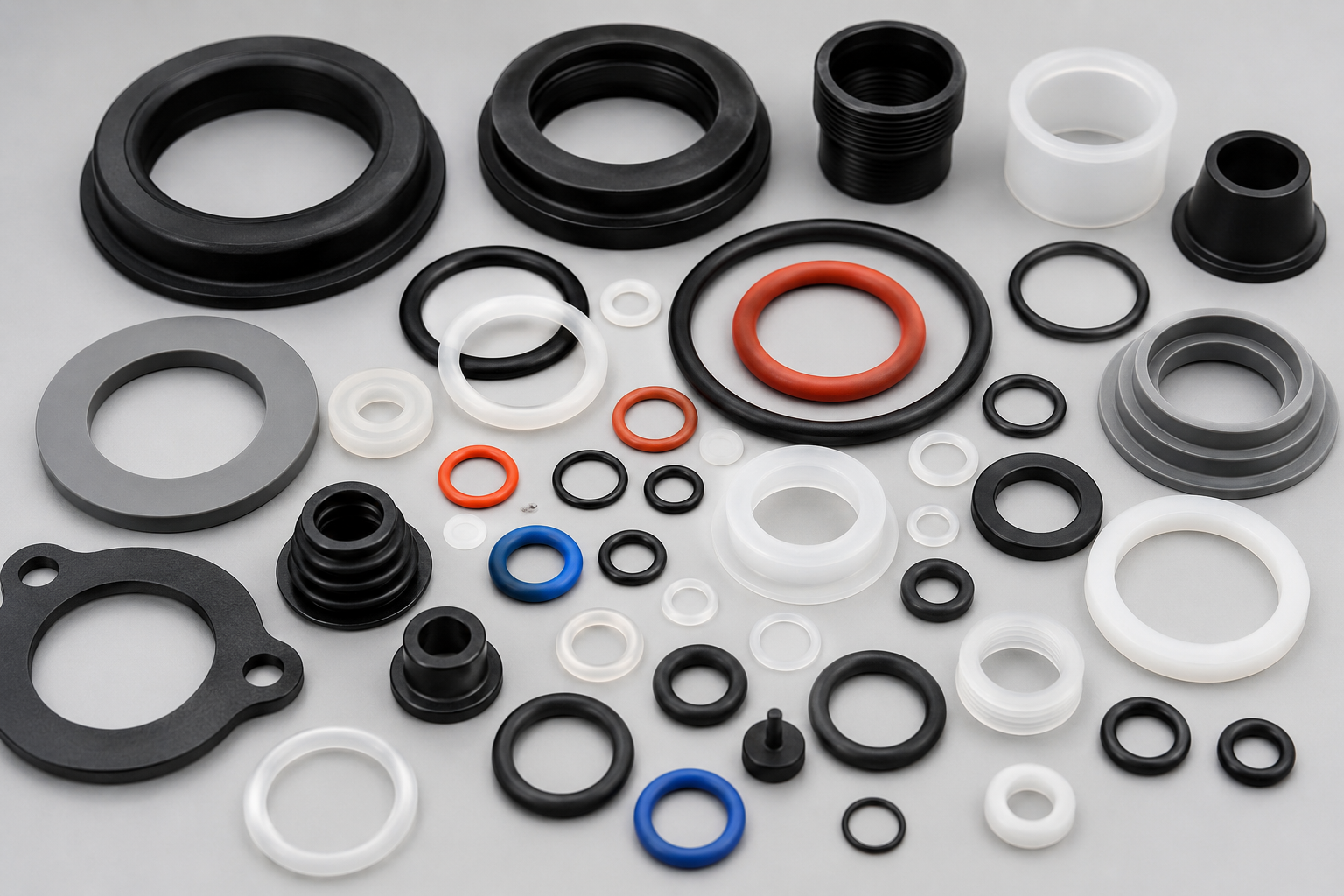
Rubber and silicone gaskets, washers, and seals for toilet, faucet, and shower fittings, molded on the same liquid silicone rubber injection molding line. These are the parts that decide whether a plumbing fixture stays watertight for years or weeps within months.
Pneumatic Pipe Test Bags
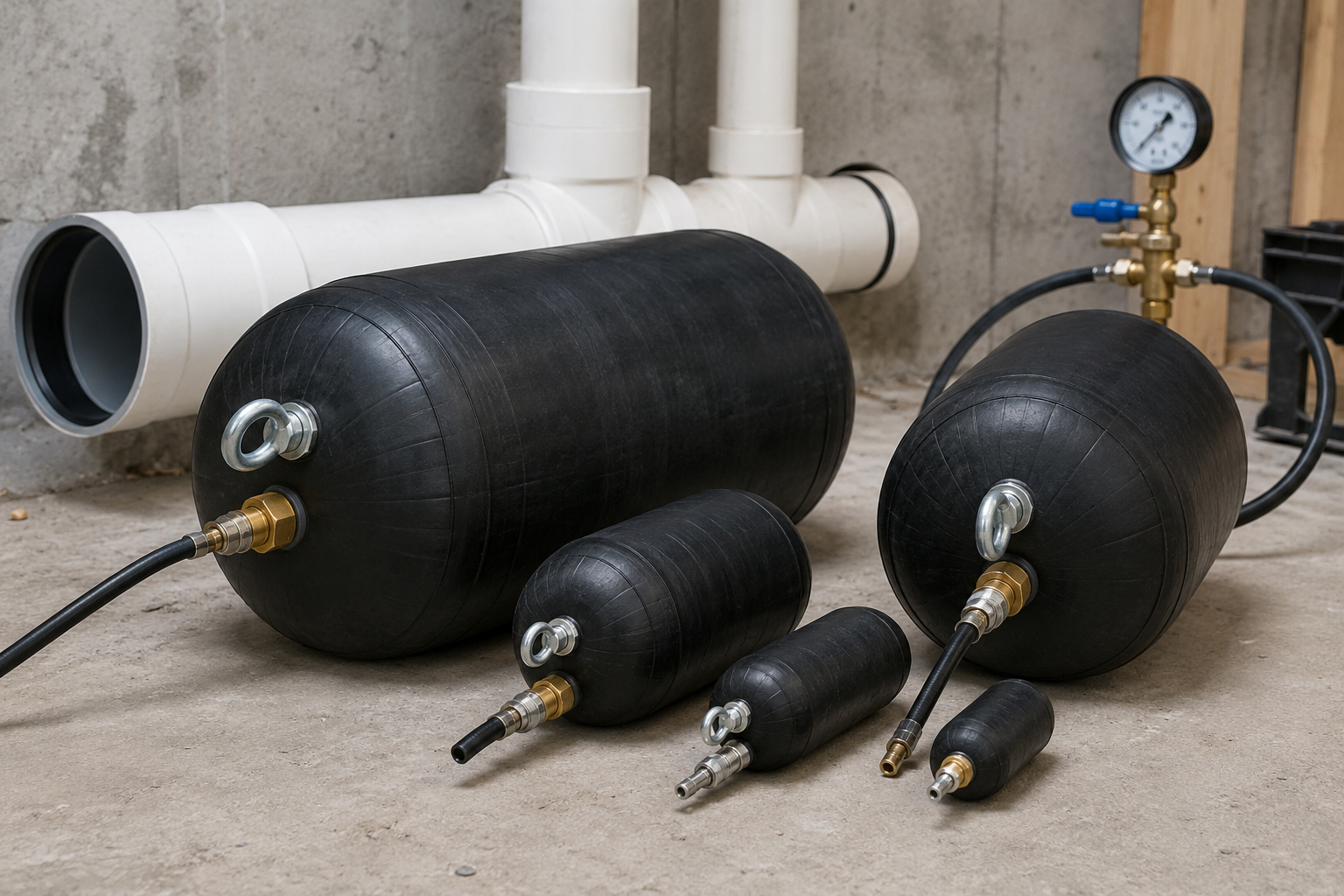
Inflatable test bags used to pressure-test and isolate a drain line during plumbing installation. A rubber-molding specialty that few drain-component suppliers carry.
Material × Process × Certification Selection Matrix
There is no single “best” material for a plumbing assembly product. The right choice depends on whether the part sees standing water, hot water, UV exposure, or a visible decorative finish. The matrix below maps each product type to the material and process Engelhardt would recommend, and the certification family it usually needs.
| Product type | Recommended body material | Process | Typical certification family |
|---|---|---|---|
| Pop-up drain (decorative) | Brass / zinc alloy | Casting + CNC + plating | cUPC / NSF (potable contact) |
| Floor drain (wet area) | Stainless steel + brass | Stamping + machining | ASME A112.18.2 waste fittings |
| Tub waste & overflow | ABS / PVC + brass linkage | Injection molding + assembly | cUPC / ASME A112.18.2 |
| Pipe sleeve / connector | PVC / ABS | Injection molding | ASTM drain-fitting standards |
| Gasket / seal | FDA-grade silicone / rubber | Compression / injection molding | NSF / LFGB / FDA material |
| Test bag | Reinforced rubber | Rubber molding + vulcanizing | Pressure-rated to spec |
Engineering note — why material drives lifespan
Field data on plumbing materials puts brass service life at 40–70 years and PVC at 25–40 years. Brass resists corrosion and carries a decorative finish well; PVC and ABS never rust and shrug off drain chemicals but should not see sustained hot water or UV.
That trade-off is the reason a single drain assembly often mixes materials — a brass visible body, a PVC tailpiece, a silicone seal — and the reason a one-source assembler matters.
Engineers reviewing the matrix can request a detailed spec sheet for any line.
Buyers comparing models against an existing SKU can send a sample for a fit assessment.
Manufacturing & Quality Capability — IATF 16949 Automotive-Grade Control
The first question on most supplier-audit checklists is blunt: is the factory certified to ISO 9001 or IATF 16949? Engelhardt answers yes to both — and the second one is unusual for a plumbing component supplier.
IATF 16949 is the automotive-industry quality standard. Holding it means Engelhardt runs the same defect-prevention discipline on a drain gasket that an automotive parts maker runs on a safety component.
Production capability that backs the claim
Capacity is what separates a real factory from a trading company that re-labels other plants’ output. The numbers below come from Engelhardt’s own production data.
LIVE_FACILITY_DATA
3,000 t
Rubber & silicone output / year
700
Injection molding machines
30M+
Hardware stamped parts / year
500
Molds built in-house / year
3,600㎡
In-house mold workshop
11
Physical & chemical test rigs
[Engineering & Traceability]
Engineers should weigh the mold workshop most heavily. Because Engelhardt designs and cuts its own tooling on German Roeders, Makino, and Standy machines, a tolerance problem found at first sampling is corrected on the same site — not negotiated across a separate toolmaker.
The test center carries the equipment to verify what the certifications promise. Salt-spray corrosion testing checks plated brass and stainless parts; a moving-die rheometer and Mooney viscometer control every rubber batch; humidity and heat-aging chambers confirm a seal will still seal after years of service. That compound-control discipline carries across our broader precision molding capability.
“On a drain assembly, the part that fails first is almost never the body — it is the seal. We test every rubber batch on a moving-die rheometer before it reaches a mold, because a gasket that cures wrong will pass a visual check and still leak in eighteen months.”
— Engelhardt Tooling & Quality Team
Behind the equipment sits a digital traceability system. Engelhardt runs ERP, MES, QMS, and WMS across the plant, so a finished plumbing component can be traced backward to its material batch, machine, operator, and process step — and a customer complaint can be traced forward to the exact production run.
How to verify Engelhardt before you commit
A new supplier should be checked, not trusted on a brochure. Engelhardt supports four concrete verification routes for the plumbing assembly line.
-
01
Certificate numbers — ISO 9001 and IATF 16949 certificates are issued with verifiable registration numbers; request them and confirm with the issuing body.
-
02
Utility-model patents — Engelhardt holds granted patents covering plumbing assemblies, including a knob-type pop-up drain and a portable-install drainage device.
-
03
Factory audit — the Zhongshan plant is open to a buyer audit or a third-party inspection before a first order.
-
04
Digital traceability report — the MES system can produce a batch-level traceability record for a sample run.
[COMPLIANCE // GLOBAL_ACCESS]
Certifications & Global Market Access
For an importer, a certification is not a trophy — it is a customs gate. A plumbing component without the right mark for its destination market simply cannot be sold there.
Engelhardt’s plumbing assembly products carry the system and product certifications below.
ISO 9001
Quality management system
IATF 16949
Automotive-grade quality
IAPMO
North America plumbing
NSF
Potable-water contact
WRAS
UK water fittings
KTW
Germany drinking water
CE
EU market access
ASTM
Material & test standards
UL
Safety listing
LFGB / FDA
Food-grade material
Certification-to-Market Access Reference
Buyers often hold the wrong certificate for their target market. Below, each certification maps to the markets where it functions as the practical entry requirement for plumbing fittings.
| Certification | Primary market | What it gates |
|---|---|---|
| IAPMO R&T (UPC / cUPC) | USA & Canada | Plumbing waste fittings, drains, pop-up drains |
| NSF | North America | Potable-water contact — faucets, valves, fittings |
| WRAS | United Kingdom | Products in contact with the public water supply |
| KTW | Germany | Drinking-water hygiene of plastics & elastomers |
| CE | European Union | General EU product market access |
| LFGB / FDA | EU / USA | Food-grade safety of silicone & rubber compounds |
OEM/ODM Sourcing Guide
[DATA-CORE: TOOLING, MOQ, SAMPLES & LEAD TIME]Engineering procurement specifications for Engelhardt rubber molding and high-polymer production.
01.MODEL
OEM or ODM — which model fits?
OEM means Engelhardt manufactures your design — you own the drawing, the tooling, and the brand. ODM means you adapt an existing Engelhardt design and brand it as yours.
| Factor | OEM (Your Design) | ODM (Adapted) |
|---|---|---|
| Ownership | You own it | Engelhardt / Brand |
| Tooling | New molds | Existing molds |
| Development | Longer cycle | Fast entry |
| Best fit | Exclusive SKUs | Volume / Speed |
02.PROC
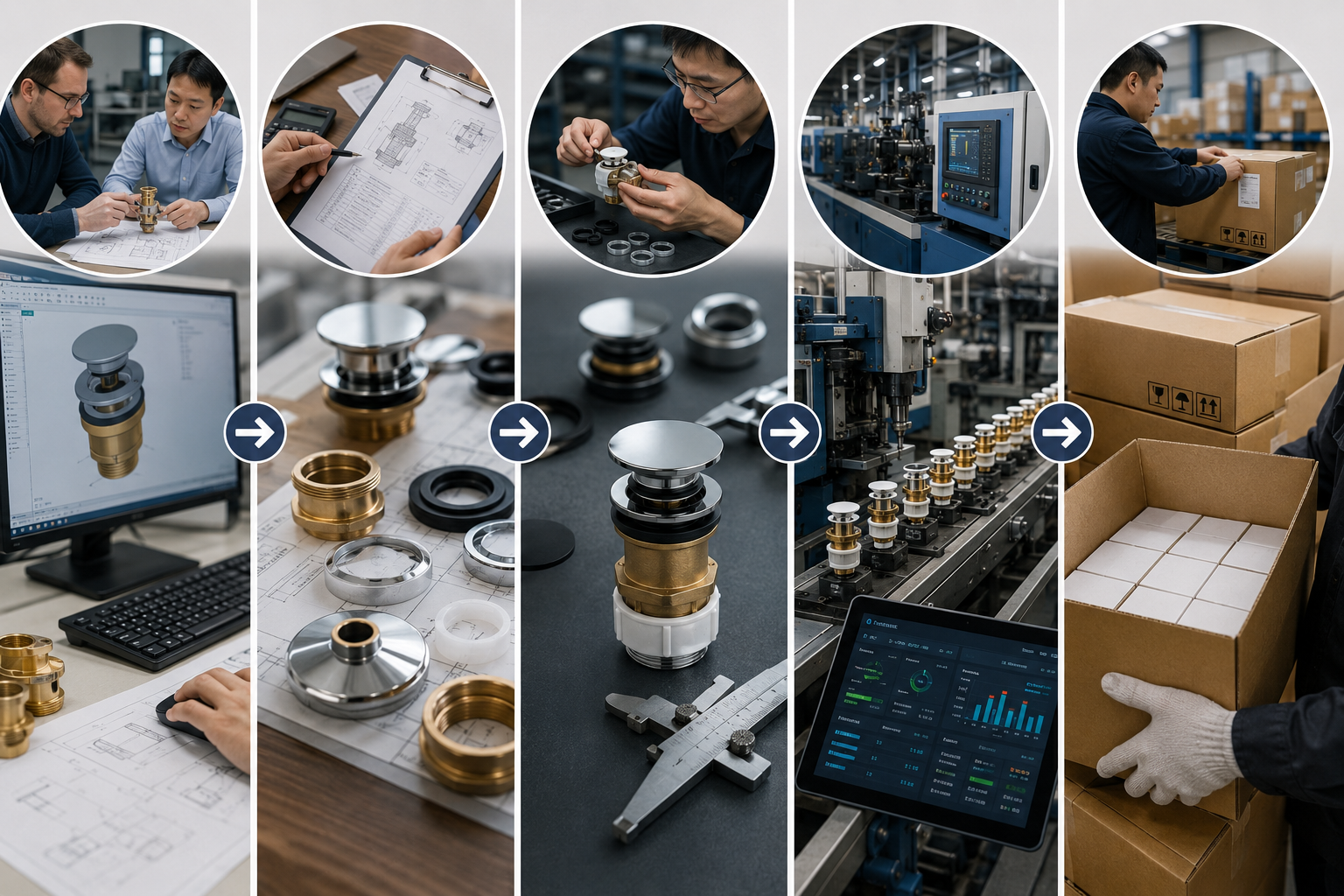
Sourcing Path
- 01 Review feasibility.
- 02 Define scope & quote.
- 03 Prototype validation.
- 04 MES-tracked production.
- 05 QC & Shipment.
03.COST
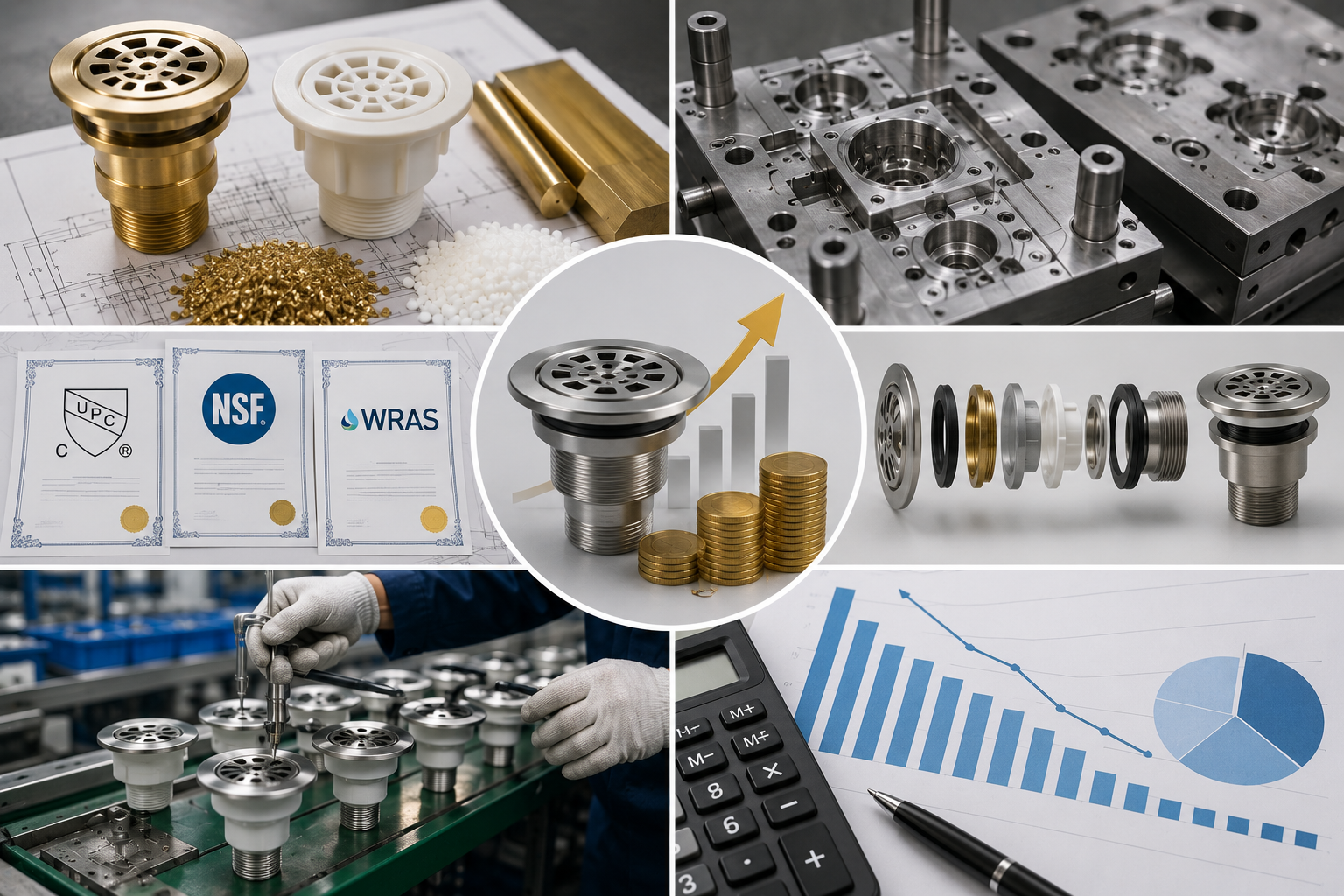
Pricing Factors
- Material spec (Brass vs Polymer)
- Tooling complexity & cavities
- Certification (cUPC/NSF/WRAS)
- Assembly integration
- Volume-amortized unit cost
Engineering Tools & Sourcing Guides
Precision calculators and selector tools to accelerate your procurement and design process.
TOOL: CATALOG
Product Line Selector
Browse Engelhardt’s comprehensive catalog of plumbing components, filters, and rubber assemblies.
Browse Catalog →TOOL: COMPLIANCE
Certification Market Checker
Verify regulatory requirements and compliance standards (cUPC, NSF, WRAS) for your target geography.
Verify Standards →TOOL: ENGINEERING
Material Selection Calculator
Input your application specs to determine the optimal polymer, hardness, and thermal resistance profile.
Calculate Material →TOOL: STRATEGY
OEM/ODM Decision Guide
Analyze sourcing models, tooling costs, and lead times to select the optimal path for your program.
Launch Guide →Plumbing Assembly Products — FAQ
Technical specifications, procurement policies, and engineering capabilities clarified for supply chain decision-makers.
A finished plumbing assembly product combines a body (brass, zinc, PVC, or ABS), a sealing element (rubber or silicone gasket), and a functional part such as a stopper, strainer, or linkage. Pop-up drains, for example, join a machined body, an overflow channel, a molded stopper, and a seal into one tested unit.
MOQ depends on the product line, material, and whether new tooling is required, so Engelhardt quotes it per item rather than as a blanket figure. Send the specific product you have in mind and the team returns an MOQ with the quotation.
Both. Our in-house mold workshop builds roughly 500 molds a year on German precision machines, supporting full OEM tooling from your drawing. For faster entry, ODM lets you adapt a proven Engelhardt design under your own brand.
Industry reporting places a typical OEM sanitary-ware production cycle around 35–45 days after tooling and samples are approved, with development time added on top. Engelhardt confirms a firm schedule against your specific order rather than a generic estimate.
A drain is the opening; a drain assembly is the complete mechanism — body, stopper or grate, gasket, and tailpiece — that controls and seals the flow. Engelhardt ships drain assemblies as finished units, not loose parts, so they reach your line ready to install or pack.
Yes. Engelhardt’s plumbing products carry IAPMO, NSF, WRAS, KTW, CE, ASTM, UL, and LFGB/FDA recognition, and tooling is built to the ASME A112.18.2 waste-fittings standard. Confirm the mark your destination market enforces and the team will align the program to it.
A fixture is the end point a person uses — a sink, toilet, faucet, or shower. By contrast, a fitting is the component that connects, seals, or controls flow between fixtures and pipes, which is the category Engelhardt’s drain assemblies and sanitary components fall into.
Four — rubber and silicone, plastic (PVC, ABS, nylon), hardware (brass, zinc, stainless steel), plus the in-house assembly that combines them. That four-material capability under one IATF 16949 system is the reason a multi-material drain assembly does not need three separate suppliers.