Get in Touch with Engelhardt

Tier-1 OEM Manufacturing · Made In Zhongshan, China
Molded Rubber ProductsCustom Components For OEMs
Engineered molded rubber products from a 53,000 m² IATF 16949 facility — 40+ vulcanizing machines, 250-ton vacuum compression press, 300-ton rubber injection press, and 2,000 metric tons of annual rubber output supplying automotive, plumbing, connector, and appliance OEMs since 2009.
Request A Quote
→
REF · MRP-OEM-2009
In-House Production
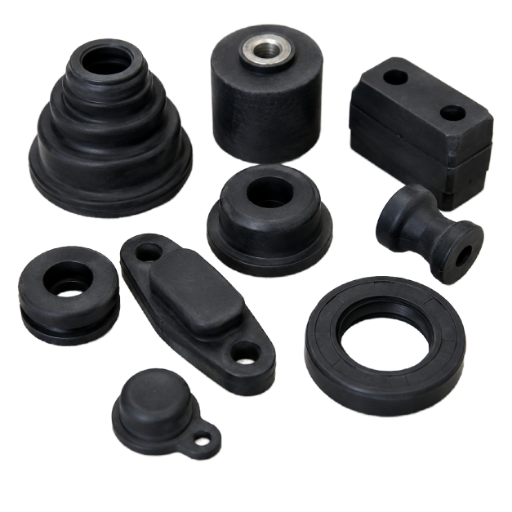
Facility Area
53,000 m²
01
40+
Vulcanizing Machines
02
6
Elastomer Families
03
3
Molding Processes
04
2,000t
Annual Rubber Output
05
IATF
16949 Certified
Trusted By OEMs Worldwide
American Standard
Kohler
Amphenol
Oatey
SFA
Nestlé
Procurement Brief · OEM Consolidation
Why Procurement Teams Specify Engelhardt For Molded Rubber Components
The pain. Industrial buyers consolidate rubber spend because splitting orders across three or four small molders rarely produces consistent results. One misaligned vendor delays a tier-1 program. When a primary supplier misses an IATF audit, the entire engine line drops with it.
Symptom
Sourcing teams report repeated quote-to-delivery slip, drawings rejected for dimensional ambiguity, and PPAP submissions failing on traceability gaps. A Reddit r/InjectionMolding thread captures the procurement reality plainly:
Reddit · r/InjectionMolding
Quotes for the same metal mold can vary from thirteen thousand to twenty-two thousand dollars with no explanation — not a quality problem, a transparency problem.
Root Cause
Small molders run without an automotive quality system. They cannot document cure-window data per the rheometer curve required by ASTM D5289, and their preform weighing protocols drift outside the ±2% mass envelope that defines a stable compression-molded part. Result: variance the customer never sees until field returns arrive.
Engelhardt’s Solution
Engelhardt’s 53,000-square-meter rubber manufacturer campus in Zhongshan operates 40+ vulcanizing machines under IATF 16949 traceability. Rubber, plastic, hardware, and assembly run under one quality system, so a sub-assembly that combines a molded EPDM gasket with a brass insert and a thermoplastic housing ships as a single part number from a single supplier — the procurement consolidation OEMs are actually looking for.
53,000 m² Campus
40+ Vulcanizing Machines
IATF 16949 Traceability
One Quality System
Single Part Number
Field Evidence
Continuous Operation Since 2009
Continuous operation since 2009 backs that claim. That OEM client wall above is real evidence: American Standard, Kohler, Oatey, and SFA are US plumbing brands; Amphenol is a US connector OEM; Nestlé sources food-contact silicone components. These brands chose a 13-year operation over the 50-year US molders also bidding because the actual unit of evaluation is annual cycle volume under a documented quality system, not founding year.
US Plumbing
American Standard · Kohler · Oatey · SFA
US Connector OEM
Amphenol
Food-Contact Silicone
Nestlé
Procurement Consolidating Multiple Asian Molders?
Request a baseline review of your current part list and IATF compliance scope.
Production Capability · Disclosure Audit
Capabilities — 40+ Machines And 2,000-Ton Annual Rubber Output
Most rubber molding capability pages list services without telling you what you can actually buy. Below aggregations storial production capabilities, on an SERP-advertising disclosure column, how much other rubber molding companies reveal about their capacity.
Capability
Engelhardt (Zhongshan)
VERIFIED
Top SERP Competitors (Average)
Vulcanizing machines
40+ presses
Not disclosed
Largest vacuum compression press
250-ton platen
20-lb shot weight (one supplier)
Largest rubber injection press
300-ton
Not disclosed
Annual rubber output
2,000 metric tons
Not disclosed
Annual silicone output
1,000 metric tons
Not disclosed
Mold design and shop footprint
3,600 m² (German Rhodes high-speed machines)
Not disclosed
Total plant footprint
53,000 m²
Not disclosed
Integrated services
Rubber, plastic, hardware, assembly
Rubber molding only
Operational Reading
The message is operational, not advertising. A 250t vacuum vulcanizer is needed to compression-mold large oil & gas flange gaskets over 300 mm OD. A 300t rubber injection press handles cavity counts over 32 on thin-wall automotive grommets in under 2 minutes per cycle. Smaller molders can handle one or the other, this press list handles both, on 1 system, with a single quality system.
Product Lines Built On This Capacity
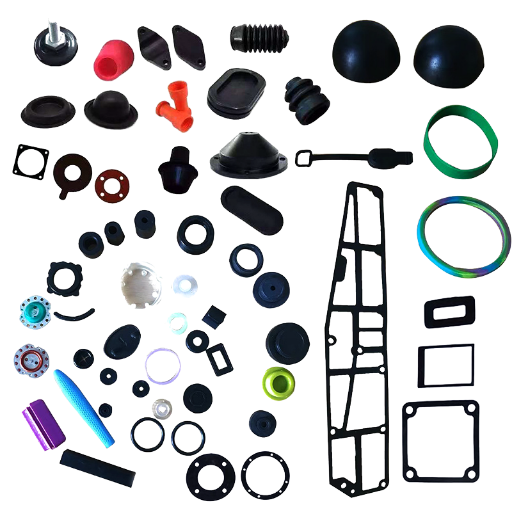
The rubber molding product group below, from the same 40+ press base. Each product below matches the Elastomer families and tolerance classes laid out in the later sections.
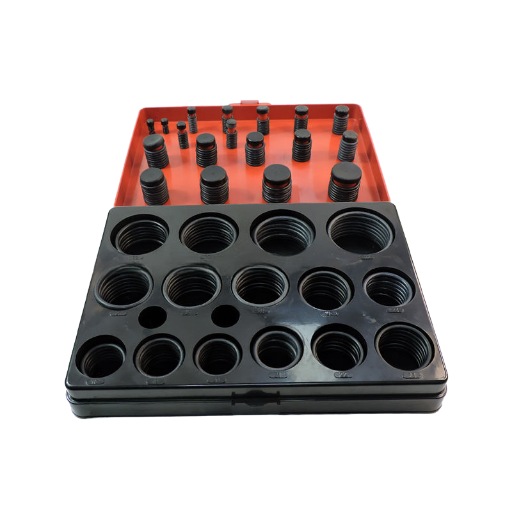
P-01
Gaskets & Seals
Rigid or dynamic, 6 mm O-rings to 760-mm flange gaskets in EPDM, Viton, NBR, and silicone.
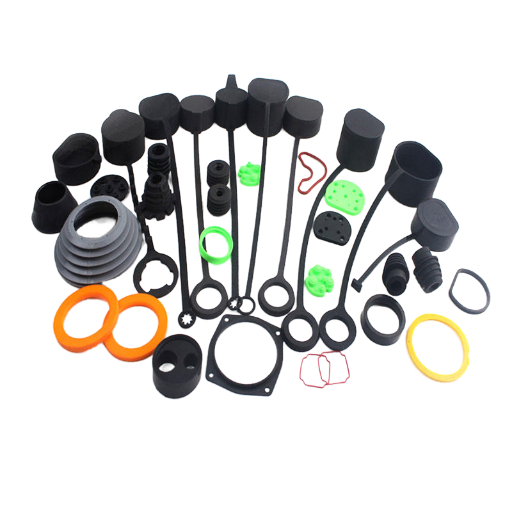
P-02
Grommets, Bushings, Mounts
Panel grommets, manifold grommets, anti-vibration bushings, engine and machine mounts, rubber to metal bonding inserts validated per ASTM D429 lap-shear.
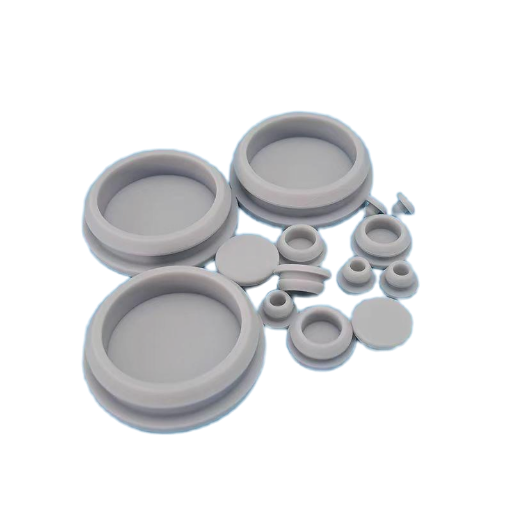
P-03
Bumpers, Plugs, Caps
Dock bumpers, equipment bumpers, suspension bumpers, threaded plugs and elastomer caps for hardware and fluid-line ends.
P-04
Custom Geometries
Diaphragms, bellows, sleeves, boots, hoses, rubber plugs, rubber caps, vibration mounts, and Shore A 30 to Shore A 90 parts manufactured to customer drawings.
Process Selection Decision Matrix
The decision matrix below shows how the Engelhardt press list maps to part volume, geometry, and tolerance — the three procurement variables that drive process choice. Specific tonnage ranges are derived from the production cells described above, not from generic industry estimates.
Annual Volume
Part Geometry
Tolerance Target
Recommended Process
Engelhardt Press Range
100 to 5,000 pcs
Simple, large parts
±0.20 mm
ISO 3302-1 M3
Compression molding
100T to 250T vacuum
5,000 to 50,000 pcs
Medium with bonded inserts
±0.15 mm
ISO 3302-1 M2
Transfer molding
150T to 250T
50,000+ pcs
Complex, thin-wall
±0.10 mm
ISO 3302-1 M2/M1
Rubber injection molding
200T to 300T
Match Your Geometry To Our Press List?
Send drawings for a 48-hour press-and-cavity recommendation.
Material Selection · ASTM D2000 Reference
Material Selection Matrix — Pick The Right Elastomer In 60 Seconds
Choosing the wrong elastomer or rubber compounds family is the highest-cost decision in a custom rubber program. A Nitrile gasket on an outdoor weather seal fails to ozone within 18 months. A Silicone seal on a fuel line swells beyond the cavity envelope. Six elastomer families below cover roughly 95% of industrial molded rubber components demand, each specified against an ASTM D2000 line callout so material, heat resistance, and fluid resistance are captured in a single string the rubber shop can quote against.
Elastomer
Temp Range
Chemical Resistance
UV / Ozone
Durometer
ASTM D2000 Type-Class
Typical Applications
EPDM
−50 to +150 °C
Acids, steam, water (good); oils (poor)
40 to 90 Shore A
BA / CA
Weather seals, HVAC gaskets, sanitary
Neoprene(CR)
−40 to +120 °C
General balance (moderate oil)
40 to 90 Shore A
BC
General industrial gaskets, hose, marine
Nitrile(NBR)
−40 to +120 °C
Oil, fuel (excellent); ozone (poor)
40 to 90 Shore A
BG / BF
Fuel grommets, hydraulic seals
Silicone(VMQ)
−55 to +230 °C
Inert (broad), biocompatible
30 to 80 Shore A
FE / GE
Medical, food-contact (FDA), LED
Viton(FKM)
−20 to +230 °C
Chemical, fuel, oil (excellent)
60 to 90 Shore A
HK
Aerospace seals, oil and gas, chem plant
Butyl(IIR)
−40 to +120 °C
Acids, gas barrier
40 to 70 Shore A
AA
Gas barriers, vibration damping
Engineering Note
The Tight-Tolerance Trap
Without an ISO 3302-1 class on the drawing, the phrase “tight tolerance” is meaningless. A 10-mm feature on an M3 class part tolerates 0.25 mm, while a 250-mm feature on the same part can tolerate up to 0.80 mm. Specify the ISO class on the drawing, not one global tolerance. Curing shrinkage runs 1.8% to 4.5% depending on elastomer family, and that shrinkage is baked into the mold at the cavity-cut stage — not adjustable after the steel is cut.
60-Second Material Selection — Five Questions
Q1
Maximum service temperature?
Above 230 C narrows to Viton or specialty Silicone. Above 150 C disqualifies Nitrile, Neoprene, and Butyl.
Q2
Oil or fuel exposure?
Yes — Nitrile (cost) or Viton (chemistry). Never EPDM in petroleum service.
Q3
Outdoor or ozone exposure?
EPDM, Silicone, or Viton. Avoid Nitrile and natural rubber in continuous UV.
Q4
Food, medical, or potable-water contact?
Platinum-cured Silicone or FDA-grade EPDM. Compliance overlay typically adds 10% to 30% to compound cost.
Q5
Budget tier?
EPDM and Neoprene are commodity ($); Silicone and Nitrile are mid-tier ($$); Viton and FFKM are specialty ($$$).
ASTM D2000 Callout
One String The Buyer And The Molder Can Both Quote Against
ASTM D2000 line callouts shown in the table column above lets sourcing teams write material specifications that translate cleanly between rubber molding companies. A spec like ASTM D2000 M2BG710 A14 B34 EO14 communicates Nitrile, Shore A 70, heat resistance to 70 C, compression set under 25%, and oil aging in IRM903 — in one string a buyer and a molder can both quote against. Most procurement disputes over rubber materials in this industry trace to drawings that skip this callout and substitute the vague phrase “rubber, oil-resistant.”
Need Help Mapping Your Application To An ASTM D2000 Callout?
Engineers respond within one business day with a free compound recommendation.
Process Engineering · Cost And Tolerance Logic
Compression Vs Transfer Vs Injection — Process Selection Logic
Rubber processes share the same vulcanization chemistry but differ dramatically in tooling cost and tolerance envelope. Conventional wisdom holds injection is always faster per part — correct on cycle time, wrong on per-part economics. Below 25,000 pieces per year, rubber compression molding wins even though its cycle is three to five times longer than rubber injection molding, because tool amortization dominates the unit-cost equation at low volume.
Process 01
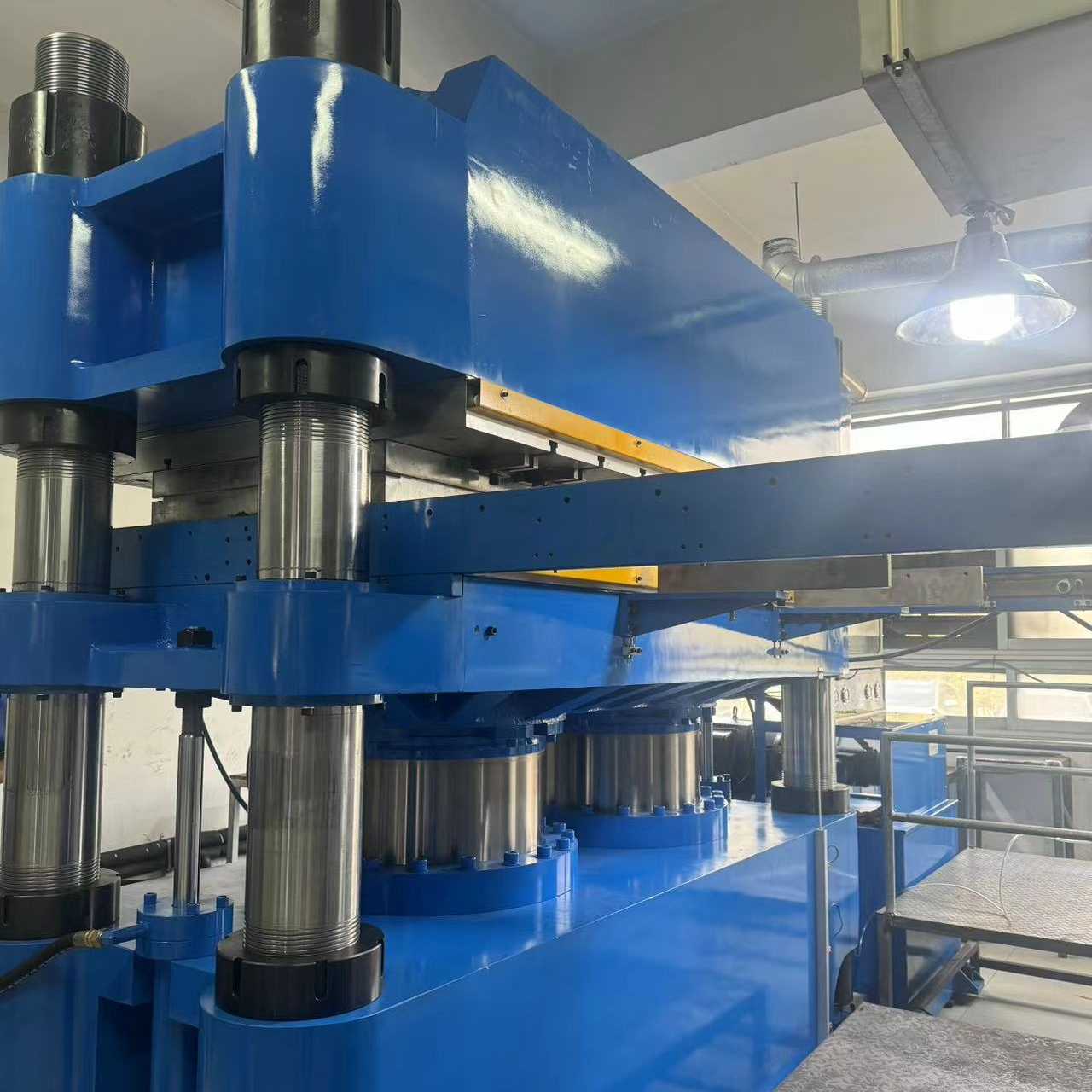
Compression Molding
Volume
100 — 25,000 pcs/yr
Tooling
$2K — $15K
Cycle
3 — 15 min
ISO 3302-1
M2 to M3
Max Part
~760 mm
Best For
Simple geometry, large parts, prototypes.
Engelhardt presses: 100-ton through 250-ton vacuum vulcanizers.
Process 02
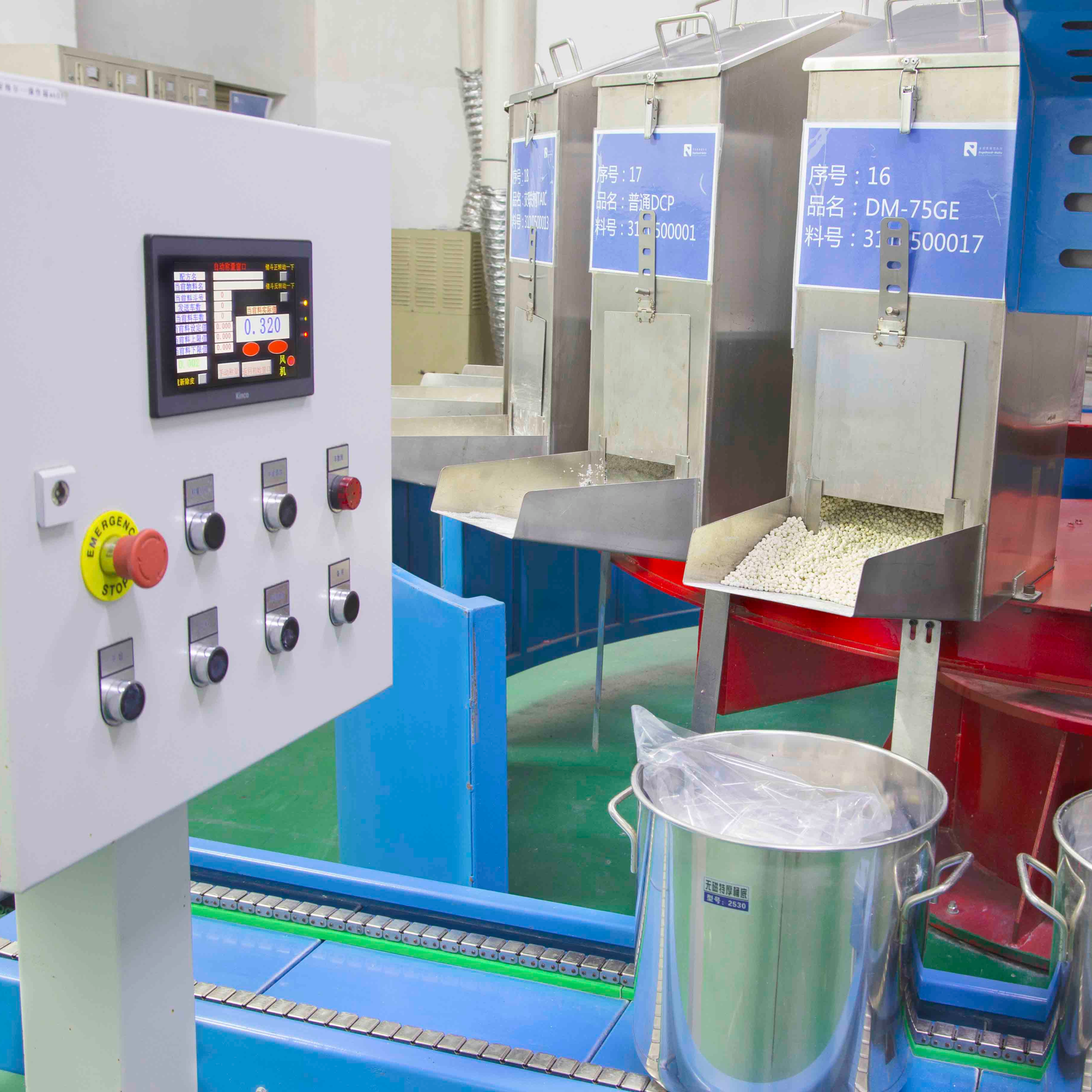
Transfer Molding
Volume
5,000 — 100,000 pcs/yr
Tooling
$8K — $30K
Cycle
2 — 6 min
ISO 3302-1
M2
Max Part
~300 mm
Best For
Bonded inserts, medium geometry.
Preferred for rubber-to-metal bonded grommets and bushings.
Process 03
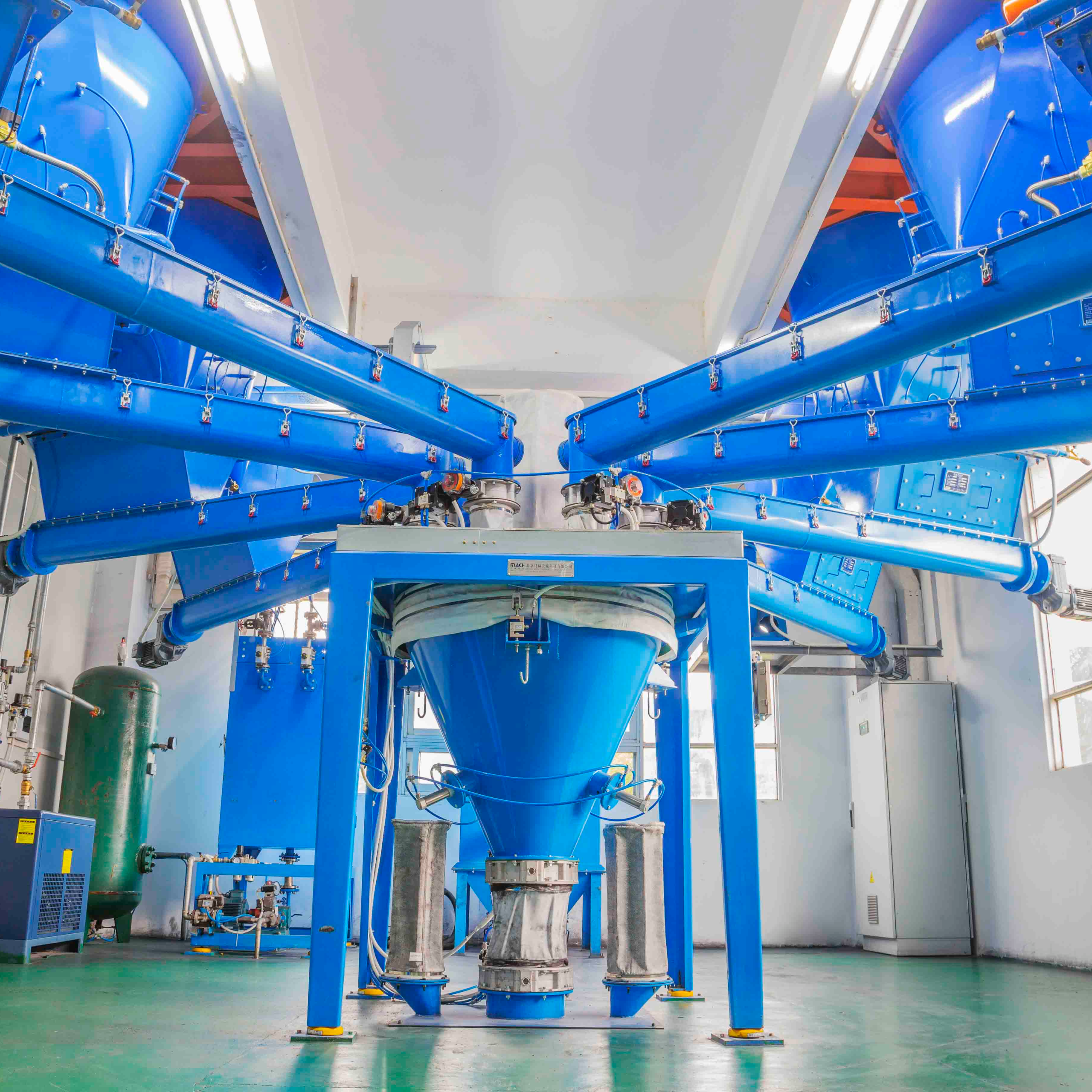
Rubber Injection Molding
Volume
50,000+ pcs/yr
Tooling
$15K — $80K
Cycle
1 — 4 min
ISO 3302-1
M1 to M2
Max Part
~300 mm
Best For
Complex thin-wall, high volume, tight tolerance.
Engelhardt: up to 300-ton presses, multi-cavity steel tools.
“
Most procurement decisions that go wrong on this process go wrong because someone compared cycle times without amortization. Injection is faster per part. But a compression mold costs a fraction of an injection mold. Divide the tool price by annual volume and compression wins below roughly 25,000 pieces a year, even though its cycle is three times longer.
Engelhardt Engineering Team · Rubber Compression Molding Guide
Quick Decision Rule
If / Then — Specify The Process By Constraint
Rule 01 — If
→ Compression
If the part exceeds 300 mm diagonal, annual volume is below 5k parts, or the compound is high-durometer Viton or bulky Silicone, specify compression.
Rule 02 — If
→ Rubber Injection
If tolerance is tighter than ISO 3302-1 M2 or cycle economics need to sit under two minutes, specify rubber injection molding.
Rule 03 — If Both
→ Transfer Bridges
If both apply — the part needs M2 precision and volume sits between 5k and 100k — rubber transfer molding bridges the gap, particularly when bonded metal inserts are in scope.
Unsure Which Process Fits Your Part?
Send your drawing and get a process-and-cost band back within 48 hours.
Customer Outcomes · Verticals Served
Customer Outcomes — Industries We Serve
The Engelhardt molded rubber catalog — custom rubber products built to OEM drawings by an IATF-certified rubber components manufacturer — ships into five industrial verticals. Each industry has its own specification grammar, certification overlay, and tolerance class, and each is supported by elastomer compounds qualified specifically for that environment.
01
Automotive
IATF 16949 Tier-1 ProgramsEngine intake gaskets, fuel-line grommets, transmission bushings, weather seals. Compounds run Nitrile or FKM for fluid-contact applications and EPDM for environmental seals. Engelhardt ships under IATF 16949, the automotive Tier-1 quality management standard required by all major OEMs including GM, Ford, and Stellantis. PPAP submissions follow the Automotive Industry Action Group framework.
02
Plumbing & Sanitary
American Standard · Kohler · Oatey · SFABath fixture gaskets, faucet diaphragms, P-trap seals, and pump-saver elastomer components ship to the four largest US plumbing brands and the European appliance maker SFA. EPDM dominates because of potable-water and chloramine compatibility. FDA-compliant silicone rubber compounds available where required.
03
Electrical Connectors
AmphenolStrain-relief grommets, wire seals, and panel-feedthrough bushings molded in Neoprene and Silicone supply Amphenol’s connector programs. Tolerance class typically ISO 3302-1 M2 with rubber-to-metal bonded variants validated per ASTM D429.
04
Food And Beverage
Nestlé Tier SupplierPlatinum-cured Silicone food-contact components, FDA 21 CFR 177.2600 compliant, run in cleanroom-segregated cells. Compound traceability per IATF flows into food-safety auditing without modification.
05
Industrial
Vibration · Bumpers · ConveyorNatural rubber and Neoprene vibration isolators, dock bumpers in EPDM, conveyor skirting in NBR, and equipment mounts across Shore A 40 to 80. Most parts produced in batches under ten thousand annually — the sweet spot for compression molding economics.
TCO Advantage — Procurement Consolidation
Measurable Indicators
Supplier Consolidation Moves Measurable Indicators In The Right Direction.
Procurement teams consolidating multiple Asian molders into a single IATF 16949 supplier report lower coordination overhead, faster sample iteration cycles, and tighter parts-per-million defect trends on the consolidated parts. Exact savings vary by program and current baseline.
Lower Coordination Overhead
Faster Sample Iteration
Tighter PPM Defect Trends
Baseline Review
Side-By-Side Process And Material Analysis Against Your Existing Supplier Set.
Engelhardt offers a baseline review on consolidated part lists: drawings, current pricing, lead-time history. Output is a side-by-side process and material analysis against the existing supplier set, with attention to consolidation candidates the current sourcing strategy may have missed.
- Drawings reviewed against in-house press and elastomer mapping
- Current pricing benchmarked process-by-process
- Lead-time history scored for IATF 16949 compliance gaps
Source: Engelhardt internal program data 2024–2025; specific outcomes vary by program.
Considering A Consolidation Review?
Send your current part list and program targets.
Quality System · Certifications · Lab Capability
Quality, Certifications, And Lab Capability
The Engelhardt quality system is built on three independent layers: certifications that frame the overall management system, ASTM and ISO test methods that govern compound and dimensional verification, and an in-house laboratory equipped to run those tests on every production batch.
CERT · 01
ISO 9001:2015
Quality Management
CERT · 02
IATF 16949
Automotive Tier 1
CERT · 03
ASTM D2000
Material Classification
CERT · 04
ASTM D429
Rubber-To-Metal Adhesion
CERT · 05
ASTM D5289
Cure Rheometry
In-House Test Equipment — What The Lab Can Actually Verify
Most competitor rubber molding companies will ignore specification scope at the quoting stage in order to establish a quote, but we will define quality control test base scope without disclosing scope of the test base. Equipment list below is the complete Engelhardt lab inventory cross-referenced to ASTM or ISO method numbers, so engineering teams can verify that onsite capability meets drawing specification.
No.
Equipment
Standard
What It Measures
01
Mooney Viscometer
ASTM D1646
Compound viscosity and scorch behavior
02
Moving Die Rheometer
Model UR-2010
ASTM D5289
Cure characteristics, scorch time, optimum cure
03
Carbon Black Analyzer
ASTM D1278
Carbon black loading, compound formulation
04
Universal Material Tester
Model RT5K-2
ASTM D412
Tensile strength, elongation, modulus
05
Salt-Spray Corrosion Tester
ASTM B117
Metal-insert corrosion in bonded parts
06
Heat Aging Test Chamber
ASTM D573
Long-term heat-resistance validation
07
High-Temperature Oven
ASTM D573
Accelerated aging, post-cure
08
Humidity Chamber
ASTM D2247
Moisture resistance, hydrolysis
09
Kinematic Viscosity Meter
ASTM D445
Oil and lubricant compatibility
10
Projector Measurement
— · IN-HOUSE
Profile and dimensional QC
11
Transportation Simulation Tester
ISTA / ASTM D4169
Packaging and shipping validation
12
Chemical Laboratory
— · R&D
Compound R&D and root-cause analysis
Operations Cadence
Manned Across All Three Production Shifts
Shift 1
Day
Shift 2
Swing
Shift 3
Night
The lab is manned during all three production shifts. Batch-dated cure-window readings are logged for each batch through the moving die rheometer; dimensional verification is performed on all first-article rubbers and at periodicity defined in the IATF process control plan; aged materials are saved for traceability windows aligned with customer PPAP requirements.
Need To Confirm A Specific Test Capability?
Request the full lab equipment and method datasheet.
Procurement Datasheet · Pricing · MOQ · Lead Time · RFQ
Procurement Guide — Pricing Factors, MOQ, Lead Time, RFQ Template
Quoted assembly cost is usually not the metal or elastomer unit price — it is the procurement efficiency differential caused by incomplete drawings and undisclosed specification scope. The framework below quantifies the four procurement inputs that encompass ever quote, with industry-normal envelope cost-band guidance rather than blind quotes.
DocPGD · MRP
Rev2026-A
ScopeTier-1 OEM
Inputs04 Variables
SEC 01
Pricing Influence Factors
Factor
Impact On Unit Price
Impact On Tooling Cost
Material Grade
commodity EPDM vs specialty FKM
Process
compression < transfer < injection
Volume Tier
prototyping vs production
Cavity Count
single vs multi
Certification Overlay
FDA, IATF, REACH
Insert Bonding
rubber-to-metal
SEC 02
Tooling Cost Bands, Lead Time, MOQ
Cost
Tooling Cost Bands
Rubber Compression
$2K — $15K
Transfer Molding
$8K — $30K
Rubber Injection
$15K — $80K
Cost depends on cavity count, geometry, and steel origin. Aluminum prototype tooling sits at the low end of each envelope; hardened steel multi-cavity manufacturing tooling at the high end. Engelhardt quotes specifically against the customer drawing, rather than industry-wide blind quotes.
Time
Lead Time Bands
Tooling Fabrication
4 — 8 wk
First-Article Samples
1 — 2 wk
Production Lots
2 — 6 wk
Total RFQ-to-sample time window for new rubber molding programs commonly is 5 — 10 weeks. Production lots run per release depending on volume and elastomeric specification.
MOQ
MOQ Transparency
Prototype
50 — 500 pc
Production
5K — 10K pc
Prototype/sampling runs commonly end in 50 — 500 pc range for compression molding programs, less frequently in aerospace or healthcare scope. Production releases begin around 5,000 — 10,000 pc depending on cavity count and elastomer. Sub-500 pc prototypes are run on aluminum tooling to limit tooling costs relative to qualification volume.
Engelhardt quotes specifically against the customer drawing — not industry-wide blind quotes. Tooling cost depends on cavity count, geometry, and steel origin.
SEC 03
RFQ Checklist — What To Send With The Drawing
RFQ
10-Point Drawing and Specification Pack
01
2D Drawing Or 3D Model
STEP or IGES preferred
02
Material Specification
ASTM D2000 line callout if available, or durometer + temperature + chemical exposure
03
Critical Dimensions And Tolerance
ISO 3302-1 tolerance class
04
Surface Finish Requirement
Drawing-specified texture or Ra value
05
Annual Volume And Program Life
Expected production horizon
06
Certification Scope
FDA, IATF, REACH, RoHS, FAR/AMS for aerospace
07
Inspection Level
AQL sampling or PPAP submission
08
Insert Or Bonded-Metal Details
Substrate, primer requirement
09
Packaging And Labeling Specification
Carton size, anti-static, customs labeling
10
Target Sample Date And Production SOP
First-article and ramp-up timeline
RFQ Template and DFM Checklist
Download both PDFs with the drawing checklist and tolerance reference table.
Engineering Tools For Molded Rubber Products
Professional evaluation and calculation modules to optimize your product design and manufacturing process.
Procurement & Engineering · Buyer FAQ
Frequently Asked Questions
Specifications, lead times, and process choices answered with the same numerical envelopes used in our internal quoting workflow — no industry-wide blind ranges, no marketing softening. Click any row to expand.
Q.01 What Is The Typical MOQ For Custom Molded Rubber Parts?
Answer
Prototype compression molded runs frequently begin in the range of 50-500 pieces in volume. Production releases for the same part by contrast frequently begin in the range of 5000-10000 pieces depending on cavity count and elastomeric specification. Qualification builds are routinely accepted at the 200-300 piece population for aerospace and healthcare scope because safety testing dominates the qualification calendar.
Q.02 How Much Does A Custom Rubber Mold Cost?
Answer
Compression molds for simple shape start at $2,000 in aluminum, while hardened-steel multi-cavity production tooling for complex shapes stretch up to $15,000. Transfer tooling sits in the $8,000 to $30,000 range. Rubber injection tooling for production-quality steel molds will be in the $15,000 to $80,000 range depending on cavity count, steel origin, and features that bond inserts. Send the customer drawing for a specific quote, rather than a blind quote based on industry normal ranges.
Q.03 What Is The Typical Lead Time From RFQ To First Sample?
Answer
Tooling fabrication takes 4–8 weeks depending on cavity count and geometry. First-article samples follow 1–2 weeks later. Total RFQ-to-sample time window for new rubber molding programs is normally 5–10 weeks. Longer time windows are associated with high cavity count injection or hardened steel multi-cavity compression tooling.
Q.04 How Do I Select The Right Elastomer For My Application?
Answer
Use the Material Selection Matrix or the Elastomer Selector tool. Engineering reviews drawings and recommends an ASTM D2000 callout at no charge.
Q.05 Are Your Custom Molded Rubber Components FDA, IATF, Or REACH Compliant?
Answer
Engelhardt operates under IATF 16949 for automotive Tier-1 programs. FDA 21 CFR 177.2600 grade silicone and EPDM compounds are stocked for food contact specs. REACH and RoHS compliant compounds are stocked for European specs. Aerospace programs requiring AS9100D or FAR/AMS callouts are quoted on a per-program basis with documented traceability. Medical and cleanroom builds run platinum-cured silicone in segregated cells. Indicate the full compliance scope on the RFQ so the right compound and cell are quoted from day one.
Q.06 Can You Bond Rubber To Metal Inserts?
Answer
Absolutely. Transfer molding is preferred for bonded rubber-metal components because the geometry of the closed mold positions the insert and the rubber preform simultaneously. Substrate prep can include plasma cleaning or grit-blasting then a Chemlok-class primer. Rubber to metal performance is validated per ASTM D429 lap-shear adhesion. Failure mode documented per R / RC / CP / M code system.
Q.07 Do You Support DFM Review On Customer Drawings?
Answer
Sure. The engineering team reviews part drawings before tooling commitment. Common considerations are parting-line repositioning, handling features for undercuts, draft-angle minimums, injection gate positioning, and a reality check against a ISO 3302-1 class capability. Our 10-point DFM Checklist available for download in the Procurement Guide section above.
Q.08 What Is The Difference Between Compression, Transfer, And Injection Molding?
Answer
Refer to the Process Selection Logic in this guide. Compression is used when low volume, large, simple shape, or lowest tool cost are highest priority; transfer is utilized when medium volume, bonded insert is desired; injection is the process of choice when high volume, thin wall, or tight tolerances are required. Engelhardt operates a 250t vacuum compression and a 300t injection presses — we always recommend the ideal process based on program requirements.
Have A Question Not Listed Here?
Send your drawing and program scope — engineering responds within one business day.