
Póngase en contacto con Engelhardt



Juntas y sellos de caucho: la guía de selección del ingeniero para 2026
Las juntas y juntas de goma tienen el mismo aspecto para un comprador ocasional: un anillo o una lámina negros que evita que las cosas se escapen. No son el mismo producto. Una junta se comprime estáticamente entre dos bridas planas; un sello funciona dinámicamente contra un eje móvil, un pistón o un vástago de válvula giratorio. Esta terminología difusa cuesta dinero real a los equipos de adquisiciones: Viton sobreespecificado donde habría funcionado Nitrile, compresión de tamaño insuficiente que falla después de seis meses de servicio o ajuste de compresión que silenciosamente pasa el umbral mientras nadie lo prueba.
Esta guía explica cómo funcionan realmente las juntas y sellos de caucho, cuándo cada compuesto obtiene su precio, los seis modos de falla responsables de la mayoría de las fugas de campo y cómo la evaluación PFAS de la UE hasta finales de 2026 está remodelando qué fluoroelastómeros su proveedor aún puede enviar. Si especifica, obtiene o inspecciona juntas y sellos de caucho industriales, el resto de esta página está escrita para usted.
Especificaciones rápidas « Juntas y sellos de caucho industriales de un vistazo
| Gama de durómetros | 40-90 Shore A (según ASTM D2240; 70±5 es el valor predeterminado industrial) |
| Compuestos comunes | NBR (Buna-N), EPDM, Silicona (VMQ), Viton (FKM), Neopreno (CR), Butilo (IIR), Caucho natural, Fluorosilicona (FVMQ) |
| Temperatura de servicio | Envoltura total de -75°F a +500°F; cada compuesto cubre una banda más estrecha |
| Prueba de conjunto de compresión | ASTM D395 Método B « Cepa 25%, tiempo fijo a temperatura elevada |
| Apretar (instalado) | Sellos estáticos: 15-30% | Juntas tóricas dinámicas: 8-16% (según el manual de Parker) |
| Marcos de cumplimiento | ASTM D2000 (especificación del compuesto); ISO 3601-1 (tolerancia a las juntas tóricas); FDA 21 CFR 177.2600 (caucho de calidad alimentaria) |
Junta de goma versus sello de goma « ¿Cuál es realmente la diferencia?
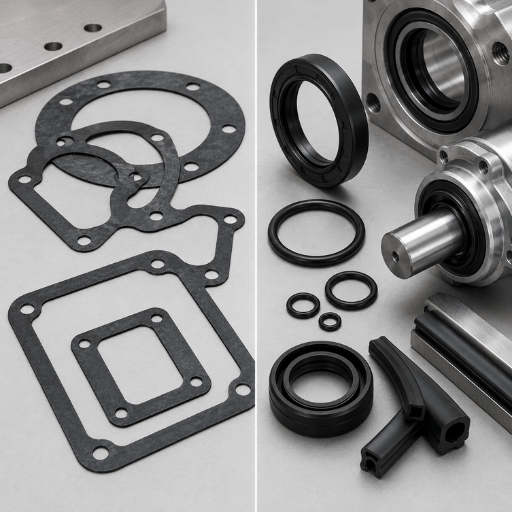
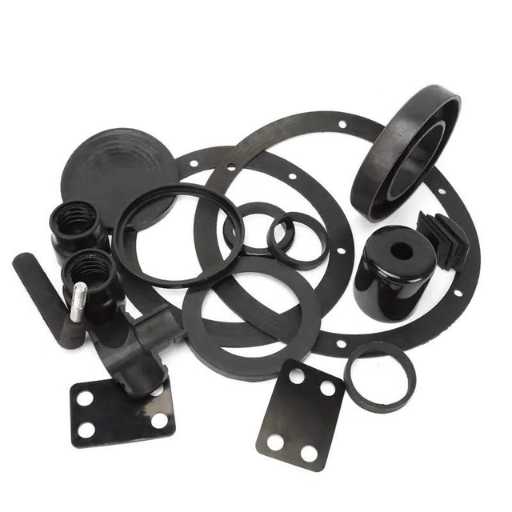
Una junta de goma es un elemento de sellado estático que llena el espacio entre dos superficies estacionarias: bridas, cubiertas, accesorios, carcasas, juntas de tuberías o arandelas de goma apiladas en conjuntos atornillados. Un sello de goma cubre la familia más amplia de piezas de sellado que contienen presión o excluyen contaminantes en las interfaces móviles: ejes giratorios, pistones alternativos, vástagos de válvulas y orificios de bomba. Ambos términos se utilizan indistintamente en los catálogos, pero el problema de ingeniería que cada uno resuelve es diferente.
Esta distinción es importante porque las compensaciones de ingeniería se invierten. Las juntas están dimensionadas para la fuerza de compresión y la conformabilidad de la superficie; los sellos están dimensionados para baja fricción, resiliencia de seguimiento del eje y vida útil. El reemplazo de una junta suele tardar una hora; Reemplazar un sello del eje a menudo significa derribar una bomba o carcasa del motor. Elija el término incorrecto en una solicitud de cotización y el producto incorrecto llegará con un plazo de entrega de seis semanas.
| Dimensión | Junta de goma | Sello de goma |
|---|---|---|
| Movimiento de interfaz | Estático (las piezas no se mueven entre sí) | Dinámico (giratorio, alternativo u oscilante) |
| Forma típica | Hoja, anillo, forma troquelada, perfil moldeado | Sello de labio, junta tórica, junta en X, sello de eje giratorio, copa en U |
| Carga primaria | Compresión entre bridas (par de torsión del perno) | Fuerza de resorte/presión + presión de contacto del eje |
| Apretón instalado | 15-30% (rango estático Parker) | 8-16% (rango dinámico de Parker) |
| Esfuerzo de reemplazo | Normalmente minutos « desatornillar, intercambiar, volver a apretar | A menudo se requieren horas « desmontaje del montaje |
| Costo de falla | Fuga localizada; reemplazo barato | Potencial de daño al equipo; dominado por el tiempo de inactividad |
💡 La regla estático-dinámica
Si las dos partes que toca la goma no se mueven entre sí mientras el equipo funciona, se necesita una junta. Si se produce algún movimiento deslizante, giratorio o alternativo a través de la cara de goma, se necesita un sello. Las fotografías del catálogo pueden ser engañosas; la física no lo es.
Cómo funciona realmente el sellado de caucho « La ingeniería detrás del apretón
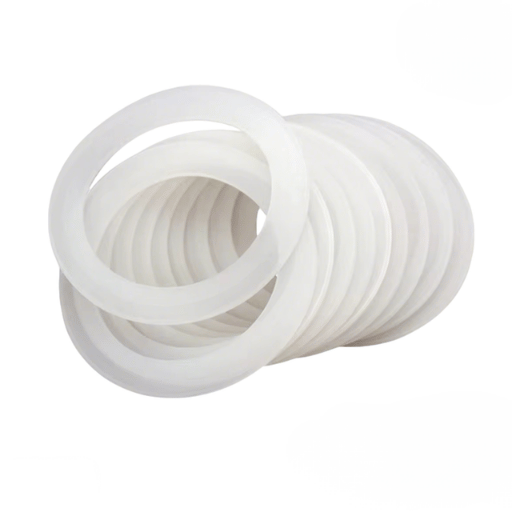
Las juntas y sellos de caucho no detienen las fugas al ser blandas o pegajosas. Detienen las fugas porque un elastómero comprimido empuja hacia atrás sus superficies de contacto con una presión de contacto superior a la presión del fluido que intenta escapar. Mientras la fuerza de recuperación del caucho supere la presión de la línea a través de la banda de contacto total, el caucho no se arrastra, envejece ni se hincha químicamente fuera de ese rango, la unión permanece apretada.
Tres propiedades impulsan esa fuerza de recuperación: durómetro (qué tan duro es el caucho), ajuste de compresión (cuánta deformación permanente acumula) y conformabilidad de la superficie (qué tan bien llena los picos y valles microscópicos de la cara de la brida). El valor predeterminado industrial general es 70±5 Shore A medido por ASTM D2240, combinado con superficies de acoplamiento terminadas en una banda de rugosidad típica de aproximadamente Ra 1,6-3,2 µm. El caucho más blando (50 Shore A) se adapta mejor a superficies rugosas pero carece de contrapresión para bridas de alta carga. El caucho más duro (85+ Shore A) mantiene la presión pero exige una brida más suave y un mayor torque del perno para asentarse.
Referencia más citada para estas compensaciones: Manual de juntas tóricas Parker (ORD-5700), la referencia de facto en el diseño industrial para sellos de elastómero.
📐 Nota de ingeniería « Aprieta objetivos
Juntas estáticas de sellado frontal: 15-30% exprime el espesor del caucho libre. Juntas tóricas radiales estáticas: aproximadamente 20% aprieta. Juntas tóricas alternativas dinámicas: 8-12%. Juntas tóricas giratorias: 8-12% con estiramiento mantenido bajo 1%. Superar el apretón recomendado no mejora el sellado, acelera la deformación por compresión y acorta la vida útil.
Un matiz que las tablas del catálogo tienden a pasar por alto: la cepa 25% citada para la prueba de deformación por compresión ASTM D395 Método B es una carga de prueba: la herramienta de laboratorio utilizada para caracterizar el comportamiento de deformación de un compuesto. La compresión instalada 30-40% que se ve en algunas pautas de junta de brida de uso general es un objetivo instalado para un prensaestopas de junta completamente cerrado sin espacio de extrusión. Son números diferentes que cumplen funciones diferentes y combinarlos es una causa común de bridas demasiado apretadas.
Selección de compuestos de caucho « Más allá de la tabla de materiales
La mayoría de los gráficos de “materiales de juntas de caucho” enumeran ocho elastómeros y lo llaman día. Ese gráfico es la parte fácil. Adaptar un compuesto a la envolvente operativa real “temperatura, contacto químico, exposición al ozono, carga de compresión y expectativa del ciclo de vida «y aceptar que ningún caucho gana en los cinco.
Los ocho caballos de batalla industriales para juntas y sellos de caucho se resumen a continuación, con las compensaciones que impulsan 80% de las decisiones de selección:
| Compuesto | Temperatura de servicio | Mejor para | Evitar | Índice de costos |
|---|---|---|---|---|
| NBR (Nitrilo/Buna-N) | «40 a +250°F | Petróleos, combustibles, fluidos hidráulicos, industriales en general | Ozono, clima, solventes polares | 1.0 (línea de base) |
| EPDM | «60 a +300°F | Agua, vapor, ozono, clima, líquido de frenos, productos químicos polares | Petróleo, combustible, grasa mineral | 1.1–1.3 |
| Silicona (VMQ) | «75 la +500°F | Propagación de temperaturas extremas, contacto con alimentos, médico | Cargas dinámicas de alta presión, abrasión, combustible/aceite | 2.0–3.0 |
| Vitón / FKM | «15 a +400°F | Productos químicos agresivos, combustible, petróleo de alta temperatura, aeroespacial | Vapor, agua caliente, aplicaciones de baja temperatura | 6–12 |
| Neopreno (CR) | «40 a +250°F | Refrigerantes, ácidos suaves, clima, grados retardantes de llama | Ácidos oxidantes fuertes, disolventes polares | 1.3–1.5 |
| Butilo (IIR) | «50 a +250°F | Barreras impermeables al gas, amortiguación de vibraciones, vacío | Aceite de petróleo, gasolina, grasa mineral | 1.2–1.4 |
| Caucho natural | «65 a +180°F | Aplicaciones de gran abrasión, resiliencia, juntas de bajo costo | Ozono, aceite, luz solar, envejecimiento por calor | 0.8–1.0 |
| Fluorosilicona (FVMQ) | «75 la +400°F | Contacto de combustible aeroespacial a temperaturas extremas | Sellos dinámicos de alta carga, abrasión | 5–9 |
Índice de costos: multiplicador relativo de costos de materiales versus NBR de productos básicos en un durómetro equivalente. Compuesto por la complejidad de las piezas, la cantidad mínima de pedido y la amortización de herramientas.
“La mayoría de los fallos de campo que revisamos no son fallos materiales, sino fallos de especificaciones. O el comprador eligió un compuesto para una propiedad y pasó por alto una segunda que impulsaba el modo de falla real, o pagó 8× por Viton en un ciclo de trabajo donde Nitrile habría durado el mismo tiempo”
📐 Nota de ingeniería “Clasificación alimentaria” no es una sola especificación
Cuando un comprador dice “Necesito una junta de silicona de calidad alimentaria”, pregunte qué estructura: FDA 21 CFR 177.2600 (caucho general en contacto con alimentos, EE. UU.), NSF 51 (materiales para equipos alimentarios, Norteamérica), 3-A Sanitary Standards (procesamiento de lácteos) o USP Clase VI (farmacéutica/biocompatibilidad). Esos cuatro marcos utilizan pruebas extraíbles superpuestas pero no idénticas. Aprobar un compuesto contra uno no lo califica automáticamente para otro.
Para obtener un apoyo más profundo a las decisiones materiales en todas las familias de elastómeros, consulte Engelhardt selector de compuestos elastómeros de caucho.
Modos de falla « Por qué fallan las juntas y sellos de goma (y cómo prevenirlos)
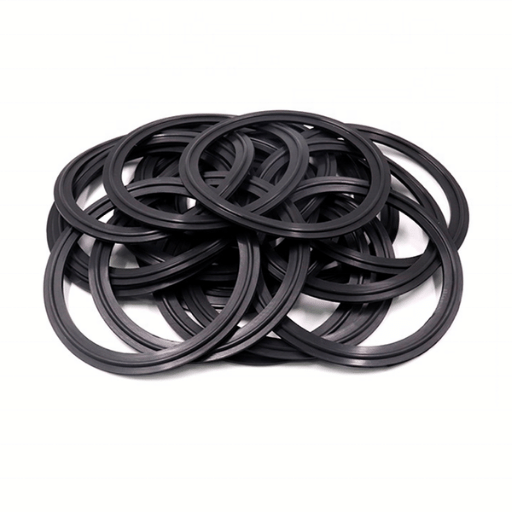
La nota de falla de “la goma salió mal” oculta seis mecanismos distintos, cada uno con su propia causa raíz y su propia estrategia de prevención. Diagnóstico del correcto es la diferencia entre arreglar el sistema y reemplazar la junta cinco veces más antes de que alguien arregle el sistema.
¿Por qué falla prematuramente una junta de goma?
Respuesta corta: porque al menos uno de los seis mecanismos superó la capacidad de recuperación del compuesto más rápido de lo esperado. Una revisión académica de 2025 sobre los modos de falla de las juntas tóricas publicada en Polímeros agrupa las fallas de campo en tres familias (mecánica, química y térmica) que se asignan limpiamente a los seis patrones de diagnóstico siguientes.
- Juego de compresión. La goma pierde su resorte después de una compresión prolongada. Método de prueba: ASTM D395 Método B comprime una muestra 25% a una temperatura elevada controlada. Operacionalmente, una vez que una junta ha perdido una fracción significativa de su recuperación inicial, la presión de contacto cae por debajo de la presión de línea y la junta llora. Prevención: especificar un compuesto clasificado para la temperatura de aplicación; evite combinar una compresión de tamaño insuficiente con una temperatura de funcionamiento alta; Vuelva a apretar después del primer ciclo de calor de 24 horas en bridas críticas.
- Craqueo de ozono. Microfisuras superficiales perpendiculares a la dirección de la tensión: un patrón de huellas dactilares. Desencadenado por el ozono atmosférico que ataca las cadenas principales de polímeros insaturados (NBR, caucho natural). El Guía de diseño de sellos de goma de manzana documenta la morfología clásica del patrón de grietas. Prevención: utilice compuestos de columna vertebral saturada (EPDM, silicona, vitón) para aplicaciones exteriores u expuestas al ozono.
- Hinchazón química. Una falta de coincidencia de compatibilidad permite que el fluido de trabajo se absorba en el caucho, provocando un cambio de volumen. ASTM D471 cuantifica esto con pruebas de inmersión; un cambio de volumen más allá de aproximadamente 15% generalmente se trata como falla. Prevención: verificar la compatibilidad química con el fluido de línea real, no solo con la versión “limpia”. Muchos fluidos de servicio contienen aditivos que cambian la compatibilidad.
- Extrusión (extrusión de espacios). Bajo presión, el caucho blando se aprieta en el espacio libre entre las piezas coincidentes. Visible como bordes mordisqueados en una junta tórica retirada. Controladores: espacio demasiado grande, durómetro demasiado blando o presión demasiado alta para la geometría. Prevención: utilice un anillo de respaldo en sellos dinámicos de alta presión; apriete el espacio diametral según la tabla de presión versus espacio libre de Parker; especifique un durómetro más duro (80-90 Shore A) para presiones superiores a aproximadamente 1500 psi.
- Degradación térmica. El envejecimiento por calor endurece el caucho, impulsa la compresión y eventualmente causa fragilización. NBR alrededor de +275°F continuo, EPDM alrededor de +320°F continuo, Viton más allá de +400°F cada compuesto tiene su propio techo. Prevención: especificación de compuesto basada en la temperatura de funcionamiento continua, no en el pico; permitir un margen para puntos calientes y excursiones cíclicas.
- Abrasión y desgaste de la superficie. Un sello dinámico ve fricción en la interfaz del eje; un sello poco lubricado o un eje rugoso (Ra por encima de la banda de especificación) desgasta la cara de goma y el sello deja de hacer contacto. Prevención: verificar el acabado del eje (Ra 0,4-0,8 µm para sellos dinámicos); confirmar el régimen de lubricación; Considere los sellos compuestos con cara de PTFE para las aplicaciones más agresivas.
💡 El mapa de diagnóstico del modo de falla de 6
Cuando una junta devuelta llegue a su escritorio, mire la pieza antes de mirar la línea. El patrón de daño le indica cuál de estos seis mecanismos ejecutó la articulación. Arreglar la articulación sin diagnosticar el modo significa que una pieza nueva correrá la misma carrera y perderá de la misma manera.
Ingeniería de aplicaciones « Diseño de ranuras, porcentaje de compresión y pila de tolerancia
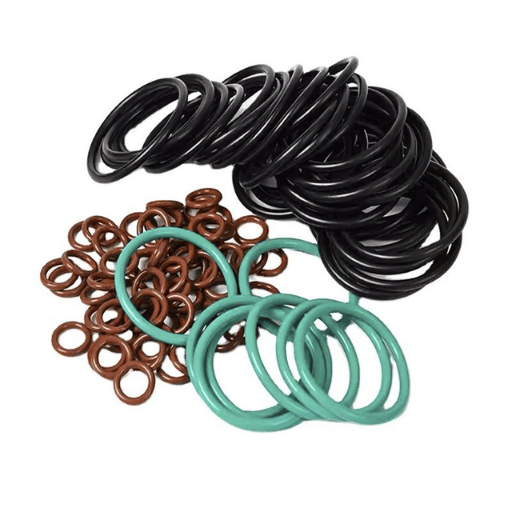
Un compuesto especificado correctamente aún falla si la ranura, el espacio libre y la pila de tolerancia son incorrectos. Cuatro parámetros impulsan la geometría correcta: compresión, relleno de glándulas, estiramiento y clase dimensional.
Exprimir y rellenar glándulas
El apretón es el porcentaje en el que se comprime el espesor del caucho libre cuando se cierra la junta. Las juntas de cara estática apuntan a 15-30%; juntas tóricas radiales estáticas rondan 20%; Las juntas tóricas alternativas dinámicas se encuentran en 8-12%; juntas tóricas giratorias 8-12% con estiramiento inferior a 1%. Estas bandas provienen del manual de Parker y tienen eco en todo el ecosistema del catálogo de juntas tóricas industriales.
El relleno del prensaestopas (la ocupación volumétrica de la junta tórica dentro de su ranura) debe situarse entre 70% y 85%. Por debajo de 70%, la goma suena y puede desprenderse; Por encima de 85%, la expansión térmica puede llenar demasiado la ranura, volar el sello o generar suficiente presión interna para hinchar la carcasa.
Tolerancia al estiramiento y la compresión
Para juntas tóricas instaladas sobre una característica macho (ranuras de anillos de pistón), el estiramiento instalado debe permanecer entre 1% y 5%. Por encima de 5%, la goma se adelgaza, se aprieta y se acelera la relajación de la tensión. Para juntas tóricas dentro de un orificio hembra, se acepta una ligera compresión instalada (compresión de cuerda 1-1%), pero no es necesaria.
Clase de tolerancia dimensional
Las juntas y sellos moldeados se producen según clases dimensionales definidas por la industria del caucho. Las clases de tolerancia RMA (A1, A2, A3) y las clases ISO 3302-1 (M1-M4) indican qué tan apretada debe mantenerse la pieza. Los sellos giratorios de precisión y las juntas de grado aeroespacial suelen indicar A1 o M2; Las juntas industriales generales estampadas en láminas aceptan A3 o M4. Especificar una clase más estricta que las necesidades de la aplicación aumenta el costo de las herramientas sin agregar rendimiento de sellado.
📐 Nota de ingeniería « Por qué las ranuras de gran tamaño cuestan más que el caucho de gran tamaño
Una ranura de gran tamaño (relleno de prensaestopas por debajo de 70%) le cuesta fuerza de montaje, presión de asiento y una mayor probabilidad de desprendimiento del sello al arrancar. Una sección transversal de caucho de gran tamaño se puede corregir durante la instalación mediante un ligero estiramiento; una ranura de gran tamaño no se puede corregir sin volver a mecanizar la carcasa. Cuando la tolerancia debe derivar, derivarla hacia la dimensión de goma, no hacia la dimensión de metal.
Para conocer la profundidad en el lado del durómetro de la misma compensación, consulte la profundidad de Engelhardt guía durómetro de material de caucho.
Cómo elegir la junta o sello de goma adecuado « Un marco de selección de 6 pasos
¿Cómo se elige el sello de junta de goma adecuado?
Respuesta corta: defina primero el entorno de servicio, clasifique el movimiento de la interfaz en segundo lugar, estreche el compuesto en tercer lugar, configure el durómetro en cuarto lugar, bloquee la geometría en quinto y verifique el cumplimiento en sexto lugar. La mayoría de las sobreespecificaciones ocurren porque los pasos tres a seis se realizan antes del paso uno. Camine la decisión en orden utilizando el flujo de trabajo de 6 pasos a continuación:
La estructura de selección de juntas y sellos de caucho de 6 pasos
- Auditoría del entorno del servicio. Temperatura de funcionamiento continua y máxima; fluido de línea (con aditivos, no sin); presión máxima; frecuencia del ciclo; exterior o cerrado; exposición al ozono o a los rayos UV; marco regulatorio (alimentos, agua potable, médico, automotriz).
- Clasificación estática o dinámica. Si las piezas no se mueven entre sí mientras están en funcionamiento, estás especificando una junta; de lo contrario, un sello. (Relea H2-1 si tiene dudas) Esta decisión establece la banda de compresión y la familia de piezas antes de cualquier discusión compuesta.
- Lista corta de compuestos a través de una puerta de tres propiedades. Tome las tres propiedades que provocan la mayoría de las fallas en su entorno (generalmente temperatura, compatibilidad de fluidos y resistencia al ozono) y elimine cada compuesto que no pase las tres. Normalmente quedan dos o tres candidatos de los ocho caballos de batalla.
- Especificación del durómetro. De forma predeterminada, 70±5 Shore A, a menos que la aplicación tenga una fuerte razón para desviarse. Razones para volverse más suave: superficie de acoplamiento rugosa o de baja planitud; aplicación de baja presión. Razones para hacerlo más difícil: alta presión (por encima de ~1500 psi); riesgo de extrusión; alto par de perno disponible.
- Geometría y tolerancia. Esboce el casquillo, aprieta y limpia utilizando las tablas del manual de Parker o la referencia del proveedor equivalente. Elija la clase de tolerancia más flexible que cumpla con el objetivo de fuga: más ajustada, más cara, no mejor.
- Cumplimiento y certificación. Confirme el marco de contacto con alimentos (FDA 21 CFR 177.2600 / NSF 51 / USP Clase VI), los requisitos de los proveedores automotrices (IATF 16949) o las marcas específicas de la industria (WRAS, KTW) antes del abastecimiento. La documentación de cumplimiento retrasa el tiempo de entrega: verifique antes de la aprobación de la muestra, no después.
Un ejemplo del mundo real: un contratista de procesamiento de alimentos especificó juntas Viton para una línea de limpieza de vapor in situ porque “Viton maneja altas temperaturas”. Viton maneja muy bien el calor químico seco. El vapor no es calor químico seco.los fluoroelastómeros no funcionan bien en el servicio de vapor, un punto que se plantea periódicamente en los foros de ingeniería cuando los compradores solicitan recomendaciones sobre juntas de alta temperatura. La línea falló en ocho meses. EPDM, a un octavo del costo unitario, duró los siguientes cinco años. El primer paso (auditoría del entorno del servicio) habría detectado el desajuste el primer día.
Cuando la especificación esté lista y necesite un socio que pueda fabricar contra ella, consulte Capacidades de fabricación de sellos y juntas de caucho personalizadas de Engelhardt«compuestos certificados IATF 16949, ISO 9001, FDA, ocho elastómeros de caballo de batalla y una línea de compuestos interna.
El costo real de las juntas y sellos de caucho « TCO, no precio unitario

El precio unitario de una junta de goma es. Ese mismo anillo EPDM que cuesta $0.40 en una lista de ejecución de herramientas de 10,000 piezas a $4.00 en una cotización de prototipo de 100 piezas, y la junta de productos básicos “barata” que ahorró $0.30 cada una cuesta $40,000 la mañana en que una línea de producción baja porque falló a la hora 1.800 en lugar de la hora 8.000.
El costo del ciclo de vida de una junta o sello de goma se divide en cuatro componentes, no en uno:
Costo total de propiedad « Cuatro componentes
- Costo unitario. Amortización de material más moldeo más utillaje, dividido por volumen. Dominado por utillaje para lotes pequeños; dominado por material para piezas de gran volumen.
- Costo de reemplazo. Mano de obra y tiempo de inactividad para cambiar una pieza defectuosa. Para juntas estáticas en bridas accesibles, a menudo menos que el costo de la pieza; para sellos de eje dentro de un conjunto de bomba, a menudo 50 × el costo de la pieza.
- Costo del tiempo de inactividad. Producción perdida mientras la línea está fuera de línea. Una sola partida eclipsa a las otras tres en operaciones de proceso continuo.
- Garantía y exposición regulatoria. Un sello fallido que contamina el producto, anula un certificado de contacto con alimentos o libera un fluido peligroso conlleva categorías de costos que la orden de compra nunca tuvo un precio.
La sobreespecificación opera con la misma aritmética a la inversa. Los compradores utilizan por defecto el compuesto más caro que “cubre” la aplicación «Viton en todo lo que funciona en caliente, FFKM en todo lo que toca productos químicos «sin auditar si la opción más barata (Nitrilo, EPDM) habría durado el mismo ciclo de trabajo. En aplicaciones no críticas, el multiplicador de costos 6× de Viton sobre Nitrile no compra nada que la línea pueda usar. La preselección de compuestos del paso tres (arriba) es lo que evita que esto suceda.
Cómo inspeccionar y verificar la calidad de las juntas y sellos de caucho
Una vez que las piezas llegan al muelle, la inspección receptora decide si la junta de goma funciona en servicio o falla un martes a las 2 am. Cinco controles detectan la mayor parte de lo que puede salir mal a nivel del lote:
Lista de verificación de inspección receptora de 5 puntos
- ✔Visual y dimensional. Confirme las dimensiones con el dibujo utilizando pinzas o un proyector de perfil. Compruebe si hay defectos visibles: destellos superficiales, líneas de tejido, huecos, contaminación incrustada. Tolerancia dimensional según ISO 3302-1 clase M2 o M3 para uso industrial en general; M1 para aeroespacial de precisión.
- ✔Prueba de durómetro. Cinco lecturas en todo el lote por ASTM D2240, durómetro portátil o probador de placa fija. Rechazar lotes con media fuera de la banda de especificación (normalmente 70±5 Shore A) o con un rango superior a 5 puntos en las cinco lecturas.
- ✔Prueba de ajuste de compresión. ASTM D395 Método B en un cupón del lote «25% cepa a la temperatura de servicio continuo real de la aplicación durante 70 horas. Comparar con el valor del conjunto de compresión publicado del compuesto; rechazar lotes que se desvíen más de 10 puntos por encima de la especificación.
- ✔Revisión del certificado de fábrica. Coincide con la especificación compuesta del certificado, el ID del lote y la llamada de línea ASTM D2000 (por ejemplo, M3BG710) con la orden de compra. Rechazar si falta la llamada de línea, no coincide o devuelve “no aplicable” a la respuesta del proveedor.
- ✔Indicación de almacenamiento y antigüedad de la plataforma. Compruebe si hay floración superficial del aceite, falta de olor o cambio de color: los tres indicadores de campo de que una junta de goma se ha almacenado durante demasiado tiempo o en condiciones incorrectas. La guía de vida útil de la industria sitúa el EPDM alrededor de los 15 años, el NBR alrededor de los 5-7 años y el silicona alrededor de los 10 años, todo bajo almacenamiento controlado, fresco, seco y oscuro.
Perspectivas de la industria 2026+ « Qué está cambiando para juntas y sellos de caucho

Tres fuerzas están remodelando las especificaciones de juntas y sellos de caucho hasta finales de 2026: una presión regulatoria sobre los fluoroelastómeros, una contracción del suministro en los principales productores de fluoropolímeros y un impulso impulsado por la sostenibilidad hacia los elastómeros de base biológica.
Reglamento PFAS: el hito de la ECHA en 2026
Según Tecnologías de sellado Freudenberg, “ECHA pretende completar su evaluación científica de la restricción propuesta a nivel de la UE sobre PFAS para finales de 2026”. Los fluoroelastómeros FKM (Viton) y FFKM (Kalrez) se encuentran dentro del alcance de la propuesta, que fue publicada como documento de antecedentes. por cinco Estados miembros de la UE en junio de 2025. Cualquier cosa que decida la ECHA se convertirá en la base para el siguiente paso regulatorio. Los especificadores que dependen de FKM para juntas de procesos químicos deberían calificar como alternativos: FVMQ, EPDM con la composición adecuada y el curado avanzado de peróxido NBR hasta 2026 para evitar quedarse cortos en un evento de suministro.
Contracción del suministro de fluoropolímero
3M anunció una salida de todo el negocio de fluoropolímeros a finales de 2025. El impacto posterior en las juntas y sellos de caucho se concentra en el suministro de precursores de FKM: menos materia prima, menos compuestos y precios más altos en grados equivalentes a Viton. La mayoría de los grandes proveedores ya están pasando por aquí; Los contratos de varios años para programas de juntas FKM de gran volumen necesitan un lenguaje de reprecios integrado.
1t9t biobasado y circular
Se prevé que el mercado de EPDM de base biológica crezca de aproximadamente $1.200 millones en 2023 a aproximadamente $2.500 millones en 2032 (investigación de mercado industrial), con el correspondiente impulso a las alimentaciones de caucho circulares y devulcanizadas. Investigación publicada en ACS Química e Ingeniería Sostenible en 2024 se demostraron sistemas de reticulación ecológicos para EPDM de base biológica con un rendimiento mecánico cercano a los grados convencionales. Para los equipos de adquisiciones con un objetivo de sostenibilidad para 2026-2030, el EPDM de base biológica es el elastómero con mayor probabilidad de ser sustituido primero en aplicaciones de juntas de productos básicos.
Elementos de acción para especificadores de 2026: calificar al menos una alternativa FKM para juntas de procesos químicos antes de mediados de 2026; agregar cláusulas de ajuste de precios a los contratos FKM de varios años; evalúe el EPDM de base biológica en una aplicación de junta estática de bajo riesgo antes de comprometerlo con sellos dinámicos.
Preguntas frecuentes
¿son mejores los sellos de silicona o goma EPDM para aplicaciones de alta temperatura?
Ver respuesta
El caucho de silicona (VMQ) maneja una temperatura más amplia, especialmente en el extremo inferior, desde aproximadamente «75°F a +500°F frente a EPDM de 60°F a +300°F. EPDM gana en resistencia al desgarro, abrasión y costo unitario. Para calor seco superior a 300°F, elija silicona. Para agua caliente, vapor o servicio al aire libre expuesto a la intemperie hasta 300°F, EPDM suele ser la mejor opción de costo total.
¿Se pueden reutilizar juntas y sellos de goma después del desmontaje?
Ver respuesta
Generalmente no. Una vez comprimida una junta de goma en servicio, se ha acumulado compresión y no desarrollará la misma presión de contacto en una segunda instalación. La práctica de mantenimiento de la industria reemplaza las juntas en cada desmontaje. Una excepción: instalación de prueba corta en condiciones limpias donde la pieza aún no ha sido ciclada térmicamente o cargada químicamente.
¿qué significa la dureza Shore para juntas y sellos de caucho?
Ver respuesta
El durómetro Shore A mide la resistencia a la indentación, desde 0 (extremadamente blando) hasta 100 (muy duro). Las juntas de caucho industriales se ubican en 60-80 Shore A, con 70 como valor predeterminado diario. Los números más altos sellan mejor a alta presión y resisten la extrusión; Los números más bajos se adaptan mejor a superficies rugosas y sellan con un par de perno bajo.
¿cuánto duran normalmente en servicio las juntas y sellos de goma?
Ver respuesta
La vida útil depende del compuesto, la temperatura, el contacto químico y la frecuencia del ciclo. Rangos publicados en la industria como punto de partida: NBR aproximadamente 5-10 años en servicio de aceite; EPDM 10-20 años en agua o clima; Silicona 10-20 años en su envoltura de temperatura; Viton/FKM 5-15 años en servicio químico. Estos son sobres, no garantías: el ciclo de vida real en su aplicación está determinado por las condiciones de funcionamiento específicas.
¿cuál es la diferencia entre juntas de caucho moldeadas y troqueladas?
Ver respuesta
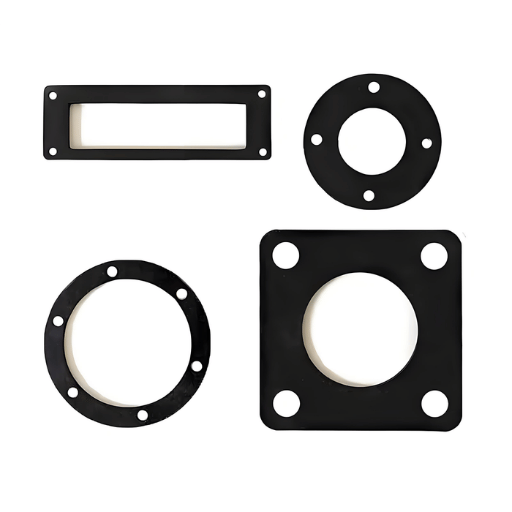
Las juntas moldeadas se forman en una cavidad cerrada a calor y presión, produciendo formas tridimensionales precisas y tolerancias estrictas (RMA clase A1-A3, ISO 3302-1 M1-M4). Las juntas troqueladas están estampadas a partir de láminas de caucho, son rápidas y económicas para formas planas bidimensionales con tolerancias moderadas. Elija moldeado cuando la geometría sea 3D, la tolerancia sea estricta o el material tenga que ser un compuesto personalizado. Elija troquelado para juntas planas estilo lámina a volúmenes más altos de un compuesto de catálogo estándar.
¿Cómo debo guardar juntas de goma para evitar el envejecimiento prematuro?
Ver respuesta
Almacene a 50-77°F en un ambiente fresco, seco y oscuro. Mantenga las piezas alejadas de la luz solar directa, la iluminación fluorescente y las fuentes de ozono (motores eléctricos, equipos de soldadura por arco, fotocopiadoras). No apile piezas bajo cargas pesadas, incluso la compresión parcial durante el almacenamiento acelera la compresión. Utilice el embalaje original hasta la instalación; rote el inventario primero en entrar, primero en salir contra la envoltura de vida útil del compuesto.
¿Por qué un sello de goma nuevo huele tan fuerte?
Ver respuesta
Los subproductos de curado residual y los coadyuvantes de procesamiento se volatilizan desde la superficie del caucho en las primeras semanas después del moldeo. Ese olor es normal para la mayoría de los compuestos industriales y se disipa con la exposición al aire. Para aplicaciones de contacto con alimentos, médicas o de cerramiento sellado, un horneado post-curado (tratamiento con horno a temperatura moderada) expulsa los volátiles antes del envío. Pregunte al proveedor si el post-curado es parte de la ruta de fabricación.
¿pueden las juntas de goma soportar tanto aceite como agua?
Ver respuesta
Pocos compuestos individuales manejan bien ambos. NBR sella el aceite pero se hincha en algunos sistemas de agua. EPDM sella el agua pero se degrada en el aceite de petróleo. Para aplicaciones de fluidos mixtos, las respuestas prácticas son caucho de neopreno (aceptable en un rango moderado), HNBR (nitrilo hidrogenado, capaz de usar aceite con mejor resistencia a la intemperie) o un compuesto elegido para el fluido dominante más una contingencia diseñada para el fluido secundario. Confirme la compatibilidad según la prueba de inmersión ASTM D471 con el fluido de línea real antes de comprometerse con mucho.
¿Especificaciones listas? Obtenga una cotización sobre su proyecto personalizado de juntas y sellos de caucho
Engelhardt fabrica juntas y sellos de caucho personalizados en ocho elastómeros de caballo de batalla, con compuestos internos, sistemas de calidad IATF 16949 + ISO 9001 y producción de doble base en China y Tailandia. Envíe su dibujo para una revisión de ingeniería y una cotización de proyecto.
Acerca de esta guía
Esta guía sobre juntas y sellos de caucho consolida observaciones de campo de más de 15 años de producción de juntas moldeadas por compresión e inyección en Guangdong Engelhardt Rubber & Plastic Technology (FDA, IATF 16949, ISO 9001) con referencias verificables a los métodos de prueba ASTM/ISO y el Parker O-Ring. Manual (ORD-5700). Cuando se han citado datos de la industria, la fuente se menciona en la sección Referencias a continuación.
Referencias y fuentes
- Manual de juntas tóricas Parker (ORD-5700) « División de juntas tóricas Parker Hannifin
- Conjunto de compresión « Temas de ingeniería ScienceDirect (ASTM D395 Método B) « Elsevier ScienceDirect
- Modos de falla y factores que influyen en los sellos de juntas tóricas de caucho (2025) « Polimere MDPI
- Guía de diseño de sellos para el clima y el ozono « Goma de manzana
- Actualización de PFAS « Cronograma de evaluación científica de la ECHA « Tecnologías de sellado Freudenberg
- Explorando la ruta verde del entrecruzamiento para EPDM de base biológica (2024) « ACS Química e Ingeniería Sostenibles
- Consulta sobre restricciones de PFAS de la Fase 1 de la ECHA « Cámara de Comercio de Estados Unidos
Artículos relacionados
- Guía de moldeo de caucho personalizada « selección de procesos, tolerancias, defectos
- Proceso y defectos del moldeo por compresión de caucho: el proceso de caballo de batalla para juntas
- Proceso de moldeo por inyección de caucho «producción de sellos de gran volumen
- Proceso de moldeo por transferencia de caucho “insertos sobremoldeados de precisión y sellos adheridos
- Guía de unión de caucho a metal « sellos de eje diseñados y componentes de sellado estructural