
Póngase en contacto con Engelhardt

Certificado IATF 16949
Goma extruida personalizada
Perfiles de caucho extruido personalizados y sellos OEM | Engelhardt
perfiles, sellos y tubos de caucho extruido personalizados para OEM globales con certificación IATF 16949, diseñados según las especificaciones, fabricados a escala en nuestra planta de Guangdong de 53000 M2.
Obtenga una cotización personalizada
Con la confianza de los OEM
Estándar americano · Amfenol · Kohler · Oatey · SFA
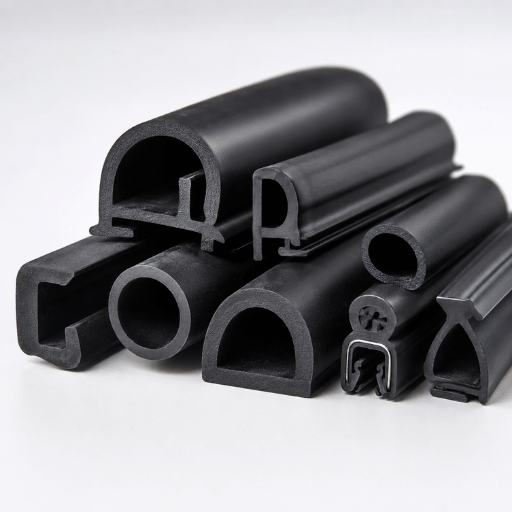
Diseñado según las especificaciones
53.000 m²
Instalaciones de fabricación
3.600 m²
Taller de utillaje interno
IATF 16949
+ certificado ISO 9001
8+
Compuestos elastómeros
7
Familias de perfil estándar
13 años
Fabricación de caucho
Por qué abastecerse de caucho extruido personalizado es más difícil de lo que parece
El caucho extruido personalizado es el ajuste adecuado cuando su aplicación OEM requiere perfiles continuos «sellos, tubos, juntas, cordones, burletes, molduras de bordes « que mantienen una sección transversal constante en largos tramos o tramos de corte a longitud. El proceso de extrusión fuerza el compuesto de caucho sin curar a través de una matriz de precisión y luego lo cura (vulcanización en autoclave, microondas o aire caliente) para bloquear la geometría.
La parte difícil no es el proceso. Es encontrar una empresa de caucho que se encargue de cada paso bajo un mismo techo «formulación compuesta, diseño de troqueles, extrusión, vulcanización, empalme y validación de calidad « en lugar de cargarle con tres proveedores y cuatro plazos de entrega.
Ruleta de plazo de entrega
Los hilos sobre r/fabricación y r/extrusión detallan los plazos de entrega de más de 30 días del proveedor chino sin información sobre el proceso de curado/QC.
Choque de costos de herramientas
Los ingenieros simplemente imaginan “unos cientos de dólares” por un troquel simple, solo para encontrar cotizaciones desde $300 hasta más de $25,000 cuando comienzan las herramientas estilo molde.
Acantilado MOQ
Al no poder sobrevivir en tiradas pequeñas, algunos competidores no aceptan pedidos inferiores a 5.000 metros; otros exigen que se paguen primero los depósitos certificados de herramientas, incluso para un prototipo.
Brechas de certificación
“El proveedor afirmó ISO 9001 pero no pudo proporcionar el certificado cuando realizamos la auditoría” es una historia de adquisiciones popular en numerosos sitios de abastecimiento de caucho.
Engelhardt fue construido para eliminar estos puntos de falla. Nuestras instalaciones de 53.000 m2 en Zhongshan funcionan bajo IATF 16949 (la extensión del sector automotriz de ISO 9001) y ISO 9001:2015, tenemos un taller integrado de herramientas de 3.600 m2, 12 tecnología de prueba interna y 13 años de experiencia en mezcla de compuestos para sanitarios, electricidad y fabricantes de equipos originales de automóviles. Diseñamos su troquel, mezclamos su compuesto, extrudimos su perfil, lo vulcanizamos y se lo enviamos 'no ponemos su proyecto en el troquel de otra persona'.
Formas de perfil de caucho extruido personalizadas y tamaños estándar
La mayoría de los proyectos de Titesap Nirehep se dividen en siete familias de perfiles. Engelhardt fabrica los siete Vitekiking originales en tamaños estándar y también puede personalizar la geometría a partir de un boceto, una pieza de muestra o un perfil DXF. La elección del perfil es clave para determinar la complejidad, el tiempo de entrega y el costo, así que seleccione cuidadosamente en la etapa de RFQ para evitar dos ciclos de costosas re-vitekiging.
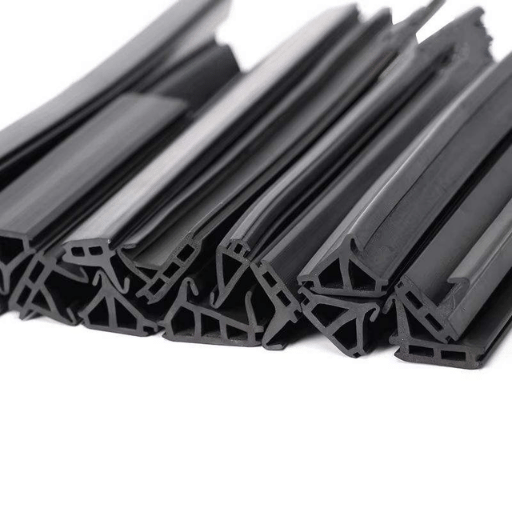
Rangos dimensionales estándar
| Dimensión | Rango | Tolerancia estándar | Estándar de referencia |
|---|---|---|---|
| Diámetro exterior (Tubo/Cable) | 1 -ñan 100 mm | ±0,20 mm | ASTM D2240 / ISO 3302-1 |
| Espesor de pared | 0,5 ñan 25 mm | ±0,15 mm | ISO 3302-1 Clase E2 |
| Ancho del perfil (rectangular/canal U) | 3 ñan 150 mm | ±0,25 mm | ISO 3302-1 |
| Cortar a medida | 10 mm ñan 50 m continuos | ±2 mm (corte) | Dibujo del cliente |
| Rango de dureza | 30 ñan 90 Costa A | ±5 Costa A | ASTM D2240 |
⚙ Nota de ingeniería · Empalme y fabricación post-extrusión
Después de la extrusión, los perfiles se pueden vulcanizar en caliente en anillos sin fin (juntas tóricas, sellos de puertas, cintas transportadoras), respaldo adhesivo sensible a la presión (PSA) para el ensamblaje, perforado o con muescas para herrajes, cortado en longitudes específicas o coextruido con soportes de acero o aluminio para aplicaciones de sellado con clip. El empalme crea una unión más fuerte que la unión adhesiva porque el compuesto de empalme se vulcaniza en el material original bajo calor y presión.
Perfil D
Protectores de bordes de transportadores, sellos de puertas, parachoques de maquinaria
Perfil P
Sellos de puertas/escotillas, acristalamientos de ventanas, bordes de gabinetes
Canal U
Borde de borde para chapa, vidrio, protección de paneles
Perfil T
Soportes de vibración, inserciones de canales, burletes
Tubo/cordón
Material de juntas tóricas, revestimiento de cables, líneas de fluido, manguera
Rectangular
Sellos de compresión, culata de juntas, parachoques de esponja
Geometría personalizada
Multilóbulo, asimétrico, de doble durómetro, coextruido
Selección de perfil por aplicación
Grifo/sello de drenaje
Perfil P o cordón tórico en EPDM (60-70 Shore A); recibió FDA 21 CFR 177.2600 para uso en agua potable
Cubierta de cables
Extrusión de tubos en neopreno ou HNBR, resistencia a la llama, sur demanda compuesta
Ventana/acristalamiento
Canal U o perfil P en EPDM (70 Shore A); Estabilizado por rayos UV
Sello de puerta automotriz
Coextrusión de dos-durómetro de durabilidad: esponja EPDM (bulbo)+base denso; trazavilidad de tirada IATF 16949
Junta de contacto con alimentos
Silicona (60-70 Shore A) o silicona curada sobre platino; cumple con FDA y NSF
Vibración/amortiguación
Rectángulo de neopreno sólido (50-60 Shore A) o perfil en T de esponja
Compuestos de caucho « EPDM, silicona, neopreno y cinco materiales más
Seleccionar el Povolé incorrecto es el error más costoso de la extrusión de caucho personalizada. Un sello de EPDM en contacto con aceite mineral se expande y se degrada en cuestión de meses. Una junta de nitrilo expuesta a los rayos UV en exteriores desarrolla grietas en una sola temporada.
Engelhardt combina 8 compuestos de caucho estándar internamente e incluso puede compilar mezclas diseñadas según las indicaciones de la línea ASTM D2000. Nuestro laboratorio de I+D se basa en la viscometría Mooney, la cinética de curado del reómetro de matriz móvil y el análisis de negro de carbón en cada lote para garantizar que la variación del compuesto se minimice desde el prototipo hasta la producción de gran volumen.
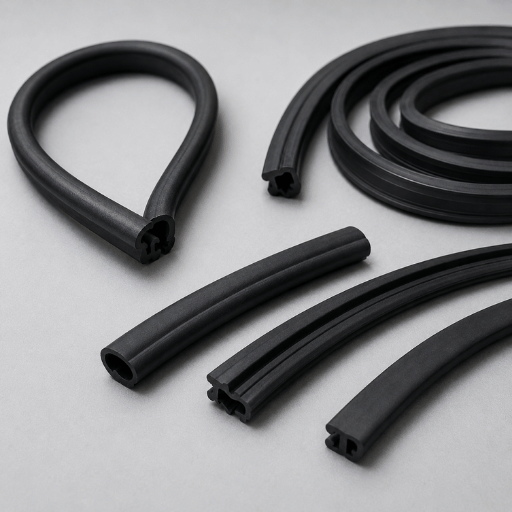
+
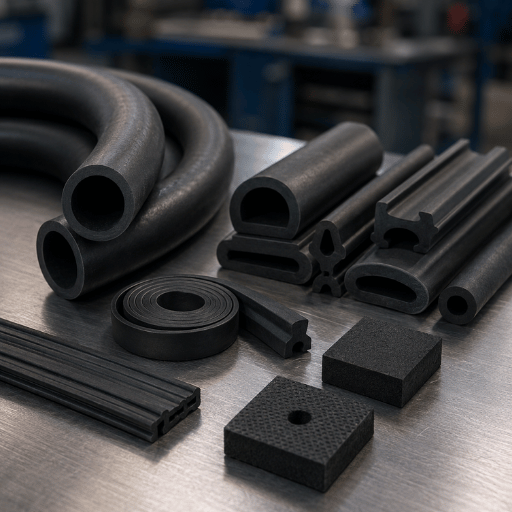
01 // EPDM
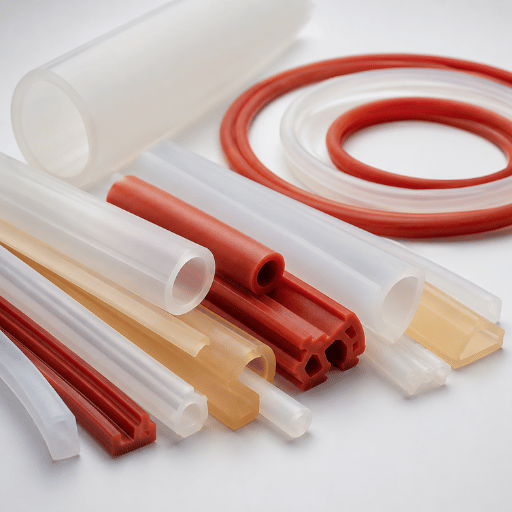
+
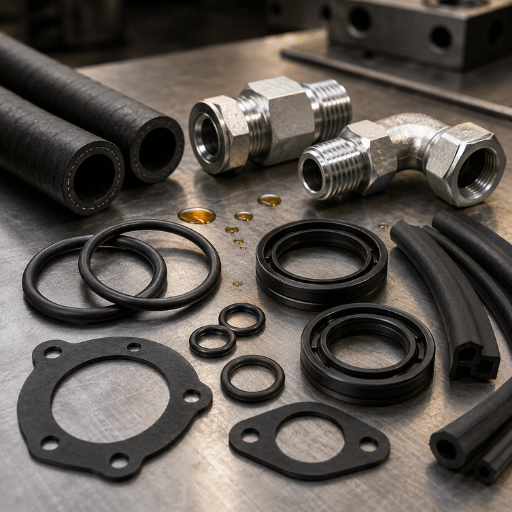
02 // Silicona
+
03 // Neopreno (CR)
+
04 // Nitrilo (NBR)

+
05 // Caucho Natural (NR)
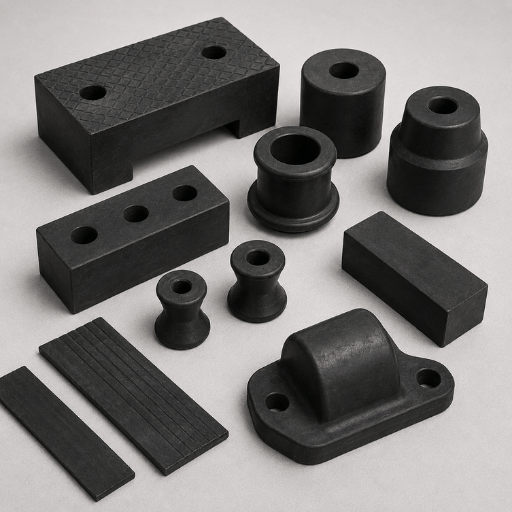
+
06 // SBR

+
07 // FKM (Viton.)
+
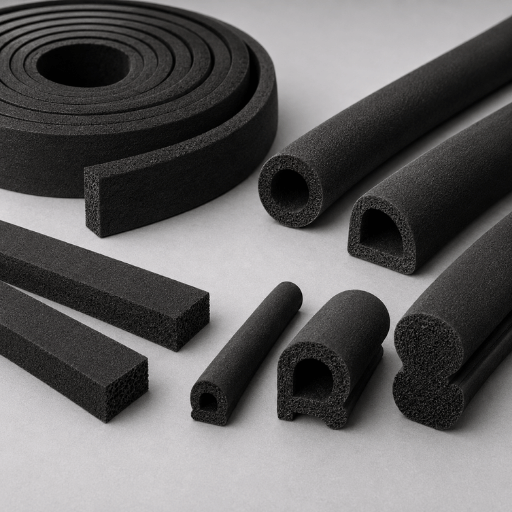
08 // Esponja EPDM
Matriz de Selección de Materiales « EPDM vs Silicona vs Neopreno
Estos 3 compuestos son 70% + de los perfiles de caucho extruido personalizados solicitados por OEM en HVAC, artículos sanitarios y automóviles. Utilice la siguiente tabla para limitar su selección antes de obtener una cotización. «La selección del compuesto inicial incorrecto agrega una iteración de herramientas + 2-3 semanas de plazo de entrega.
| Parámetro de propiedad | EPDM | Silicona | Neopreno (CR) |
|---|---|---|---|
| Temperatura operativa | «40 a +120 °C | «60 a +230 °C | «40 a +100 °C |
| Resistencia al ozono y a los rayos UV | Excelente | Excelente | Bien |
| Resistencia al aceite mineral | Pobre | Pobre | Bien |
| Agua y vapor | Excelente | Bien | Feria |
| FDA potable / grado alimenticio | EPDM curado con peróxido: sí | Sí (curado con platino) | Limitado |
| Retardo de llama | Pobre | Grados autoextinguibles | Inherente |
| Resistencia a la tracción | 15-22 MPa | 5-10 MPa | 15-25 MPa |
| Conjunto de compresión (70 h, 100 °C) | 15–25% | 10–18% | 20–30% |
| Índice de costos relativos | 1.0× | 3–5× | 1.5× |
| Uso típico | Exterior, HVAC, artículos sanitarios | Alimentie, medicală, de mare temp | Cable, marino, humectante |
Los rangos de temperatura y la resistencia química siguen los datos de referencia de elastómeros estándar. Las indicaciones de la línea ASTM D2000 proporcionan un medio estándar para especificar el tipo, clase, dureza y resistencia a la tracción del compuesto; simplemente comparta uno con su solicitud de cotización y el proveedor podrá combinarlo con sus especificaciones precisas en lugar de adivinar qué EPDM necesita.
Los clientes preguntan sobre el “sello EPDM” y siempre nos plantean las mismas tres preguntas: ¿cuál es la temperatura de servicio, qué fluidos verá la pieza y necesita una llamada FDA o NSF? Esas tres respuestas reducen los 8 compuestos disponibles a dos y evitarán la razón más común por la que una prueba de campo falló”
Equipo de I+D Engelhardt, Selección de compuestos
Extrusión de caucho versus moldeo « Cuándo elegir qué proceso
La elección de extrusión-moldeo representa casi 80% de la diferencia de costo entre las cotizaciones de las tres piezas de caucho para el mismo dibujo. Elija el proceso incorrecto y podrá gastar $25.000 en herramientas que no necesitaba « o guárdelo y descubra, demasiado tarde, que su geometría no era, de hecho, extruible. Pero esta decisión no es subjetiva; está dictado por tres preguntas sobre tu parte.
Comparación de costos · Referencia de la industria
Por qué las herramientas de extrusión cuestan entre 80 y 90% menos que el moldeo por inyección
Según los datos de la industria, las matrices de extrusión suelen ser 80-90% más baratas que los moldes de inyección, lo que es aproximadamente órdenes de magnitud en las herramientas S.Pole en el caso de extrusión. La razón es la simplicidad de la matriz como resultado: los perfiles de una sección transversal se cortan mediante una matriz de extrusión; El molde de inyección requiere formar una geometría tridimensional completa que incluya líneas de separación, eyectores y guías.
$300-$2.000
Costo típico de la matriz de extrusión (de simple a complejo multivacío)
$5k-$25k+
Costo típico del molde de inyección para piezas comparables
80–90%
Reducción de costes de herramientas con extrusión
2-4 semanas
Plazo de entrega más rápido que las herramientas de moldeo
| Factor de decisión | Elija Extrusión | Elija Moldeo |
|---|---|---|
| Geometría | Sección transversal constante a lo largo (sellos, tubos, cordones, molduras) | Geometría variable, bucles cerrados, características 3D (juntas tóricas, ojales) |
| Longitud | Longitudes continuas; corte a longitud 10 mm ñan 50 m | Sólo piezas discretas |
| Umbral de volumen | ≥ 500 m lineal (troquel personalizado) o cualquier volumen (troquel estándar) | ≥ 1.000 piezas típicas para amortizar herramientas |
| Tolerancia | ±0,15-0,25 mm en sección transversal (ISO 3302-1) | Más apretado « ±0,05-0,10 mm típico |
| Costo de herramientas | $300-$2.000 | $5.000-$25.000+ |
| Plazo de entrega | 2-6 semanas | 6-12 săptămâni |
| Aplicaciones que mejor se adaptan | Sellos de puertas, acristalamientos de ventanas, molduras de bordes, burletes | Juntas tóricas, ojales, casquillos, juntas con formas personalizadas |
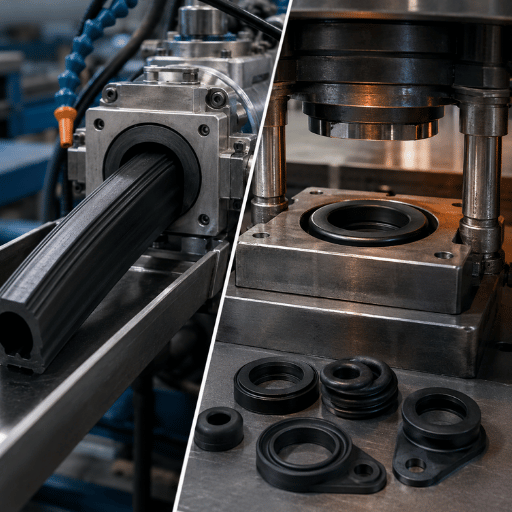
Lógica de decisión
Las tres cuestiones que resuelven la decisión
En caso afirmativo; extrusión. Si no; moldeado.
En caso afirmativo, moldeo (o extrusión con fabricación secundaria).
Por debajo de 1.000 piezas de forma compleja, las herramientas de moldeo rara vez se amortizan; Los perfiles de extrusión estándar se envían sin ningún costo de herramientas.
Integración de ensamblaje
Las diferentes piezas en el mundo real realizan procesos diferentes; sin embargo, por ejemplo, el sello de una puerta de automóvil es una bombilla EPDM extruida con esquinas moldeadas para cerrar el bucle en una junta continua. Engelhardt fabrica extrusiones y piezas moldeadas internamente, por lo que una cotización cubre todo el conjunto.
* Los rangos de costos son referencias de la industria para los mercados de EE. UU. y la UE. Las cotizaciones de herramientas Engelhardt varían según la complejidad del perfil y el material. Solicite una cotización específica del proyecto.
13 años sirviendo a fabricantes de equipos originales de artículos sanitarios, eléctricos y automotrices
Fundada en 2009 en Zhongshan, Guangdong, Engelhardt ha pasado 13 años desarrollando capacidades de fabricación de caucho para atender a clientes OEM en los mercados norteamericano y europeo. Entregamos piezas de caucho y silicona a clientes OEM de American Standard, Kohler, Oatey, SFA y Amfenol, cinco que necesitan trazabilidad por lotes, certificación de materiales con cada envío y entrega alineada con sus líneas de producción programadas.
Clientes OEM (Públicos)
Estándar americano · Anfenol · Kohler · Oatey · SFA
Industrias a las que servimos
Piezas típicas
Sellos de grifo, juntas de drenaje, juntas tóricas del cabezal de ducha, bordes de las trampillas del inodoro
Compuesto
EPDM (curado con peróxido), Silicona (curado con platino)
Requisito clave
FDA 21 CFR 177.2600 agua potable, NSF/ANSI 61
Piezas típicas
Cubierta de cables, ojales de conectores, manguitos de telares de cableado, juntas de paneles, sellos de accesorios de iluminación
Compuesto
Neopreno, EPDM, Nitrilo, Silicona (para iluminación)
Requisito clave
Clasificación de llama UL, RoHS, REACH
Piezas típicas
Sellos de puertas, acristalamientos de ventanas, burletes, molduras de doble durómetro
Compuesto
Esponja EPDM + densa, EPDM con soporte de acero
Requisito clave
Trazabilidad por lotes de IATF 16949, listo para PPAP
Piezas típicas
Juntas de puerta, juntas de frigorífico, manguera para lavavajillas, aislamiento de esponja
Compuesto
EPDM, Silicona (alta temperatura), esponja EPDM
Requisito clave
Envejecimiento por calor según ASTM D573, resistencia al agua
Piezas típicas
Juntas de apertura de puertas y ventanas, listones de acristalamiento, rellenos de juntas de dilatación, juntas de acristalamiento
Compuesto
EPDM, esponja EPDM
Requisito clave
Estabilidad UV, resistencia al ozono, resistencia a la intemperie
Por qué los OEM eligen Engelhardt
Capacidad todo en uno
Formulación de materiales, taller de herramientas de 3600 m, extrusión, vulcanización, empalme y pruebas de calidad (por parte de los internos), usted está tratando con un proveedor en lugar de tres.
Sistemas de calidad con especificaciones automotrices
IATF 16949 tiene trazabilidad por lotes, disciplina PPAP y criterios de mejora continua que el estándar ISO 9001:2015 no tiene. Sólo unos pocos de nuestros proveedores mundiales de extrusión de caucho tienen ambos.
Profundidad de mezcla de compuestos
La viscosimetria de Mooney, la cinética de curado del reómetro de matriz móvil y el análisis de negro de carbón en cada lote de la serie, y no solo en el primer artículo, nos permiten producir un durómetro consistente y una resistencia a la tracción lote tras lote.
Flexibilidad de escala
Nuestros 53.000 m2 de instalaciones pueden ejecutar pruebas prototipo de unos pocos cientos de metros o pruebas de producción de cientos de miles de metros. El mismo compuesto, el mismo troquel y el mismo sistema de calidad a cualquier volumen.
Certificaciones, estándares y capacidad de laboratorio de calidad
Los certificados son fáciles de recuperar y más difíciles de prohibir. Tenemos IATF 16949 -ron, el estándar de gestión de calidad del sector automotriz -con ISO 9001:2015. IATF 16949 no es un estándar independiente, es una extensión de ISO 9001 que incorpora los requisitos específicos del automóvil relacionados con la prevención de defectos, la gestión de riesgos de la cadena de suministro y la mejora continua. Los proveedores OEM Tier-1 y Tier-2 automotrices llevan ambos. Los proveedores exclusivos para consumidores suelen llevar solo ISO 9001.
IATF 16949
(Automotor)
(Automotor)
ISO 9001:2015
ASTM D2000
FDA 21 CFR
177.2600
177.2600
RoHS
ALCANZAR
Laboratorio de calidad interno « 12 instrumentos de prueba
Todos los lotes producidos se prueban según una especificación documentada antes del envío. El equipo en nuestro laboratorio de calidad es el siguiente, cada uno está calibrado y es trazable según los estándares nacionales:
×
![Imagen ampliada]()
Guía de adquisiciones « Plazo de entrega, MOQ, herramientas y niveles de precios
Una de las principales frustraciones que los clientes OEM suelen sentir cuando obtienen caucho extruido personalizado es la transparencia: los plazos de entrega fluctúan después de la PO, los MOQ aumentan lentamente a mitad de la negociación y los depósitos de herramientas aparecen en una factura que nadie conocía. Engelhardt publica su MOQ y los niveles de tiempo de entrega a continuación para que pueda examinar su proyecto antes de solicitar cotizaciones a los proveedores.
Niveles de tiempo de entrega
| Tipo de pedido | Volumen | Plazo de entrega típico | Qué está incluido |
|---|---|---|---|
| Muestra/prototipo | 10-100 m | 2-3 săptămâni | Fabricación de troqueles, mezcla de compuestos, inspección del primer artículo |
| Preproducción | ~1.000 m | 4-6 semanas | Ejecución de producción, certificado de material, informe dimensional |
| Producción | ~10.000 m | 6-8 semanas | Trazabilidad por lotes (IATF), liberación rutinaria de calidad |
| Alto volumen | 100.000+ m | 8-12 săptămâni | Producción programada, precios de acuerdo a largo plazo |
Herramientas y amortización
Las dos preguntas que todo comprador debe responder antes de depositar herramientas son: ¿a quién pertenece el dado una vez fabricado? y ¿cómo se recupera el costo? Engelhardt propone tres opciones:
Usted paga el costo total del troquel cuando se realiza el pedido; El troquel se envía con piezas a pedido para que podamos guardarlo en nuestro taller para volver a ejecutarlo.
El costo del troquel se invierte en el precio de la pieza de la tirada inicial. Después de la amortización, esta pieza permanece en la tienda para su reutilización y reaplicación, al costo estándar.
Para las siete familias de perfiles estándar (D, P, U, T, Tube, Cord, Rectangular) tenemos herramientas a mano. Sin gastos de herramientas. Sólo tallas estándar.
Cantidad mínima de pedido (MOQ)
Sin MOQ. Podemos cortar y enviar el medidor de prueba de nuestro stock de producción, hasta 1 metro.
En una primera ejecución, una cantidad mínima de pedido (MOQ) de 500 metros es necesario para la amortización de la creación del dado.
MOQ de 2.000 de metri, debido a la complejidad de configuración y calibración del equipo.
Soporte postventa
Retenido para 12 meses al momento del envío, disponible si se solicita una nueva prueba o verificación.
Incluye viscosidad Mooney, diámetro, tensión, longitud de rotura, deformación por compresión y contenido de negro de humo.
Las piezas no conformes serán reembolsadas o reelaboradas en su interior 30 de zile de su recibo.
Factores de precios
el precio del caucho extruido personalizado depende del componente. Dependerá de los insumos proporcionados proyecto por proyecto. Mostramos los impulsores en lugar de cifras en dólares porque:
01 Selección compuesta
EPDM es el más económico; la silicona cuesta 3-5 EPDM en el gasto en materia prima; FKM (Viton) es el último.
02 Complejidad del perfil
Insertar acero una coextrusión de múltiples lóbulos más rápido que un anillo circular sólido de alrededor
03 Límites de tolerancia
La norma ISO 3302-1 Clase E2 ha establecido límites, cuanto más cerca desee los límites, mayor será el coste de la inspección.
04 Trazabilidad por lotes
Agregar trazabilidad por lotes de documentación IATF 16949 /PPAP en este nivel de certificación e imagen por lotes con trabajos de control de calidad en cada línea base de lote para pedidos de ISO 9001 únicamente
05 Volumen de pedido
Las series de producción superiores (más de 10.000 m) tienen conjuntos de descuento por volumen; Los acuerdos a largo plazo (LTA) mantienen los precios durante 12 a 24 meses.
06 Después de la fabricación
La fabricación después de la extrusión (empalme, respaldo de PSA, perforación, corte de besos o coextrusión con soportes) también se carga al precio de la pieza.
Utilidad de ingeniería
Calculadora de selección de materiales de caucho
Ingrese el entorno de servicio de su aplicación y clasificamos EPDM, silicona, neopreno, nitrilo (NBR) y FKM (Viton) según fit « según los datos de referencia de elastómero estándar y las clasificaciones ASTM D2000.
Iniciar calculadora
Análisis de ajuste ASTM D2000
EPDM
0%
Silicona
0%
FKM (Viton)
0%
Neopreno
0%
Nitrilo (NBR)
0%
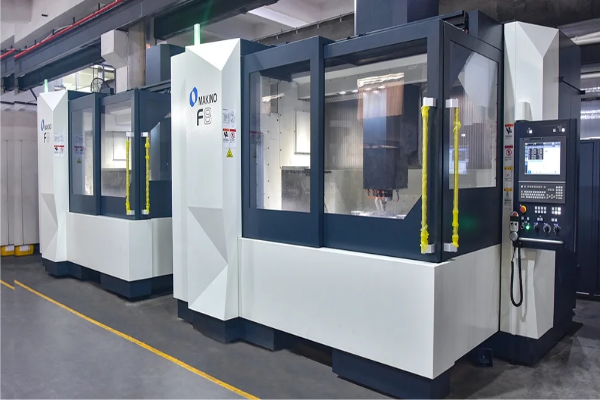
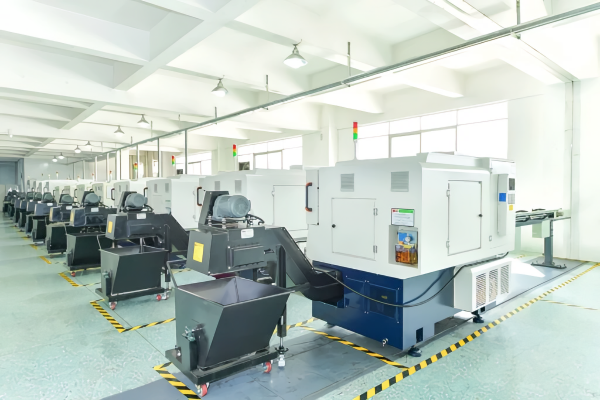
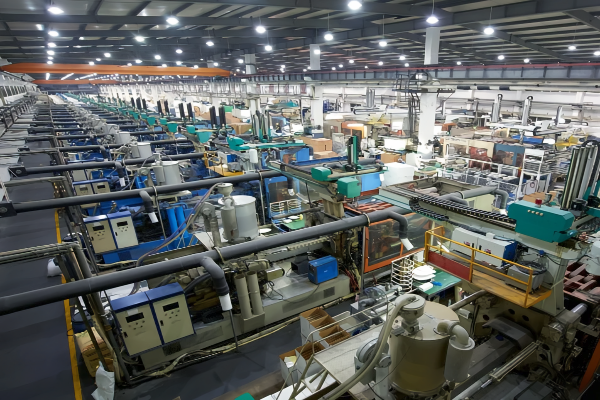
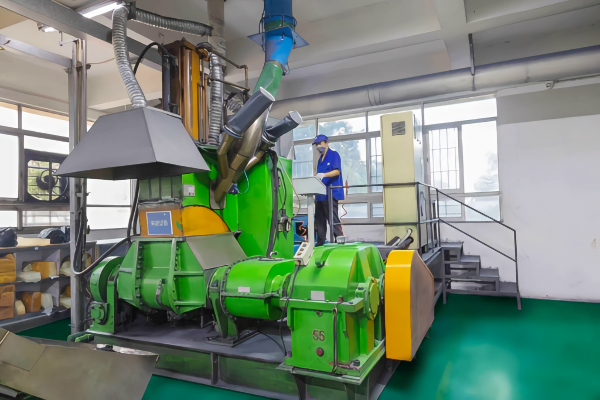
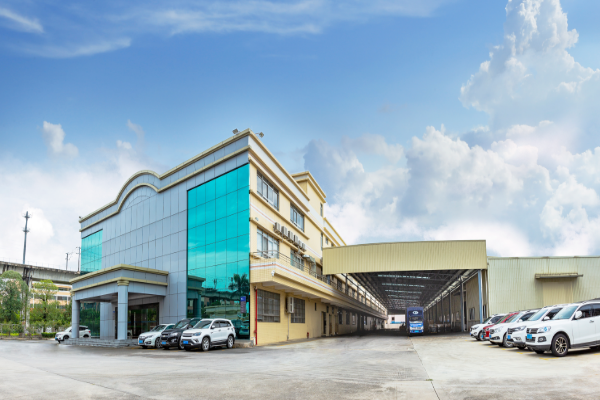
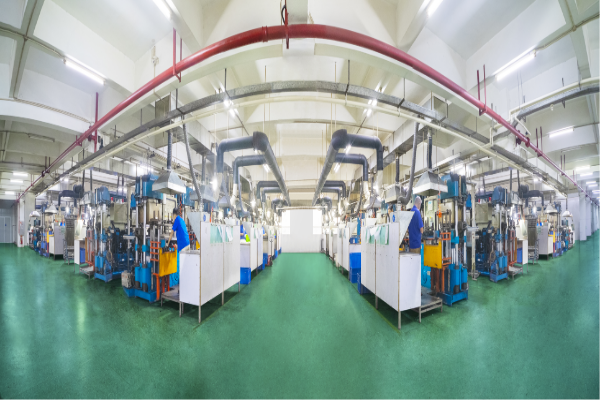
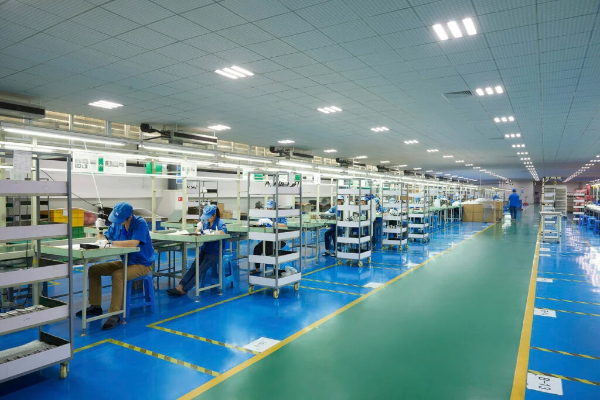
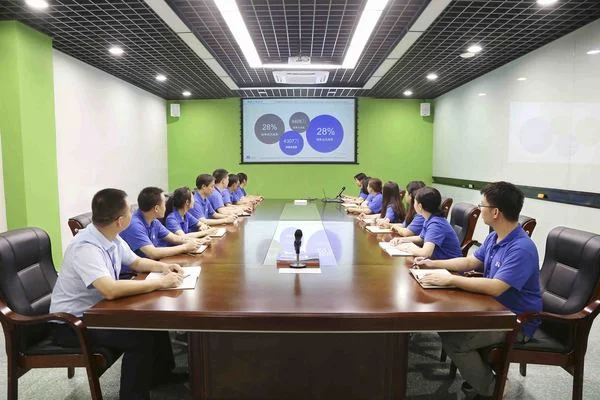
Instalación avanzada de fabricación de caucho extruido personalizado
Preguntas frecuentes « Goma extruida personalizada
El caucho extruido personalizado es un perfil de caucho que se produce forzando un compuesto de caucho sin curar a través de una matriz de precisión y luego vulcanizándolo bajo calor (curado en autoclave, microondas, aire caliente o baño de sal) para bloquear la sección transversal. A diferencia del moldeo, el curado se produce después de la matriz, no dentro de ella, por lo que la extrusión puede producir longitudes continuas del mismo perfil en lugar de piezas discretas. El proceso «mezcla → extrusión → vulcanización → enfriamiento → corte → empalme « está documentado en referencias estándar de la industria del caucho.
La extrusión es la elección correcta cuando la pieza tiene una sección transversal constante a lo largo de su longitud «sellos, tubos, molduras de bordes, burletes, cordones, perfiles de canal. El moldeo es la elección correcta para piezas de circuito cerrado o tridimensionales donde la geometría cambia a lo largo de la longitud, como juntas tóricas (hechas de un solo molde), ojales, casquillos y fuelles. Las herramientas para extrusión normalmente cuestan 80-90% menos que las herramientas de moldeo por inyección, y el tiempo de entrega es 2-4 semanas más corto, pero la extrusión no puede producir una pieza con un orificio a través de ellas o una característica que rompa la sección transversal.
Extraemos ocho compuestos estándar: EPDM (grados curados con peróxido y azufre), silicona curada con platino y peróxido, neopreno (CR), nitrilo (NBR), caucho natural (NR), SBR, FKM (equivalente a vitones), y esponja EPDM en densidades de células cerradas y abiertas. Las mezclas personalizadas para llamadas de línea ASTM D2000, FDA 21 CFR 177.2600 de calidad de agua potable y NSF/ANSI 61 están disponibles bajo pedido. Nuestro viscosímetro Mooney y reómetro de troquel móvil validan cada lote.
Siete familias de perfiles estándar (D, P, canal U, T, tubo/cordón, rectangular, personalizado). Rango de diámetro exterior: 1-100 mm. Espesor de pared: 0,5-25 mm. Ancho de perfil: 3-150 mm. Dureza: 30-90 Shore A. Tolerancia estándar: ISO 3302-1 Clase E2 (±0,15-0,25 mm en sección transversal). Longitudes continuas cortadas a cualquier longitud desde 10 mm hasta 50 m. La geometría personalizada (portadores multilóbulo, asimétricos, de doble durómetro coextruido, reforzados con acero o aluminio) se fabrica a partir de su boceto, muestra o dibujo DXF.
Para perfiles estándar con herramientas existentes, no hay MOQ y el tiempo de entrega es de 2 a 3 semanas. Para perfiles personalizados que requieren nuevas herramientas: prototipo 2 a 3 semanas (MOQ 100 m), preproducción 4 a 6 semanas (MOQ 500 m), producción 6 a 8 semanas (10 000 m típico), volumen alto 8 a 12 semanas (100 000+ m). La coextrusión y el doble durómetro tienen una cantidad mínima de pedido de 2000 m debido a la complejidad de la configuración. El tiempo de entrega y la cantidad mínima de pedido se cotizan en cada solicitud de cotización «nunca los verá cambiar después de la colocación de la orden de compra.
Sistema de calidad: IATF 16949 (gestión de calidad del sector automotriz) y ISO 9001:2015. Estándares de materiales: ASTM D2000 line callouts (Tipo, Clase, Grado, Dureza, Tensado), ASTM D412 (ensayos de tracción), ASTM D2240 (dureza Shore A). Estándares de aplicación: FDA 21 CFR 177.2600 (agua potable), NSF/ANSI 61 (componentes del sistema de agua potable), RoHS, REACH. Los paquetes de documentación PPAP están disponibles para la calificación de proveedores de nivel 1 automotriz.
El diseño del troquel es interno en nuestro taller de herramientas de 3.600 m², es decir, sin fabricante externo ni factura separada. La propiedad de las herramientas tiene tres opciones: (1) Propiedad del cliente con pago completo al momento del pedido, el troquel es suyo y lo retenemos para reposiciones; (2) Amortizado al precio de pieza de la primera tirada de producción, Engelhardt conserva el troquel para futuros pedidos a precios estándar; (3) Herramientas estándar propiedad de Engelhardt, sin coste de herramientas para las siete familias de perfiles estándar en tamaños estándar.
Sí. La fabricación posterior a la extrusión incluye empalme vulcanizado en caliente (que crea una unión más fuerte que la unión adhesiva porque el compuesto de empalme se vulcaniza en el material original), respaldo de adhesivo sensible a la presión (PSA), perforación, muesca, corte de beso a medida, coextrusión con soportes de acero o aluminio y coextrusión de perfil de doble durómetro. Un sello de puerta, por ejemplo, suele ser una longitud extruida de EPDM con esquinas moldeadas empalmadas en una junta continua « producimos ambos extremos de este proceso internamente.
La ruta más rápida: envíenos un boceto o DXF de la sección transversal de su perfil, la aplicación (qué fluido, qué temperatura, qué exposición a los rayos UV, qué tolerancia necesita), su volumen objetivo y las certificaciones requeridas. Dentro de 5 días hábiles recibirá una cotización de herramientas, una matriz de niveles de precio por pieza (muestra/preproducción/producción), una recomendación de material con llamada ASTM D2000 y un compromiso de tiempo de entrega. Si no tiene un dibujo, envíenos un correo electrónico con una pieza de muestra « aplicaremos ingeniería inversa al perfil.
Siguiente paso
¿listo para cotizar su proyecto de caucho extruido personalizado?
Envíenos un boceto o muestra de nuestro catálogo. Responderemos en 5 días hábiles con una cotización de herramientas, una matriz de precios por pieza, una recomendación de material y un compromiso de plazo de entrega.