
Póngase en contacto con Engelhardt

Piezas de caucho para plomería y construcción
Piezas de caucho moldeadas personalizadas para aplicaciones de plomería y construcción
Engelhardt moldea los componentes de sellado de tuberías y productos de construcción Los OEM dependen de « acoplamientos para tuberías, juntas para drenaje de pisos, juntas, arandelas y manguitos para tuberías « construidos según su dibujo, en el elastómero que su aplicación realmente necesita.
Solicite una cotización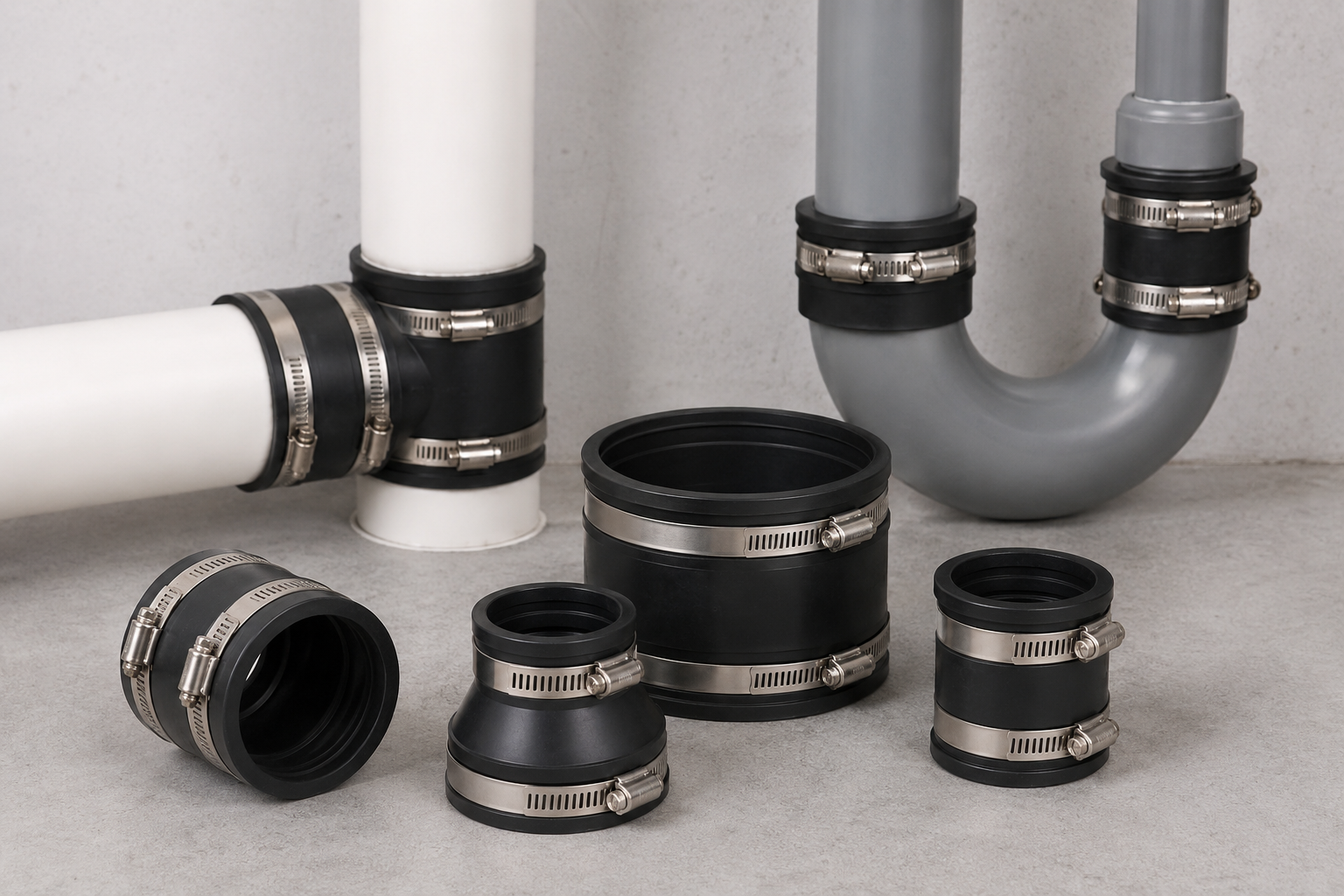
Resumen de la solución
- 4 Elastómeros en producción rutinaria: EPDM, NBR, silicona, neopreno
- 3 Procesos de moldeo: compresión, transferencia, inyección
- 40+ Prensas vulcanizadoras incl. 250T de vacío e inyección de 300T
- ±0,3% Precisión de dosificación compuesta controlada por computadora
- 3.600 m² Taller interno de herramientas y diseño de moldes
- 2 certificados Sistema de calidad ISO 9001 + QMS de grado automotriz IATF 16949
Todos los compradores
Por qué fallan las piezas de caucho de plomería y construcción y cómo lo previene el moldeo de precisión
Las piezas de caucho moldeadas personalizadas son los componentes de elastómero vulcanizado «sellos, juntas, acoplamientos, manguitos y arandelas « que mantienen estancos los conjuntos de plomería y construcción. Son artículos pequeños y de bajo costo. También son la razón más común por la que se devuelve un dispositivo.
La mayoría de las fallas de campo se remontan a una decisión tomada mucho antes de que se moldeara la pieza: el compuesto incorrecto para el entorno de servicio.
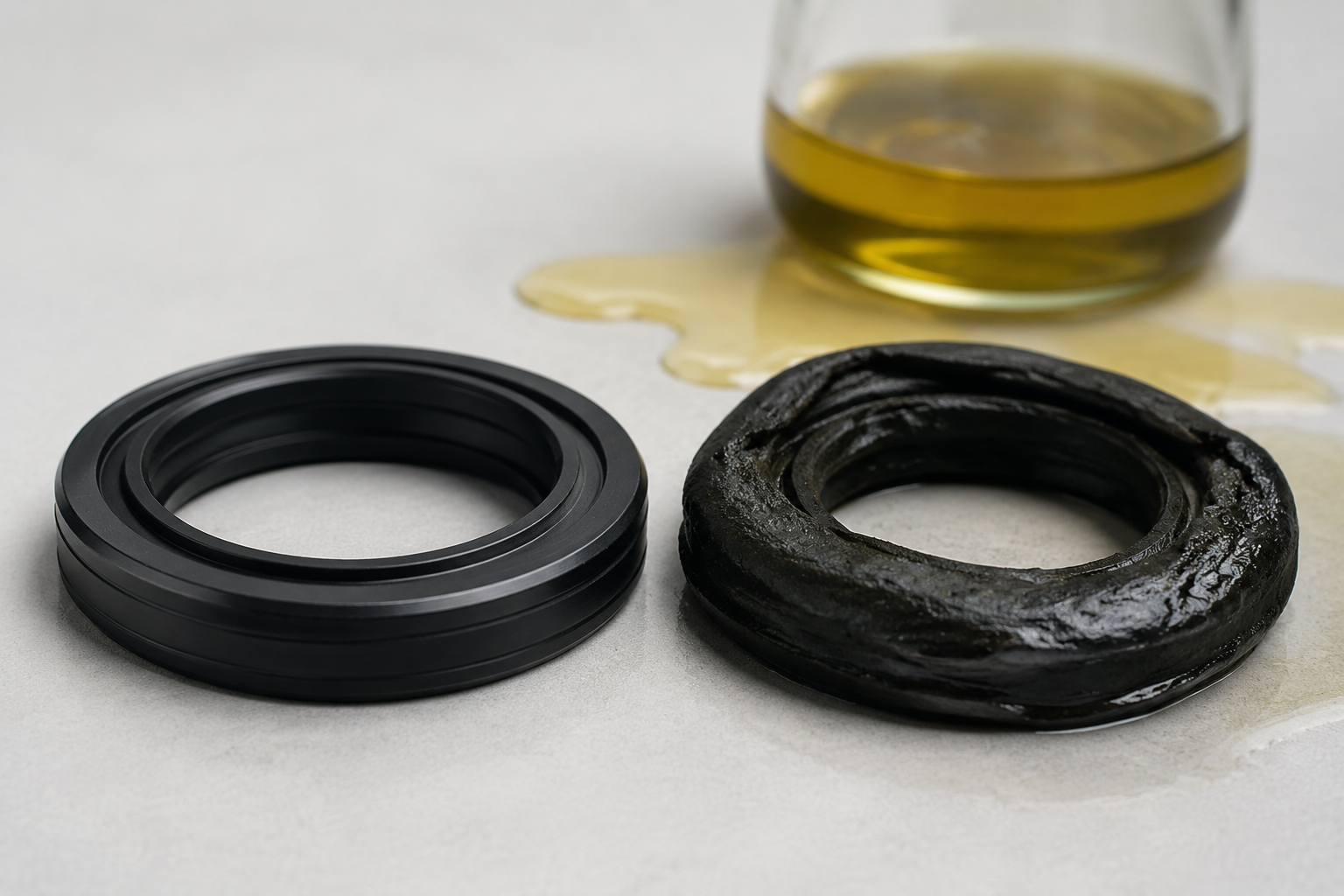
Especificación errónea del material
Un sello especificado para agua fría pero luego expuesto a aceite o solvente puede hincharse y fallar en unos meses. La pieza parece idéntica « la química no coincide con el deber.
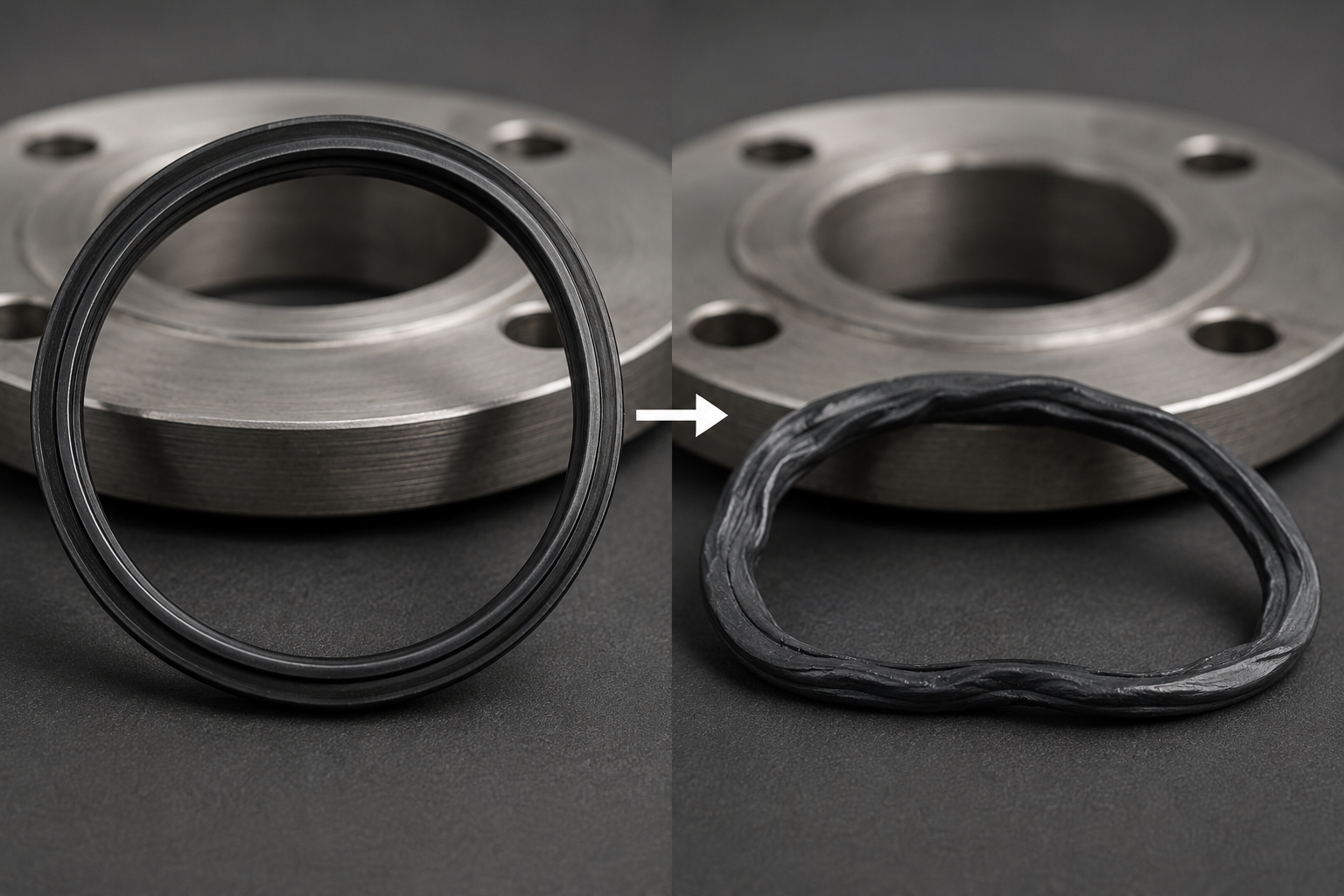
Conjunto de compresión
Una junta poco curada o mal compuesta pierde su fuerza de recuperación con el tiempo. La junta permanece “montada” pero deja de sellar “una fuga lenta que nadie detecta en la inspección.
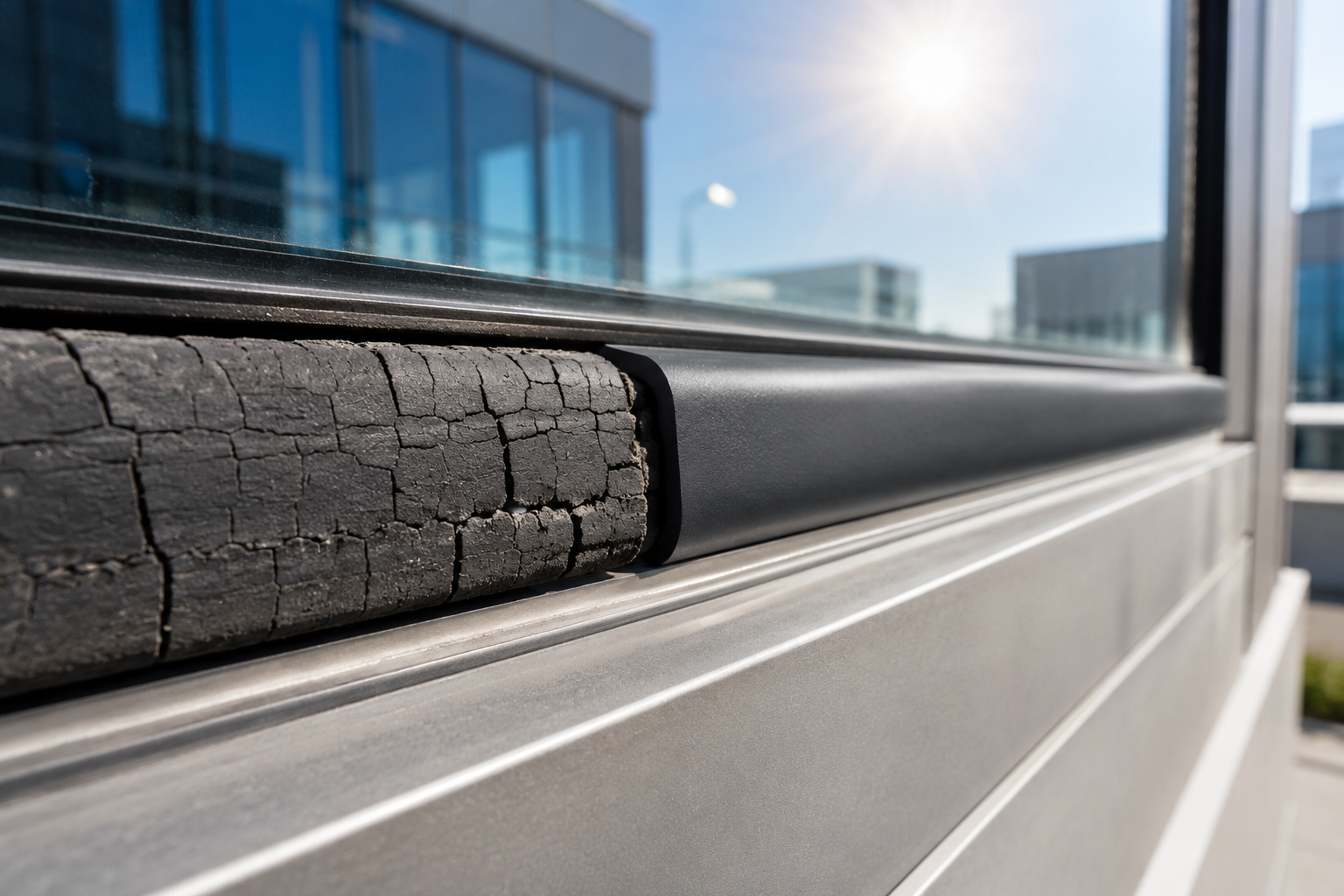
Envejecimiento con ozono y rayos UV
Un caucho de uso general utilizado en un edificio expuesto sella grietas bajo la luz solar y el ozono. EPDM sobrevive; un compuesto no verificado no lo hace.
La causa fundamental rara vez reside en la prensa de moldeo. Se remonta a un proveedor que trata el “caucho” como un solo material en lugar de una familia de compuestos diseñados con límites mensurables.
Engelhardt aborda cada pieza de plomería y construcción primero como un problema de material y luego como un problema de moldeo. Hacemos coincidir el elastómero con su perfil de temperatura, fluido y exposición, lo validamos según el estándar correspondiente y luego lo moldeamos según su dibujo. El resto de esta página muestra cómo «gama de productos, elección de procesos, capacidad de fábrica, certificaciones y términos de abastecimiento.
Ingeniero + Adquisiciones
Engelhardt Piezas de caucho para fontanería y construcción « Gama y selección de compuestos
Moldeamos siete familias de componentes para fabricantes de fontanería, artículos sanitarios y productos de construcción. Cada uno se produce según un dibujo del cliente o una muestra de ingeniería inversa. No hay un catálogo fijo que pueda hacer concesiones.
Acoplamientos y conectores de tuberías
Acoplamientos, reductores y conectores de tuberías de caucho flexibles para conjuntos de drenaje, residuos y ventilación.
Servicio típico
Drenaje, baja presión
Recomendado
EPDM/neopreno
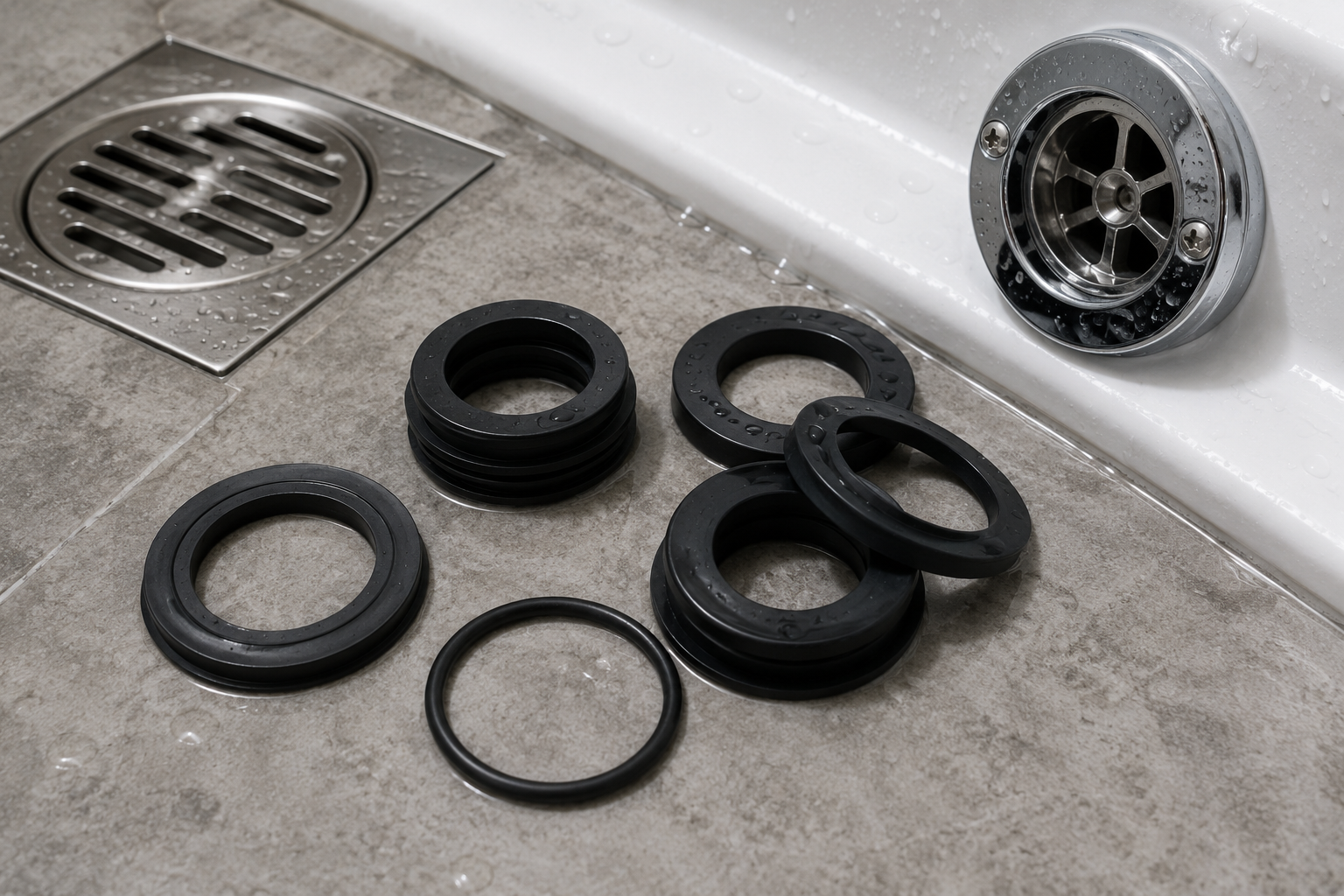
Sellos de drenaje de suelo y bañera
Anillos y juntas de sellado moldeados para desagües de pisos, desechos de bañeras y salidas de ducha.
Servicio típico
Agua estancada, caliente intermitente
Recomendado
EPDM
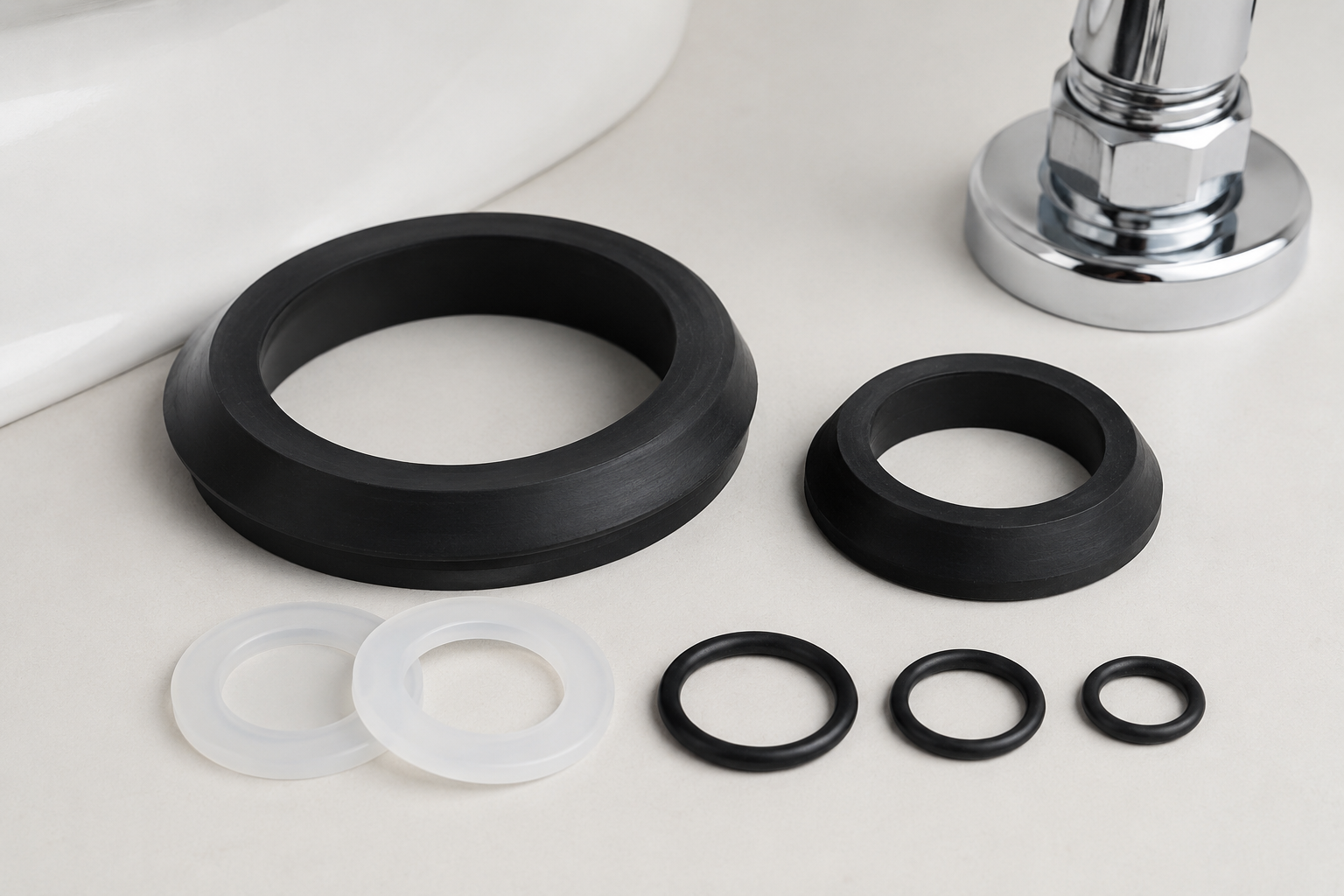
Juntas, arandelas y juntas tóricas
Juntas de tanque a cuenco, arandelas de juntas deslizantes, juntas de púas y juntas tóricas moldeadas para el montaje de accesorios.
Servicio típico
Agua potable, sellado estático
Recomendado
EPDM/silicona
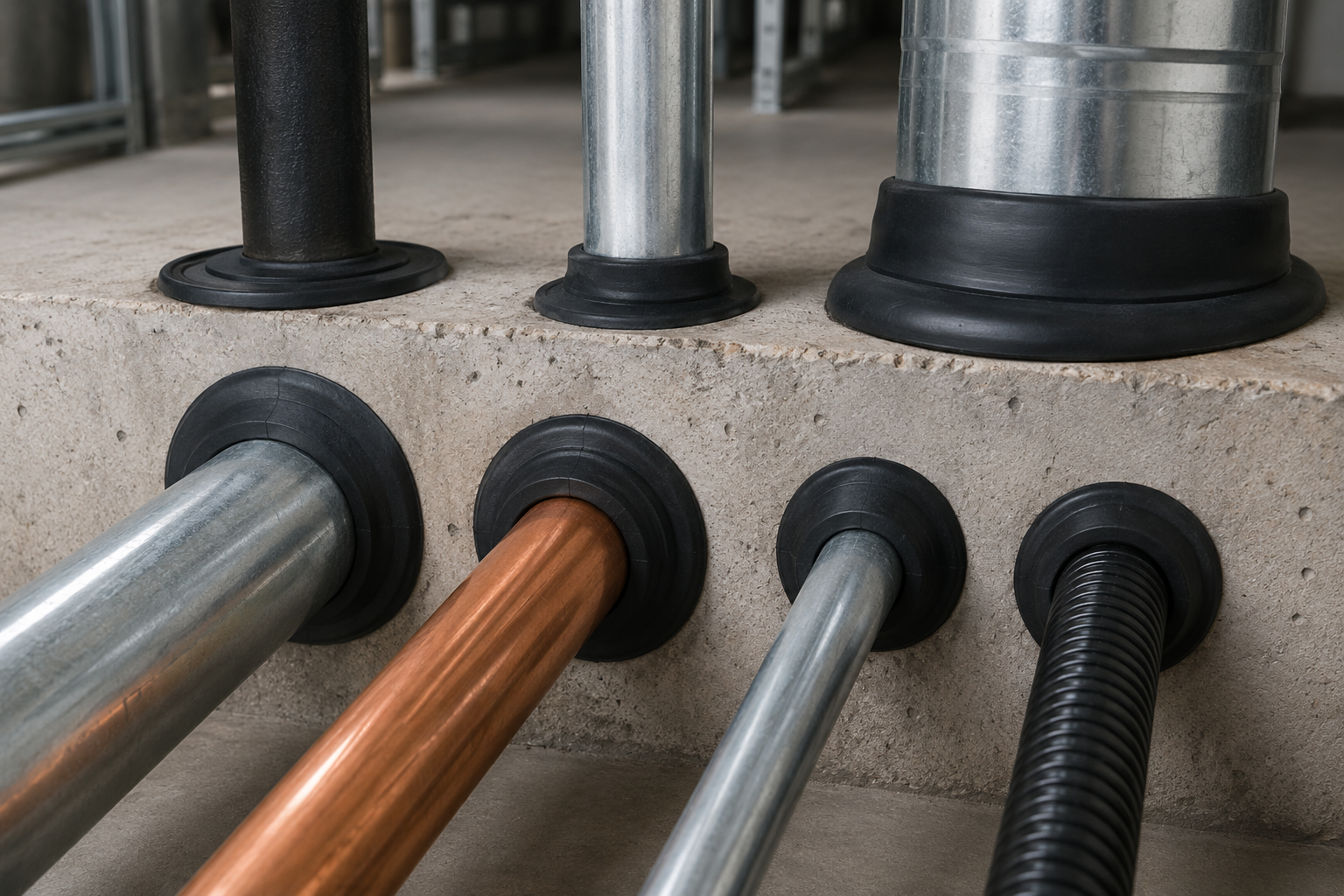
Manguitos y casquillos de tubo de goma
Manguitos, ojales y sellos de penetración que protegen las tuberías por donde pasan a través de la estructura del edificio.
Servicio típico
Abrasión, movimiento estructural
Recomendado
Neopreno/EPDM
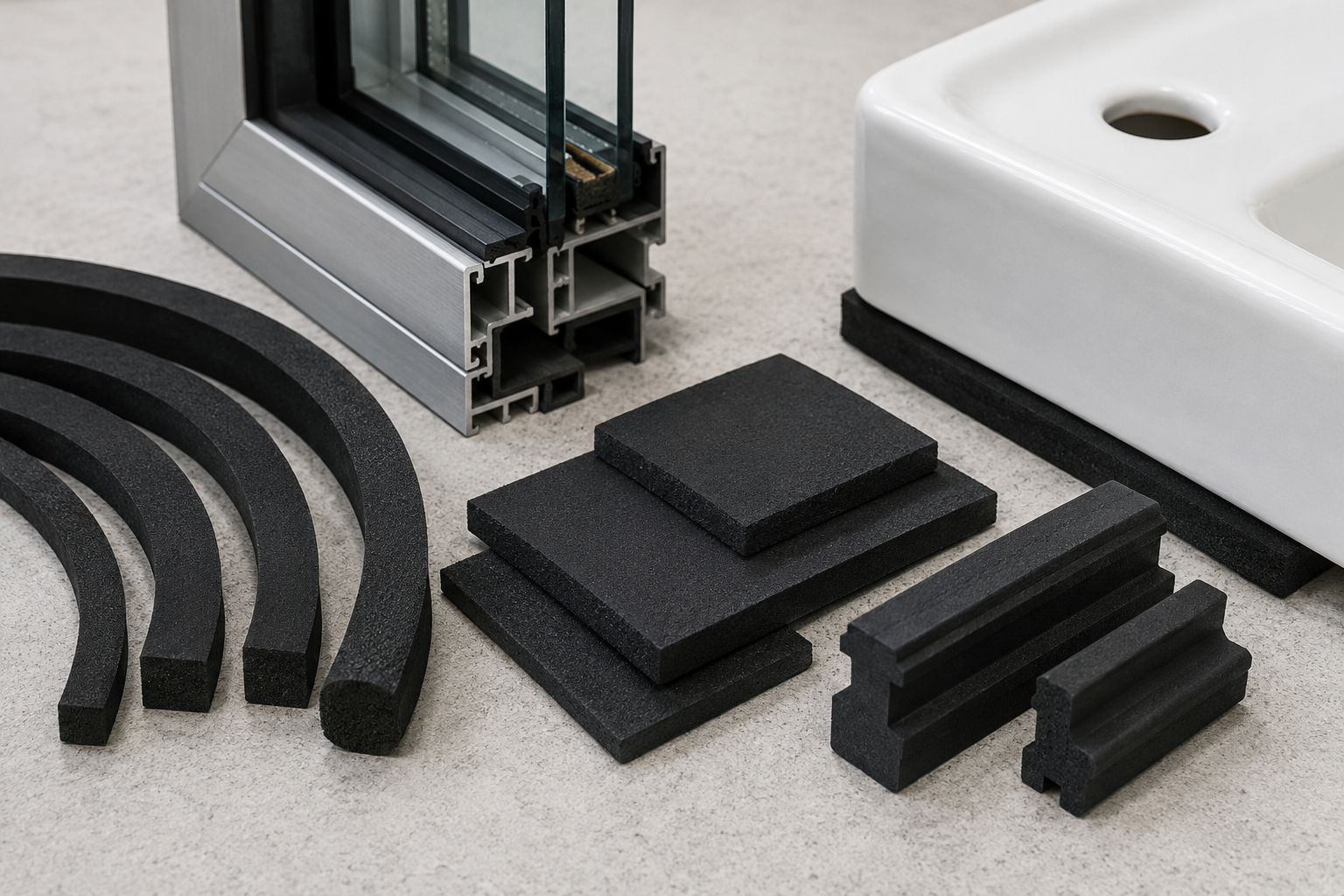
Componentes de goma de espuma y esponja
Tiras, almohadillas y rellenos de juntas de expansión de gomaespuma de celda cerrada para conjuntos de construcción y sanitarios.
Servicio típico
Compresión, sellado contra la intemperie
Recomendado
EPDM/neopreno
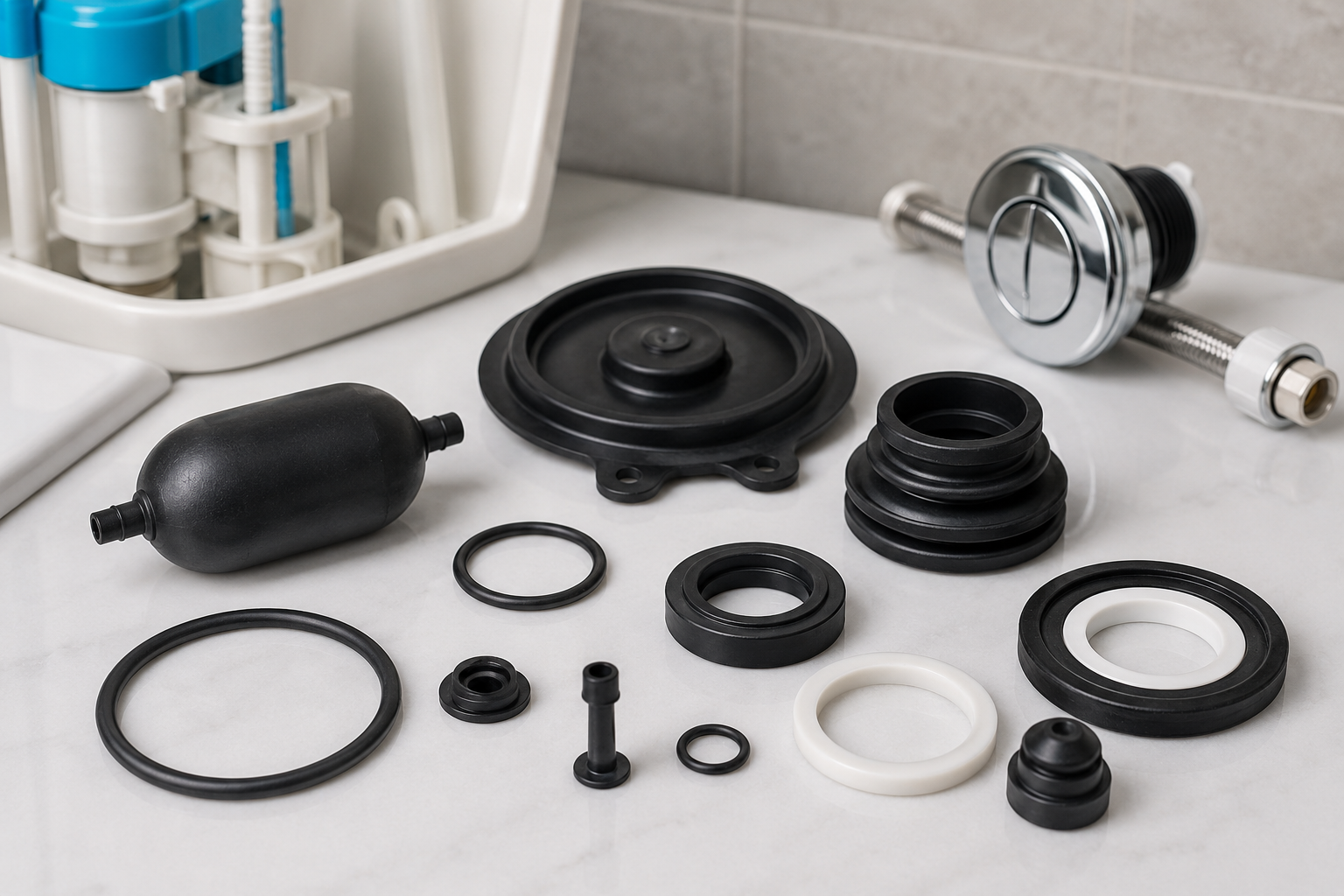
Piezas de sellado de artículos sanitarios
Bolsas de aire neumáticas, diafragmas y juntas moldeadas para mecanismos sanitarios, cisternas y sanitarios.
Servicio típico
Flexión repetida, agua potable
Recomendado
EPDM/silicona
Una séptima familia (componentes de reparación y mantenimiento de tuberías) está construida según las especificaciones del proyecto. En los siete, el problema de selección es el mismo: qué compuesto y qué estándar.
Matriz de selección de compuestos de caucho « Servicio de fontanería y construcción
Esta matriz es la lógica de selección que nuestros ingenieros aplican antes de cortar un solo molde. Haga coincidir su condición de servicio dominante con el elastómero recomendado y luego confirme con el estándar enumerado.
Rangos de temperatura y costo relativo verificados con datos de elastómeros publicados (comparación de materiales de Delta Rubber, 2026).
| Condición de servicio | Elastómero recomendado | Por qué encaja | Rango de temperatura | Estándar de referencia |
|---|---|---|---|---|
| Agua fría y potable | EPDM | Excelente resistencia al agua; disponible en grados de agua potable | -40 la +120°C | NSF/ANSI 61, EN 681-1 |
| Agua caliente y vapor | EPDM | Mantiene las propiedades en vapor a +120°C; dura más que NBR/neopreno en servicio caliente | -40 la +120°C | EN 681-1 |
| Drenaje / DWV | EPDM/neopreno | Los acoplamientos flexibles y estables al ozono toleran la desalineación | -40 la +120°C | EN 681-1 |
| Contacto con aceite o disolvente | NBR (nitrilo) | Excelente resistencia al aceite y al combustible donde se hincharía EPDM | -40 la +120°C | ASTM D2000 |
| Sello contra la intemperie para exteriores/edificios | EPDM/neopreno | Resiste los rayos UV, el ozono y el envejecimiento atmosférico durante años | -40 la +120°C | ASTM D2000 |
| Alta temperatura/contacto con alimentos | Silicona | Rango de temperatura más amplio; formulaciones de calidad alimentaria disponibles | -60 la +230°C | FDA 21 CFR 177.2600 |
Ingeniero + Operaciones
Moldeado, extruido, troquelado: elegir el proceso de caucho adecuado
Los compradores suelen pagar por el proceso equivocado. Un perfil largo y uniforme no necesita molde de inyección; No se puede extruir un sello tridimensional complejo. Recoger correctamente es la forma más rápida de eliminar costos de una pieza de caucho personalizada antes de que comience la producción.
A continuación se muestra la comparación que la mayoría de los proveedores de caucho dejan fuera de sus páginas. Utiliza criterios de ingeniería concretos: afirmaciones de “calidad” no vagas.
Características del proceso compiladas a partir de fuentes de ingeniería de fabricación de caucho, 2025-2026.
| Criterio | Moldeo por compresión/transferencia | Moldeo por inyección | Extrusión de caucho | Troquelado |
|---|---|---|---|---|
| Costo de herramientas | Bajo a moderado | Alto | Bajo (muerte de perfil) | Más bajo |
| Tolerancia dimensional | Bien | Más apretado | Más flojo (morir hincharse) | Bueno (partes planas) |
| Volumen económico | Bajo a medio | Medio a alto | Ejecuciones continuas/largas | Cualquier volumen |
| Geometría de la mejor parte | Sellos 3D, juntas, formas complejas | Piezas 3D de precisión de alto volumen | Sección transversal uniforme (mangas, cordón) | Juntas de láminas planas |
| Velocidad del ciclo | Más lento (1-6 min/ciclo) | Rápido, automatizado | Continuo | Rápido |
Para la mayoría de los componentes de plomería y construcción, el moldeo por compresión y transferencia brinda el mejor equilibrio: costo moderado de herramientas, tolerancias de sonido y libertad para moldear las formas complejas que exigen los drenajes y acoplamientos. Las piezas moldeadas tienen una geometría tridimensional definida que los perfiles extruidos y los planos troquelados no pueden reproducir. Reservamos el moldeo por inyección para piezas de precisión de gran volumen donde su ciclo más rápido devuelve la inversión en herramientas.
Porque Engelhardt se realiza bajo un mismo techo, junto con la extrusión y el montaje internos, la elección del proceso se realiza por mérito de ingeniería, no por el método que posee un taller.
Ingeniero
Dentro de la capacidad personalizada de ensamblaje y moldeo de caucho de Engelhardt
Un compuesto es tan bueno como el control de proceso detrás de él. Engelhardt ha construido su plomería y capacidad de construcción de piezas de caucho en torno a tres cosas que los compradores pueden verificar: precisión de mezcla, capacidad de moldeo y herramientas internas.
40+
Prensas vulcanizadoras para moldeo de caucho
2.000 t
Piezas de caucho moldeadas producidas por año
±0,3%
Precisión del pesaje por lotes compuestos
3.600 m²
Taller interno de diseño y construcción de moldes
Automatización de compuestos
La composición es la etapa en la que se diseñan la mayoría de las fallas, por lo que es la etapa en la que automatizamos primero. Un sistema de dosificación de materiales pequeños controlado por computadora pesa cada ingrediente con un margen de ±0,3% y no liberará el siguiente material hasta que se confirme que el anterior es correcto.
Esto elimina los lotes mal coincidentes, faltantes y sobredosificados que el pesaje manual produce «la fuente oculta de sellos inconsistentes. Luego, dos líneas mezcladoras de 55 litros enfrían el compuesto rápidamente para proteger sus propiedades físicas antes de moldearlo.
Con los sellos de plomería, el comprador nunca ve el compuesto “ve la fuga dos años después. Por eso fijamos el lote en ±0,3% y rastreamos cada lote a través de MES. Una pieza de caucho moldeada personalizada debe ser tan repetible como el dibujo del que proviene.
Moldeo y montaje
INGENIERO
Resultados de clientes « Suministro de OEM de plomería y artículos sanitarios
La prueba más sólida de que se puede confiar en una moldeadora marina es la lista de clientes. Engelhardt es un proveedor establecido de las principales marcas de fontanería y artículos sanitarios, incluidas American Standard, Kohler, Oatey y SFA.
Estándar americano
Kohler
Oatey
SFA
Se trata de empresas que auditan duramente sus cadenas de suministro. Mantener su negocio es en sí mismo una referencia de calidad que ninguna afirmación de marketing puede sustituir.
“
No existe una cifra de retorno de la inversión universal para un sello de goma, pero existe un patrón de costes claro. Un compuesto mal especificado normalmente aparece como una falla de campo, y una falla de campo conlleva costos de garantía, riesgo de recuperación y una no conformidad de calidad que eclipsa el precio de la pieza muchas veces. El valor de Engelhardt está aguas arriba de eso: hacer coincidir el elastómero con el deber, demostrarlo con EN 681-1 o NSF/ANSI 61, y mantenerlo estable mediante lotes de ±0,3% y trazabilidad MES. El costo total de propiedad más bajo es el sello que nunca regresa.
¿Reemplazar a un proveedor existente? Envíe una muestra para una verificación gratuita de ingeniería inversa
→
GESTIÓN DE CALIDAD
Certificaciones y Cumplimiento
Los equipos de adquisiciones examinan a los proveedores de caucho en la certificación antes que nada. La posición de calidad de Engelhardt está diseñada para limpiar esa pantalla y luego superar la norma de la industria del caucho.
ISO 9001
Sistema de gestión de calidad
IATF 16949
Qms de grado automotriz
Trazabilidad MES
Seguimiento hacia adelante y hacia atrás a nivel de lote
Normas materiales
ASTM D2000 · EN 681-1
La mayoría de los competidores de caucho personalizados tienen ISO 9001 y se detienen allí. Engelhardt también funciona con IATF 16949, el estándar de calidad de la industria automotriz, un sistema materialmente más resistente que requiere disciplina en la prevención de defectos, análisis de fallas de procesos y el tipo de rigor de los proveedores que exigen los fabricantes de equipos originales automotrices.
Para los compradores de plomería y construcción, esa es una ventaja que obtienen de forma gratuita: un programa de piezas ejecutado bajo controles de calidad automotriz, aplicado a un componente sanitario o de drenaje.
Agua potable
compuestos seleccionados según los criterios de efectos sobre la salud NSF/ANSI 61 para el contacto con el agua potable.
Sellos para juntas de tuberías
siga los requisitos de elastómero alineados con EN 681-1 para aplicaciones de agua y drenaje.
Clasificación de materiales
caucho especificado y documentado en el sistema de llamada de línea ASTM D2000.
Trazabilidad del proceso
se ejecuta a través de ERP/MES/QMS, vigente desde 2017, cada lote rastreable desde el material entrante hasta la pieza enviada.
El cumplimiento es documentación, no un eslogan. Proporcionamos los certificados, los datos materiales y los registros de inspección que su auditoría necesita «antes de realizar el pedido, no después.
¿Preparar una auditoría de proveedores? Descargue la documentación completa de cumplimiento
→
ADQUISICIÓN
Guía de abastecimiento « MOQ, herramientas, plazos de entrega y creación de prototipos
Las piezas de caucho moldeadas personalizadas se cotizan, no se cotizan a precio de catálogo, y un comprador que comprende lo que impulsa el número negocia uno mejor. Esta sección es la lógica de precios, al aire libre.
Lo que impulsa la cotización
Cinco factores mueven el precio de una pieza de goma personalizada. Ninguno de ellos queda oculto una vez que sabes preguntar.
Factor de costo
Cómo afecta tu cotización
Herramientas/molde
Un costo único establecido por la complejidad de las piezas y el recuento de cavidades. La fabricación interna de moldes lo mantiene competitivo y protege la velocidad de iteración.
Proceso de moldeo
Compresión, transferencia o inyección « elegida según la geometría y el volumen (consulte la tabla de procesos arriba). El proceso correcto reduce el costo unitario.
Grado de elastómero
Las escalas de costos con compuesto: EPDM y NBR son económicas; Los grados de silicona y especialidad tienen una prima. Haga coincidir el grado con el deber, no con el hábito.
Volumen de pedido
Los volúmenes más altos amortizan las herramientas y la configuración en más piezas, lo que reduce el precio por pieza.
Acabado y montaje
Método de recorte, insertos y si las piezas se envían sueltas o ensambladas con componentes de plástico/metal.
MOQ, plazo de entrega y creación de prototipos
La cantidad mínima de pedido y el tiempo de entrega dependen del proceso y el estado de las herramientas de su pieza, por lo que los cotizamos por proyecto en lugar de publicar una sola cifra. Lo que se fija es el camino para llegar allí.
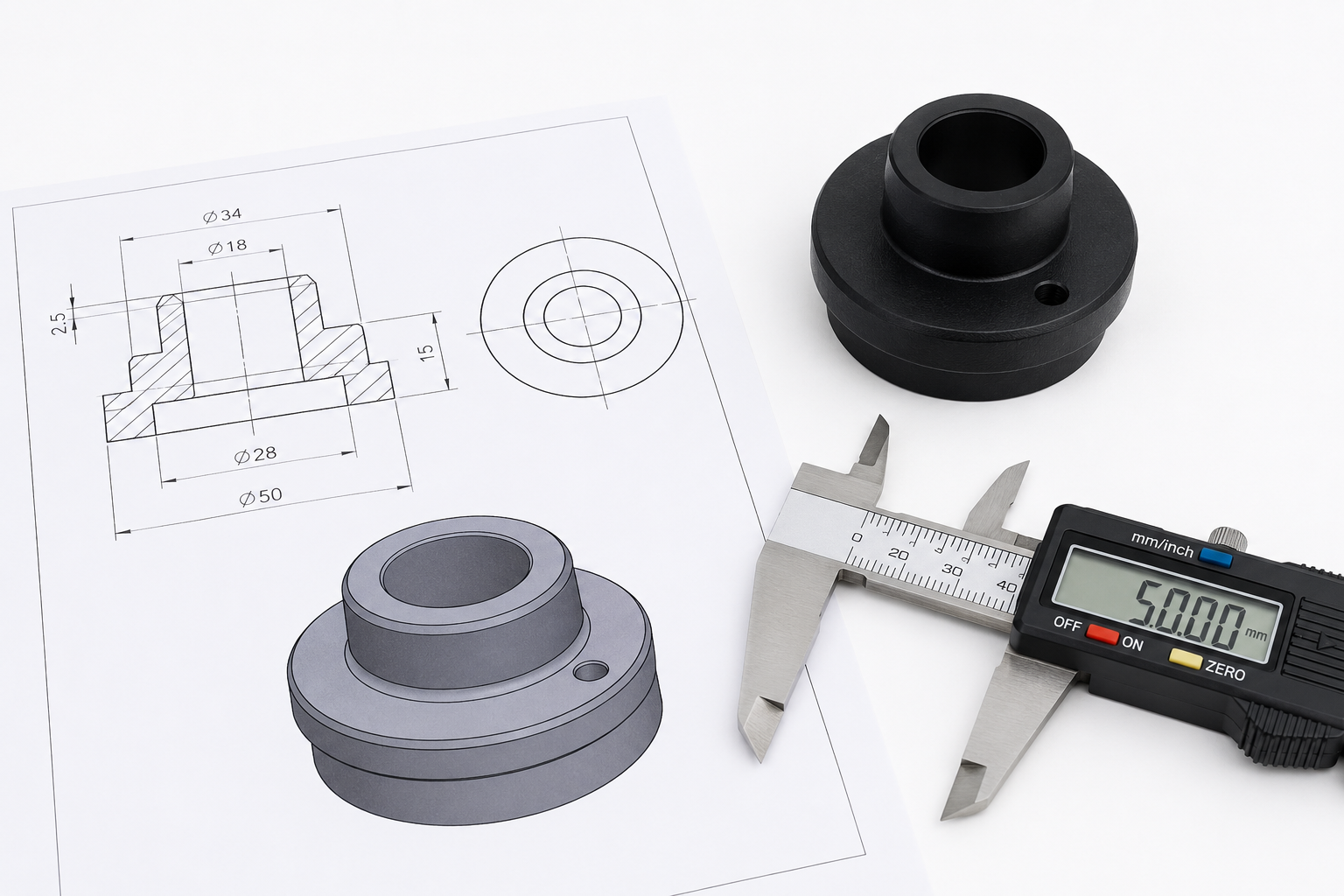 01
01
Comience a partir de un dibujo o una muestra
« envía un dibujo 2D/3D, o una muestra física para ingeniería inversa, y citamos cualquiera de los dos.
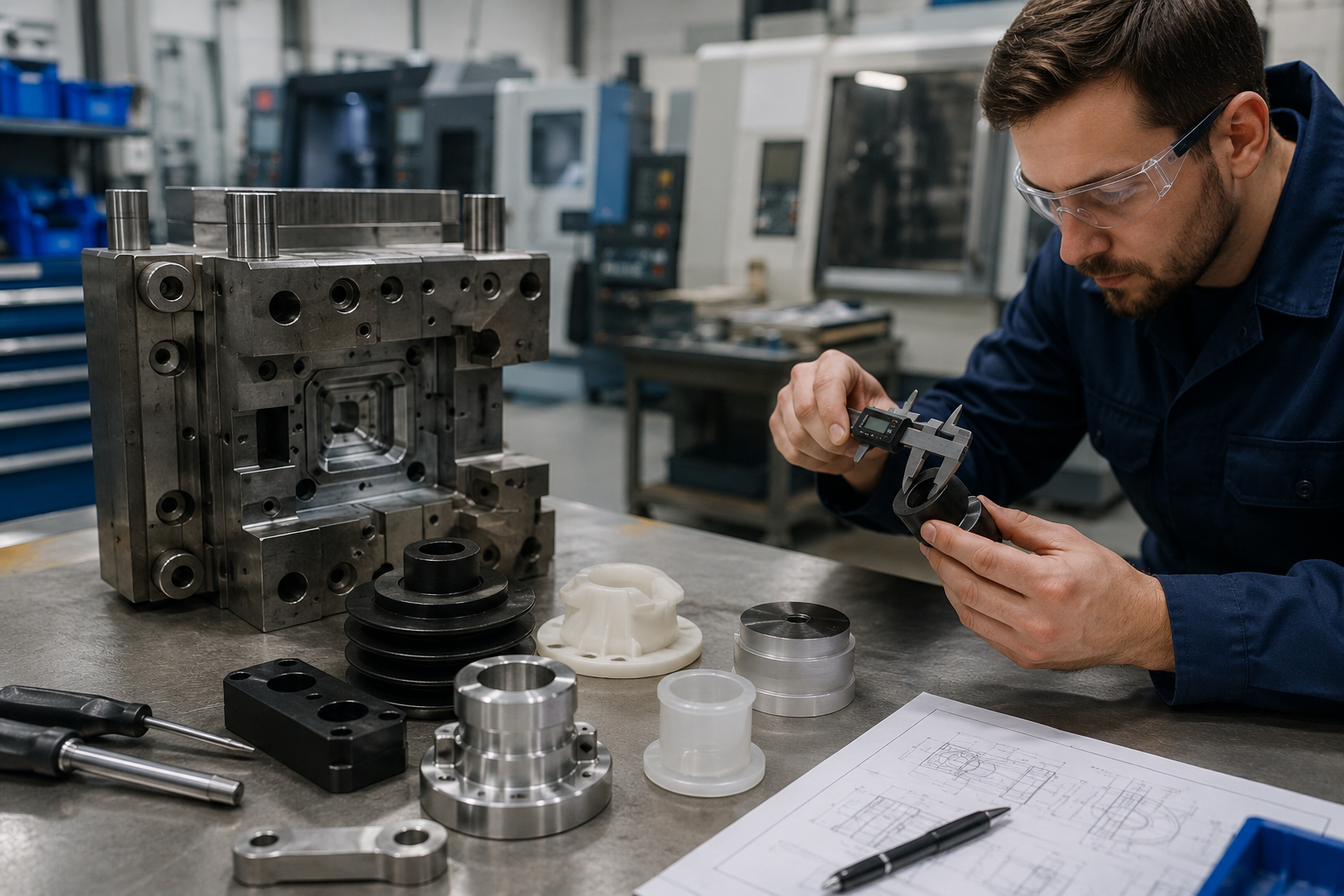 02
02
Prototip înainte de comprometere:
las herramientas internas nos permiten producir y validar un prototipo antes de que se bloquee la producción total.
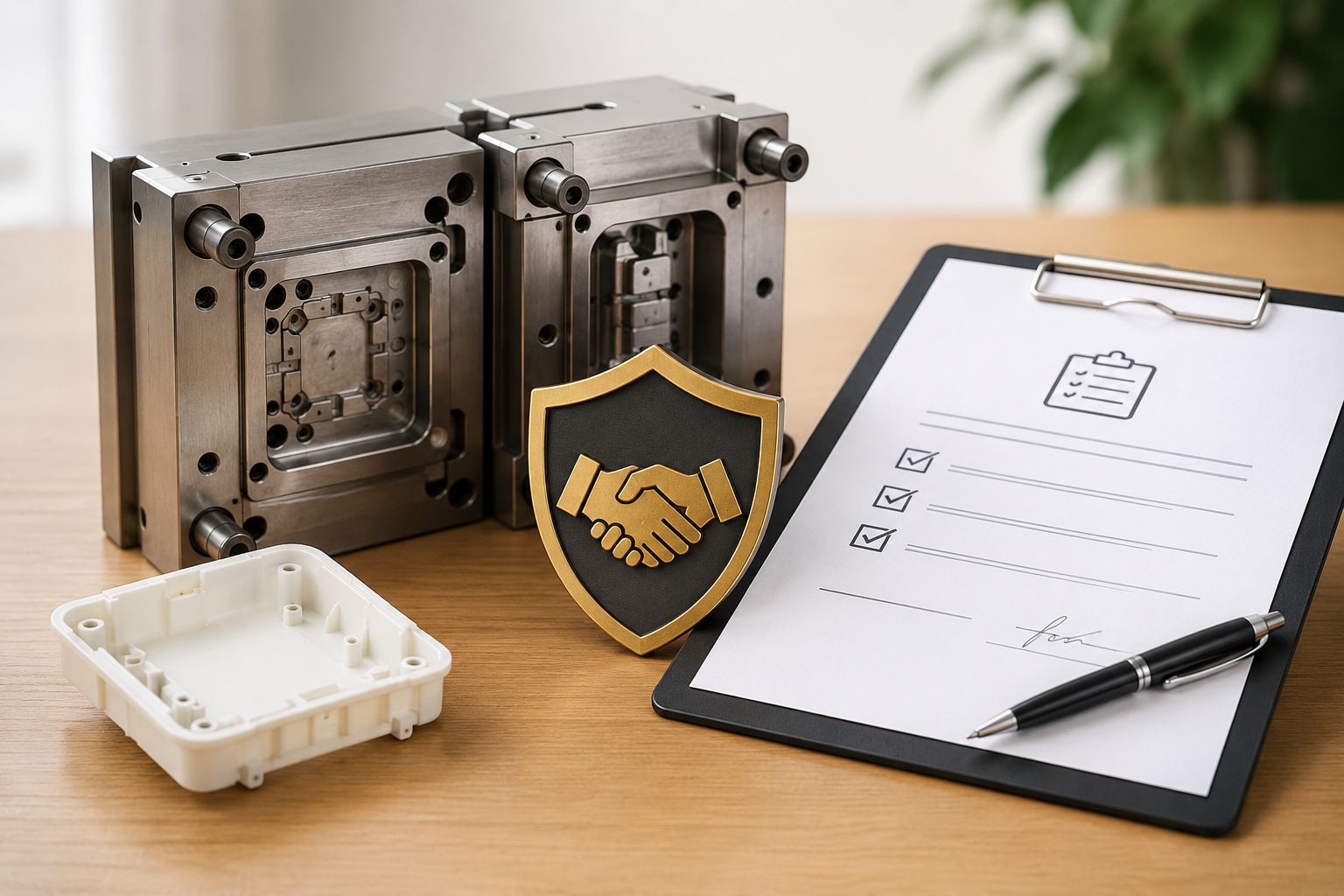 03
03
La propiedad del molde se acuerda por adelantado,
con términos de herramientas escritos en la cita «no hay sorpresas después del primer pedido.
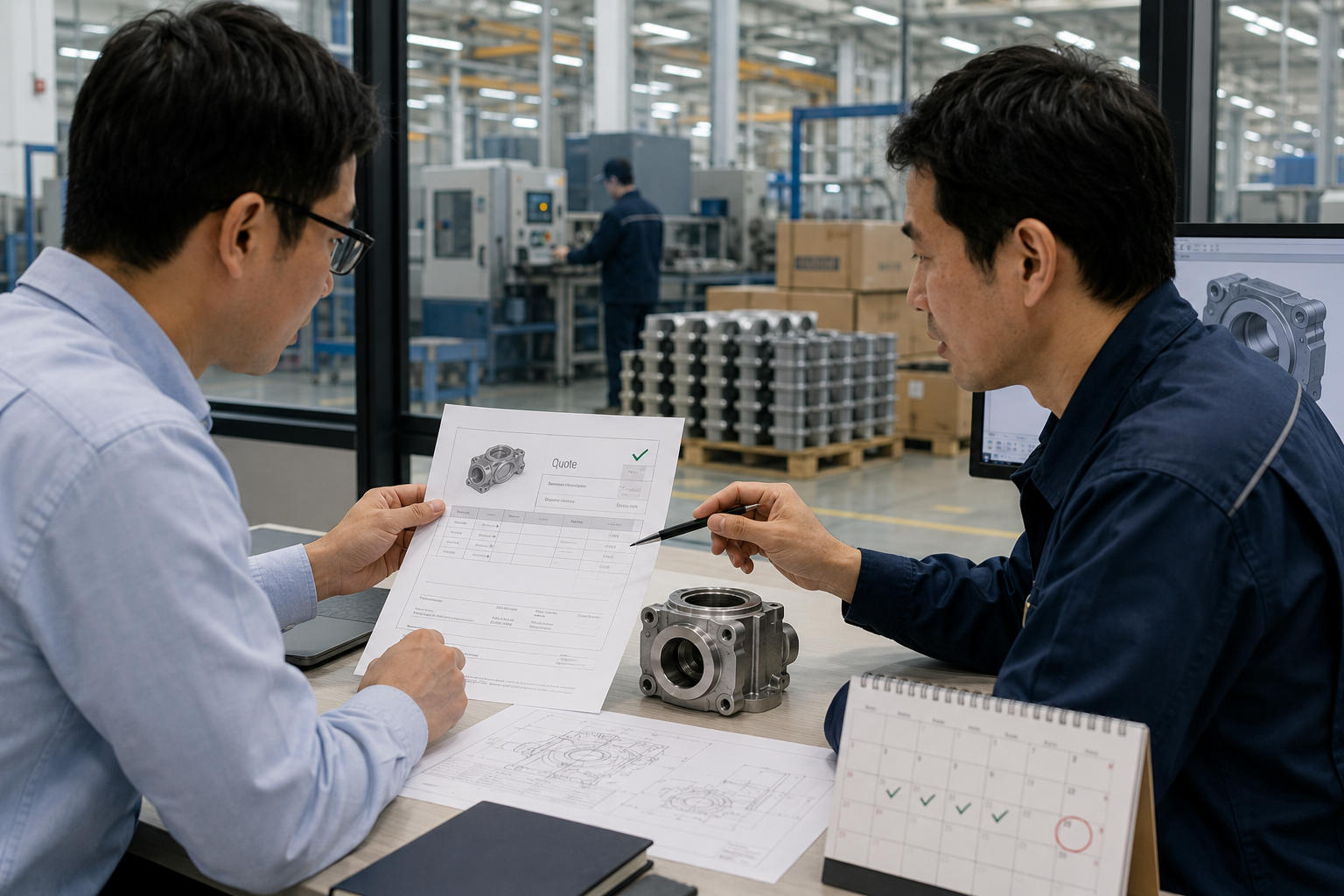 04
04
El plazo de entrega se confirma al momento de la cotización, no después
«obtienes un presupuesto vinculado a tu parte y volumen específicos.
Solicite una cotización con los parámetros de su pieza y obtendrá los números reales “MOQ, costo de herramientas y plazo de entrega « en su componente, no en un rango genérico.
→
HERRAMIENTAS DE INGENIERÍA
Asesores de especificaciones y servicios públicos de ingeniería digital
Simplifique su flujo de trabajo de adquisiciones. Implemente nuestras aplicaciones de servicios públicos especializadas basadas en datos para alinear rápidamente las propiedades de los materiales, las limitaciones dimensionales y los parámetros del proyecto para los componentes de plomería.
Inteligencia material
Inicie el selector compuesto →
Selector de compuestos de elastómero
Cribe y verifique instantáneamente las formulaciones de caucho (EPDM, NBR, Silicone, HNBR) frente a techos de temperatura, fluidos de plomería y estrictos criterios de resistencia química.
Mapeo de la capacidad química y de fluidos
Límites térmicos y parámetros de tensión
Alineación de fabricación
Asesor de Procesos Abiertos →
Asesor de procesos de moldeo
Calcule el recorrido de producción óptimo para sus piezas. Evalúe las técnicas de compresión, transferencia e inyección en relación con la complejidad de la geometría y el volumen objetivo.
Curvas de costo de herramientas versus volumen
Puntuación de viabilidad de la técnica de moldeo
Validación de Adquisiciones
Acceda a la lista de verificación de RFQ →
Navegador de lista de verificación de RFQ
Audite previamente sus activos de ingeniería críticos antes de enviar la solicitud de cotización. Asegúrese de que los parámetros 2D/3D coincidan con los marcos internacionales de calidad y entrega.
Parámetros técnicos de auditoría de activos
Métricas de cumplimiento y riesgo comercial
PREGUNTAS FRECUENTES TÉCNICAS
Piezas de caucho moldeadas personalizadas « Preguntas frecuentes del comprador
Parámetros técnicos críticos, asignaciones de cumplimiento y marcos de ingeniería inversa para administradores de activos de plomería industrial y adquisiciones de edificios.
¿qué tipo de caucho es mejor para plomería y sellos de construcción?
EPDM se encarga de la mayoría de los trabajos de fontanería y construcción «agua fría y caliente, drenaje y sellado contra la intemperie en exteriores « debido a su resistencia al agua, al vapor y al ozono. Cambie a NBR cuando haya contacto con aceite o solvente, y a silicona cuando se requiera cumplimiento de temperatura o contacto con alimentos. La matriz de selección anterior asigna cada condición de servicio al compuesto correcto.
¿cuánto duran las piezas de plomería de caucho moldeado?
La vida útil depende casi por completo de la coincidencia entre el compuesto y el servicio. Un sello EPDM correctamente especificado en el servicio de agua puede funcionar durante muchos años, mientras que un compuesto mal especificado puede fallar en unos meses una vez que cambian las condiciones de exposición. Especificar en EN 681-1 o NSF/ANSI 61 « y controlar la compresión establecida mediante el curado adecuado « es lo que hace que la vida sea predecible.
¿los acoplamientos y sellos de caucho moldeado cumplen con el código?
Pueden serlo, cuando el compuesto se selecciona y documenta según la norma aplicable. Para contacto con agua potable, eso significa criterios de efectos sobre la salud NSF/ANSI 61; para sellos de juntas de tuberías en agua y drenaje significa EN 681-1. Engelhardt selecciona compuestos según estas normas y proporciona la documentación de respaldo.
¿Cuál es la cantidad mínima de pedido de piezas de caucho moldeadas personalizadas?
El MOQ depende del proceso de moldeo y del estado de las herramientas de su pieza, por lo que lo cotizamos por proyecto en lugar de publicar una figura. Envíe su dibujo o muestra y le devolveremos un MOQ vinculado a su componente específico.
¿cuánto cuestan las herramientas de moldeo de caucho y quién es el propietario del molde?
Las herramientas son un costo único impulsado por la complejidad de las piezas y el recuento de cavidades; Engelhardt construye moldes internamente, lo que lo mantiene competitivo. Los términos de propiedad del molde se escriben en la cotización por adelantado, por lo que no hay ambigüedad después del primer pedido.
¿puede Engelhardt igualar o aplicar ingeniería inversa a una pieza de goma existente a partir de una muestra?
Sí. Envíe una muestra física y nuestros ingenieros identificarán el tipo y las dimensiones del compuesto y luego citarán una pieza de caucho moldeada personalizada a juego. Esta es la ruta habitual cuando se reemplaza a un proveedor actual o se pierde el dibujo original.
¿qué plazo de entrega debo esperar desde el prototipo hasta la producción?
El tiempo de entrega varía según la complejidad de la pieza, las herramientas y el volumen, por lo que se confirma en la cotización en lugar de prometerse genéricamente. Debido a que el diseño y corte del molde se realizan internamente, las iteraciones de los prototipos se mueven más rápido que con un fabricante de herramientas subcontratado.
¿por qué es importante el IATF 16949 para un proveedor de piezas de caucho para plomería?
IATF 16949 es el estándar de gestión de calidad de la industria del automóvil, más estricto que ISO 9001 solo, con disciplina obligatoria de prevención de defectos y fallos de proceso. Un proveedor que lo sostiene aplica rigor de grado automotriz a cada programa, lo cual es una fuerte señal de detección cuando se evalúa a un fabricante desconocido.