
Entre em Contato com Engelhardt


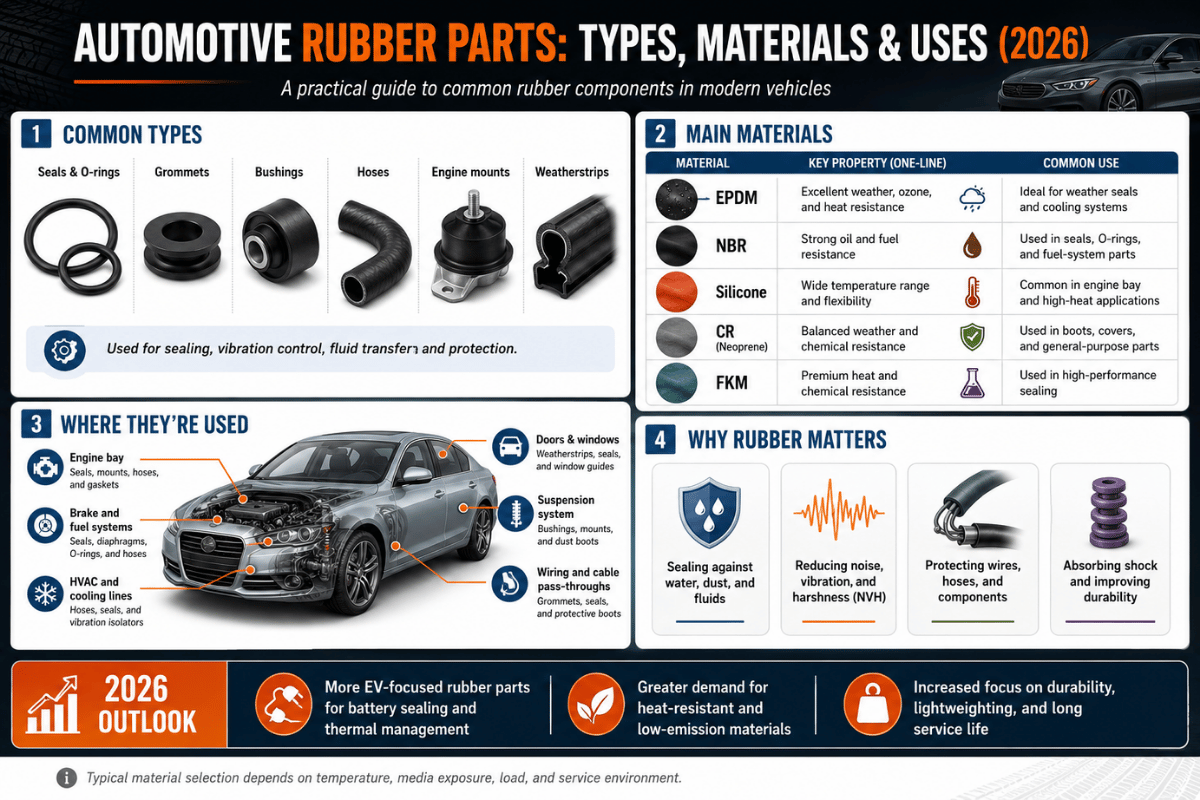
Especificações rápidas: resumo dos elastômeros automotivos
| Envelope temporário de serviço | EPDM -50 a +150°C · NBR -30 a +120°C · Silicone -60 a +250°C · FKM -20 a +200°C |
| Dureza típica | 400 Shore A (mais tarde = vedação, mais difícil = montagens estruturais/empurramentos) |
| Padrão ESPEC | Chamada de linha ASTM D2000/SAE J200; Graus de tolerância dimensional ISO 3302-1 |
| Sistema de qualidade automotiva | 1TP3 T + 1TP4 T, com APQP e PPAP para aprovação de peças OEM/Tier-1 |
O que são peças de borracha automotiva?
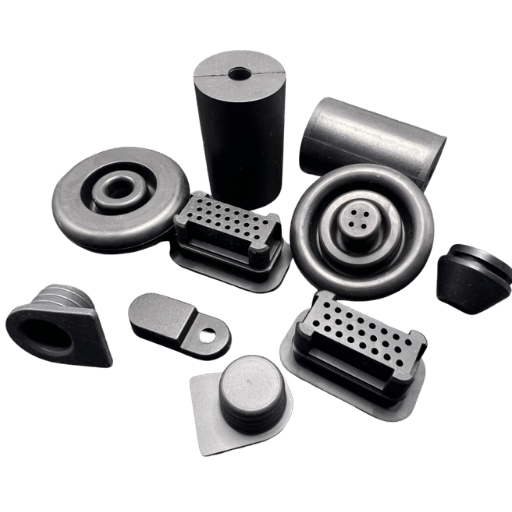
As peças de borracha automotiva são componentes funcionais moldados a partir de borracha natural ou sintética que realizam quatro trabalhos em um veículo: isolar vibração (motores, buchas), vedação contra ar, água e fluidos (tiras climáticas, juntas, anéis de vedação), proteger movendo juntas de sujeira e umidade (Botas CV e poeira) e transportar fluidos (mangueiras de refrigerante, combustível e ar).Um único carro carrega centenas deles, a maioria escondidos e baratos.
O que faz os compradores subirem é que uma parte nominal, digamos um selo “door,” pode ser moldada a partir de compostos muito diferentes, dependendo de onde ele se senta Erre o composto e ele falha rapidamente: um selo 1TP9 T incha em óleo, um selo de nitrila racha na luz solar dentro de uma estação É por isso que a borracha automotiva é especificada para um padrão 1TP8 T D2000, não escolhido por como ele parece.
Como a borracha é um material ajustado em vez de fixo, o nome da peça indica o forma e trabalho, enquanto a família de elastômeros e dureza lhe dizem se ele vai realmente durar Essa divisão, geometria versus composto, é o fio que atravessa o resto deste guia e através de cada peças de borracha automotiva personalizadas programa.
Os 8 tipos principais de peças de borracha automotiva
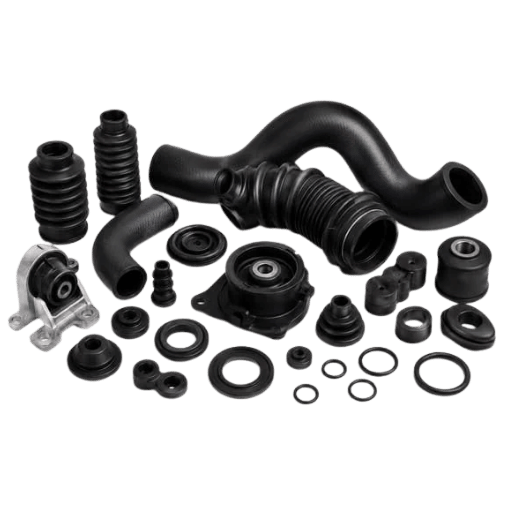
Quase todas as peças de borracha de um veículo se enquadram em uma das oito famílias funcionais Abaixo está o que chamamos de Mapa de peças de borracha automotiva de 8 tipos, emparelhando cada família com onde ela vive, o elastômero de que geralmente é moldada e o modo de falha que realmente termina sua vida útil As desmontagens de prensa comercial descrevem o mesmo grupo dinâmico: barras de amarração, acoplamentos, buchas e montagens de motor, caixa de câmbio e silenciador.
| Parte família | Trabalho | Onde no veículo | Elastômero típico | Modo de falha primário |
|---|---|---|---|---|
| Montagens do motor e da transmissão | Isolar a vibração do trem de força | Entre motor/caixa de câmbio e subquadro | NR, EPDM (ligado borracha-metal) | Corrosão da ligação, flacidez, rasgo |
| Buchas suspensão | Localize braços, absorva o impacto da estrada | Braços de controle, barra oscilante, subquadro | borracha NR/EPDM (PU como atualização) | Rachaduras, desgaste, micção |
| Weatherstrip & selos da porta/janela | Cabine de vedação da água, vento, ruído | Portas, janelas, porta-malas, teto solar | EPDM | Quebra de ozônio, conjunto de compressão |
| Grommets | Proteja e sele passagens de fios/tubos | Firewall, painéis do corpo | EPDM, NBR | Rasgando, endurecendo |
| Juntas | Vede faces correspondentes contra fluido/gás | Tampa da válvula, panela de óleo, líquido de arrefecimento | NBR, silicone, FKM | Conjunto de compressão, ondulação química |
| O-rings | Vedação em ranhuras sob pressão | Combustível, A/C, freio, transmissão | NBR, FKM, EPDM | Conjunto de compressão, extrusão |
| Mangueiras e dutos | Transportar refrigerante, ar, combustível | Radiador, admissão, linhas de combustível | EPDM, silicone, NBR | Envelhecimento térmico, rachaduras |
| CV/botas de pó e fole | Proteja as juntas da sujeira e da água | Juntas CV, direção, choques | CR, silicone, TPE | Rasgando, ataque de ozônio |
| Cabides exaustão | Exaustão do apoio, vibração úmida | Sob chassi | EPDM, NR | Envelhecimento térmico, lacrimejamento |
Associações de parte da família e de materiais compiladas a partir da prática de engenharia de borracha automotiva e descrições de componentes dinâmicos de prensa comercial.
De que são feitas as buchas de suspensão do carro?
A maioria das buchas de suspensão de fábrica, braço de controle, barra oscilante, braço de arrasto e subestrutura, são moldadas em borracha natural ou 1TP9 T e coladas em uma luva de metal, de modo que a borracha funciona em cisalhamento e compressão enquanto as mangas carregam a carga de borracha natural dá alta resiliência e vida à fadiga para conforto de condução; 1TP9 T é escolhido onde a exposição ao ozônio e ao clima é alta.
O poliuretano, a alternativa de reposição, é um material mais rígido com um trade-off diferente, coberto em sua própria seção abaixo Bushings são a família de peças que a maioria dos compradores pesquisa primeiro: buchas de braço de controle sozinho desenhar dezenas de milhares de pesquisas mensais Você pode ver as opções moldadas do 1TP2 T sob buchas e ilhós de borracha.
Materiais de borracha usados em peças automotivas (1TP9 T vs 1TP13 T vs Silicone vs 1TP14 T vs CR)

Cinco famílias de elastômeros cobrem a esmagadora maioria das peças de borracha automotiva. Maneira mais rápida de escolher: leia o Seletor de elastômero automotivo de 5 fatores abaixo em toda a temperatura de serviço, resistência ao clima/ozônio, resistência ao óleo e combustível, faixa de dureza e custo relativo, em seguida, coincidem com a aplicação Os números de temperatura são faixas, não pontos únicos, eles mudam com o sistema de cura, de modo que um 1TP9 T curado com peróxido atinge o topo de sua faixa onde um grau curado com enxofre não.
| Elastomero | Temperatura de serviço | Tempo/ozônio | Óleo/combustível | Dureza | Melhor uso automotivo |
|---|---|---|---|---|---|
| EPDM | -50 a +150°C | Excelente | Pobre | 40 A. | Weatherstrip, ilhós, líquido refrigerante, freio |
| NBR (nitrila) | -30 a +120°C | Pobre | Excelente | 40 A. | Vedações de óleo, mangueira de combustível, juntas |
| Silicone (VMQ) | -60 a +250°C | Excelente | Feira | 30 A | Vedações do compartimento do motor, botas de vela de ignição, sensores |
| FKM (Viton) | -20 a +200°C | Bom | Destaque | 55 A. | Vedações do sistema de combustível, trem de força eletrônico |
| CR (neopreno) | -40 a +120°C | Bom | Moderado | 40 A. | Botas, selos A/C, uso geral |
As faixas cruzaram-se a partir de dados de propriedades do elastômero; os valores variam com o grau e o sistema de cura.1TP9 T atinge +150 °C quando curado com peróxido.
Duas regras pegam a maioria dos compradores: 1TP9 T e óleo nunca se misturam (um selo 1TP9 T incha e falha em contato com óleo de motor ou combustível), e 1TP13 T racha ao ar livre (tem fraca resistência ao ozônio, por isso pertence selado dentro de um sistema, não no corpo) Onde o calor e o combustível se encontram, turbo encanamento, trilhos de combustível modernos de injeção direta e loops térmicos EV, FKM ganha seu prêmio, embora simples NBR mantém o padrão econômico para contato comum com petróleo em aproximadamente 60T's 0% do preço 1TP14. Engelhardt compõe todas as cinco famílias internamente; veja o relacionado Moldagem de borracha EPDM e silicone vs borracha notas materiais.
Que borracha é usada para vedações de portas de automóveis?
As tiras de intempéries da porta, janela e porta-malas do carro são quase sempre 1TP9 T. Essa escolha é ambiental: uma vedação da porta vive do lado de fora, totalmente exposta a UV, ozônio, chuva e oscilações de temperatura, e 1TP9 T resiste a todos os três onde a nitrila iria rachar na superfície dentro de uma estação Também permanece flexível a cerca de - 50 °C, de modo que a porta ainda sela em uma manhã fria.
1TP9 T leva um perfil de esponja espumosa ou densa bem, também, dando a sensação de esforço suave e de baixo fechamento que os compradores esperam Seu único trade-off é a baixa resistência ao óleo, o que é irrelevante em uma porta, mas descarta o momento em que um selo vê combustível ou óleo de motor.
Buchas de borracha versus poliuretano: qual dura mais?
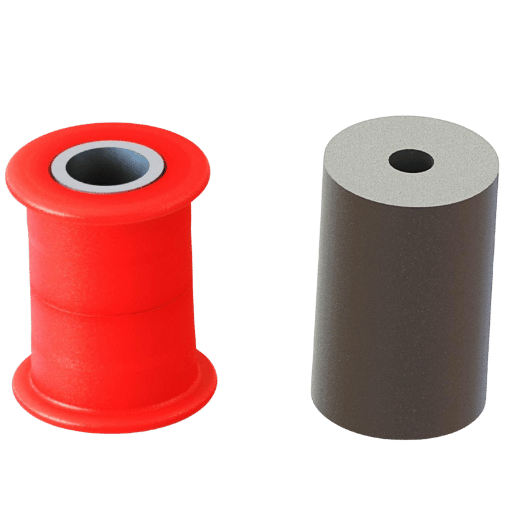
As buchas de poliuretano são vendidas como um “upgrade” reto sobre a borracha de fábrica, e na durabilidade isso é parcialmente verdade, mas em um carro de poliuretano acionado diariamente é nem sempre a melhor escolha. Testadores de suspensão independentes colocam isso claramente: a borracha quase sempre proporciona uma condução mais silenciosa e suave, enquanto o poliuretano aumenta o ruído, a vibração e a aspereza para o motorista.
Uma desmontagem amplamente compartilhada resumiu: poli “não são os joelhos das abelhas em todos os carros em todos os locais de bucha, em muitos casos os rolamentos de borracha ou esféricos são melhores.’ Portanto, a verdadeira questão não é qual dura mais, mas qual compensação você deseja.
Poliuretano onde vence
- Durômetro mais alto, desvia menos, mais afiado, mais preciso manipulação
- Resiste ao óleo, ao sal da estrada e ao desgaste; os proprietários relatam que dura significativamente mais
- Disponível em várias durezas para ajustar a sensação
- Chamada certa para construções de trilhos, reboque e carga pesada
^ Poliuretano captura
- Transmite mais NVH, um passeio mais difícil e mais alto
- Pode guinchar a menos que untado com lubrificante compatível com uretano e untado novamente
- Não colado; ele gira no eixo em vez de flexionar internamente
- Freqüentemente custa aproximadamente 3× da peça de borracha por ~4× de vida útil reivindicada
O enquadramento honesto: buchas de borracha de fábrica são coladas e ajustadas para isolamento de passeio e silêncio; o poliuretano troca esse conforto por rigidez e longevidade Para um motorista diário com prioridade de conforto, a borracha geralmente é a resposta certa; para uma construção de desempenho ou trabalho, o poli ganha sua aspereza De qualquer forma, a bucha tem que ser moldada e colada corretamente, que é a próxima seção.
Como as peças de borracha automotiva são feitas (e ligadas ao metal)
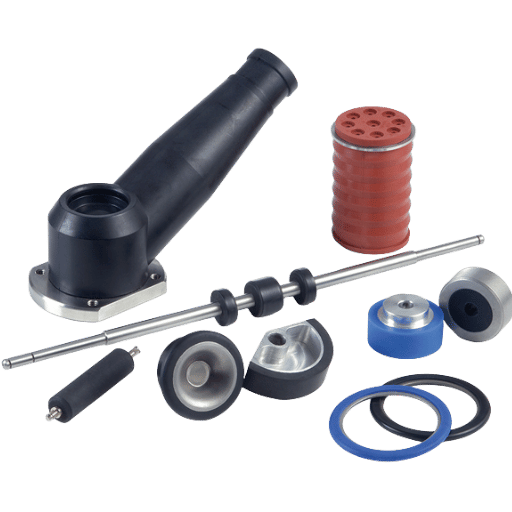
As peças de borracha automotiva são moldadas por um dos três processos, escolhidos por volume e geometria: moldagem compressão (volume baixo a médio, formas simples, menor custo de ferramentas), moldagem transferência (melhor para inserções e controle de flash mais rígido) e moldagem injeção (alto volume, tolerância apertada, cura repetível).
Em nossa própria loja, uma prensa de vulcanização a vácuo de 250 toneladas lida com moldagem sem vazios para peças de vedação, enquanto uma máquina de injeção de borracha de 300 toneladas executa o trabalho de volume de alta consistência, em cerca de 2.000 toneladas de borracha moldada por ano. Essa escolha de processo é uma decisão de custo e qualidade sobre a qual você pode ler mais compressão, transferência e moldagem por injeção.
Mais difícil do que a própria moldagem ligação borracha-metal, a junta co-vulcanizada dentro de cada bucha, montagem e vedação colada Aqui a suposição convencional (escolha o primer e o adesivo certos e a ligação é resolvida) está incompleta Trabalho revisado por pares em interfaces duráveis metal-borracha descobre que a falha dominante em serviço não é a resistência de ligação original, mas a perda de adesão à medida que a corrosão rasteja ao longo da interface borracha-metal. Testes de pulverização de sal em laboratório mostram que a borracha ligada ao aço macio pode falhar em cerca de 25 horas de exposição, uma vez que a interface corroa.
“Nunca assinamos uma peça ligada de borracha a metal apenas com a resistência de tração inicial Nós testamos novamente após o envelhecimento térmico e após o spray de sal, porque a maioria das falhas de ligação em serviço são corrosão rastejando ao longo da interface, não a ligação original”
Engenheiro de Aplicação Sênior, equipe de composição de borracha Engelhardt
Essa prática é o que chamamos de Validação de 3 estágios de ligação borracha-metal: (1) força inicial de tração/descascamento, (2) re-teste após o calor-envelhecimento, e (3) re-teste após a exposição do sal-pulverizador Uma parte que passa somente a fase 1 olha bem no banco e falha no campo A literatura da patente reflete as mesmas prioridades, primers em pó projetados especificamente para a ligação da borracha-metal, e compostos 1TP9 T curados com peróxido desenvolvidos para isoladores de vibração ligados.
Nota de Engenharia
Um rejeito colado não pode ser refeito, uma vez que a borracha é co-vulcanizada no metal mal preparado, a peça é sucata. É por isso que as peças coladas são revisadas quanto à capacidade de moldagem e superfície de ligação antes o ferramental é cortado (uma revisão de desenho DFM-primeiro), e por que os desenhos críticos de ligação devem levar uma chamada de linha 1TP8 T D2000 mais um critério de aceitação de sal-pulverização, não apenas um número de dureza.
Como escolher e especificar a peça de borracha automotiva certa
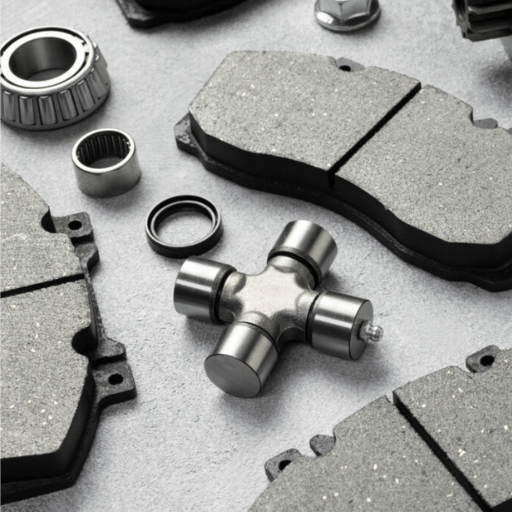
Especificar uma peça de borracha automotiva personalizada se resume a uma decisão de quatro etapas, e fazê-lo em ordem evita que uma RFQ se recupere com perguntas Trabalhe através do ambiente e da mídia, depois da família de elastômeros, depois da dureza, depois da tolerância e certificação, e de uma solicitação vaga como “Preciso de uma vedação de borracha” se torna uma especificação cotável e fabricável que seu moldador pode precificar na primeira passagem.
O seletor de especificações de 4 etapas
- Defina o ambiente e a mídia. Faixa de temperatura, e exposição ao óleo, combustível, líquido refrigerante, ozônio, ou UV. Isto elimina a maioria dos materiais imediatamente.
- Escolha a família de elastômeros. Use o seletor de 5 fatores acima, por exemplo, weatherseal → 1TP9 T, selo de óleo → 1TP13 T, combustível quente → 1TP14 T, calor da baía do motor → silicone.
- Defina a dureza. Mais macio (60 Shore Shore A) para vedação e conformidade mais dura (70 Shore A, 9 Shore A) para buchas estruturais e montagens. A dureza não é toda a história, para uma porcentagem de compressão de vedação e pressão de contato é mais importante do que Shore A sozinho.
- Defina tolerância e certificação. classe dimensional ISO 3302-1, uma chamada de linha 1TP8 T D2000 /SAE J200 para o composto e 1TP3 T + PPAP se for um programa OEM ou Tier-1.
- ✔ Aplicação, mídia e faixa completa de temperatura declarada
- ✔ Família de elastômeros + chamada de linha ASTM D2000 (por exemplo, 2BC517)
- ✔ Dureza alvo em Shore A, com compressão de vedação %, se aplicável
- ✔ Grau de tolerância dimensional (ISO 3302-1) e qualquer critério de ligação/pulverização de sal
- ✔ Volume anual, nível de certificação (1TP3 T/PPAP), e qualquer cor/marcação
Ainda não tem certeza sobre o material ou a dureza? comece com o seletor material borracha automotivo, ou execute seu desenho através do Lista de verificação de prontidão RFQ antes de enviá-lo para fora.
Qualidade, Teste e Certificação para Borracha Automotiva
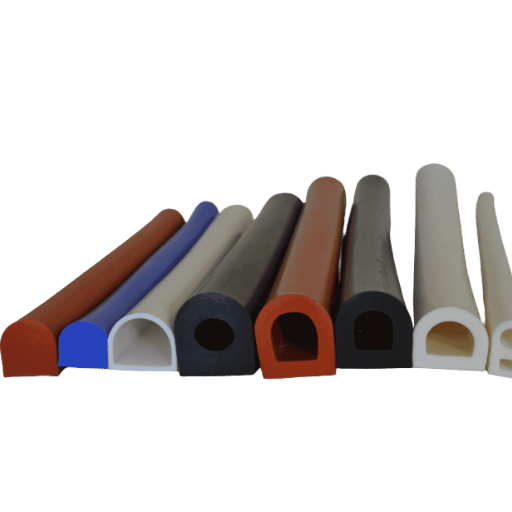
Para trabalhos automotivos, o sistema de qualidade faz parte do produto Na linha de base, isso significa IATF 16949 (o padrão de gerenciamento de qualidade automotiva) em camadas de ISO 9001, com APQP planejamento e a PPAP submissão para aprovar uma peça para produção OEM ou Tier-1. mas logotipos de certificação não são o mesmo que controle, o que realmente mantém as peças consistentes é a verificação do processo por lote, porque as propriedades de um composto de borracha dependem de obter a cura certa todas as vezes.
Em nosso centro de testes interno, cada lote obtém uma verificação de viscosidade Mooney e uma curva de cura do reômetro MDR antes de ser executado, uma análise de dispersão de negro de fumo para confirmar a mistura do enchimento e as peças passam por sal-pulverização, calor-envelhecimento e câmaras de umidade, além de um simulador de vibração de transporte. Isso importa porque os dados de falha o respaldam: estudos de elastômeros de vedação mostram que os indicadores de fim de vida mais fortes são conjunto de compressão, relaxamento de tensão e alongamento na ruptura, com aproximadamente 8590% na falha. Essas são exatamente as propriedades que o controle de cura em lote protege.
Quando você avaliar um fornecedor de peças de borracha automotiva, peça para ver o registro da curva de cura para o seu composto e o relatório de sal-pulverização para qualquer peça colada, não apenas o certificado na parede Uma loja que pode mostrar dados MDR por lote e uma chamada 1TP8 T D2000 para o seu material está controlando as coisas que realmente falham.
O que está mudando nas peças de borracha automotiva (2026 Outlook)
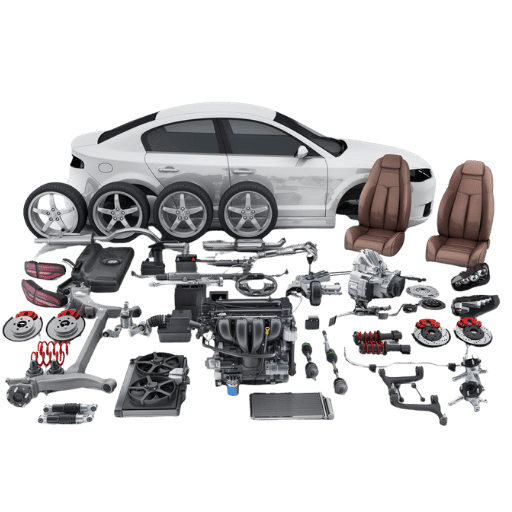
Duas forças estão remodelando o que é especificado, e nenhuma delas é sobre volume. Primeiro, a eletrificação está mudando os requisitos, não removendo as peças. Um EV exclui o calor e a vibração do motor, mas isso também remove o ruído que ele usava para mascarar, de modo que as tolerâncias da bucha e da montagem ficam mais apertadas porque os motoristas agora ouvem o ruído da estrada e do motor que um motor já cobriu.
Ao mesmo tempo, os loops térmicos da bateria e do e-powertrain e os novos refrigerantes empurram a vedação para materiais de temperatura mais alta, como 1TP14 T e silicone, em vez do padrão legado 1TP13 T. Esse sinal é concreto: em março de 2025, a SKF lançou uma linha de vedação projetada para as altas temperaturas e químicas dos veículos elétricos, e com as vendas de EV subindo cerca de 201TP20 T para mais de 20 milhões de unidades em 2025, um quarto de todos os carros novos, a mudança agora é mainstream.
Segundo, a regulação de materiais está apertando o composto, não apenas a peça. A lista de candidatos ao REACH SVHC da Europa atingiu 247 substâncias no início de 2025, e o Artigo 33 obriga os fornecedores a divulgar qualquer substância listada presente acima de 0,11TP20 T em peso, o que empurra constantemente a borracha automotiva para formulações mais limpas e curadas com peróxido 1TP9 T e sem ftalatos Ação prática para um programa de 2026: quando você iniciar uma nova peça, peça ao moldador para confirmar a triagem REACH SVHC no composto e para especificar um elastômero classificado para seu envelope térmico e químico real, não herde uma chamada legada de 1TP13 T por padrão. (Previsões de tamanho de mercado colocam a borracha automotiva em torno de US $ 60 bilhões crescendo perto de 51TP20 T por ano, mas esses números são de fundo; os drivers de design acima são o que alteram suas especificações)
Perguntas frequentes
Quais são as peças de borracha mais comuns em um carro?
Ver Resposta
As peças de borracha automotiva mais comuns são suportes de motor e transmissão, buchas de suspensão, tiras de intempéries e vedações de portas/janelas, ilhós, juntas, anéis de vedação, mangueiras e botas CV ou de poeira. Um único veículo carrega centenas deles. A maioria está escondida e barata, mas cada um isola a vibração, sela um sistema, protege uma junta ou carrega um fluido, de modo que uma falha geralmente aparece como ruído, vazamento, ou intrusão de água e poeira, em vez de uma parte quebrada óbvia.
Que tipo de borracha é usada em peças automotivas?
Ver Resposta
Cinco elastômeros cobrem a maioria das peças de borracha automotiva: 1TP9 T para tiras de intempéries, ilhós e peças de refrigerante; 1TP13 T para vedações de óleo e combustível; silicone para aquecimento do compartimento do motor a cerca de 250 °C; 1TP14 T para combustível quente e produtos químicos; e CR (neoprene) como um polivalente moderado para botas e vedações gerais.
Quanto tempo duram as peças de borracha automotiva?
Ver Resposta
Depende fortemente do material e do ambiente, assim que a vida útil varia de alguns anos à vida do veículo Os assassinos comuns são o ozônio e o UV, que quebram o composto errado ao ar livre, calor-envelhecimento, e conjunto da compressão, o achatamento permanente que impede uma vedação que salta para trás Os estudos amarram o fim-de-vida a aproximadamente 85901TP20 T na compressão ajustada e no alongamento.
As buchas de poliuretano são melhores que a borracha?
Ver Resposta
Nem sempre O poliuretano dura mais e aguça o manuseio, mas transmite mais ruído e aspereza e pode guinchar sem lubrificação regular Para um motorista diário focado no conforto, a borracha de fábrica geralmente é o melhor passeio; o poliuretano se adapta ao desempenho, reboque e construções pesadas.
O que é ligação borracha-metal em autopeças?
Ver Resposta
A ligação borracha-metal co-vulcaniza quimicamente a borracha a uma inserção de metal para que as duas atuem como uma parte, a base de quase todas as buchas, montagem do motor e vedação colada Um primer e adesivo são aplicados ao metal preparado, então a borracha é moldada diretamente sobre ele O risco real não é a resistência de ligação inicial, mas a corrosão rastejando ao longo da interface, de modo que as peças coladas devem ser validadas após o envelhecimento térmico e a pulverização de sal, não apenas em um teste de tração de bancada.
Como escolho um fabricante de peças de borracha automotiva personalizado?
Ver Resposta
Procure a certificação 1TP3 T e 1TP4 T, ferramentas internas e a capacidade de suportar APQP e PPAP para programas OEM. Além dos logotipos, peça evidências de controle de processo: uma curva de cura MDR por lote para seu composto, um relatório de spray de sal para qualquer peça colada e uma chamada de linha 1TP8 T D2000 para o material Um fornecedor que mistura seus próprios compostos e executa seus próprios testes controla as variáveis que realmente causam falhas de campo.
Qual é a diferença entre a borracha 1TP9 T e 1TP13 T?
Ver Resposta
1TP9 T resiste ao ozônio, clima e água, mas não ao petróleo, por isso se adapta a tiras de intempéries e peças de refrigerante. 1TP13 T resiste ao petróleo e ao combustível, mas não ao ozônio, por isso pertence aos selos de óleo dentro de um sistema. Eles estão quase opostos, então trocá-los é um erro caro.
As peças de borracha automotiva são moldadas por injeção?
Ver Resposta
Sim, para componentes de alto volume (a moldagem por moldagem é o processo dominante para ilhós, buchas pequenas e vedações produzidas na casa das centenas de milhares a milhões por ano, graças ao seu tempo de ciclo rápido e ferramentas de múltiplas cavidades. Peças maiores, como tiras de proteção contra intempéries, são normalmente extrudadas e peças de baixo volume ou ligadas por metal, como algumas montagens e buchas, usam com mais frequência moldagem por compressão ou transferência. Veja nosso moldagem por injeção borracha página para detalhes do processo e tolerâncias automotivas típicas.
Sobre Este Guia
As faixas de materiais, modos de falha e prática de validação de ligação neste guia refletem o próprio trabalho de moldagem de peças de borracha automotiva da 1TP2 T, incluindo composição interna de 1TP9 T, 1TP13 T, silicone, 1TP14 T e neoprene, uma prensa de vulcanização a vácuo de 250 toneladas e testes de curva de cura por lote, verificados cruzadamente com padrões publicados e estudos de falha revisados por pares Onde os dados são direcionais (como previsões de tamanho de mercado), já dissemos isso Revisado pela equipe técnica do Engelhardt.
Tem um desenho ou uma peça problemática? obtenha uma cotação sobre peças de borracha automotivas personalizadas moldadas de acordo com suas especificações.
Referências e fontes
- SAE J200 /ASTM D2000, Sistema de Classificação para Materiais de BorrachaSAE Internacional
- Estratégias de engenharia de superfície para interfaces duráveis metal-borrachaJOM (revisado por pares), 2026
- Análise da falha do selo O-Ring sob condições estáticasInstitutos Nacionais de Saúde dos EUA (PMC)
- Riscos e alternativas ao ftalato (REACH)CALCE, Universidade de Maryland
- Reciclagem de Veículos em Fim de Vida: Recuperação de Recursos (contexto REACH)Laboratório Nacional de Argonne
- Global EV Outlook 2026, Resumo ExecutivoAgência Internacional Energia
- Lista de candidatos REACH SVHCAgência Europeia dos Produtos Químicos (ECHA)