
Treten Sie mit Engelhardt in Kontakt


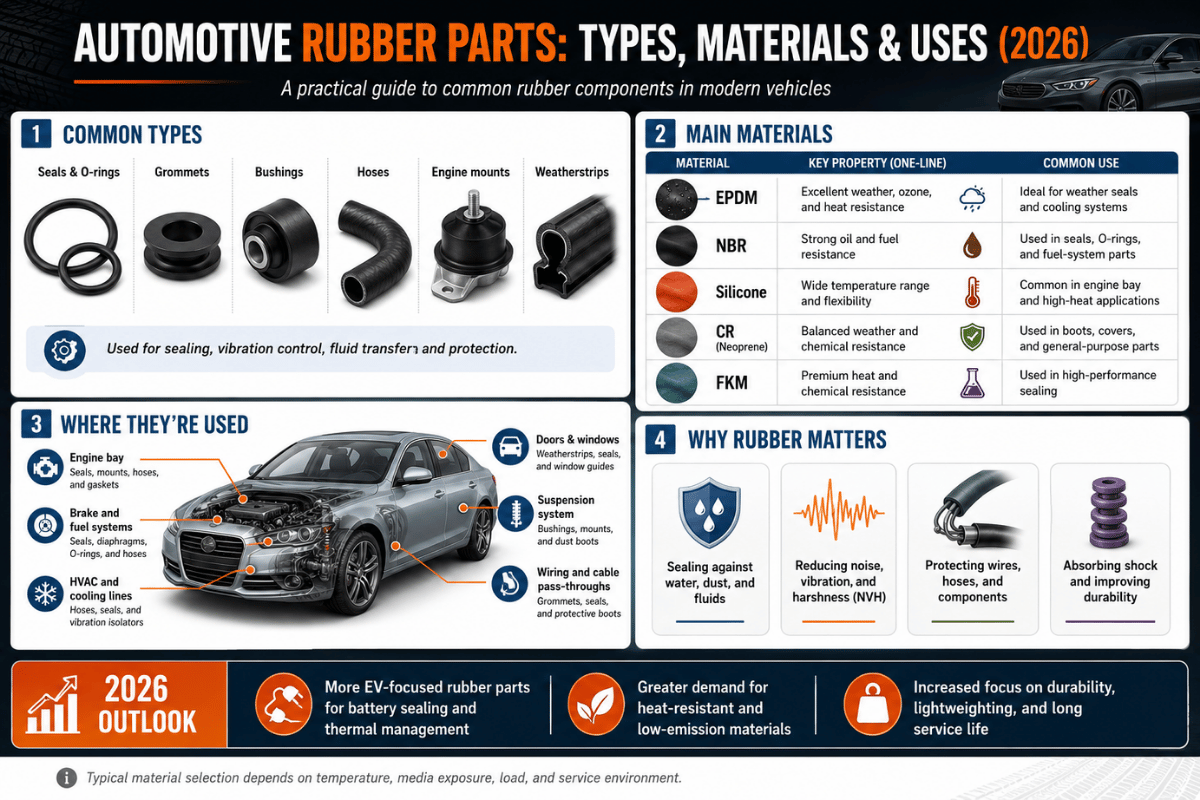
Schnelle Spezifikationen: Automobil-Elastomere auf einen Blick
| Service-Temp-Umschlag | EPDM -50 bis +150°C · NBR -30 bis +120°C · Silikon -60 bis +250°C · FKM -20 bis +200°C |
| Typische Härte | 40 –90 Shore A (weicher = abdichtend, härter = Strukturhalterungen/-auflagen) |
| Spec-standard | ASTM D2000 / SAE J200-Leitungsaufruf; Maßtoleranzgrade ISO 3302-1 |
| Automobil Qualitätssystem | 1TP3 T + 1TP4 T, mit APQP und PPAP für die OEM/Tier-1-Teile-Zulassung |
Was sind Kfz-Gummiteile?
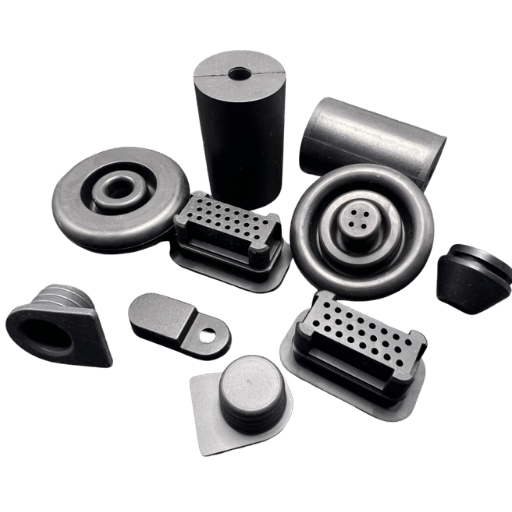
Automobilgummi-Teile sind funktionale Komponenten aus Natur - oder Synthesekautschuk geformt, die vier Aufgaben in einem Fahrzeug erledigen: Vibration isolieren (Motorhalterungen, Buchsen), Dichtung gegen Luft, Wasser und Flüssigkeiten (Wetterstreifen, Dichtungen, O-Ringe), Schützen Bewegliche Verbindungen aus Schmutz und Feuchtigkeit (CV- und Staubstiefel) und Fluide transportieren (Kühlmittel, Kraftstoff und Luftschläuche) Ein einzelnes Auto trägt Hunderte davon, die meisten versteckt und kostengünstig.
Was Käufer auf die Palme bringt, ist, dass ein Nennteil, sagen wir eine “Türversiegelung” aus sehr unterschiedlichen Verbindungen geformt werden kann, je nachdem, wo es sitzt. Versetzen Sie die Verbindung falsch und sie versagt schnell: Eine 1TP9 T-Dichtung quillt in Öl auf, eine Nitrilversiegelung reißt innerhalb einer Saison im Sonnenlicht. Deshalb wird Automobilkautschuk nach einem 1TP8 T D2000-Standard spezifiziert, nicht nach seinem Aussehen.
Da Gummi ein abgestimmtes Material und kein festes ist, verrät Ihnen der Teilename Form und Beruf, Während die Elastomerfamilie und die Härte Ihnen sagen, ob es tatsächlich hält Diese Spaltung, Geometrie versus Verbindung, ist der Faden, der durch den Rest dieser Führung und durch jede verläuft Kundenspezifische Automobilgummi-Teile Programm.
Die 8 Kerntypen von Automobilgummiteilen
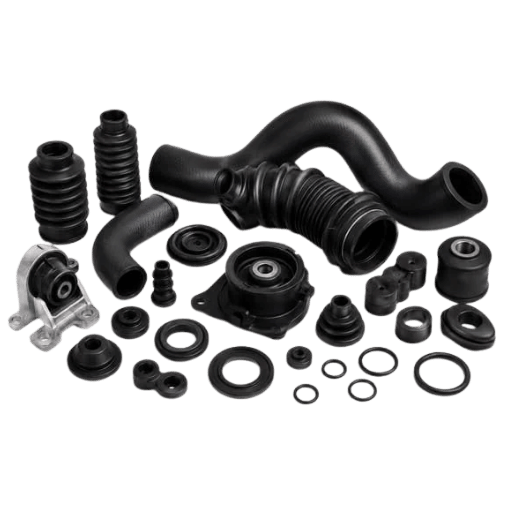
Fast jedes Gummiteil eines Fahrzeugs fällt in eine von acht Funktionsfamilien Im Folgenden nennen wir die Karte der 8-Typ-Automobilgummi-Teile, „Paarung jeder Familie mit ihrem Wohnort, dem Elastomer, aus dem sie normalerweise geformt wird, und dem Fehlermodus, der tatsächlich ihre Lebensdauer beendet. Trade-Press-Teardowns beschreiben dieselbe dynamische Gruppe: Zugstangen, Kupplungen, Buchsen sowie Motor-, Getriebe- und Schalldämpferhalterungen.
| Teilfamilie | Job | Wo am Fahrzeug | Typisches Elastomer | Primärer Fehlermodus |
|---|---|---|---|---|
| Motor- und Getriebelafetten | Isolieren Sie die Vibration des Antriebsstrangs | Zwischen Motor/Getriebe und Hilfsrahmen | NR, 1TP9 T (Gummi-zu-Metall-gebunden) | Verbundkorrosion, Durchhängen, Reißen |
| Aufhängungsbuchsen | Ortung der Arme, Absorption von Straßenaufprall | Steuerarme, Stabilisator, Hilfsrahmen | NR/1TP9 T-Gummi (PU als Upgrade) | Risse, Abnutzung, Entleerung |
| Weatherstrip & Tür-/Fensterdichtungen | Dichtungskabine von Wasser, Wind, Lärm | Türen, Fenster, Kofferraum, Schiebedach | EPDM | Ozonrissbildung, Kompressionssatz |
| Ösen | Durchgänge von Drähten/Rohren schützen und abdichten | Firewall, Karosserieteile | EPDM, NBR | Reißen, Härten |
| Dichtungen | Passende Flächen gegen Flüssigkeit/Gas abdichten | Ventildeckel, Ölwanne, Kühlmittel | 1TP13 T, Silikon, FKM | Kompressionssatz, chemische Schwellung |
| O-ringe | Unter Druck in Rillen abdichten | Kraftstoff, A/C, Bremse, Getriebe | NBR, FKM, EPDM | Kompressionssatz, Extrusion |
| Schläuche & Kanäle | Kühlmittel, Luft, Treibstoff transportieren | Kühler, Ansaug, Kraftstoffleitungen | 1TP9 T, Silikon, NBR | Wärmealterung, Rissbildung |
| CV/Staubstiefel & Balg | Schonen Sie Fugen vor Schmutz und Wasser | CV-Gelenke, Lenkung, Stöße | CR, Silikon, TPE | Reißen, Ozonangriff |
| Abgasaufhänger | Stützauspuff, feuchte Vibration | Unter Fahrgestell | EPDM, NR | Wärmealterung, Reißen |
Teilfamilien- und Materialverbände, zusammengestellt aus der Praxis des Automobilgummibaus und Beschreibungen dynamischer Komponenten der Fachpresse.
Woraus bestehen Autoaufhängungsbuchsen?
Die meisten werkseitigen Aufhängungsbuchsen, Steuerarm, Schwingstange, Hinterarm und Hilfsrahmen, sind aus Naturkautschuk oder 1TP9 T geformt und zu einer Metallhülse verbunden, sodass der Gummi bei Scherung und Kompression arbeitet, während die Hülsen die Last tragen. Naturkautschuk sorgt für eine hohe Belastbarkeit und Ermüdungslebensdauer für Fahrkomfort; EPDM wird dort gewählt, wo die Ozon- und Wetterbelastung hoch ist.
Polyurethan, die Aftermarket-Alternative, ist ein steiferes Material mit einem anderen Kompromiss, das in einem eigenen Abschnitt unten behandelt wird Buchsen sind der Teil, den die meisten Käufer zuerst erforschen: Kontrollarmbuchsen allein zeichnen Zehntausende von monatlichen Suchanfragen Sie können die geformten Optionen von Engelhardt unter sehen Gummibuchsen und Ösen.
In Automobilteilen verwendete Gummimaterialien (1TP9 T vs. 1TP13 T vs. Silikon vs. 1TP14 T vs. CR)

Fünf Elastomerfamilien decken die überwältigende Mehrheit der Automobilgummiteile ab. Schnellste Wahl: Lesen Sie die 5-Faktor-Automobil-Elastomer-Selektor Unterhalb über die Betriebstemperatur, Wetter-/Ozonbeständigkeit, Öl- und Kraftstoffbeständigkeit, Härtebereich und relative Kosten, dann passen Sie zur Anwendung an. Temperaturwerte sind Bereiche, keine einzelnen Punkte, sie verschieben sich mit dem Aushärtungssystem, sodass ein peroxidgehärtetes EPDM die Spitze seines Bandes erreicht, wo dies bei einer schwefelgehärteten Sorte nicht der Fall ist.
| Elastomer | Service-temp | Wetter/ozone | Öl/brennstoff | Härte | Beste Automobilnutzung |
|---|---|---|---|---|---|
| EPDM | -50 bis +150°C | Ausgezeichnet | Arm | 40 –90 A | Weatherstrip, Ösen, Kühlmittel, Bremse |
| NBR (Nitril) | -30 bis +120°C | Arm | Ausgezeichnet | 40 –90 A | Öldichtungen, Kraftstoffschlauch, Dichtungen |
| Silikon (VMQ) | -60 bis +250°C | Ausgezeichnet | Messe | 30 –80 A | Motorraumdichtungen, Zündkerzenstiefel, Sensoren |
| FKM (Viton) | -20 bis +200°C | Gut | Herausragend | 55 –90 A | Dichtungen für Kraftstoffsysteme, E-Powertrain |
| CR (Neopren) | -40 bis +120°C | Gut | Mäßig | 40 –80 A | Stiefel, A/C-Siegel, Allzweck |
Bereiche, die aus Elastomereigenschaftsdaten abgeglichen werden; Die Werte variieren je nach Qualität und Aushärtungssystem. EPDM erreicht +150°C, wenn Peroxid ausgehärtet wird.
Zwei Regeln fangen die meisten Käufer: 1TP9 T und Öl vermischen sich nie (eine 1TP9 T-Dichtung quillt auf und versagt bei Kontakt mit Motoröl oder Kraftstoff), und 1TP13 T reißt im Freien (es hat eine schlechte Ozonbeständigkeit, gehört also abgedichtet in ein System, nicht auf die Karosserie).Wo sich Wärme und Kraftstoff treffen, Turbo-Lot, moderne Direkteinspritz-Kraftstoffschienen, und EV-Wärmeschleifen, FKM Verdient seine Prämie, während es schlicht ist NBR Bleibt der kosteneffiziente Standard für den normalen Ölkontakt bei etwa 60 –701 TP20 T des Preises von 1TP14 T. Engelhardt verbindet alle fünf Familien intern; siehe die zugehörigen EPDM-Gummiformteil und Silikon gegen Gummi Materialnotizen.
Welcher Gummi wird für Autotürdichtungen verwendet?
Die Wetterstreifen für Autotüren, Fenster und Kofferraum sind fast immer 1 TP9 T. Diese Wahl ist umweltbedingt: Eine Türdichtung lebt draußen, ist vollständig UV, Ozon, Regen und Temperaturschwankungen ausgesetzt, und 1TP9 T widersteht allen dreien, bei denen Nitril innerhalb einer Saison an der Oberfläche reißen würde Außerdem bleibt es flexibel bis etwa -50°C, sodass die Tür an einem kalten Morgen immer noch abdichtet.
EPDM nimmt auch ein geschäumtes oder dichtes Schwammprofil gut und verleiht den Käufern ein weiches, schliessungsarmes Gefühl. Sein einziger Kompromiss ist die schlechte Ölbeständigkeit, die bei einer Tür irrelevant ist, sie aber ausschließt, sobald ein Siegel Kraftstoff oder Motoröl sieht.
Gummi vs. Polyurethanbuchsen: Was hält länger?
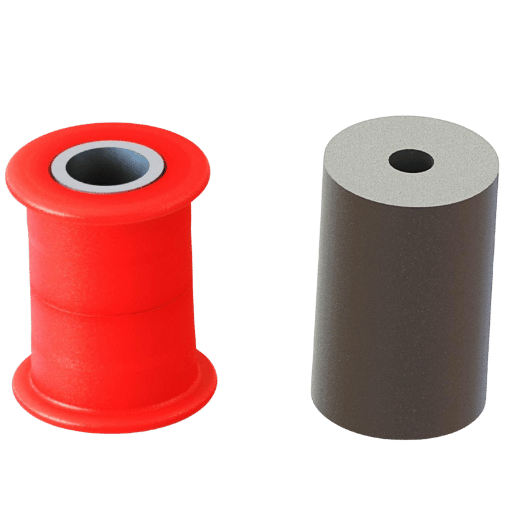
Polyurethan-Buchsen werden als gerades “Upgrade” über Werksgummi verkauft, und auf Haltbarkeit stimmt das teilweise, bei einem Auto mit Tagesantrieb hingegen schon Nicht immer Die bessere Wahl. Unabhängige Aufhängungstester sagen es deutlich: Gummi sorgt fast immer für eine leisere und sanftere Fahrt, während Polyurethan Lärm, Vibrationen und Härte für den Fahrer erhöht.
Ein weitverbreiteter Teardown brachte es auf den Punkt: poly “ist nicht in jedem Auto an jedem Buchsenplatz die Knie der Bienen, in vielen Fällen sind Gummi - oder Kugellager besser’ Die eigentliche Frage ist also nicht, was länger hält, sondern welchen Kompromiss man will.
Polyurethan, wo es gewinnt
- Höherer Durometer, weniger auslenkt, schärfer, präzisere Handhabung
- Beständig gegen Öl, Streusalz und Abnutzung; Besitzer berichten, dass es deutlich länger hält
- Erhältlich in mehreren Härten, um das Gefühl abzustimmen
- Richtiges Rufen nach Gleis-, Schlepp- und Schwerlastbau
Polyurethan fangen
- Überträgt mehr NVH, eine härtere, lautere Fahrt
- Kann quietschen, es sei denn, es wird mit urethanverträglichem Gleitmittel eingefettet und erneut gefettet
- Nicht verklebt; Es dreht sich auf der Welle, anstatt sich nach innen zu biegen
- Kostet oft etwa 3 ̄NF, das Gummiteil für ~4 ̄F.R.E.R. hat Leben gefordert
Der ehrliche Rahmen: Werksgummibuchsen sind verklebt und auf Fahrtrennung und Ruhe abgestimmt; Polyurethan handelt mit diesem Komfort für Steifigkeit und Langlebigkeit Für einen tagesaktuellen Komfortfahrer ist Gummi normalerweise die richtige Antwort; Für einen Performance- oder Arbeitsaufbau verdient Poly seine Härte. So oder so muss die Buchse richtig geformt und verklebt werden, was der nächste Abschnitt ist.
Wie Autogummi-Teile hergestellt (und mit Metall verbunden) werden
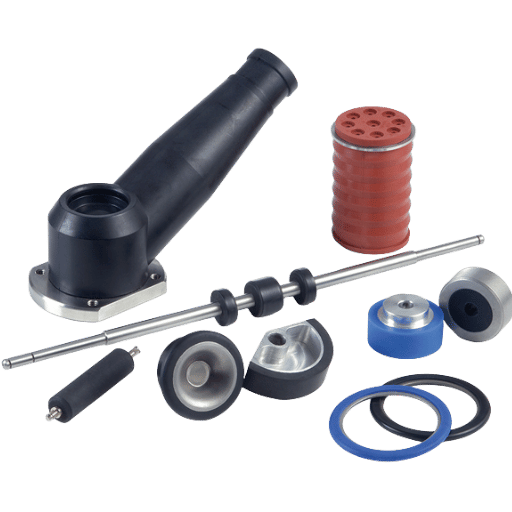
Automobilgummiteile werden nach einem von drei Verfahren geformt, die nach Volumen und Geometrie ausgewählt werden: Formpressen (geringes bis mittleres Volumen, einfache Formen, niedrigste Werkzeugkosten), Transferformen (besser für Einsätze und engere Blitzsteuerung) und Spritzgießen (hohes Volumen, enge Toleranz, wiederholbare Aushärtung).
In unserem eigenen Geschäft übernimmt eine 250-Tonnen-Vakuumvulkanisationspresse das voidfreie Formen zum Verschließen von Teilen, während eine 300-Tonnen-Gummispritzmaschine die hochkonsistente Volumenarbeit über etwa 2.000 Tonnen Formgummi pro Jahr durchführt. Diese Prozesswahl ist eine Kosten- und Qualitätsentscheidung, über die Sie weiterlesen können unter Kompressions-, Transfer- und Spritzguss.
Härter als das Formteil selbst ist Gummi-metall-bindung, „die kovulkanisierte Verbindung in jeder Buchse, Halterung und verbundenen Dichtung. Hier ist die herkömmliche Annahme (pick the right Primer and Adhäsive and the Bond is Solved) unvollständig. Peer-Reviewte Arbeiten an dauerhaften Metall-Gummi-Grenzflächen stellen fest, dass der dominierende Ausfall im Betrieb nicht die ursprüngliche Bindungsfestigkeit ist, sondern Haftungsverlust, da Korrosion entlang der Gummi-Metall-Grenzfläche kriecht. Labor-Salzsprühtests zeigen, dass mit Weichstahl verklebter Gummi in etwa 25 Stunden nach der Einwirkung versagen kann, sobald diese Grenzfläche korrodiert.
“Wir unterzeichnen niemals ein Gummi-zu-Metall-gebundenes Teil allein auf die anfängliche Zugfestigkeit Wir testen es nach dem Wärmealterung und nach dem Salzsprühen erneut, weil die meisten Verbindungsausfälle im Betrieb Korrosion sind, die entlang der Grenzfläche kriecht, nicht die ursprüngliche Bindung.”
Leitender Anwendungsingenieur, Engelhardt-Gummimischungsteam
Diese Praxis nennen wir das 3-stufige Validierung der Gummi-zu-Metall-Bindung(1) anfängliche Zug-/Schälfestigkeit, (2) erneuter Test nach dem Wärmealterung und (3) erneuter Test nach Salzsprühbelichtung Ein Teil, der nur Stufe 1 passiert, sieht auf der Bank gut aus und versagt im Feld Die Patentliteratur spiegelt die gleichen Prioritäten wider, pulverförmige Grundierungen, die speziell für die Gummi-Metall-Bindung entwickelt wurden, und peroxidgehärtete EPDM-Verbindungen, die für gebundene Vibrationsisolatoren entwickelt wurden.
Technische Anmerkung
Ein gebundener Ausschuss kann nicht wieder hergestellt werden. Sobald Gummi mit dem falsch präparierten Metall covulkanisiert ist, handelt es sich bei dem Teil um Schrott. Deshalb werden die gebundenen Teile auf Formbarkeit und Verbindungsoberfläche überprüft Vorher Die Werkzeuge werden gekürzt (eine DFM-erste Ziehungsüberprüfung) und warum bindungskritische Zeichnungen einen ASTM D2000-Zeilenaufruf plus ein Salzsprühakekriterium und nicht nur eine Härtezahl enthalten sollten.
So wählen und spezifizieren Sie das richtige Automobilgummiteil
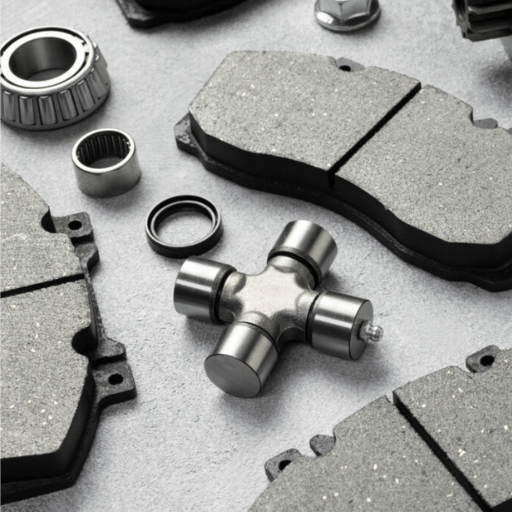
Die Angabe eines kundenspezifischen Automobilgummiteils läuft auf eine vierstufige Entscheidung hinaus, und wenn man es in Ordnung bringt, verhindert man, dass ein RFQ mit Fragen zurückspringt. Arbeiten Sie durch Umgebung und Medien, dann die Elastomerfamilie, dann Härte, dann Toleranz und Zertifizierung und eine vage Anfrage wie “Ich brauche eine Gummidichtung”wird zu einer zitierfähigen, herstellbaren Spezifikation, die Ihr Former im ersten Durchgang preisgeben kann.
Der 4-stufige Spec Selector
- Definieren Sie die Umgebung und die Medien. Temperaturbereich und Exposition gegenüber Öl, Kraftstoff, Kühlmittel, Ozon oder UV. Dadurch werden die meisten Materialien sofort eliminiert.
- Wählen Sie die Elastomerfamilie. Verwenden Sie den 5-Faktor-Selektor oben, z.B. Wetterdichtung → 1TP9 T, Öldichtung → 1TP13 T, heißer Kraftstoff → 1TP14 T, Motor-Bay-Wärme → Silikon.
- Stellen Sie die Härte ein. Weicher (40 –60 Shore A) zum Abdichten und Konformen, härter (70 – 90 Shore A) für Strukturbuchsen und Halterungen Denken Sie daran, dass Härte nicht die ganze Geschichte ist, denn für eine Dichtung sind Druckprozentsatz und Kontaktdruck wichtiger als Shore A allein.
- Toleranz und Zertifizierung festlegen. Dimensionsklasse ISO 3302-1, ein ASTM D2000 / SAE J200-Leitungsanruf für die Verbindung und IATF 16949 + PPAP, wenn es sich um ein OEM- oder Tier-1-Programm handelt.
- ✔ Anwendung, Medium und vollständiger Temperaturbereich angegeben
- ✔ Elastomerfamilie + 1TP8 T D2000-Leitungsaufruf (z.B. 2BC517)
- ✔ Zielhärte in Shore A, ggf. mit Dichtungsquetschung %
- ✔ Maßtoleranzgrad (ISO 3302-1) und jedes Bindungs-/Salzsprühkriterium
- ✔ Jahresvolumen, Zertifizierungsniveau (1TP3 T / PPAP) und jede Farbe/Markierung
Noch nicht sicher auf material oder härte? beginnen mit der Kfz-Gummimaterialwähler, Oder führen Sie Ihre Zeichnung durch Checkliste für die RFQ-Bereitschaft Vor dem Versand.
Qualität, Prüfung und Zertifizierung für Automobilkautschuk
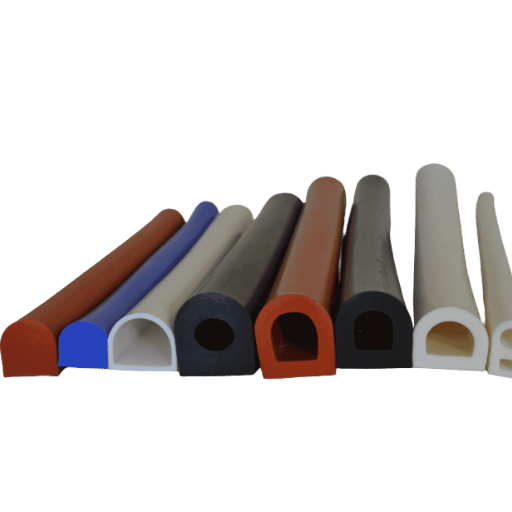
Für die automobile Arbeit ist das Qualitätssystem Teil des Produktes Zu Studienbeginn bedeutet das IATF 16949 (der Qualitätsmanagementstandard für Kraftfahrzeuge), geschichtet auf ISO 9001, mit APQP Planung und ein PPAP Einreichung zur Genehmigung eines Teils für die OEM- oder Tier-1-Produktion. Zertifizierungslogos sind jedoch nicht dasselbe wie Kontrolle. Was die Teile tatsächlich konsistent hält, ist die Überprüfung pro Charge, da die Eigenschaften einer Gummimischung davon abhängen, dass jedes Mal die richtige Aushärtung erfolgt.
In unserem hauseigenen Testzentrum erhält jede Charge eine Mooney-Viskositätsprüfung und eine MDR-Rheometer-Aushärtungskurve, bevor sie läuft, eine Kohlenstoff-Schwarz-Dispersionsanalyse zur Bestätigung der Füllstoffmischung, und Teile durchlaufen Salzsprühstrahl, Wärmealterung und Feuchtigkeit Kammern plus ein Transport-Vibrationssimulator Das ist wichtig, denn die Fehlerdaten bestätigen es: Studien an Dichtungselastomeren zeigen, dass die stärksten Indikatoren am Ende der Lebensdauer Druckeinstellung, Spannungsrelaxation und Dehnung bei Bruch sind, mit etwa 85901 TP20 T Änderung bei Ausfall. Das sind genau die Eigenschaften, die die die Kontrolle der Batch-Aushärtung schützt.
Wenn Sie einen Lieferanten von Automobilgummiteilen bewerten, fragen Sie nach dem Aushärtungskurvenprotokoll für Ihre Verbindung und dem Salzsprühbericht für jedes gebundene Teil, nicht nur nach dem Zertifikat an der Wand. Ein Shop, der MDR-Daten pro Charge und einen ASTM D2000-Call-Out für Ihr Material anzeigen kann, kontrolliert die Dinge, die tatsächlich ausfallen.
Was sich bei Automobilgummiteilen verändert (Ausblick 2026)

Zwei Kräfte formen das, was angegeben wird, um, und bei beiden geht es nicht um das Volumen. Erstens, Durch die Elektrifizierung ändern sich die Anforderungen, nicht durch die Entfernung der Teile. Ein Elektrofahrzeug löscht die Hitze und Vibration des Motors, beseitigt aber auch die Geräusche, die es früher maskierte, sodass die Toleranzen für Buchsen und Halterungen enger werden, da die Fahrer jetzt Straßen- und Motorgeräusche hören, die ein Motor einst abgedeckt hatte.
Gleichzeitig treiben Batterie- und E-Powertrain-Thermalschleifen und neue Kühlmittel die Abdichtung in Richtung höhertemperaturiger Materialien wie 1TP14 T und Silikon anstelle des alten 1TP13 T-Standard. Dieses Signal ist konkret: Im März 2025 brachte SKF eine Dichtungslinie auf den Markt, die für die hohen Temperaturen und Chemikalien von Elektrofahrzeugen konzipiert ist, und da der Elektrofahrzeugabsatz im Jahr 2025 um etwa 201 TP20 T auf über 20 Millionen Einheiten anstieg, ein Viertel aller Neuwagen, ist der Wandel mittlerweile Mainstream.
Zweitens, Die Materialregulierung verschärft die Verbindung, nicht nur das Teil. Die europäische REACH SVHC-Kandidatenliste erreichte Anfang 2025 247 Stoffe, und Artikel 33 verpflichtet Lieferanten, alle aufgeführten Stoffe offenzulegen, die über 0,11 TP20 T nach Gewicht vorhanden sind, was Automobilkautschuk stetig in Richtung saubererer, peroxidgehärteter 1TP9 T- und phthalatfreier Formulierungen drängt. Praktische Maßnahmen für ein Programm 2026: Wenn Sie ein neues Teil starten, bitten Sie Ihren Former, das REACH SVHC-Screening auf der Verbindung zu bestätigen und ein Elastomer zu spezifizieren, das für Ihre tatsächliche thermische und chemische Hülle ausgelegt ist. Erben Sie standardmäßig keinen alten 1TP133 TP-Ka-Ka-Vorhersagen gehen davon aus, dass die Auto-Spezifikationen um etwa 50-T-Hintergrund-T-T-Spezifikationen über diesen 50-Hintergrund liegen.
Häufig gestellte Fragen
Was sind die häufigsten Gummiteile in einem Auto?
Antwort anzeigen
Die gebräuchlichsten Automobilgummiteile sind Motor - und Getriebehalterungen, Aufhängungsbuchsen, Wetterstreifen und Tür-/Fensterdichtungen, Ösen, Dichtungen, O-Ringe, Schläuche, CV - oder Staubstiefel Ein einzelnes Fahrzeug trägt Hunderte davon Die meisten sind versteckt und kostengünstig, aber jedes isoliert Vibration, Dichtungen, ein System, schützt ein Fluidgelenk oder trägt ein Fluid, so dass ein Ausfall normalerweise als Geräusch, ein Leck, oder Wasser und Staubeinbruch und nicht als offensichtliches gebrochenes Teil angezeigt wird.
Welche Art von Gummi wird in Automobilteilen verwendet?
Antwort anzeigen
Fünf Elastomere decken die meisten Automobilgummiteile ab: 1TP9 T für Wetterstreifen, Ösen und Kühlmittelteile; 1TP13 T für Öl- und Kraftstoffdichtungen; Silikon für Motorraumwärme auf etwa 250°C; FKM für heißen Kraftstoff und Chemikalien; und CR (Neopren) als moderates Allrounder für Stiefel und allgemeine Dichtungen.
Wie lange halten Kfz-Gummiteile?
Antwort anzeigen
Es hängt stark von Material und Umgebung ab, so dass die Lebensdauer von einigen Jahren bis zur Lebensdauer des Fahrzeugs reicht. Häufige Killer sind Ozon und UV, die im Freien die falsche Verbindung knacken, Wärmealterung und Druckverformung, die dauerhafte Abflachung, die eine Dichtung stoppt, die zurückspringt Studien binden das Ende der Lebensdauer an etwa 85901TP20 T Änderung des Drucksatzes und der Dehnung.
Sind Polyurethan-Buchsen besser als Gummi?
Antwort anzeigen
Nicht immer. Polyurethan hält länger und schärft das Handling, aber es überträgt mehr Lärm und Härte und kann ohne regelmäßiges Schmieren quietschen Für einen komfortorientierten täglichen Fahrer ist Werksgummi normalerweise die bessere Fahrt; Polyurethan passt zu Leistung, Schleppen und Hochleistungskonstruktionen.
Was ist Gummi-Metall-Klebung in Autoteilen?
Antwort anzeigen
Durch die Gummi-Metall-Bindung wird Gummi chemisch kovulkanisiert, sodass beide als ein Teil fungieren, die Grundlage für fast jede Buchse, Motorhalterung und Verbunddichtung. Eine Grundierung und ein Klebstoff werden auf das vorbereitete Metall aufgetragen, dann wird Gummi direkt darauf geformt. Das eigentliche Risiko besteht nicht in der anfänglichen Haftfestigkeit, sondern im Kriechen von Korrosion entlang der Grenzfläche. Daher sollten gebundene Teile nach dem Heißalter und Salzsprühen validiert werden, nicht nur bei einem Prüfstandsstreiftest.
Wie wähle ich einen Hersteller von kundenspezifischen Automobilgummiteilen aus?
Antwort anzeigen
Suchen Sie nach 1TP3 T - und 1TP4 T-Zertifizierung, internen Werkzeugen und der Möglichkeit, APQP und PPAP für OEM-Programme zu unterstützen Über die Logos hinaus, fragen Sie nach Nachweisen der Prozesskontrolle: eine MDR-Härtungskurve pro Charge für Ihre Verbindung, ein Salz-Spray-Bericht für jedes gebundene Teil, und ein 1TP8 T D2000-Leitungsaufruf für das Material Ein Lieferant, der seine eigenen Verbindungen mischt und seine eigenen Tests durchführt, kontrolliert die Variablen, die tatsächlich Feldausfälle verursachen.
Was ist der Unterschied zwischen 1TP9 T und 1TP13 T Gummi?
Antwort anzeigen
1TP9 T widersteht Ozon, Wetter und Wasser, aber nicht Öl, so passt es zu Wetterstreifen und Kühlmittelteilen. 1TP13 T widersteht Öl und Kraftstoff, aber nicht Ozon, also gehört es in Öldichtungen innerhalb eines Systems Sie sind nahe aneinander, so dass ein Austausch ein kostspieliger Fehler ist.
Werden Automobilgummiteile spritzgegossen?
Antwort anzeigen
Ja, für hochvolumige Komponenten ist das Spritzgießen für Teile der dominierende Prozess wie Ösen kleine Buchsen, und Dichtungen produziert in den Hunderttausenden bis Millionen pro Jahr, dank seiner schnellen Zykluszeit und Multi-Cavity-Werkzeug Größere Teile wie Wetterstreifen werden typischerweise extrudiert, und niedrigvolumige oder metallgebundene Teile wie einige Halterungen und Buchsen verwenden häufiger Kompressions- oder Transferformen. Sehen Sie sich unsere an Gummi-Spritzguss Seite für Prozessdetails und typische Automobiltoleranzen.
Über diesen Leitfaden
Die Materialbereiche, Fehlermodi und die Praxis der Bindungsvalidierung in diesem Leitfaden spiegeln die eigenen Arbeitsformteile von Engelhardt für Automobilkautschukteile wider, einschließlich der hauseigenen Compoundierung von EPDM, NBR, Silikon, FKM und Neopren, einer 250-Tonnen-Vakuumvulkanisationspresse, und Tests der Aushärtungskurve pro Charge, abgeglichen mit veröffentlichten Standards und von Experten begutachteten Fehlerstudien. Wenn die Daten richtungsweisend sind (z. B. Marktgrößenprognosen), haben wir dies vom technischen Team von Engelhardt überprüft.
Haben Sie eine Zeichnung oder ein Problemteil? Holen Sie sich ein Angebot für maßgeschneiderte Automobilgummiteile, die nach Ihren Spezifikationen geformt sind.
Referenzen und Quellen
- SAE J200 / ASTM D2000, Klassifizierungssystem für GummimaterialienSAE International
- Oberflächentechnische Strategien für langlebige Metall-Gummi-SchnittstellenJOM (Peer-reviewt), 2026
- Analyse des Versagens der O-Ring-Dichtung unter statischen BedingungenUS-amerikanische National Institutes of Health (PMC)
- Phthalatrisiken und -alternativen (REACH)CALCE, Universität Maryland
- End-of-Life-Fahrzeugrecycling: Ressourcenwiederherstellung (REACH-Kontext)Argonne National Laboratory
- Global EV Outlook 2026, ZusammenfassungInternationale Energieagentur
- REACH SVHC-KandidatenlisteEuropäische Chemikalienagentur (ECHA)