
Entre em Contato com Engelhardt


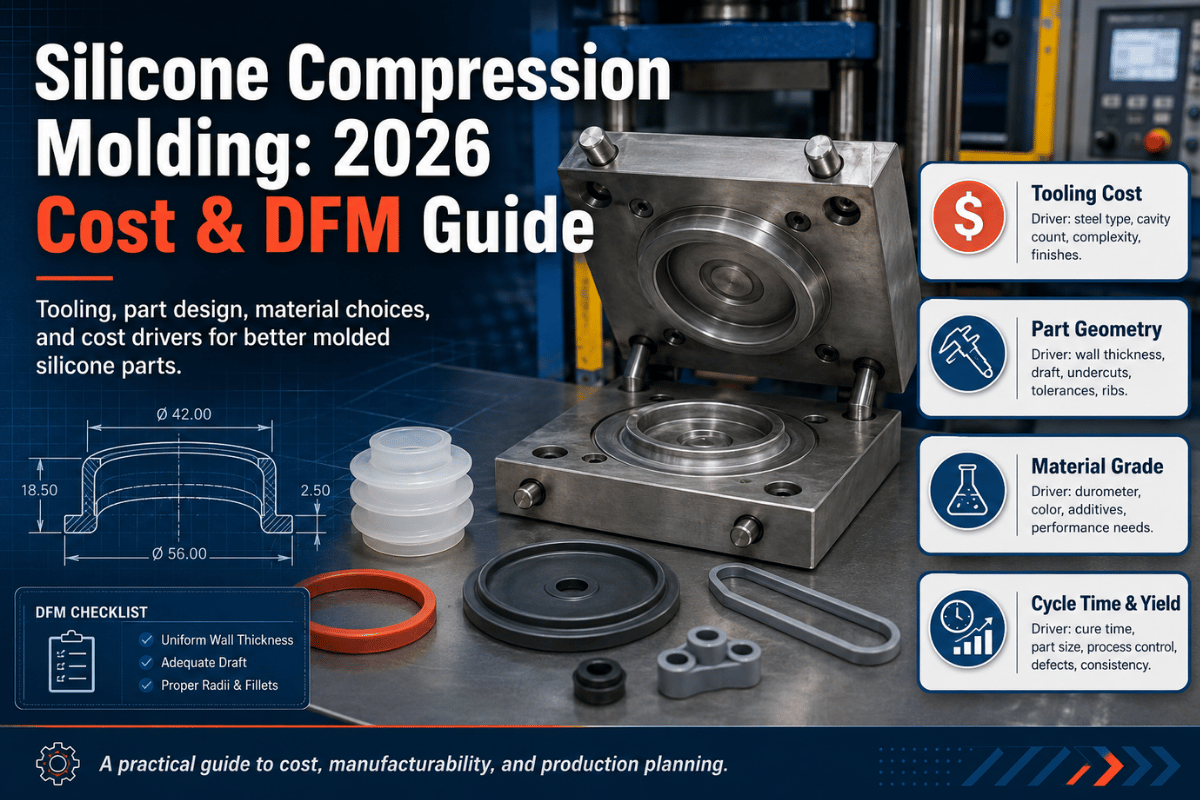
A moldagem por compressão de silicone é um processo de moldagem termofixa que pressiona uma carga pesada de silicone sólido não curado em uma cavidade aquecida e a cura para moldar É o cavalo de batalha para juntas de baixo a médio volume, vedações, ilhós, teclas e seções grossas e o processo em que os compradores ganham grande ou perdem silenciosamente a margem para flash, costuras frias e ferramentas que nunca amortizam Este guia cobre como funciona, qual grau & durômetro especificar, quais tolerâncias você pode realmente manter sob ISO 3302-1, e onde a compressão bate ou perde para a moldagem por injeção no custo.
Especificações rápidas, moldagem por compressão de silicone
| Material | Goma de silicone HCR /HTV sólida (não LSR) |
| Faixa durômetro | 200 Shore A (tolerância Shore A de 5000) |
| Cura/ciclo | ~1700 200 °C; 15 min (mais espesso = mais longo) |
| Tolerância dimensional | ISO 3302-1 Classe M1 (0,15 mm) 2 M (0,20 mm) @10 16 mm |
| Temperatura de serviço | padrão de -50 °C a +250 °C (especialidade a +300 °C) |
| Volume econômico | ~50.000 peças (dependentes do processo) |
| Ferramentas típicas | Engelhardt1,00 artigos 1TP210,000; primeiro em 712 dias |
O que é moldagem por compressão de silicone?

A moldagem por compressão de silicone funciona assim: uma lesma pré-pesada de silicone sólido não curado é colocada em uma cavidade aquecida, a ferramenta é fechada e o calor (cerca de 1700 °C mais pressão) vulcaniza o silicone na forma de cavidade Essa cura é uma reticulação química unidirecional (uma vez definida, a peça não pode mais ser fundida novamente É o cavalo de batalha para juntas de baixo a médio volume, vedações, ilhós, teclas e seções transversais mais espessas, onde o custo da ferramenta é mais importante do que a velocidade do ciclo.
Como não há corredores e as pressões são baixas, a ferramenta permanece barata e os primeiros artigos vêm rápido É exatamente por isso que uma vedação de silicone de 2,00 peças geralmente cai em uma prensa de compressão em vez de um molde de injeção de 1 15 T A ferramenta de injeção nunca pagaria seu custo nesse volume Sua compensação é uma linha de separação que precisa ser desflashada e uma cura que vive ou morre no tempo de permanência, que é onde o resto deste guia se concentra.
O silicone pode ser moldado por compressão?
Sim silicone é rotineiramente molde de compressão Em sua forma de borracha de alta consistência (HCR) ou vulcanizada de alta temperatura (HTV), é o grau mais comumente usado para o processo, bem adequado para volumes mais baixos, tempos de ciclo mais longos e peças que devem manter uma forma sólida e firme, uma vez curadas As peças mais adequadas incluem juntas, vedações, ilhós, contatos de teclado de silicone e seções de paredes espessas, uma classe que se estende a geometrias de vedação de precisão documentadas em patentes concedidas, como US 9.943.146 B2.
Como funciona o processo de moldagem por compressão, passo a passo
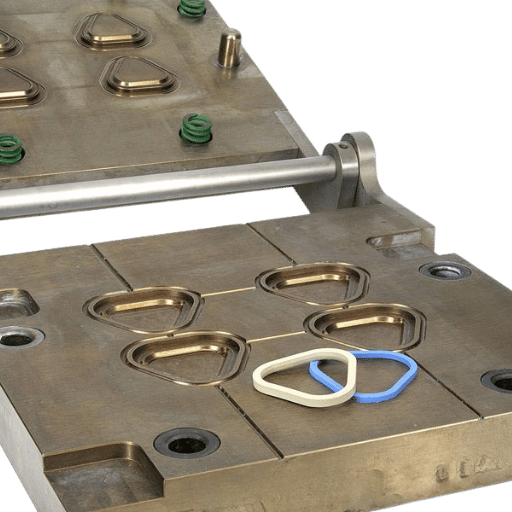
Uma peça de silicone com compressão m geralmente falha por causa de um erro em uma das cinco etapas de um ciclo normal de moldagem, não porque a própria não seja confiável Cada etapa (slug) pesagem, carregamento, fixação e aquecimento, cura habitar, des-flashingold tem que ser controlado em sequência Aqui está o ciclo real executado em uma prensa de silicone:
O Ciclo Moldagem Compressão
- Lesma pesa. Uma carga de silicone não curado é pesada para cada cavidade Muito cria excesso de flash; muito pouco mata de fome o preenchimento e arrisca um canto sub-embalado.
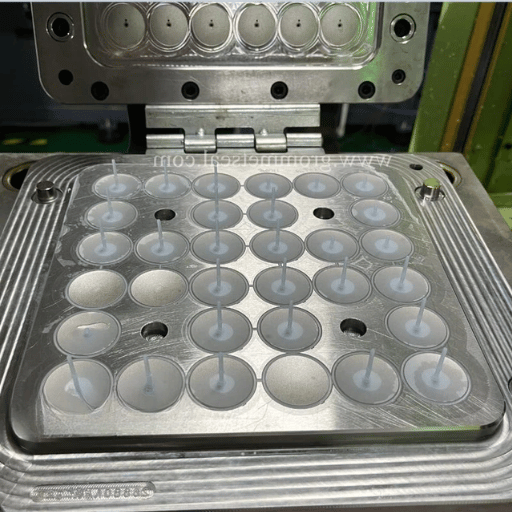
- Carregar. A lesma é colocada na cavidade inferior e o degrau se repete por estação em uma ferramenta multicárie.
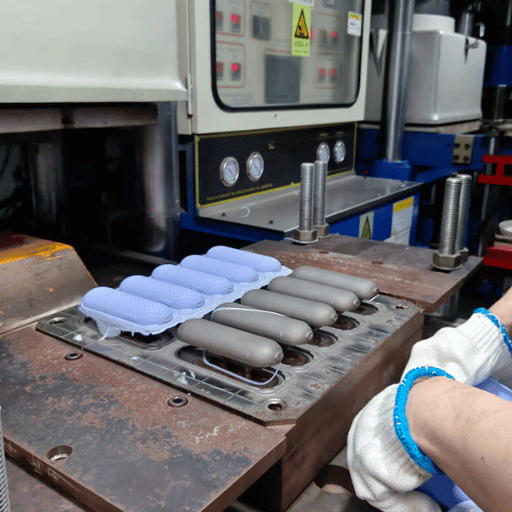
- Braçadeira & calor. A prensa fecha a tonelagem (tipicamente 50; a prensa de silicone força 300 t) mais o silicone do molde aquece em cada recesso da cavidade.
- Cura habitar. A peça é mantida em uma temperatura controlada com precisão, sendo a variável mais importante. Cura muito curta e o núcleo permanece subcurado.
- Desflash. A peça é removida e o flash da linha de separação é aparado em linhas de descarga manuais, criogênicas/congeladas ou automáticas.
Nota de Engenharia
A pesagem consistente e precisa de cada lesma para cada cavidade em uma corrida de peças de 20 K faz toda a diferença se as peças atendem ou não às especificações. Por exemplo, nossos controles automatizados de pesagem de lesmas preenchem e piscam dentro de cada cavidade de 1 a 20 K; você simplesmente disca sua configuração de preenchimento e deixa nossa máquina pesar e entregar o material da lesma antes do início de cada ciclo de cura.
Para que é utilizada a moldagem por compressão?
Alcance a moldagem por compressão sempre que um elastômero termofixo precisar de uma cura uniforme através de uma parede espessa: vedações e juntas de silicone, ilhós vibratórios, membranas de teclado, isoladores elétricos, botas de interruptor, vedações sanitárias e utensílios de cozinha com contato com alimentos governados por 21 CFR 177.2600. É também a maneira mais barata de obter um protótipo de borracha utilizável, uma vez que o ferramental executa uma pequena fração de um molde de injeção.
Seleção de materiais e durômetros de silicone
Um dos erros mais comuns e mais caros de lojas 1 early é deixar de fixar o material Abundância de lojas de compressão-molde sólido 200% de silicone de goma de enxofre (os engenheiros chamam de HCR, borracha de alta consistência, ou HTV, vulcanizada de alta temperatura), que cura para moldar sob calor e pressão em vez de ser injetado como um líquido de duas partes Então não assuma que o grau que uma oficina de imprensa cita é o que sua parte precisa Leia a lista de durômetros: se mostra “1TP15 T, que é um material de injeção de líquido, não um grau de compressão Os dois não são intercambiáveis.
| Grau silicone | Tipo/processo | Durômetro | Temperatura de serviço | Peças mais adequadas |
|---|---|---|---|---|
| HCR/HTV de uso geral | Goma sólida; compressão | 200 Shore A | -50 a +250°C | Juntas, vedações, seções grossas |
| HCR alto-rasgo | Sólido; compressão | 300 Shore A | -50 a +250°C | Vedações de paredes finas, diafragmas |
| HCR de qualidade alimentar | Sólido; compressão | 300 Shore A | -50 a +230°C | Utensílios de cozinha, juntas de contato com alimentos |
| Grau médico (cura de platina) | Sólido; compressão | 300 Shore A | -50 a +200°C | Selos médicos, diafragmas |
| Fluorosilicone (FVMQ) | Sólido; compressão | 400 Costa A | -55 a +200°C | Vedações resistentes a combustível/fluidos, aeroespaciais |
| Retardante de chama (UL 94) | Sólido; compressão | 400 Shore A | -50 a +230°C | Isolamento elétrico, botas de interruptor |
| Eletricamente condutor | Sólido; compressão | 400 Costa A | -40 a +200°C | Juntas EMI, contatos do teclado |
| HCR de alta temperatura | Sólido; compressão | 400 Shore A | -50 a +300°C | Vedações de alto calor, dutos |
| Fenil (baixa temperatura) | Sólido; compressão | 300 Shore A | -90 a +200°C | Selos criogênicos/aeroespaciais |
| Borracha de silicone líquida (LSR) | Líquido de 2 partes; injeção | 100 Shore A | -50 a +200°C | Detalhe fino, de alto volume e parede |
“Hard também chamado de ”durômetro Hardness é uma decisão de vida útil e não um preço um A dureza em uma peça de silicone moldada normalmente contém ±5 pontos Shore A por ASTM D2240, então você não pode escolher um durômetro apenas no custo Cada grau nesta mesa se adapta à moldagem por compressão, exceto a última linha; apenas a borracha de silicone líquida (LSR) naquela linha final é um material de injeção.
Para alimentos e contato médico, a nota deve ser apoiada por documentação de conformidade, não por uma garantia verbal. Artigos de borracha e silicone em contato com alimentos dos EUA para uso repetido são regidos por 21 CFR 177.2600, 1, e o inventário de Substâncias em Contato com Alimentos da FDA lista elastômeros de silicone limpos sob essa seção Pergunte ao moldador a declaração de conformidade específica vinculada à sua aplicação antes que o ferramental seja cortado.
Compressão vs Transferência vs Injeção 1TP15 T, Qual Você Deve Escolher?
Raramente há uma resposta mais barata. “Qual processo custa menos igual?” é a pergunta que ouvimos mais, mas todo o resto nunca é igual quando você está planejando uma parte elastomérica O que se segue apresenta as apostas da tabela de desempenho de preços, depois uma regra de decisão simples que protege seu orçamento.
| Fator | Compressão | Transferência | Injeção LSR |
|---|---|---|---|
| Tempo ciclo | 1 min | 2 min | 10 seg |
| Ferramentas típicas | #1.000 AT$20.000 | #3.000 AT$2.000 | Engelhardt3.000+$1.000+ |
| Volume econômico | 50–5,000 | Volume médio | 5,000–1,000,000+ |
| Complexidade de peça | Baixo | Médio, insere OK | Detalhe alto e fino |
| Flash de linha de separação | Presentear aparado | Menor | Mínimo |
Essas faixas são benchmarks publicados do setor; sua cotação depende da contagem de cavidades, tamanho da peça, durômetro e composto.
O crossover de custos de 5.000 partes
Eis a regra que vale a pena recordar: abaixo de cerca de 5.000 peças, a moldagem por compressão geralmente acarreta o menor custo total, porque a ferramenta é muito mais barata de construir Acima disso, o ciclo de 100 segundos da injeção de LSR começa a compensar seu prêmio de ferramentas por meio de mão de obra e rendimento economizados. Seções grossas e classes HCR de alta temperatura puxam o cruzamento a favor da compressão em quase qualquer volume, porque a injeção luta para curar uma parede pesada sem deixar um núcleo subcurado.
Exemplo trabalhado: Uma ferramenta de vedação de silicone de 30 mm precisa de 3.000 peças Uma ferramenta de compressão simples em cerca de 121T4,00 com um ciclo de 4 minutos de 3TP bate um molde 1TP15 T em cerca de $25.000 00 a ferramenta de injeção precisaria de uma corrida muito longa para pagar o extra ~$21,00 em ferramentas Vire a peça para 150.000 ilhós de parede fina por ano, e os invertidos matemáticos: o ciclo de segundos de injeção ganha em trabalho de parto, apesar do ferramental.
️ A verdade contrária: ferramentas de compressão não são sempre mais barato
Os moldes de compressão “ são sempre baratos. A regra prática do” desmorona no trabalho de precisão de múltiplas cavidades. Moldadores experientes dizem isso claramente: os moldes de borracha são nem sempre mais barato ou mais simples do que os moldes de injeção, e uma ferramenta de compressão de tolerância apertada e alta contagem de cavidades pode custar tanto quanto um simples molde de injeção O custo real é impulsionado pela contagem e precisão da cavidade, não pela etiqueta do orçamento na tolerância e cavitação da sua parte. ISO 3302-1 aula que você realmente precisa não é um slogan.
Moldagem por compressão vs moldagem por injeção para silicone, qual devo escolher?
Volume e geometria obtê-lo a maior parte do caminho, e um rápido custo sanity-check geralmente resolve-lo: sob cerca de 5.000 partes ou para paredes grossas, vitórias de compressão; para o trabalho de parede fina de alto volume, injeção 1TP15 T ganha Tratar isso como uma primeira passagem através do mapa, não a chamada final que vem apenas com uma revisão DFM de sua parte real.
Matriz de seleção de custos de processo
- Sob ~5.000 peças, geometria simples a média → moldagem compressão (baixo custo de ferramentas, rápido para o primeiro artigo).
- Seção transversal de paredes grossas ou grandes → moldagem compressão (até mesmo curar através de seções pesadas).
- Alto volume, parede fina, detalhes finos → Moldagem por injeção LSR (o ciclo curto amortiza o custo mais alto do trabalho feito com ferramentas).
- Inserções metálicas /encapsulamento → moldagem por transferência de borracha (o molde fechado protege a posição da inserção).
- Validação de protótipo ou projeto → moldagem compressão (ferramentas baratas, iteração rápida).
Tolerâncias, flash e defeitos que os engenheiros mais aumentam
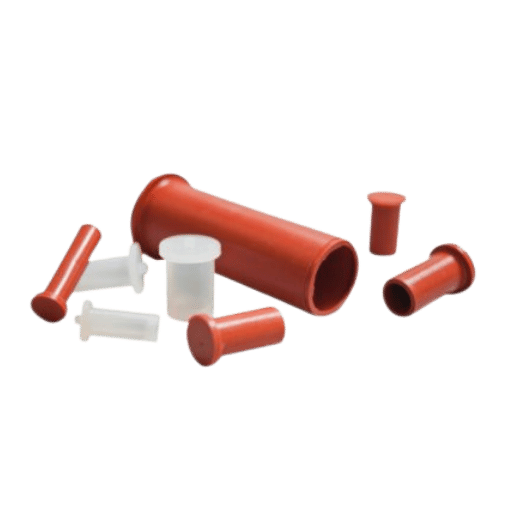
Obtendo Tolerâncias apertadas (ish): Se a precisão importa, uma tolerância dimensional geral em suas peças moldadas por compressão é guiada por um padrão conhecido como ISO 3302-1. Esse padrão define quatro classes de tolerância, de M1 (precisão) a M4 (geral), e você deve escolher a classe necessária antes que o ferramental seja cortado, e não depois que a primeira parte decepcionar.
| Classe | Grau | Tolerância @1016 mm | Uso típico |
|---|---|---|---|
| M1 | Precisão | ±0,15mm | Rostos de vedação, costelas, saliências |
| M2 | Alto | ±0,20mm | Características gerais da precisão |
| M3 | Médio | Intermediário | Dimensões não críticas |
| M4 | Geral | ±0,80mm | Peças grosseiras e de baixo custo |
Mantenha a costa A macio (ou não): tolerâncias de dureza em peças de silicone moldadas por compressão correr cerca de 5 pontos em Shore A. As lojas especializadas podem prometer tolerâncias apertadas ‘feature’ 0,02 para.1 mm (usando aço endurecido e pinos de localização, mas você deve ficar com a referência da classe ISO (por ISO 3302-1) em seus desenhos.
Os engenheiros de defeitos são os que mais levantam: costuras frias
Nos fóruns de fabricação, real de fabricação: mal gerenciado moldagem por compressão pode deixar pequenas costuras “frias ” aviso de que o silicone foi mal embalado ou a cura não completou aqueles podem prender bactérias, um problema genuíno em silicone médico e de grau de Slug pesagem, colocação deliberada da carga na cavidade, um perfil de cura aprovado (não esperança) são o que eliminam o risco.
As 3 alavancas de cura e disciplina
- Projeto do molde: A linha de separação, as aberturas e a cavidade cavitam a espessura do flash e enchem o equilíbrio um molde mal projetado nunca dão uma boa parte.
- Matérias Compostas: O perfil de cura (temperatura, tempo de permanência e pressão) deve corresponder ao composto de silicone específico - a cura excessiva pode ser a principal causa de costuras frias e de “high compression set”.
- Controle de flash: Cada peça de silicone tem que ser de-flashed Nós podemos fazer isso da maneira certa-consistência, do início ao fim.
Quais são as desvantagens da moldagem por compressão?
Mas não é perfeito... Há três razões honestamente irritantes: O tempo de ciclo da peça é em minutos - então o custo da mão de obra é maior em volume alto; Desflashing significa uma etapa adicional; detalhes de recursos muito finos e seções finas podem ser difíceis de preencher com as baixas pressões da compressão. (Mas estes não precisam importar na parte certa)
Vantagens
- Baixo custo de ferramentas ($1k ($20 k), primeiros artigos rápidos
- Até mesmo curar através de seções grossas/de parede pesada
- Baixa tensão residual; pouco desperdício de material
- Rota mais barata para um protótipo de borracha funcional
– Limitações
- Ciclo lento (15 min) → maior trabalho em volume
- O flash da linha de separação requer descarga
- Lutas com paredes ultrafinas/detalhe fino
- A disciplina de cura não é negociável para peças médicas/alimentares
Custo de ferramentas, MOQ e prazo de entrega
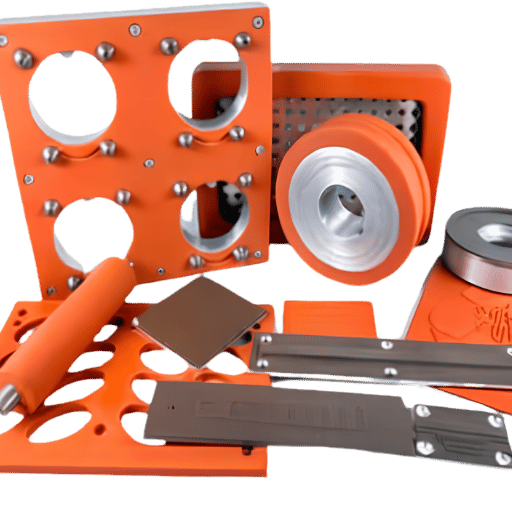
O assassino escondido da cotação: Onde as cotações de silicone personalizadas saem mais frequentemente dos trilhos? não com preço unitário Em vez disso, em itens de linha a cotação deixa de fora (operações secundárias, testes, retrabalho e certificações como 21 CFR 177.2600 conformidade).Uma vantagem citada 30% desaparecerá com estes.
| Tipo de ferramenta | Custo típico | Prazo de execução |
|---|---|---|
| Molde compressão silicone simples | #1,000 AT$5,000 | 2 semanas |
| Molde complexo/multi-cavidade | #5.000 AT$20.000 | 4 semanas |
| Amostras de primeiro artigo + inspeção | Citado com ferramentas | 7 dias |
| Produção run | Por volume e durômetro | Por projeto |
Para o contexto, os moldes de injeção abrangem $100 (impresso em 3 D, baixo volume) a $100.000 + para ferramentas complexas de múltiplas cavidades, e é por isso que o trabalho de silicone de baixo volume permanece com moldagem por compressão.
💡 Pro Tip (linha Pro) itens a serem solicitados no orçamento
Para citá-lo melhor: Nós discriminamos o custo da ferramenta, o método de de-flash, qualquer teste/certificações e a Quantidade de Pedido Mínimo em cada cotação Nós sempre discriminamos em quatro linhas separadas - então nada é ‘uma surpresa’ no futuro Se uma loja não puder discriminar rapidamente tudo isso... eles provavelmente tentarão agrupar silenciosamente e recarregá-los mais tarde.
Que peças são moldadas por compressão? Famílias de seis partes
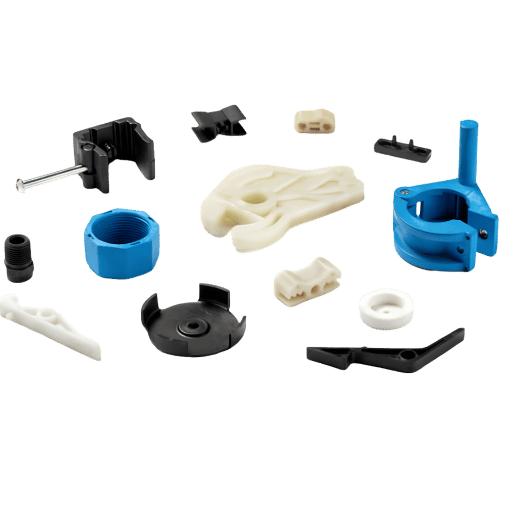
Os engenheiros procuram silicone onde outros elastômeros racham: ele permanece flexível de - 50 a +250 °C, resiste ao envelhecimento e é inerte a quase qualquer. Seis famílias de peças cobrem a maioria dos trabalhos de moldagem por compressão, cada uma impulsionada por uma prioridade diferente de tolerância, custo ou conformidade.
- Vedações médicas e de laboratório, juntas e diafragmas que precisam de flash controlado e compostos de qualidade alimentar ou médica em conformidade 21 CFR 177.2600.
- Almofadas automotivas, gromm e vedações moldadas sob um sistema IATF 16949.
- Teclados de silicone keypads instrumento e industrial. Contra-intuitivamente, a compressão é muitas vezes mais barato por parte do que a injeção aqui: centenas de chaves moldam em um único ciclo em nossa multi-cavidade “waffle-ferro” ferramenta, em vez de um de cada vez.
- Isolamento elétrico (bota isolante), tampas de bateria e camisas para equipamentos elétricos.
- Sacos pneumáticos sanitários e de construção, mangas para tubos, juntas e vedações para encanamento.
- Utensílios de cozinha e produtos moldados em casa de silicone de qualidade alimentar.
“Onde a moldagem por injeção luta contra uma seção transversal pesada e arrisca um núcleo sub-curado, a compressão embala toda a carga na ferramenta e mantém o calor e a pressão até que a peça esteja curada por todo o caminho Para juntas grossas e vedações, essa cura até é toda a razão pela qual o processo é”
Equipe de moldagem de silicone & borracha Engelhardt
Como Vet um Silicone Compressão Moldagem Fornecedor
As certificações não ajudam muito se as peças às quais se aplicam não puderem Maneira mais rápida de distinguir um sistema de qualidade real de uma pilha de logotipos: peça três documentos antes de encomendar um fornecedor com um sistema de qualidade real os produz rapidamente.
- Um certificado de conformidade válido com o nome da entidade jurídica das partes aplicáveis (não uma empresa irmã ou afiliadas).
- Uma declaração de conformidade material do requerente (exemplo: 21 CFR 177.2600, RoHS /REACH mediante solicitação).
- relatório FA I associado ao seu desenho
Um par de outros o molde-construção-operador do corretor Primeiro, a qualidade realmente executar em cheques de rastreamento de lote separado uma peça enviada ser amarrado de volta para a imprensa, operador, e lote de material? nossas peças traçar para a frente e para trás através de um sistema ERP/MES/QMS/WMS em vigor desde 2017, com perfis de cura vivendo no MES em vez de no papel Segundo, certifique-se de pagamento encenado está na mesa: um depósito de ferramentas na frente, o equilíbrio contra a aprovação do primeiro artigo, e lotes cobrados depois disso Tenha cuidado com qualquer fornecedor que não vai encenar um trabalho de compressão quando você quer aprovar a peça real antes de escrever um grande cheque para a produção completa.
Perspectiva da indústria: o que está mudando para os compradores de moldagem de silicone

O que importa em 2026 é o risco de fornecimento, não uma manchete de tamanho de mercado Duas tendências estão mudando a forma como os compradores examinam um moldador de silicone.
1) Dupla fonte. A crescente demanda por dispositivos médicos e a eletrificação automotiva estão pressionando as empresas que antes eram offshore de fonte única a adicionar um segundo fornecedor, muitas vezes próximo da costa, geralmente após um evento “compliance dis”, onde um certificado não corresponde à entidade legal ou as lacunas de escopo surgem durante uma auditoria. 2) Especificações de rastreabilidade. Compradores de alimentos e contatos médicos cada vez mais escrevem rastreabilidade de material nas especificações: não apenas uma reivindicação genérica de “food safe”, mas conformidade documentada, como 21 CFR 177.2600 e traços no nível do lote vinculados ao nome e grau exatos do material.
O que fazer sobre isso: verifique os certificados do seu moldador contra a entidade legal que realmente produz suas peças, e confirme a rastreabilidade real no nível do lote em vez de apenas aparecer no folheto Para o contexto apenas o mercado global 1TP15 está crescendo em um CAGR de alto dígito no início dos anos 2030; útil para orientação, não uma base para escolher um processo A disciplina de grau e conformidade é o que o mantém longe de problemas de responsabilidade parcial.
Tem os desenhos das peças? Obtenha um crossover de custos modelado com base em seu volume anual.
Perguntas frequentes
Q: O silicone pode ser moldado por compressão, e quais partes se adequam melhor?
Ver Resposta
Sim, o silicone HCR/HTV é um grau comum de moldagem por compressão. Ele se adapta a juntas, vedações, grommets, teclados e peças de seção transversal superior em volume baixo a médio, onde até mesmo a cura através de uma parede espessa é mais importante do que a velocidade bruta do ciclo. Programas de alto volume ou paredes ultrafinas são onde o HCR dá lugar à moldagem por injeção de LSR, que tem um tempo de ciclo muito mais curto, mas um custo de ferramentas muito maior. Para uma tiragem de alguns milhares de peças, a compressão é geralmente a rota de custo total mais baixo.
Q: Quanto custa um molde de compressão de silicone?
Ver Resposta
Os benchmarks da indústria colocam um molde de compressão simples em torno de $1,000$5,000 e uma ferramenta complexa ou multi-cavidade em $5,000.$20,000. sua figura de loja é impulsionada pela contagem de cavidades, tamanho da peça, durômetro e composto Uma loja respeitável cita ferramentas, de-flashing e inspeção como itens de linha separados para que o total seja transparente antes de você comprometer Para comparação, um molde de injeção 1TP15 T para a mesma peça normalmente começa perto de $25.000, e é exatamente por isso que o trabalho de silicone de baixo volume permanece em uma prensa de compressão.
Q: Que tolerâncias e faixa de durômetro pode compressão moldagem segurar?
Ver Resposta
A tolerância dimensional segue ISO 3302-1: para uma dimensão fixa de 10,6 mm, a Classe M1 permite ±0,15 mm e a Classe M2 permite ±0,20 mm. Recursos precisos, como nervuras e saliências, são normalmente mantidos em M1M2. faixas de durômetro de silicone sólido 2080 Shore A com cerca de ±5 Shore Uma variação de dureza Confirme uma classe viável em seu desenho antes que a cotação da ferramenta seja resolvida.
Q: Quando a moldagem por injeção 1TP15 T bate a moldagem por compressão?
Ver Resposta
Acima de aproximadamente 5.000 peças com paredes finas ou detalhes finos. O ciclo de 1060 segundos do LSR amortiza seu custo de ferramentas mais alto por meio de mão de obra e rendimento economizados em volume, enquanto o ciclo de 15 minutos da compressão torna a mão de obra o custo dominante em longas tiragens de produção.
Q: É o alimento de silicone moldado por compressão - e o médico-grau seguro?
Ver Resposta
Sim, quando o flash e a cura são controlados e verificados, usando HCR de qualidade alimentar com conformidade documentada, como 21 CFR 177.2600 e rastreabilidade total do lote Solicite a declaração de conformidade específica vinculada à sua peça antes que o ferramental seja cortado, em vez de aceitar um rótulo “food safe” genérico.
Q: Que é o prazo de execução e MOQ para peças moldadas personalizadas do silicone?
Ver Resposta
O trabalho feito com ferramentas normalmente é executado 28 semanas dependendo da complexidade dos primeiros artigos em 7, com 2 dias MOQ é definido para baixo-médio volume em vez de forçar execuções em escala de injeção, então algumas centenas a alguns milhares de partes é normal Confirmar o cronograma encenado (stage schedule) ferramenta, primeira aprovação de artigo, depois lotes de produção (up front).
Q: Como é controlado flash de linha de separação?
Ver Resposta
Pesando cada lesma para a cavidade, em seguida, aparando em linhas de remoção de rufos automáticas, congeladas/criogênicas ou manuais sob um perfil de cura controlado por MES. O peso consistente da lesma e a colocação deliberada da carga são o que mantêm o flash da linha de separação fino e repetível em uma ferramenta de múltiplas cavidades.
Artigos Relacionados
- Serviços de moldagem por compressão de silicone, capacidade e cotação de peças moldadas
- Moldagem por injeção 1TP15 T, quando o silicone líquido bate sólido
- 1TP15 T vs HCR Silicone, guia de seleção de materiais
- Moldagem por compressão de borracha, opções de processo e elastômero
- Moldagem por Transferência de Borracha, para peças com inserções metálicas
- Juntas e vedações de borracha personalizadas
Referências e fontes
- 21 CFR 177.2600, Artigos de borracha destinados a uso repetido Instituto de Informação Jurídica, Cornell Law School
- ISO 3302-1:2014, Borracha: Tolerâncias para produtos, Parte 1: Tolerâncias dimensionais Ção Internacional para Normalização
- US 9.943.146 B2, Anel de silicone moldado por compressão (USPTO)
- 1TP8 T D395, Métodos de teste padrão para a propriedade da borracha: conjunto da compressão ASTM Internacional
- 1TP8 T D2240, Método de teste padrão para a propriedade da borracha: Dureza do durômetro ASTM Internacional
Sobre Esta Análise
As figuras de tolerância, cura e ferramentas neste guia refletem ISO 3302-1 e dados publicados de patentes/padrões cruzados em nosso próprio piso de moldagem por compressão de silicone, mais de 80 prensas de vulcanização e cerca de 1.000 toneladas de produção anual de silicone sob um sistema 1TP4 T e 1TP3 T. Revisado pela equipe técnica Engelhardt.