Entre em Contato com Engelhardt


Atualizado em junho de 2026 · Avaliado pela equipe técnica de Guangdong Engelhardt Rubber & Plastic Technology
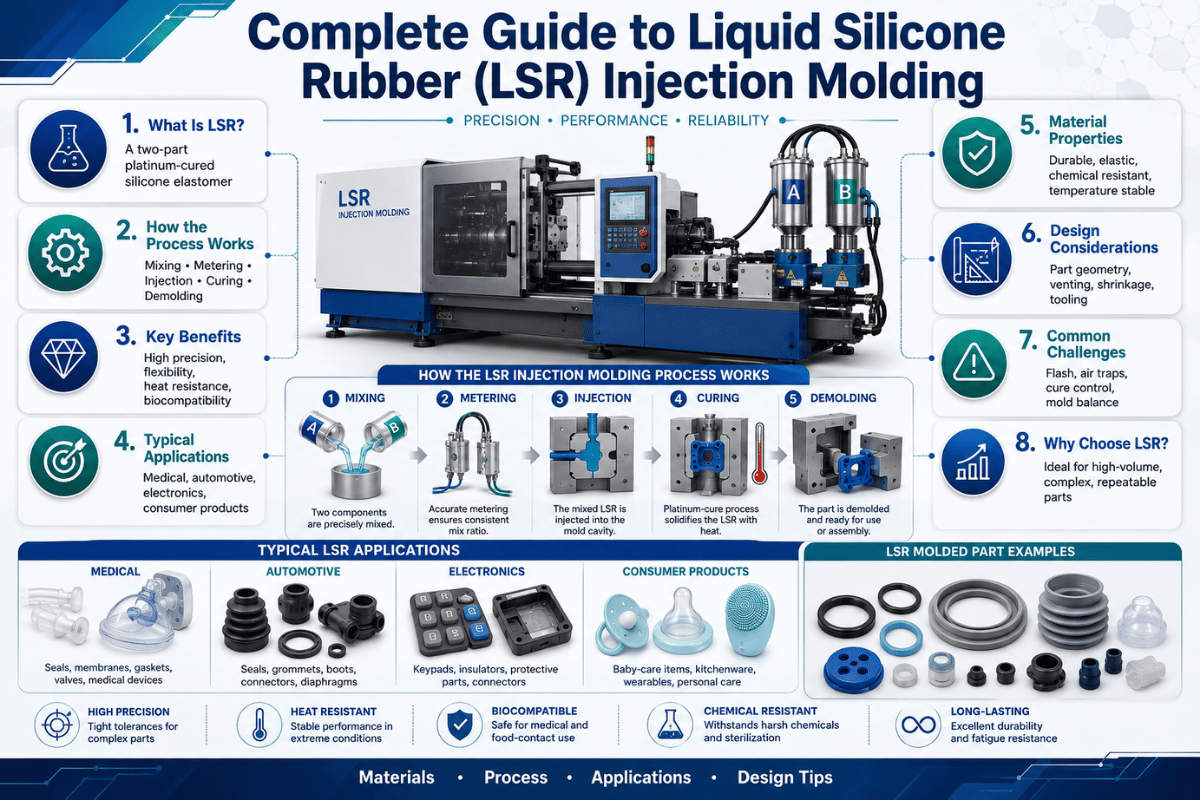
A moldagem por injeção de borracha de silicone líquido é um processo termofixo que força um silicone refrigerado e curado com platina de duas partes em uma cavidade de aço quente, onde cura em uma parte flexível e durável em segundos É o único processo de silicone que funciona quase como uma máquina termoplástica ainda se comporta quimicamente ao contrário, e essa única inversão molda tudo sobre suas ferramentas, defeitos e economia Este guia explica como o processo 1TP15 T realmente funciona, como ele difere da moldagem de borracha sólida e termoplástica, o que suas ferramentas e defeitos exigem e como informar ou examinar um moldador.
Em um parágrafo
A moldagem por injeção de borracha de silicone líquida (1TP15 T) mede dois componentes líquidos (uma base e um catalisador de platina) na proporção de 1:1, mistura-os através de um misturador estático, e injeta a mistura fria através de um corredor frio em uma cavidade mantida a aproximadamente 150 °C, onde a vulcanização define a parte em cerca de 20 segundos. Como o material é um termofixo de baixa viscosidade em vez de um termoplástico derretido, 1TP15 T preenche paredes finas, automatiza bem e desperdiça material de canal pequeno, mas sua baixa viscosidade também torna o controle de flash o problema central de engenharia.
Especificações rápidas, moldagem por injeção de borracha de silicone líquido
| Material | LSR curado com platina em 2 partes, A: B misto = 1:1 |
| Dureza (durômetro) | 50 Shore A (a maioria das partes 3007) |
| Cavidade (molde) temperatura | 155 °C 210 (faixa de vulcanização de 25 °C 35 °F) |
| Pressão de injeção | 200 1,200 psi (a maior parte do trabalho 300 700 psi) |
| Cura/tempo de ciclo | 200 s de REAT para seções típicas da parede |
| Encolhimento linear | 20TP20T (molde dimensionado para compensar) |
| Temperatura de serviço | °C de -50 a +200 °C (algumas notas até 250 °C) |
| Tolerância típica | ±0.10,2 mm (dependente da classe ISO 3302-1) |
| Melhor ajuste | Volumes médios a altos; ferramentas de convés frio para sucata de corredor quase zero |
1TP15 T senta-se dentro da família mais ampla de moldagem por injeção borracha processos, mas é o único que chega como um líquido bombeável Essa diferença é por que uma loja pode automatizá-lo acende, e por que seu molde tem que lutar contra o flash em uma escala que nenhum termoplástico jamais vê.
O que é borracha líquida de silicone e por que ela molda “Backwards”
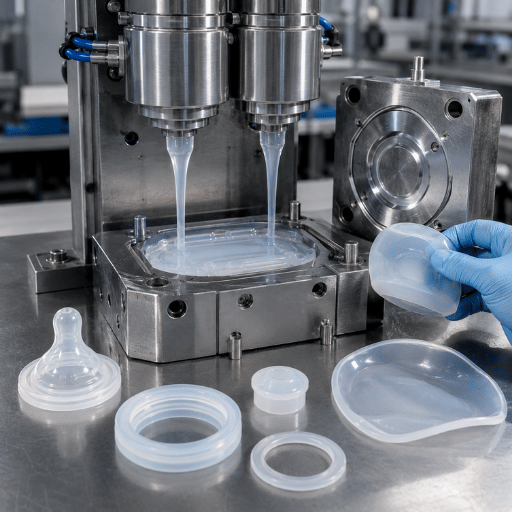
A borracha de silicone líquida é um elastômero de silicone de duas partes de alta pureza com uma estrutura inorgânica de siloxano, alternando átomos de silício e oxigênio transportando grupos laterais de metila e vinil. Um componente carrega um catalisador de platina; o outro carrega um reticulador (um siloxano de metil-hidrogênio) mais um inibidor. Misto 1:1 e exposto ao calor, a platina aciona um cura adicional que reticula permanentemente as cadeias Ao contrário de um termoplástico, que derrete e solidifica novamente através de uma mudança física, esta é uma reação química irreversível, a peça não pode ser fundida ou reprocessada. Como material LSR, suas propriedades materiais definidoras são flexibilidade, biocompatibilidade e estabilidade térmica, que se estendem a todas as peças moldadas que produz. Uma regra de seleção rápida: se a peça for uma vedação, membrana ou superfície de contato com a pele, alcance uma classe 2040 Shore A mais macia; se tiver que resistir ao desgaste ou segurar uma borda estrutural, mude para 6070 Shore A e confirme a escolha com uma amostra, porque o durômetro se troca contra a resistência ao rasgo e a força de vedação.
A borracha de silicone pode ser moldada por injeção?
Sim, mas apenas a forma líquida A baixa viscosidade do 1TP15 T permite que as bombas dosadoras o empurrem através de tubos e um misturador estático, para que possa ser moldado por injeção em equipamentos automatizados A borracha sólida de alta consistência (HCR) semelhante a uma goma não pode fluir dessa maneira e, em vez disso, é processada por moldagem por compressão borracha ou moldagem por transferência. De acordo com a entrada da enciclopédia sobre moldagem por injeção LSR, o material curado resiste a temperaturas extremas, tem excelente isolamento elétrico e oferece uma faixa de dureza de 5 a 80 Shore A.
💡 A regra do dois calores
Moldagem por injeção termoplástica empurra a quente derreter em um frio molde assim que a peça congela. 1TP15 T moldagem por injeção faz o inverso: ele empurra um frio líquido em um quente molde assim o curas. Segure que um ideia e o resto de LSR parte barril refrigerado, o comportamento flash, o tempo de cura matemática pára sendo uma lista de fatos e torna-se um sistema único e previsível.
Essa inversão é a razão pela qual o equipamento LSR resfria o material até o portão e só permite ver o calor dentro da cavidade. É também por isso que a cura com platina é importante: o silicone curado com platina não deixa resíduos de peróxido e proporciona melhor resistência à tração e ao rasgo e clareza do que os sistemas de silicone curados com peróxido, uma das características definidoras do LSR entre os materiais de silicone, e exatamente por que o contato médico e alimentar aplicações de borracha de silicone líquido padronize nele Para uma quebra material-versus-material mais profunda, veja nossa comparação de silicone versus borracha convencional.
Como funciona o processo de moldagem por injeção LSR, passo a passo
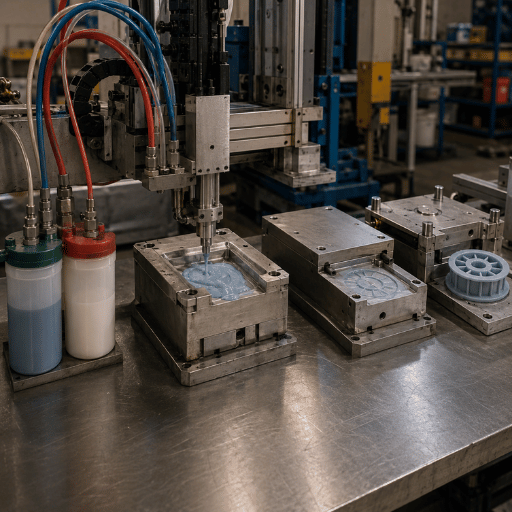
A moldagem por injeção de 1TP15 T, também chamada de moldagem por injeção de silicone quando descrita pelo material, é uma sequência termofixa contínua e medida, em vez do loop de fusão e congelamento dos plásticos Ao contrário de uma configuração padrão de moldagem de silicone que funciona com goma sólida, a máquina de moldagem por injeção aqui lida com um líquido bombeável Aqui está a cadeia completa do tambor ao desmoldagem:
- Medição, duas bombas dosadoras extraem a base e o catalisador de seus baldes ou tambores de 55 galões e os mantêm em uma proporção constante de 1:1 Um pigmento colorido pode ser injetado aqui.
- Misturando, um misturador estático mistura os dois fluxos em um composto homogêneo pouco antes da injeção, porque o relógio de cura começa no instante em que os componentes se encontram.
- Refrigerar e segurar, o material misturado é mantido fresco na seção de medição e no corredor frio assim que permanece líquido até a cavidade.
- Injeção, em uma máquina de moldagem por injeção 1TP15 T, um bocal de corte aberto e o parafuso atua como um pistão, conduzindo o composto através do corredor frio para as cavidades aquecidas do molde Uma válvula de corte positiva impede que o parafuso seja empurrado para trás e encha demais o cano.
- Cura, dentro da cavidade (1500210 °C) a reação de adição de platina reticula o silicone em aproximadamente 20 °C, 60 segundos, dependendo da espessura da parede.
- A desmoldagem, o molde aberto e um robô ou calha removem as peças Uma pós-cura opcional em um forno (geralmente em torno de 175 °C) elimina os voláteis e otimiza a tração, o módulo e a dureza das peças críticas.
Como você molda borracha de silicone líquida na prática?
Na prática o moldador ajusta três alavancas, pressão de injeção, temperatura de vulcanização, e tempo de vulcanização, contra a geometria da peça A ferramenta 1TP15 T está alojada em uma prensa de moldagem por injeção específica de 1TP15 T construída para controle preciso de tiro, que é o que separa a moldagem por injeção de silicone líquido de uma prensa de moldagem por injeção de plástico convertido Um estudo de projeto de processo marco em Plásticos Médicos e Biomateriais documenta pressões de injeção de aproximadamente 200 psi (a maioria das aplicações é executada em 300, 200 psi) e temperaturas de vulcanização de 25 375 °F, o coração do processo de cura. Observe a distinção que muitos guias confundem: esses são injeção pressões na cavidade O valor muito maior de 50.000 psi que você verá em outro lugar é o fornecimento/medição pressão usada para bombear material de alto durômetro para a máquina Confundir os dois leva os engenheiros a sobre-especificarem uma prensa.
“A borracha de silicone ”Liquid é ligeiramente compressível, a moldagem por injeção com este tipo de material é um pouco como moldar uma mola Uma pressão de injeção mais alta resulta em menor encolhimento da peça, e uma temperatura de vulcanização mais alta causa maior encolhimento.”
Nota de Engenharia
Um ciclo trabalhado estimativa: tempo de ciclo preenchimento + + desmoldagem + Uma seção de parede de 3 mm a 180 °C cura cavidade em aproximadamente 25 s; adicionar ~5 s preenchimento e ~5 s desmoldagem e você're perto de um ciclo de 35 s cura 4 s. Duplicar a parede para 6 mm e tempo mais que duplica, porque o calor tem que conduzir para o núcleo, razão pela qual seções transversais grossas são o inimigo do rendimento de 1TP15 T.
Um truque de loja sob o disco: uma diferença de temperatura de 10 °F de 50 entre as duas metades do molde faz com que a peça grude no lado mais frio, que controla de qual metade ela se desmolda Empurre a variância muito longe, porém, e você acelera o desgaste do pino-guia Para a visualização de processo cruzado, compare este loop com nossa quebra de moldagem por compressão versus moldagem por injeção.
1TP15 T vs HCR vs Moldagem por Injeção de Borracha Convencional
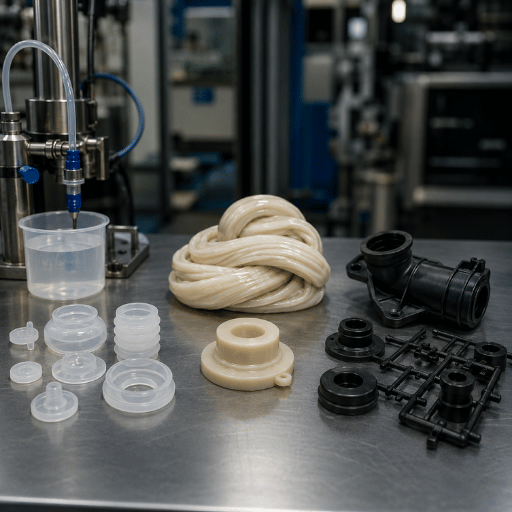
Uma suposição comum, e dispendiosa, é que 1TP15 T é “apenas HCR líquido.” Não é A química da cura, a forma de alimentação, a automação e a economia da sucata divergem todos através destes métodos de moldagem A borracha de alta consistência (HCR) é um silicone sólido, semelhante a uma goma, que muitas vezes (mas nem sempre) é curado com peróxido; é lento para curar, menos repetível dimensionalmente e frequentemente precisa de uma pós-cura A natureza bombeável e de baixa viscosidade do 1TP15 T é o que desbloqueia a moldagem totalmente automatizada, quase sem flash e menor desperdício de material do que a goma sólida de trabalho Também difere da moldagem por injeção termoplástica tradicional: onde a injeção de plástico derrete e recongela um polímero, o 1TP15 T cura quimicamente o silicone moldado no lugar, de modo que as intuições tradicionais de moldagem por injeção sobre resfriamento e encolhação não transferem diretamente 1TP15 T vs HCR vs Escada de Processo Termoplástico de 3 Vias abaixo mapeia as compensações práticas.
| Dimensão | LSR (silicone líquido) | HCR (silicone sólido) | Termoplástico |
|---|---|---|---|
| Formulário alimentação | Líquido de duas partes, A:B 1:1 | Goma sólida/pré-forma | Pelotas sólidas |
| Cura/conjunto | Cura de adição de platina (termofixo) | Cura de calor + pressão (termofixo) | Derreta e esfrie (sem cura) |
| Temperatura do molde | Cavidade quente (~150 10 °C) | Pratos quentes | Molde refrigerado |
| Automação | Alto (com capacidade para apagar luzes) | Baixo intensivo em mão de obra) | Alto |
| Sucata de corredor | Quase zero com convés frio | Moderado | Sprue/corredor reciclável |
| Reprocessamento | Não reprocessável | Não reprocessável | Refundível |
| Melhores volumes | Médio; precisão/médico | Baixo; peças grandes | Alto; peças rígidas |
Características do processo sintetizadas a partir da literatura comercial e de padrões; veja Referências.
Aqui está a regra de decisão que segue da escada: escolha 1TP15 T quando precisar de flexibilidade, biocompatibilidade ou desempenho em temperatura extrema em peças de borracha de silicone que você executará em volume; escolha HCR para seções transversais grandes e mais simples em menor volume; escolha um termoplástico quando a peça deve ser rígida e refundível Em suma, como funciona a moldagem por injeção de borracha de silicone líquida é fundamentalmente um problema de cura, não de resfriamento Para o corte específico de silicone desta questão, veja nossas peças mais profundas em 1TP15 T vs HCR e LSR vs TPE.
Ferramentaria 1TP15 T e Design de Moldes Cold-Runner
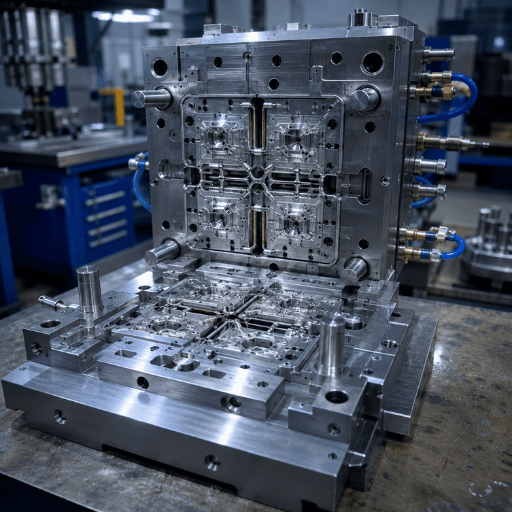
O ferramental 1TP15 T é onde o “Two-Heat Rule” se transforma em aço. Como o material deve permanecer frio até a cavidade, o molde usa um corredor frio (convés frio)um coletor refrigerado que injeta diretamente na peça com pouco ou nenhum desperdício de corredor curado Sua cavidade fica quente Um bom corredor frio é caro em comparação com o ferramental convencional de corredor quente, mas é o que torna possível a sucata de corredor quase zero O registro da patente reflete o quanto a engenharia entra nisso: EP 1293323 B1 descreve a injeção de 1TP15 T através de um sistema cold-runner com prevenção de refluxo, e KR 101983242 B1 cobre um bocal de corte que interrompe o vazamento e o enchimento excessivo.
O aço do molde é inoxidável endurecido porque 1TP15 T é levemente abrasivo e a ferramenta vê o ciclo de calor Ao contrário dos moldes de plástico, as cavidades 1TP15 T geralmente não precisam de um acabamento de alto polimento ou ângulos de tração, uma vez que a borracha curada libera sem distorção Venting é o detalhe de fazer ou quebrar: Primer de ferramentas da Plastics Technology tensões que a viscosidade muito baixa de 1TP15 T força aberturas extremamente apertadas e colocadas A profundidade de ventilação típica para 115 T é de cerca de 0,000 3 em.0005 em; um respiradouro periférico de aba de rasgo pode funcionar 0,002 em.005 em.
Nota de Engenharia (compensação de redução)
Porque Meitu Engelhardt encolhe 22 T1TP20 T enquanto cura, a cavidade deve ser cortada superdimensionar Para atingir uma dimensão acabada de 50,0 mm a 2,51TP20 T encolher, corte a cavidade a aproximadamente 50,0 (1 - 0,025) 51,28 mm. E lembre-se da alavanca contra-intuitiva dos dados do processo: aumentando a pressão de injeção abaixa encolhimento (VALOR DE 3,051TP20 T a 200 psi caindo para 2,281TP20 T a 400 psi), então os fornecedores publicam um encolhimento alcance, não um único número. amarre suas tolerâncias finais a uma classe ISO 3302-1, M1 é o grau fino, M4 o grosso, e confirme a banda alcançável contra a geometria da peça.
Para o lado dimensional disso, nosso guia para tolerâncias de moldagem por injeção e nossas diretrizes de design 1TP15 T vão mais fundo na espessura da parede, gating e regras de corte inferior Em nossa própria oficina de moldes de 3.500 m², cortamos ferramentas de deck frio 1TP15 T em máquinas Makino e Roeders e validamos o encolhimento nos primeiros artigos antes do lançamento, porque um molde dimensionado para o número de encolhimento errado é um recorte, não um ajuste.
Defeitos de moldagem 1TP15 T comuns e como evitá-los
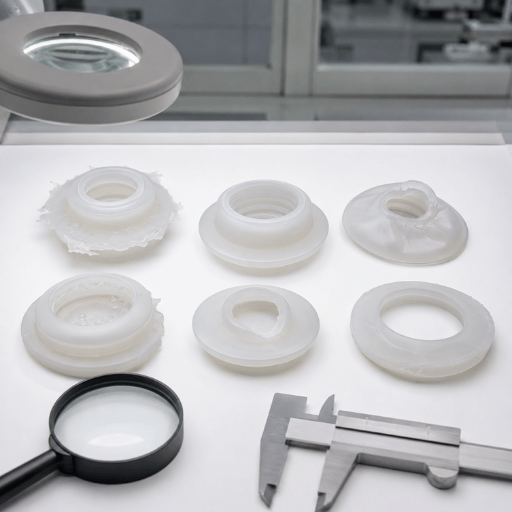
A baixa viscosidade do LSR é seu presente e sua maldição: ele preenche os micro-recursos lindamente e pisca em qualquer lacuna com a mesma facilidade Como um fabricante de moldes de silicone colocou sem rodeios em um fórum de moldagem, “você não vai conseguir peças sem flash com moldes impressos em 3 D, flashes de silicone em cerca de 0,00015 pol.” O controle de flash real é uma disciplina de aço e ventilação, e é por isso que os construtores de máquinas patenteiam hardware especificamente para detê-lo; patente KR 101983242 B1 descreve um bocal de corte cujo trabalho é evitar o vazamento e o enchimento excessivo do flash de acionamento. O 5 1TP15 T Defeitos Tabela Raiz-Causa mapeia as falhas que vemos com mais frequência para sua causa e correção.
| Defeito | Causa raiz | Consertar |
|---|---|---|
| Flash | Baixa viscosidade escapando da linha de separação; ferramentas desgastadas/soltas; sobreembalagem | Aperte a linha e a braçadeira da peça; verifique o tamanho do tiro; precisão-vent (0,000 em.0005 em). |
| Vazios/armadilhas de ar | Ar retido sem onde desabafar | Preencha para compactação, localize o vazio, adicione um respiradouro lá; use ventilação a vácuo/guia de rasgar |
| Tiro curto | Preenchimento insuficiente; cura prematura no corredor; pontos frios | Aumente a pressão/taxa de injeção; verifique a temperatura do corredor frio; reequilibrar portões |
| Subcura/proporção | Desvio da relação A:B devido ao acúmulo curado nas válvulas de retenção | Assista aos manômetros laterais A e B para uma resposta desigual da agulha; atenda ao bloco de impacto |
| Retrocesso no portão | Elastômero em expansão forçado para fora do portão em grandes seções transversais em alta temperatura | Mova o portão para uma seção mais fina ou reduza a pressão de injeção/temperatura de vulcanização |
Causas profundas por literatura de design de processo e relatórios de campo de LSR; veja Referências.
Quais são as desvantagens do LSR?
Aqui estão as limitações honestas: 1TP15 T exige ferramentas de câmara fria especializadas e dispendiosas e uma prensa específica para 1TP15 T; o flash é um risco de acabamento sempre presente que pode exigir corte; uma etapa pós-cura é frequentemente necessária para propriedades mecânicas ou alimentares/médicas críticas; e o material não pode ser reprocessado Nenhuma delas é deal-breakers, mas explicam por que o 1TP15 T recompensa o volume e um moldador disciplinado, e por que um one-off de baixo volume pode ser mais barato em outro processo Em nosso laboratório de qualidade no local, examinamos os primeiros artigos em busca de flash, vazios e durômetro antes que uma ferramenta seja lançada para produção, porque o defeito mais barato é o capturado antes do início da execução.
Onde a moldagem por injeção 1TP15 T ganha, aplicações por indústria
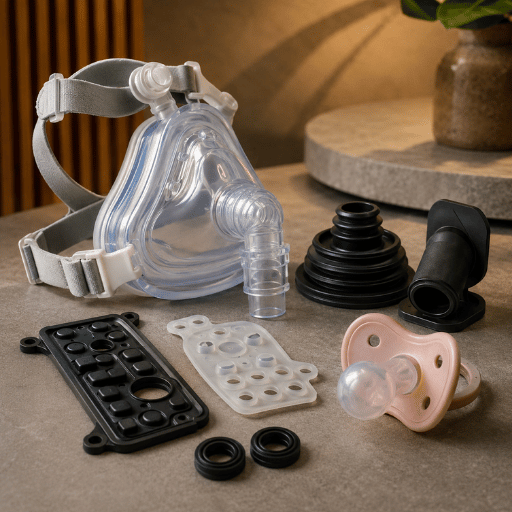
Entre os produtos de borracha feitos por moldagem, as peças de moldagem por injeção 1TP15 T ganham seu lugar onde quer que uma peça deva ser flexível, biocompatível, eletricamente isolante ou estável em temperaturas extremas Suas credenciais de biocompatibilidade e contato com alimentos não são reivindicações de marketing, elas são codificadas nos EUA. Regulamento FDA 21 CFR 177.2600 lista explicitamente os elastômeros de silicone contendo grupos metil e vinil entre borrachas permitidas para contato repetido com alimentos, sujeitas a limites de extração (não mais que 20 mg/in² de extrativos totais em água nas primeiras 7 horas).Para contato implantável e com dispositivo, os materiais são rastreados para USP Classe VI e qualificados no nível do dispositivo sob ISO 10993.
| Indústria | Peças típicas LSR | Motorista imobiliário |
|---|---|---|
| Ciências médicas/da vida | Vedações, válvulas, diafragmas, peças de distribuição de medicamentos, wearables | Biocompatibilidade (USP Classe VI / ISO 10993), esterilizável |
| Automotivo | O-rings, conectores e vedações de sensores, ilhós, foles | Resistência do calor/UV; under-capô & durabilidade do EV |
| Bebê & contato do alimento | Mamilos para garrafas, espátulas, assadeiras, focas | FDA 21 CFR 177.2600, insípido/inodorizado |
| Consumidor/vestível | Faixas de relógio, pontas de orelha, capas de botões, punhos de toque suave | Seguro para a pele, flexível, sobremoldável |
| Elétrica /industrial | Isoladores, vedações de conectores, membranas sensoras | Isolamento dielétrico; resistência química |
Veja como isso se desenrola no chão Uma equipe de dispositivos de diagnóstico uma vez nos trouxe uma válvula de retenção bico de pato que havia sido moldada por compressão em HCR, ciclos longos, corte manual por flash e pressão de rachadura que derivou muito para o lote até que as peças falharam na inspeção Re-projetada para moldagem por injeção 1TP15 T em um grau de platina 40 Shore A, a mesma válvula manteve sua pressão de rachadura dentro de uma faixa apertada em uma corrida anual de seis dígitos, desmoldada automaticamente e limpou a USP Classe VI. Esse é o padrão recorrente: quando uma peça flexível tem que atingir uma barra regulatória e uma especificação repetível em volume, LSR é geralmente o que o mantém em produção em vez de ser re-sourced.
Porque 1TP15 T é naturalmente translúcido e facilmente pigmentado, o mesmo processo para fora coloridos, produtos moldados personalizados sem pintura secundária As classes autoadesivas 1TP15 T estendem o processo em dois tiros e sobremoldagem de silicone, ligando uma face de silicone macio diretamente em um plástico rígido ou inserção de metal sem primers ou colagem secundária, uma face de botão macia sobre uma caixa de nylon é o exemplo clássico.
O que 1TP15 T Injection Molding Custa, e a tela de adequação de 4 portas
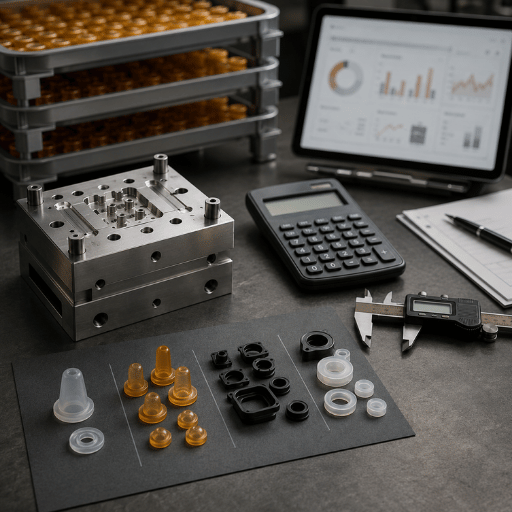
O custo 1TP15 T tem duas camadas: um investimento único em ferramentas (o molde de convés frio, muitas vezes o maior item de linha e o passo mais longo) e um preço por peça definido por cavitação, grau de material, durômetro, tempo de ciclo e qualquer operação pós-cura ou secundária As escolhas de equipamentos também são importantes, prensas totalmente elétricas, valorizadas para o trabalho em sala limpa porque evitam o óleo hidráulico, custam pelo menos 251TP20 T mais do que uma máquina hidráulica comparável Como as ferramentas são carregadas na frente, a economia da unidade do 1TP15 T melhora acentuadamente com o volume, recompensa a produção de alto volume e as corridas de produção mais longas, e é por isso que raramente é a rota mais barata para um verdadeiro one-off Seu lado flip é a moldagem precisa de peças complexas de silicone a um custo por peça que cai à medida que o nosso guia sobe custo de moldagem de borracha personalizado quebra ainda mais os motoristas.
A tela de adequação LSR de 4 portas
Execute uma parte candidata através de quatro portas antes de solicitar uma cotação Pass todos os quatro e 1TP15 T é quase certamente o processo certo; falhar um e repensar o design ou o processo.
- Porta geometria. As paredes são finas e razoavelmente uniformes, com características flexíveis ou de membrana fina? 1TP15 T adora o que os plásticos rígidos lutam com. Seções transversais grossas e grossas lutam contra o tempo de cura.
- Porta volume. Você executará peças suficientes para amortizar ferramentas de convés frio? Volumes médios a altos pagam de volta; pequenas execuções raramente o fazem.
- Porta material/regulatória. Você precisa de biocompatibilidade, contato com alimentos, temperatura extrema ou desempenho de isolamento elétrico? Isso é a grama doméstica do LSR.
- Portão tolerância. A peça pode viver dentro de uma classe ISO 330-1 (aproximadamente ±0. dado um típico ISO 20.2 mm), precisão 23TP0T shrink? Se você precisar de precisão mais apertada que M1, valide a viabilidade primeiro.
A moldagem por injeção de 1TP15 T é adequada para produção de baixo volume?
As execuções de baixo volume 1TP15 T podem funcionar, mas com os olhos abertos Muitos programas médicos e de consumo usam 1TP15 T durante a prototipagem em estágio avançado para produzir peças de quase produção para ensaios clínicos e execuções piloto Observe a conta de ferramentas, no entanto: como o molde do convés frio domina o custo inicial, os volumes baixos carregam uma alta carga de ferramentas por peça Se você precisar apenas de um punhado de peças, pergunte ao seu moldador se uma ferramenta de ponte mais simples ou um processo alternativo serve melhor ao marco, então mude para uma ferramenta de produção 1TP15 T quando o volume justificar.
Como escolher um parceiro de moldagem por injeção LSR
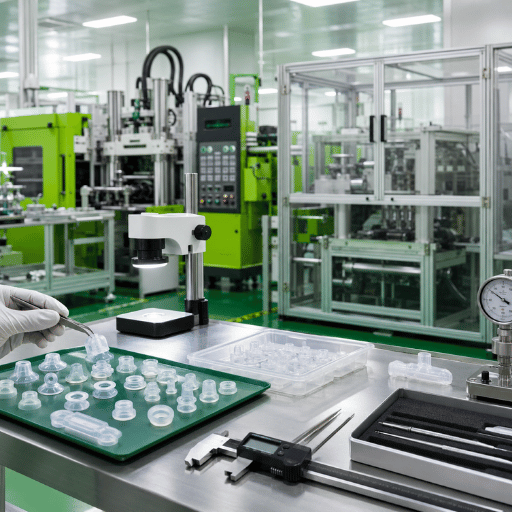
Escolher uma matéria do moldador mais em 1TP15 T do que na maioria de processos, porque o controle de flash, o ferramental do frio-corredor, e a disciplina da relação são habilidades do chão de fábrica, não itens do catálogo Use esta lista de verificação quando você examina um fornecedor da moldagem por injeção LSR:
- ✔ Sistemas qualidade. ISO 9001 no mínimo; ISO 13485 para médico, IATF 16949 para automotivo; FDA /LFGB /NSF para alimentos e contato médico.
- ✔ Ferramentas internas. Eles próprios podem cortar e corrigir moldes de convés frio? ferramentas terceirizadas retardam cada recorte de psiquiatra.
- ✔ Automação e sala limpa. Ilumina as células do convés frio e, para fins médicos, as salas limpas com classificação ISO reduzem a contaminação e o custo em volume.
- ✔ Testes no local. Um laboratório real de metrologia e materiais para verificar durômetros, dimensões e extraíveis antes do lançamento.
- ✔ Capacidade headroom. Prensas e capacidade de mistura suficientes para escalar sem re-sourcing mid-program.
Para contextualizar como é essa capacidade na prática: nossa fábrica opera cerca de 700 máquinas injetoras ao lado de duas linhas de mistura de silicone de 55 litros (cerca de 3.000 toneladas de rendimento de silicone por ano), uma oficina interna de moldes de 3.500 m² produzindo mais de 500 moldes conjuntos anualmente e um laboratório de testes químicos e físicos no local, em ISO 9001, IATF 16949, FDA, LFGB e NSF. Essa integração vertical é o que permite que uma loja resolva um problema de flash ou encolhimento na ferramenta em vez de na citação. Para ver onde LSR se encaixa entre nossos mais amplos Serviços de moldagem por injeção LSR, comece por aí.
Perspectivas da indústria, para onde a moldagem por injeção LSR está indo (2026 e além)
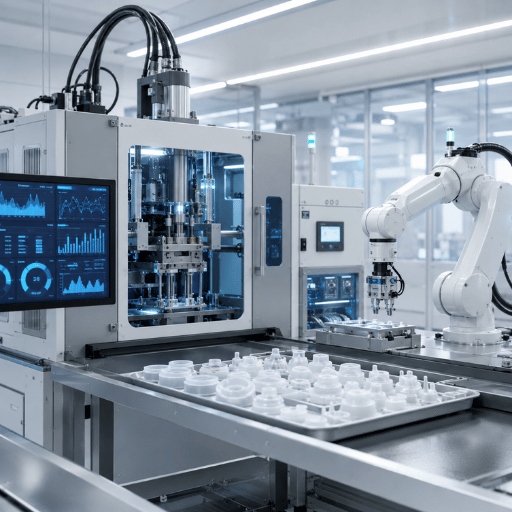
Para os compradores em 2026, a decisão que importa não é se o LSR crescerá, é quem Pode servir onde está crescendo Dois motoristas da procura estão puxando a capacidade da injeção 1TP15 T para lojas automatizadas, certificadas Primeiro, a eletrificação automotiva está multiplicando a necessidade para o sensor de alta temperatura, o conector, e os selos do barramento que sobrevivem sob-capô e ambientes da bateria-pacote, um conjunto da aplicação 1TP15 T é propositadamente-construído para, e a razão automotivo já domina a procura líquido-injeção-moldagem Segundo, os programas do médico-dispositivo mantêm a biocompatibilidade mais apertada e as expectativas da limpeza, que favorecem moldadores com salas limpas, ISO 13485, e fluxos validados do material da classe VI/ISO 10993 de USP.
Tecnologicamente, a tendência é em direção a células frias totalmente automatizadas e controle da taxa de cura na máquina, que reduzem o custo unitário em volume e aumentam a lacuna entre oficinas automatizadas e manuais, o fluxo constante de patentes de ferramentas de câmara fria (como CN 218462821 U) rastreia que a automação empurra Os analistas de mercado dimensionam o mercado global de 1TP15 T em aproximadamente US$3.6 bilhões em 2026 com alto crescimento anual de um dígito até o início de 2030, útil apenas como fundo direcional, não como uma razão de fornecimento Acionável: se você está planejando um programa 20262027 em componentes médicos de EV, pese sua lista restrita de fornecedores em direção a lojas que já executam células automatizadas de 1TP15 T com as certificações certas, porque essa capacidade é onde a demanda está se concentrando Para a visão upstream, nosso guia de borracha de silicone líquida cobre graus de materiais e DFM com mais profundidade.
Perguntas frequentes
Q: Qual é o propósito da borracha de silicone líquida?
Ver Resposta
O silicone líquido fornece um elastômero flexível, durável e biocompatível que funciona em temperaturas extremas (aproximadamente -50 a +200 °C), resiste a produtos químicos e UV e isola eletricamente Seu objetivo na fabricação é fornecer peças flexíveis de alto volume, vedações, válvulas, membranas, garras de toque macio, componentes médicos e componentes médicos que plásticos rígidos e muitos outros elastômeros não conseguem igualar, ao mesmo tempo em que atendem aos padrões de contato com alimentos e biocompatibilidade médica.
Q: Como você molda a borracha de silicone líquida?
Ver Resposta
Duas bombas dosadoras puxam a base e o catalisador na proporção de 1:1, um misturador os mistura e a mistura fria é injetada através de um canal frio em uma cavidade (15 estática 20 °C).Aí a reação de adição vulcaniza a peça em cerca de 200 segundos, após o que um robô a desmolda e uma pós-cura opcional do forno otimiza suas propriedades Todo esse circuito executa o inverso da moldagem termoplástica: material frio em um molde quente.
Q: Pode 1TP15 T ser usado para multi-componente ou duas peças de tiro (sobremoldadas)?
Ver Resposta
Sim. Os graus autoadesivos 1TP15 T são projetados para dois tiros e sobremoldagem, ligando o silicone diretamente a uma inserção rígida de plástico ou metal sem primers ou colagem secundária É assim que apertos de toque suave, caixas seladas e botões de silicone sobre plástico são produzidos em uma única célula automatizada, eliminando a montagem a jusante.
Q: Como as velocidades de produção de 1TP15 T se comparam a outros métodos de moldagem?
Ver Resposta
1TP15 T cura mais rápido do que a moldagem de transferência de silicone sólido suporta automação de luzes apagadas, proporcionando ciclos curtos (geralmente 200 compressão60) e alta através de paredes espessas com tempo de cura lento.
Q: É a moldagem por injeção 1TP15 T mais econômica para baixo volume?
Ver Resposta
O trabalho de baixo volume 1TP15 T geralmente não é a opção mais barata, porque as ferramentas de deck frio são o custo inicial dominante. 1TP15 T compensa em volume médio a alto; para um punhado de peças, uma ferramenta de ponte ou processo alternativo geralmente é mais barato.
Q: Qual durômetro 1TP15 T devo escolher?
Ver Resposta
1TP15 T está disponível de cerca de 5 a 80 Shore A; a maioria das partes pousa entre 30 e 70. graus mais macios suit membranas, e peças de contato com a pele; graus mais firmes suit superfícies estruturais ou de desgaste Pick durômetro contra a força de vedação da peça e sentir, em seguida, confirmar com uma amostra ver nossas diretrizes de design LSR.
Tem uma peça 1TP15 T para citar?
Execute-o através da tela de 4 portas e, em seguida, envie-nos seu desenho para uma revisão gratuita do design para fabricação e verificação de redução.
Sobre Este Guia
Escrevemos este guia de moldagem por injeção 1TP15 T do piso de moldagem, não o folheto As janelas de processo, a matemática de compensação de encolhimento e as causas-raiz de defeitos aqui refletem a prática diária em nossas células 1TP15 T de deck frio, oficina de moldes interna e laboratório de qualidade no local, verificado de forma cruzada com 1TP10 T, ISO e literatura publicada de design de processos de silicone Revisada pela equipe técnica de Tecnologia de Borracha e Plástico de Guangdong 1TP2 T.
Referências e fontes
- 21 CFR 177.2600, Artigos de borracha destinados a uso repetidoUS FDA /Código Eletrônico de Regulamentações Federais
- Moldagem por injeção de borracha de silicone líquidaWikipédia
- Moldagem por injeção com borrachas de silicone líquidas: usando design de processo para maximizar resultadosPlásticos Médicos e Biomateriais (MD+DI)
- Entrando em 1TP15 T, Parte IV: Como o ferramental LSR é diferenteTecnologia Plásticos
- EP 1293323 B1, Método e dispositivo para moldagem por injeção de borracha líquida de siliconePatentes do Google
- KR 101983242 B1, Bocal de corte para moldagem por injeção LSRPatentes do Google
- ISO 3302-1:2014, Borracha, tolerâncias para produtos, Parte 1 (classes de tolerância dimensional M1M4); USP Classe VI e ISO 10993 (biocompatibilidade) (padrões referenciados em texto
Artigos Relacionados
- LSR vs HCRescolhendo o processo de silicone certo
- Diretrizes de projeto LSRespessura, controle e tolerâncias da parede
- Sobremoldura de siliconeLSR de dois tiros e autoadesivo
- Guia de moldagem de borracha de silicone líquidograus de materiais e DFM