Entre em Contato com Engelhardt


A moldagem por injeção 1TP15 T é um processo de fabricação que injeta uma borracha de silicone líquida curada com platina de duas partes em um molde aquecido, onde se reticula em uma peça de elastômero termofixo acabada em segundos Como cura quimicamente em vez de congelar, a peça permanece estável ao calor e não pode ser derretida e reformada, e é por isso que 1TP15 T é o material de escolha para peças de alto volume em aplicações automotivas, médicas e eletrônicas Este artigo descreve os fundamentos deste estágio do processo por estágio - incluindo fatores que você precisa considerar para selecionar o melhor durômetro e grau de borracha de silicone, repartição de custos e como escolher um fabricante.
Em um parágrafo
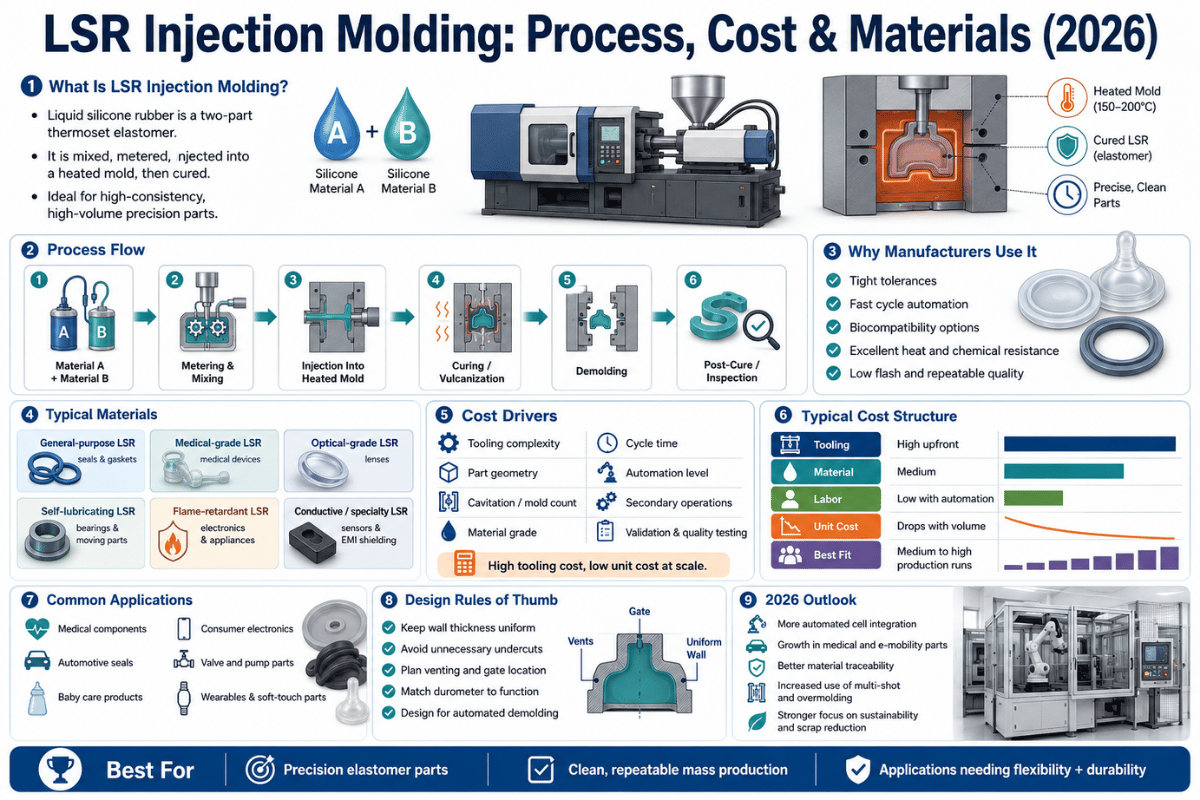
A moldagem por injeção de 1TP15 T mede com precisão e mistura estaticamente dois materiais líquidos, tipicamente um silicone de cura por adição composto por uma base ativada por catalisador de platina e um reticulador O material misturado então injetado através de um cold-runner resfriado em uma cavidade quente - geralmente 150-200 C - curando em seu durômetro desejado em 25 segundos ou menos Como o silicone não cura no corredor frio - que normalmente permanece em torno de 15-25 C, é um método sem flash e sem sucata para fabricação automatizada de alto volume de peças com classificações de dureza da Shore A 5-80.
Especificações rápidas: Moldagem por injeção LSR
| Forma material | Líquido de duas partes (A: B misturado 1:1), cura de adição de platina |
| Faixa durômetro | Shore A 580 (graus padrão normalmente 300) |
| Cura/temperatura do molde | Cavidade aquecida até 200 °C; corredor frio ~15 °C |
| Temperatura de serviço | -50 °C a +250 °C (graus especiais mais largos) |
| Tolerância típica | Linear ±0,025 mm/mm/±0,0mm; parte.2 mm (por ISO 3302-1) |
| Encolhimento | ~2 % (dependente do grau) |
| Cavidades | 1 a 32+; cura medida em segundos por peça |
O que é moldagem por injeção LSR?
A Moldagem por Injeção 1TP15 T é quando uma borracha de silicone líquida curada com platina de duas partes é injetada em uma cavidade de molde já quente, curando-se para se tornar a parte final do elastômero em segundos Ao contrário dos termoplásticos que solidificam após o resfriamento e derreterão quando o calor aplicado novamente, o 1TP15 T experimenta uma reticulação permanente (ele se define como um termofixo) e não pode ser derretido e redobrado novamente.
No nível fundamental, o material é dois líquidos separados O componente A contém um catalisador de platina, e o componente B contém o reticulador (nomeadamente o metil hidrogênio siloxano) e um inibidor, o que impede que ele reaja prematuramente enquanto os dois componentes são armazenados em suspensão O componente B também contém um homopolímero inerte de polissiloxano de cadeia longa reforçado com carga de sílica tratada Quando misturado 1:1 em uma cavidade quente ocorre a reação de adição (ou hidrossililação) catalisada por platina, ligando quimicamente as cadeias em um elastômero uniforme Um amplamente referenciado (publicado no Jornal de Fabricação e Processamento Avançados mostra como a temperatura da cavidade e o tempo de permanência alcançados dentro dela são responsáveis por quão reticulado (ou quanto dele é formado) é o elastômero, a variável que determina se o material se reticula totalmente e está acabado ou permanece pegajoso.
Uma vez que o material permanece líquido até que tenha sido curado, o 1TP15 T flui e preenche paredes finas e microcaracterísticas que materiais mais rígidos não conseguem, com baixo flash Essa trindade de uma química bio-amigável, fluxo amigável à automação e excelente estabilidade térmica em uma faixa de temperatura de -50 C a +250 C faz do 1TP15 T o material de escolha tanto para peças externas de contato com a pele quanto sob as peças automotivas do capô Saiba mais sobre o que pode ser alcançado em nosso guia de melhores práticas de moldagem de borracha de silicone líquido.
💡 Takeaway chave
1TP15 T: valor termofixo estável ao calor: sem flash, alto volume, alta precisão; não para aplicações de baixo volume e baixo funcionamento de ferramentas
Como funciona o processo de moldagem por injeção LSR: o ciclo de injeção de 7 estágios
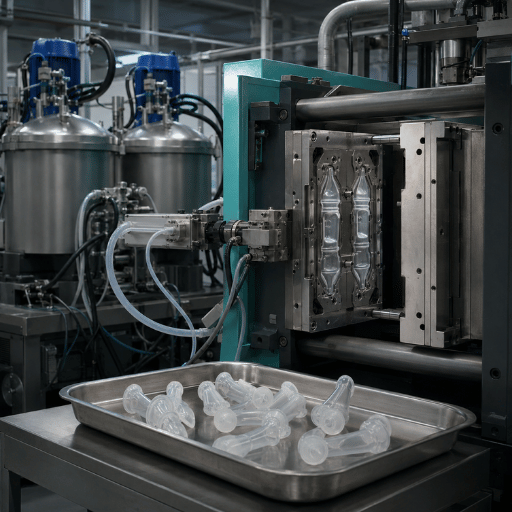
O processo de moldagem por injeção de 1TP15 T é baseado na cura através de uma reação de adição: o silicone misturado é mantido no corredor frio em torno de 15-25 C, então a cavidade aquecida (tipicamente cerca de 200 C) ativa o catalisador de platina, a parte de reticulação em segundos com flash zero e sucata de corredor zero para cura A maneira mais intuitiva de imaginar é um único loop contínuo Abaixo do Ciclo de Injeção 1TP15 T de 7 Estágios resumido para referência convenienteoutros guias geralmente espalham as fases sobre parágrafos.
Uma máquina 1TP15 T é projetada em torno da dosagem, não plastificando Em vez do típico tambor alternativo da prensa termoplástica e parafuso para derreter pelotas plásticas, a prensa 1TP15 T depende de uma unidade de medição e bombas para dosar os componentes 1:1 A/B em um misturador estático, enquanto a força de fixação acomoda a ferramenta fechada contra a pressão de injeção Uma vez que a vulcanização acontece apenas em uma cavidade aquecida com entrega de canal frio, as prensas 1TP15 T são funcionalmente “runnerless” não há nada para solidificar na alimentação resfriada.
| Estágio | O que acontece | Temperatura | Tempo típico |
|---|---|---|---|
| 1. medição/bombeamento | Os êmbolos empurram a base (A) e o catalisador (B) dos tambores | Ambiente | Contínuo |
| 2. Mistura estática (1:1) | A e B se misturam a uma granalha homogênea em um misturador estático | ~1525 °C | Contínuo |
| Injeção 3. cold-runner | Corredor refrigerado entrega mistura para o portão sem curá-lo | ~1525 °C | <1 s |
| 4. preenchimento aquecido da cavidade | O tiro preenche a cavidade quente; o afinamento por cisalhamento ajuda paredes finas | Até ~200 °C | 15 s |
| Cura 5. Platinum | A reação de adição reticula a peça a um termofixo | Calor cavidade | Segundos (dependentes da parede) |
| 6. desmoldagem/automação | Remoção de robô ou manual; não são necessários pinos ejetores | Quente | 1 s |
| 7. Pós-cura opcional | O forno remove voláteis para peças médicas/alimentares | ~200°C | Até 4 h (lote) |
As temperaturas do estágio mostradas refletem máquinas típicas de 1TP15 T e faixas de fichas técnicas de materiais; os valores exatos variam de acordo com o grau 1TP15 T, espessura da peça e layout da cavidade.
A chave para tudo isso é o corredor frio Por um lado, editores comerciais em Tecnologia Plásticos A Tecnologia de Plásticos da Revista (como observado anteriormente) nos diz que 1TP15 Ts têm tempos de cura mais longos do que os tempos típicos de resfriamento termoplástico e, crucialmente, não podem ser recondicionados O corredor frio aborda isso com precisão: apenas parte do volume é introduzida e curada, e não há corredor (e, portanto, nenhum sprue, sem aparas) que cura Isso também é o que torna o núcleo do mecanismo da ferramenta LSR patenteável os registros oficiais da patente para métodos para dispositivo de moldagem por injeção LSR (EP1293323B1).
Como é curado LSR?
1TP15 T é curado pela cura de platina ativada por calor (adição), não pela pressão ou evaporação que muitos plásticos dependem Quando a mistura 1:1 A/B atinge uma cavidade quente, o catalisador de platina impulsiona uma reação de hidrossililação que reticula o líquido em um sólido em segundos Seções finas gel em menos de um segundo; paredes mais espessas levam mais tempo à medida que o calor se difunde para o núcleo Nenhum subproduto é liberado, e é por isso que o 1TP15 T curado com platina é limpo o suficiente para peças médicas e de contato com alimentos.
Nota de Engenharia (leitura) tempo de cura
O tempo de cura é amarrado à dimensão mais espessa, não à área de superfície Uma regra geral aceita para uma parede nominal de 2 mm em temperatura de molde totalmente quente é vários segundos de tempo de cura após o preenchimento, mais desmoldagem, e cerca de vários segundos cada adicional por ~ 2 mm adicional de material Mas para um chefe de 4 mm na mesma parte que, de outra forma, é apenas 1,5-2 mm de espessura, é o chefe que governará o tempo de ciclo (ciclo) não as regiões mais finas Assista a seções grossas e encurte o ciclo.
LSR vs HCR, TPE e RTV Silicone
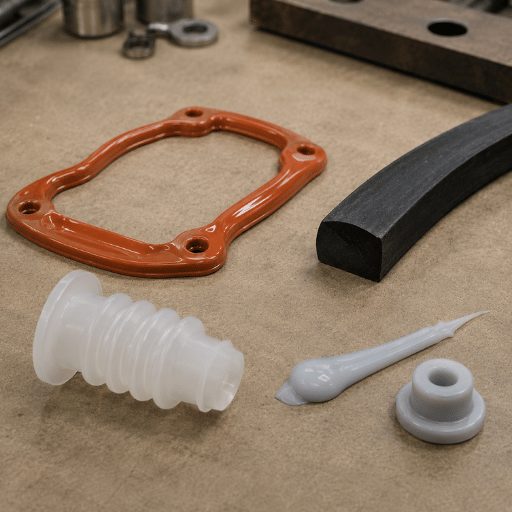
1TP15 T é um líquido bombeável de duas partes que cura através da adição de platina; HCR (borracha de alta consistência) é uma goma rígida que deve ser moída e curada por pressão; RTV cura à temperatura ambiente e é melhor para peças de baixo volume; e TPE é um plástico refundível Praticamente falando, se você está procurando peças altamente automatizadas, de alto volume e de alta precisão, 1TP15 T ganha; em trabalhos de menor volume e menor orçamento de ferramentas, seu custo de ferramentas de câmara fria é difícil de justificar Aqui está a matemática não um gráfico de comparação vago alto-médio-baixo.
| Propriedade | LSR | HCR | TPE | RTV |
|---|---|---|---|---|
| Formulário | Líquido de 2 partes | Goma sólida | Pelotas termoplásticas | Líquido de 2 partes |
| Cura | Adição de platina, calor | Peróxido/platina, calor+pressão | Nenhum (derreter/resfriar) | Temperatura ambiente |
| Automação | Alto | Baixo | Alto | Baixo |
| Ponto ideal de volume | Alto | Baixo | Médio | Baixo/protótipo |
| Temperatura de serviço | -50 a +250°C | -50 a +250°C | ~-30 a +120 °C | -50 a +200°C |
| Custo de ferramentas | Alto (corredor frio) | Baixo | Médio | Baixo |
Qual é a diferença entre HCR e LSR?
HCR vem como uma goma sólida pré-composta que precisa de moagem e cura por pressão. 1TP15 T vem como um par de líquidos bombeáveis que precisam de medição e injeção Os processos de moldagem por transferência HCR exibem menos controle e mais variação parte a parte O processo de injeção de câmara fria 1TP15 T produz alta repetibilidade com sucata quase zero No entanto, as ferramentas requerem corretores resfriados de precisão, portanto, o HCR pode ser selecionado para volumes baixos Veja o completo Comparação LSR versus HCR artigo.
Qual é a diferença entre RTV e LSR?
O silicone RTV (vulcanização à temperatura ambiente) cura lentamente sem calor, adequando protótipos e volumes muito baixos; 1TP15 T cura em segundos em uma ferramenta aquecida para produção automatizada Escolha RTV para algumas peças, 1TP15 T para dezenas de milhares Se as peças de plástico podem funcionar em vez disso, veja o nosso LSR vs TPE artigo.
Materiais LSR e seleção de durômetro
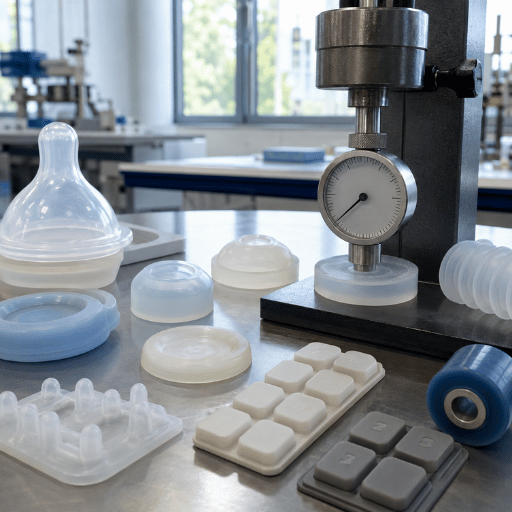
Dois fatores irão guiá-lo ao escolher 1TP15 T: Banda de durômetro e família de notas. Os durômetros 1TP15 T variam de um suave 5 A a um duro 80 A, mas a maioria das notas de estoque cai entre 30 A e 70 A. A banda de durômetro deve estar relacionada ao modo de falha, então uma lente óptica precisa de uma faixa diferente de uma vedação suave ou um teclado tátil Selecionar a faixa certa para a classe de peças, que muitos concorrentes não abordam, é a maneira mais eficiente de proceder Olhe para o Mapa de Durômetro para Aplicação abaixo.
| Banda Shore A | Sentir | Classe parcial | Exemplos típicos |
|---|---|---|---|
| 5–20 | Muito macio, semelhante a um gel | Vedações macias, válvulas, membranas | Válvulas para alimentação infantil, válvulas bico de pato, diafragmas |
| 30–50 | Soft-touch, tátil | Teclados, juntas, punhos | Teclados eletrônicos, O-rings, faixas vestíveis |
| 60–80 | Firme, dimensionalmente estável | Estrutural/óptico | Caixas de conectores, lentes ópticas, vedações rígidas |
A seleção da família de grau é diferentes graus terão dados variados (maior conteúdo de preenchimento resulta em maior resistência à tração e resistência ao rasgo (enchimento) lubrificante a seguir, não apenas o durômetro, define se a peça estará à altura de sua aplicação. Os graus de baixo durômetro até Shore A 5 servem vedações macias, enquanto os graus autoluantes cortam o atrito da superfície. Existem graus típicos para aplicações gerais da indústria; e graus específicos para vedações macias (até 5 A durômetro); graus autoluantes (modificados por fenil) para diminuir o atrito superficial; graus de autoligação para aderir diretamente a outros plásticos; graus ópticos para maior clareza e transparência; e graus médicos (uma consideração muito importante porque devem corresponder ao atrito ISO 10993 e/ou composto listado como US Classe VI e não pode ser rotulado como silicone “médico” Os principais fabricantes de LSR têm esses graus prontamente disponíveis com dados Engelhardt classifica ainda mais os graus de acordo com o modo de falha específico e valida os compostos de biocompatibilidade especificados em vez de tomar um rótulo geral Você pode selecionar a banda de durômetro certa usando nosso Seletor de durômetro LSR.
“O erro mais comum do comprador que corrigimos é sobre-especificar o durômetro ou pedir ‘silicone médico’ sem nomear o composto listado da USP Classe VI. O grau tem que corresponder ao modo de falha, uma válvula de alimentação que precisa selar na Shore A 10 não deve ser citada em um grau de uso geral de 50 durômetros.”
1TP15 T Overmolding e Two-Shot Molding
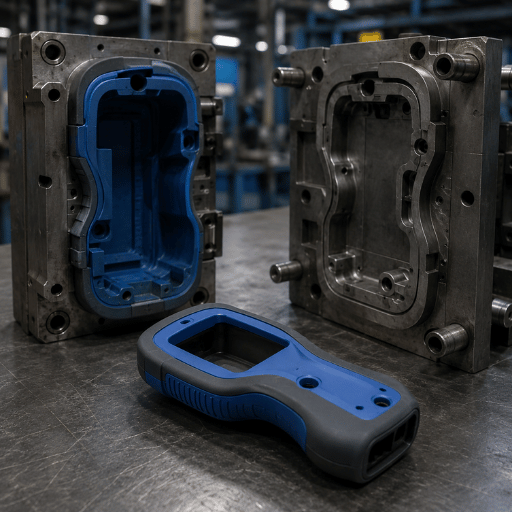
1TP15 T overmolding usa silicone líquido diretamente em substratos rígidos PA, PBT, PC PPSU, ou inserções de metal (metal inserts) ou produzir partes macio-duras em um ou dois tiros A ligação acontece através de um primer, cada vez mais, auto-ligação 1TP15 T graus que criam uma ligação cruzada química para o substrato durante a cura para eliminar o primer Essa é uma razão sobremoldar a adoção está aumentando: Um grau auto-adesivo tornar o processo um caso de uma operação em vez de dois.
A moldagem de dois tiros (2 K) processa ambos os materiais (substrato, depois 1TP15 T) na mesma ferramenta, enquanto a moldagem por inserção adiciona o substrato antes da sobremoldagem O risco de projeto chave reside na energia da superfície de preparação de ligação e no sucesso da ligação de limpeza através do ciclo térmico Um estudo de 1TP15 T sobre a moldagem termoplástica descobriu que o aquecimento dinâmico do molde e a preparação do substrato de pré-tratamento do substrato podem melhorar materialmente as ligações As diretrizes estão em nossa guia sobremoldagem silicone.
Nota de Engenharia (preparação de títulos)
Para os muitos 1TP15 T autoadesivos, ou o tratamento a plasma ou o priming podem elevar a energia superficial do material rígido, criando uma melhor molhabilidade para o silicone Após o ciclo térmico da ligação, não aceite os resultados de RT: o teste mais honesto é um teste de descascamento feito na pior temperatura de serviço esperada da peça.
Projeto e Ferramentaria para Moldagem por Injeção LSR
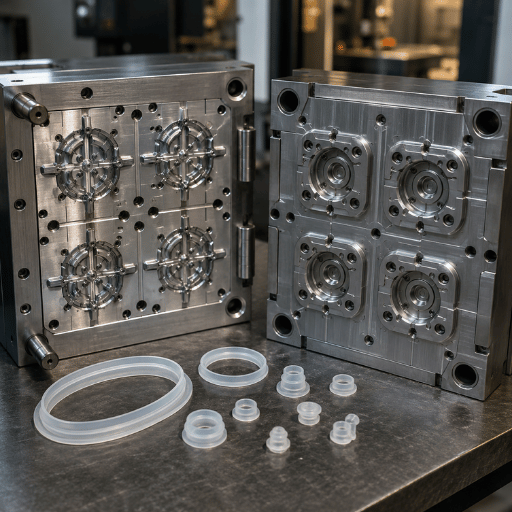
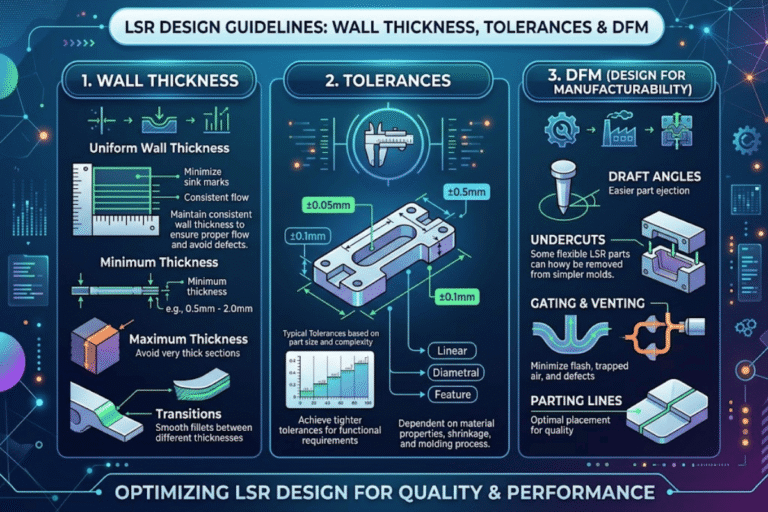
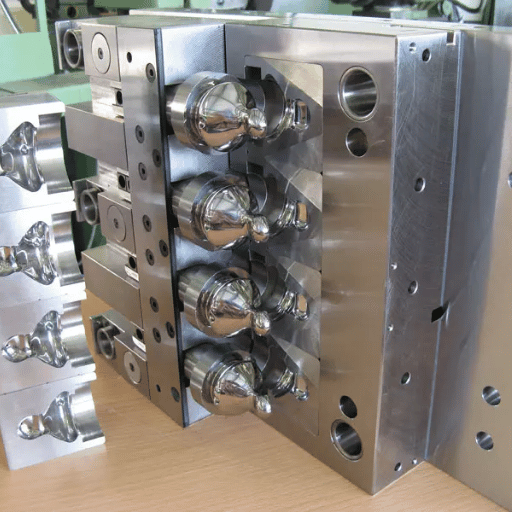
1TP15 T está mais preocupado com o controle de flash, encolhimento e liberação de molde Uma vez que é um líquido de baixa viscosidade, ele flui para qualquer abertura e assim portões, ventilação e linhas de separação desempenham um papel maior do que no ferramental termoplástico Planeje no encolhimento 2-31TP20 T, mantenha as seções da parede mesmo e localize portões para escondê-los A simulação de fluxo de molde prevê padrões de enchimento, ventilação a vácuo e encolhimento antes de cometer aço; ferramentas que executam volumes mais altos usam aço de ferramenta endurecido (o alumínio é bom para volumes baixos), e um agente de liberação de luz ou uma cavidade polida auxilia a liberação de molde Tolerâncias para peças de estoque são tipicamente lineares a.001 in/in [0.025 mm/mm], quebradas em graus pela ISO 3302-1, e peças médicas geralmente vão para deflacionamento criogênico Existem três erros primários que cometemos:
- Tratando o flash 1TP15 T como o material termoplástico Você quer ferramentas de moldagem sem flash e localização precisa do respiradouro; sua linha de peças “good o suficiente” aparece como um trabalho de acabamento em cada peça produzida.
- Esquecendo de incluir o encolhimento no início do processo de projeto É muito maior do que para um termoplástico, entre 2 a 31TP20 T, e será diferente com base no grau - o processo deve incluí-lo na ferramenta, não como parte do relatório de inspeção.
- Colocar a massa nas seções do molde . Características mais espessas fazem com que todos os tiros fiquem presos a um processo de cura específico, impactando a eficiência geral do processo; core essas peças para proteger o rendimento.
Central para o molde é a tecnologia de válvula-porta cold-runner, que, no momento da escrita original, era patente protegida (uma boa descrição está em EP1293323B1), Confira nosso completo Diretrizes de projeto LSR para a lista de verificação completa.
O que impulsiona o custo de moldagem por injeção 1TP15 T: a pilha de custo de 4 alavancas
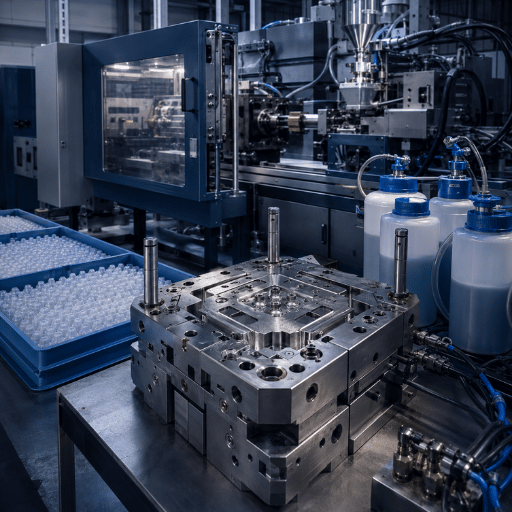
1TP15 T pilhas de custo de quatro alavancas de ferramentas de grau frio, cavitação, nível de automação de peças e quatro alavancas de ferramentas de grau frio, assim o alto custo de ferramentas amortiza em um baixo preço por peça somente quando o volume e a cavitação são altos A teia aberta é fina em preços reais de 1TP15 T, e não vamos inventar números em dólares aqui.
O que é confiável é a estrutura do custo e como as alavancas são negociadas umas contra as outras Os compradores em fóruns de engenharia continuam perguntando “quanto custará o molde, e o custo unitário?” então aqui é a estrutura honesta Esta é a pilha de custos 4-Lever LSR.
A Pilha de Custo LSR de 4 Alavancas
- frior runner ferramental o custo up-front mais caro; corredor refrigerado precisamente equilibrado com válvula gate. é fixo; o que significa que é diluído sobre um maior número de peças
- O molde de cavidade -A16 fornece 16 partes por ciclo, o custo por peça, a um custo de molde mais caro, pode ser reduzido pela metade no caso de duplicação na contagem de cavidades.
- Grau de Automação Robótica, “lights out” células e ferramentas reduzem a quantidade de mão de obra por unidade e controlam a consistência da qualidade do produto; o retorno aumenta diretamente com o volume.
- Grau de material /durômetro Médico / Óptico /As notas de autoligação são mais caras /Kg do que as de uso geral; LSR não pode ser re moído. então o peso que importa é apenas parte do peso.
Nota de Engenharia (leitura por peça) custo
Trabalhe assim: por custo de peça (volume total de ferramentas) + (cavidades de taxa de máquina de tempo de ciclo) + (preço do material de peso de tiro).O que a fórmula diz: em volume alto o termo de ferramentas cai e o tempo de ciclo determina se 1TP15 T é barato ou caro O que não diz: A escolha ideal em execuções de peças de alto volume pode ser impossível em uma execução de baixo volume Nosso Estimador de custos de ferramentas LSR deve permitir que você modele sua própria situação.
Onde LSR ganha com custo
- Volumes elevados que amortizam ferramentas
- Corredor frio sem sucata (sem perda de reafiação)
- Células automatizadas, sem luz e com baixo teor de mão de obra
- Peças finas/complexas que evitam operações secundárias
Ção Onde LSR perde no custo
- Volumes baixos (ferramentas nunca amortizam)
- One-offs e protótipos (use RTV)
- Notas médicas/ópticas superespecificadas
- Peças de paredes espessas que esticam o tempo de ciclo
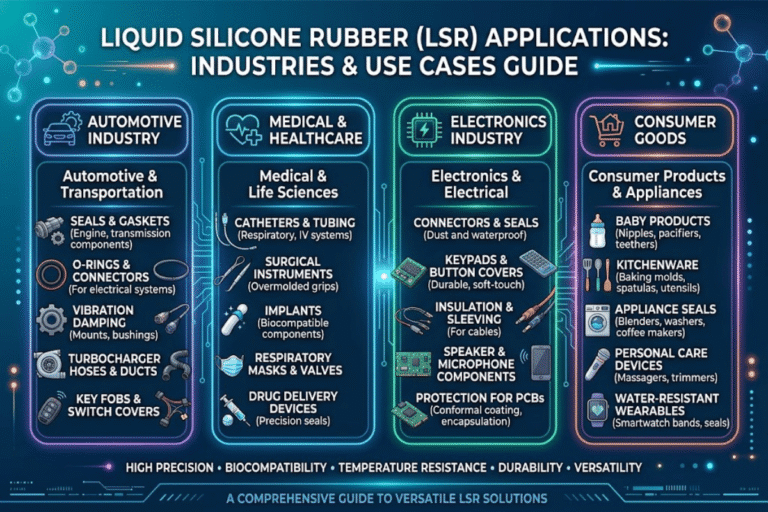
Aplicações LSR: Médico, Automotivo, Eletrônico e Consumidor

Você encontra 1TP15 T sempre que há necessidade de uma peça ser flexível, bio-compatível e manter propriedades em extremos de temperatura Existem alguns segmentos que criam alta demanda; os três grandes segmentos exploram características únicas de 1TP15 T: Fornecemos uma tabela abaixo que classifica aplicações comuns de 1TP15 T nas 3 principais indústrias Também identifica propriedades-chave para cada aplicação com um intervalo baseado em durômetro Pense nisso como um atalho de “O que estou moldando” para “Que grau e dureza cito.”
| Tipo de peça | Indústria | Costa Típica A | Propriedade que impulsiona a escolha |
|---|---|---|---|
| Bico de pato/válvula de alimentação | Médico | 5–20 | Selo macio + classe VI da USP |
| Diafragma | Médico/fluídica | 10–30 | Vida do Flex-ciclo |
| O-ring/selo estático | Automotivo | 40–60 | Resistência do conjunto de compressão |
| Selo conector | Automotivo /EV | 40–70 | faixa de -50 a +250 °C |
| ilhó/selo cabo | Automotivo | 30–50 | Proteção da vibração + da entrada |
| Teclado | Eletrônica | 30–50 | Sensação tátil de toque suave |
| Membrana impermeável | Eletrônica | 20–40 | Self-bonding sobremold selo |
| Lente óptica | Iluminação / óptica | 60–80 | Estabilidade transparente + dimensional |
| Banda vestível | Consumidor | 30–50 | Seguro para a pele + flexibilidade |
| Junta envolvente | Industrial | 40–70 | Química + resistência ao calor |
| Bico/mamilo para cuidar do bebê | Consumidor /médico | 10–30 | Biocompatível, muito macio |
Médico. Imagem de uma válvula de alimentação infantil moldada a partir da Shore A 10..., ela precisa assentar sob baixa força, suportar centenas de ciclos de esterilização e ser moldada a partir do composto exato listado na USP Classe VI e ISO 10993. Outro composto da mesma dureza (Shore A 10 aqui) pode moldar-se bem, mas ainda falhar na qualificação. A nota passa na auditoria, não no durômetro.
É também assim que nossas peças de respirador, autoinjetor e válvula de diagnóstico funcionarão.
Automotive AnEVconnectorseal opera onde o calor, vibração e proteção de entrada se encontram Uma faixa de temperatura de -50 °C a +250 °C mais bom conjunto de compressão dar uma resiliência de vedação 1TP15 T através de um conjunto de bateria inteira extremos térmicos que um TPE iria suavizar e não conseguir selar Eletrificação veículo crescente está aumentando a vedação e uso conector, ambos impulsionados por LSR.
Eletrônica e consumidor. teclado sobremoldado em gaxetas personalizadas 1TP15 T selando cada botão contra uma caixa de PCB Também considere este material para pulseiras e vestuário, revestimentos de acessórios de telefone, produtos para bebês e ferramentas de cozinha, veja o nosso aplicações de borracha de silicone líquido visão geral. moldamos peças de silicone personalizadas para aplicações de todos os tipos.
Como escolher um fabricante de moldagem por injeção LSR
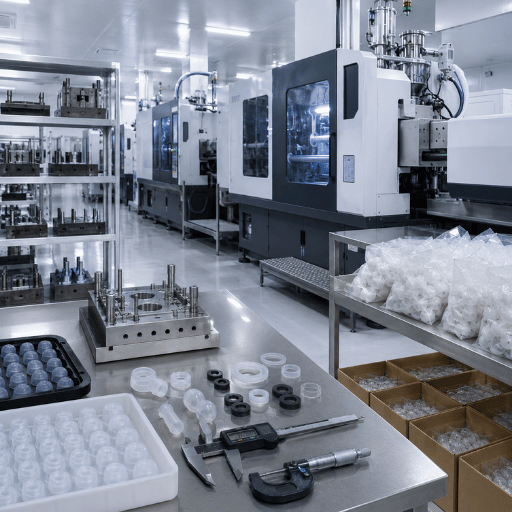
Mas por baixo de todas estas perguntas resume-se a um único critério Pode o moldador 1TP15 T manter um processo de câmara fria válido e repetível em seus volumes e com as certificações necessárias seu mercado exige? termoplástico NÃO é experiência que você pode transportar; ferramentas 1TP15 T, gating, e cura são todas disciplinas separadas Use isso como sua lista de verificação 1TP15 T moldadores RFO.
- Certificações no seu próprio mercado 1TP4 T para qualidade, 1TP3 T para automotivo, 1TP10 T /1TP6 T /1TP11 T e USP Classe VI / ISO 10993 para contato médico e alimentar.
- Ferramentas de câmara fria feitas em casa (eles cortarão/sintonizarão a ferramenta de válvula fechada) ou a peça mais resistente será enviada?
- Automação e capacidade de sala limpa (desmoldagem robótica) para precisão; molde para uso médico em sala limpa.
- CQ no local e rastreabilidade do material: controle de qualidade no local, além de todos os testes físicos e químicos necessários, incluindo a nota listada referenciada no certificado.
Para perspectiva, o 1TP2 T tem aproximadamente.700 máquinas (incluindo uma com uma tonnagepress de 2.000 toneladas), mais de 80- máquinas de vulcanização e 2-55 litros sil./rub. misturar linhas que dão aproximadamente 3.000 toneladas/ano Os moldes são construídos em uma oficina interna de fabricação de moldes de 3.500 m², usando máquinas Makino, Roeders e Standy, mais de 500 conjuntos de moldes por ano, funcionando 24 horas por dia, 365 dias por ano - e as peças são testadas no próprio Laboratório químico/físico QA/QC da planta A instalação mantém Litegot 1TP4 T, 1TP3 T, 1TP10 T, 1TP6 T e 1TP11 T, a razão pela qual podemos fazer referência a uma formulação específica em vez de reivindicações genéricas e um escopo para o composto listado USP Classe VI. Comece seu projeto a partir de nosso projeto Moldagem por injeção LSR hub.
A perspectiva LSR: para onde a demanda está indo
A alavanca real no volume 1TP15 T nos próximos anos não é o amplo aumento na demanda 1TP15 T. E as três forças específicas dos três interrompem o planejamento dos compradores O primeiro é a regulamentação 100000000000000000000000000000000000000000000000000000000000000000000000000000000000000000000000000000000000000000000000000000000000000000000000000000000000000000000000000000000000000000000000000000000000000000000000000000000000000000000000000000000000000000000000000000000000000000000000000000000000000000.
Enquanto 21 CFR 177.2600 ainda é o padrão para aplicações de contato com alimentos, a revisão de 2025 da ISO 10993-1 (publicada no final de 2025) atualiza como seu fornecedor deve documentar silicones médicos Em vez de simplesmente marcar caixas, as evidências dos fornecedores com base no impacto do ciclo de vida e risco estruturado se alinharão com a ISO 14971. o que isso significa para você: para sua próxima compra de molde de injeção para dispositivos médicos, prepare-se para obter mais tempo para verificar se a documentação de grau dos silicones médicos do seu fornecedor está de acordo com os novos padrões.
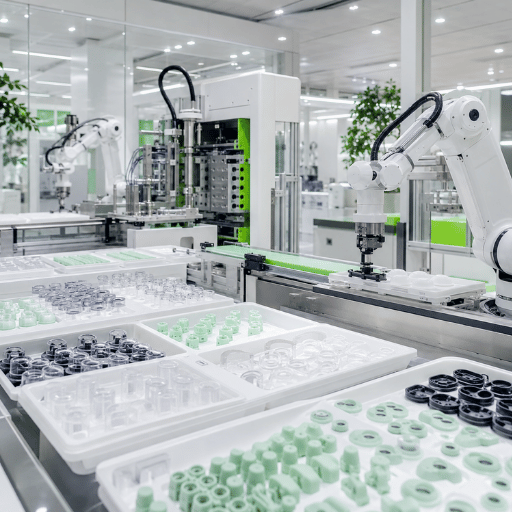
O segundo é a tecnologia. Autoligação sem primer LSR; graus de alto fluxo micromoldáveis; e automação servo-conduzida com câmara fria - todos contribuem para uma gama mais ampla de aplicações e custos de LSR; eletrônicos menores; e sobremoldagem mais suave. Em terceiro lugar está a eletrificação do veículo: cada sensor adicional, cada conector e cada vedação da bateria precisam de um material com essa estabilidade térmica.
Para fornecer contexto, o tamanho do mercado LSR estimado pelos pesquisadores de mercado como estando no meio de um dígito para alta taxa percentual anual de um dígito de crescimento (direcional apenas (empresa individual) as previsões podem variar amplamente esta informação servirá para informá-lo, mas a compra é baseada nos outros três critérios mencionados acima Se você já tiver um programa de 2026 ou 2027 definido, então o plano é muito direto; bloqueie os prazos de entrega de ferramentas agora e garanta a disponibilidade de notas para o durômetro específico e a certificação necessária.
Perguntas frequentes
Q: Qual é a diferença entre HCR e LSR?
Ver Resposta
HCR é uma goma sólida, pré-misturada que é moída e curada por pressão, o que dá ciclos mais lentos e mais variação entre as peças 1TP15 T é dois líquidos bombeáveis, misturados um-para-um e injetados em uma ferramenta de câmara fria aquecida, por isso funciona mais rápido e de forma mais repetida.
Q: Quais são as desvantagens da moldagem por injeção LSR?
Ver Resposta
A maior desvantagem é o alto custo inicial de ferramentas de câmara fria, que só compensa em volume; para algumas centenas ou alguns milhares de peças, RTV ou HCR é geralmente mais barato. 1TP15 T também é um líquido de baixa viscosidade, por isso pisca facilmente e exige ventilação precisa e controle de processo apertado O silicone curado também não pode ser rearredondado, então cada peça sucateada é material perdido, e desmoldagem de peças delicadas sem rasgá-las leva um trabalho cuidadoso com ferramentas e manuseio robótico.
Q: Como é curado LSR?
Ver Resposta
1TP15 T é curado por uma reação de adição de platina ativada por calor, não por pressão ou evaporação Quando a mistura um-para-um entra em uma cavidade à temperatura da cavidade, o catalisador de platina impulsiona a hidrossililação entre os grupos vinil e hidreto, reticulando o líquido em um sólido em segundos Nenhum subproduto se forma, de modo que o 1TP15 T curado com platina permanece limpo o suficiente para uso médico.
Q: Qual é a diferença entre RTV e LSR?
Ver Resposta
O RTV cura lentamente à temperatura ambiente, por isso se adapta a protótipos, fundição e um punhado de peças de baixo volume 1TP15 T cura em segundos dentro de uma ferramenta aquecida para produção totalmente automatizada Escolha RTV para algumas peças; escolha 1TP15 T quando precisar de dezenas de milhares.
Q: Quanto custa a moldagem por injeção LSR?
Ver Resposta
Resposta honesta: quatro alavancas depende de fri-runner ferramental, o número de cavidades, o nível de automação, eo grau de material Ferramentas é o grande custo up-front e só amortiza através do volume, de modo que o preço por peça cai acentuadamente como a quantidade sobe Um trabalho que parece caro em cinco mil partes pode ser a opção mais barata em quinhentos mil Em vez de confiar em um número, modele seu próprio volume contra ferramentas, tempo de ciclo e contagem de cavidades.
Q: É a moldagem por injeção 1TP15 T adequada para dispositivos médicos?
Ver Resposta
Sim, 1TP15 T é um material líder para dispositivos médicos porque é biocompatível, esterilizável e estável em uma ampla faixa de temperatura. A condição é a documentação: o grau deve ser o composto específico listado na USP Classe VI e ISO 10993, e na revisão de 2025 da ISO 10993-1 que as evidências devem seguir uma avaliação baseada no risco.
Q: Que durômetro de 1TP15 T devo escolher?
Ver Resposta
Combine a banda do durômetro com o modo de falha da peça Use Shore A 5-20 para vedações e válvulas macias, 30-50 para teclados e juntas e 60-80 para peças estruturais ou ópticas Quando não tiver certeza, proteste duas bandas adjacentes e teste antes de cometer ferramentas.
Tem uma peça 1TP15 T para enviar para cotação? entre em contato com nossa equipe para recomendações de processo e grau para atender às suas especificações.
Sobre Esta Análise
Este guia reflete como moldamos borracha de silicone líquida dia a dia, desde ferramentas de câmara fria cortadas em nossa própria oficina de moldes até verificação de classificação em relação aos compostos listados USP Classe VI e ISO 10993. A seção de custos evita deliberadamente valores em dólares fabricados porque o preço de 1TP15 T é específico da geometria e do volume; a pilha de custos de 4 alavancas é como realmente citamos. Revisado pela equipe técnica Engelhardt.
Referências e fontes
- Utilização da Norma Internacional ISO 10993-1 (Avaliação Biológica de Dispositivos Médicos)Administração de Alimentos e Medicamentos dos EUA
- 21 CFR 177.2600, Artigos de Borracha Destinados ao Uso RepetidoeCFR dos EUA
- Calculando a temperatura e o grau de reticulação para moldagem por injeção LSRJornal de Fabricação e Processamento Avançados (AIChE/Wiley)
- Testes de biocompatibilidade para implantes (estrutura ISO 10993)PMC, Biblioteca Nacional de Medicina dos EUA
- EP 1293323 B1, Método e Dispositivo para Moldagem por Injeção de Borracha Líquida de SiliconePatente Europeia (via Google Patents)
- Entrando em 1TP15 T, como o ferramental LSR é diferenteTecnologia Plásticos
![Sobremoldadura de silicone: Guia de design multimaterial LSR [2026]](https://meitu-engelhardt.com/wp-content/uploads/2026/04/0-8-768x512.png)