Entrez en contact avec Engelhardt


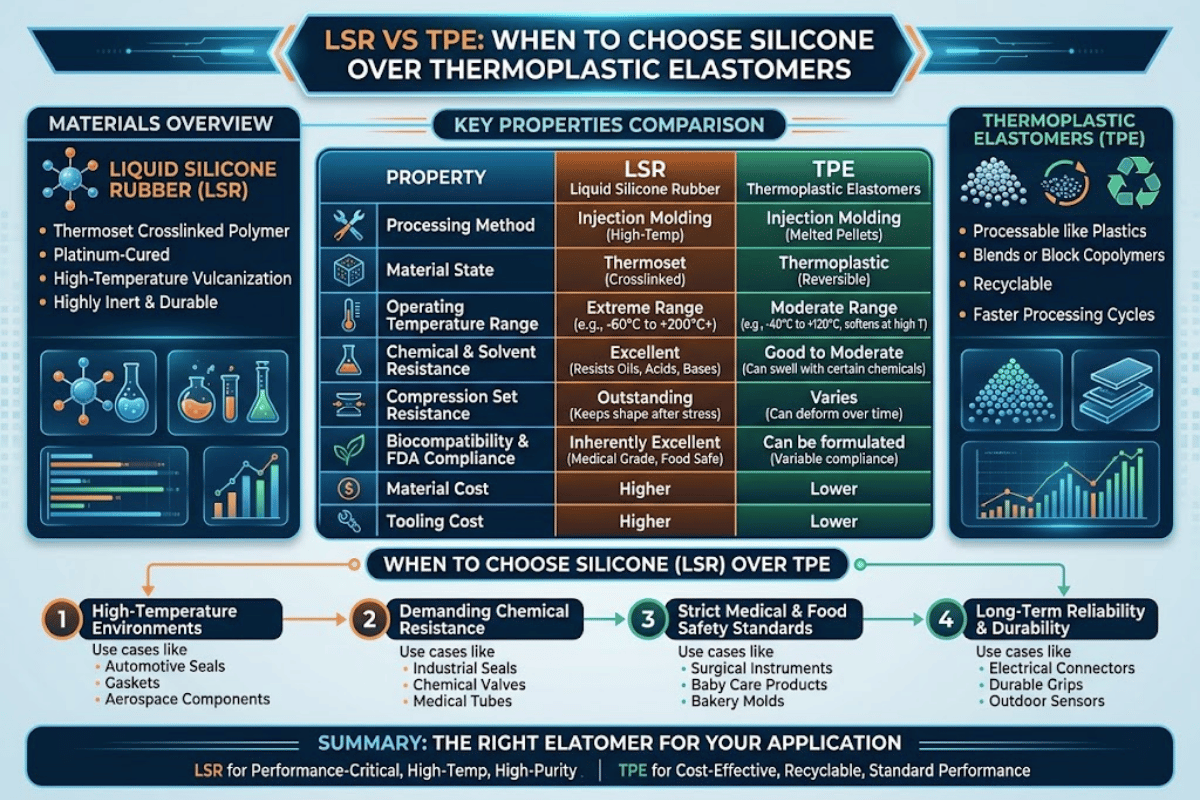
LSR vs TPE est la question de sélection d'élastomère qui condamne la plupart des équipes de produits avant qu'une seule pièce ne soit outillée Le caoutchouc de silicone liquide (LSR) et l'élastomère thermoplastique (TPE) déplacent le caoutchouc naturel dans les applications de précision les plus exigeantes, pourtant ils occupent des extrêmes opposés de la chimie des polymères one is a durablement vulcanisé thermodurci, l'autre thermoplastique réchauffable imprudemment et vous serez soit pied 3 la facture d'outillage ou regarder une pièce de caoutchouc de précision fluer hors des spécifications dans le domaine Ce guide marche à travers la chimie, la température, le coût, et les facteurs de processus de marketing qui entraînent le choix de base de la décision de base de la production.
Spécifications rapides : 1TP15 T vs TPE en un coup d'œil
| Classe Polymère | LSR : thermodurci · TPE : thermoplastique |
| Temp de service continu | LSR : -60 à +200 °C · TPE : -40 à +100 °C (typique) |
| Plage de dureté Shore | LSR : Shore A 580 · TPE : Shore OO 20 20 Shore A 95 |
| Tolérance de moulage | LSR : ±0,0250.05 mm · TPE : ±0,050.10 mm |
| Temps de cycle | LSR : 3090 s · TPE : 1540 s |
| Recyclable ? | LSR : Non (réticulé) · TPE : Oui (rétromper accepté) |
| Coût d'outillage | LSR: $15K$80K · TPE: $10K$50 |
| Ajustement du volume | LSR : 10 000+ parties/an · TPE : 5 000+ parties/an |
Que sont le 1TP15 T et le TPE ? Thermoset vs Thermoplastique dans un seul graphique
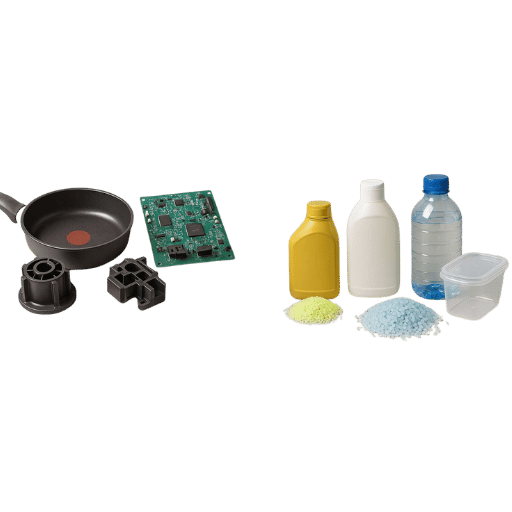
Décider d'abord de la chimie La comparaison élastomère thermoplastique vs silicone repose sur la façon dont chaque polymère réagit à la chaleur Le 1TP15 T à base de silicone est un thermodurci : chauffer un silicone liquide en deux parties à travers un catalyseur au platine entraîne une réaction de réticulation irréversible (« crosslinking reaction ») (« verrous ») (« verrous ») de molécules de vulcanisation en un réseau élastique permanent Une fois, la partie ne ramollira plus même à 250 °C elle reste caoutchouteuse plutôt que fondante.
Le TPE fonctionne de la manière opposée C'est un copolymère qui fond lorsqu'il est chauffé, remplit le moule et durcit lors du refroidissement. Ne pas modifier la chimie. Réchauffez la pièce et elle redevient liquide, c'est pourquoi les déchets de TPE peuvent être rebroyés et réutilisés comme n'importe quel thermoplastique.
Quelle est la différence entre TPE et LSR ?
Réponse courte : 1TP15 T réticule en permanence sous chaleur (thermoset), tandis que le TPE se ramollit et se ré-endurcit de façon répétée (thermoplastique).Cette différence de chimie unique se répercute dans chaque plafond de décision en aval, recyclabilité, coût de l'outil, temps de cycle, et quelles méthodes de stérilisation la pièce peut survivre Le TPE couvre sept familles importantes sur le plan commercial : les copolymères blocs styréniques (SBS et SEBS hydrogénés), les vulcanisats thermoplastiques (TPV), le polyuréthane thermoplastique (TPU), la polyoléfine thermoplastique (TPO), les élastomères copolyesters (COPA) et les élastomères copolyamides. Plastipédie de la Fédération britannique des plastiques, 1, la famille spécifique sélectionnée entraîne environ 80 1TP20 T du comportement mécanique final. Le LSR, en revanche, est un matériau monochimie varié principalement par la qualité du duromètre et l'emballage de remplissage.
Pour les fabricants évaluant de manière réaliste les deux matériaux sur un programme donné, notre Services de moulage par injection LSR l'équipe exécute des critiques DFM côte à côte pour signaler le point de croisement où l'un ou l'autre matériau a un sens rationnel.
Propriétés du matériau comparées : TPE vs caoutchouc de silicone tête-à-tête
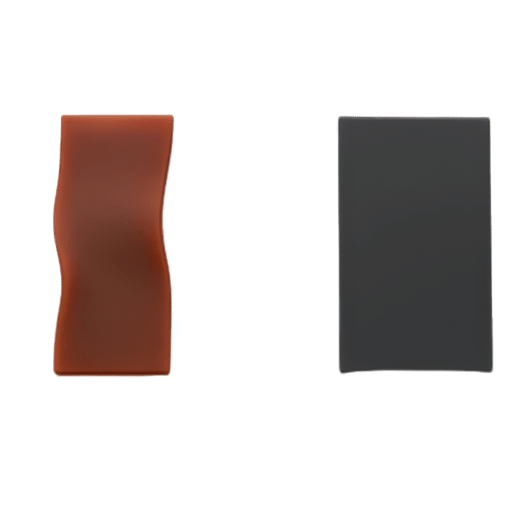
Une fois que la décision passe du concept à la spécification, cinq propriétés déterminent le résultat éventuel tpe vs caoutchouc de silicone : les limites de température, la plage de dureté, la résistance à la déchirure, la compatibilité chimique et la récupération par compression. Un tableau comparatif ci-dessous résume les valeurs croisées à partir de la base de connaissances sur les matériaux d'Avient, la Plastipédie BPF, 10 et normes de duromètre ASTM D2240.
| Propriété | LSR | TPE |
|---|---|---|
| Plage de température continue | -60 à +200°C | -40 à +100 °C (dépendant du grade) |
| Dureté Shore | Un 5 80 A | OO 20 A 95 |
| Gravité spécifique | ~1.12 | ~0.89 |
| Allongement à la pause | Jusqu'à 950 % | Jusqu'à 700 % (grades SEBS) |
| Résistance à la déchirure | Relativement basses, les petites larmes se propagent | Formulable sur un étirement de 3 mil au niveau du film |
| Ensemble de compression (22 h @ 100 °C) | 10–25 % | 25–55 % |
| Résistance UV/ozone | Inhérent (pas d'additifs) | Additif-dépendant |
| Biocompatibilité | Inhérent (durci au platine) | Grade-dépendant (ETP médical disponible) |
Le 1TP15 T est-il un élastomère ?
Oui 1TP15 T est un élastomère, mais un thermodurci Un élastomère est tout polymère qui récupère élastiquement après déformation, et le réseau durci au platine de 1TP15 T atteint ce comportement sur sa fenêtre de température de service complète Là où il faiblit est la propagation de la déchirure : une fois qu'une fissure s'initie en 1TP15 T, elle a tendance à courir.
“Bien que les charges puissent améliorer quelque peu les propriétés, les résistances à la déchirure et à la traction restent relativement faibles [en 1TP15 T].Même une petite déchirure peut entraîner une défaillance catastrophique.”
La plupart des comparaisons rédigées par le fournisseur ignorent cette découverte contre-intuitive. “Silicone est plus résistant que le plastique” est globalement vrai pour la résistance au fluage et la stabilité thermique, mais erroné pour la propagation des déchirures et un détail important si votre conception a des parois minces ou des transitions de rayon nettes. Correspondance Duromètre Shore A votre profil de stress réel évite cette classe de défaillance sur le terrain.
Processus de moulage : liquide froid dans un moule chaud ou pastille chaude dans un moule froid
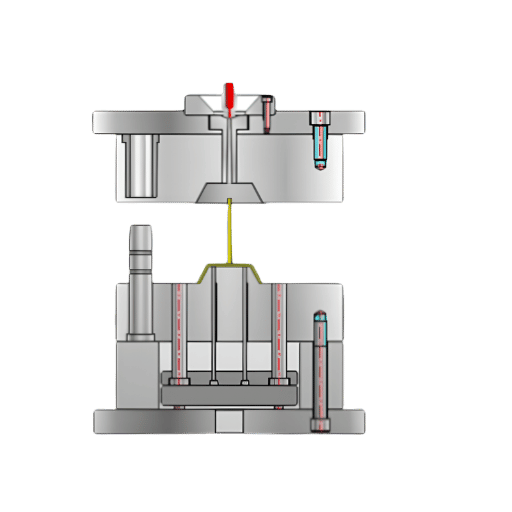
Le processus de moulage du caoutchouc thermoplastique par rapport au silicone s'effectue dans des directions thermiques opposées et l'équipement le réfléchit. Le 1TP15 T arrive sous la forme de deux liquides visqueux (parties A et B) dosés dans un rapport de 1 :1, refroidis à travers un canal froid et injectés dans un moule maintenu à 150200 °C où le catalyseur au platine réticule la partie en 3090 secondes. Le TPE arrive sous forme de granulés secs, fond dans un canon chaud à 180240 °C et injecte dans un moule maintenu à seulement 2149 °C où il se solidifie lors du refroidissement.
| Paramètre du processus | Injection LSR | Injection d'ETP |
|---|---|---|
| Aliment matériel | Liquide pompé (2 parties) | Granulés secs (trémie) |
| Température du baril | Refroidi ~5 25 °C | 180 °C 40 |
| Température du moule | 150 200 °C (chauffé) | 214 °C (réfrigéré) |
| Mécanisme de durcissement/réglage | Réticulation platine | Refroidissement thermique |
| Exigences en matière d'outillage | Coureur froid, évents de précision, vide | Injection standard monovis |
| Gratter le destin | Non recyclable | Recrind accepté |
Un fil de forum capture bien la différence pratique : le traitement du caoutchouc ou du silicone est fondamentalement différent du moulage par injection plastique, et un atelier de TPE uniquement ne peut pas déposer un tambour 1TP15 T dans la même machine Notre cellule 1TP15 T dédiée de 150 tonnes exécute un système de dosage à froid réglé sur une précision de rapport p/p de ±0,5 1TP20 T, plus proche du dosage de qualité pharmaceutique qu'un plancher en plastique typique Pour le flux de travail complet, voir notre guide de moulage par injection de caoutchouc.
📐 Note d'ingénierie : surmoulage à deux coups
Le TPE se lie de manière cohérente à la plupart des thermoplastiques de base (PP, ABS, PC) à des températures de moule comprises dans la plage de 40 °C sans amorces. 1TP15 T nécessite soit un substrat traité au plasma, soit un apprêt chimique pour obtenir la même force de liaison, et le substrat doit tolérer une surface de moule à 150 °C+. La mauvaise lecture de cette fenêtre de compatibilité est la plus courante Surmoulage LSR mode d'échec que nous voyons dans les avis DFM.
Comparaison des coûts : matériau, outillage et piège à gravité spécifique
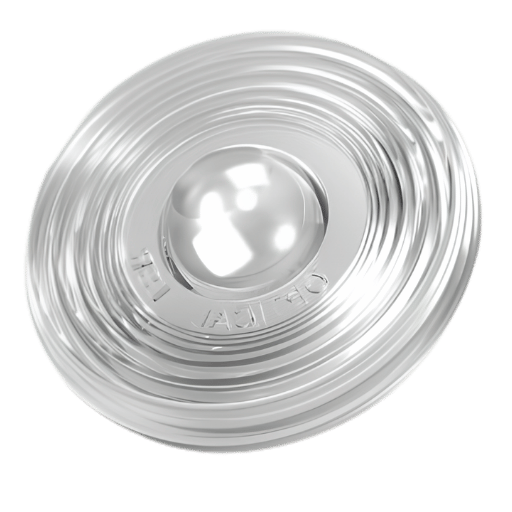
Sur le papier, le TPE est moins cher. Les granulés bruts de TPE fonctionnent environ $41 kg$12 par kg selon le grade, tandis que le LSR de qualité médicale se situe à 1121T15 kg$35 kg par kg. Mais ce n'est pas la comparaison qui compte sur un billet de matières. Parties par dollar, pas dollars par kilogramme, c'est la bonne mesure.
Lequel est le moins cher : TPE ou LSR ?
TPE est presque toujours moins cher à la fois sur le matériel et sur l'outillage Un outil de production à petite cavité fonctionne environ $10KMeitu Engelhardt50K pour TPE contre Meitu Engelhardt15K reclaim21T80 pour un outil automatisé dédié 115T à froid. Ajouter le temps de 15 0 deuxième cycle de TPE 15 1TP15 contre 30 90 secondes de moule flash et l'écart de coût par partie s'élargit encore à de faibles volumes de récupération économique une fois que le volume annuel de retournement dépasse environ 40 000 pièces 15 000000000000000000000000000000000000000000000000000000000000000000000000000000000000000000000000000000000000000000000000000000000000000000000.
Une équipe d'approvisionnement variable manque généralement : la densité. Avient publie une formule utile dans sa base de connaissances densité spécifique. prix par livre = coût en volume. Étant donné que le 1TP15 T fonctionne à une densité spécifique de 1,12 contre 0,89 pour le TPE, une livre de 1TP15 T donne 20 1TP20 T de parties de moins qu'une livre de TPE. L'écart par livre se rétrécit une fois que vous le traduisez en pièces finies.
Balancement du monde réel du joint de soupape de robinet de robinet
Une marque de sanitaires Fortune 500 a exécuté des joints de valve moulés par compression pour 3 millions de pièces par an La durée du cycle était de 8 minutes avec 12 rebuts de 1TP20 T provenant du flash et du remplissage court La conversion de la pièce en un outil 1TP15 T à courant froid à 16 cavités a fait s'effondrer le cycle à 55 secondes et a coupé les rebuts sous 1 1TP20 T. L'alternative TPE aurait permis d'économiser davantage sur l'outillage initial mais ne pourrait pas atteindre la tolérance d'étanchéité de ±0,03 mm requise la conception Économies annuelles nettes après conversion : $20000 K+. Le point n'est pas que le prix de réponse 15 ne dépend pas le prix, il est toujours le coût et le coût 15.
Pour une ventilation spécifique au programme, notre Estimateur de coût LSR exécute les deux scénarios par rapport à votre volume annuel et à votre tolérance cible.
Quand 1TP15 T gagne : quatre applications où le silicone contre le TPE n'est pas un concours
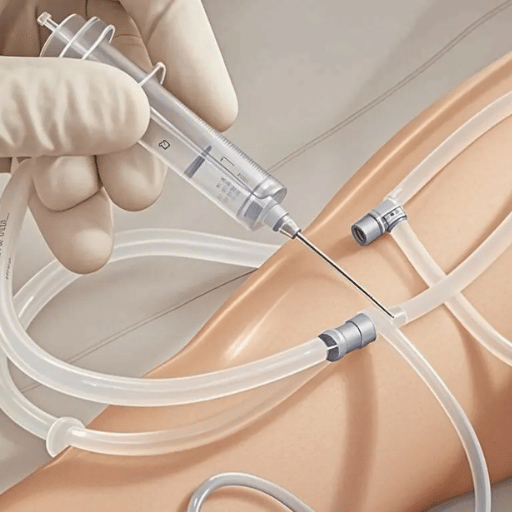
Dans le débat silicone vs tpe, quatre scénarios laissent 1TP15 T effectivement non substituable Chacun renvoie à une propriété TPE ne peut pas correspondre dans sa forme typique.
1. Dispositifs médicaux implantables
Les implants de classe III et les dispositifs à contact prolongé l'exigent FDA ISO 10993-1 évaluation biologique et qualification USP Classe VI. Le 1TP15 T durci au platine a un historique clinique documenté de 40 ans selon ces normes Le TPE de qualité médicale existe mais nécessite une qualification par formulation, c'est pourquoi les cathéters, les composants des valves cardiaques et les sceaux implantables d'administration de médicaments sont par défaut en silicone.
2. Joints de sous-capot automobile
Le service sous le capot voit -40 à +200 °C avec des cycles de service d'huile chaude, de vapeur de carburant et de 10 ans. La résistance thermique de 1TP15 T maintient la stabilité dimensionnelle sur toute la fenêtre ; le TPE typique se ramollit au-dessus de 100 °C en continu et perd la résistance chimique à mesure que la température augmente. Les joints de connecteur, les amortisseurs de vibrations CVC et les joints de turbocompresseur sont un territoire en silicone.
3. Stérilisation répétée en autoclave à vapeur
Les poignées d'instruments chirurgicaux et les interfaces médicales réutilisables font face à une vapeur saturée à 134 °C, souvent plus de 500 cycles au cours de la vie d'un appareil. Le TPE de qualité médicale peut survivre environ 100 cycles ; le LSR médical élimine généralement plus de 2 000 sans dérive du duromètre ni changement dimensionnel.
4. joints de précision à tolérance serrée
Lorsque la conception demande ±0,025 mm sur une surface d'étanchéité critique et une géométrie de paroi mince inférieure à 0,5 mm, la faible viscosité de 1TP15 T remplit des cavités complexes que TPE peine à atteindre Les membranes sensibles à la pression dans les appareils à gaz et les diaphragmes de pompe ophtalmique se trouvent dans ce godet.
️️ Erreur courante dans l'hypothèse des poignées TPE autoclavage
Un OEM médical nous avons travaillé avec le TPE standard spécifié pour une poignée d'endoscope réutilisable, en supposant une stérilisation couverte par des“ de qualité médicale. Au cycle 30, le duromètre Shore A avait dérivé de 8 points et la poignée s'était déformée sous la pression de préhension. Ce dispositif a été rééquipé en LSR. Si le protocole de stérilisation inclut de la vapeur répétée à 134 °C, validez avec les données de comptage de cycles avant de spécifier TPE.
Pour un travail de précision à ces tolérances, notre services d'injection personnalisés LSR maintenez ±0.025 mm avec 166 cavité outils, et chaque programme est livré avec la documentation PPAP Une comparaison plus large de silicone contre d'autres caoutchoucs se trouve dans notre silicone vs caoutchouc panne.
Lorsque TPE gagne : trois cas où TPE Material vs Silicone retourne la réponse
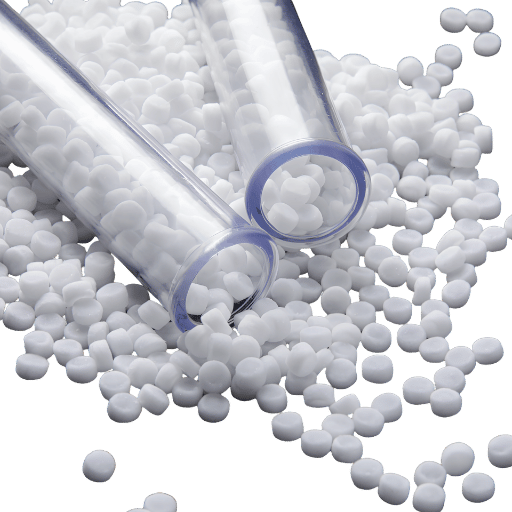
Le TPE est souvent présenté comme l’alternative économique. Ce cadrage le sous-estime. Dans le débat élastomère/silicone, trois scénarios font du TPE la réponse techniquement correcte, et non le compromis coût-réduction.
1. Surmoulage consommateur à toucher doux
Les poignées de brosse à dents, les poignées d'outils électriques et les articles de sport nécessitent une couche souple rodée sur un substrat dur. Le TPE se lie facilement au PP, à l'ABS, au PC et au PA66 dans des moules standard à deux coups sans amorce. Le LSR nécessite un substrat résistant à la chaleur et un plasma ou un apprêt chimique, ce qui double les dépenses liées au processus.
2. Dispositifs médicaux à usage unique
Les tubes IV jetables, les joints de poche de perfusion et les composants respiratoires à usage unique correspondent au point idéal du TPE. Les tubes TPE de qualité médicale de Saint-Gobain et DuPont Liveo fonctionnent de manière standard dans le bioprocessus à grand volume. Ces pièces ne voient pas de stérilisation répétée et n'ont pas besoin des performances à vie de LSR. Atteindre pour LSR ici gaspille l'investissement en outillage.
3. Films et joints à haute résistance à la déchirure
Les bandes de résistance à l'exercice, les films élastiques de couche et les joints de barrière minces nécessitent un allongement de 500 1TP20 T+ sans propagation de déchirure Comme le montre la citation Avient/McKeen ci-dessus, le 1TP15 T est en fait plus faible ici. Les étirements SEBS ou TPV correctement formulés jusqu'à une épaisseur de film de 3 m sans déchirer LSR seraient divisés.
Quels sont les inconvénients du TPE ?
Les faiblesses de TPE se regroupent autour de la température et du fluage Le service continu au-dessus de 100 °C adoucit la plupart des qualités La charge de compression soutenue provoque le fluage Un joint TPE maintenu sous précontrainte pendant 10 ans ne récupérera pas entièrement sa forme originale, tandis que LSR récupère à 10 2 1TP20 près de l'original Plastifiant et les additifs peuvent lessiver ou extraire, ce qui importe pour les applications médicales et alimentaires à contact direct chaque qualité doit être qualifiée indépendamment Et si la partie voit de l'ozone, des UV soutenus, ou des solvants concentrés, l'ensemble additif détermine la survie plutôt que la base polymère.
️️ Erreur courante dans la spécification excessive de 1TP15 T là où fonctionne le TPE
Un ingénieur sur r/InjectionMolding l'a résumé : “À moins que vous ne traitiez spécifiquement avec 1TP15 T, vous êtes mieux avec un TPV ou un TPU.” voir ce pattern hebdomadaire programmes par défaut à 1TP15 T parce que “silicone semble plus sûr,” alors découvrez que la facture d'outillage est $40 K plus élevée que l'alternative TPE qui aurait répondu à toutes les spécifications Pour les pièces orientées consommateur, basse température, non stérilisées en dessous de 40 K volume annuel, TPE gagne presque toujours sur le coût total de possession.
Notre moulage en caoutchouc personnalisé l'équipe court également services de moulage par injection plastique au même étage, une recommandation TPE en premier n'est donc pas un tour de passe-passe commercial. C'est donc la réponse lorsque les données indiquent que TPE convient.
La règle 60/40 : un cadre de décision simple pour la différence entre le silicone et le TPE
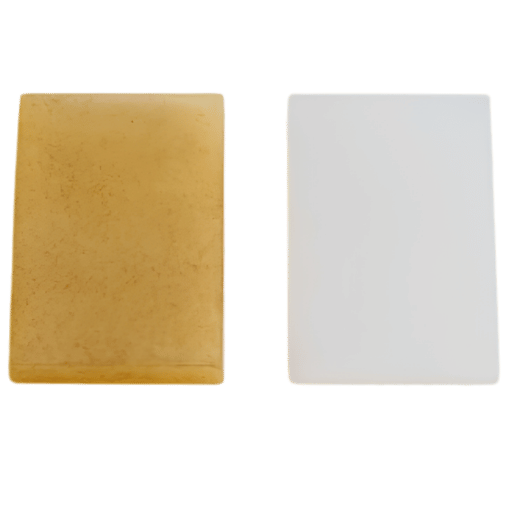
Les tables de propriétés pour la différence entre le silicone et le tpe sont utiles, mais elles ne répondent pas à la question d'achat : que dois-je préciser pour cette partie ? Notre règle 60/40 regroupe cette décision en deux chiffres tirés des données de production de 12 programmes de fabrication (2022025).
La règle 60/40
Choisissez LSR si la partie verra service continu au-dessus de 60 °C ou sera stérilisé plus de 40 fois au cours de sa durée de vie.
Choisissez TPE si la pièce fonctionne en dessous de 60 °C en continu et le volume de production annuel est de moins de 40 000 unités et le toucher doux ou la recyclabilité est une priorité de conception.
Ces seuils sont des heuristiques dérivées des données de production 1TP2 T. Votre programme peut nécessiter une mise au point pour des contraintes réglementaires ou de tolérance spécifiques.
Une carte scénario-matière ci-dessous applique la règle aux catégories B2 B communes :
| Application | Matériel | Pourquoi |
|---|---|---|
| Cathéter implantable | LSR | ISO 10993 + héritage USP Classe VI |
| Joint turbo automobile | LSR | Température continue >150 °C |
| Bracelet portable grand public | TPE (SEBS) | Liaison cohésive à faible température au boîtier du PC |
| Couvercle de stockage des aliments | TPE (TPV) | Il existe des qualités conformes au FDA 21 CFR 177 ; recyclable |
| Joint d'enceinte extérieur | LSR | UV + ozone sans additifs |
| Mamelon tétine bébé | LSR | Biocompatibilité + cycles de stérilisation à la vapeur |
Pour une recommandation spécifique au volume et à la tolérance, le Calculateur de sélection de matériaux LSR applique la même logique à la géométrie de votre pièce et à votre production annuelle.
Vous ne savez pas de quel côté de la ligne 60/40 votre pièce tombe ?
FAQ : LSR contre TPE
Q : Est-ce que 1TP15 T est un TPE ?
Voir la réponse
Le n° 1TP15 T est un thermodurci : la chaleur relie le polymère de manière permanente à travers un catalyseur au platine, et la partie durcie ne peut pas être refondue. Le TPE est un thermoplastique : il ramollit et réarrange la chaleur sans aucun changement chimique. Les deux matériaux se situent dans des catégories de polymères opposées bien qu'ils soient des élastomères de type caoutchouc.
Q : Le TPE peut-il remplacer le silicone dans les produits pour bébés ?
Voir la réponse
Plusieurs formulations de TPE de qualité médicale répondent au 1TP10 T 21 CFR 177 pour le contact alimentaire et sont largement utilisées dans les mamelons de bouteilles, les anneaux de dentition et les composants de sucettes. Contraintes clés : la stérilisation répétée à la vapeur au-dessus de 100 °C dégradera la plupart des qualités de TPE, de sorte que les produits conçus pour le nettoyage à l'ébullition sont par défaut au 1TP15 T. Confirmez toujours que la qualité spécifique est qualifiée pour la température d'utilisation et la méthode de stérilisation attendues.
Q : La nourriture TPE est-elle sûre ?
Voir la réponse
Les formulations de TPE de qualité alimentaire sont conformes au FDA 21 CFR 177 et au règlement UE 10/2011. Tous les TPE ne répondent pas par défaut à ces normes. Les qualités SEBS et TPV sans plastifiant sont les choix habituels de contact alimentaire. Vérifiez la fiche technique et le profil des extractibles pour l'application spécifique.
Q : Le TPE peut-il être stérilisé à la vapeur comme le LSR ?
Voir la réponse
Portée limitée. Le TPE de qualité médicale tolère l'autoclavage jusqu'à environ 135 °C pendant 15 minutes, et les ensembles de câbles TPE/TPE survivent à environ 100 cycles par test ClearPath Medical. En comparaison, le 1TP15 T gère la vapeur à 134 °C pendant plus de 2 000 cycles sans dérive du duromètre. Pour les instruments chirurgicaux réutilisables et le retraitement à cycle élevé, le LSR reste la valeur par défaut.
Q : Est-ce que 1TP15 T coûte plus cher par pièce que TPE ?
Voir la réponse
À faibles volumes, l'outillage et la matière première oui 1TP15 T sont tous deux plus élevés À des volumes supérieurs à ~40 000 pièces par an, l'automatisation multi-cavités et le cyclage sans flash du coureur à froid de 1TP15 T comblent l'écart ou l'inversent Incluez toujours le coût volumique ajusté en fonction de la gravité spécifique lorsque vous comparez : une livre de 1TP15 T fait 20 1TP20 T de moins de pièces qu'une livre de TPE.
Q : Le 1TP15 T peut-il être recyclé ?
Voir la réponse
Pas par le recyclage de la matière fondue Le réseau réticulé est thermiquement irréversible, de sorte que le rebroyage ne peut pas réintégrer un cycle d'injection comme le peuvent les déchets de TPE. Les flux de déchets de 1TP15 T sont généralement rétrocyclés vers un remplissage mécanique ou une récupération d'énergie. Si la circularité est une exigence du programme, le TPE est structurellement le meilleur ajustement.
Références et sources
- Utilisation de la norme internationale ISO 10993-1 : Évaluation biologique des dispositifs médicaux L'administration des aliments et des médicaments
- Guide de pointe sur les effets des processus de stérilisation sur les matériaux TPU/TPE 1'PMC, Bibliothèque nationale de médecine (NCBI)
- Élastomères thermoplastiques TPE, TPR Plastipedia Fédération britannique des plastiques
- Quelle est la différence ? TPE vs Silicones Base de connaissances de la société Avient
- Choisissez le bon matériau et le bon processus en caoutchouc (duromètre Shore ASTM D2240) Solutions de scellement Trelleborg
- Tubes en silicone vs sélection de dispositifs thermoplastiques 'saint-gobain médical'
- McKeen, LW., Manuel des applications des polymères en médecine et en dispositifs médicaux, Elsevier, 2016 (ISBN 978-0-323-22169-6)
À propos de cette analyse
Les chiffres de coût et de temps de cycle dans ce guide sont tirés des enregistrements de production 202 T 2025 1TP15 T et TPE de 1TP2 T dans 12 programmes de fabrication couvrant les joints de vannes sanitaires, les joints de connecteurs automobiles et les moules portables grand public. La règle 60/40 est une distillation heuristique de ces programmes. C'est un point de départ, et non un substitut à la revue DFM sur votre pièce spécifique. Les plages de propriétés sont croisées avec ASTM D2240, le Plastipédie BPF, [TRADUCTION] ?, la base de connaissances sur les matériaux publiée par Avient, et les directives d'évaluation biologique ISO 10993-1 du 1TP10 T. Notre équipe d'ingénieurs détient les certifications 1TP4 T :2015 et 1TP3 T et a examiné chaque réclamation numérique par rapport aux documents sources.
Articles connexes
- Silicone vs Caoutchouc : principales différences pour les ingénieurs et les équipes d'approvisionnement comparaison élastomère plus large au-delà du TPE
- Moulage par injection de caoutchouc : processus, types et utilisations (Guide 2026) procédés en caoutchouc organique, Meitu Engelhardt et thermoplastique
- Comparaison des méthodes de moulage du caoutchouc : compression vs injection vs transfert ''choix' à chaque processus'
- Moulage en caoutchouc personnalisé : Guide des processus, des matériaux et de la tolérance (2026) guide de sélection en caoutchouc complet
- Moulage par compression ou moulage par injection : comment choisir le bon processus compagnon de sélection
![Surmoulage en silicone : Guide de conception multi-matériaux LSR [2026]](https://meitu-engelhardt.com/wp-content/uploads/2026/04/0-8-768x512.png)