
Mettiti in contatto con Engelhardt


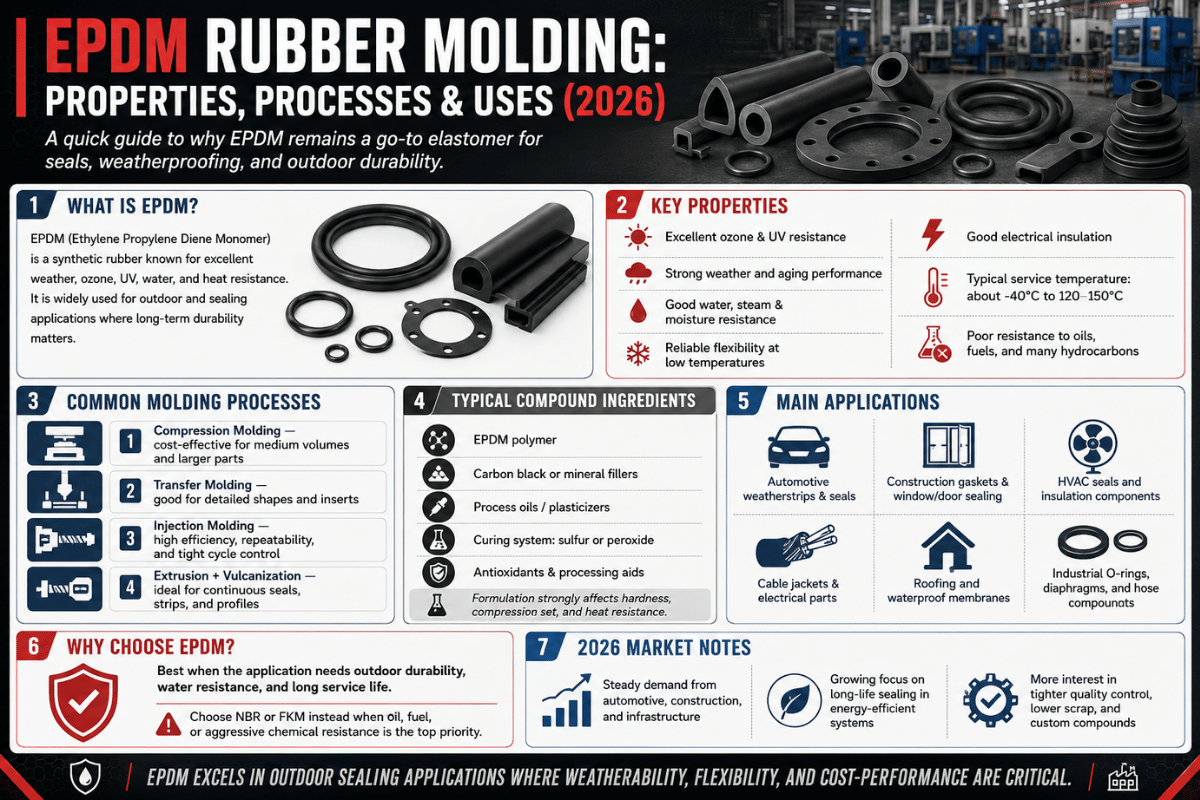
1TP lo stampaggio è il processo di modellatura del monomero di etilene propilene diene (EPDM) 9 gomma sintetica RESISTENTE agli agenti atmosferici in parti finite mediante iniezione, compressione o stampaggio a trasferimento e quindi vulcanizzazione sotto calore e pressione Gli ingegneri lo raggiungono quando una guarnizione o guarnizione deve sopravvivere all'ozono, ai raggi UV, all'acqua e al vapore per decenni, ma lo stesso materiale può guastarsi in mesi se mai tocca l'olio di petrolio Questa guida spiega la chimica, i processi di stampaggio, come EPDM si confronta con altri elastomeri e come scrivere una specifica che in realtà viene citata correttamente.
In breve: Lo stampaggio della gomma EPDM modella il monomero di etilene propilene diene in parti personalizzate, principalmente guarnizioni, guarnizioni e anelli di tenuta, utilizzando stampaggio a iniezione, compressione o trasferimento. EPDM resiste all'ozono, ai raggi UV, alle intemperie, all'acqua calda e ai fluidi polari, ma si gonfia gravemente negli oli di petrolio e nel carburante, quindi è scelto dall'ambiente operativo anziché per impostazione predefinita.
Punti chiave
- Un singolo punto di contatto petrolio, carburante o olio aromatico squalifica EPDM, non importa quanto bene ottenga punteggi altrove, lo chiamiamo così il veto Oil-Line.
- La resistenza agli agenti atmosferici di EPDM proviene da una struttura polimerica satura che non dà all'ozono nulla da attaccare, il motivo per cui le membrane di copertura EPDM a strato singolo sono documentate in oltre 38 anni di servizio sul campo.
- Il sistema di polimerizzazione (zolfo vs perossido) può far oscillare la durata del calore e la compressione di circa un ordine di grandezza, è una vera decisione specifica, non un dettaglio di fabbrica.
- La scelta del processo (iniezione, compressione, trasferimento) segue il volume e la geometria annuali; l'economia dell'iniezione in genere supera quasi le 5.000 unità.
Specifiche rapide: gomma stampata EPDM
| Materiale | EPDM (etilene propilene diene monomero), una gomma sintetica/elastomero |
| Temperatura di servizio | da ~ -40 °C a +120 °C (indurimento standard dello zolfo); fino a ~ -50 °C fino a +150 °C continuo con indurimento con perossido/gradi specialistici |
| Durezza | 30 90 Shore A (60 70 più comune) |
| Sistemi di cura | Solforato o indurito con perossido |
| Processi di stampaggio | Stampaggio ad iniezione, compressione, trasferimento |
| Gradi di tolleranza | RMA da A1 (alta precisione) ad A4 (base/commerciale) |
| Classificazione | Chiamata di chiamata di linea ASTM D2000 (linee EPDM tipicamente BA, CA, DA) |
| Resiste | Ozono, UV, tempo, acqua, vapore, fluidi polari (glicole, liquido dei freni) |
| Evitare | Oli di petrolio, combustibili, idrocarburi aromatici e clorurati (grave rigonfiamento) |
Cos'è la gomma EPDM?
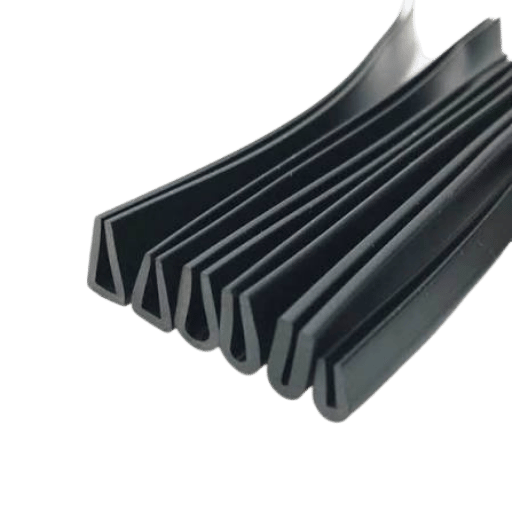
EPDM è una gomma sintetica prodotta polimerizzando etilene e propilene con una piccola quantità di un monomero dienico che fornisce i siti di reticolazione necessari per la vulcanizzazione Ciò che la distingue dalla gomma naturale è la sua saturato catena principale: la struttura portante di etilene-propilene non trasporta carbonio, doppi legami di carbonio, quindi l'ozono e gli UV non hanno nulla da attaccare lì. Per il descrizione tecnica della gomma EPDM, ecco perché supera le gomme diene all'aperto.
La regola del backbone saturo
Ecco una regola pratica che puoi applicare a vista: la resistenza agli agenti atmosferici vive nella spina dorsale, la resistenza all'olio vive nei gruppi laterali. L'ozono spacca la gomma ordinaria spezzando i doppi legami insaturi nella sua catena polimerica sotto tensione La spina dorsale satura di EPDM non dà all'ozono doppi legami da rompere, quindi invecchia lentamente alla luce del sole e alle intemperie La prova è su milioni di tetti, un'indagine sul campo del 2025 ha rilevato che le membrane per tetti EPDM a strato singolo continuano a funzionare dopo 38+ anni di servizio, con il lavoro più recente di invecchiamento accelerato che proietta la durata di servizio ancora più lunga La stessa chimica che rende EPDM un tetto di 40 anni lo rende il materiale di gomma predefinito per le guarnizioni esterne e la guarnizione.
Il problema è il rovescio della medaglia di questa regola: una struttura satura e non polare è anche chimicamente simile agli oli di petrolio, quindi gli oli non polari si dissolvono in modo che EPDM e farlo gonfiare Tra la vasta gamma di famiglie di gomma naturale e sintetica un ingegnere può scegliere, e l'intera gamma di gomma naturale e gomma sintetica chemistices, EPDM si trova all'estremità resistente agli agenti atmosferici, oil-averse Questa guida alla gomma EPDM ritorna a quel compromesso ripetutamente, perché guida quasi ogni decisione go/no-go.
Proprietà EPDM & Dati di Spec
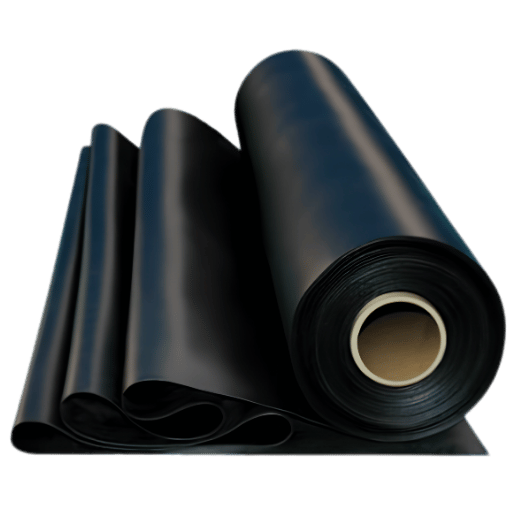
Per un RFQ o un foglio dati, questi sono i numeri EPDM che contano Tratta gli intervalli come dipendenti dal composto: una morbida striscia meteorologica da 40 Shore A e una boccola dura da 80 Shore A sono entrambe EPDM ma si comportano in modo molto diverso e il sistema di polimerizzazione sposta il tetto della temperatura. Laddove un valore è una cifra a fonte singola, è qualificato di conseguenza.
| Proprietà | Valore tipico | Nota |
|---|---|---|
| Temp. di servizio continuo | ~ -40 °C a +120 °C di zolfo; a ~+150 °C di perossido | Set di soffitti per sistema di polimerizzazione |
| Durezza | 3090 Shore A | 600 70 più comune per le foche |
| Resistenza alla trazione | ~50 psi3,000 p MPa) | Varia ampiamente con composto e riempitivo |
| Insieme di compressione | Basso con polimerizzazione con perossido (% a una cifra a 100 °C ottenibile) | Critico per le guarnizioni statiche |
| Ozono /UV / meteo | Eccellente | La forza del titolo |
| Acqua/vapore/glicole | Eccellente | Compresa acqua calda e liquido dei freni |
| Olio di petrolio/carburante | Scarso (grave moto ondoso) | Squalifica (Oil-Line V) |
Gamme di proprietà compilate da schede tecniche in elastomero e dal quadro di classificazione ASTM D2000; i valori variano in base al composto e al fornitore.
EPDM mantiene queste proprietà attraverso le temperature estreme e gli agenti atmosferici che induriscono o rompono le gomme minori, ed è anche un buon isolante elettrico, motivo per cui si presenta negli accessori dei cavi e nelle guarnizioni elettroniche degli involucri Poiché le mescole di gomma EPDM variano così ampiamente con il sistema di riempimento e polimerizzazione, due parti entrambe etichettate EPDM possono funzionare in modo molto diverso, un risultato di gomma di qualità dipende dal composto specifico, non dal nome della famiglia Poiché la finestra della proprietà è così ampia, gli acquirenti non specificano solo “EPDM”, specificano un composto attraverso un Chiamata di uscita della linea ASTM D2000 che fissa il tipo (resistenza al calore) e la classe (resistenza all'olio) Interrompiamo tale call-out nella sezione delle specifiche di seguito.
EPDM vs Altri elastomeri: Abbinamento del materiale all'ambiente
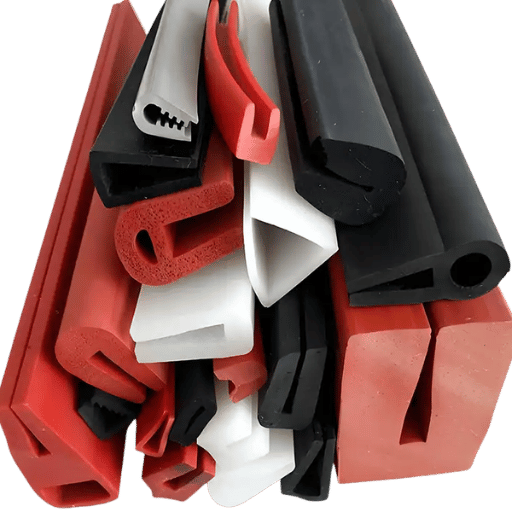
La scelta tra EPDM e neoprene, nitrile, Viton (FKM), silicone o gomma naturale si riduce a una domanda: cosa tocca effettivamente la parte e quanto fa caldo? la tabella seguente utilizza un comportamento concreto piuttosto che vago Alto/Medio/Basso rating.
| Elastomero | Ozono/UV | Acqua/vapore | Petrolio | Costo relativo | Migliore vestibilità |
|---|---|---|---|---|---|
| EPDM | Eccellente | Eccellente | Povero | Basso | Outdoor /acqua/guarnizioni atmosferiche |
| Neoprene (CR) | Bene | Bene | Moderato | Basso | Olio dolce per uso generale |
| Nitrile (NBR) | Povero | Fiera | Eccellente | Basso | Carburante/oil seals |
| Vitone (FKM) | Eccellente | Bene | Eccellente | Alto (~810×EPDM) | Olio caldo/chimico/carburante |
| Silicone (VMQ) | Eccellente | Buono (calore secco) | Povero | Alto | Temp estrema, cibo/medico |
| Gomma naturale (NR) | Povero | Bene | Povero | Basso | Abrasione, dinamica, indoor |
Moltiplicatore di costo per Viton vs EPDM riportato dai fornitori di elastomeri; le valutazioni di resistenza riflettono il comportamento generale del composto.
Weatherability-per-Dollar. Il silicone e EPDM entrambi scrollano di dosso l'ozono e gli UV, ma il composto siliconico costa molto di più e si strappa più facilmente Normalizza la resistenza agli agenti atmosferici in base al costo del composto e EPDM vince in modo decisivo, ed è proprio per questo che, non il silicone, è diventato il materiale sigillante predefinito per esterni e gomma sintetica. Quel mix di resistenza agli agenti atmosferici e basso prezzo composto rende EPDM stampato uno degli elastomeri sigillanti più convenienti in produzione. Dove hai veramente bisogno degli estremi di temperatura del silicone o della purezza alimentare, il nostro stampaggio a iniezione di gomma siliconica liquida la linea copre invece quella busta.
️ Il veto Oil-Line
Eseguire ogni altro punteggio Temperatura, meteo, costo (cost) e quindi applicare un override se la parte entrerà mai in contatto con olio di petrolio, carburante o idrocarburi aromatici, EPDM è fuori uso. Un rapporto di analisi sul campo ha misurato il rigonfiamento di EPDM superiore a 100% in volume nell'olio minerale Passare la specifica al nitrile (NBR) per l'olio ambientale o fluoroelastomero (Viton/FKM) per l'olio caldo prima di l'attrezzatura viene tagliata, non dopo il primo lotto fallito.
Qual è il migliore, Viton o EPDM?
Né è “better” a titolo definitivo, risolvono problemi opposti Scegli EPDM quando la parte affronta il tempo, acqua calda, vapore, o liquido dei freni e non vede mai olio; costa una frazione di Viton e resiste a quei fluidi appena bene Scegli Viton (FKM) quando la parte affronta combustibile olio caldo, o sostanze chimiche aggressive, e accettare il 810× materiale-costo Un errore comune è specificare Viton “to essere safe” in un dovere di acqua calda dove EPDM durerebbe tanto a lungo per molto meno.
Come EPDM è modellato: iniezione, compressione e trasferimento
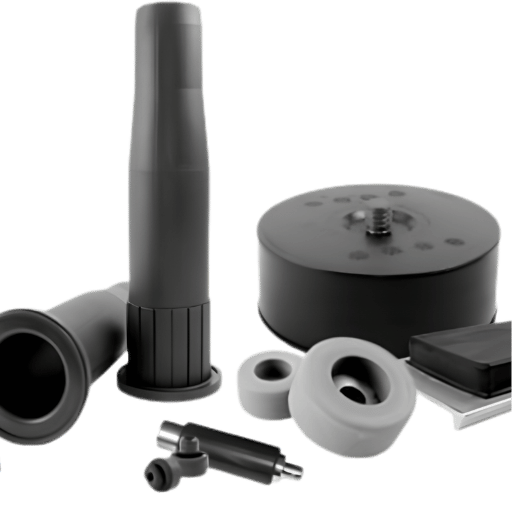
EPDM non viene versato come liquido come alcune gomme di colata Un composto di gomma solido e non indurito viene riscaldato fino a quando non scorre, forzato in uno stampo di acciaio chiuso e vulcanizzato, reticolato, sotto calore e pressione. Quel processo di produzione di base è condiviso da tre metodi di stampaggio.
Dove differiscono è l'utensileria, il tempo di ciclo e i volumi in cui hanno senso economico Il processo giusto per EPDM segue il volume annuale e la geometria della parte, non il materiale, e sì, è del tutto possibile lo stampo a iniezione EPDM, proprio come può essere stampato a compressione o a trasferimento.
| Processo | Miglior volume | Costo dell'attrezzatura | Tempo ciclo | Profilo della parte migliore |
|---|---|---|---|---|
| Compressione | Basso/prototipo | Più basso | Più lungo | Guarnizioni grandi, semplici e spesse |
| Trasferimento | Basso | Metà | Metà | Inserti incollati gomma-metallo |
| Iniezione | Alto (~5.000+ unità) | Più alto | Più corto | Guarnizioni di precisione ad alto volume |
Il crossover del volume riflette la pratica di quotazione Engelhardt ed è corroborato da analisi indipendenti dei costi di stampaggio; spostamenti esatti di pareggio con dimensioni delle parti e complessità degli utensili.
EPDM può essere stampato ad iniezione?
Sì, EPDM è stampato a iniezione di routine Composto riscaldato EPDM viene iniettato sotto alta pressione in uno stampo metallico chiuso a cavità multipla e vulcanizzato in posizione; i dati del brevetto pubblicato descrivono EPDM stampato polimerizzato a circa 185 °C in circa 6 minuti sotto ~60 bar. Brevetti di stampaggio concessi conferma queste finestre di processo Il processo di stampaggio a iniezione EPDM offre le tolleranze più strette e i tempi di ciclo più brevi, motivo per cui domina la tenuta di automobili e elettrodomestici ad alto volume una volta superato il pareggio degli utensili.
Lo stampaggio a trasferimento guadagna il suo posto quando una parte necessita di gomma incollata a un inserto metallico, una boccola prigioniera, una guarnizione incollata o una sede della valvola Per volumi inferiori, lo stampaggio a compressione e trasferimento raggiunge la stessa parte indurita con un'attrezzatura più semplice e a basso costo. Nello stampaggio a trasferimento il composto viene forzato da un vaso di trasferimento attraverso guide su una parte metallica preposizionata rivestita con adesivo e un brevetto guarnizione EPDM-to-metal stampato a trasferimento documenta esattamente questa costruzione Per una più profonda walk-through di ogni metodo, vedi il nostro processo di stampaggio della gomma panoramica. EPDM condivide anche gran parte della sua logica di attrezzaggio con il silicone, coperto nel nostro stampaggio a compressione siliconica guida.
Un errore costoso e comune è l'esecuzione di stampaggio a compressione per una tenuta ad alto volume: il ciclo di polimerizzazione più lungo gonfia silenziosamente il costo per parte fino a quando gli utensili a iniezione non si sarebbero ripagati più volte. Nell'officina di stampi interna di Engelhardt, oltre 40 presse vulcanizzanti supportate da utensili CNC ed EDM, il pareggio vicino a 5.000 unità è esattamente il punto in cui spostiamo una parte da uno strumento di compressione a cavità singola a uno stampo a iniezione a cavità multipla.
Cura dello zolfo vs perossido: perché la polimerizzazione decide la vita parziale
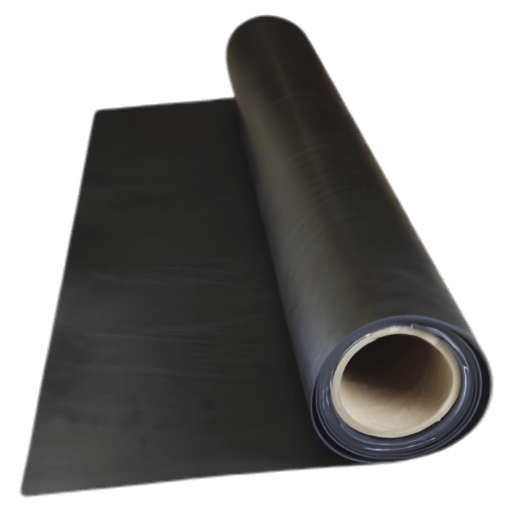
Il sistema di polimerizzazione (vulcanizzazione) è la decisione più sotto-specificata nello stampaggio della gomma EPDM, e imposta silenziosamente quanto dura una tenuta Due sistemi dominano. Cura dello zolfo è più veloce, più economico e più facile da legare, ma i suoi legami incrociati con lo zolfo si rompono a un calore elevato e prolungato. Cura perossido forma legami incrociati di carbonio e carbonio più forti che conferiscono una resistenza al calore nettamente migliore e un set di compressione inferiore, la proprietà che mantiene una tenuta statica che spinge indietro contro la sua flangia anni dopo.
Quanto è grande il divario? Fornitori e a notebook tecnico industria gomma sul rapporto di selezione del sistema di polimerizzazione che EPDM indurito con perossido può fornire all'incirca un ordine di grandezza di durata più lunga rispetto alla polimerizzazione con zolfo a temperatura elevata, insieme a una migliore ritenzione del set di compressione Il compromesso: i composti di perossido costano di più, polimerizzano più lentamente e si legano meno facilmente al metallo, motivo per cui la scelta della polimerizzazione e la scelta del processo sono collegate Un composto EPDM di alta qualità è definito tanto dalla sua polimerizzazione verificata quanto dalle sue mescole di gomma grezza, e un composto di gomma EPDM ben fatto mantiene la sua forza di tenuta molto tempo dopo che uno scarsamente indurito si è rilassato.
“Una guarnizione EPDM sottoindurita è il guasto che osserviamo per la maggior parte, perché supera il test sbagliato Può cancellare un controllo visivo e dimensionale del primo articolo e perdere comunque la forza di tenuta circa un anno in servizio quando la rete di reticolazione finisce di reagire sotto calore Ecco perché verifichiamo la velocità di indurimento e il tempo di bruciatura su un reometro a stampo mobile per ogni lotto composto, non solo con l'approvazione parziale.”
Nota ingegneristica
Specificare l'indurimento del perossido quando la parte vede un calore continuo superiore a ~120 °C o deve mantenere un limite stretto impostato per la compressione (ad esempio una tenuta statica del viso che non può rilassarsi) Specificare l'indurimento dello zolfo per la striscia meteorologica sensibile ai costi e le parti dinamiche a temperatura moderata, o dove il forte legame gomma-metallo è la priorità Indicare il sistema di indurimento sul disegno, non lasciarlo all'impostazione predefinita dello stampo.
Parti stampate EPDM e dove vengono utilizzate
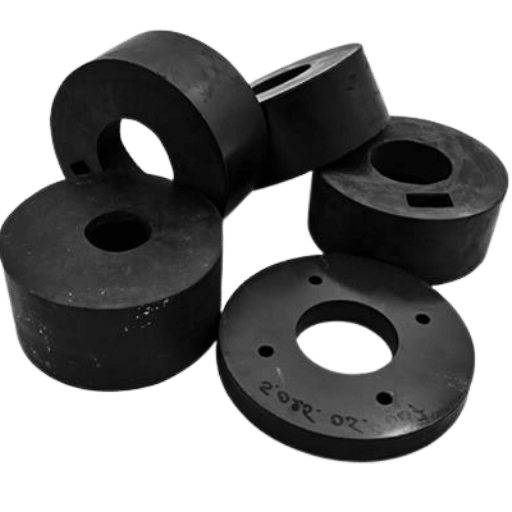
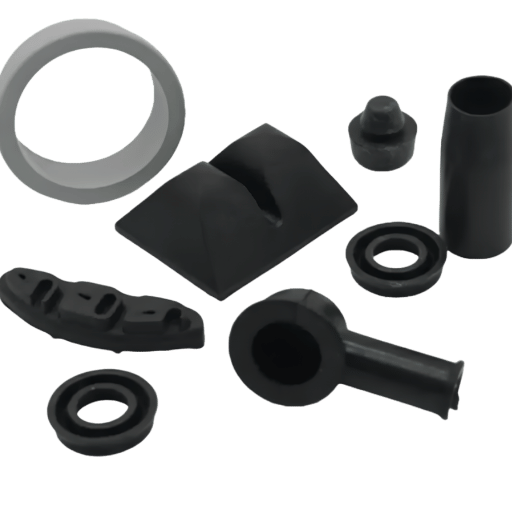
EPDM stampato si presenta ovunque una parte deve trattenere il tempo, l'acqua o il vapore per anni I comuni prodotti in gomma EPDM stampati includono:
- ✔ Guarnizioni, O-ring e guarnizioni per il viso
- ✔ Ombrelli, boccole e isolatori
- ✔ Diaframmi, soffietto e sedi delle valvole
- ✔ Striscia meteorologica, rondelle e parti incollate da gomma a metallo
| Industria | Parti tipiche EPDM | Perché EPDM |
|---|---|---|
| Automobilistico | Striscia di meteorologia, guarnizioni del liquido di raffreddamento/freno, anelli di tenuta per il corpo | Resistenza all'ozono + glicole/freno-fluido |
| HVAC/apparecchio | Guarnizioni, guarnizioni per vapore e acqua calda | Stabilità dell'acqua calda e del vapore |
| Idraulica/acqua potabile | Guarnizioni per valvole, guarnizioni di montaggio, O-ring | Resistenza all'acqua + composti NSF/FDA |
| Elettrico/elettronico | Guarnizioni per recinzioni, anelli di tenuta per cavi | Tenuta meteo + isolamento elettrico |
Attraverso queste applicazioni esterne e gli usi industriali EPDM, il filo conduttore è la durata: i prodotti in gomma stampata come le guarnizioni EPDM, gli O-ring e la guarnizione sopravvivono dove l'ambiente è umido, caldo o esposto al sole L'ampia gamma di applicazioni per EPDM, dalle parti in gomma EPDM per autoveicoli alle guarnizioni delle valvole idrauliche, è il motivo per cui le serie di produzione ad alto volume di parti in gomma stampata lo specificano così spesso Per gli acquirenti che confrontano parti e prodotti in gomma, le applicazioni comuni della gomma EPDM e il più ampio insieme di applicazioni in gomma EPDM si raggruppano ovunque la resistenza agli agenti atmosferici e all'acqua superi la resistenza all'olio, e quella durata è ciò che EPDM offre come componenti in gomma stampata.
Per i dettagli specifici dell'applicazione, consulta le nostre guide su tipi e materiali di parti in gomma per autoveicoli e parti in gomma elettriche ed elettroniche.
EPDM è sicuro per acqua potabile o contatto alimentare?
Sì, ma solo con un composto certificato, non 1EPDM“ in generale”Parti di acqua potabile devono utilizzare un composto EPDM certificato a NSF/ANSI 61 per i componenti del sistema di acqua potabile e le parti ripetute a contatto con gli alimenti devono essere soddisfatte FDA 21 CFR 177.2600 per articoli in gomma Il polimero di base è adatto; la certificazione riguarda la formulazione completa (riempitivi, plastificanti, residui di polimerizzazione) Richiedi sempre i documenti di certificazione del composto specifico, perché un grado generico EPDM non è automaticamente conforme.
Quando NON Specificare EPDM
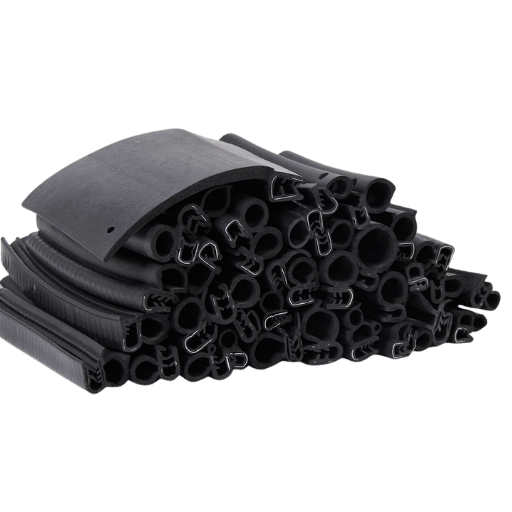
I vantaggi della gomma EPDM, il tempo, l'ozono, l'acqua e la resistenza al vapore a basso costo, rendono facile la sovra-fiducia I vantaggi dell'utilizzo della gomma EPDM sono reali, ma scegliere la gomma EPDM giusta significa rispettare dove si fermano quei vantaggi di EPDM Fallirà, a volte velocemente, nell'ambiente sbagliato Squalificare EPDM prima di attrezzare quando uno qualsiasi di questi è vero:
Specificare EPDM quando
- Esposizione esterna, all'ozono, ai raggi UV o alle intemperie
- Acqua calda, vapore, glicole o liquido dei freni
- Tenute meteorologiche sensibili ai costi su larga scala
Evitare EPDM quando
- Qualsiasi contatto con olio di petrolio, carburante o grasso
- Solventi aromatici o clorurati
- Calore sostenuto ben al di sopra del soffitto della cura
️ Ideazione sbagliata comune:“” resistente alle intemperie significa“” a prova di sostanze chimiche”
Non traccia regolarmente una guarnizione gonfia di “weather non al suo design ma a un fluido chimico adiacente. Gli ingegneri sul campo rintracciano regolarmente un fluido gonfio. Gli ingegneri sul campo un lubrificante polare, una vernice, un adesivo di assemblaggio che nessuno ha elencato sul disegno. EPDM resiste brillantemente alle intemperie e ai fluidi e agli oli; quelli sono assi separati. L'errore opposto è altrettanto costoso: è stato documentato che Viton, in un servizio benigno di acqua calda, spreca circa $12.000 all'anno rispetto a un composto EPDM che sarebbe durato altrettanto a lungo.
Quando EPDM è fuori, le sostituzioni usuali sono nitrile (NBR) per olio ambientale e carburante, o fluoroelastomero (FKM/Viton) per olio caldo e sostanze chimiche aggressive Entrambi sono standard parti in gomma personalizzate materiali, quindi cambiare le specifiche è un cambiamento composto, non una riprogettazione.
Come specificare una parte stampata EPDM
Una specifica completa è ciò che trasforma una vaga indagine in una citazione accurata e una parte che funziona la prima volta Per lo stampaggio su gomma personalizzato, e lo stampaggio EPDM personalizzato in particolare, quattro informazioni fanno la maggior parte del lavoro Invia questi e uno stampo può citare utensili, ciclo e prezzo senza una dozzina di email di follow-up.
Lista di controllo delle specifiche EPDM
- Disegno o CAD + grado di tolleranza. Indicare un grado RMA: da A1 (alta precisione) a A4 (base) I gradi più stretti costano di più, chiedere A1 solo dove ne ha bisogno una superficie di tenuta.
- Durezza + call-out standard. Dare un durometro (ad esempio 60 o 70 Shore A) e, idealmente, un ASTM D2000 linea call-out in modo che la classe di calore e olio sono fissi, non assunto.
- Volume annuale. Questo imposta il processo (compressione vs trasferimento vs iniezione), la decisione di attrezzaggio e la quantità di EPDM consumata all'anno.
- Ambiente operativo. Intervallo di temperatura, fluidi contattati e qualsiasi requisito di acqua potabile o contatto con gli alimenti (NSF/FDA).
La chiamata di chiamata della linea ASTM D2000 sembra criptica ma è logica: una lettera tipo fissa la temperatura del test di resistenza al calore (A = 70 °C, B = 100 °C, C = 125 °C, D = 150 °C) e una lettera di classe fissa la resistenza al rigonfiamento dell'olio I composti EPDM solitamente atterrano a BA, CA o DA, la segnalazione finale di “A” non presenta resistenza all'olio, esattamente ciò che prevede la chimica Leggendo la chiamata di chiamata ti viene comunicata la famiglia degli elastomeri prima di vedere mai una scheda tecnica Per le apparecchiature utilizzate per valutare la resistenza all'ozono nei composti di gomma, vedere Beier Labs's’ Camera di prova dell'ozono; selezionare le condizioni di esposizione e i criteri di accettazione per corrispondere alle specifiche del materiale.
Nota ingegneristica
La durezza non è una specifica prestazionale di per sé, è un input. Per un O-ring o una guarnizione frontale, design per compressione 1555 120T (squeeze) (squeeze standard range O-ring in Shore e scegliere il durometro che lo raggiunge nella scanalatura, anziché passare per default a 70 A per abitudine L'attrezzatura è un costo una tantum; il prezzo per parte si ripresenta, quindi paga una tolleranza stretta solo sulle caratteristiche che effettivamente sigillano È così che ottieni una parte in gomma di alta qualità senza pagare in eccesso per una specifica in gomma di qualità di cui non hai bisogno.
L'errore RFQ più costoso è una specifica incompleta Un disegno senza durometro, senza grado di tolleranza e senza fluido operativo costringe lo stampo a indovinare, e un'ipotesi sbagliata sul sistema di polimerizzazione può significare un sigillo che fallisce sul campo mesi dopo aver superato l'ispezione del primo articolo. Gli ingegneri di Engelhardt selezionano ciascuna specifica rispetto ai gradi di tolleranza ASTM D2000 call-out e RMA A1A4 prima che qualsiasi strumento venga tagliato, proprio per colmare tali lacune.
Quando le specifiche sono pronte, il nostro Servizio di stampaggio della gomma EPDM può esaminarlo per verificarne la producibilità e consigliare un sistema di polimerizzazione e un processo che corrispondano al volume.
Prospettiva sulla domanda di stampaggio EPDM: cosa sta cambiando
Il cambiamento più grande per gli acquirenti di EPDM non è una cifra di dimensioni di mercato, è dove stanno andando le nuove guarnizioni L'elettrificazione del veicolo sta ampliando il ruolo di EPDM: i pacchi batteria e i circuiti del liquido di raffreddamento eseguono fluidi di gestione termica a base di glicole, esattamente il servizio polare dove EPDM eccelle e dove le gomme resistenti all'olio non aggiungono alcun valore Mentre i volumi di gestione termica dei veicoli elettrici salgono fino al 2026, il contenuto di tenuta che storicamente è andato agli elastomeri resistenti all'olio è sempre più EPDM, perché il fluido è passato dall'olio al liquido di raffreddamento.
Un secondo fattore è la conformità, non il consumo. Rafforzare l’applicazione delle norme sull’acqua potabile (NSF/ANSI 61) sta spingendo gli acquirenti verso modellatori in grado di certificare uno specifico formulazione composta, non solo appendere un certificato ISO sul muro L'effetto pratico nella fase RFQ: la documentazione sta diventando parte della parte.
Il rischio per gli acquirenti è un costoso interruttore a metà programma Un team di elettrificazione che ha bloccato una guarnizione del refrigerante EPDM senza confermare la compatibilità con glicole ha dovuto affrontare la riqualificazione quando un grado sostitutivo è stato specificato per errore, settimane di ritardo che un singolo controllo di compatibilità allo stadio RFQ avrebbe impedito.
Solo per il contesto di mercato, gli analisti mettono EPDM e una più ampia crescita dello stampaggio della gomma nella gamma CAGR a media cifra, sfondo direzionale, non un motivo di acquisto Le ragioni di acquisto sono sopra Questi cambiamenti stanno rimodellando l'industria dello stampaggio della gomma: gli acquirenti sempre più selezionano i produttori EPDM e i produttori di stampaggio della gomma i cui servizi di stampaggio e soluzioni di stampaggio della gomma sono dotati di un controllo documentato delle mescole piuttosto che di prezzi delle materie prime La tecnologia della gomma si sta muovendo verso formulazioni certificate, non solo fabbriche certificate. Azione per i programmi 2026: se si stanno approvvigionando sigilli per un sistema termico EV, confermare la compatibilità glicole/refrigerante e richiedere il sistema di polimerizzazione e i documenti composti NSF/FDA a RFQ, non dopo PPAP.
FAQ di stampaggio della gomma EPDM
Q: Può EPDM essere modellato?
Visualizza risposta
Sì. EPDM è stampato da tutti e tre i processi standard di gomma, stampaggio a iniezione, compressione e trasferimento In ogni caso un composto solido EPDM viene riscaldato fino a quando non scorre, forzato in uno stampo di acciaio chiuso e vulcanizzato sotto calore e pressione Il processo che si preleva dipende dal volume annuale e dalla geometria del pezzo, non da alcuna limitazione del materiale stesso La compressione si adatta a bassi volumi e grandi guarnizioni, mentre lo stampaggio a iniezione prende il sopravvento per le guarnizioni di precisione ad alto volume.
D: Cosa significa EPDM nella gomma?
Visualizza risposta
EPDM sta per monomero di etilene propilene diene, i tre monomeri che insieme costruiscono la catena polimerica È una gomma sintetica la cui struttura satura conferisce un'eccellente resistenza all'ozono, ai raggi UV e agli agenti atmosferici, mentre il componente dienico fornisce i siti di reticolazione necessari per vulcanizzarlo in una parte.
Q: Quanto dura la gomma EPDM?
Visualizza risposta
Nel giusto ambiente, decenni Le indagini sul campo delle membrane di copertura EPDM a strato singolo confermano oltre 38 anni di servizio e gli studi sull'invecchiamento accelerato proiettano ancora più a lungo Le guarnizioni EPDM stampate in condizioni meteorologiche, acqua o glicole durano abitualmente la vita dell'attrezzatura. La durata della vita diminuisce drasticamente, tuttavia, se EPDM entra in contatto con olio di petrolio o carburante o supera il tetto massimo della temperatura del sistema di polimerizzazione.
Q: È EPDM gomma impermeabile?
Visualizza risposta
Sì. EPDM resiste all'acqua, all'acqua calda e al vapore eccezionalmente bene, motivo per cui ancora le membrane di copertura a strato singolo e le guarnizioni del sistema idrico. A differenza di molte gomme resistenti all'olio, non si gonfia in acqua prolungata o contatto con glicole, rendendolo un valore predefinito per la sigillatura a umido.
Q: Come si fa a legare la gomma EPDM al metallo?
Visualizza risposta
Il legame gomma-metallo avviene durante lo stampaggio L'inserto metallico viene pulito, innescato e rivestito con un adesivo adesivo adesivo, quindi posizionato nello stampo in modo che il EPDM curi direttamente contro di esso, lo stampaggio a trasferimento si adatta particolarmente bene. I composti induriti con zolfo generalmente si legano più facilmente di quelli induriti con perossido, il che è uno dei motivi per cui il sistema di indurimento e il processo di stampaggio vengono scelti insieme. Un inserto pulito e ben innescato è la differenza tra un legame duraturo e una parte che si delamina in servizio.
D: EPDM è una gomma o una plastica?
Visualizza risposta
EPDM è una gomma, in particolare un elastomero sintetico Una volta vulcanizzata è elastica e ritorna dopo la deformazione, a differenza di un materiale termoplastico rigido. A volte viene scambiata per plastica perché è sintetica, ma meccanicamente si comporta come una gomma, che è esattamente ciò che la rende utile per guarnizioni, guarnizioni e anelli di tenuta.
D: Quanto è forte EPDM?
Visualizza risposta
La resistenza alla trazione di EPDM in genere funziona con 500,3,000 punti (circa 3,21 MPa a seconda del composto e del riempitivo rinforzante, moderata tra le gomme, inferiore al picco della gomma naturale ma ampia per il servizio di tenuta. La sua reale resistenza ingegneristica non è la trazione grezza: eccezionale resistenza all'ozono, agli UV, all'acqua calda e alla compressione, in particolare con l'indurimento con perossido. Per le parti sigillanti, la resistenza all'invecchiamento conta molto più di un numero di trazione, motivo per cui EPDM è specificato dall'ambiente operativo Quando si confrontano i gradi, chiedere al fornitore il valore del set di compressione misurato per 1TPT D395 120T (22 hr20T a circa 20 °C) segnala una tenuta che manterrà la sua forza di tenuta per anni di servizio, che è il numero che prevede effettivamente la vita del campo.
Pronto a citare una parte EPDM. Invia un disegno, durezza target, volume annuale e ambiente operativo per una revisione della producibilità da parte del nostro team di ingegneri.
Informazioni su questa guida EPDM
Engelhardt stampa EPDM e altri elastomeri internamente su presse vulcanizzanti 40+ (~2.000 tonnellate/anno) con un negozio di stampi da 3.600 m² e un laboratorio in loco che esegue la viscosità Mooney, curve di polimerizzazione del reometro a stampo mobile, spray salino e invecchiamento termico su ciascun composto Le osservazioni di polimerizzazione e sovra/sottoindurimento in questo articolo provengono da quella pratica di test batch Recensito dal team tecnico Engelhardt.
Riferimenti e fonti
- EPDM Gomma, Composizione e ProprietàWikipedia
- ASTM D2000 Classificazione standard per i prodotti in gommaASTM Internazionale
- NSF/ANSI 61: Componenti del sistema di acqua potabileNSF Internazionale
- 21 CFR 177.2600, Articoli in gomma destinati ad uso ripetutoCodice elettronico dei regolamenti federali degli Stati Uniti
- Guarnizione legata gomma-metallo EPDM stampata a trasferimento (EP0142930A2)Brevetti Google
- Cure System Selection, Quaderno TecnicoNotizie sulla gomma