Mettiti in contatto con Engelhardt


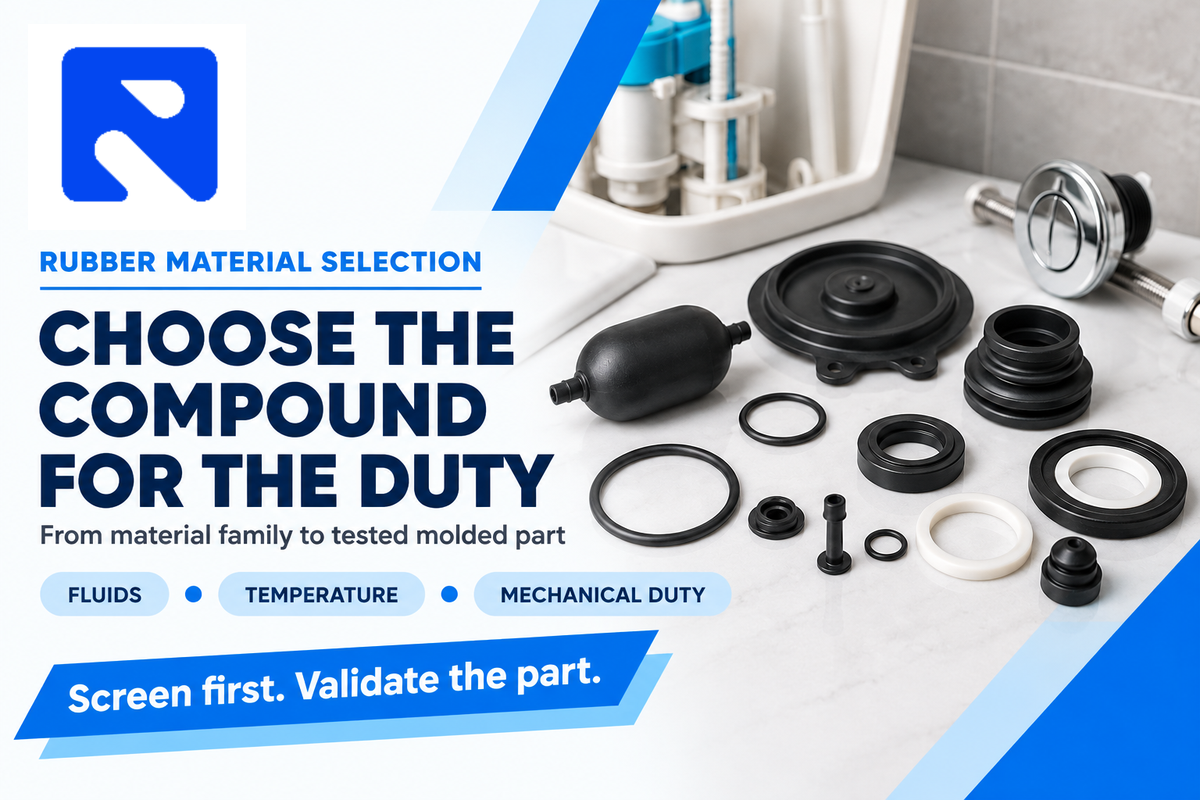
EPDM è un buon punto di partenza quando c'è esposizione all'acqua e alle intemperie.NBR è un inizio quando si tratta di olio di petrolio, ma FKM dovrebbe essere incluso quando l'olio caldo richiede una lista ristretta diversa Questa guida alla selezione del materiale in gomma confronta otto elastomeri comuni, quindi mostra come restringere una famiglia a un composto e testare la parte stampata nelle sue condizioni di servizio.
Aggiornato ottobre 2026
Punti di partenza di selezione rapida
- EPDM avvia la rosa dei candidati per acqua e tempo; includere detergenti e lubrificanti di assemblaggio nella valutazione.
- Per l'olio di petrolio, iniziare con NBR e indagare HNBR o FKM quando il calore o l'usura cambia il dovere.
- Indagine sui semi in silicone per il servizio termico statico, con compatibilità con strappi e fluidi considerati separatamente.
- Specificare la designazione del composto, il disegno, la busta di servizio e i test di accettazione.
La selezione del materiale in gomma è il processo di abbinamento di un composto elastomerico ai suoi fluidi, temperature e lavoro meccanico Un grafico familiare avvia la rosa dei candidati Il test delle parti rappresentative chiude la selezione.
Inizia con le condizioni di servizio, non con un nome in gomma
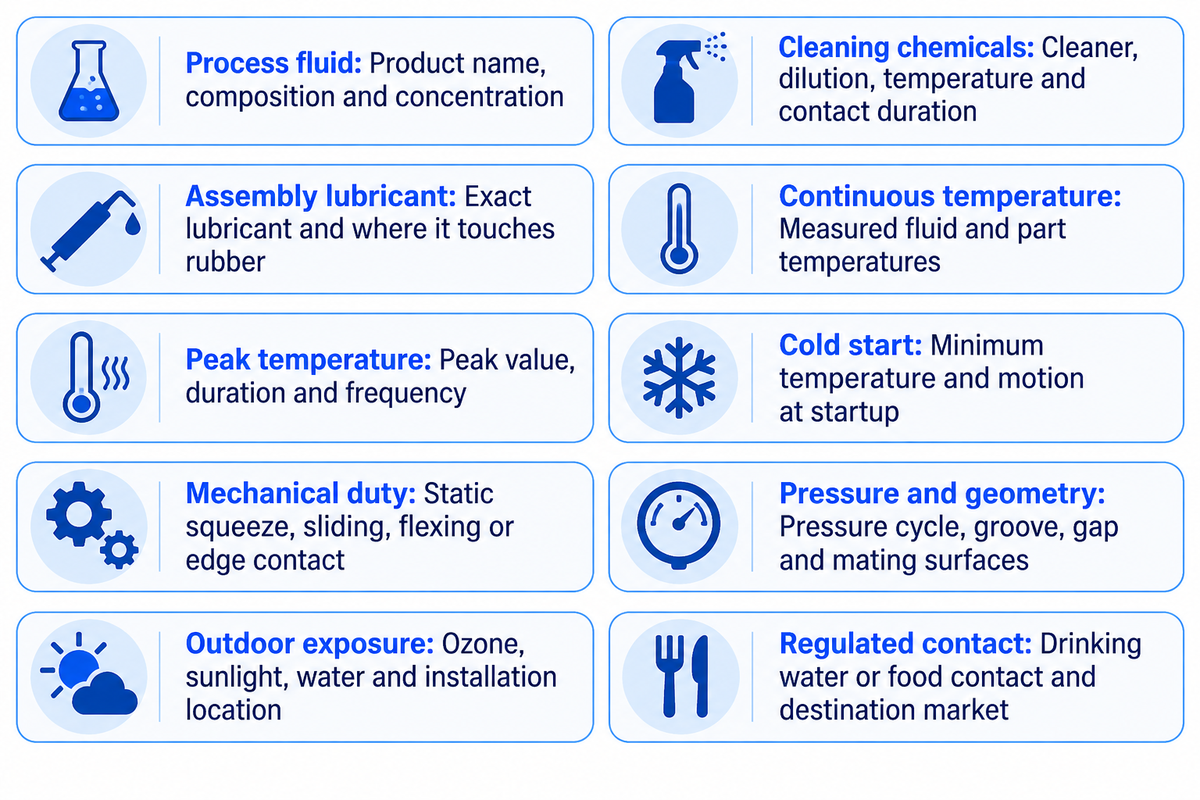
La gomma giusta dovrebbe essere selezionata in base alle condizioni che la parte incontrerà, a partire da ogni fluido e dagli stati operativi più freddi e caldi Le decisioni di selezione dei materiali si muovono quindi attraverso tre livelli: famiglia di polimeri, grado composto e componente stampato Ogni livello dà una risposta a una domanda diversa partendo dall'ampia compatibilità al fatto che l'assemblaggio sigilli o sopravviva a movimenti ripetuti.
| Ingresso | Registrare nella specifica | Decisione cambia |
|---|---|---|
| Fluido di processo | Nome del prodotto, composizione e concentrazione | Lista iniziale dei candidati per la compatibilità chimica |
| Prodotti chimici per la pulizia | Detergente, diluizione, temperatura e durata del contatto | Se il ciclo di pulizia elimina un candidato |
| Lubrificante di assemblaggio | Lubrificante esatto e dove tocca la gomma | Esposizione dell'installazione prima del normale servizio |
| Temperatura continua | Temperature misurate di fluidi e parti | Resistenza al calore richiesta in quel mezzo |
| Temperatura di picco | Valore di picco, durata e frequenza | Escursioni brevi contro invecchiamento prolungato |
| Partenza fredda | Temperatura minima e movimento all'avvio | Recupero e sigillatura durante la contrazione |
| Dovere meccanico | Spremere statico, scivolare, flettere o contatto con i bordi | Priorità di recupero, attrito, strappo o usura |
| Pressione e geometria | Ciclo di pressione, scanalatura, spazio vuoto e superfici di accoppiamento | Progettazione delle parti e condizioni di prova funzionale |
| Esposizione all'aperto | Ozono, luce solare, acqua e luogo di installazione | Resistenza agli agenti atmosferici e protezione delle superfici |
| Contatto regolamentato | Contatto con acqua potabile o cibo e mercato di destinazione | Documentazione e approvazioni dei materiali richiesti |
Un disegno che afferma “rubber, 70 Shore A” non fornisce informazioni sull'ambiente di servizio e sui fluidi Prima che vengano richiesti preventivi, il personale tecnico determina e specifica le condizioni di servizio, l'acquisto mantiene l'equivalenza e il personale di qualità decide cosa è necessario per accettare i campioni.
Per esposizioni liquide, ASTMD471 fornisce procedure di test comparativo; non sostituisce la prova delle parti assemblate nelle condizioni di servizio registrate.
Confronta i materiali in gomma: EPDM, NBR, silicone, FKM e altro ancora
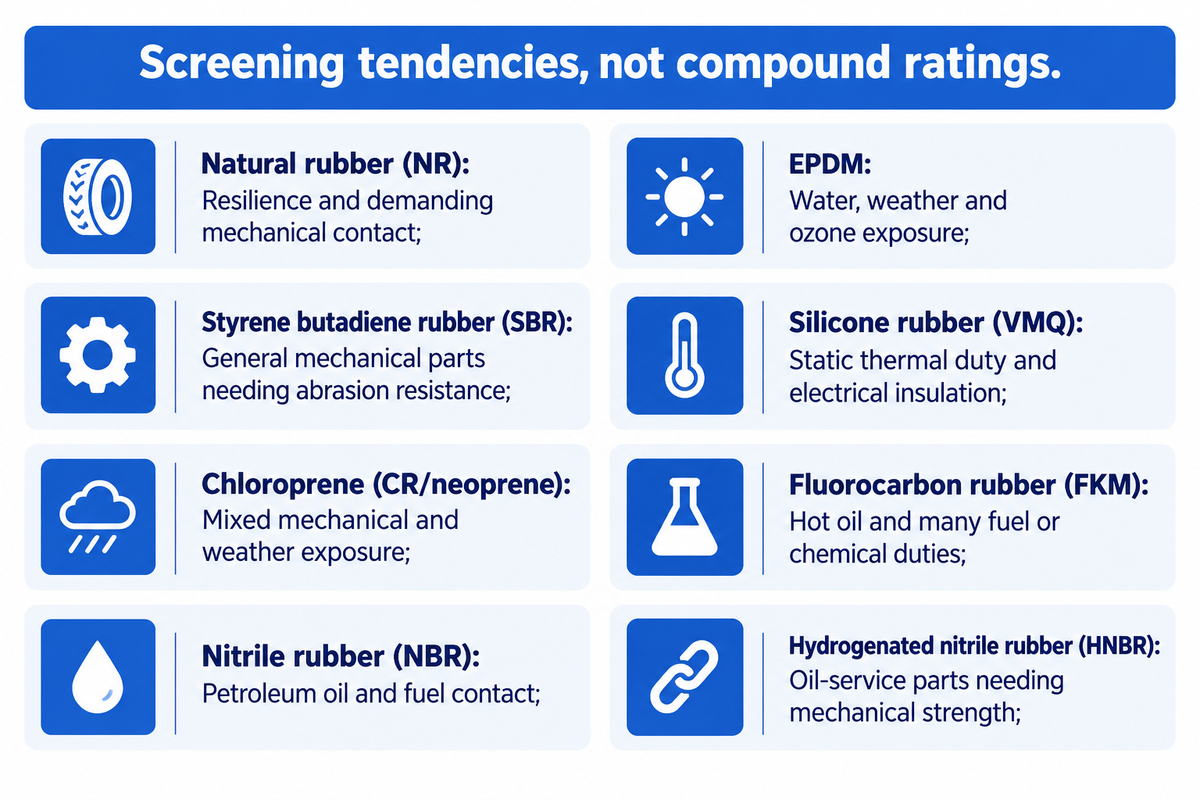
Per esposizioni diverse, EPDM, NBR, silicone e FKM sono punti di partenza; NR, SBR, CR e HNBR estendono la rosa dei candidati per i compiti meccanici o misti Confrontare questi diversi tipi di gomma dalla loro vestibilità più forte e dalla condizione che potrebbe escluderli Un materiale preferito diventa una specifica di acquisto dopo che un particolare composto soddisfa i requisiti di applicazione.
| Famiglia | Punto di partenza utile | Esposizione o dovere di risolvere | Prossimo controllo a livello composto |
|---|---|---|---|
| Gomma naturale (NR) | Resilienza e contatto meccanico esigente | Fluidi petroliferi e ozono esterno | Strappo, abrasione e fatica sotto il carico di lavoro |
| Gomma stirene butadiene (SBR) | Parti meccaniche generali che necessitano di resistenza all'abrasione | Esposizione e alterazione dell'olio | Indossare contro la superficie di accoppiamento reale |
| Cloroprene (CR/neoprene) | Esposizione meccanica e meteorologica mista | Solo una moderata resistenza ad alcuni fluidi petroliferi | Requisiti esatti di fluidi, invecchiamento e strappo |
| Gomma nitrilica (NBR) | Contatto olio di petrolio e carburante | Ozono, flessibilità del freddo e miscele di combustibili sconosciute | Gonfiore dei liquidi e funzione di avvio a freddo |
| EPDM | Esposizione all'acqua, al tempo e all'ozono | Olio minerale e lubrificanti petroliferi | Compatibilità più pulita e grado di servizio idrico |
| Gomma siliconica (VMQ) | Servizio termico statico e isolamento elettrico | Sfregamento, strappo e fluidi incompatibili | Recupero, forza lacrimale ed esposizione ai fluidi |
| Gomma fluorocarbonica (FKM) | Olio caldo e molti combustibili o compiti chimici | Vapore, avviamenti a freddo ed esclusioni chimiche specifiche per grado | Finestra operativa media e composta esatta |
| Gomma nitrilica idrogenata (HNBR) | Parti per servizi petroliferi che necessitano di resistenza meccanica | Formulazione fluida e requisiti di bassa temperatura | Usura, invecchiamento termico e funzione assemblata |
Le tendenze e il comportamento generali, indicati come “excellent resistance” o “good resistance”, consentono di selezionare le famiglie prima di confrontare i singoli composti. Le condizioni di prova e il mezzo da utilizzare devono essere specificati per utilizzare queste affermazioni nella progettazione.
Al di fuori delle otto famiglie, il butile è utile per indagare dove la bassa permeabilità ai gas è preoccupante; il poliuretano merita attenzione per la resistenza all'usura I gas ad alta pressione e i compiti di decompressione rapida richiedono un piano di qualificazione dedicato Una gomma versatile per una copertura protettiva può essere sbagliata per una tenuta in movimento.
Qual è la differenza tra gomma naturale e gomma sintetica?
La gomma naturale è derivata dal lattice dell'albero della gomma mentre la gomma sintetica è prodotta attraverso la sintesi chimica La gomma naturale è utile per la resilienza e le proprietà meccaniche; le famiglie sintetiche offrono diverse combinazioni di resistenza all'olio, al calore e agli agenti atmosferici Nessuna delle due categorie fornisce le migliori proprietà del materiale per ogni applicazione.
La composizione conferisce ai gradi all'interno di entrambe le categorie le loro proprietà uniche La chimica di polimerizzazione, la miscela polimerica e i riempitivi influenzano la parte finita In uno studio del 2009, Noguchi e colleghi hanno attribuito il comportamento allo strappo delle miscele NR/SBR reticolate alla cristallizzazione indotta dalla deformazione e alla struttura della miscela. Questo spiega perché i composti di tipi di gomma familiari possono comportarsi diversamente quando viene applicato il carico. Leggi l'abstract originale dello studio.
Verificare la compatibilità chimica prima dell'intervallo di temperatura
La compatibilità chimica può eliminare un candidato prima dei confronti della temperatura Il fluido di processo, il detergente e il lubrificante per l'installazione influenzano la gomma in diverse fasi Il rigonfiamento può provocare un adattamento inadeguato, mentre l'estrazione può causare restringimento o perdita di proprietà È ancora necessario un grado di una famiglia resistente ai prodotti chimici, adatto alla concentrazione e all'esposizione richieste.
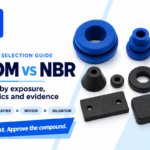
Tenuta idraulica EPDM: includa grasso di assemblaggio, poiché i lubrificanti a base di petrolio possono portare un'esposizione incompatibile ad un'applicazione di acqua altrimenti adatta Per una decisione più ravvicinata su due materiali, utilizzi il Confronto di gomma EPDM e NBR.
“Oil” copre una gamma di liquidi diversi Uno studio dell'Oak Ridge National Laboratory ha immerso 17 elastomeri in biocarburanti e diesel selezionati a 50 °C per quattro settimane La risposta al rigonfiamento riportata differiva tra bioolio a pirolisi rapida e bio-greggio a idrotermoliquefazione, anche per i fluoroelastomeri Mantenere l'olio motore, l'olio idraulico e un altro biocarburante come domande di compatibilità separate L'ambito del test è descritto in Abstract della ricerca 2021 di ORNL.
Gli acidi forti, un solvente polare o una miscela di combustibili con alcol dovrebbero rimanere nominati nella specifica di resistenza chimica. “Resistente a molte sostanze chimiche” è troppo generale per distinguerle.
FKM può essere utilizzato nel servizio a vapore?
Un composto FKM può essere selezionato per il servizio a vapore; tuttavia, è richiesta una classificazione del vapore specifica per grado Considerare la temperatura del vapore, la durata dell'esposizione e la chimica di pulizia per valutare tale grado La resistenza generale all'olio e al carburante FKM è un criterio di selezione diverso dalla resistenza all'acqua calda o al vapore, quindi un generico composto per il servizio dell'olio non è un sostituto automatico.
Quando si considera un composto per il servizio con vapore, chiedere le condizioni di prova, il tempo di esposizione e i criteri di accettazione Una designazione familiare per i composti FKM non garantisce il servizio con vapore.
Leggere insieme la resistenza al caldo, al freddo e agli agenti atmosferici
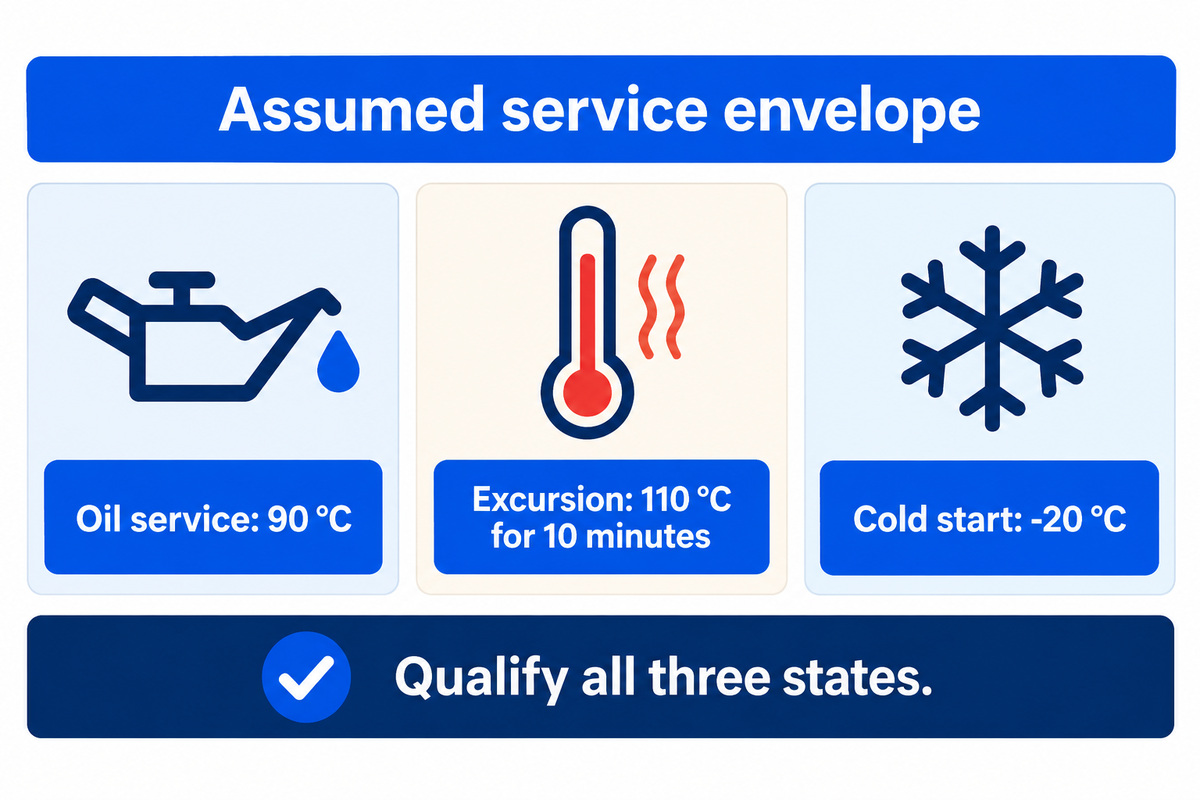
Un intervallo di temperatura, con il suo mezzo, la durata di esposizione e la funzione richiesta, dovrebbe essere letto insieme per capire il suo ruolo La sigillatura a freddo è diversa dalla resistenza al calore aria-secca e dalla resistenza ai fluidi caldi, e le parti esterne affrontano anche ozono e luce ultravioletta Scegliere il composto giusto significa tenere insieme quelle esposizioni quando si confrontano la resistenza alle alte temperature con la flessibilità all'estremità fredda.
Esempio di involucro di servizio: una guarnizione funziona in olio a 90 °C, vede un'escursione di 110 °C per 10 minuti e deve sigillare durante un inizio di -20 °C Questi sono i tre requisiti per la stessa parte Selezionando un composto dal solo valore di 110 °C si lascia irrisolto l'avvio a freddo.
ISO 3384-2 affronta il ciclo della temperatura misurando la controforza decrescente mentre un campione di gomma rimane a deformazione costante. Ciò fornisce una base di metodo di prova per considerare la sequenza termica.
- Valutare l'invecchiamento termico continuo nel fluido di lavoro.
- Registrare la durata e la frequenza dei picchi di temperatura.
- Prova la sigillatura mentre la parte si contrae durante il raffreddamento dopo l'invecchiamento.
- Per le parti resistenti all'ozono e ai raggi UV, valutare l'esposizione all'esterno insieme alla deformazione e al movimento.
EPDM e silicone sono buoni punti di partenza resistenti agli agenti atmosferici nella guida del produttore Per le parti automobilistiche esposte a olio e condizioni esterne, HNBR può essere confrontato con lo standard NBR. I materiali utilizzati nel settore automobilistico richiedono ancora i controlli specifici del dovere nel disegno; un'etichetta dell'applicazione non imposta un limite di servizio.
Durezza di corrispondenza, set di compressione e proprietà meccaniche
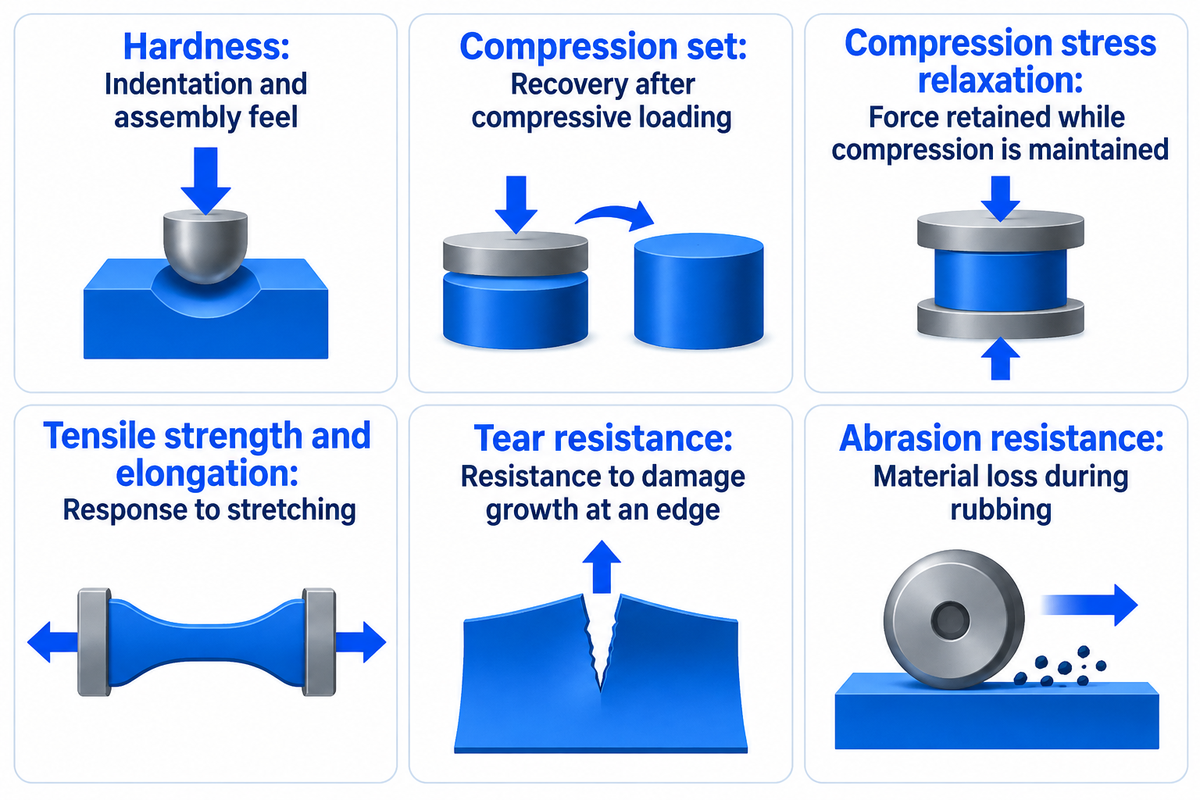
Le misure di durezza si riferiscono alla resistenza alla rientranza Il recupero e la forza di tenuta trattenuta si riferiscono a diversi aspetti del comportamento del materiale Per una tenuta statica, confrontare la compressione impostata nelle stesse condizioni e includere la ritenzione della forza quando si considerano gli effetti dell'invecchiamento o del ciclo di temperatura Per una parte mobile, aggiungere i requisiti di usura, attrito e strappo invece di selezionare la gomma corretta solo da Shore A.
| Proprietà | Decisione utile | Mantenere comparabile |
|---|---|---|
| Durezza | Sensazione di rientro e assemblaggio | Scala, campione e condizioni di misurazione |
| Insieme di compressione | Recupero dopo carico di compressione | Metodo, deflessione, tempo, temperatura e periodo di recupero |
| Rilassamento dello stress da compressione | Forza trattenuta mentre la compressione viene mantenuta | Deformazione iniziale, campione e storia della temperatura |
| Resistenza alla trazione e allungamento | Risposta allo stretching | Metodo di prova, geometria e condizionamento |
| Resistenza allo strappo | Resistenza a danneggiare la crescita su un bordo | Geometria della tacca e direzione di carico |
| Resistenza all'abrasione | Perdita di materiale durante lo sfregamento | Superficie di accoppiamento, meccanismo di carico e usura |
ASTMD395 definisce metodi di prova a compressione-set principalmente rilevanti per le sollecitazioni di compressione statiche Un risultato da un tempo e la temperatura non devono essere classificati direttamente contro un risultato ottenuto sotto un'altra esposizione Due composti di uguale durezza possono mostrare un comportamento di recupero diverso.
Per il ciclo di temperatura, ISO 3384-2 misura la diminuzione della controforza mentre la deformazione rimane fissa Il suo Metodo A include controlli della forza di tenuta a bassa temperatura dopo l'invecchiamento ad alta temperatura Questo distingue una tenuta che si riprende dopo lo scarico da una che mantiene una forza sufficiente mentre è installata.
“Il confronto dei risultati è valido solo se effettuato su provette di dimensioni e forma simili.”
Per una citazione NBR, identificare il composto piuttosto che specificare il contenuto di acrilonitrile come scorciatoia per tutte le proprietà Le scelte di formulazione e polimerizzazione influenzano anche il comportamento meccanico del componente stampato.
Scegli una rosa di candidati per tre applicazioni impegnative
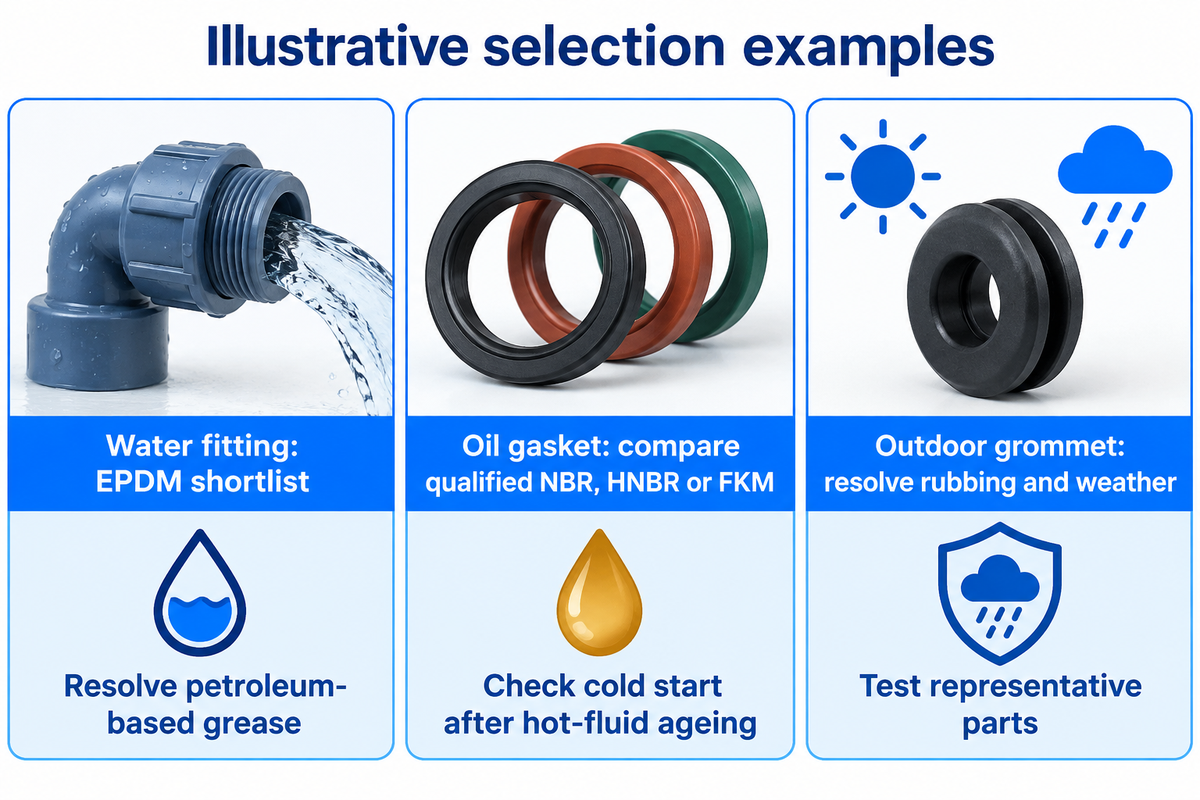
Eliminare i materiali che difficilmente soddisfano i requisiti, e considerare il resto Una guarnizione dell'acqua, una guarnizione dell'olio e un anello di tenuta per lo sfregamento pongono requisiti diversi sulla gomma Gli esempi di servizio presunto forniti mostrano come arrivare a un requisito specifico da una famiglia più ampia, più plausibile.
Test di collisione dell'esposizione
Il test di collisione dell'esposizione si riferisce al confronto di un candidato rispetto a ogni condizione fluida e operativa; un'incompatibilità irrisolta impedisce a quel candidato di avanzare.
Un raccordo per acqua calda all'aperto
Supponiamo che un raccordo statico gestisca acqua a 60 °C a 6 bar, passi attraverso un ciclo di pulizia di 15 minuti e sia assemblato con grasso a base di petrolio. EPDM appartiene alla rosa di candidati iniziale per acqua e meteo. Il grasso è la collisione: passare a un lubrificante di assemblaggio compatibile può preservare l'opzione EPDM.
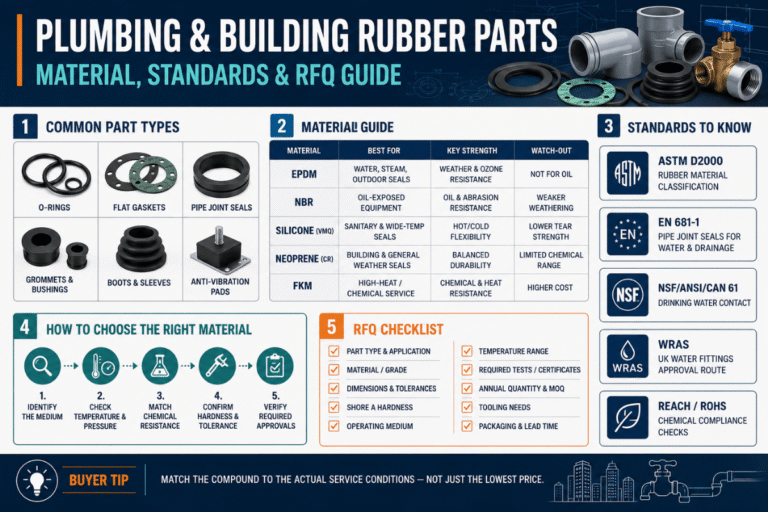
La sostituzione di EPDM con NBR solo per la resistenza agli oli introduce una diversa valutazione meteorologica e potenzialmente una diversa valutazione dell'acqua e del detergente. Prendendo un percorso diverso, se anche il lubrificante non è modificabile, è possibile valutare un composto speciale per il servizio idrico. Il raccordo assemblato viene quindi testato dallo staff di qualità. Viene valutato dopo la sequenza di esposizione completa, compreso il raffreddamento. Utilizzare il guida alle parti in gomma per impianti idraulici e per l'edilizia per applicazione di componenti.
Una guarnizione minerale-olio con avviamento a freddo
Per la precedente busta di servizio del servizio petrolifero, iniziare con NBR e confrontare qualificato HNBR o FKM se necessario per requisiti termici o meccanici più elevati Le specifiche dell'olio sono mantenute le stesse durante questo confronto La modifica simultanea dell'olio e della gomma rende poco chiaro quale cambiamento ha influenzato il rigonfiamento o la perdita.
Le prestazioni ad alta temperatura possono favorire un candidato che necessita ancora di un diverso grado di bassa temperatura. La prova decisiva è l'avvio a freddo dopo l'invecchiamento del fluido caldo, con la guarnizione installata nel giunto previsto.
Un anello di tenuta esposto allo sfregamento e alle intemperie
Supponiamo che un cavo da 4 mm si muova attraverso un anello di tenuta protettivo su un alloggiamento esterno Un test da 100.000 cicli è la valutazione proposta, non una durata del materiale stabilita. EPDM inizia con i requisiti meteorologici; CR o un composto adatto focalizzato sull'usura possono entrare quando domina il contatto ripetuto del bordo.
Il silicone standard presenta proprietà termiche che meritano di essere prese in considerazione, ma necessita di un'attenta valutazione sul bordo di sfregamento Ridurre il contatto netto nell'alloggiamento e confrontare l'usura su parti rappresentative L'acquisto di una gomma più dura potrebbe lasciare in posizione lo stesso meccanismo di taglio.
Controllare le approvazioni per il composto effettivo e l'uso
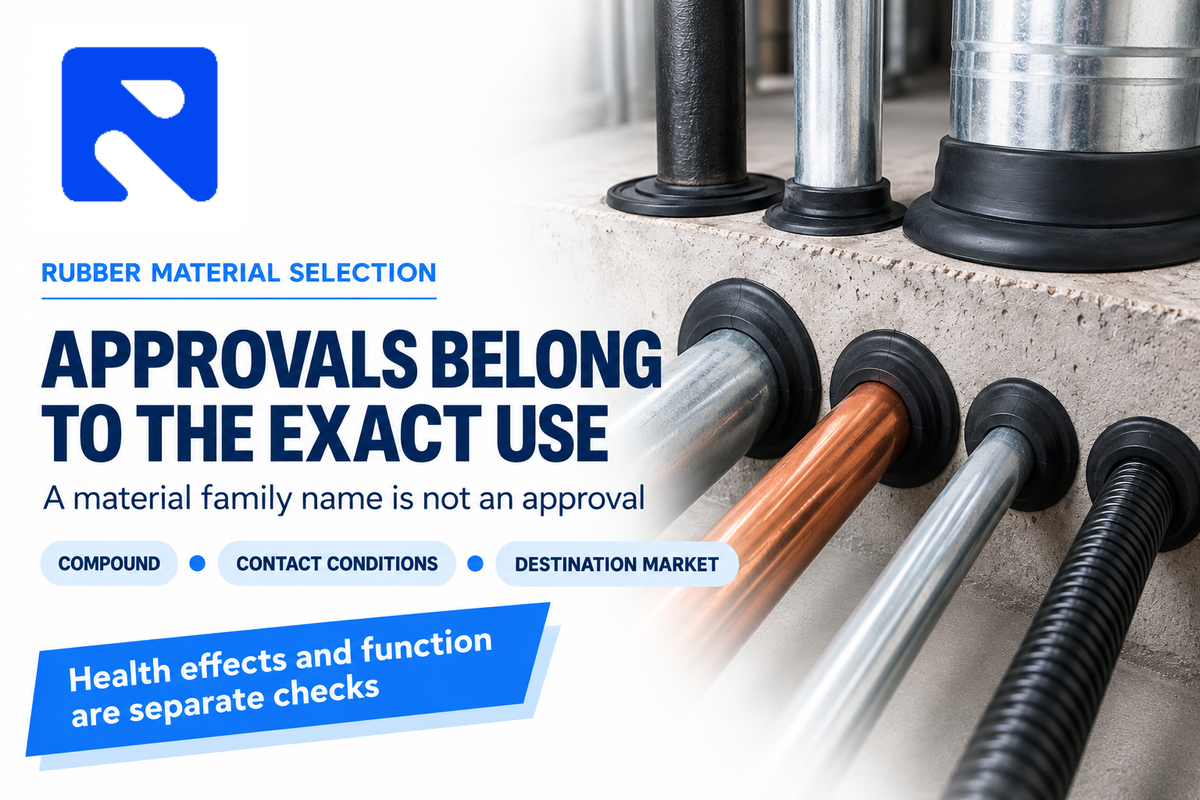
Per i requisiti di acqua potabile o di contatto con gli alimenti, abbinare il composto o componente esatto e le sue condizioni di utilizzo.EPDM e silicone sono nomi di famiglia e le approvazioni sono definite per prodotti e applicazioni specifici Mantenere le preoccupazioni sugli effetti sulla salute separate da pressione, perdita e qualificazione meccanica quando si seleziona una parte in gomma per il contatto regolato.
NSF spiega che NSF/ANSI 61 affronta gli effetti sulla salute delle sostanze impartite all'acqua potabile. Le prestazioni meccaniche, il gusto, l'odore e il supporto alla crescita microbica non rientrano nei requisiti affrontati in tale spiegazione. Una revisione del materiale dell'acqua potabile è quindi parallela ai test funzionali del raccordo.
- Engineering definisce il mezzo di contatto, la temperatura e l'uso previsto.
- L'acquisto corrisponde alla designazione citata alla documentazione del fornitore.
- Il personale di qualità verifica che la produzione utilizzi la designazione approvata e il processo concordato.
Per la trasformazione alimentare, la richiesta dovrebbe includere anche le condizioni del mercato di destinazione e di contatto con gli alimenti. Un cambiamento nel colorante, nell'additivo o nella formulazione potrebbe richiedere una nuova revisione anche se la parte è ancora chiamata silicone.
Confronta i costi dopo l'adattamento tecnico
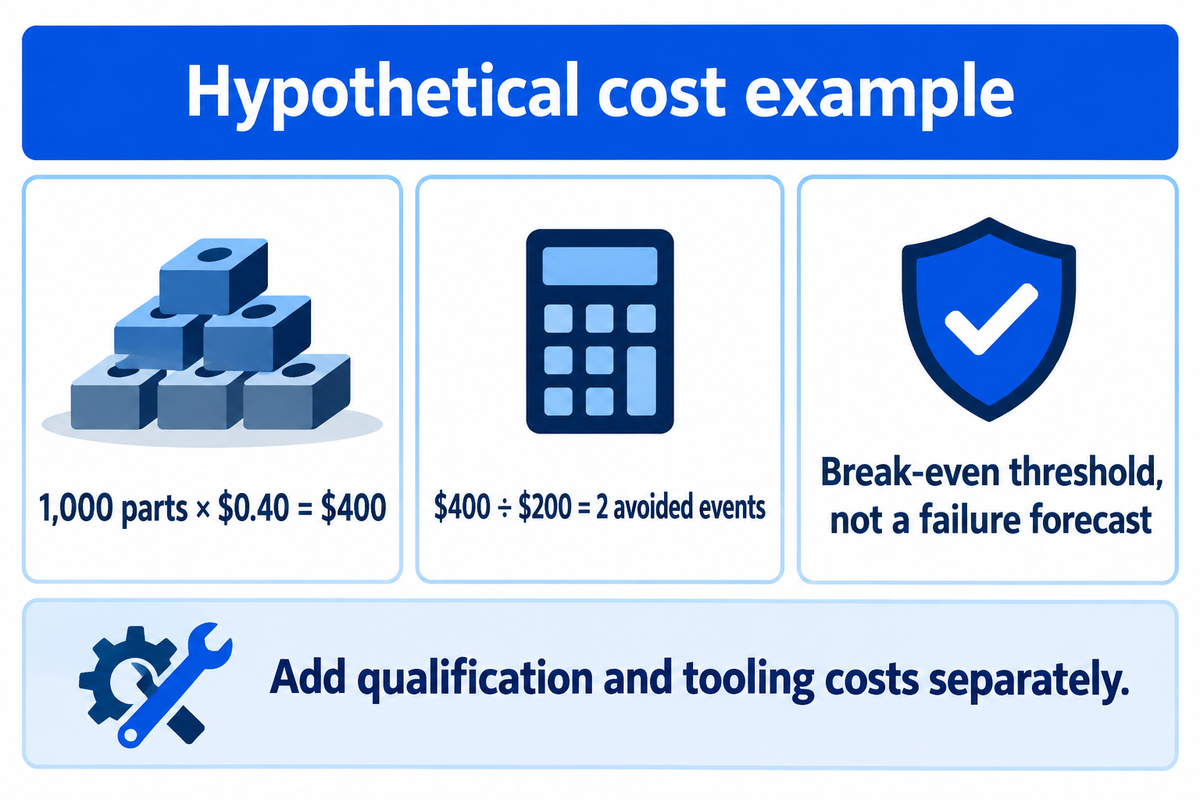
Confrontare il prezzo dei composti che soddisfano le stesse specifiche tecniche La domanda utile è quanta spesa extra deve essere recuperata attraverso meno sostituzioni o altri risparmi misurabili Mantenere quella soglia separata da qualsiasi previsione che un cambiamento di materiale consentirebbe di realizzare il risparmio Mantenere il periodo di servizio e la quantità della parte pari a quelli delle alternative.
Ingressi presunti: 1.000 parti per lo stesso periodo di servizio, un premio di $0,40 per parte e $200 in costo evitabile per evento di sostituzione Si tratta di input editoriali; i costi di qualificazione vengono valutati separatamente.
| Calcolo | Risultato |
|---|---|
| 1.000 parti × $0,40 per parte | $400 costo di acquisto aggiuntivo |
| $400 (RACCOGLIENZA) $200 per evento evitato | 2 eventi di sostituzione evitati per raggiungere il pareggio |
Il calcolo mostra il risparmio richiesto da ottenere, non la riduzione prevista dei guasti Se un cambio di materiale richiede anche una qualifica o un'attrezzatura, aggiungilo al costo e quindi valuta il risparmio Una riparazione coperta da uno spegnimento pianificato può anche avere un costo evitabile inferiore rispetto a una chiamata per uno spegnimento non programmato.
Questa semplice soglia si basa su un principio di funzione equivalente discusso in La pratica di ASTM E917 di costruzione-costo. Per i costi ripartiti su più anni, un modello più completo richiede la considerazione sia dei tempi che degli sconti, come discusso in Guida ai costi del ciclo di vita di FHWA. Nessuno dei due metodi rende economicamente accettabile un materiale di guarnizione incompatibile.
Convalidare la parte stampata prima della produzione
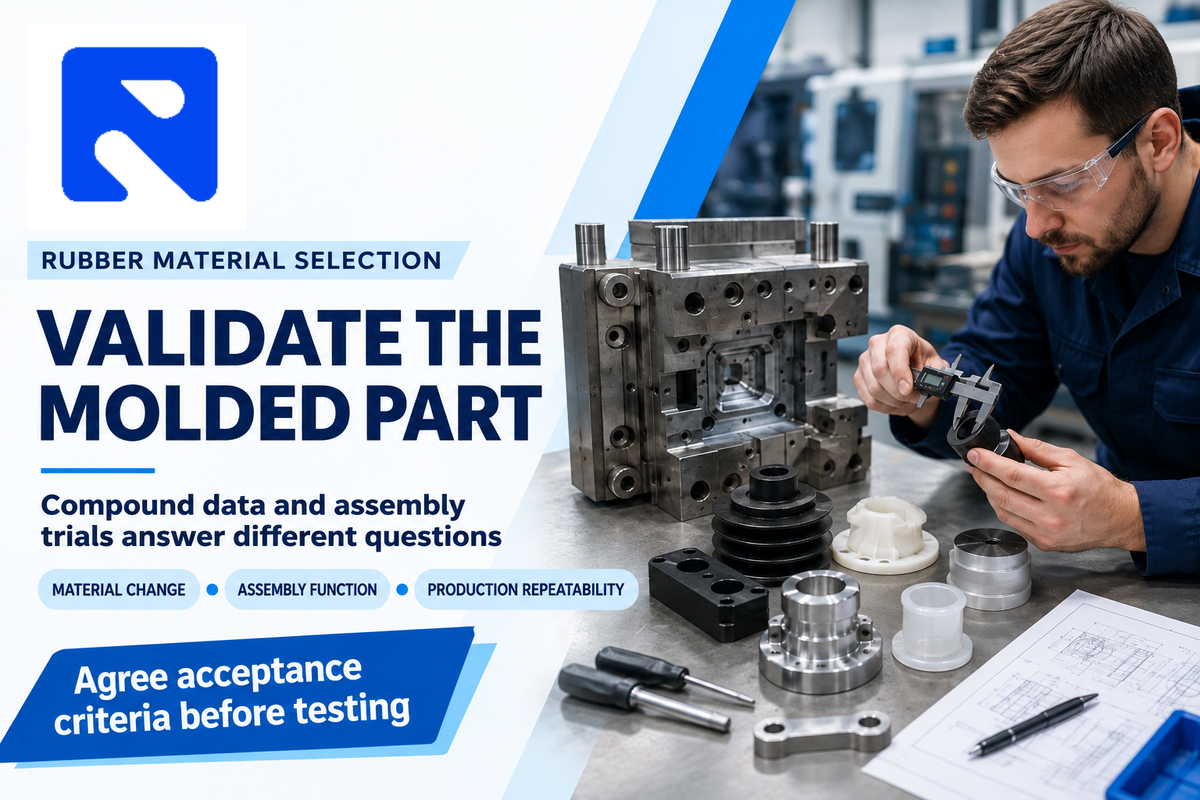
Verificare il composto selezionato e quindi valutare la parte nel suo assemblaggio previsto I test sui materiali rivelano cambiamenti nelle proprietà fisiche; le prove funzionali rivelano se la geometria, il contatto e il carico funzionano ancora dopo l'esposizione Concordare i criteri di guasto prima del test in modo che gli stessi risultati supportino l'approvazione tecnica e l'accettazione della produzione.
| Domanda | Prove da raccogliere | Titolare della decisione |
|---|---|---|
| Il campione è il composto citato? | Designazione, registrazione di lotti e campioni | Acquisti e qualità |
| L'esposizione ai liquidi cambia in forma? | Variazione di volume o dimensionale in base all'esposizione specificata | Ingegneria dei materiali |
| Il composto conserva le sue proprietà? | Misure di durezza, trazione o allungamento rilevanti | Ingegneria dei materiali |
| Il recupero soddisfa il dovere? | Dati impostati sulla compressione con condizioni abbinate | Ingegneria progettuale |
| La forza di tenuta viene mantenuta? | Prove di rilassamento dello stress ove richiesto | Ingegneria progettuale |
| Il montaggio sigilla? | Prova di tenuta a stati di pressione e temperatura concordati | Team di test del prodotto |
| Il movimento danneggia la parte? | Prova di usura, strappo o flessione sulla geometria rappresentativa | Team di test del prodotto |
| L'approvazione del contatto è abbinata? | Documentazione applicabile per l'uso specificato | Conformità e qualità |
| La produzione può ripetere il risultato? | Record composto, processo e controllo delle modifiche approvato | Qualità del fornitore |
ASTMD471 copre i test comparativi di esposizione ai liquidi e menziona che i test sui materiali potrebbero non essere direttamente correlati alle prestazioni dei pezzi Una compressione errata, un taglio di installazione o uno spazio non supportato possono comunque causare il cedimento della tenuta, anche se il composto supera un test sui liquidi.
Considerare guida alla progettazione di guarnizioni e guarnizioni in gomma per applicazioni di sigillatura e combinarlo con prove sui materiali Conservare il campione iniziale, una parte in gomma usata e la registrazione del fluido e della temperatura di una prova in cui una parte ha fallito La separazione dei danni durante il servizio dai danni durante l'installazione è aiutata da questo confronto dei campioni.
Trasforma la tua lista dei candidati in una specifica di stampaggio
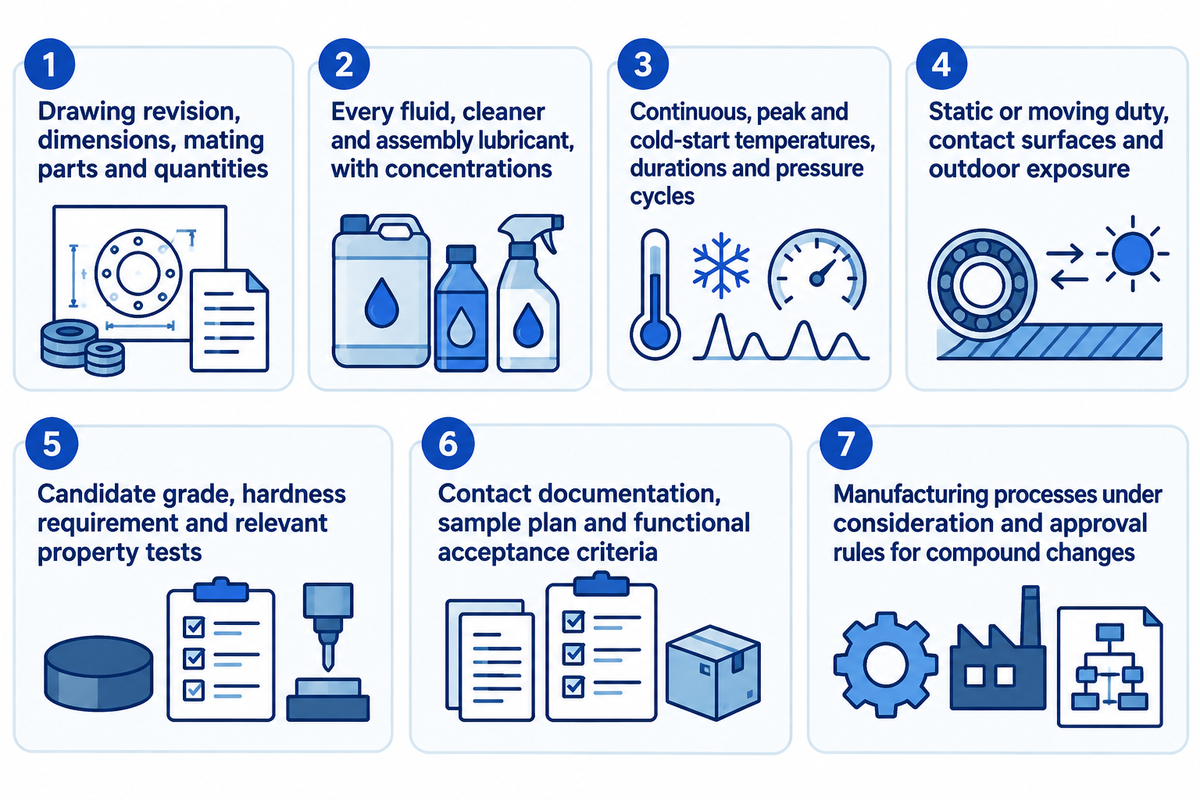
Fornire al fusore un disegno, specificare le condizioni di esposizione e indicare i test di accettazione con le famiglie di composti candidati Una specifica di mescola di gomma dovrebbe indicare la funzione della parte e stabilire le modifiche che richiedono l'approvazione. ASTM D2000 può fornire il linguaggio di classificazione per la proprietà pertinente.
ASTM D2000 classifica i materiali in gomma utilizzando tipi di invecchiamento termico e classi di rigonfiamento dell'olio Aggiungere i requisiti funzionali e di produzione che un nome di famiglia o un valore di durezza lascia aperti.
Includere nella richiesta di offerta
- Revisione del disegno, dimensioni, parti accoppiate e quantità.
- Ogni fluido, detergente e lubrificante di assemblaggio, con concentrazioni.
- Temperature, durate e cicli di pressione continui, di picco e di avviamento a freddo.
- Servizio statico o in movimento, superfici di contatto ed esposizione esterna.
- Grado del candidato, requisito di durezza e test di proprietà pertinenti.
- Documentazione di contatto, piano campione e criteri di accettazione funzionale.
- Processi di produzione in esame e regole di approvazione per le modifiche dei composti.
Engelhardt può rivedere i tuoi requisiti per parti in gomma personalizzate per applicazioni idrauliche e edili. Inviare il foglio di lavoro di disegno e di input di servizio con la richiesta in modo che la discussione sui materiali affronti il fluido e il servizio operativo, nonché la forma Identificare eventuali requisiti irrisolti di detergente, lubrificante o contatto prima di richiedere campioni.
Domande frequenti
Qual è la differenza tra FKM e FFKM?
FFKM offre opzioni di servizio chimico più ampie rispetto a FKM, con la selezione del composto ancora richiesta.
Entrambi sono famiglie di elastomeri fluorurati, ma la loro chimica dei polimeri differisce.FKM è comunemente considerato per la resistenza all'olio e al carburante, mentre i gradi FFKM estendono i materiali disponibili per il servizio chimico aggressivo. La finestra operativa utile appartiene ancora al particolare composto. Abbina il servizio medio e termico prima di confrontare i gradi qualificati, perché una famiglia a prezzo più alto può ancora avere esclusioni specifiche dell'applicazione.
La gomma nitrilica (NBR) è resistente alla benzina?
Alcuni composti NBR possono essere utilizzati per il contatto della benzina, con la miscela di carburante specificata.
La resistenza del carburante cambia con la formulazione, gli additivi e le condizioni operative La benzina contenente alcol necessita di una propria valutazione di compatibilità piuttosto che di una decisione basata su una valutazione generica dell'olio di petrolio Includere il carburante esatto nei test di esposizione ai liquidi ed esaminare il rigonfiamento insieme ai cambiamenti di proprietà Per un sigillo sostitutivo, mantenere visibili le specifiche originali del carburante e le condizioni di temperatura quando si confronta il composto NBR proposto.
La gomma siliconica è un materiale sicuro per uso alimentare?
Può essere adatto un composto siliconico destinato e documentato per il contatto alimentare rilevante.
La formulazione, gli additivi, il tipo di alimento, il tempo di contatto e la temperatura determinano la valutazione richiesta Il cognome del silicone non rende ogni componente finito adatto alla lavorazione degli alimenti Abbina la documentazione ai requisiti esatti del grado e del mercato di destinazione, quindi tieni conto delle condizioni di produzione e di utilizzo della parte finita Un cambiamento di formulazione o colorante dovrebbe entrare nello stesso processo di approvazione della selezione del materiale originale.
Il TPE è in plastica o gomma?
Il TPE è un elastomero termoplastico con flessibilità simile alla gomma.
Un TPE si ammorbidisce con il calore per la lavorazione, a differenza di un termoindurente reticolato in modo permanente. La sostituzione di una parte in gomma richiede quindi il confronto tra i fluidi del grado, il servizio termico, il recupero e la geometria dei componenti, nonché la sua morbidezza iniziale.
Quale elastomero ha la migliore resistenza all'abrasione?
Il poliuretano è un forte candidato iniziale per una forte usura; il meccanismo di contatto decide la scelta finale.
Anche gomma naturale, nitrile e altri composti si adattano a particolari compiti di abrasione Lo scorrimento contro un albero liscio, lo sfregamento contro un bordo dell'alloggiamento e il contatto con le particelle abrasive creano danni diversi Confrontare i dati di usura con il carico di lavoro, la velocità, la superficie di accoppiamento e la lubrificazione mantenuti coerenti La resistenza allo strappo conta quando un bordo avvia un taglio, mentre l'accumulo di calore e l'esposizione del fluido possono modificare il comportamento durante l'uso Per un anello di tenuta protettivo, testare il profilo stampato contro il cavo e l'alloggiamento previsti Per una tenuta in movimento, includere misurazioni di perdite e attrito nonché perdita di materiale Un campione da laboratorio altamente resistente può comunque funzionare male in una diversa geometria di contatto.
La gomma nitrilica idrogenata (HNBR) può sostituire la gomma fluorocarburica?
Potenzialmente, per i compiti in cui un grado HNBR qualificato soddisfa gli stessi requisiti.
Confrontare l'esatto fluido, gli estremi termici e il carico meccanico prima della sostituzione La resistenza al carburante e all'olio di HNBR può renderlo un candidato, ma il grado scelto deve superare i test di applicazione e le approvazioni di contatto richieste.
Nota sul metodo: questa guida combina descrizioni pubbliche dei metodi di prova, ricerche pubblicate e letteratura sui produttori commerciali utilizzata come sfondo. Esempi di applicazioni e input di costo sono esempi ingegneristici illustrativi. I limiti dei composti e i valori di accettazione del campione appartengono alle specifiche del progetto.
Riferimenti e fonti
- Noguchi et al., “Tear Energy of Strain-Induced Crystallization of Natural Rubber/Styrene-Butadiene Rubber Blends,” 2009.
- Oak Ridge National Laboratory, abstract della ricerca del 2021 sul rigonfiamento degli elastomeri in due biocarburanti.
- ASTM D395, metodi di prova compression-set, portata pubblica e significato.
- ISO 3384-2:2019, rilassamento dello stress da compressione con cicli di temperatura, abstract pubblico.
- ASTM D471, esposizione della gomma ai liquidi, portata pubblica e significato.
- NSF, “NSF/ANSI 61: Componenti del sistema dell'acqua potabile, Effetti sulla salute,” 2024.
- ASTM E917, costi del ciclo di vita degli edifici e dei sistemi edilizi, ambito pubblico.
- FHWA,“Migliorare le decisioni di investimento nei trasporti attraverso l'analisi dei costi del ciclo di vita”.
- ASTM D2000-18 (2024) e1, sistema di classificazione dei prodotti in gomma, ambito pubblico.