Get in Touch with Engelhardt


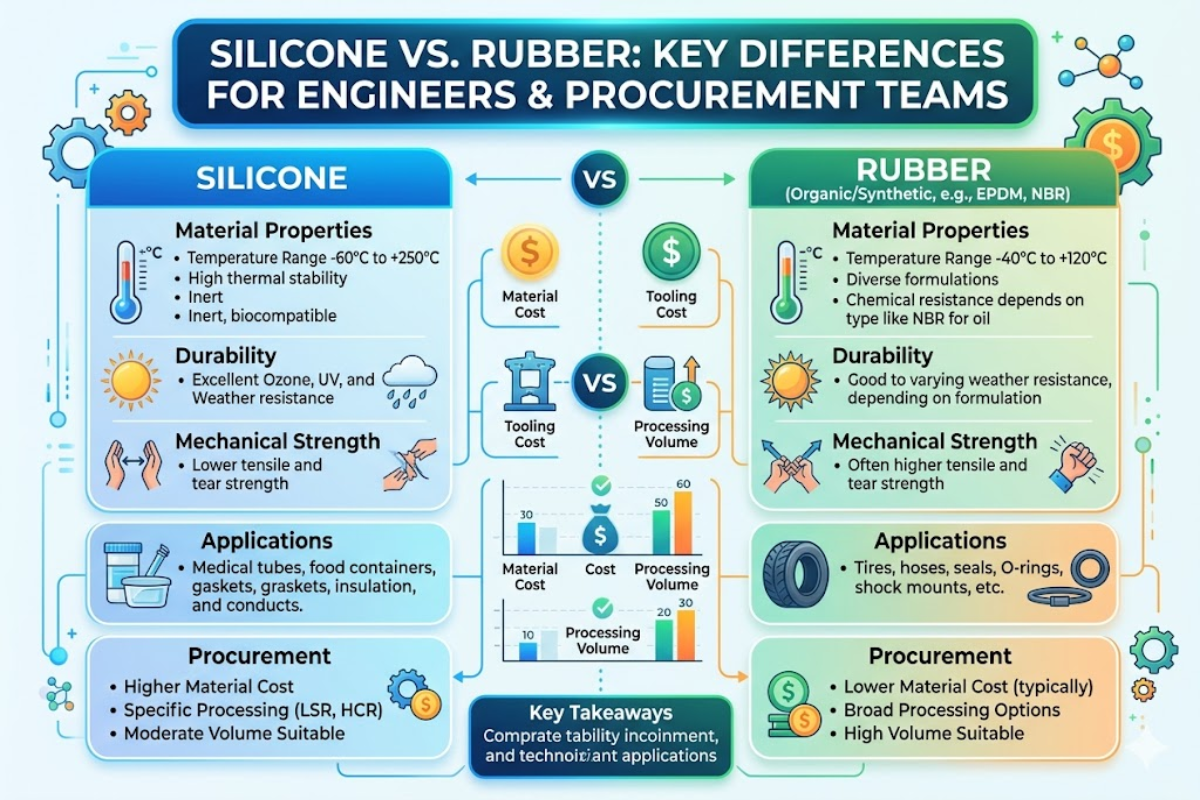
Silicone vs Rubber: Key Differences for Engineers & Procurement Teams
Engineers and procurement professionals encounter the silicone vs rubber dilemma every time a new sealing, gasket, or flexible component specification hits the books. Both materials are elastomers, meaning they deform under stress then return to their original shape, but they have radically different performance profiles in terms of temperature, chemical compatibility, longevity, and economics. Choose unwisely, and you’ll face expensive early part failures or a costly material rebuild.
This primer explains the true distinctions between silicone and rubber on a line-by-line basis. Every property is backed up with standard specification data as well as guidance based on decades of manufacturing experience, enabling you to identify the best material for your application without conjecture.
In This Guide
- What’s the difference between silicone and rubber?
- Property-by-Property Comparison
- When should I choose silicone over rubber?
- Industry Applications
- Cost, Lifespan, and Total Value
- How Compression Molding Produces Both
- FAQ
What Is Silicone and What Is Rubber? Clearing Up the Confusion
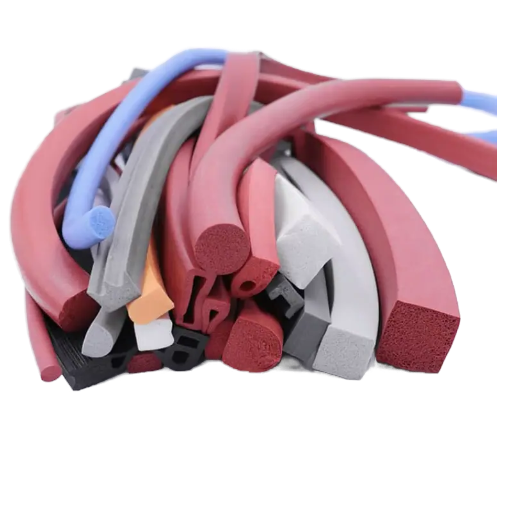
What is a silicone rubber? Although “silicone” is often used as a synonym for “silicone rubber,” the two materials are not identical. Silicone rubber is a type of elastomer—a member of the same class of materials as rubber—that is made of synthetic polymers with silicon-oxygen as its fundamental component. This gives silicone rubber different properties than rubber derived from natural sources. Historically, the term “rubber” was first applied to natural latex and polyisoprene, which are derived from the sap of rubber trees. Over time, the term has come to encompass synthetic variants as well.
Natural rubber is obtained by collecting latex sap from Hevea brasiliensis trees. This juice is then refined into polyisoprene, a naturally occurring polymer based on carbon and hydrogen -carbon-hydrogen carbon-hydrogen chains. Since the dawn of manufacturing, this material has been used extensively and, as a result, remains a common elastomer.
Silicones are a class of man-made polymers composed primarily of silicon and oxygen -silicon-oxygen -silicon-oxygen -chain, also known as a polysiloxane or siloxane. Because of the silicon-oxygen backbone, silicones demonstrate one of the broadest ranges of chemical inertness and thermal stability. It’s important to recognize the distinction: silicon is a chemical element represented as Si with atomic number 14. Silicone describes the synthetic polymer that includes silicon among its composition.
What is a type of synthetic rubber? An umbrella term for rubbers derived from petrochemical sources, these include styrene-butadiene rubber (SBR), nitrile, ethylene-propylene-diene monomer (EPDM), and neoprene. Every variation is formulated to achieve intended properties like oil or weather resistance.
| Feature | Natural Rubber | Silicone Rubber | Synthetic Rubber (general) |
|---|---|---|---|
| Origin | Rubber trees (latex) | Synthetic (siloxane polymer) | Petroleum-derived |
| Backbone | Carbon–carbon (C–C) | Silicon–oxygen (Si–O) | Carbon–carbon (C–C) |
| Classification | Natural or synthetic elastomer | Synthetic elastomer | Synthetic elastomer |
| ASTM D2000 Type | AA (NR), BF/BG (SBR) | FC/FE/GE (VMQ) | Varies by compound |
💡 Pro Tip
Occasionally, the job of specification writer is tainted by a simple typo—”silicon” mistakenly written where “silicone” should be. While many scientists know the obvious departure between a metalloid element and flexible polymer, the resulting confusion may lead to ordering the wrong part.
Silicone vs Rubber — Property-by-Property Comparison
In most circumstances, the real distinction between silicone and rubber is revealed when the material’s measurable engineering data is presented side by side. Below is a collection of the most relevant specifications influencing component selection for gasketing, sealing, and flexible assemblies.
| Property | Silicone (VMQ) | Natural Rubber (NR) | EPDM |
|---|---|---|---|
| Temperature Range | -60°C to +230°C | -30°C to +80°C | -50°C to +150°C |
| Tensile Strength | 5–12 MPa | 20–30 MPa | 7–21 MPa |
| Tear Resistance | Low–moderate (10–50 kN/m) | High (80–120 kN/m) | Moderate (20–40 kN/m) |
| Hardness (Shore A) | 10–80 | 30–90 | 30–90 |
| UV / Ozone Resistance | Excellent | Poor (degrades) | Excellent |
| Chemical Resistance | Good (acids, bases); poor with oils/fuels | Poor (oils, solvents, ozone) | Good (water, steam, glycols); poor with oils |
| Oil / Fuel Resistance | Poor (swells) | Poor | Poor (use nitrile instead) |
| Electrical Insulation | Excellent (insulating properties) | Good | Good |
| Compression Set | Low (retains seal over time) | Moderate | Low–moderate |
| FDA / Food Contact | Yes (food-grade, odorless, non-toxic) | Limited | Some grades |
| Approx. Cost ($/kg) | $5–$50 (grade-dependent) | $1.50–$2.50 | $2.50–$3.00 |
Data sourced from Shin-Etsu Silicone technical datasheets and the ASTM D2000 classification system for automobiles.
A clear pattern emerges from these numbers. In order of performance capability, silicone is high in heat endurance, UV and ozone performance, compression set, and neutral in food and medical compliance. Conversely, natural rubber is stronger in terms of tensile strength, tear strength, resilience, and raw materials cost. Neither would be suitable in petroleum environments—in that case, NBR or FKM would take the assignment.
Based on our experience with silicone and organic rubber compounds we encounter the largest performance difference under operating conditions at the temperature extremes. An organic rubber gasket that performs well at 60 C, will fracture and lose its seal above 100 C, whereas a silicone gasket will withstand 200 C without deformation or hardening.
— Engelhardt Engineering Team
When to Choose Silicone Over Rubber (and Vice Versa)
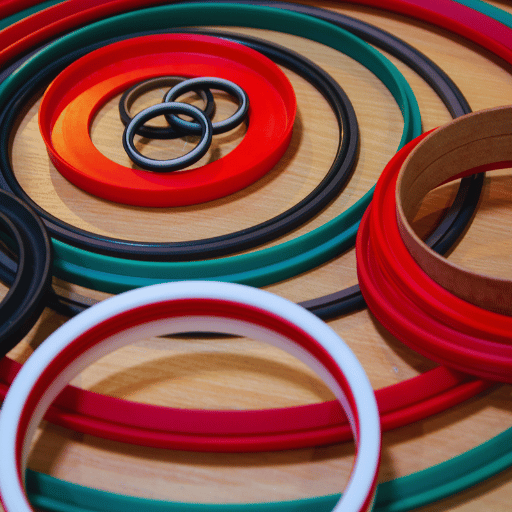
Selecting the appropriate material involves considering how well the elastomer is suited to its real-world application; not necessarily choosing the lowest or highest cost material. Here is a decision framework based on typical application situations.
Choose Silicone When:
- Temperatures of operation are above 100C or below -40C (extreme temperatures).
- Parts face constant exposure to UV light, ozone, or harsh weather conditions outdoors.
- Necessita de conformidade com contacto de alimentos ou com dispositivos médicos (FDA 21 CFR 177.2600 USP Class VI)
- Electrical insulation at high temperatures is needed
- Long-term reliability than initial cost (10+ year service life)
- The component must be odorless and non-toxic
Choose Natural or Synthetic Rubber When:
- High tensile strength and tear resistance are important (dynamic seals, vibration mounts).
- Budget is the primary constraint and conditions are moderate
- Partea trebuie sa resiste uleiuri petroliere, combustibili sau lichide hidraulice (ulgulate nitrilice).
- High-pressure sealing with aggressive mechanical cycling is required
- Abrasion resistance is a top priority (conveyor belts, tire compounds).
Silicone vs EPDM — A Closer Look
Finally, EPDM merits mention since it is often compared with silicone by engineers with such applications as the outdoors and weathering exposed components. Both are good resisters of sun (UV) light as well as ozone. The differentiation here is a correlative: cost.
EPDM is best suited for general weatherings (max 150C) situations and is usually priced at approximately 2.50-3.00/kg. For higher heat resistance up to 230C, you move to silicone — priced 2-10 times higher. For Roof membranes and Automobile door gasketing materials and other such applications at less than 130 C the usual “best value” is rubbery EPDM.
In silicone usage for high temperature Plumber-type gaskets around the under-bonnet-cluster near exhaust manifolds is more normal. The Manglam Engineer s O-ring material guide indicated that in water and steam applications Singapore used EPDM rather than silicone.
⚠️ Common Mistake
Petroleum is the application of contact with petroleum lubricating oils or hydrocarbon based solvents 1. This material degrades and swells when in contact with petroleum-based chemicals or solutions, therefore if coming into contact with oils, use nitrile rubber (NBR), or use fluorosilicone for either high temperature, or fuel resistant applications, bear in mind fluorosilicone costs ten times more.
Industry Applications — Where Each Material Wins
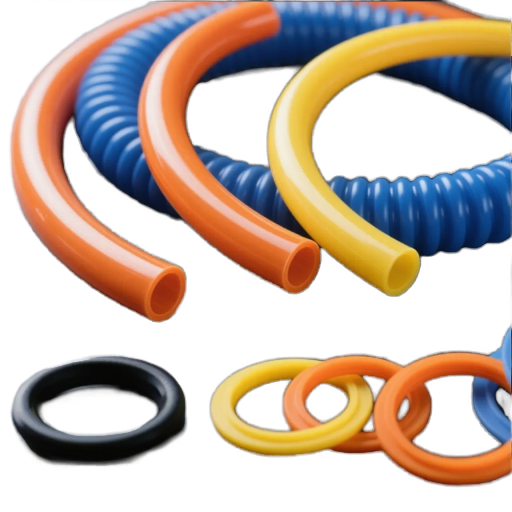
Rubber and silicone are both utilized by dozens of fields, but whereas there are many industries that use one or the other, there are also fields that consistently favor one or the other. Here is where each material earns its place.
| Industry | Silicone Wins | Rubber Wins |
|---|---|---|
| Automotive | Turbo hose, exhaust gasket, spark plug boots | Engine mounts, tire compounds, fuel line (nitrile) |
| Medical Device | Implants, tubing, seals (biocompatible, sterilizable) | Gloves (latex), general-purpose tubing |
| Food Processing | Conveyor seals, oven gaskets (food-grade, odorless) | Cold storage seals (EPDM), beverage hose |
| Industrial Sealing | High-temp O-ring, static gasket, electrical insulation | High-pressure hydraulic seals, dynamic O-ring (nitrile) |
| Renewable Energy | Solar panel edge seals, inverter gaskets | Wind turbine vibration mounts (NR) |
| Construction | Curtain wall seals, expansion joints (UV exposure) | Roofing membranes (EPDM), waterproofing |
In medical applications, silicone dominates because it meets USP Class VI biocompatibility standards and withstands repeated autoclave sterilization at 134°C. Natural rubber latex remains common for disposable gloves, but latex allergy concerns have driven many facilities toward nitrile or silicone alternatives.
For custom gaskets and O-rings, the material choice comes down to the fluid being sealed, the operating temperature, and whether the seal is static or dynamic. At Engelhardt, many of the parts we produce through rubber compression molding are exactly these types of sealing components — manufactured in both silicone and organic rubber compounds depending on the end-use specification.
Cost, Lifespan, and Total Value Comparison
On a per-kilogram basis, silicone costs 2 to 20 times more than regular rubber, depending on grade. According to IMARC Group’s 2025 pricing data, industrial-grade silicone runs $5–15/kg, food-grade $15–30/kg, and medical-grade $20–50/kg. By comparison, natural rubber trades around $1.50–2.50/kg and EPDM around $2.50–3.00/kg.
However, raw material cost alone does not explain the entire procurement equation. Testing by Westlab shows that silicone lasts about 4x longer than rubber in similar scenarios; account for that, plus component replacement schedules, downtime, and labor, and the true total cost of ownership is often silicone-friendly in high-demand situations.
TCO Decision Framework
- Part replacement cycle: If rubber components fail every 12 months, but silicone parts last 48 months, ultimately the 3X silicone cost premium 2 years ahead of schedule, offset by the savings in alternate years.
- Downtime factor: In tight production schedules, a single un-scheduled seal change on the line can make the costs of silicone appear insignificant to the loss of output experienced by $5,000-$50,000 – far greater than any difference in using silicone or rubber.
- Cost to stay in compliance: the parameters for getting medical and food grade silicone (FDA, USP) certification was already built into the silicone polymer. Achieving minimal standards with rubber often requires slightly different compounds that can some times erase any cost differential.
- Yield premiums: for a premium run quantity of 100K+ units per design of part, ask your compound supplier to quote bare silicone volumes at high volume – you should be able to achieve 15-30% savings over conventional sources.
How Rubber Compression Molding Produces Both Materials
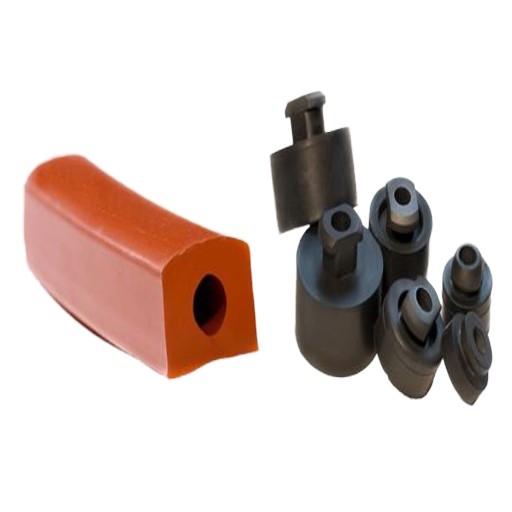
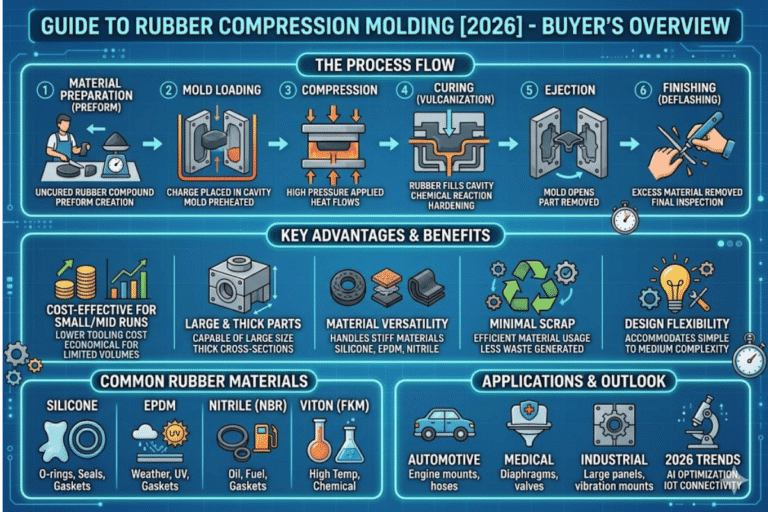
Both families of material are capable of being molded through compression methods- where a ready-measured charge of uncured material is loaded directly into a heated mold cavity, then compressed through hydraulic presses until the material cures into its final shape. The overall process, fundamental steps and principles remain the same for both base materials, but process parameters may vary.
| Parameter | Silicone | Organic Rubber (NR, EPDM, NBR) |
|---|---|---|
| Cure Temperature | 150–200°C | 140–180°C |
| Typical Cycle Time | 3–10 minutes | 5–15 minutes |
| Post-Cure Required? | Often yes (4–16 hrs at 200°C) | Rarely |
| Flash Removal | Cryogenic deflashing or manual trim | Manual trim or tumble deflash |
What makes the same compression molding equipment capable of working both families of material such a significant advantage for multi-industry processor is that you can indeed compound for both elastomer types through the same presses. Engelhardt local provides rubber compression molding capacity for silicone, EPDM, nitrile, neoprene and natural rubber options, without having to switch suppliers- meaning our engineers can evaluate the best ratio of material to cost for different designs. Engelhardt processes also include consultation on particular appropriate material options if you need a manufacturer to help selected your ideal type of elastomer for a particular based part.
Frequently Asked Questions
Q: Which is better rubber or silicone?
View Answer
Neither is a “golden bullet” for every application- both come with their own set of impressive and not-so-impressive characteristics. As a rule of thumb: use silicone where you need high heat, UV stability, or a material too sensitive for organic formulations. Use rubber if a lower priced product with enormous peel strength and high strength is what you need. Don’t use either if they are in contact with a lot of oil and/or fuel- that’s for nitrile.
Q: Is silicone a type of rubber?
View Answer
When we categorize them by their relative placement in the world of industrial polymers, yes – silicone is a rubber. When you specifically analyze their chemical compositions, silicone is a silicone: its backbone is based on silicon and oxygen molecules, while standard rubber exists nearly exclusively out of carbon-based atoms, and altogether behaves very differently than organic rubbers. In the industry, we classify the chemical families as their own Elastomer group within the covering at large of rubber materials.
Q: How can you tell the difference between rubber and silicone?
View Answer
Burn test: silicone tends to burn to a white ash, rubber produces black soot. Smell: natural rubber tends to have a strong odor, whereas silicone is all but odor free. Feel: silicone tends to handle much smoother,and has a slightly glossier feel than rubber. In facilities and processing plants, Fourier Infra-red analysis spectroscopy proves the easiest way to identify one from the other.
Q: Is silicone more durable than rubber?
View Answer
In raw material terms- for wearproofs and O-ring applications, the service life of silicone in comparison to rubber could certainly be considered closer to 4X, mainly because of its inherent ability to withstand UV degradation, ozone, and thermal aging. But in strength testing, rubber outperforms silicone; tensile loads between the two, tears, and resilience at high ranges are far more achievable with rubber. “Durability” is a relative term- do you want to last the longest time in service? Or do you want to resist bending and tearing through abuse?
Q: Can silicone replace rubber in all applications?
View Answer
No. Silicone swells in contact with petroleum oils or fuels. It also tears easily under abrasion. Tires, fuel seals, and heavy-duty conveyor belts all require organic rubber.
Q: What is silicone vs EPDM rubber?
View Answer
Both are synthetic elastomers, well the weathering resistance. If you want to use them for a max temperature of about 150C you will find that EPDM cost $2.50-3.00/kg which is quite cheap for automotive weatherstripping, roofing and water seals. Silicone extends to 230 C, also gives better low temperature flexibility but is about twice the price.
Q: Is silicone rubber food safe?
View Answer
Yes. Food-grade silicone meets FDA 21 CFR 177.2600 and EU 1935/2004. Non-toxic and odorless.
Q: Why is silicone more expensive than rubber?
View Answer
Silicone is manufactured via a complex chemical process from quartz sand, while natural rubber comes from trees! The complex manufacturing process is costly: it requires more energy, more specialised catalysts and much closer inspection and quality control than natural rubber. Food and medical grade silicone is also purified further in the production process, increasing price further.
Need Custom Rubber or Silicone Parts?
Manufactures a range of compression molding parts in silicone, EPDM, nitrile and natural rubber. Send us your drawing or material spec – we will recommend the right compound and supply a quote for your project.
Our Perspective on This Guide
Engelhardt specializes in compression-molded rubber and silicone components for automotive, industrial and consumer products. The inter-material comparisons discussed here are based on our manufacturing experience from thousands of silicone and organic-rubber molding cycles, coupled with published data from ASTM, Shin-Etsu and the IMARC Group. We suggest this article as an informative reference only – test to determine the most suitable material for your operating conditions and industry requirements.
References & Sources
- ASTM D2000 Testing & Specification for Rubber Materials After conversion, the sample in ASTM D2000 condition is in the room. Then the ASTM00, ASTM01 and ASTM02 get a common blue color.
- Proprietà caratteristiche delle composizioni di gomma di silice -Ditta Shin-Etsu
- Seal, them dey call am Silicone na Nitrile, EPDM Rubber seals—Weyer you go choose? – Manglam Engineers
- Preise, Trend, Chart 2025 des Silikongummins mit Prognose – IMARC Group
- Silicone vs Rubber — Westlab
- EPDM versus Rubber de Silicona: Comparación de Materiales para juntas – Fabricación de juntas personalizadas