
Get in Touch with Engelhardt

Engelhardt
Series RG · VM — Molded Rubber Hardware
Custom Engineered For OEM Production
Custom Molded Rubber Components
Rubber Grommets, Bushings & Vibration Mounts — Custom Molded By Engelhardt
Spec-matched grommets, bushings and vibration mounts designed to your panel, load and environment. Not lifted from a book. ISO 9001 and IATF 16949 approved molding, with MOQ and lead time supplied in advance.
Request An RFQ
ISO 9001 · IATF 16949
Audited Quality Management System
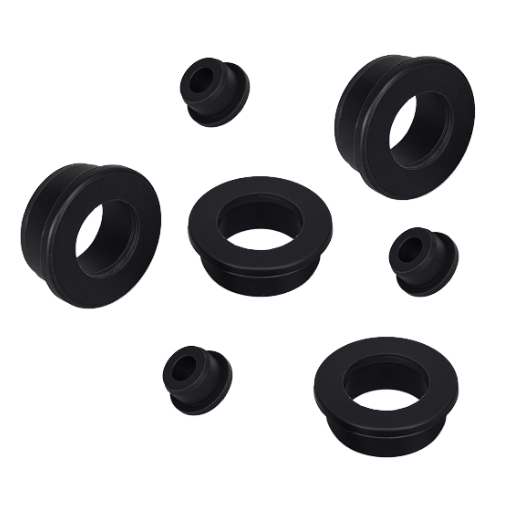
Manufacturing Since
EST. 2009 · Engelhardt
Capability Snapshot
06 Production Indicators
/ 01
6+
Elastomer Families Molded
/ 02
40+
Vulcanizing Presses
/ 03
300T
Rubber Injection Capacity
/ 04
ISO 9001
IATF 16949
Certified Quality System
/ 05
2,000t
Molded Parts / Year
/ 06
2009
Manufacturing Since
When Off-The-Shelf Rubber Grommets Fall Short
Design engineers, engineers and manufacturing managers.A rubber grommet, bushing or vibration mount may seem like a trivial part until the one that doesn’t do its job is already in operation. A rubber grommet chafing through, a rubber bushing working loose, or a mount transmitting vibration rather than absorbing it rarely fails on the test stand it fails in operation where the cost of a recall or rework run is many times the cost of the offending part.
Three Failure Patterns Drive Most Of Those Warranty Calls
First
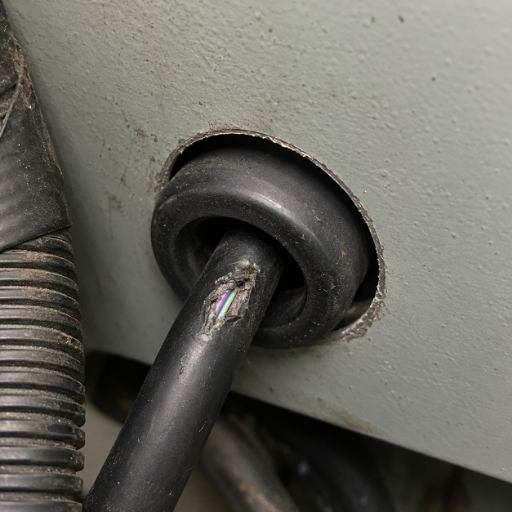
Edge Cut-Through
A stock grommet sized to the nearest catalog hole leaves the wiring rubbing against a sharp panel edge until the insulation wears through.
Second
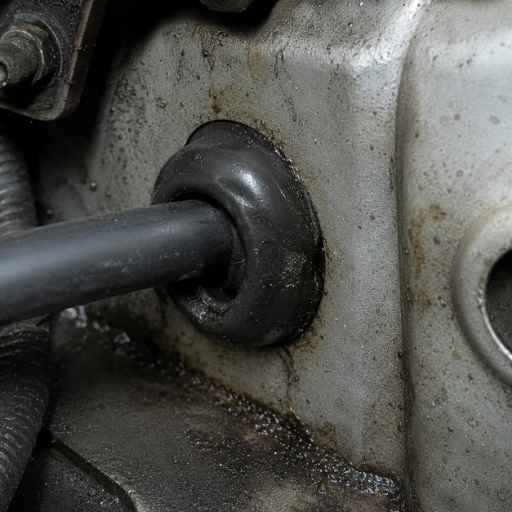
Chemical Swell
An EPDM grommet specified for its weather performance is used in a location subject to oil splashes, where it swells and loses its grip on the panel.
Third

Vibration Resonance
The bushing or mount with the wrong durometer provide either overstressed or resonant mounting points which mean that the new assembly continues to vibrate during operation.
Each is a part size or material choice, not a quality issue.
Stock grommets and punched washers are built for a range of average applications; your panel thickness, hole size, cable OD, temperature range and chemical exposure are specific. Custom molding closes the gap — the elastomer, the Shore A hardness and the groove geometry are all tailored to the task, so the part retains its interference fit and its sealing performance for the lifetime of the assembly.
That is what Engelhardt does: molded rubber grommets, bushings and vibration isolation mounts cured to your drawing rather than adapted from a shelf.
Below, the sections introduce the range and materials, how custom-molded parts compare with stock and stamped substitutes, the OEM programs that support the work, our certifications, and a clear procurement guide so you can scope MOQ, tooling and lead time before you buy.
The Engelhardt Range — Materials & Selection
Engelhardt produces three related families drawn from one tooling and specializing in one area of molding. So you can manage wire shielding, sealing and vibration control on the same purchase order, each is itemized with MOQ and lead time.
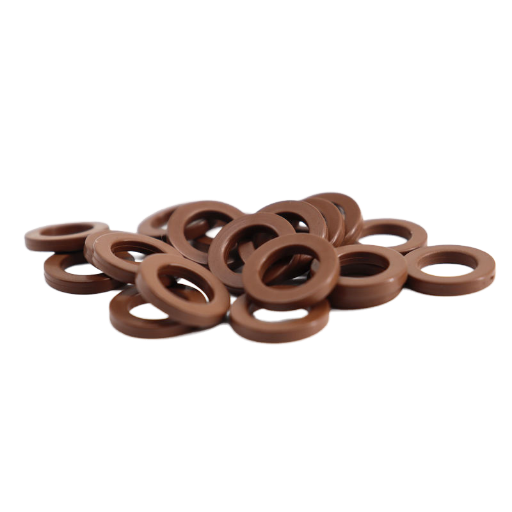
Rubber Grommets
Open, closed (blind-hole) and snap-in rubber grommets that make up panel holes that protect wire against sharp edges, vibration and moisture intrusion. Various shapes available round, oval, square and oblong.
Hole range typically 3.5–100 mm OD · ID from 1.5 mm · groove width matched to panel thickness
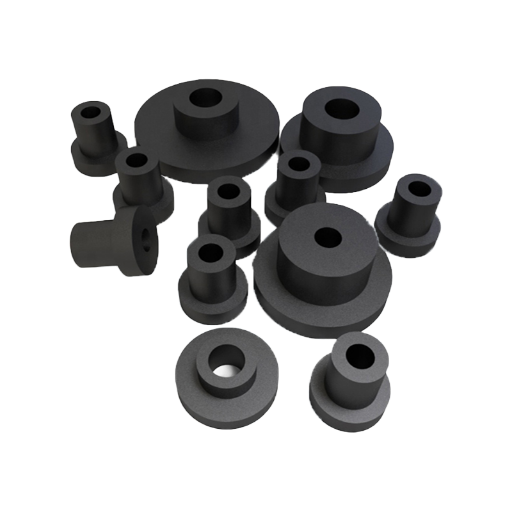
Rubber Bushings
Straight, tapered, flanged and bonded rubber bushings that isolate fasteners, pivots and shafts, absorb shock loads and accommodate misalignment without the metal-on-metal wear of plain bushings. Rubber-to-metal bonding keeps the insert aligned under load.
Bonded or unbonded · metal insert tolerances held to print · durometer specified per load case
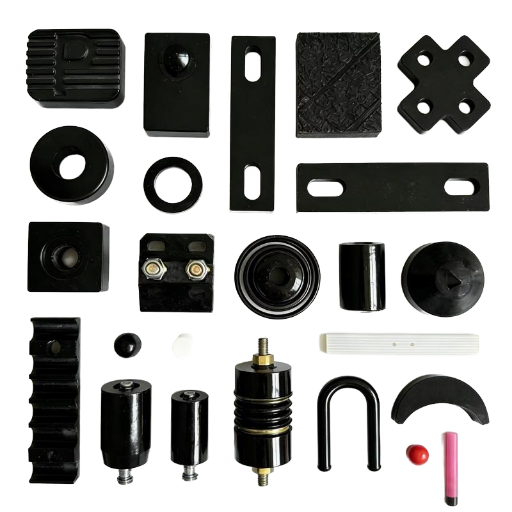
Vibration Isolation Mounts
Anti-vibration rubber mounts and vibration isolators — cylindrical, bobbin and bonded styles — for compressors, pumps, generators, engine and motor mounting, HVAC and instrument platforms.
Studded or tapped · load rated per mount · tuned to shift natural frequency below operating speed
Material choice is the single factor that most often separates a grommet that survives its design life from one that fails early. The matrix below summarizes the working envelope of the elastomers Engelhardt molds most often. Temperature and resistance figures are based on well-known published materials data, for everyday general-purpose compounds, more exotic specialists push the limits further and your final order-off should be based on ASTM D2000 line designations.
| Material | Temp Range | Oil / Fuel | Weather / Ozone | Shore A | Relative Cost | Best Fit |
|---|---|---|---|---|---|---|
| Nitrile (NBR / Buna-N) | -30 to +100 C | Excellent | Fair | 40–90 | Low | Oil-wetted areas, engine bay grommets |
| EPDM | -40 to +150 C | None | Excellent | 40–90 | Low | Outdoor, water contact, general automotive |
| Silicone (VMQ) | -60 to +200 C | Poor | Excellent | 30–80 | High | High-heat zones, food and medical grades |
| Neoprene (CR) | -35 to +100 C | Good | Good | 40–80 | Medium | Balanced weather and moderate oil exposure |
| SBR | -40 to +90 C | Poor | Fair | 40–90 | Low | Low-cost general-purpose grommets and pads |
| Natural Rubber | -50 to +80 C | Poor | Fair | 30–70 | Low | High-deflection vibration mounts and bushings |
| Application | Recommended Part | Material | Durometer | Why |
|---|---|---|---|---|
| Wire bundle through painted steel panel | Open or snap-in grommet | EPDM | 50–60 A | Weather and ozone resistance, no oil exposure |
| Grommet near engine oil or fuel lines | Closed / blind-hole grommet | Nitrile (NBR) | 60–70 A | Resists oil swell where EPDM fails |
| High-heat or exhaust-adjacent pass-through | Grommet or bushing | Silicone | 50–70 A | Stable to +200 C continuous |
| Pivot or fastener isolation, shock loads | Rubber-to-metal bonded bushing | Natural rubber | 50–65 A | High deflection, bonded insert holds alignment |
| Compressor / generator anti-vibration mount | Cylindrical or bobbin mount | Natural rubber or NBR | 40–55 A | Soft enough to drop natural frequency below running speed |
Engineering Note — Durometer And Vibration Isolation
durometer is a load-versus-isolation trade-off for vibration isolators and rubber bushings: the stiffer it is, the more load it can carry, but also the more vibration it transmits. A softer compound isolates vibration better for the same mass, but must deflect more. In general equipment mounting isolation, published industry guidance recommends the practical intermediate at 40-60 Shore A, with natural-rubber mounts usually driven 40-70 Shore A. Our objective is to determine the stiffness that results in the natural frequency of the mounted system remaining comfortably below the operating frequency separating it from the disturbing one- that separation in frequency alone is what kills the transmission. Send us the supported mass and disturbing frequency and our engineers will recommend a durometer and mount geometry rather than leaving you to guess.
Uncertain which elastomer your panel and environment call for?
Download The Rubber Material Selection GuideCustom Molded vs. Stock & Stamped Alternatives
For engineers and operations managers looking to reduce supply variability. It is often tempting to treat a grommet or bushing as a catalog purchase – select the next size up, or punch a washer in-house. This approach may be okay until a part enters service; industry guidance on supplier selection is very clear about this: selecting on the initially-quoted price is a false economy, because the unanticipated costs – rework, replacements, warranty claims and field failures – are not revealed until after the equipment reaches the customer.
| Factor | Stock Catalog Grommet | In-House Stamped / Punched | Engelhardt Custom Molded |
|---|---|---|---|
| Material match to spec | Nearest available compound | Whatever sheet is on hand | Elastomer chosen to ASTM D2000 call-out |
| Fit to panel / hole | Nearest catalog size | Flat profile, no groove | Groove width matched to panel thickness |
| Geometry | Round only, fixed range | Simple 2D shapes | Round, oval, oblong, blind-hole, bonded |
| Tooling cost | None | None to low | One-time mold, amortized over the run |
| Per-unit cost at volume | Higher (distributor margin) | Labor-heavy, inconsistent | Lower at production volume |
| Field failure risk | Material / fit mismatch | Edge cut-through, no sealing | Engineered for the load and environment |
| Quality records | Limited or none | None | CoC, material reports, inspection records |
Here is the candid assessment: for a small batch of prototype units, a generic grommet that is readily in-stock is not a problem. As soon as a part appears in a recurring assembly, catalog selection quietly shifts cost off the purchase order and onto your warranty and rework budget. Custom molding pre-loads a one-time tooling expense and removes the repetitive failure likelihood- which happens to be the relevant comparison for calculating overall program life-cycle expenses, not a single purchase order.
Interested in seeing this comparison against your current grommet or bushing expenses?
Request A Free Sample KitClient Trust and Program Examples
For operations and engineering managers de-risking the supplier determination. Anyone who has ever had to buy grommets or bushings from an overseas molder should ask that question: have your customers ever depended on you under continual demand? Engelhardt has supplied molded rubber and plastic components into the supply chains of American Standard, Kohler, Amphenol and Nestl – brands for whom their own quality auditors reject “good enough.” Manufacturing to those standards is this companys valuation record.
A Few Examples Of Programs Our Grommets, Bushings And Mounts Have Supported. Specifics Are Kept General To Respect Customer Confidentiality.
Plumbing Fixtures
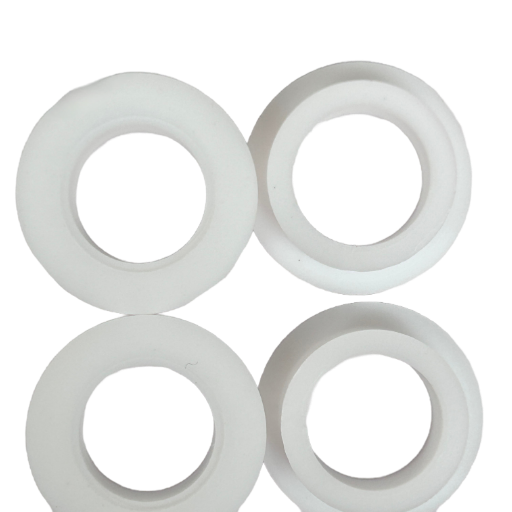
Plumbing-Fixture Manufacturer
Sealing grommets and isolation pads molded in EPDM and neoprene for water-contact mounts, where resistance to ozone and weather aging matters more than oil resistance.
Electrical Interconnect
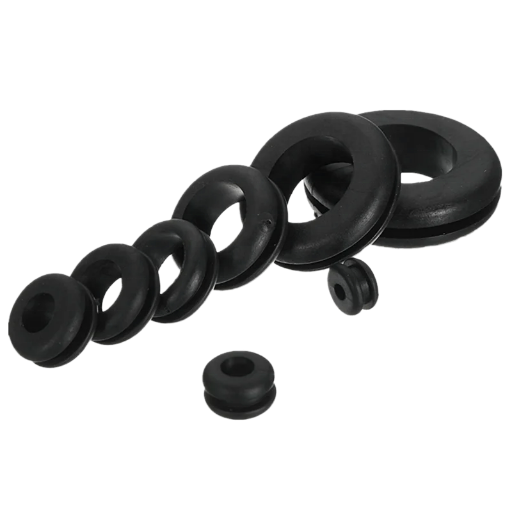
Electrical Interconnect Supplier
Cable and wire grommets in nitrile and silicone for panel pass-through applications.
Automotive Tier
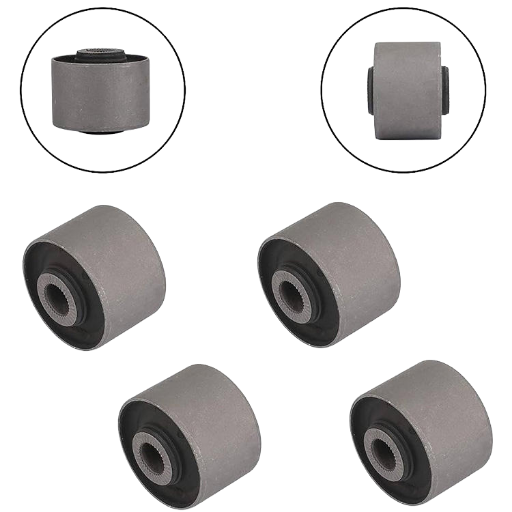
Automotive Tier Supplier
Bonded bushings and anti-vibration mounts manufactured to IATF 16949 standards, with full material traceability per build.
We don’t start a grommet or mount program from a catalogue page. We start from the customer’s panel thickness, the cable OD, the temperature band and the chemical exposure – then decide on the elastomer and the durometer. The compression and injection presses are the easy part; matching the material to the failure mode is where the engineering happens.
Engelhardt Engineering Team
Total Cost Of Ownership — What Custom Molding Protects
A grommet failure often appears after assembly costing rework, downtime and field service- not the few cents of the part itself.
Cost of ownership covers the entire lifecycle: purchase price plus freight, duties, warehousing, rework, replacement, and costs incurred by quality failures in service.
Matching the elastomer and geometry to the application takes that most common failure mode- chemical swell or edge cut-through- out of the lifecycle calculations.
Deciding on one molder for grommets, bushings and mounts consolidates tooling, paperwork and approvals, lowering the program’s administrative cost.
Spec’ing a grommet or bushing for a drawing?
Download The Grommet Sizing Chart (PDF)
Certifications and Compliance
For quality and procurement engineers. Rubber part procurers are often told to check a supplier for the correct certification, and then to verify the certificate itself rather than rely on it at face value. Engelhardt was designed for that very check. Our quality system holds certified by both IATF 16949-and ISO 9001- standards preferred by many automotive customers.
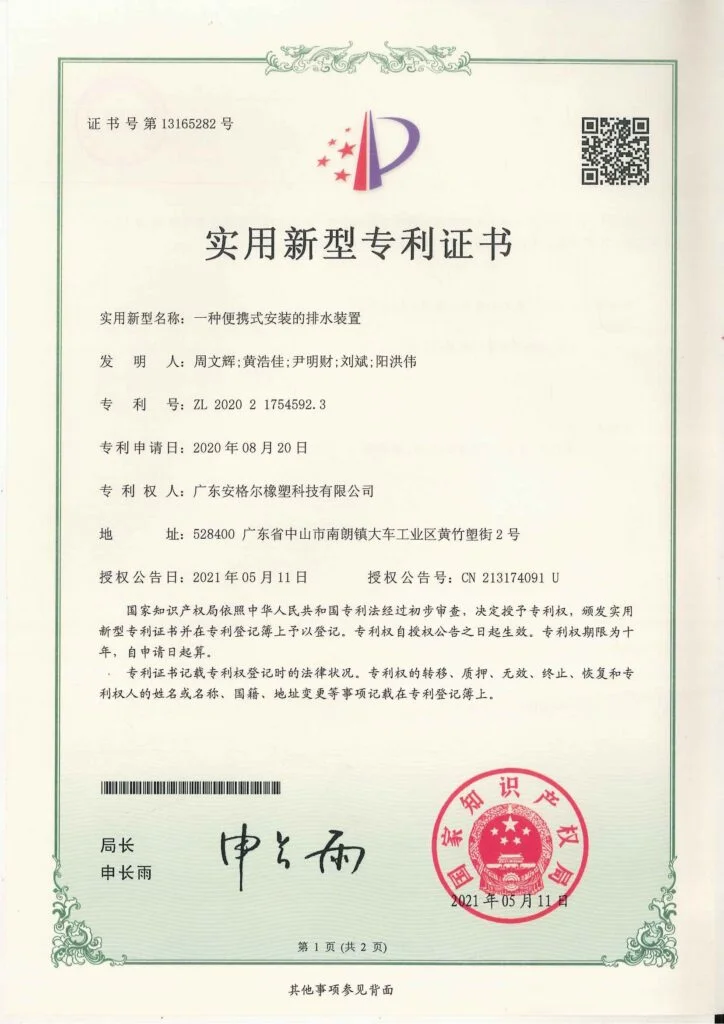
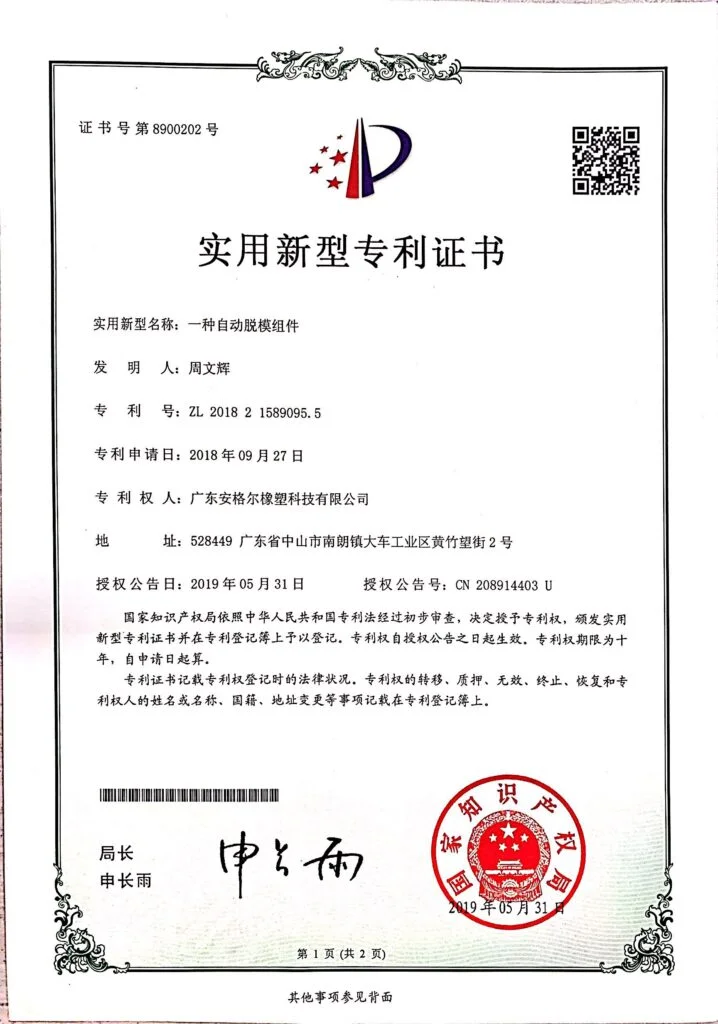
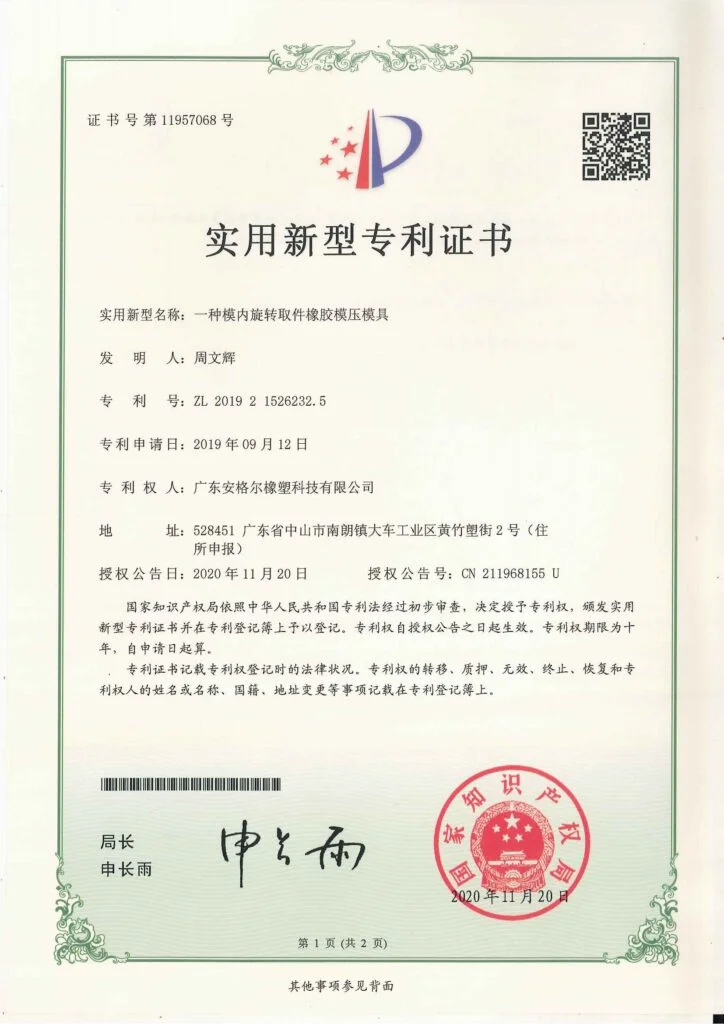
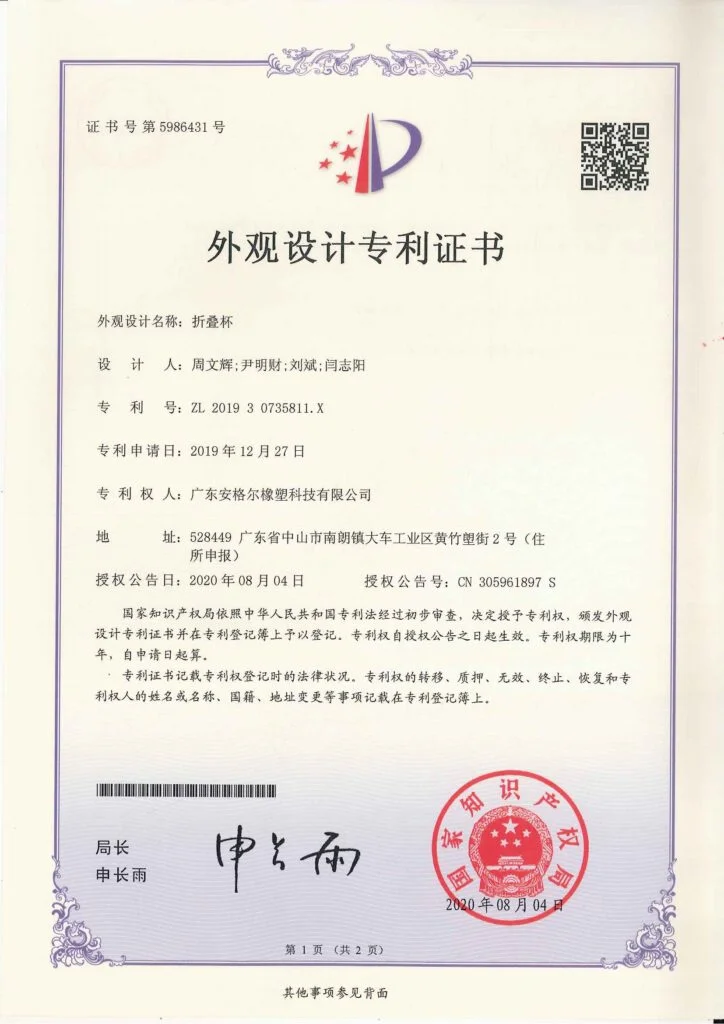
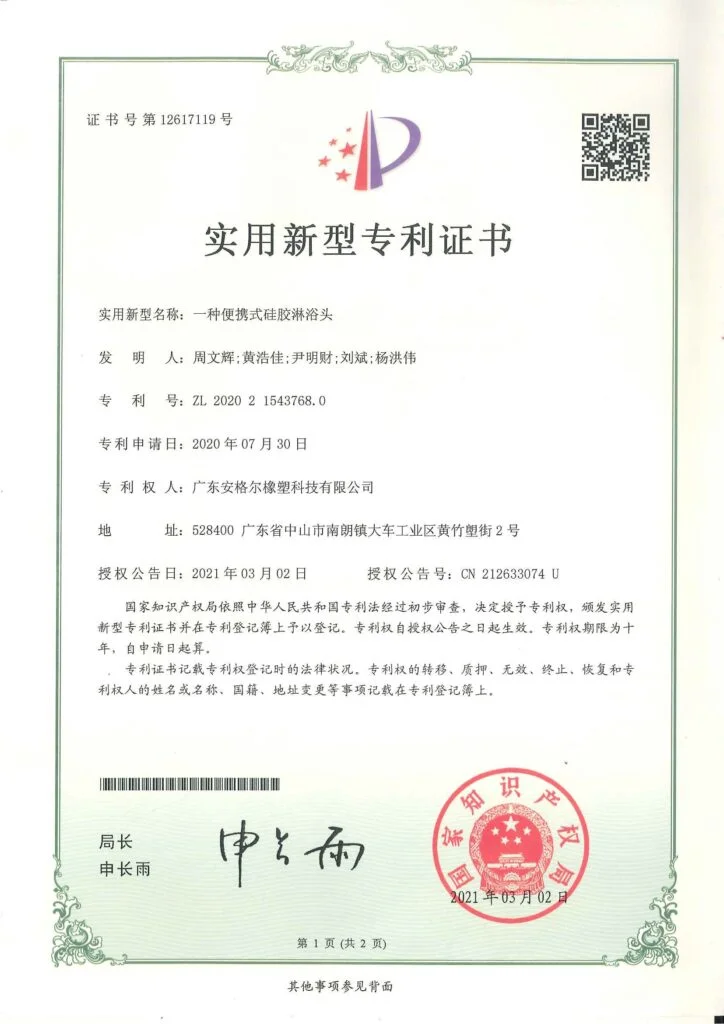
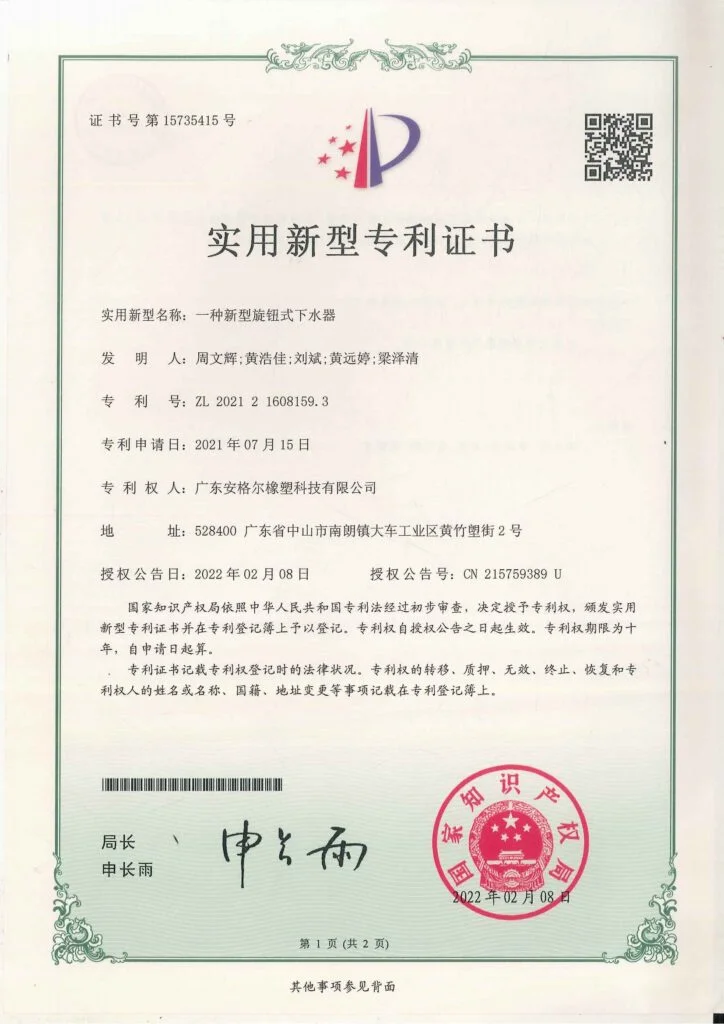
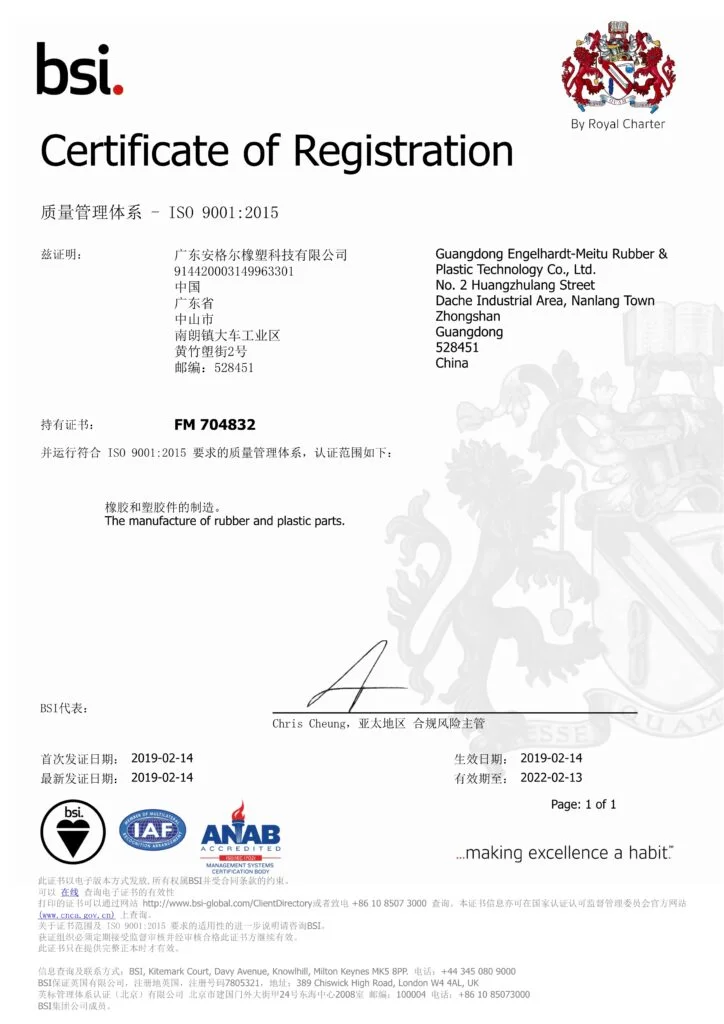
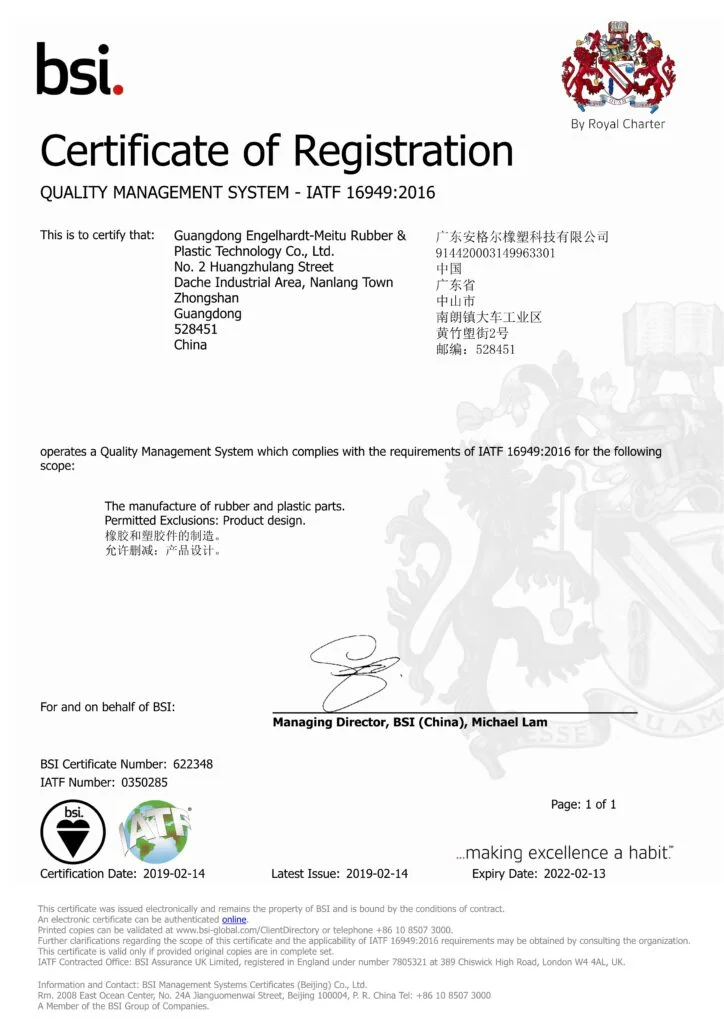
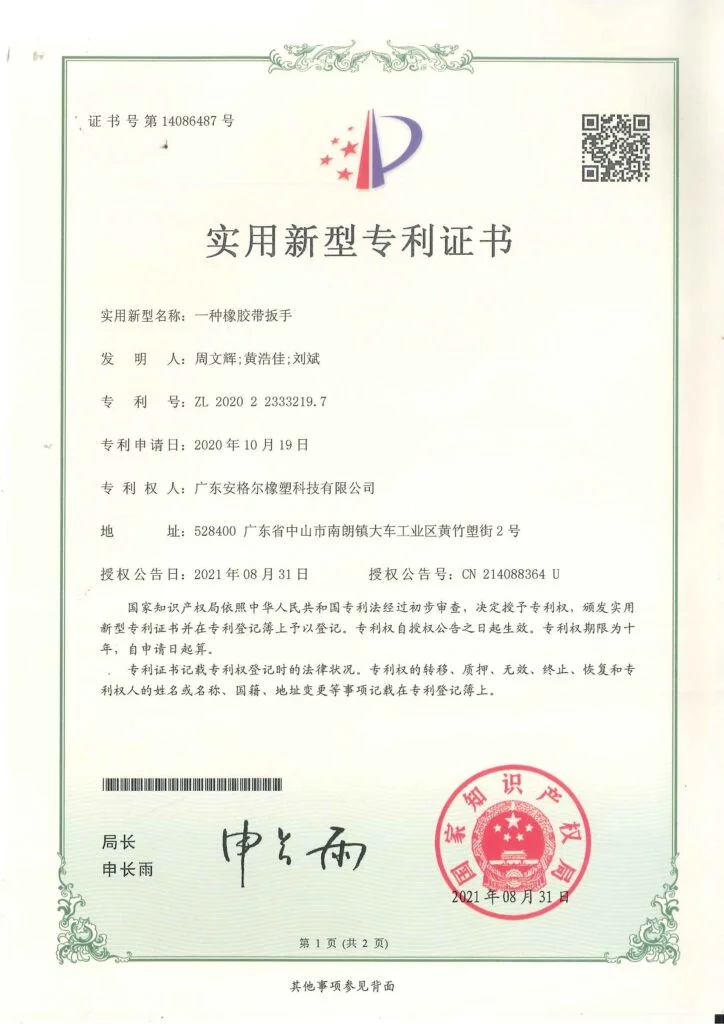
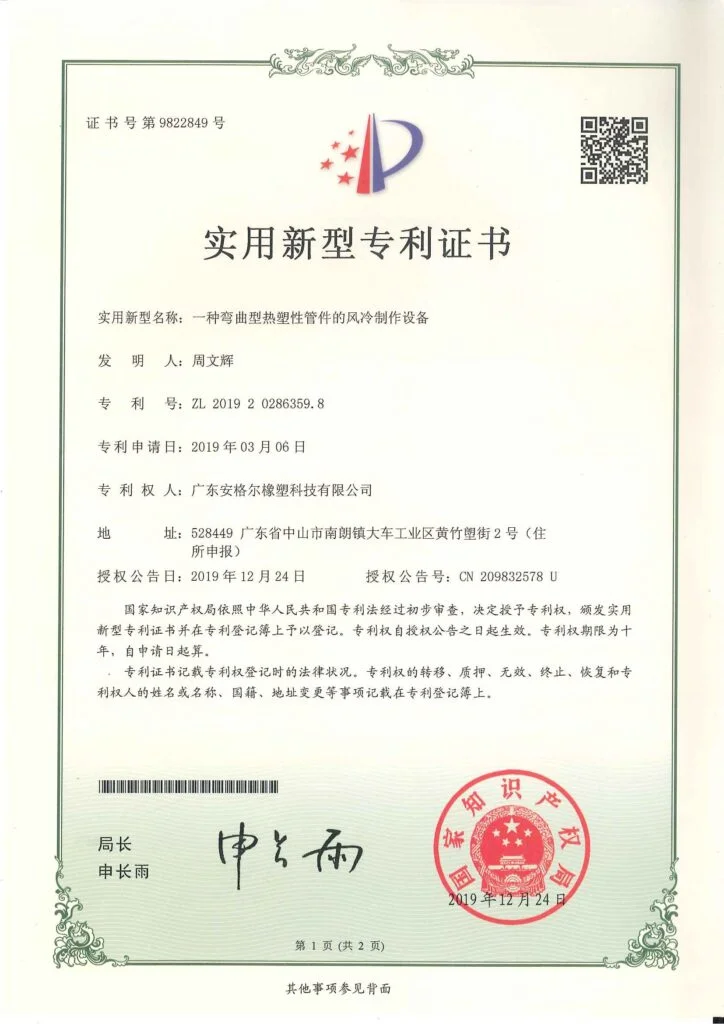
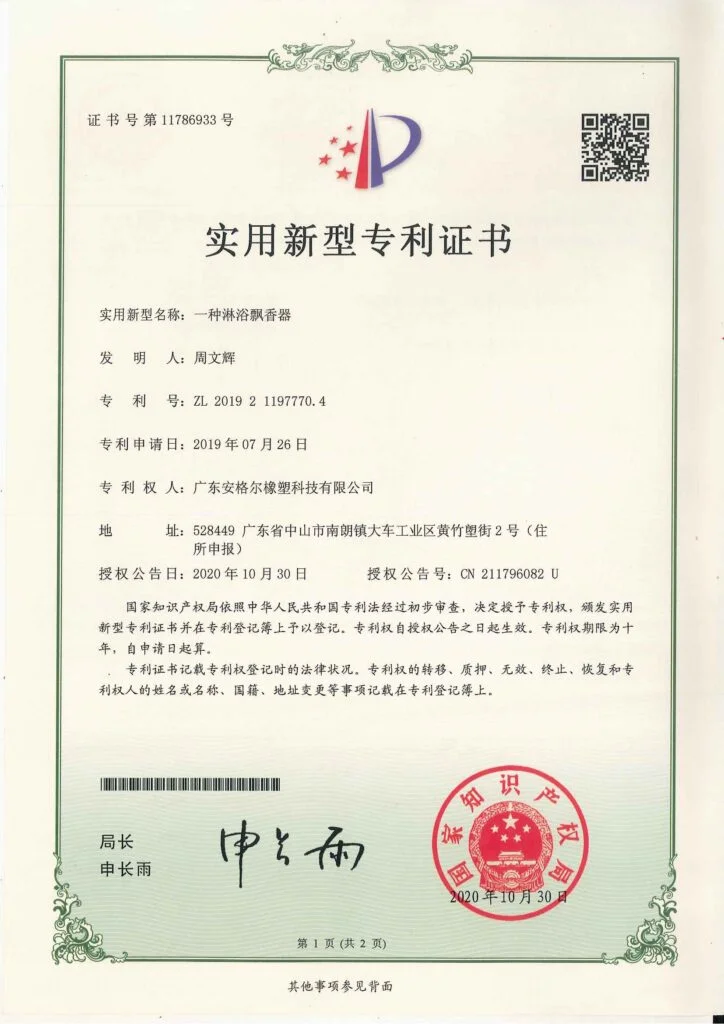
ISO 9001
Quality management system certified
IATF 16949
Automotive-sector quality standard
ASTM D2000
Rubber material line call-outs
RoHS / REACH
Material compliance on request
Quality Records We Provide
Material specifications are written against ASTM D2000-carpentry information for describing rubber in grade, type and class. Temperature resistance is covered by Type and oil-swell resistance by class. Referencing a part specification this way allows you to test the material performance not the source. For example, Engelhardt provides:
DOC 01
Certificate of Conformance against the approved drawing and ASTM D2000 call-out
DOC 02
Material test reports and batch inspection records
DOC 03
First Article Inspection reports, with PPAP-level records available for automotive programs
DOC 04
Dimensional inspection data tied to the print tolerances
Concerned your supplier paperwork might fall short? See the documentation.
Download Our Full Compliance RecordsProcurement Guide — MOQ, Tooling Cost & Lead Time
For buyers and budget approvers. Not all rubber component suppliers show price, minimum order quantity and other charges on the quote: contract molders often hide extra tooling costs inside a high minimum purchase quantity, forcing large step-up order sizes. Engelhardt exposes Molding and piece cost as two distinct items.
What Drives The Price
Here are the elements that make a grommet, bushing or mount quote, instead of a headline number. All these are items you can impact:
Lead Time, Realistically
2 – 12 Wks
Mold Creation Window
For custom molded rubber components, the largest and most changeable step in the build schedule is the mold-creation phase — published estimates indicate that a mold can be ready within 2 weeks to about 12 weeks, depending on design complexity and where the tool is cut. Following tooling, prepare for a sampling and batch approval phase prior to production. A practical way to compress the schedule is to lock the material call-out and panel dimensions early, so the mold is cut once. Engelhardt produces both compression and rubber injection components in-house and this allows the build schedule to be compressed by removing the back-and-forth delays seen at multi-vendor suppliers.
How To Get An Accurate Quote
Just provide a drawing or a sample, and your panel thickness and hole size (or supported mass and disturbing frequency for a mount), ambient operating temperature and chemical challenge profile, and your yearly volume — and Engelhardt will provide you with a quotation including the following as transparent line-items:
Input 01
Drawing or sample
Input 02
Panel thickness and hole size (or supported mass and disturbing frequency for a mount)
Input 03
Ambient operating temperature and chemical challenge profile
Input 04
Yearly volume
Returned as transparent line-items — enabling procurement to support a budget with concrete information.
Tooling
Unit Price
MOQ
Lead Time
Rubber Grommet and Bushing Engineered Tools
Rubber Grommet & Bushing FAQ
08
Questions Answered
Q · 01
What Size Hole Do I Need For A Rubber Grommet?
Check the diameter of the panel hole, the panel thickness, and the outside diameter of the wire or component passing through. To fit well, the grommet’s groove diameter should be roughly the same as the panel hole, while the groove width should be commensurate with the panel thickness, with a slight interference fit so the grommet grips the panel. Common grommet hole sizes range from approximately 3.5 mm to approximately 100 mm on the outside diameter, with internal diameters from about 1.5 mm upward. If you are unsure, send us the panel drawing and the component dimensions, and our engineers will specify the grommet for you.
Q · 02
Which Rubber Material Is Best — NBR, EPDM, Silicone Or Neoprene?
It is a function of the environment, not the “best” overall. Use nitrile ( NBR) for areas with oil or fuel, EPDM for outdoor and water-contact use, silicone where temperatures are higher than what EPDM or nitrile can stand, and neoprene if moderate weather and oil is desired. EPDM has very little oil resistance, which is the most common mistake around an oil-wetted area. Give us your application and we will help determine what to use.
Q · 03
What Is The Minimum Order Quantity For Custom Rubber Grommets?
MOQ is set by the point where the one-time tooling cost amortizes across a reasonable run – it is an economic breakeven, not a rigid-number output. Because Engelhardt runs compression molding in-house, lower-to-medium volumes are economical without the inflated MOQ that suppliers use to bury tooling cost. Tell us your annual volume and we will quote an MOQ that makes sense for it.
Q · 04
How Much Does Grommet Or Bushing Tooling Cost?
Tooling is a one-off cost based on part complexity, number of cavities and quantity of metal inserts. Compression molds are easier and much less expensive than injection molds. Engelhardt accounts for tooling as a separate line from unit price, so you see what the mold costs, instead of it being buried inside a high minimum order. Ask for a quote with your drawing, for an exact number.
Q · 05
What Is The Lead Time For Custom Molded Rubber Parts?
The tool-build process is the largest and most variable part of the schedule, often two weeks to around twelve. After the mold is cut a sampling and first-article approval cycle precedes production. Establish your material call-out and dimensions early to keep the mold to one cut, and shorten the schedule.
Q · 06
Can You Bond Rubber To Metal Inserts On Bushings And Mounts?
Yes. Rubber-to-metal bonded bushings and studded vibration mounts are standard production work. The metal insert is prepared and bonded during molding, so the finished assembly carries load through the bond rather than a press fit, which keeps it concentric. Insert tolerances are held to your print.
Q · 07
Do You Provide Samples Before Full Production?
Yes. Every program includes a first-article inspection cycle before production release. For early-stage evaluation, request a sample kit of representative grommet and bushing profiles.
Q · 08
How Do Custom Molded Grommets Compare With Off-The-Shelf Stock Grommets?
Pre-molded grommets are produced to “average” applications and dimensions aimed at the nearest bolt hole, producing gaps that frequently result in field failures. Custom molding makes the elastomer, durometer and groove profile match your panel and job environment. For an initial prototype quantity a stock part is fine; for continuous production, custom molding eliminates the risk of repeated failures and often reduces per-unit cost.