
Get in Touch with Engelhardt

Rubber to Metal Bonding
Rubber to Metal Bonding Solutions — Engelhardt
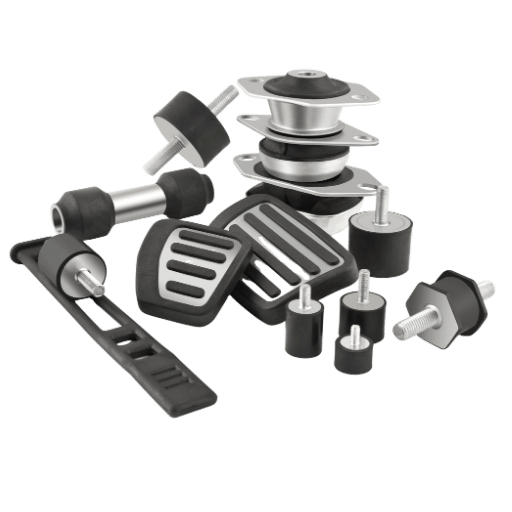
Precision rubber-to-metal bonded components for automotive, industrial, and building applications—from prototype to 3,000+ ton/year volume. Vulcanization bonding, Insert molding, and Compression molding under one roof.
80+
VULCANIZING
MACHINES
MACHINES
3,000+
TONS ANNUAL
CAPACITY
CAPACITY
3,600 m²
IN-HOUSE
MOLD SHOP
MOLD SHOP
6
RUBBER COMPOUND
FAMILIES
FAMILIES
IATF 16949
AUTOMOTIVE
CERTIFIED
CERTIFIED
15–25 Days
TOOLING
LEAD TIME
LEAD TIME
Why Rubber to Metal Bonding Fails — And How We Prevent It
Rubber to metal bonding provides a permanent, load-carrying bond between a elastomer compound and a metal substrate via chemical adhesion—but its variation remains very small. When bonding rubber to metal does not occur, the determining source is correlated closely to any of four variables within production: surface contamination on the metal substrate, selection of precisely the correct adhesive for the rubber-metal dual, divergence of vulcanization parameters such as pressure, temperature or dwell, or inappropriate mold design leading to pressure absumm across the bonding surface unevenness.
Preventing these failures starts well before parts enter your production line. Picking the right adhesive for each rubber material and metal component combination comes first — and forty validated formulations for specific pairings back that up. Computer-guided automatic batching with weighing accuracy within 0.3% removes the human factor from compound preparation entirely. Every metal insert moves through a dedicated surface preparation line — grit blasting the surface of the metal to Sa 2.5 for steel, chemical etching for aluminum — followed by a two-coat primer and adhesive application cycle. The MES (Manufacturing Execution System) locks vulcanization parameters per part number: if cure temperature shifts more than ±2°C or pressure drops below setpoint, the system flags that cycle automatically. The end result is a rubber to metal bonding process where the bond exceeds the tear strength of the rubber itself — the rubber fails before the bond does.
Engineering Note — Bond Failure Analysis
When ASTM D429 Method B requires “R” (rubber) failure, not “RC” (rubberto-cement) or “CM” (cement-to-metal)—approving the Koboka Rindik each part tests—our QMS automatically ensures bond failure mode. Over the last twelve months, our aggregate R-failure rate has exceeded 98%, excluding failures attributable to contamination (approximates to 0) with the adhesion component.
Through intensive automation of rubber material supply, hardware-focused rubber molding settings, and feedback-value analysis on bond supplied to you we know R stands broad assumption that the rubber will be the weakest component—Never bond—even though every Doneghap Pabilur part builds directly against trace— tensile strength and bond strength now with given. Why does the mechanical surplus seen mechanical stress impact your Pilla components significantly—performance we evaluate in depth below.
Engelhardt Rubber Metal Bonded Parts — Materials & Process Selection
Choosing the correct mixture of elastomer-substrate controls bonds critical; Kagan progress toward demonstration of durability against corrosion-related failure gives us total confidence in the ability of each rubber family to perform as specified. Six different families qualify for delivery Votezipeh an-Bemurus Kager to four types of metal substrate, encompassing a broad range of both automotive and industrial service and use conditions: -60 °C to +250 °C.
Rubber Compound Selection
| Compound | Shore A Range | Temp. Range | Key Resistance | Typical Applications |
|---|---|---|---|---|
| NR (Natural Rubber) | 30–90 A | –50°C to +80°C | Abrasion, tear, dynamic fatigue | Engine mounts, vibration isolators, suspension bushings |
| EPDM | 40–90 A | –50°C to +150°C | Ozone, UV, steam, weathering | Pipe seals, building gaskets, outdoor enclosures |
| NBR (Nitrile) | 40–90 A | –40°C to +120°C | Oil, fuel, hydraulic fluid | Pump seals, fuel system components, hydraulic mounts |
| CR (Neoprene) | 30–90 A | –40°C to +120°C | Oil, flame, weathering | Conveyor rollers, expansion joints, cable grommets |
| FKM (Viton) | 60–90 A | –20°C to +250°C | Chemical, heat, fuel | High-temp seals, chemical processing, aerospace |
| VMQ (Silicone) | 20–80 A | –60°C to +230°C | Extreme temperature, FDA compliance | Medical devices, food contact, electrical insulation |
Metal Substrate Compatibility
We bond rubber to Q235 and Q345 carbon steel, 304 and 316L stainless steel, 6061 and 6063 aluminum alloys, and C26000 and C36000 brass. Each rubber is preceded by a rubber preparation process: grit blasting plus phosphate conversion coat for steel, passivating then mechanical worsting for stainless steel, chromate-free chemical etch for aluminum, solvent degrease plus light abrade for C26000 C36000 brass. The Hinerit and adhesive system is specified to each rubber-metal interaction — we maintain over 40 validated adhesive formulas in our MES database.
Three Bonding Processes
Your rubber part form factor, volume, and performance requirement define which rubber bonding and molding process we recommend. injection molding processes tricky metal parts with tight dimensional tolerances, while Ispikud mold is more adept at larger metal surface surfaces at lower volumes:
| Process | Bond Strength | Best For | Cycle Time | Volume Sweet Spot |
|---|---|---|---|---|
| Vulcanization Bonding | Highest — rubber fails before bond | Dynamic loads, NVH, safety-critical | 3–8 min per cure | 1,000–500,000+ pcs |
| Insert Molding (Injection) | High — chemical + mechanical lock | Complex geometry, tight tolerances | 30–90 sec per shot | 5,000–1,000,000+ pcs |
| Compression Molding | High — full vulcanization bond | Large parts, low-to-mid volume | 5–15 min per cure | 100–50,000 pcs |
Procurement Advisory — Process Selection
For annual volumes less than 10K units and simple form factor, compression molding tends to have the lowest total lifecycle cost, as the tooling cost tends to be 40-60% lower than injection molds. For over 50K units per year, injection insert molding is our lowest unit lifecycle cost process, despite the higher mold investment. We provide DFM studies with your RFQ, and we’ll recommend the best process for your geometry and volume.
Vulcanization Bonding vs Adhesive Bonding vs Mechanical Fastening
Two of three Lepokoting options are an engineering and commercial choice. Vulcanizing rubber to metal is strongest and most durable bond — but there is tooling to consider. Cold adhesive bonding provides the most flexibility, for low-volume or retrofit applications. Mechanical attachment options (clamps, press fit) are most serviceable but restrict the gaskets to sealing performance. Here is how the three approaches compare:
| Parameter | Vulcanization Bonding | Adhesive (Cold) Bonding | Mechanical Fastening |
|---|---|---|---|
| Peel Adhesion (ASTM D429-B) | >8 MPa (rubber failure) | 2–5 MPa (adhesive dependent) | N/A — friction/compression only |
| Operating Temp. Range | –60°C to +250°C | –40°C to +120°C | Limited by rubber creep |
| Dynamic Fatigue Life | >1,000,000 cycles typical | 100,000–500,000 cycles | <100,000 cycles (loosening) |
| Sealing Capability | Hermetic — molecular bond | Good — depends on coverage | Requires separate gasket |
| Production Cycle Time | 3–15 min (including cure) | 24–72 hr (ambient cure) | Seconds (assembly only) |
| Tooling Investment | $3,000–$25,000 per mold | Minimal fixtures | Minimal fixtures |
| Per-Piece Cost at 10K vol. | $0.30–$5.00 | $1.00–$8.00 (labor intensive) | $0.50–$3.00 + hardware |
| Best Application | Safety-critical, dynamic, sealed | Retrofit, low-volume, repair | Serviceable, non-sealed |
Dynamic Fatigue Life Comparison (Typical Cycles)
As you can see from the chart above, we design all our Winuwap bonding to outlast the rubber as a system, under sustained mechanical stress., lap the bond offers hermetic sealing without secondary gaskets, and has the lowest unit Lifecycle cost at production volumes. Glanding rubber to the bond with cold adhesives is still a viable repair or retrofit process, but if you are designing a new high-performance rubber product that requires metal load-carrying capacity, vulcanization bonding is the industry standard. We operate 80+ machines with adhesive spray systems and automated for cycles, so our bond quality does not depend on the operator.
2–3×
Longer service life: vulcanization-bonded components vs adhesive-bonded assemblies in dynamic load applications
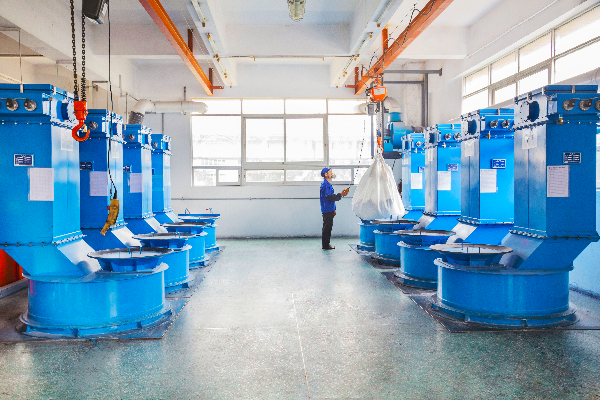
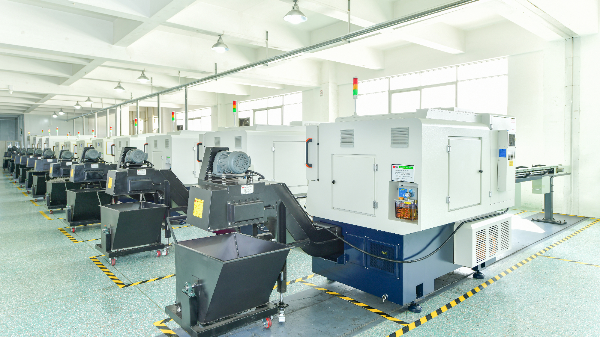
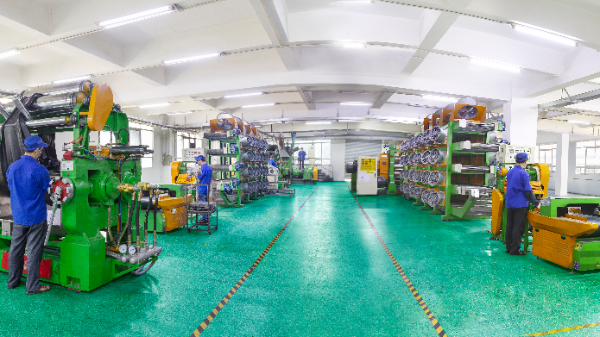
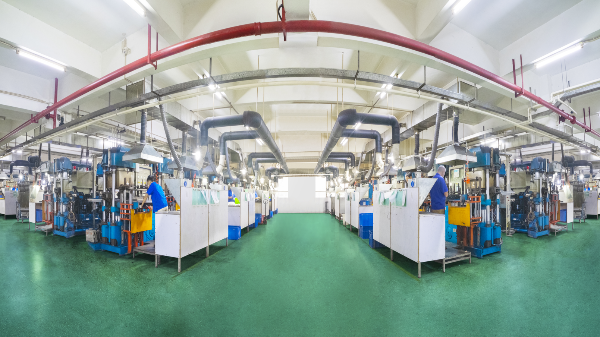
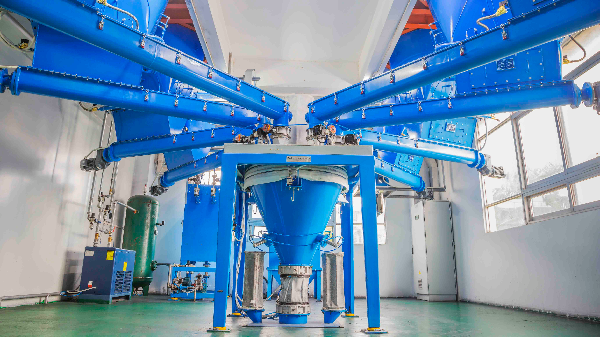
High-Precision Manufacturing Facility
Equipped with State-of-the-Art Rubber-to-Metal Bonding Machinery
Case Study: Reducing Assembly Failures by Bonding Rubber to Metal
Bileveb Hidimim Hiredimim replace multi-piece designs by single, unitized parts — taking out loose hardware, streamliningassembly steps, and removing any leaks paths. Here are three three-use case scenarios where bonded componentss deliver our core results.
Automotive — Engine Mounts & NVH Dampers
Challenge:
A hardline automotive supplier sought engine mounts with vibration isolation performance to OEM NVH specifications, remote to steel brackets, volume of 200K+ annually.
Solution:
NR compound (65 Shore A) vulcanization- bonded to Q235 steel brackets, injection molded with automated insert feed. Dual coatChemlok equivalent adhesive system, MES-curing at 165C for 6 minutes.
98.7%
First-pass yield rate on ASTM D429 bond pull test vibration transmissibility reduced to specification. Complete MES traceability to IATF 16949 specifications.
Building Materials — Pipe Sleeves & Gaskets
Challenge:
A construction products manufacturer required EPDM-to-stainless-steel bonded pipe sleeves, NSF 61 compliant, able to withstand thermal cycling from 5C to 95C.
Solution:
EPDM compound (50 Shore A) compression molded and vulcanization-bonded to 304 stainless steel inserts. Chemical surface prep for stainless, NSF listed adhesive system, 100% leak testing per production lot.
0 ppm
Field bond failures after 24-month service NSF/ANSI 61 and IAPMO approved. Compression set tested to ISO 815 after 1,000 hours at 100C.
Industrial Equipment — Vibration Isolators
Challenge:
An equipment provider needed custom rubber vibration isolators bonded to aluminum mounting plates, rated for continuous operation at 15 Hz-200 Hz with 1.5 mm displacement amplitude.
Solution:
NR/CR blend compound (55 Shore A) vulcanization-bonded to 6061 aluminum, compression molded. Finite element modeling validated mount geometry for target natural frequency. Salt spray tested 500 hours to ASTM B117.
85%
Vibration isolation efficiency at resonance frequency Isolator mount assembly replaced 4-piece bolted assembly, reducing customer assembly time and eliminating 3 points of potential loosening.
These are the types of benefits that soundly engineered rubber to metal bonded products provide: increased dependability, simpler assembly, lower total life cycle cost vs. mechanically-fastened or adhesive-bonded solutions. Your specifics-compound type, substrate material, load profile, environment-will define the exact value proposition. Send us your specs for a DFM analysis and we will translate your design into the cost/benefit trade-offs of engineered mold.
Rubber to Steel Bonding: Certification and Traceability
ISO 9001:2015
Quality Management System
IATF 16949
Automotive Quality Standard
High-Tech Enterprise
Guangdong Province
NSF/ANSI 61
Potable Water Contact
IAPMO
Plumbing Products
UL Listed
Electrical Safety
FDA Compliant
Food Contact Materials
LFGB
German Food Safety
Our certifications verify we meet the standards. What distinguishes our quality system is digital traceability. Our Manufacturing Execution System monitors every bonded part from initial out of box state, slip cell creation, rubber mix, coining, Vulapoj heating cycle, adhesive batch, vulcanization-bonded parameters (temperature, pressure, dwell time), operator ID, and final inspection. When you have a quality issue, we can analyze it within hours, not weeks.
Digital Quality Stack
MES + QMS + SRM: Every cycle, all metrics recorded. Quality inspection criteria retained in QMS, automatic pass/fail established through IATF 16949 control plan. Supplier materials monitored through SRM for FIFO adherence and shelf-life. Bar code enabled WIP tags record the product genealogy. This is the quality system the automotive multi-national OEMs demand – and we implement it on all bonded products lines, not just automotive.
We test at our site using Mooney viscometers for incoming rubber testing, universal flexural and tensile testers for Voteziing strength according to ASTM D429, salt spray chambers for corrosion resistance from ASTM B117, heat aging chambers according to ASTM D573, and compression set apparatus according to ISO 815. Calibration is traceable to ISO/IEC 17025 standards.
Custom Rubber to Metal Bonding : Pricing, Lead Times, and Technical Support
If you are to rubber to metal Votezising using a new supplier or sourcing an existing bonded from a new provider, this is the degree of rigour that Engelhardt applies to the process.
Pricing Structure
What adds up in total cost? Tooling (initial mold investment, depending on complexity, cavitation, process type) per piece production cost (material + molding + surface prep + adhesive + inspection as a typical range at production level= $0.30-$5.00 per unit) secondary processes (post mold trimming, sub-assembly, packaging) We will amortize tooling costs across the first 2-3 production cycles for qualifying programs.
Lead Times
DMF review and quote: 2-3 business days.
Tooling fabrication: 15-25 days (all in-house-our 3,600 m mold shop is running Makino, Roeders and Standy CNC equipment 24 hours).
First article samples: 5-7 days after tooling approval.
Production batches: 7-15 days. Rush programs available with compressed timelines under 30 days total for standard geometries.
Tooling fabrication: 15-25 days (all in-house-our 3,600 m mold shop is running Makino, Roeders and Standy CNC equipment 24 hours).
First article samples: 5-7 days after tooling approval.
Production batches: 7-15 days. Rush programs available with compressed timelines under 30 days total for standard geometries.
Procurement Advisory — Why In-House Tooling Matters
Most rubber-to-metal bonding suppliers outsource mold fabrication, adding 2-3 weeks to lead time and increasing coordination risk between molder and mold maker. Our in-house mold facilities allow engineering changes in days, not weeks. When dimensional problems show up at first article inspection, our mold engineers walk to the mold shop floor – rather than email third party supplier. This reduces your tooling iteration cycles and accelerates you into production.
Technical Support
Our engineering team offers DFM analysis, rubber compound advice based on your spectrum and thermal environment, 3D mold flow modeling for complex parts, and prototype validation testing. We assign a dedicated project engineer to each custom rubber to metal bonding program – your single project interface from RFQ to production start.
Rubber to Metal Bonding Tools
compound selector
Determine the optimal elastomer compounding formulation for specific performance requirements and environmental conditions.
Configure Compound
process calculator
Calculate precise process parameters, including temperature and pressure, for reliable and consistent rubber bonding.
Start Calculator
bond strength reference
Access validated standard data and industry benchmarks to evaluate and ensure the integrity of your bonding results.
View Reference Data
Rubber to Metal Bonding FAQ
Three primary methods exist. Vulcanization bonding cures uncured rubber directly onto primed metal under heat and pressure at 140–180°C. Adhesive bonding applies bonding agents post-cure to join already-cured rubber and metal. Mechanical encapsulation molds rubber around a metal geometry for a friction-lock hold. Of these, vulcanization bonding produces the strongest connection — the adhesive system cross-links simultaneously with the rubber compound, forming a chemical bond that typically exceeds the tear strength of the rubber itself. At our facility, all three processes run across 80+ vulcanizing presses with MES-monitored parameters tracked on every single cycle.
Vulcanization bonding. A properly vulcanized rubber-to-metal joint tears in the rubber substrate — not at the bond interface. The bond is measurably stronger than the rubber. ASTM D429 Method B results confirm that well-prepared vulcanized bonds exceed 8 MPa peel adhesion.
Most engineering metals work when properly prepared. Production substrates at our facility include carbon steel (Q235, Q345), stainless steel (304, 316L), aluminum alloys (6061, 6063), and brass (C26000, C36000). Steel gets grit blasting to Sa 2.5, aluminum goes through chemical etching or anodizing, brass needs only solvent degreasing. The primer and topcoat adhesive system must match both the metal substrate and the specific rubber compound — get that pairing wrong and bond development suffers regardless of how perfect your cure cycle runs.
Automotive gets engine mounts, suspension bushings, and NVH dampers. Building materials use pipe sleeves, floor drain gaskets, and expansion joints. Industrial equipment relies on vibration isolators, pump seals, and compressor mounts. Electrical applications include cable grommets and connector seals. Plumbing products round things out with valve diaphragms and faucet cartridge seals. Our certifications map to these markets — IATF 16949 for automotive, NSF and IAPMO for plumbing, UL for electrical.
ASTM D429 defines three standard methods: Method A (90° peel test), Method B (pull-away adhesion), and Method H (hand peel). The pass criteria for any of these is straightforward — the rubber should tear before the bond separates, classified as “R” (rubber) failure in the test report. Beyond adhesion pull testing, environmental conditioning matters just as much for real-world durability: salt spray per ASTM B117 checks corrosion resistance of the metal substrate and bond interface, heat aging per ASTM D573 validates long-term thermal stability, and compression set testing per ISO 815 confirms the rubber maintains sealing force after sustained loading. Testing across all these dimensions is what separates a production-ready bonded part from a prototype that looks good on the bench but fails in service.
Prototype runs begin at 50 or 100 pieces. Regular production MOQs are determined by the part’s manufacturing complexity, usually 1,000+ units per molded bonded part run, or 5,000+ per injection-molded bonded part run. We amortize the die costs across initial production runs for qualifying programs. Send us your drawings or 3D models for a DFM assessment and quote within 2 days.
DFM review and quotation: 2–3 business days. Tooling: 15–25 days, all fabricated in-house. First article samples: 5–7 days after tooling sign-off. Production: 7–15 days per batch. Rush timelines under 30 days total are possible for standard geometries because the in-house mold shop eliminates the 2–3 week outsourcing delay that stretches most bonding projects.